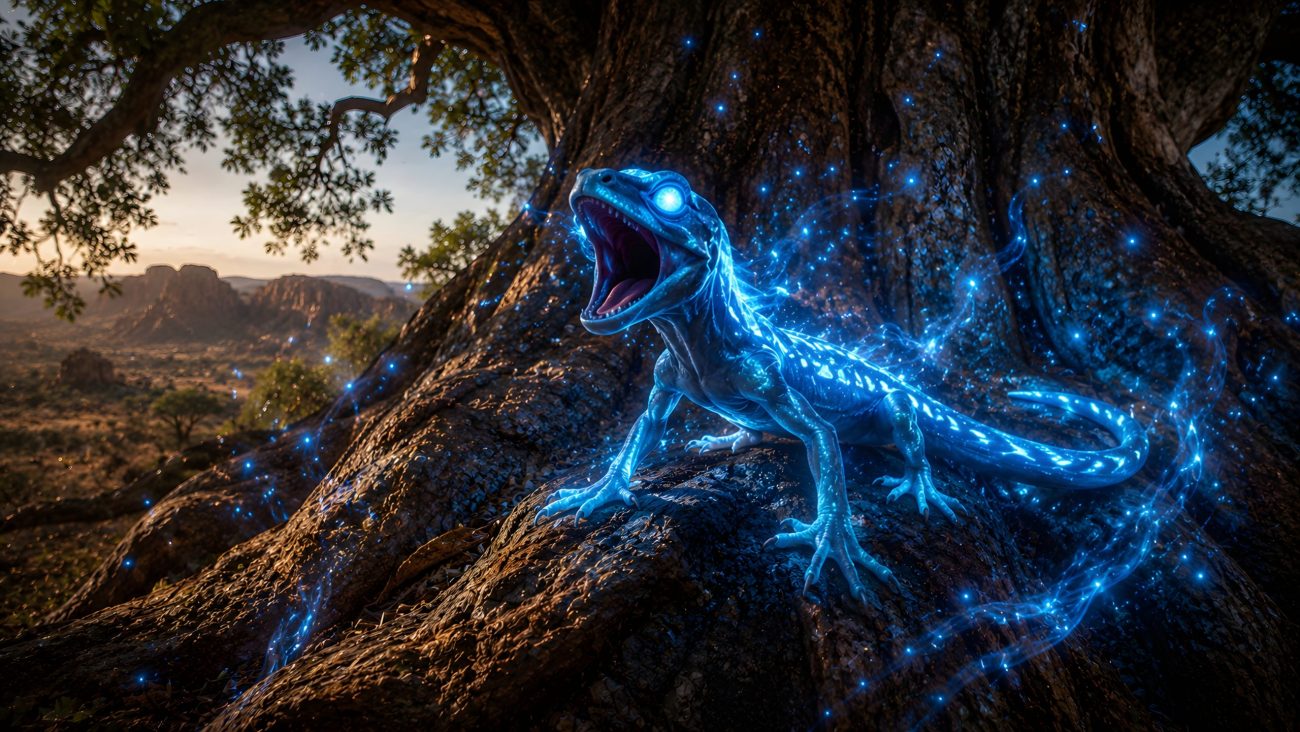
Salamander Spirit

Tradition / Region: Burkina Faso Mythology
Alternative name: Ko! Ko! Salamander
Category: Lizard


The Myth

In a Moose folktale from Burkina Faso, the mysterious salamander spirit appears during the story of the destructive twins Poko and Raôgo.

After being raised by a giant hawk, the twins were adopted by a village chief. But Raôgo was wild and violent. He eventually burned down the chief’s palace and hid with his sister high inside a kapok tree while the enraged villagers tried to cut it down.

As blacksmiths chopped at the massive tree, a salamander suddenly crawled out from a hole in the trunk and cried:

“Ko! Ko! Ko!”

Immediately, the cuts vanished and the tree became whole again, as though it had never been damaged.

The salamander possessed supernatural restorative powers tied to the tree itself. Its cry magically healed the wood every time it was nearly destroyed, protecting the twins from capture.

Raôgo wanted to kill and eat the creature despite Poko’s warnings. He seized the salamander, cut off its head, and gave the head to his sister. Even after death, the severed head retained its magical power. Whenever the tree was close to falling, the salamander’s head cried again:

“Ko! Ko! Ko!”

And once more the tree restored itself.

Eventually, Raôgo consumed the head as well, destroying the spirit’s power entirely. Without the salamander’s magic, the blacksmiths finally succeeded in cutting down the tree.

The salamander in this tale acts as a guardian spirit connected to nature, restoration, and survival. Its regenerative abilities resemble wider African and global beliefs linking salamanders and reptiles to rebirth, fire, immortality, and supernatural protection.


Sources

Sissao, A.-J. (2010). Folktales from the Moose of Burkina Faso. African Books Collective.
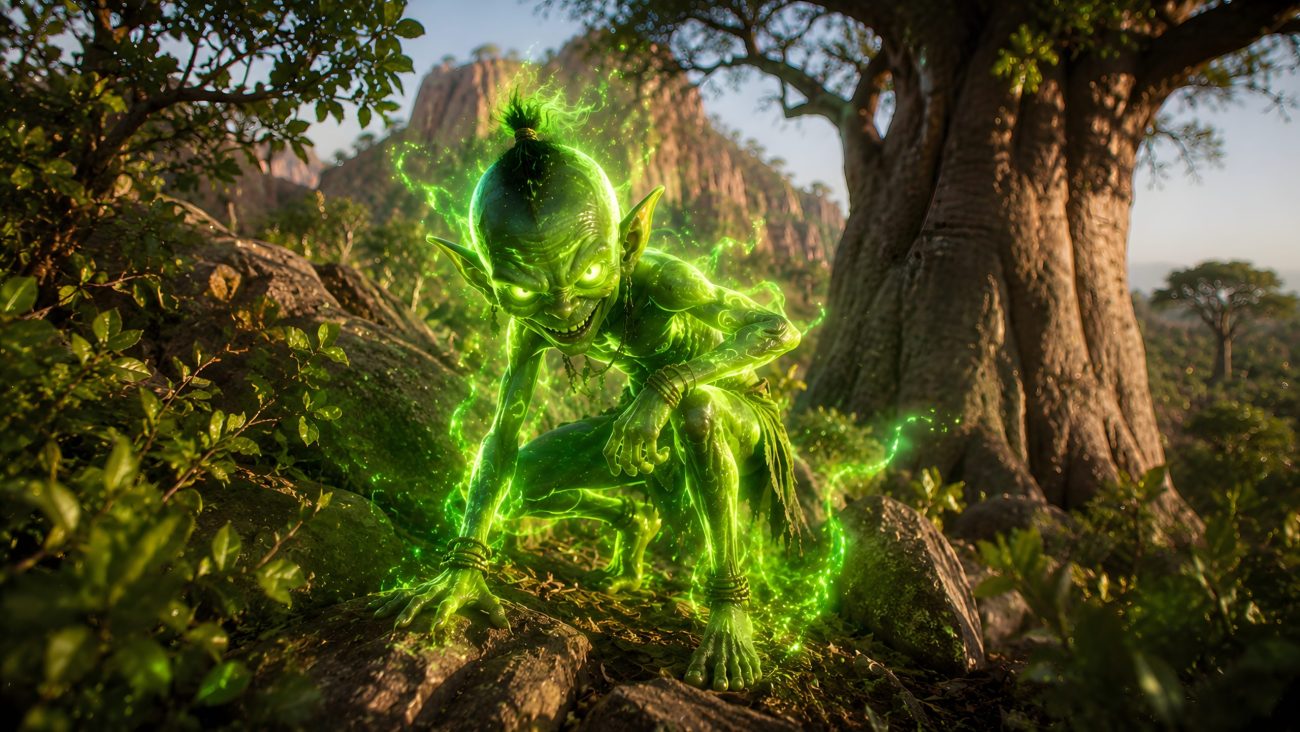

Kinkirga

Tradition / Region: Burkina Faso Mythology
Alternative name: Little Genie
Category: Spirit, Goblin


The Myth

The Kinkirga is a small supernatural being from Moose folklore in Burkina Faso. It is usually described as a genie-like spirit living in the wilderness, rocks, and remote areas of the bush.

In one famous tale, a village chief promised his daughter in marriage to whoever could bring him three impossible objects: milk from a wild she-buffalo, the tendon of a tortoise, and the brain of a kinkirga.

The clever hare decided to attempt the challenge. After tricking a buffalo and obtaining her milk, he searched the bush for a kinkirga. When he found the little spirit, the hare asked whether it could perform a somersault on top of a large rock.

The kinkirga admitted it could not.

Pretending to help, the hare climbed onto the rock first and demonstrated the trick safely. The kinkirga tried to imitate him, but struck its head against the stone and shattered its skull. The hare then took the spirit’s brain and continued on his journey.

The tale portrays the kinkirga as mysterious and supernatural, but also vulnerable to cunning and deception. In Moose folklore, spirits of the bush are often powerful in strange ways, yet they can still be outsmarted by clever tricksters like the hare.


Sources

Sissao, A.-J. (2010). Folktales from the Moose of Burkina Faso. African Books Collective.

Fire Hawk

Tradition / Region: Burkina Faso Mythology
Alternative name: Giant Hawk
Category: Bird


The Myth

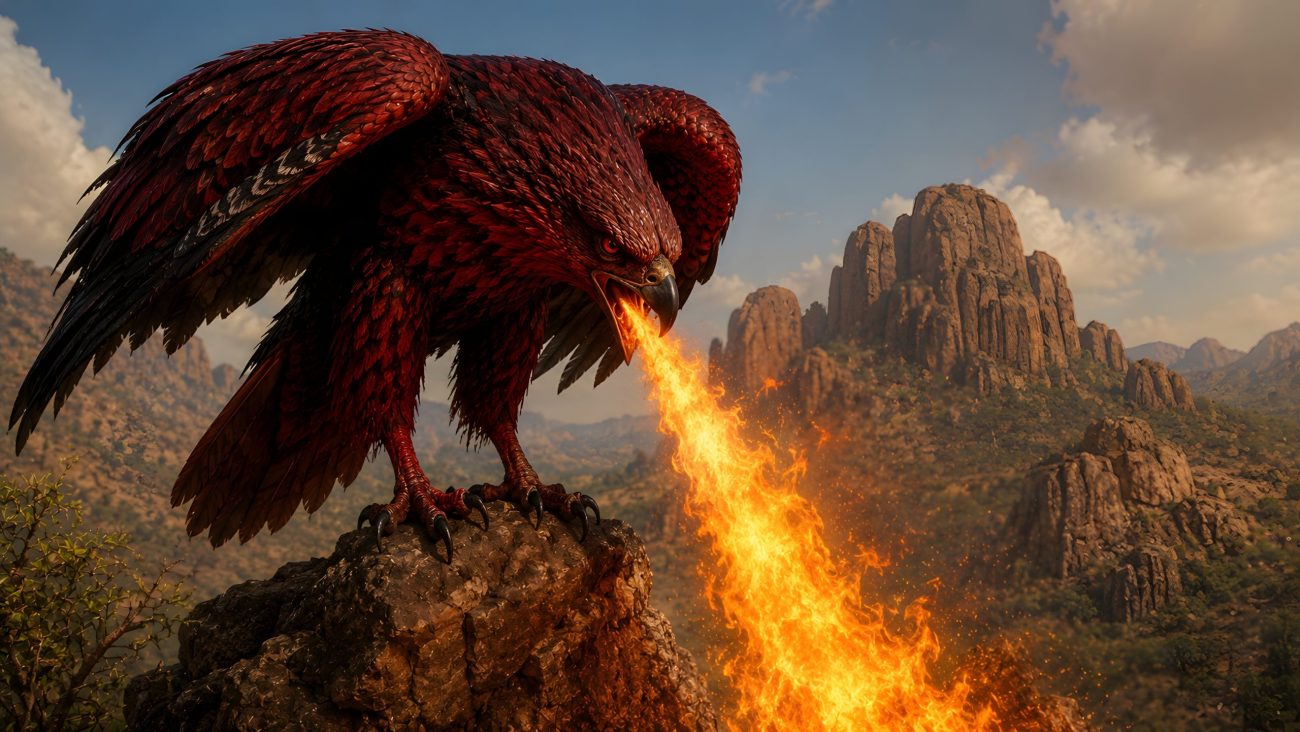
The Fire Hawk is a gigantic supernatural bird from Moose folklore in Burkina Faso. It is remembered as a terrifying creature that descended from the sky to attack villages and devour people.

According to the legend, the monster appeared every seven days. Entire communities lived in fear of it, knowing that sooner or later the hawk would return to claim more victims. People eventually gathered together, preparing to sacrifice themselves all at once so the nightmare would finally end.

The hawk was said to land on a massive rock before attacking. When it opened its beak, fire burst out, scorching the ground and terrifying everyone nearby. Its arrival was associated with destruction, panic, and death.

The hero Raôgo confronted the creature after hearing of the suffering it caused. Armed with a heavy iron club, he faced the giant hawk alone. During the battle, the hawk repeatedly rose after being struck down, but Raôgo continued attacking until he finally killed the monster.

After the death of the Fire Hawk, the people celebrated their freedom from the creature’s terror. In some versions of the story, the defeat of the hawk becomes linked to storms and thunder, with Raôgo later ascending into the sky alongside his sister Poko.


Sources

Sissao, A.-J. (2010). Folktales from the Moose of Burkina Faso. African Books Collective.

Bibêga

Tradition / Region: Burkina Faso Mythology
Alternative name: Bibega
Category: Human Creature


The Myth

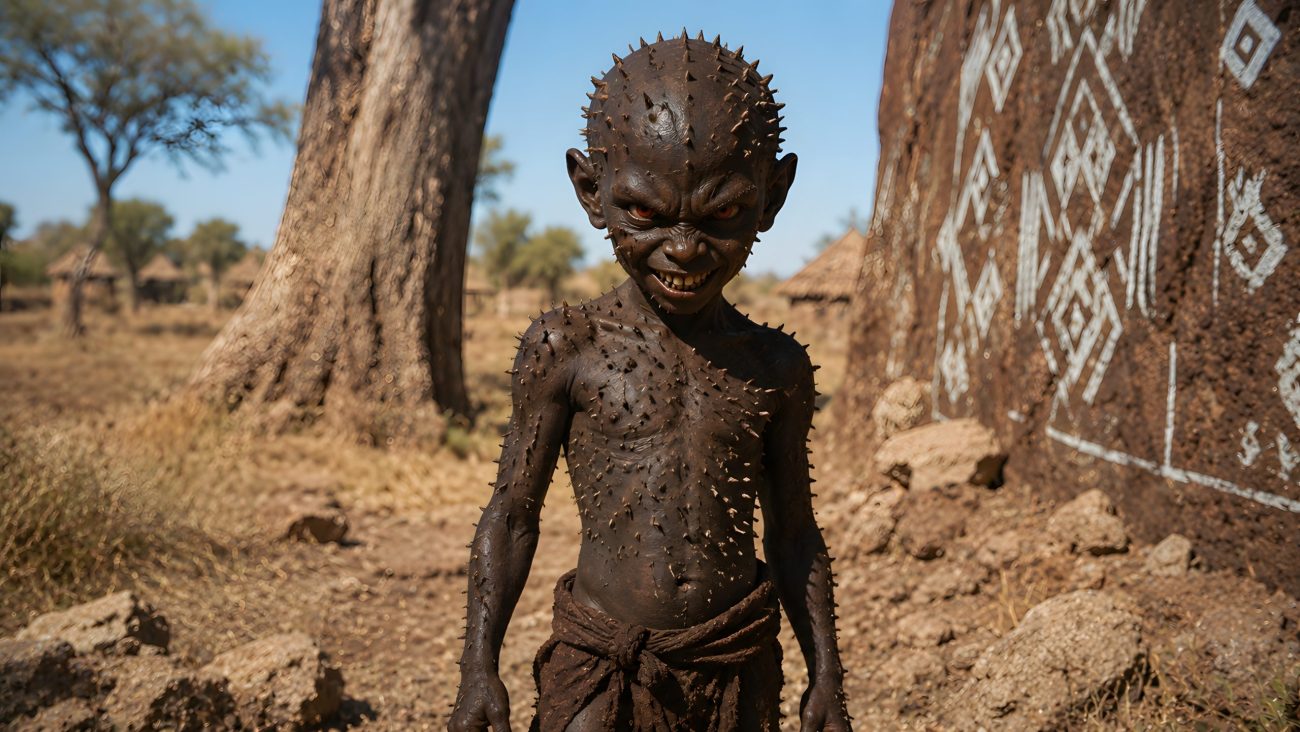
Bibêga is a terrifying child figure from Moose folklore in Burkina Faso, known for his cruelty, fearlessness, and violent behavior.

According to the tale, Bibêga was born in a supernatural way. While a pregnant woman was gathering wood in the bush, a thorn pierced her stomach and the child burst out immediately, already able to speak. He announced his own name and calmly told his frightened mother to return home.

As he grew, Bibêga searched for others who claimed to fear nothing. He gathered several children and traveled with them until they reached the house of a village chief, who welcomed them generously and offered them food and shelter for the night.

During the night, Bibêga suddenly decided to murder the chief’s daughters while they slept. His companions begged him not to do it, reminding him that the chief had treated them kindly, but Bibêga ignored them and killed all three girls. Terrified, the other children fled.

After the murders, Bibêga climbed a tree and mocked the villagers while they searched for him. When the villagers tried to cut the tree down, a great eagle rescued him by carrying him away beneath its wings. Yet Bibêga repaid kindness with violence again. Later, after a tortoise revived both him and the injured eagle with magical water, Bibêga immediately killed the tortoise, cooked it, and ate it.

The stories continue with Bibêga wandering from place to place, offering help to strangers before murdering them without reason. He kills an old woman who fed him and later murders a blacksmith while pretending to assist him in his workshop.

Bibêga became remembered in Moose folklore as the image of a merciless and destructive child who rejected gratitude, kindness, and hospitality. The tale is often told as a warning about cruelty, ingratitude, and uncontrolled violence.


Sources

Sissao, A.-J. (2010). Folktales from the Moose of Burkina Faso. African Books Collective.