Agany

Tradition / Region: Sudanese Mythology
Alternative names: None recorded
Category: Hero, Human Creature


The Myth

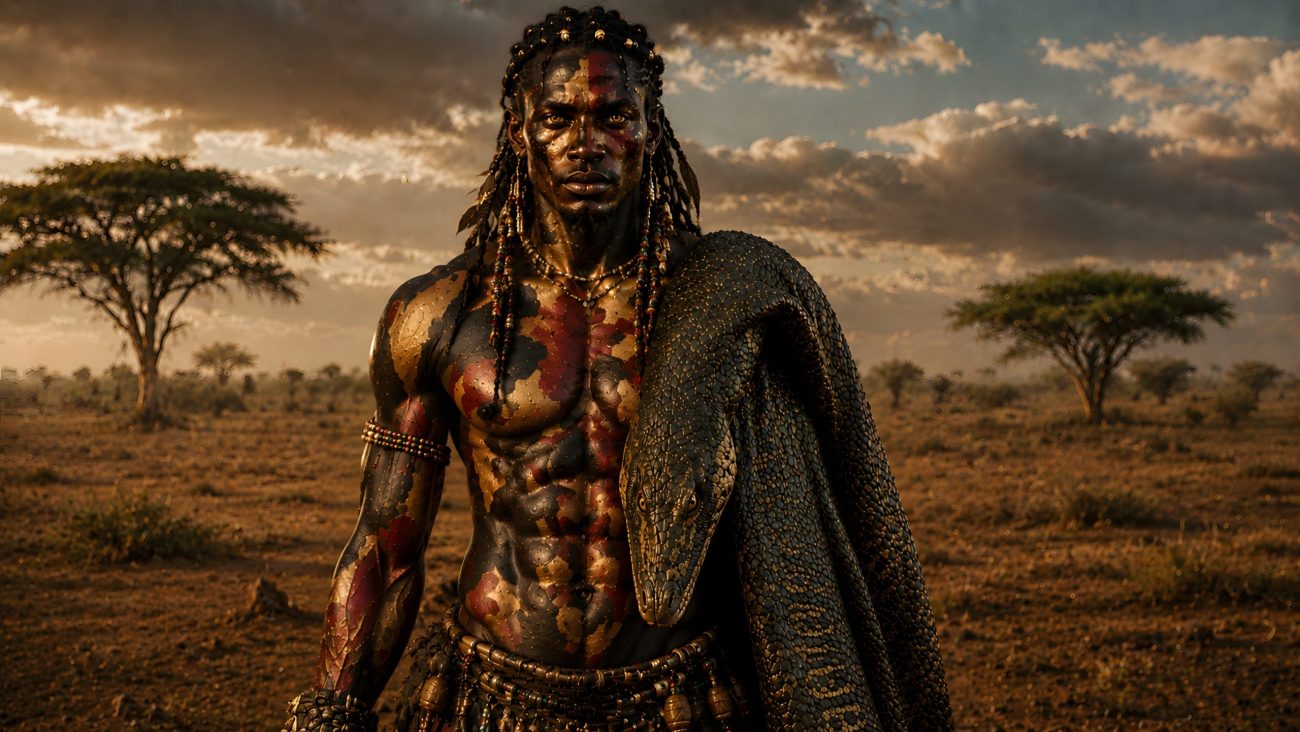
Agany was a supernatural man from Dinka folklore whose true appearance was hidden beneath the skin of a monstrous reptile. Outwardly he appeared terrifying — tall, scaled, awkward, and almost inhuman — because he wore a full suit made from the stitched hides of giant monitor lizards. His body was covered in rough green-black scales, with clawed hands, stiff reptilian limbs, and an elongated lizard-like face. People feared him and treated him like a strange creature rather than a man.

Beneath the disguise, however, Agany possessed extraordinary beauty. When his lizard skin was removed, he appeared as an impossibly handsome young cattle-warrior with glowing skin marked by shifting patterns of black, bronze, pale gold, and deep red like living ritual paint. His body seemed almost radiant beside the fires of the cattle-camp. He was tall and lean yet strongly built, with calm amber-gold eyes, thick dark braided hair decorated with beads and feathers, and graceful movements that fascinated everyone who saw him.

Agany matured unnaturally quickly, growing from infancy into adulthood in a short time. As he grew older, he became famous for his dancing during the goor ceremonies held in the great Dinka cattle-camps beneath the open savannah sky. At dusk, while cattle moved through dust and smoke drifted from the fires, Agany danced among singers and spear-warriors with hypnotic elegance. His presence overwhelmed people despite his quiet voice and calm behavior.

The story describes Agany as a hidden supernatural being whose frightening outer form concealed an almost divine nature. Those who judged only the monstrous reptilian disguise failed to recognize the powerful and beautiful figure hidden beneath it.


Sources

Deng, F. M. (1974). Dinka folktales: African stories from the Sudan. New York: Africana Publishing Company.
Bibêga

Tradition / Region: Burkina Faso Mythology
Alternative name: Bibega
Category: Human Creature


The Myth

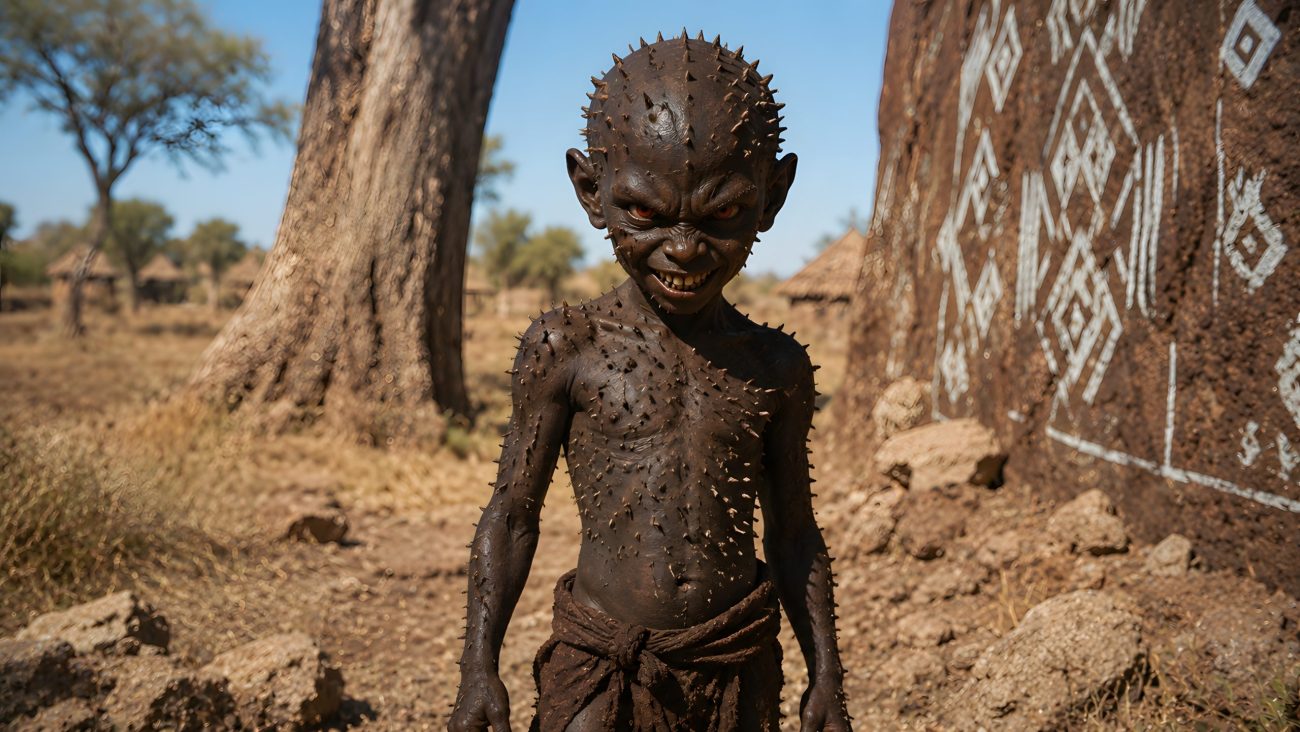
Bibêga is a terrifying child figure from Moose folklore in Burkina Faso, known for his cruelty, fearlessness, and violent behavior.

According to the tale, Bibêga was born in a supernatural way. While a pregnant woman was gathering wood in the bush, a thorn pierced her stomach and the child burst out immediately, already able to speak. He announced his own name and calmly told his frightened mother to return home.

As he grew, Bibêga searched for others who claimed to fear nothing. He gathered several children and traveled with them until they reached the house of a village chief, who welcomed them generously and offered them food and shelter for the night.

During the night, Bibêga suddenly decided to murder the chief’s daughters while they slept. His companions begged him not to do it, reminding him that the chief had treated them kindly, but Bibêga ignored them and killed all three girls. Terrified, the other children fled.

After the murders, Bibêga climbed a tree and mocked the villagers while they searched for him. When the villagers tried to cut the tree down, a great eagle rescued him by carrying him away beneath its wings. Yet Bibêga repaid kindness with violence again. Later, after a tortoise revived both him and the injured eagle with magical water, Bibêga immediately killed the tortoise, cooked it, and ate it.

The stories continue with Bibêga wandering from place to place, offering help to strangers before murdering them without reason. He kills an old woman who fed him and later murders a blacksmith while pretending to assist him in his workshop.

Bibêga became remembered in Moose folklore as the image of a merciless and destructive child who rejected gratitude, kindness, and hospitality. The tale is often told as a warning about cruelty, ingratitude, and uncontrolled violence.


Sources

Sissao, A.-J. (2010). Folktales from the Moose of Burkina Faso. African Books Collective.


Davalpa

Tradition / Region: Iranian Mythology
Alternative name: Old Man of the Sea, Devalpa, Dawal-bay
Category: Human Creature


The Myth

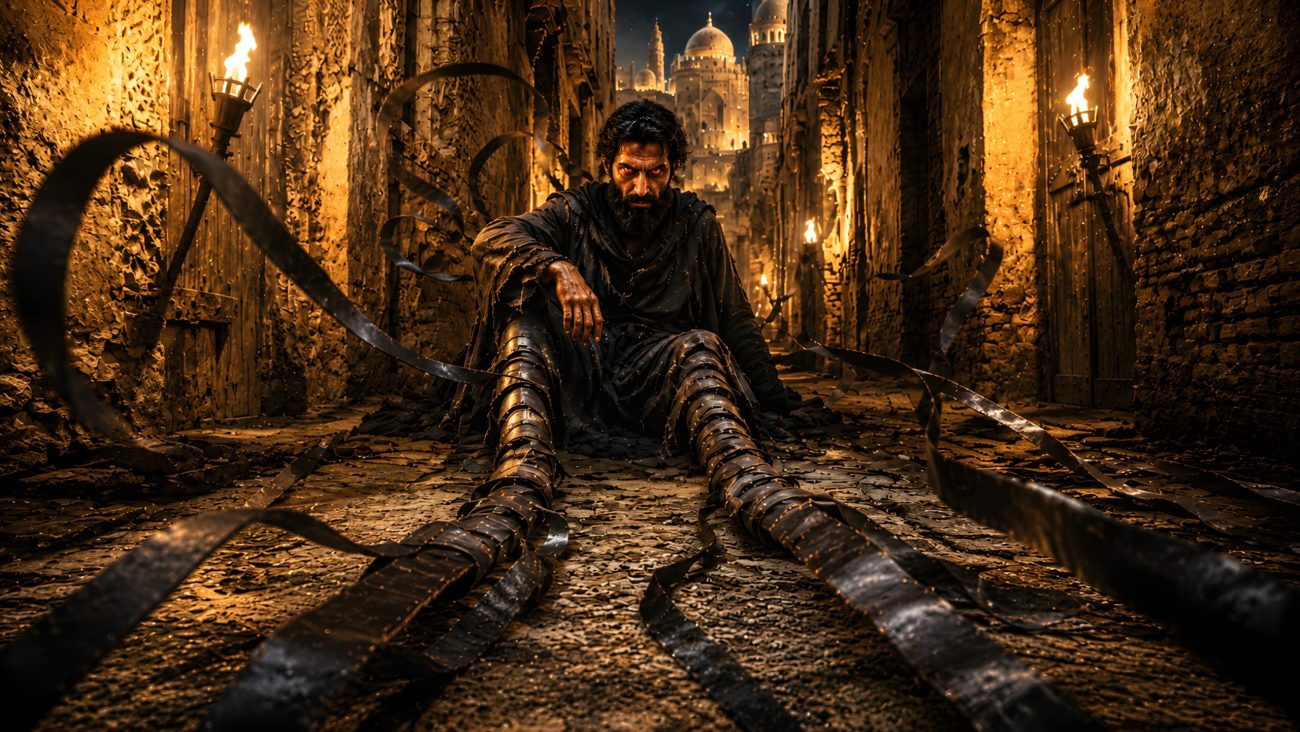
The Davalpa is a terrifying creature from Persian and Middle Eastern folklore, usually described as an old, frail-looking man dressed in rags. At first glance it appears weak and helpless, often begging travelers to carry it across rivers or rough terrain.

Its true horror is hidden beneath its clothing. The davalpa possesses long, leathery legs resembling straps or snakes, sometimes stretching several meters in length. Once lifted onto a victim’s shoulders, the creature wraps these powerful limbs tightly around the person’s neck and body, trapping them completely. From that moment on, the victim becomes the creature’s unwilling servant.

The davalpa forces its captive to carry it endlessly across deserts, islands, and wilderness while it strikes them with whips or its tail and demands food and movement. Some victims are strangled to death, while others slowly die from exhaustion after days or weeks of enslavement.

The most famous tale involving the creature appears in the adventures of One Thousand and One Nights through the story of Sindbad the Sailor and the Old Man of the Sea. Sindbad helps what appears to be a helpless old man cross a river, only for the creature to lock its legs around his neck and enslave him. Sindbad eventually escapes by giving the creature fermented grape juice until it becomes drunk and loosens its grip, allowing him to kill it with a stone.

Older legends place davalpas on remote islands shared with other monstrous races and strange beings. Ancient Greek writers described similar creatures called Himantopodes or “strap-feet,” beings unable to walk normally who crawled or clung to others.

Over time, the davalpa became a symbol of parasitic oppression in folklore — a creature that survives only by draining the strength and freedom of others.


Sources

A Book of Creatures. (2015, June 5). Davalpa. Retrieved May 10, 2026, from https://abookofcreatures.com/2015/06/05/davalpa/


Iron Man

Tradition / Region: Albanian Mythology
Alternate Names: Half-Iron Man
Category: Human creature


The Myth

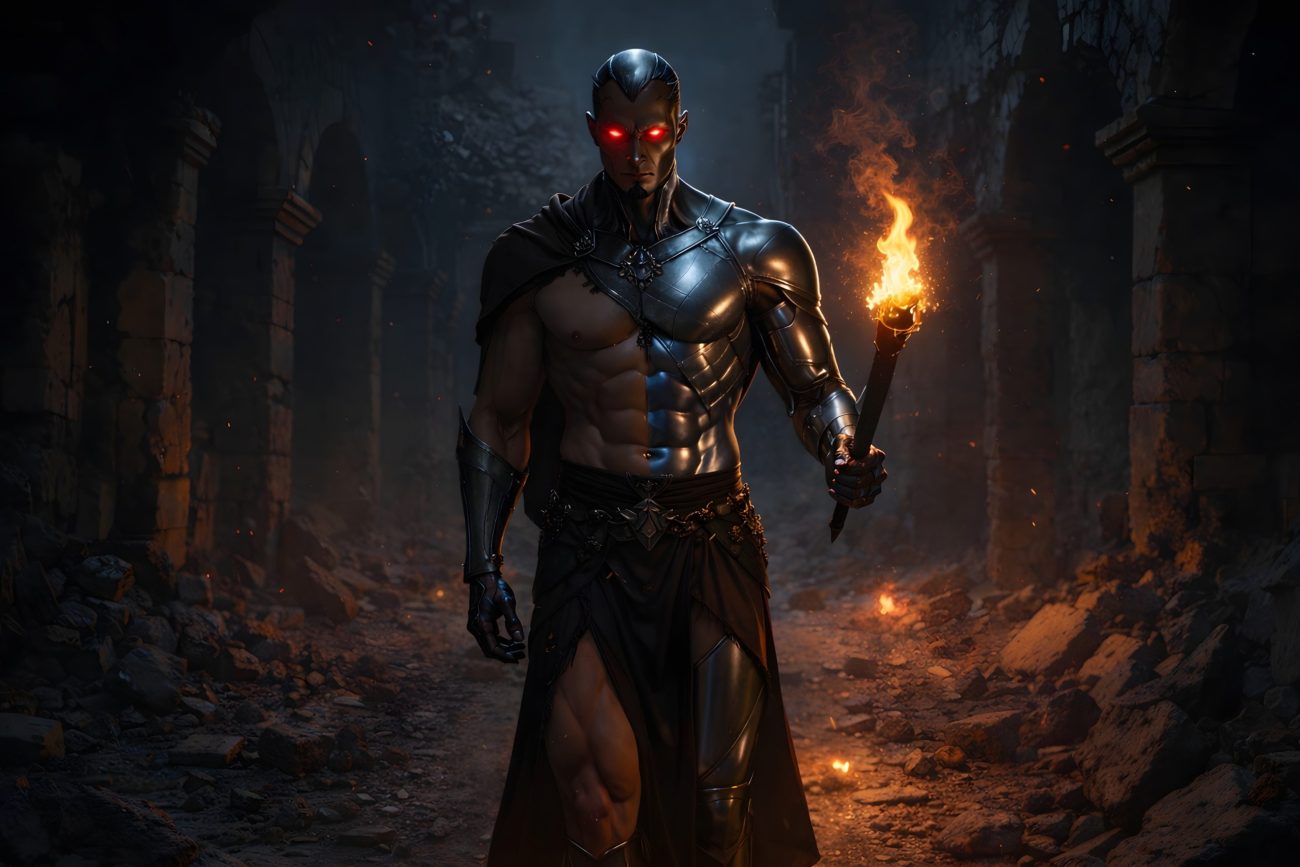
The Iron Man is a being that is half human and half iron, combining human awareness with unnatural physical strength and durability. His body is fused with metal, making him extremely difficult to harm, and he exists as a powerful and dangerous figure.

He appears as a prisoner who has been locked away for life, indicating that he is already feared and known. When he is released, he immediately devours the king’s daughter and escapes to a distant, inaccessible place in another world, where he keeps her captive.

The Iron Man is not a mindless monster but an intelligent and predatory being. When the hero reaches him, he proves overwhelmingly powerful and kills the hero by draining his blood, leaving only skin and bones behind.

His true power lies in the fact that his life is not contained within his body. Instead, it is hidden externally in a layered structure: inside a boar, within the boar a hare, and within the hare three doves. As long as these exist, he cannot be killed.

The hero ultimately defeats him through knowledge and strategy rather than strength. By killing the boar, then the hare, and finally the three doves, the Iron Man’s life force is destroyed. At that exact moment, his body collapses and he dies instantly.

The Iron Man represents a form of false invincibility, a being whose apparent immortality depends on a hidden and separable life source rather than his physical form.


Sources

Albanian Literature contributors. (n.d.). Folktale 4. In Albanian Literature, from http://www.albanianliterature.net/folktales/tale_04.html

Dozon, A. (1879). Manuel de la langue chkipe ou albanaise: Grammaire, vocabulaire, chrestomathie. In Paris: Ernest Leroux (reprinted in Folklor shqiptar 1, Proza popullore, 1963). Translated by Elsie, R.