Alber

Tradition / Region: Austrian Mythology
Alternate Names: —
Category: Dragon


The Myth

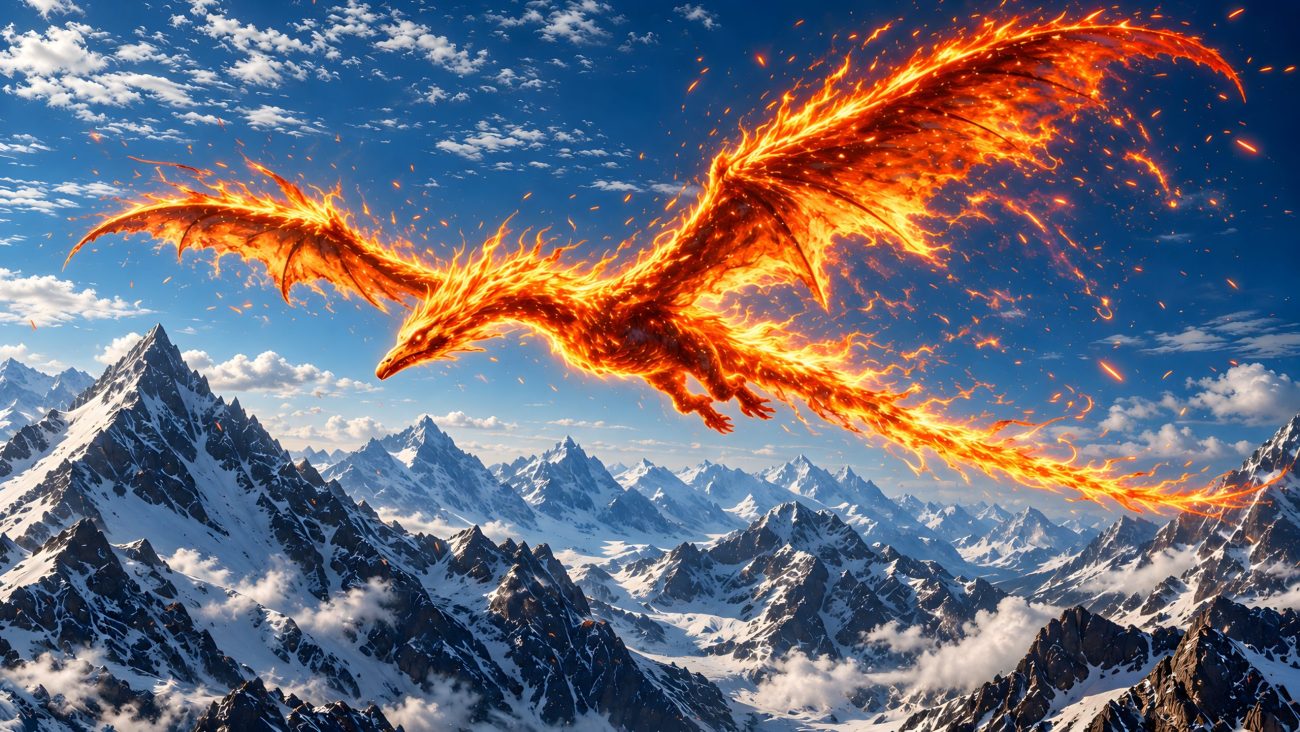
The Alber is a demonic being said to appear as a great fiery dragon descending from the mountain known as the “Devil’s Corner.” It glows with an intense, unnatural light and flies through the mountains toward the valley, bringing with it signs of disaster such as plague, war, and famine.

It is not merely a creature, but a manifestation of destructive forces, associated directly with the devil and appearing during ominous or cursed moments.

In one account, two men climbed a cherry tree near a sacred cross during a pitch-black night. One of them, a dishonest and reckless man, had made a bet to steal cherries, while the other was an honest villager who had been persuaded to join him.

As they were in the tree, the Alber suddenly passed by, lighting the darkness with its fiery glow. The dishonest man was overcome with fear, nearly falling from the tree, while the honest man remained calm and even addressed the creature without fear.

Because of his integrity and lack of wrongdoing, the Alber had no power over him and departed immediately.

The Alber represents a demonic force that is drawn to corruption and wrongdoing, yet powerless against those who remain morally upright and unafraid.


Sources

A Book of Creatures contributors. (2021, May 3). Alber. In A Book of Creatures, from https://abookofcreatures.com/2021/05/03/alber/


Trud

Tradition / Region: Austrian Mythology
Alternate Names: —
Category: Bat


The Myth

The Trud is a malevolent spirit or witch-like being that can enter homes through the smallest openings, even slipping through a keyhole, which is why people traditionally block keyholes during births or illness. It is believed that protective measures such as blessed objects, crosses marked on the floor, or sacred items placed near the bed can keep it away.

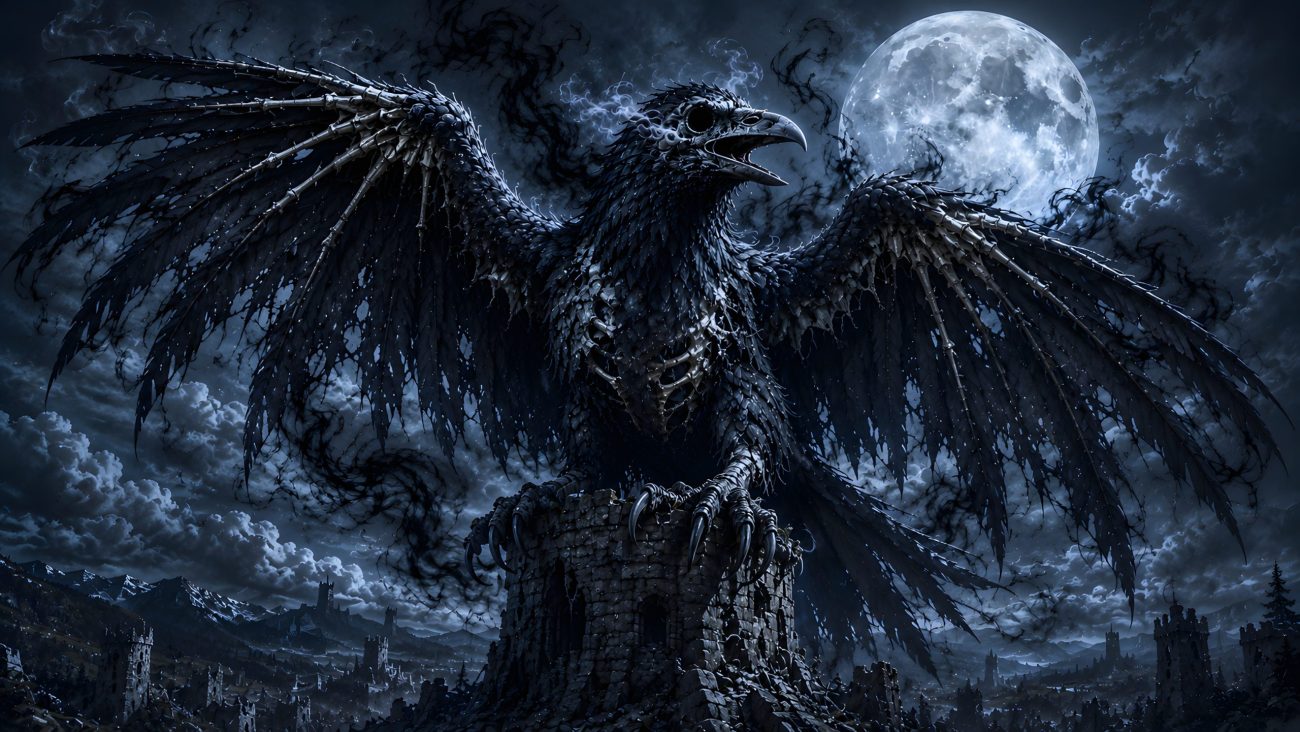
In southern Burgenland, the Trud is said to appear during moonlit nights at the ghostly hour, taking the form of a large, bat-like creature with wide wings and clawed limbs. It is described as extremely ugly and unnatural in appearance. The Trud flies through the night and enters stables, where it sits on animals and “bewitches” them, causing cows to stop giving milk or preventing them from calving.

It is also feared as a danger to mothers and newborn children. During the days following childbirth, both are carefully protected because the Trud is believed to strangle infants or harm them through supernatural means. Various rituals and religious protections are used to guard against it, including holy water, prayer books, and symbolic objects.

The Trud can also change form. In one account, it transformed into a straw that was about to be burned, but when the fire was lit, it turned back into a woman who begged for mercy and claimed to be released from its condition.

The Trud represents a nocturnal, intrusive force associated with vulnerability, especially in moments of weakness such as illness or childbirth, and is repelled by strong symbolic and religious protections.


Sources

sagen.at contributors. (n.d.). Von der Trud. In sagen.at, from https://www.sagen.at/texte/sagen/oesterreich/burgenland/petzoldt/von_der_trud.html


Black Hare

Tradition / Region: Austrian Mythology
Alternate Names: –
Category: Rabbit (hare)


The Myth

The Devil appears as a black hare and is understood to be a manifestation of the Devil himself, taking animal form to deceive and claim human lives.

The legend takes place in an old farmhouse where a group of workers were threshing grain in autumn. During a break, they joked and challenged one another, and one of the farmhands boasted that a person could hang themselves even from a single straw. When the others doubted him, he insisted it was possible and agreed to prove it, asking them to cut him down immediately if he began to suffocate.

He tied a straw to a beam and placed it around his neck, attempting to demonstrate his claim. At that exact moment, a pitch-black hare with glowing red eyes suddenly ran through the barn. The sight startled everyone, and they all chased after it, completely forgetting the man hanging from the straw.

When they finally returned, exhausted and empty-handed, they found him dead, still hanging. The straw had not broken.

The black hare was understood to have been the Devil, appearing deliberately to distract the others and claim the life of the reckless man.


Sources

sagen.at contributors. (n.d.). Der schwarze Hase. In sagen.at, from https://www.sagen.at/texte/sagen/oesterreich/oberoesterreich/linz/derschwarzehase.html


Wörthersee Sprite

Tradition / Region: Austrian Mythology
Alternate Names: Wassermann
Category: Spirit


The Myth

The Wörthersee Sprite is a male water spirit said to inhabit Lake Wörthersee and is known for dragging young women into its depths. One evening, a servant girl went alone to bathe in the lake at sunset. After some time in the water, the surface suddenly grew restless and waves began to rise, and from the middle of the lake she saw something approaching her. She recognized the figure by its pale green face and the wreath of reeds in its hair — it was the Wassermann.

Overcome with fear, she ran out of the water and fled back to the house, managing to lock the door just in time. Moments later, the Wassermann reached the house and could be heard outside, but it was unable to enter. The doorway bore the protective sign “C + M + B”, which prevented the spirit from crossing the threshold.

The Wassermann, which was said to claim victims from the lake each year, was forced to leave empty-handed. The girl survived, but from that day on, she never entered the lake after sunset again.


Sources

sagen.at contributors. (n.d.). Die Wichtelcher zu Useldingen. In sagen.at, from https://www.sagen.at/texte/sagen/luxemburg/Wichtlein_Useldingen.html


Ghostly Cat

Tradition / Region: Austrian Mythology
Alternate Names: White Cat Spirit
Category: Cat, Ghost


The Myth

The Ghostly Cat is the spirit of a woman condemned to wander in the form of a large white cat, appearing at night on the rooftops of an old house.

The legend tells of a man who lived a corrupt and immoral life, while his wife endured everything in silence. Eventually, he fell under the influence of another wicked woman, and together they plotted to murder his wife using poisoned food.

However, through a twist of fate, the poison was consumed by the very woman who had prepared it. The effects were unnatural and disturbing. Instead of dying immediately, she began to lose her humanity and believed herself to be a cat.

She crawled on all fours, ran wildly through the house, climbed across the roof, and screamed like an animal. Her madness intensified with time, growing worse by the hour, until finally she fell from the highest point of the roof and broke her neck.

After her death, she did not find rest.

She became a restless spirit, condemned to return as a ghostly white cat, roaming the rooftops at night. Those who come too close to her path risk being attacked, as she lashes out with sharp claws at anyone who dares approach.

The Ghostly Cat represents a punishment tied to guilt, corruption, and unnatural transformation — a human reduced to an animal in life, and bound to that form even after death.


Sources

sagen.at contributors. (n.d.). Die gespenstische Katze. In sagen.at, from https://www.sagen.at/texte/sagen/oesterreich/wien/sagen_legenden_gugitz/katze.html


Iron Man

Tradition / Region: Albanian Mythology
Alternate Names: Half-Iron Man
Category: Human creature


The Myth

The Iron Man is a being that is half human and half iron, combining human awareness with unnatural physical strength and durability. His body is fused with metal, making him extremely difficult to harm, and he exists as a powerful and dangerous figure.

He appears as a prisoner who has been locked away for life, indicating that he is already feared and known. When he is released, he immediately devours the king’s daughter and escapes to a distant, inaccessible place in another world, where he keeps her captive.

The Iron Man is not a mindless monster but an intelligent and predatory being. When the hero reaches him, he proves overwhelmingly powerful and kills the hero by draining his blood, leaving only skin and bones behind.

His true power lies in the fact that his life is not contained within his body. Instead, it is hidden externally in a layered structure: inside a boar, within the boar a hare, and within the hare three doves. As long as these exist, he cannot be killed.

The hero ultimately defeats him through knowledge and strategy rather than strength. By killing the boar, then the hare, and finally the three doves, the Iron Man’s life force is destroyed. At that exact moment, his body collapses and he dies instantly.

The Iron Man represents a form of false invincibility, a being whose apparent immortality depends on a hidden and separable life source rather than his physical form.


Sources

Albanian Literature contributors. (n.d.). Folktale 4. In Albanian Literature, from http://www.albanianliterature.net/folktales/tale_04.html

Dozon, A. (1879). Manuel de la langue chkipe ou albanaise: Grammaire, vocabulaire, chrestomathie. In Paris: Ernest Leroux (reprinted in Folklor shqiptar 1, Proza popullore, 1963). Translated by Elsie, R.


Black Dog of Maraunberg

Tradition / Region: Austrian Mythology
Alternate Names:
Category: Dog


The Myth

In Carinthia it is said that great treasure lies buried within the Maraunberg near St. Veit. Many have sought to uncover it, but none have succeeded.

One time, three men went into the forest at the hour believed to be right for raising hidden wealth. Carrying spades and shovels, they spoke the necessary words and began to dig. They worked hard until at last their tools struck something solid. Clearing the earth away, they uncovered a large iron chest.

Excited, they prepared to lift it from the ground.

But before they could do so, a black dog suddenly appeared before them. It sat silently, staring at them with glowing, fiery eyes. The sight filled the men with terror. Dropping their tools, they fled from the place as fast as they could run.

As they escaped through the forest, they said they heard strange sounds behind them — sighing and weeping rising from the ground. When they dared to look back from a distance, the chest had already sunk again into the earth, as though the mountain had swallowed it.

And so the treasure of Maraunberg remained hidden, guarded by the black dog whose fiery gaze drove away any who tried to claim it.


Sources

Sagen.at. (n.d.). Der schwarze Hund. From https://www.sagen.at/texte/sagen/oesterreich/kaernten/franz_pehr/derschwarzehund.html


Koralpe Mermaid

Tradition / Region: Austrian Mythology
Alternate Names: Water Nymph of the Koralpe; Lake Maiden of the Koralpe
Category: Mermaid


The Myth

On the Koralpe mountain range there lies a dark lake surrounded by high cliffs. In this lake, people say, a water nymph dwells. Only a few old folk claimed to have seen or heard of her, and they told that she granted protection and prosperity to the shepherds of the mountain, so long as they did not disturb her peace.

One young shepherd, however, was seized by the desire to see her with his own eyes. He went to the lake and, taking up a heavy stone, hurled it into the water.

At once a wild storm broke out. From the depths of the lake the beautiful water nymph rose, and the waters began to swell higher and higher, rushing toward the shepherd. He tried to flee, but the rising water overtook him.

The next morning he was found dead upon the shore, while the lake lay once more calm and silent, as if nothing had happened.


Sources

sagen.at contributors. (n.d.). Der See auf der Koralpe. In sagen.at, from https://www.sagen.at/texte/sagen/oesterreich/kaernten/franz_pehr/derseeaufderkoralpe.html


Adasbub

Tradition / Region: Austrian Mythology
Alternate Names:
Category: Mountain dweller, Giant


The Myth

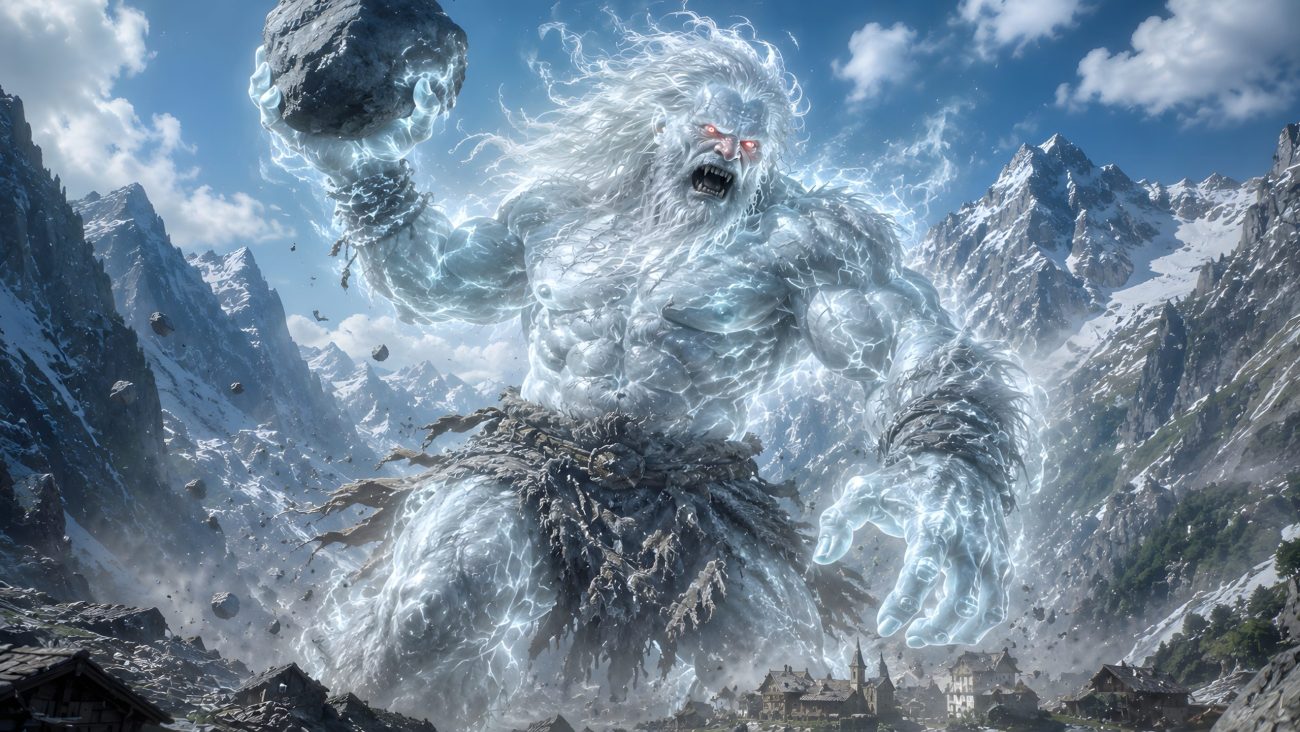
About sixty years ago, in the valley of the Ötz near Lengenfeld, there lived a man of enormous height and terrifying strength known as the Adasbub. He was a monster in spirit as much as in body—a thief, a drunkard, a fighter, and a blasphemer. He had served as a soldier in many wars and returned more savage than when he had left. From foreign lands he brought home great sums of money, stolen and extorted, and with this wealth he bought himself a farm.

Yet he lived not like a Christian farmer, but like a pagan. He never went to church. Instead, he sat in the village inn boasting of his velvet jacket adorned with buttons hammered from old silver coins. The young men of the village, dazzled by his swagger and riches, grew ashamed of their simple clothing and sought to imitate him.

The Adasbub’s strength was legendary. It was said he had once defeated fifty men who attacked him at the same time. Those who offended him feared more than his fists. People whispered that he could divert mountain torrents onto a rival’s fields or send huge snowballs—packed with hidden stones—crashing down upon a roof. Whether by cunning or brute force, he was a man to be feared.

His pleasure lay in drink, oaths, and cruelty. He gathered around him a band of like-minded ruffians. Together they committed outrageous acts. They tore doors from their neighbors’ houses and dragged them into the forests. They lifted carts onto rooftops. They broke into sacristies to steal and drink the priests’ wine. They shut goats into roadside chapels and uprooted cemetery crosses, thrusting them upside down into graves, laughing that they had made Christendom stand upon its head.

At last, the Adasbub planned a new villainy involving the daughter of a farmer whose home stood on the Burgstein above Lengenfeld. But word of the plot reached the farmer. Rather than flee, he sharpened his axe and waited.

When the Adasbub entered the house, the farmer struck with all his strength. The axe split the giant’s skull, and the terror of the valley fell dead at his feet. Seeing their leader slain, his companions fled in panic.

The alarm spread quickly. People climbed up to the Burgstein from every direction and thanked the farmer for freeing them from their tormentor. They cut off the Adasbub’s head and dragged his body to the edge of a precipice, casting it down onto the road below near the sulphur baths of Rumunschlung.

The head was thrown into the charnel-house of the cemetery at Lengenfeld. There it is said to remain.

The skull, nearly cleft in two, does not always lie quiet. On certain midnights it is said to glow red-hot, terrible to behold. Some claim that when it burns, it rolls from the charnel-house into the chapel, whirling in circles before leaping back to its place. By morning it has cooled, appearing once more like any other skull.

Thus the Adasbub endures—not as a man, but as a warning.


Sources

Günther, A. von. (1874). Tales and legends of the Tyrol. London: Chapman and Hall.


One-Eyed Fish of Lake Plöckensteiner

Tradition / Region: Austrian Mythology
Alternative name: –
Category: Fish


The Myth

Lake Plöckensteiner was long believed to be lifeless, a dark mountain lake where no creature could survive. Doubting this belief, a group of men once went to the lake to test it by fishing. For many hours they caught nothing, until at last one man cried out in triumph: a large fish was writhing on his line. Though they continued fishing, no other fish appeared.

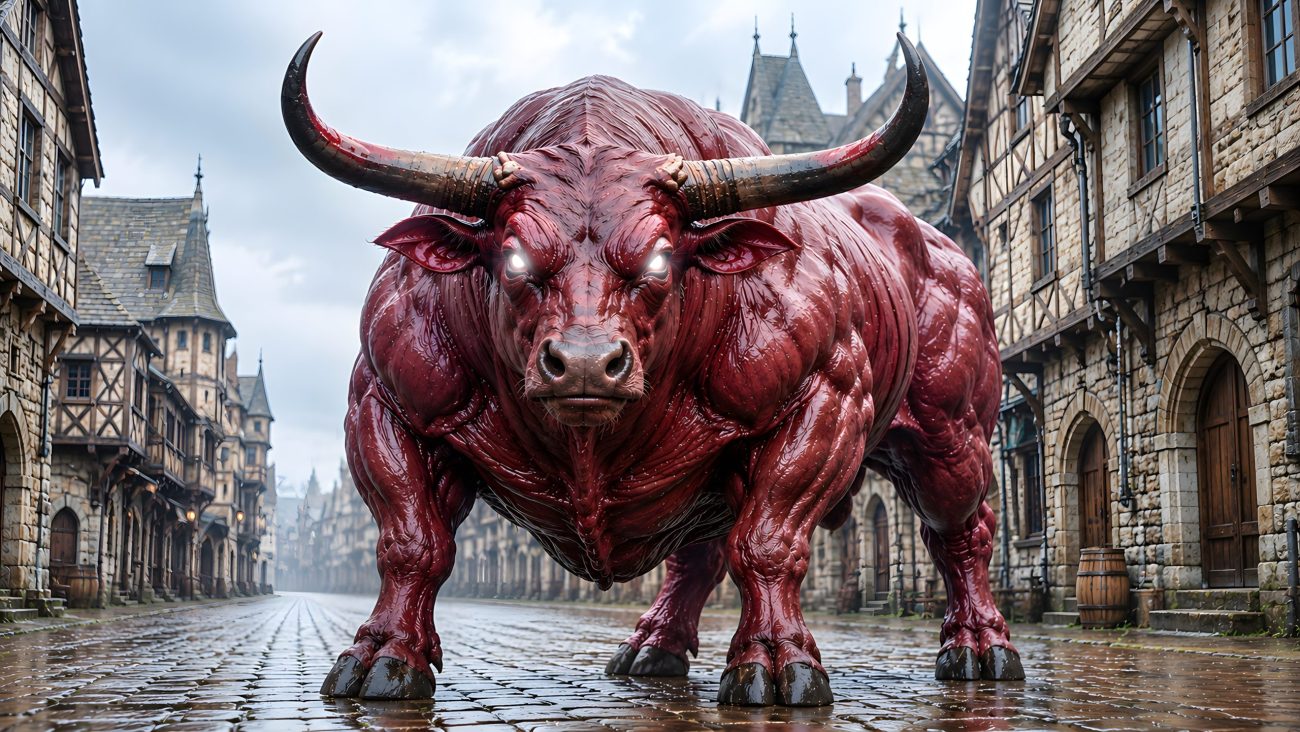
As evening fell, the men decided to cook their catch. They placed the fish into a pan of water over the fire. As the water began to heat, a strange sound rose from the lake—a low murmuring that grew louder and clearer. From the depths came a voice asking, “Is everyone there?” Another voice replied, “Everyone is here—except the bull.”

Horrified, the men looked at the pan and realized the fish was still alive. Worse still, they saw that it had only one eye. Overcome with fear, they threw the fish back into the lake. At once, the voices ceased, and the lake fell silent. Terrified, the men fled home.

Another tale tells of a time long ago, when kings once gathered near the lake to mark the borders of three lands. During this age, three men came to the lake in mischief and found that fish leapt willingly into their hands—trout with glowing red mouths and bodies speckled like sparks. They caught many and placed them into pans of water over a fire.

As night fell and the moon rose, the water began to boil, yet the fish did not die. Instead, they grew lively, almost joyful. Suddenly, a great roaring arose—trees seemed to thunder, and the lake roared as though whipped by a storm. Yet the air was still, the sky clear, and the water unbroken. From beneath the lake came voices murmuring, “Not everyone is home… not everyone…”

Stricken with terror, the men threw all the fish back into the lake. Immediately, the roaring ceased. Silence returned, and the moon shone calmly above the water. The men dared not move or speak until morning, when they fled and told what had happened. Upon hearing this, the kings departed and cursed the forest, condemning the place to remain desolate forever.

Thus the lake is remembered as a place where something watches, and where not all who dwell beneath the water may safely be taken.


Sources

SAGEN.at contributors. (n.d.). Die Fische im Plöckensteiner See. In SAGEN.at, from https://www.sagen.at/texte/sagen/oesterreich/oberoesterreich/muehlviertel/ploeckensteinersee.html