Dragon of Zirl

Tradition: Austrian Mythology
Alternative Names: Lindworm of Zirl
Category: Dragon


The Myth

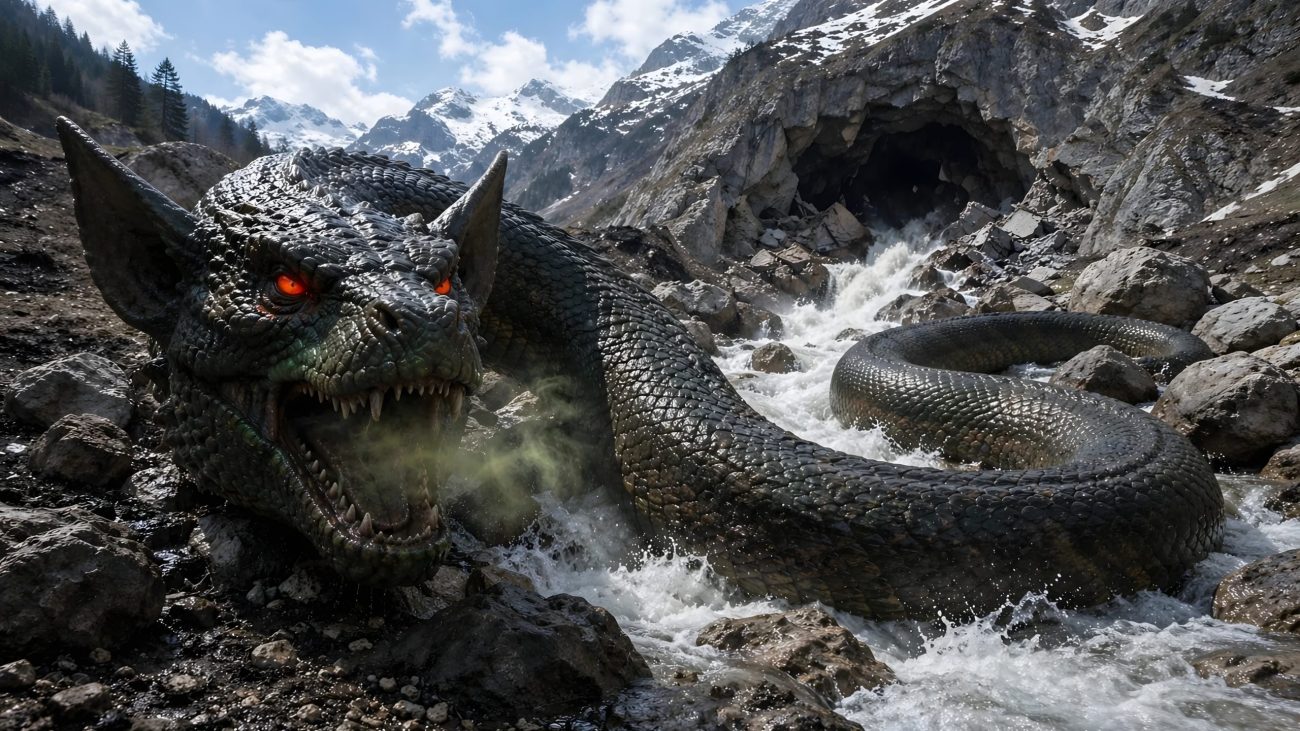
The Dragon of Zirl was a gigantic lindworm, a thick and enormously long serpent with the head of a dragon. It had two large ears and hideous, fiery eyes, and its enormous body was said to be capable of writhing among the rocks even when the creature was nearly dead. It lived for centuries inside a cavern called the Hundstall, near the bridge of Zirl on the road to Inzing.

The monster was feared throughout the surrounding country, for it killed and devoured every living creature that came near its territory. During summer, a small stream flowed through the cavern, though in winter it was almost completely dry. The dragon remained hidden in the Hundstall for generations until a sudden spring thaw changed everything.

When the warm weather arrived and the snow began to melt, the little stream became a tremendous torrent. The rushing water undermined the rocky cavern, tearing enormous pieces of rock from the mountain and sweeping the dragon out with them. The torrent burst into the meadow below, carrying the monster and the shattered rocks with it and flooding the surrounding ground. From then on, the place became known as the Dragon Meadow, and the great breach torn into the mountain by the flood could still be seen.

The dragon was found half dead among the rocks, but it was still writhing and struggling with its enormous body. Nobody dared approach the beast. Instead, the people kept their distance and fired cannons at it until it was finally killed.

Even in its dying state, the lindworm was terrifying. It gasped so violently that those watching from afar were frightened simply by the sound, and there was fear that it might still spit venom. Nothing green was said to grow upon the meadow where the dragon died, leaving the place as a lasting reminder of the creature that had once lurked inside the Hundstall.


Sources

Von Günther, Amalia. Tales and Legends of the Tyrol. London: Chapman and Hall, 1874.

Broken Lindworm

Tradition: Austrian Mythology
Alternative Names: Griffen Lindworm
Category: Dragon


The Myth

A terrible Lindworm once lived near Griffen, where it became a menace to both people and livestock. Since neither humans nor animals were safe from the monster, the inhabitants devised a plan to destroy it.

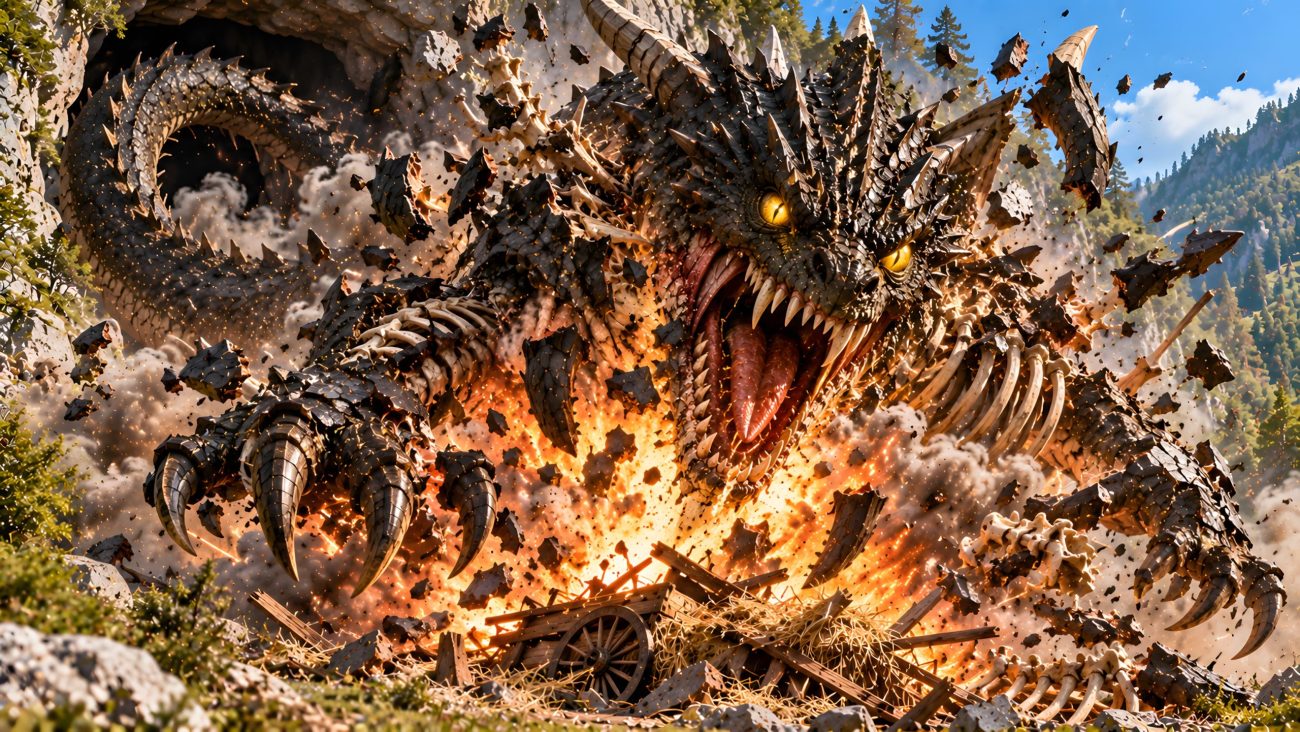
A farmhand was ordered to drive a team of oxen directly toward the Lindworm’s lair. A wagon loaded with hay was placed behind them, but hidden within the hay were gunpowder and a long fuse. The dragon seized the bait, pulling the oxen, the farmhand, and the wagon toward its lair before devouring them all.

At the right moment, a brave man ignited the fuse. The concealed gunpowder exploded inside the dragon, tearing the Lindworm apart.

For a long time afterward, the monster’s enormous skeleton could still be seen. The farmhand who had been sacrificed in the plan was not forgotten, and the people of Griffen prayed for him for many years.


Sources

“Der gesprengte Lindwurm.” SAGEN.at – Traditionelle Sagen aus Österreich (Kärnten). Reproduced by SAGEN.at.
https://www.sagen.at/texte/sagen/oesterreich/kaernten/allgemein/dergesprengtelindwurm.html


Windwurm of Lake Goggau

Tradition: Austrian Mythology
Alternative Names: Goggau Windwurm, Windwurm of Goggau
Category: Dragon


The Myth

A terrible Windwurm once lived in Lake Goggau. According to the farmers of the surrounding area, the monster began its life in a most unusual way: a seven-year-old rooster laid a red egg in a manure pile, and three years later a dragon hatched from it.

The creature grew with astonishing speed, becoming a gigantic monster that devoured the animals of the surrounding countryside and eventually became a danger to humans as well. For a long time, the farmers could find no way to destroy the beast.

At last, an old man from the Wimitzgraben, who was also said to possess the powers of witchcraft, devised a plan. He concealed a large black lump filled with powerful poison inside a hay wagon and harnessed a pair of oxen to it.

No one was willing to drive the wagon to the lake, so the task was given to a farmhand known as the “Goggau-Togger.” As he passed Lake Goggau, the Windwurm spotted the oxen. With a tremendous leap, the dragon burst from the water and devoured the oxen, the wagon, and the farmhand.

The poison soon began to take effect inside the monster. The Windwurm writhed and strained in agony, until eventually the poison killed it.

Even into the last century, people were said to have seen remnants of the dragon’s bones around Lake Goggau.


Sources

“Der Goggausee.” SAGEN.at – Traditionelle Sagen aus Österreich (Kärnten). Reproduced by SAGEN.at.
https://www.sagen.at/texte/sagen/oesterreich/kaernten/allgemein/goggausee.html


Linddur of Klagenfurt

Tradition: Austrian Mythology
Alternative Names: Klagenfurt Linddur, Lindwurm of Klagenfurt
Category: Dragon


The Myth

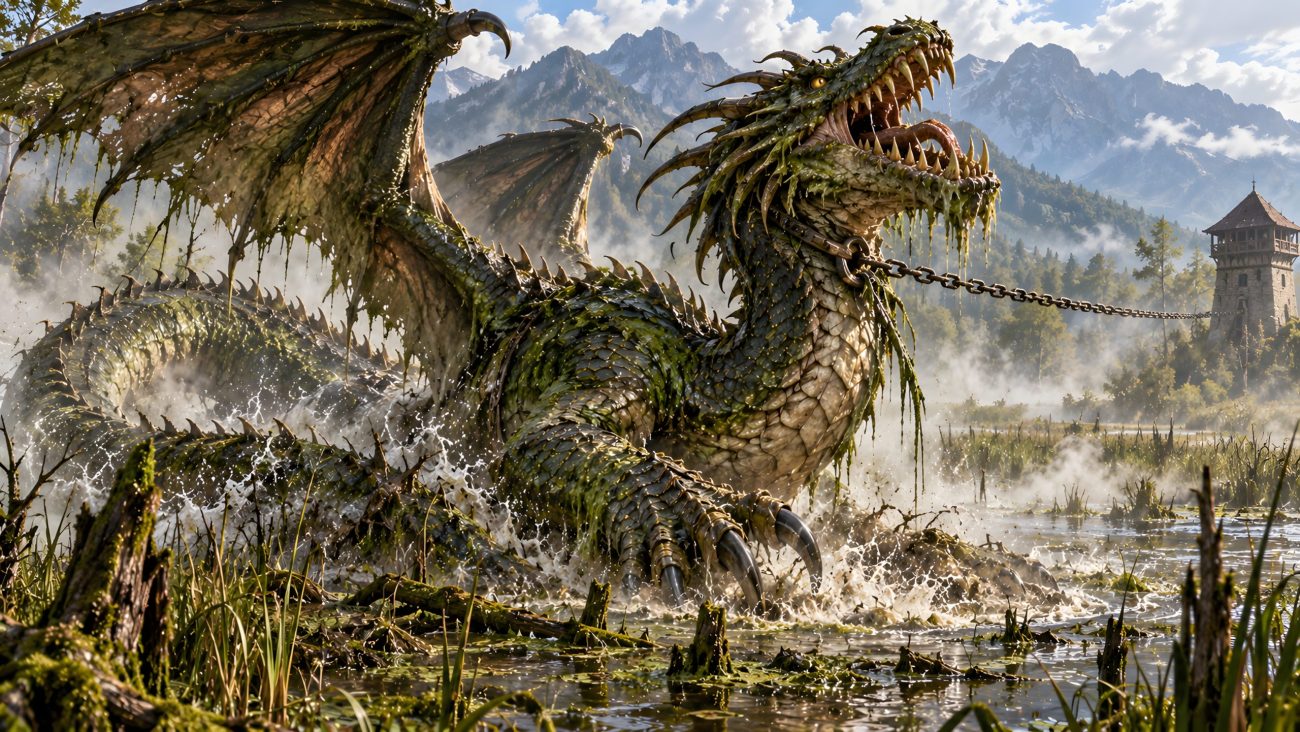
In the time of Duke Karast, the place where Klagenfurt now stands was a wild, swampy wilderness covered in thick thickets. People lived only on the surrounding mountains, for anyone who entered the misty marsh—or sent an animal into it—was unlikely to return. Hidden among the reeds and undergrowth lived a monstrous Linddur that devoured every living thing it could find. Even the bravest men were afraid to venture into the swamp, and shepherds would not dare search for animals that had wandered into it.

To confront the creature, the duke ordered a sturdy tower to be built at the edge of the swamp and summoned brave men from across the land. From the safety of the tower, they were to destroy the monster through cunning or force. He promised freedom, land, and a rich reward to whoever succeeded.

A group of courageous men devised a trap. They fastened a fat bull to a long chain fitted with a barbed hook and concealed themselves inside the tower. The bull’s terrified bellowing echoed across the swamp, drawing the Linddur from its hiding place.

The monster came rushing through the marsh like an arrow. Its wings beat against the water, its body was covered in enormous scales, and its snarling jaws were filled with terrible teeth. It seized the bull with its claws and began to devour it, but suddenly became caught on the barbed hook.

The Linddur thrashed violently, whipping the water with its enormous tail and struggling to escape. Yet every attempt only drove the iron barb deeper into its throat. Unable to free itself, the monster was finally overwhelmed, and the duke’s servants killed it with iron clubs.

With the Linddur dead, the people were finally able to settle the lowlands without fear. The dense undergrowth was cleared, the swamp was drained, and the land was cultivated. The duke eventually replaced the old tower with a castle, and the settlement became the earliest habitation in the Klagenfurt Basin.

The memory of the battle survives in Klagenfurt, where a huge stone dragon stands in New Square and the city’s coat of arms depicts the legendary creature beside the tower.


Sources

“Der Kampf mit dem Lindwurm.” SAGEN.at – Traditionelle Sagen aus Österreich (Kärnten). Reproduced by SAGEN.at.
https://www.sagen.at/texte/sagen/oesterreich/kaernten/franz_pehr/kampfmitlindwurm.html


Amberg Worm

Tradition: Austrian Mythology
Alternative Names: Amberg Lindworm, Worm of Amberg
Category: Dragon


The Myth

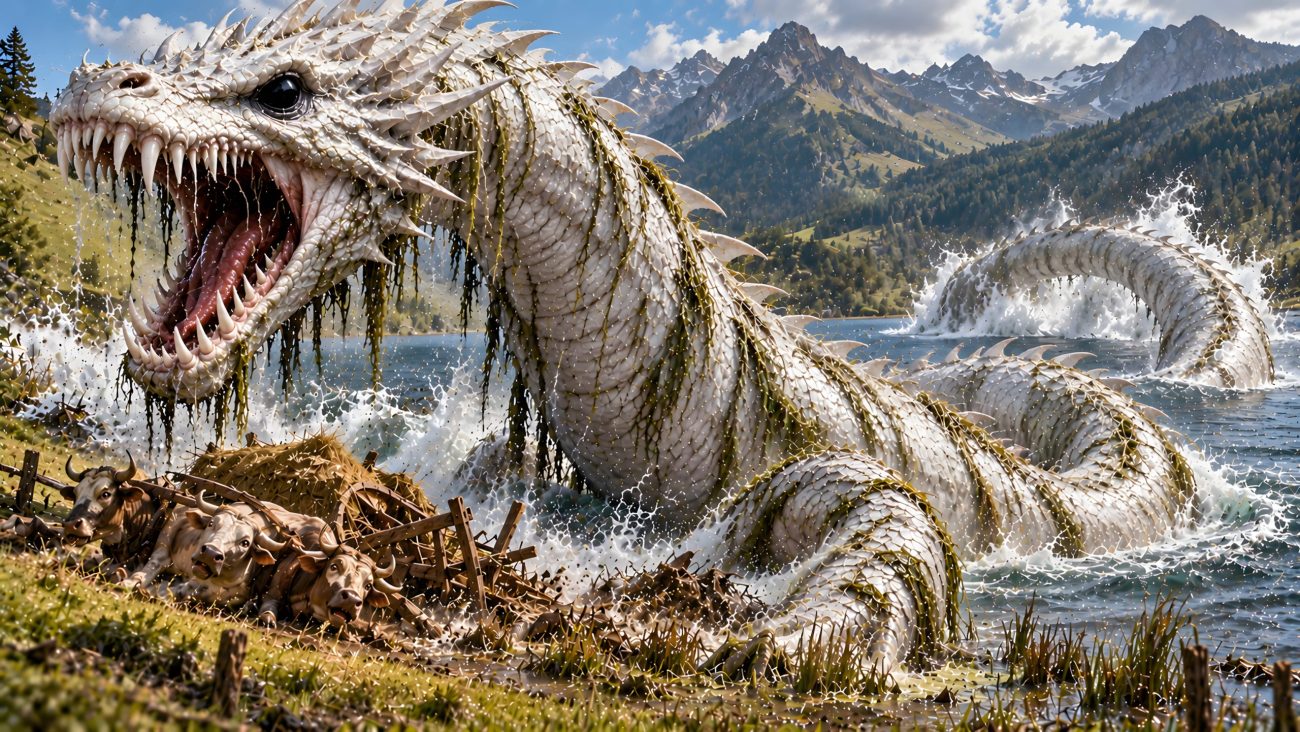
In the mountains above the Drava Valley, near the village of Amberg, a great lake once filled the basin where the farmers’ homes now stand. The lake was known as the Black Lake, and deep within its waters lived a hideous dragon that terrorized the surrounding country. Neither people nor animals were safe from the monster.

One day, a tailor came to Amberg and boldly vowed to rid the inhabitants of the dragon. He went to a blacksmith and had a long, pointed needle forged for him. Armed with this strange weapon, he crept into a rocky cave near the dragon and began stabbing and provoking the beast.

The dragon became so furious that it thrashed its enormous tail through the water, whipping the lake into chaos. In its rage, the creature eventually split the surrounding rock, allowing the waters of the Black Lake to rush out toward the Drava River.

The dragon itself was swept away by the rushing water and carried down into the valley, where it perished. Deep cracks and fissures in the rocks are said to remain from the struggle, descending into depths that no one has dared to explore.

The field where the monster finally died is still known as “the Worm.”


Sources

“Der Ambergerwurm.” SAGEN.at – Traditionelle Sagen aus Österreich (Kärnten). Reproduced by SAGEN.at.
https://www.sagen.at/texte/sagen/oesterreich/kaernten/allgemein/ambergerwurm.html


Alber

Tradition / Region: Austrian Mythology
Alternate Names: —
Category: Dragon


The Myth

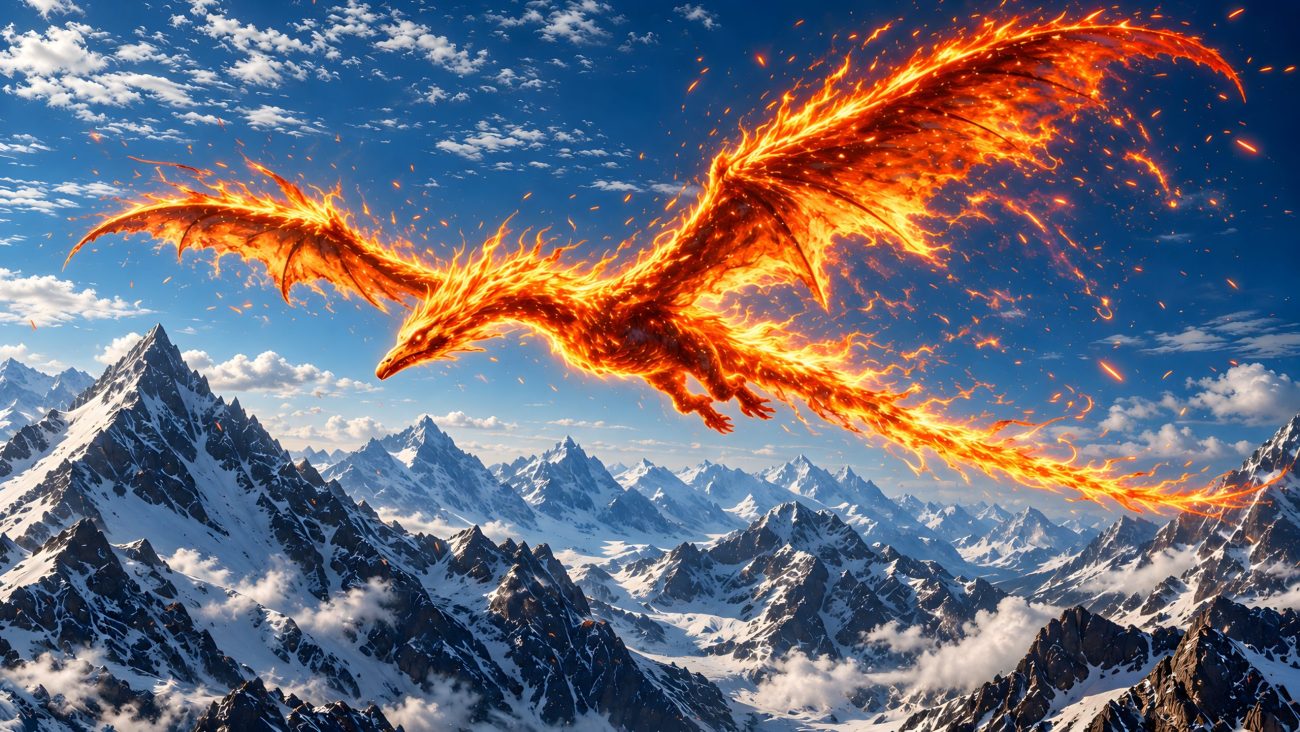
The Alber is a demonic being said to appear as a great fiery dragon descending from the mountain known as the “Devil’s Corner.” It glows with an intense, unnatural light and flies through the mountains toward the valley, bringing with it signs of disaster such as plague, war, and famine.

It is not merely a creature, but a manifestation of destructive forces, associated directly with the devil and appearing during ominous or cursed moments.

In one account, two men climbed a cherry tree near a sacred cross during a pitch-black night. One of them, a dishonest and reckless man, had made a bet to steal cherries, while the other was an honest villager who had been persuaded to join him.

As they were in the tree, the Alber suddenly passed by, lighting the darkness with its fiery glow. The dishonest man was overcome with fear, nearly falling from the tree, while the honest man remained calm and even addressed the creature without fear.

Because of his integrity and lack of wrongdoing, the Alber had no power over him and departed immediately.

The Alber represents a demonic force that is drawn to corruption and wrongdoing, yet powerless against those who remain morally upright and unafraid.


Sources

A Book of Creatures contributors. (2021, May 3). Alber. In A Book of Creatures, from https://abookofcreatures.com/2021/05/03/alber/