Kaser-Mandl

Tradition: Austrian Mythology
Alternative Names: Kaser-Manndl, Kaser-Mandl of the Fliegeralm, Kaser-Manndl of the Wotz-Alm
Category: Ghost


The Myth

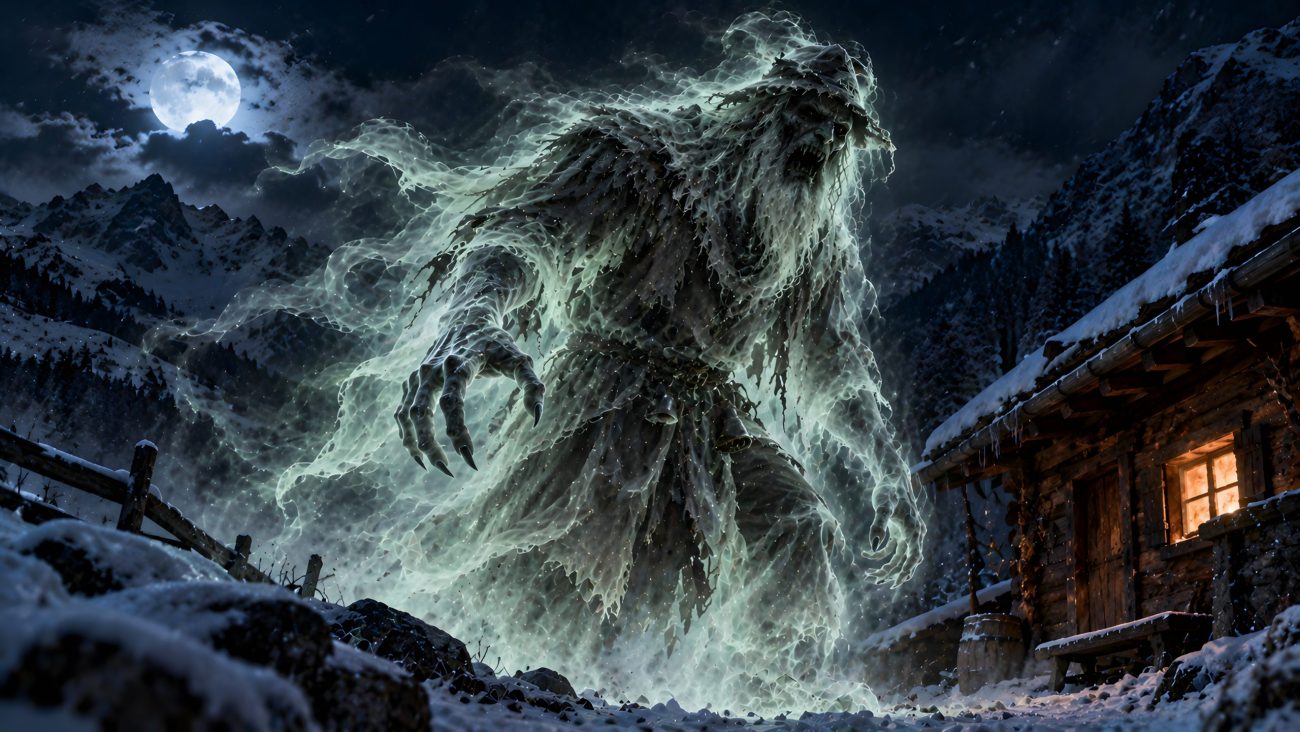
The Kaser-Mandl is a fearsome mountain ghost said to haunt the Alpine pastures of Tyrol in Austria, particularly during winter. It inhabits isolated mountain huts and is known for its terrifying strength, violent temper, and the dreadful noises that echo across the mountains. During the cold months, its presence fills the surrounding countryside with fear, but as spring approaches, it grows quieter and eventually disappears. In one account, a blackbird sings beautifully from a pine tree on the mountain for several days before the spirit’s departure.

At the Fliegeralm, a locksmith named Huis built a hut beneath the mountain despite warnings that a Kaser-Mandl roamed the area during winter. One evening, while he worked inside, he heard footsteps circling the hut and someone violently shaking the door. When he opened it, nobody was there. Later that night, while sleeping on a bundle of hay, he awoke to find the monstrous ghost standing beside him. The creature attacked like an enormous butcher’s dog, its eyes blazing with fire and its body poised to tear him apart. Huis fought back with his tremendous strength and struck the spirit so forcefully that it was thrown across the hut. Although he survived the encounter, he never again dared to spend the night alone in the mountain dwelling, carrying his work back to the valley every evening instead.

Another Kaser-Manndl haunted the Wotz-Alm, where its hut stood high upon a snow-covered mountain. Its terrifying roars and otherworldly noises could be heard for miles, and people who ventured too close risked returning with their heads badly battered. One Christmas Eve, a farmer at the Zotta-Hof jokingly promised his finest cow to anyone brave enough to climb the mountain and return with the ghost’s milking bucket and foot-warmer. A poor servant girl accepted the challenge because she hoped to help her seriously ill mother. She climbed six miles through bitter winds and snow until she reached the brilliantly illuminated hut.

Inside, she found the Kaser-Manndl dressed in its Sunday clothes, sitting beside the hearth and cooking a coal-black meal. The spirit invited her to join its supper, but when she recoiled in fear, it told her to make the sign of the Cross over the pan. The dark food instantly transformed into beautiful cakes, which they ate together. Recognizing the girl’s courage and the purpose of her visit, the Kaser-Manndl gave her the milking bucket and foot-warmer without requiring her to ask. It also instructed her to demand the farmer’s finest cow together with its calf, as punishment for sending her into such dangerous weather.

When the girl returned, the farmer refused to honour his promise. The following morning, his champion cow, Robblerin, was found dead in the stable. The next day, another cow, Maierin, strangled herself with her chain, and a third cow died soon afterward. Terrified that he would lose his entire herd, the farmer finally gave the girl his finest remaining cow, allowing her to escape poverty and support her mother. The girl continued to pray for the redemption of the Kaser-Manndl of the Wotz-Alm, whose strange power could bring both terror and unexpected generosity.


Sources

Von Günther, Amalia. Tales and Legends of the Tyrol. London: Chapman and Hall, 1874. https://www.gutenberg.org/files/46047/46047-h/46047-h.htm

Pfifer

Tradition: Austrian Mythology
Alternative Names: Der Pfifer, The Whistler
Category: Ghost


The Myth

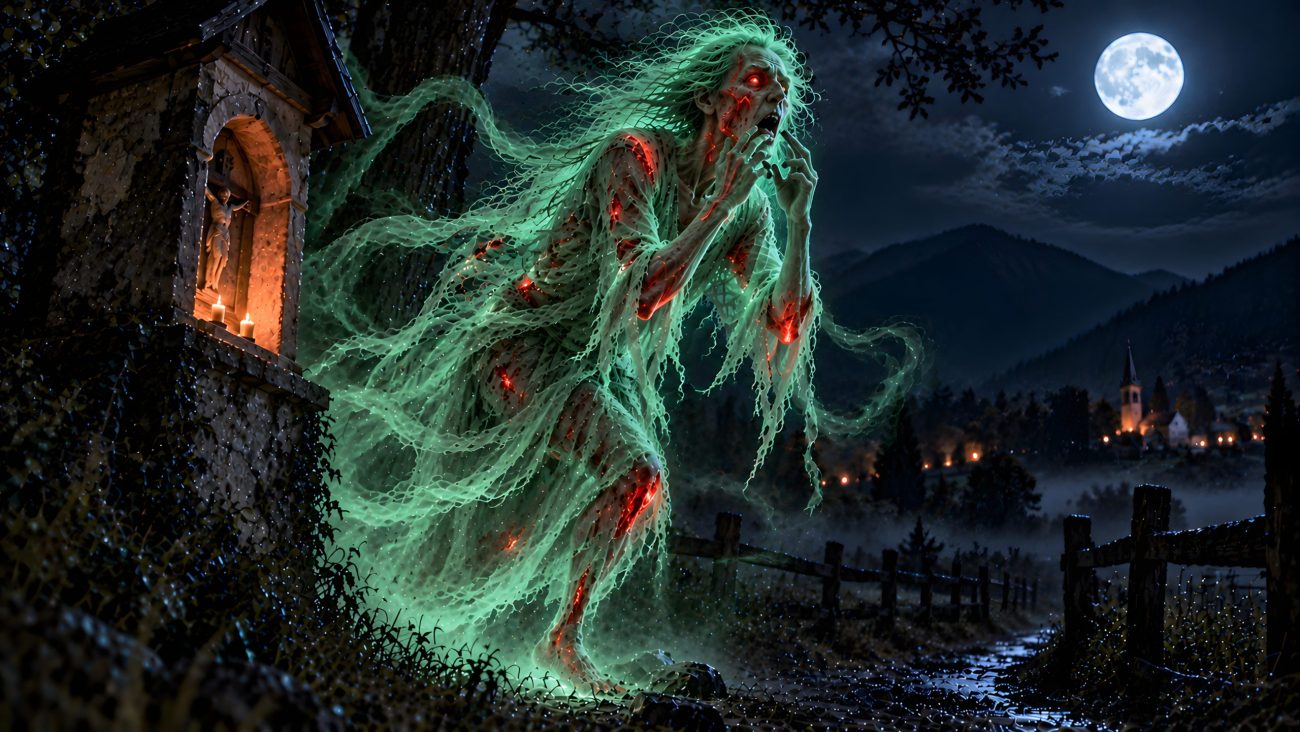
The Pfifer is a ghost that haunts a small wayside shrine near the former border of Dornbirn in Vorarlberg, Austria. The shrine stood in a lonely grove where a person had been murdered by a ruthless hand. According to local belief, the spirit of a murdered person could be condemned to haunt the place of their death after dying, serving as a warning to others and enduring torment at the scene of the crime.

Anyone passing the shrine around midnight might hear a piercing whistle that carries over a great distance. The sound seems to move unpredictably through the darkness, sometimes coming from far away and sometimes shrieking directly beside the listener’s ears. It may sound from the left or the right, descend from the air, or suddenly emerge from behind the traveller. The source of the whistle is never seen, and even the bravest people are filled with fear by its uncanny movements.

The people of Dornbirn call this restless spirit the Pfifer, or the Whistler. It is said to have haunted the wayside shrine since time immemorial, its eerie cries continuing to disturb anyone who dares to pass the lonely spot at night.


Sources

“Pfifer.” SAGEN.at – Vorarlberger Sagen aus dem Rheintal. Reproduced by SAGEN.at. https://www.sagen.at/texte/sagen/oesterreich/vorarlberg/rheintal/pfifer.html


Ghost in the Hollowway

Tradition: Austrian Mythology
Alternative Names: The Hollowway Ghost
Category: Ghost


The Myth

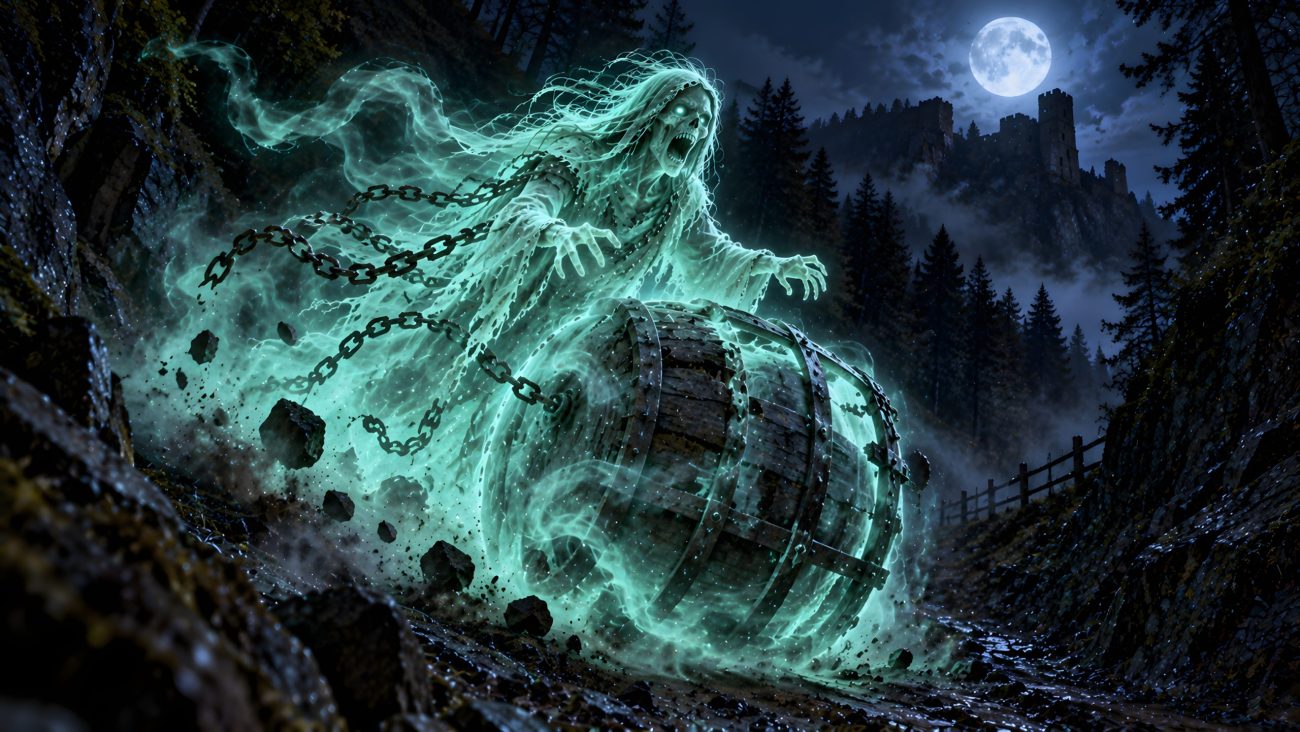
The Ghost in the Hollowway haunts a long, deep hollow road on a distant mountain near Dornbirn in Vorarlberg, Austria. The hollow runs alongside an ordinary mountain road, and during winter, wooden sleds travel along their own track through its depths. Yet in the height of summer, when the surroundings are otherwise quiet, the hollow becomes the scene of a terrifying supernatural disturbance.

Around midnight, a tremendous roaring sound echoes through the hollow, resembling a heavy barrel rolling down the passage. The noise is accompanied by occasional piercing screams, while a strange clattering reverberates along the entire length of the hollow. Even the bravest traveller is overcome with fear when the mysterious sounds begin. Then, just as suddenly as it started, the roaring and clanging cease, leaving the hollow in complete silence.

Centuries ago, a knight’s castle stood near this haunted road, and the desolate surrounding area is still known as “at the castle.” The origins of the haunting have been forgotten, and nobody can explain what the ghostly roaring and screaming signify. The hollow remains a mysterious place where unexplained sounds disturb the summer nights.


Sources

“Der Geist im Hohlweg.” SAGEN.at – Vorarlberger Sagen aus dem Rheintal. Reproduced by SAGEN.at. https://www.sagen.at/texte/sagen/oesterreich/vorarlberg/rheintal/geistimhholweg.html


Woman with Red Hair

Tradition: Austrian Mythology
Alternative Names: Die Frau mit den roten Haaren, The Red-Haired Woman
Category: Ghost


The Myth

In Dornbirn, Vorarlberg, there once lived a carpenter whose young wife had red hair. When she fell seriously ill, her husband made a vow at her bedside to undertake a pilgrimage to Einsiedeln in Switzerland if she recovered. However, the woman died a few weeks later, and the carpenter soon forgot his promise. Instead of fulfilling his vow, he began courting a friend of his deceased wife and eventually married her.

About fourteen days after the wedding, the new wife went downstairs into a room on the ground floor to collect wood shavings for the kitchen. When she returned, she had a terrifying encounter: her predecessor was sitting upon the pile of shavings. The red-haired woman addressed her in a loud voice, explaining that her husband had promised to make a pilgrimage to Einsiedeln. Until he fulfilled this vow, she could find no peace in her grave and was condemned to remain among the living.

The following morning, at three o’clock, the carpenter and his new wife set off for Switzerland. They travelled to Einsiedeln, prayed at the holy site, and arranged for several Masses to be celebrated. After they returned home, the red-haired woman’s ghost was never seen again. The carpenter’s new wife could once more enter the room and collect wood shavings without fear, for the restless spirit had finally found peace.


Sources

“Die Frau.” SAGEN.at – Vorarlberger Sagen aus dem Rheintal. Reproduced by SAGEN.at. https://www.sagen.at/texte/sagen/oesterreich/vorarlberg/rheintal/diefrau.html


Toad and the Carriage Driver

Tradition: Austrian Mythology
Alternative Names: The Seefeld Toad
Category: Frog


The Myth

A mysterious toad once jumped onto the cart of a carriage driver from Innsbruck as he travelled through Leithen. No matter how often the driver tried to shoo the creature away, it kept returning to sit beside him. Unable to rid himself of the persistent passenger, he continued his journey with the toad accompanying him.

When the driver finally stopped in the church square of Seefeld, the toad suddenly disappeared, and a beautiful young woman appeared beside him. She explained that during her lifetime she had promised to make a pilgrimage to Seefeld but had failed to fulfil her vow. After her death, she was forced to undertake the journey in the form of a toad, crawling along the road until she could reach the sacred destination.

The woman explained that she had finally been freed from her punishment because a kind person had carried her along the way. Grateful to the driver for helping her complete the pilgrimage, she thanked him and disappeared into the church. She was never seen again.


Sources

“Die Kröte.” SAGEN.at – Tiroler Sagen (Seefeld). Reproduced by SAGEN.at. https://www.sagen.at/texte/sagen/oesterreich/tirol/seefeld/kroete.htm


Salve-Toad

Tradition: Austrian Mythology
Alternative Names: Toad of the Hohe Salve
Category: Frog


The Myth

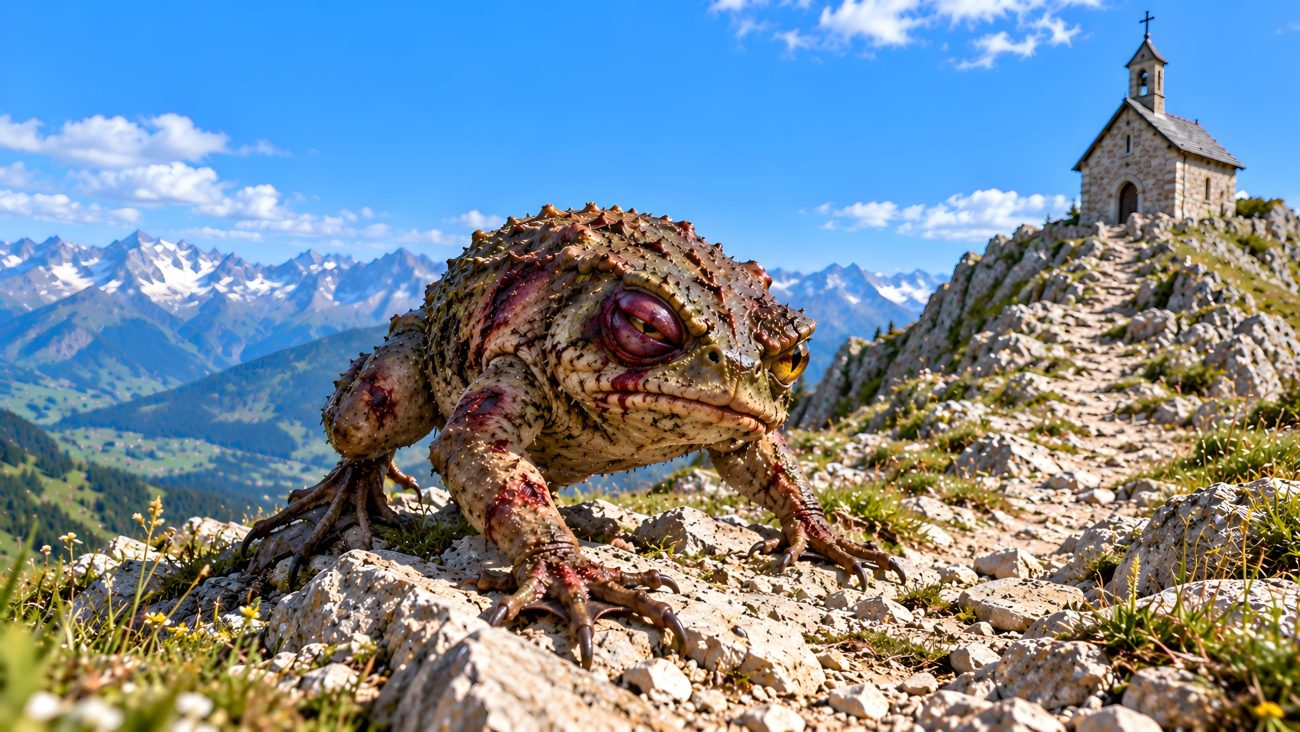
The Salve-Toad is a supernatural creature associated with the Hohe Salve mountain in Tyrol, Austria. It is said to be the transformed soul of a brigand who lived a wicked life and failed to fulfil a sacred vow. After death, he was condemned to crawl up the mountain in the form of a toad and seek redemption inside the chapel dedicated to St. John the Baptist. His punishment forced him to struggle slowly up the steep mountain while carrying the burden of his past crimes.

According to the legend, the brigand had promised to make a pilgrimage to the summit of the Hohe Salve if Heaven would help him escape his evil companions and return to a righteous life. Although he received the assistance he had prayed for, he forgot his vow. After his death, he was transformed into a toad and compelled to climb the mountain. When he finally reached the chapel, people at the entrance repeatedly pushed and kicked him away, preventing him from entering. Nevertheless, the determined creature continued trying until at last it managed to crawl inside.

Once within the chapel, the toad crawled three times around the altar. At that moment, the curse was lifted, and the creature was instantly transformed into a handsome man. He addressed the people praying there, recounting his former life as a brigand and the long, painful penance he had endured. After revealing his story, he suddenly disappeared, leaving the worshippers to wonder at the strange event.

Another version of the legend tells of a remorseful mother whose son had become the leader of a band of robbers and murderers. After he refused to surrender to justice, a vision of the ghastly head of St. John the Baptist appeared to him in a dream, prompting him to give himself up. He was executed alongside his companions, and his mother buried their heads together on the mountain. In deep repentance, she sold all her possessions and used the money to build the chapel that still stands on the summit of the Hohe Salve.


Sources

Von Günther, Amalia. Tales and Legends of the Tyrol. London: Chapman and Hall, 1874.


Witch as a Toad

Tradition: Austrian Mythology
Alternative Names: Toad Witch, Frog Witch
Category: Frog


The Myth

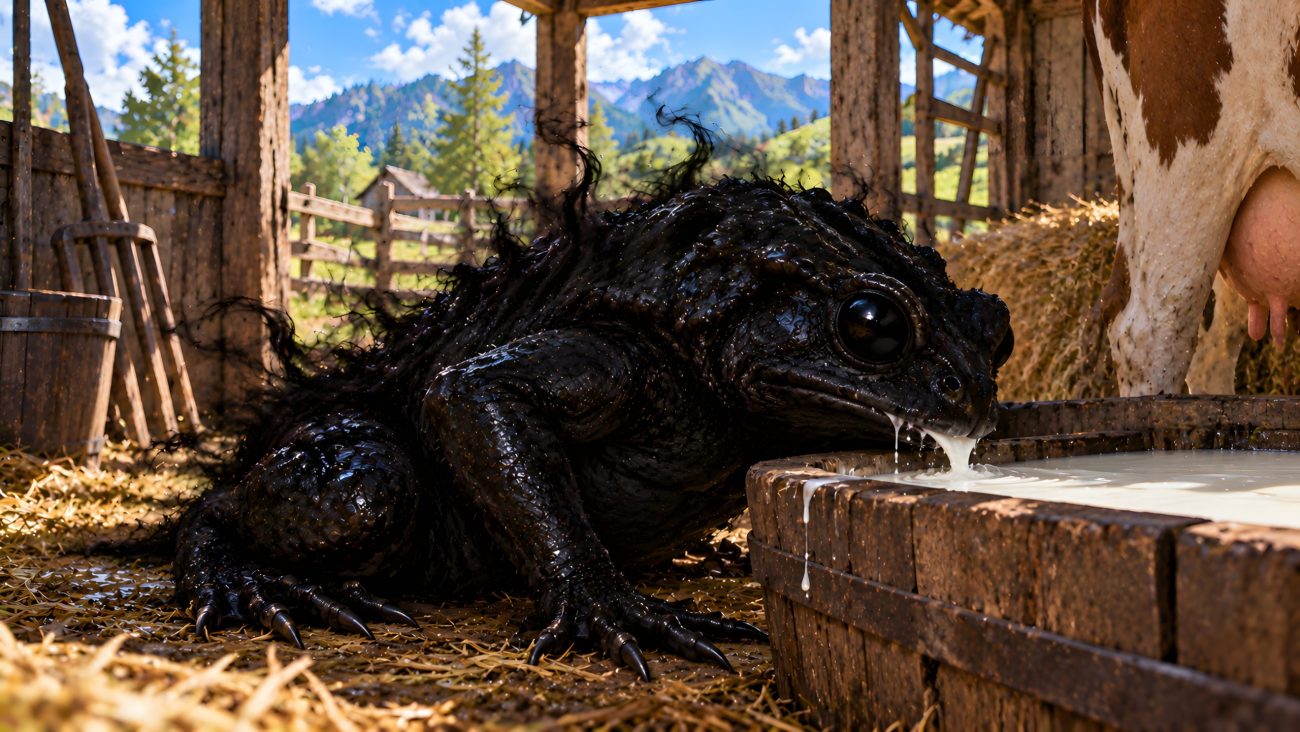
Witches in Burgenland mythology were believed to transform themselves into large frogs or toads to enter stables and steal milk from cows. They crept into barns and drank directly from the cows while the animals were lying down. After such a visit, a cow might have a swollen udder but produce no milk, or give blood instead. These strange occurrences were blamed on witches who had taken the form of enormous toads.

One tale tells of a family whose great-grandmother knew how to drive away witches. When the cows began losing their milk, a man was instructed to keep watch in the barn with an iron-tined pitchfork. He was told to attack any creature that entered, whether it was a cat, a dog, or a frog. During the night, a large toad appeared, and the man pinned it to the ground with his pitchfork. The creature began screaming and pleading with him to stop, insisting that it would not return.

The man refused to release the toad, accusing it of causing trouble by stealing the cows’ milk. As he held it down, the creature cried out that its blood was flowing and promised never to come back. Eventually, it disappeared, leaving the family to believe that the witch had been driven away. The following day, a woman was found lying in her home with the door locked. Nobody was allowed to enter, and no doctor was called. The tale presents the wounded toad and the suffering woman as two forms of the same witch, punished for stealing milk from the cattle.


Sources

Petzoldt, Franz. “Die Hexe als Kröte.” SAGEN.at – Sagen aus dem Burgenland. Reproduced by SAGEN.at. https://www.sagen.at/texte/sagen/oesterreich/burgenland/petzoldt/hexe_kroete.html


Reutte Fox

Tradition: Austrian Mythology
Alternative Names: Fox of Reutte
Category: Fox


The Myth

The Reutte Fox is a mysterious creature from the legends of the Tyrolean town of Reutte, appearing at first as an ordinary fox but displaying supernatural powers that reveal its true nature. Hunters who encounter it may shoot at the animal repeatedly without causing it any apparent harm. The fox can even mock its pursuers by standing upright and making a little bow, as though deliberately challenging them to continue shooting. Ordinary bullets seem powerless against it, and the creature only reacts when a hunter uses a blessed object or a special projectile made from a rosary.

In one tale, several hunters from Reutte went fox hunting near the Gurt, between Reutte and Heiterwang. Before setting out, they placed something blessed inside their gunstocks. After waiting for some time, they spotted a fox and fired at it. The animal fell but quickly rose again and fled. As the hunters followed its tracks through the snow, they noticed that the footprints gradually grew larger until they resembled human footprints, eventually revealing the marks of slippers. The trail led them to a house in the upper market of Reutte, where an old woman lay in bed with a gunshot wound.

Another story tells of an old hunter named Hauser from Betzigau who pursued a fox that repeatedly ran ahead of him, stopping to make little bows. He fired at it several times, but each shot failed to harm the animal. Suspecting that it was no ordinary fox, he took out his rosary, cut its string, and used one of its beads in place of a bullet. This time, the fox recoiled and fled, leaving a trail of blood behind it. The hunter followed the tracks to a house, where he was told that the mother of the household was lying in bed with a badly injured foot. Both tales suggest that the fox was a witch or a human transformed into an animal, whose wounds in fox form were reflected on the human body.


Sources

“Die Hexe als Fuchs.” SAGEN.at – Traditionelle Sagen aus Deutschland (Bayern, Allgäu). Reproduced by SAGEN.at. https://www.sagen.at/texte/sagen/deutschland/bayern/allgaeu/hexe_fuchs.html


D’r Pfellar-Pfifar

Tradition: Austrian Mythology
Alternative Names: Pfellar-Pfifar, Pillar Piper
Category: Forest dweller


The Myth

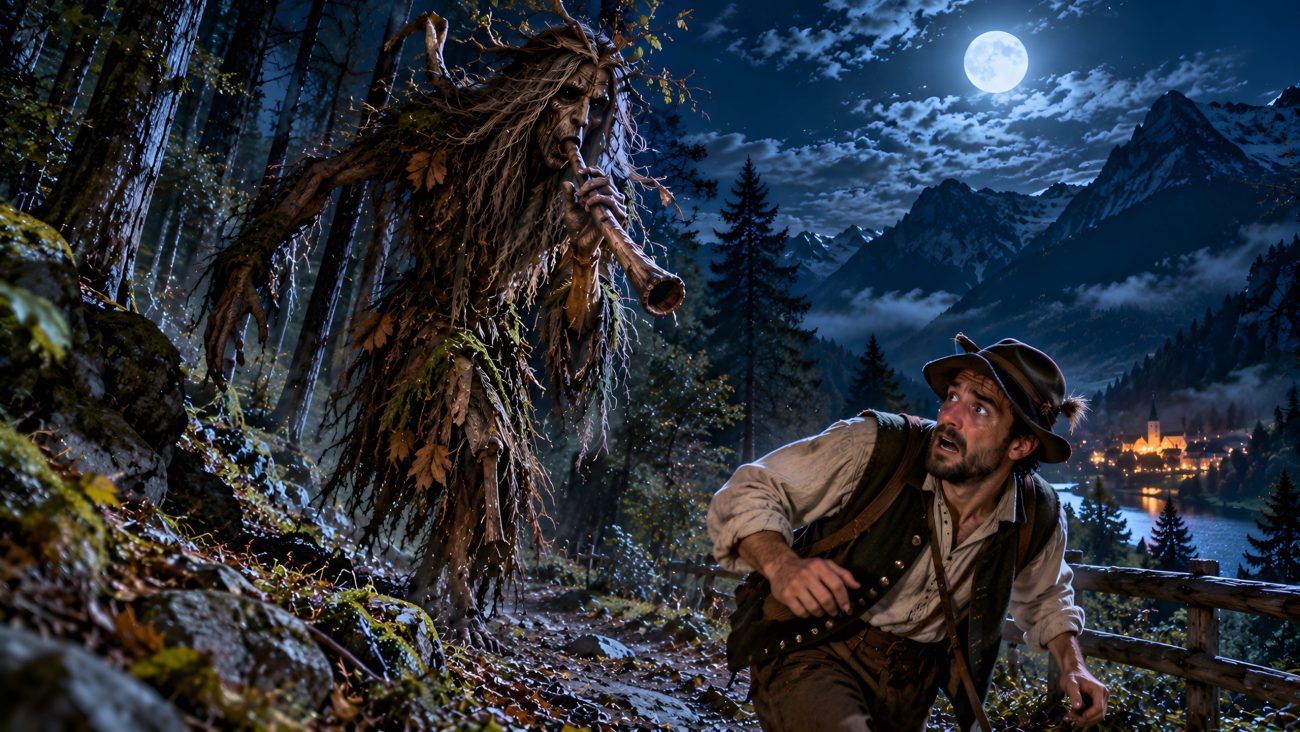
D’r Pfellar-Pfifar is a mysterious forest spirit associated with the Pillar forest in Vorarlberg, Austria. The woodland stretches along the road connecting Haselstauden and Schwarzach, where the spirit’s eerie calls have frightened travellers making their way home late at night. Its appearance remains unknown, and it is remembered primarily through the strange cries that echo through the trees. Those who hear its call may feel an overwhelming sense of dread, as though something unseen is pursuing them through the darkness.

The Pillar Piper is especially dangerous to those who travel while drunk or utter blasphemous curses. When such a person passes through the forest, the spirit pursues them with its frightening cry, filling them with wild terror. Travellers who hear the call are advised to continue quietly on their way and recite the Lord’s Prayer. By remaining calm and turning to prayer, they may avoid provoking the mysterious being and escape the forest unharmed.

No one knows who the Pfellar-Pfifar truly is or why it calls out from the woodland. Its unseen presence and terrifying cries have made it a feared figure of the forest, warning late-night travellers against drunkenness, blasphemy, and careless behavior in the darkness.


Sources

“Pfifar.” SAGEN.at – Traditionelle Sagen aus Österreich (Vorarlberg, Dornbirn). Reproduced by SAGEN.at. https://www.sagen.at/texte/sagen/oesterreich/vorarlberg/dornbirn/pfifar.htm


Fiery Body

Tradition: Austrian Mythology
Alternative Names: The Fiery Corpse
Category: Flame


The Myth

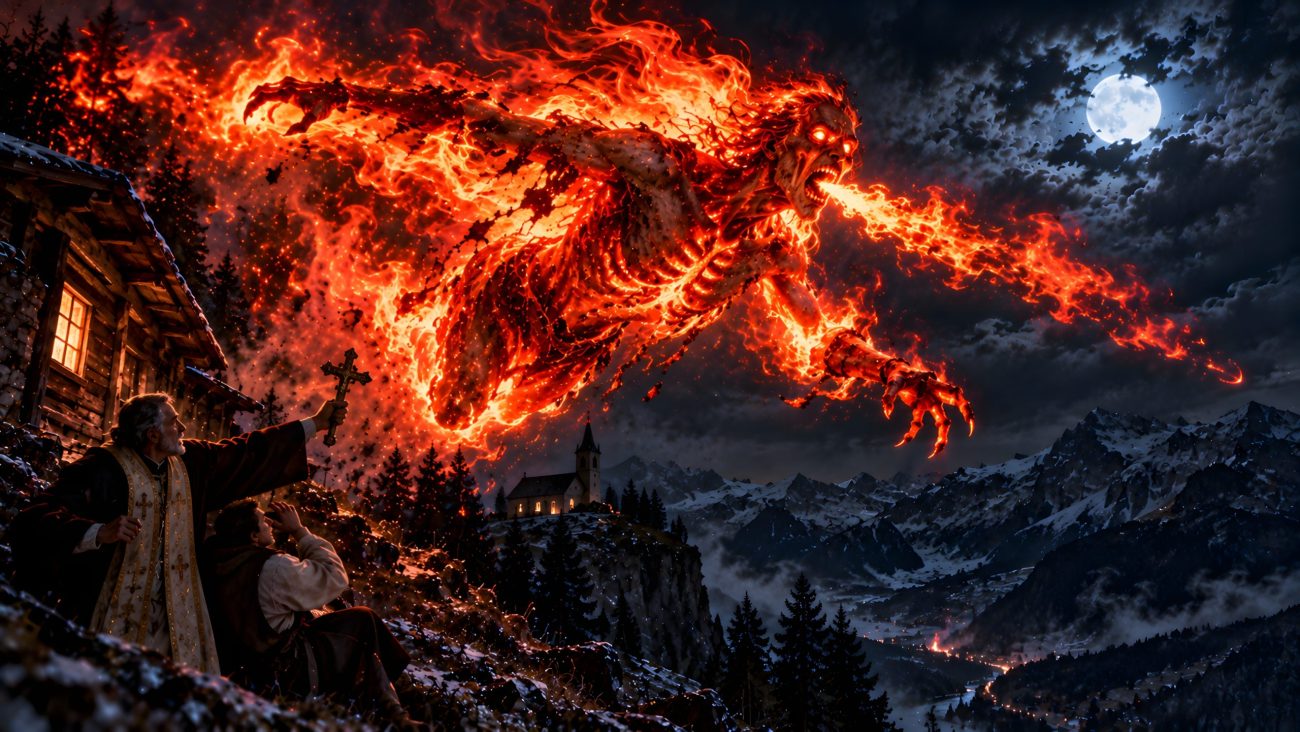
The Fiery Body is a terrifying supernatural apparition from the folklore of the Passeier Valley in the Tyrol. It appears as a fiery red human body rushing through the air, spitting flames as it flies. The apparition is said to be the spirit of a wicked man who died without repentance after repeatedly breaking the Sabbath and mocking religion.

According to the legend, a man living on an isolated mountain farm became gravely ill after injuring his foot while hunting in the forest on a Sunday. His wound worsened until he was consumed by a deadly fever. Although his neighbours urged him to abandon his wicked ways, he refused to listen. Even when a priest tried to persuade him to repent, the man responded with contempt, throwing a plate at the priest and remaining defiant until his final moments.

As the man lay dying, his household begged the priest to return and save his soul. The priest hurried up the mountain with his sacristan, carrying the Holy Sacrament. Near the farm, they suddenly encountered a blazing red body hurtling through the air directly toward them. Recognising the apparition as the body of the unrepentant sinner, the sacristan fell to the ground in terror. The priest remained calm, declaring that Christ was with them. The fiery apparition swept past without harming either man before plunging down the terrible precipice of the Matatz Valley.


Sources

Von Günther, Amalia. Tales and Legends of the Tyrol. London: Chapman and Hall, 1874.