Orco

Tradition / Region: Austrian Mythology
Alternative names: Orco
Category: Ghost


The Myth

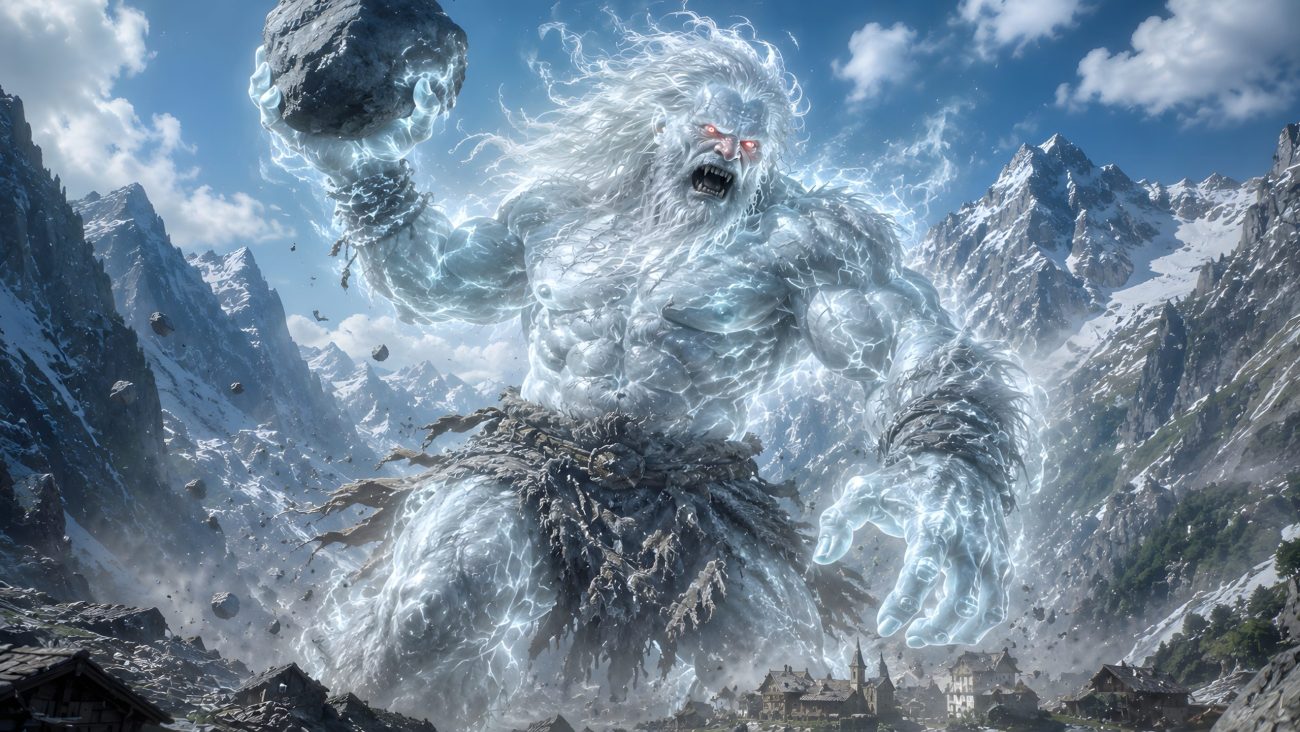
The Orco is a gigantic and ancient mountain ghost feared throughout the Dolomite Alps, especially in the mountains between Enneberg Abbey and Buchenstein. Said to dwell in deep caves, chasms, and rocky cliffs, the Orco is a malicious supernatural being that never grows old and exists only to spread fear, destruction, and misfortune among humankind.

The Orco is a powerful shapeshifter, appearing in many terrifying forms. It most commonly manifests as a gigantic black dog with blazing eyes, a wild horse whose hooves burn with fire, a raging bull, or even as a massive rolling boulder that chases terrified travelers across the mountains. On the rare occasions it takes human form, it appears as an enormous giant with a cruel expression, either naked beneath a coat of thick bear-like hair or dressed like one of the legendary mountain giants.

Many Tyrolean legends recount encounters with the Orco. One skeptical innkeeper who mocked stories about the creature was confronted by a monstrous black dog that circled his wagon until he finally made the sign of the cross, causing it to vanish instantly. Another tale tells of a fiery horse that attempted to scatter a family’s cattle before disappearing the moment it approached a roadside crucifix.

The Orco often pursued lonely travelers for miles. One young man was chased home by a gigantic black dog whose tongue dripped blue flames and whose breath smelled of burning sulfur. Although he escaped unharmed, the terror and exhaustion permanently damaged his health, leading to his death only months later.

In another legend, two young men returning home at night were stalked first by a wild bull and then by an enormous rolling sphere that crashed over rocks in pursuit of them. They escaped only by throwing themselves at the foot of a large crucifix. Unable to cross the holy ground, the Orco appeared in human form beyond the fence, striking it with such supernatural force that the marks of its blows remained visible for years.

The Orco could also imitate human voices to lure victims. A shepherd boy once answered what he believed were distant woodcutters calling through the forest, only to realize too late that he had mimicked the Orco itself. The monster seized him and carried him across mountains and deep ravines before abandoning him bruised and unconscious many miles away. From that day onward, locals warned never to imitate mysterious voices heard in lonely forests, for doing so could summon the Orco with lightning speed.

Throughout Tyrolean folklore, the Orco embodies the dangers of the wild mountains—an ancient, shape-shifting force of terror that preys upon travelers, but whose power is consistently overcome by Christian symbols such as the sign of the cross and roadside crucifixes.


Sources

von Günther, A. (1874). Tales and legends of the Tyrol. Chapman and Hall.

Ghostly Cat

Tradition / Region: Austrian Mythology
Alternate Names: White Cat Spirit
Category: Cat, Ghost


The Myth

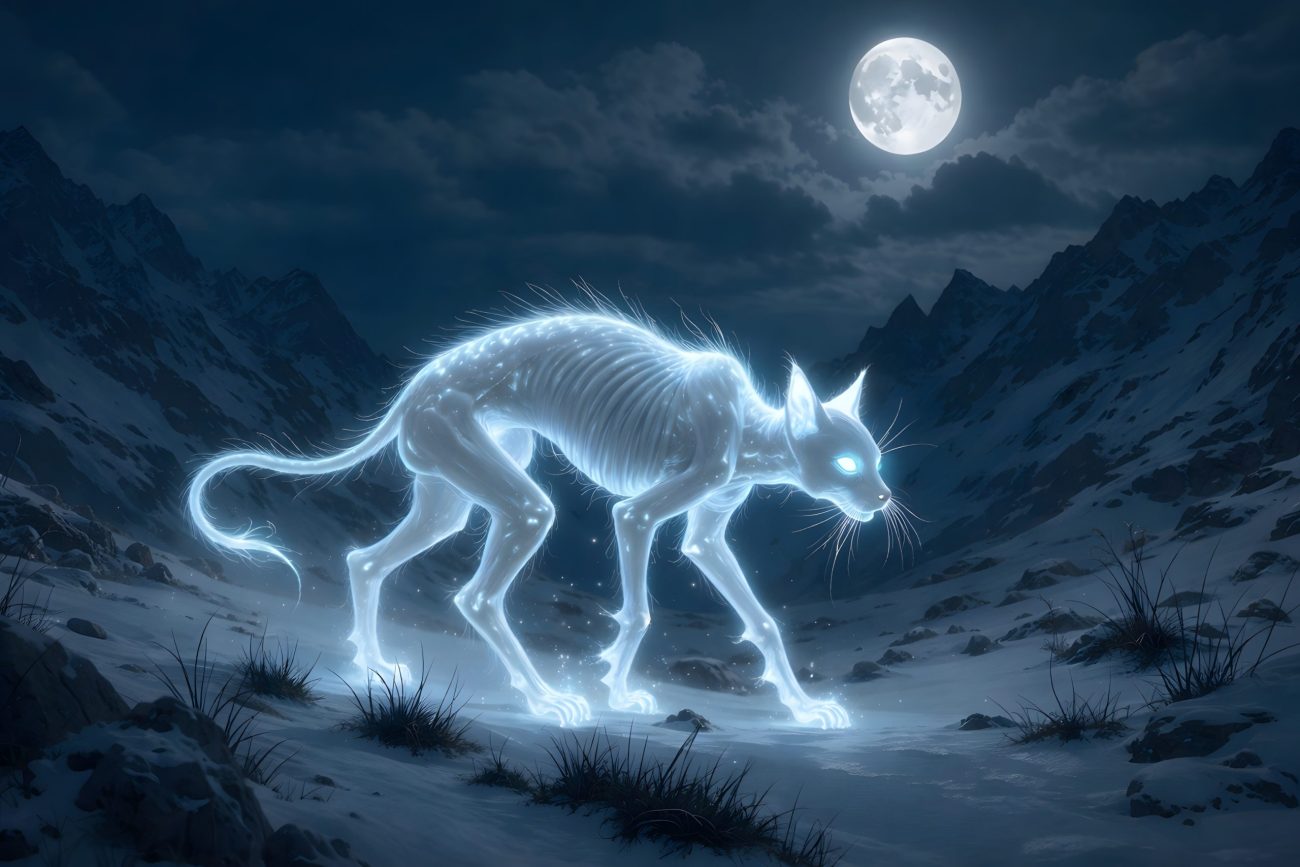
The Ghostly Cat is the spirit of a woman condemned to wander in the form of a large white cat, appearing at night on the rooftops of an old house.

The legend tells of a man who lived a corrupt and immoral life, while his wife endured everything in silence. Eventually, he fell under the influence of another wicked woman, and together they plotted to murder his wife using poisoned food.

However, through a twist of fate, the poison was consumed by the very woman who had prepared it. The effects were unnatural and disturbing. Instead of dying immediately, she began to lose her humanity and believed herself to be a cat.

She crawled on all fours, ran wildly through the house, climbed across the roof, and screamed like an animal. Her madness intensified with time, growing worse by the hour, until finally she fell from the highest point of the roof and broke her neck.

After her death, she did not find rest.

She became a restless spirit, condemned to return as a ghostly white cat, roaming the rooftops at night. Those who come too close to her path risk being attacked, as she lashes out with sharp claws at anyone who dares approach.

The Ghostly Cat represents a punishment tied to guilt, corruption, and unnatural transformation — a human reduced to an animal in life, and bound to that form even after death.


Sources

sagen.at contributors. (n.d.). Die gespenstische Katze. In sagen.at, from https://www.sagen.at/texte/sagen/oesterreich/wien/sagen_legenden_gugitz/katze.html


Rankweil Geist

Tradition / Region: Austrian Mythology
Alternate Names:
Category: Ghost


The Myth

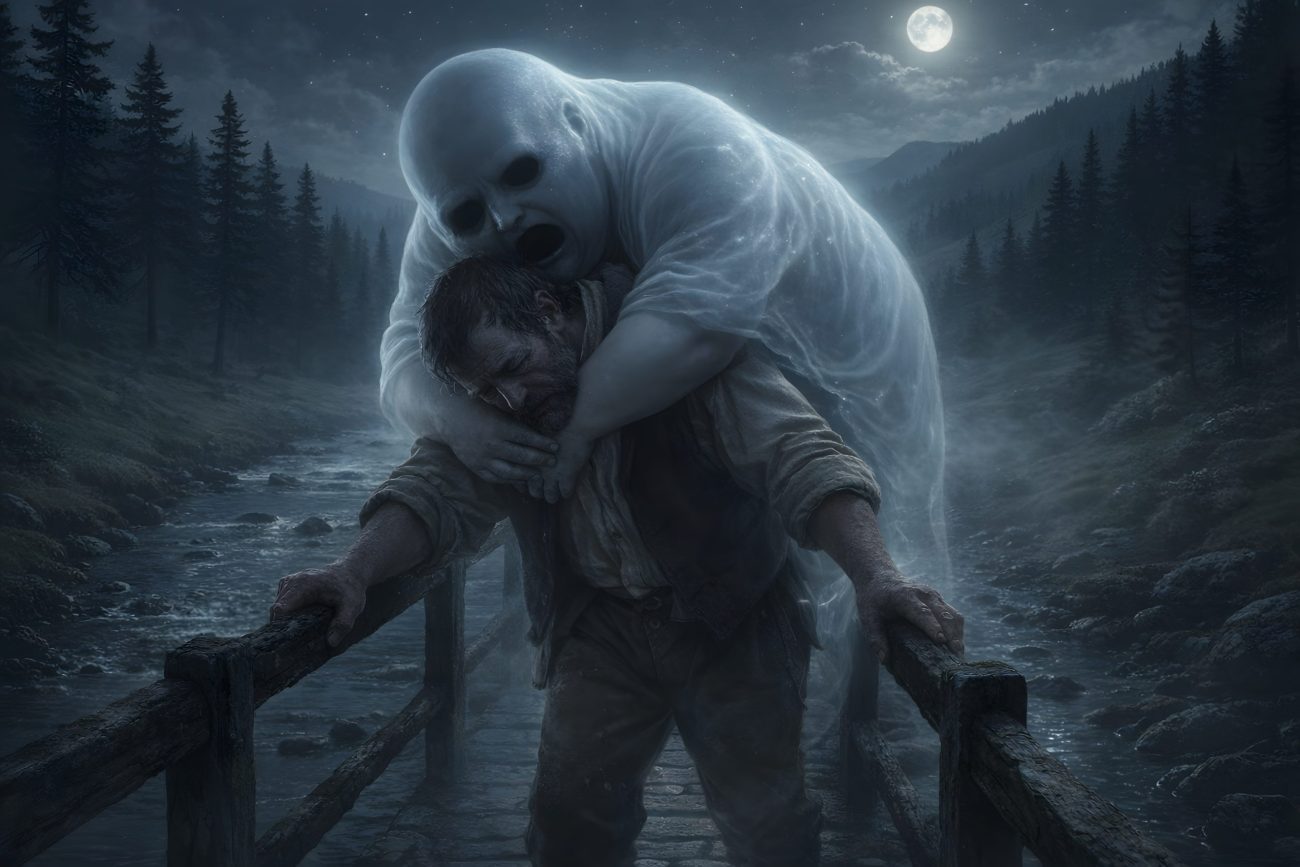
In the region between Dornbirn and Haselstauden, people walking at night often heard sneezing beneath the bridge over the Fischbach. Most ignored the sound and continued on their way. One night, however, a traveler, hearing the sneezing, called out, “God help you, if you need help.”

At once, a man appeared before him and answered that he could indeed be helped—if the traveler would carry him that very night to Rankweil. Though exhausted, the traveler agreed, saying that he would first return home to eat supper and tell his wife of his plan. When he did so, his wife pleaded with him not to keep such a dangerous promise, but he refused to break his word.

The man returned to the bridge, where the spirit awaited him. The ghost leapt onto his back, and the traveler was forced to carry it all the way through the night, bearing its heavy weight until they reached Rankweil. At the steps of the church, the spirit finally dismounted and said, “You have redeemed me, and I will redeem you as well.”

The man, drenched in sweat and weakened by the ordeal, returned home. From that night on, he fell ill, and six weeks later he died. It was said that the ghost had vowed during his lifetime to make a pilgrimage to Rankweil but had never fulfilled his promise. After death, he was forced to wander until someone carried him there, binding his redemption to the life of the one who helped him.