Aluel

Tradition / Region: Sudanese Mythology
Alternative names: Lioness-Girl Aluel
Category: Lion


The Myth

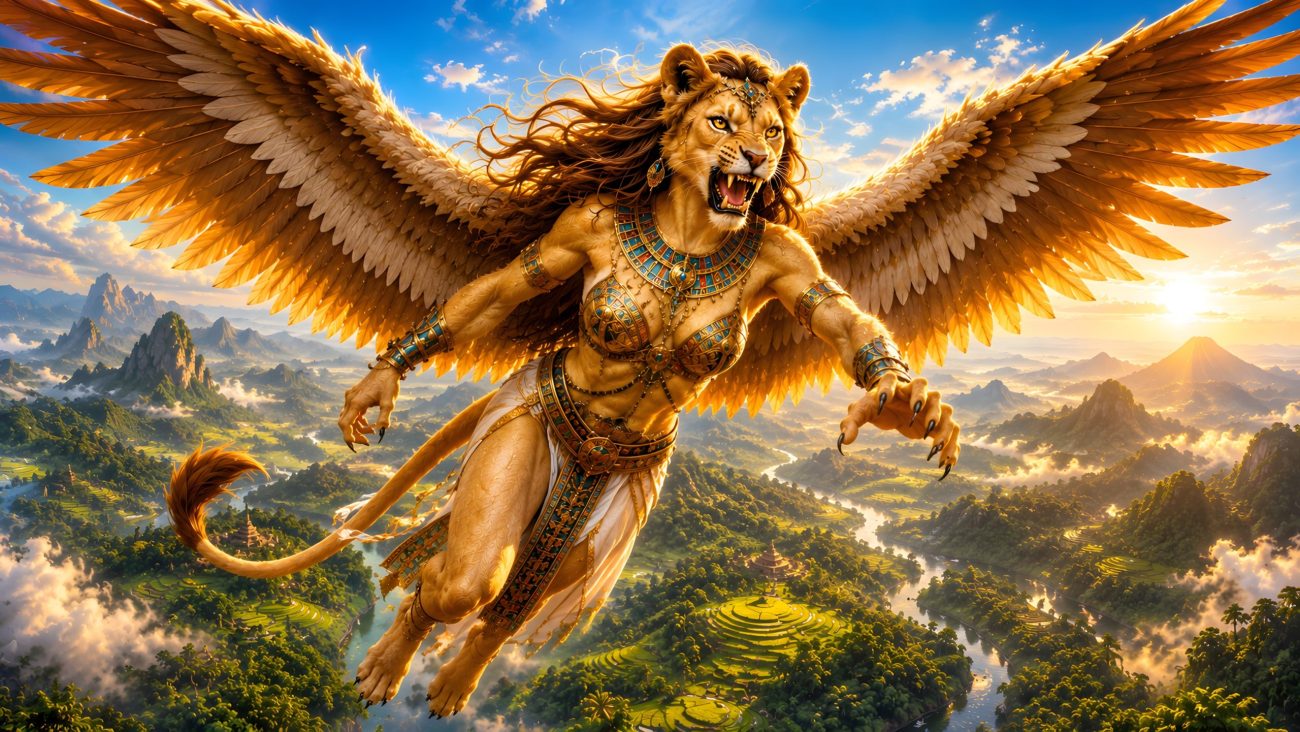
Aluel was a terrifying lioness-woman from Dinka mythology who lived between the human world and the wilderness. She appeared as a supernatural young woman but possessed the nature and strength of a monstrous lioness. Wild, powerful, and feared, she hunted human beings and moved through the bush with unnatural speed and ferocity. Some stories describe her almost like a spirit of the untamed land itself.

Aluel became obsessed with a girl named Atholong, whose beauty had spread across the cattle camps. Atholong had been raised from birth by a man named Chol, who loved her from the moment she was born and later intended to marry her. When Aluel heard of the girl’s beauty, she secretly came to the cattle-camp and hid nearby, waiting for a chance to seize her.

One night Atholong wandered near the edge of the camp, and Aluel attacked. The lioness seized her and carried her away deep into the wilderness. Aluel was so powerful and wild that she could fly through the air while carrying her victim. Yet after taking Atholong, she found herself unable to kill her. Each time she prepared to devour the girl, she became overwhelmed by her beauty and delayed the act again. Instead, she brought her meat, cared for her, and kept her hidden in the forest.

The two lived together for a long time in the bush. Atholong would sing mournful songs about her disappearance and about Chol, while Aluel answered her from the darkness of the forest. Eventually warriors from the cattle-camp tried to rescue the girl, but all fled in terror when they encountered the lioness. Even Atholong’s former suitor failed to face her. Only Chol continued onward alone, carrying many sharpened spears.

When Chol finally reached the place where Atholong was held, Aluel was preparing a special platform covered with grass so the girl’s skin would not touch dirt when she ate her. Before fighting, the lioness repeatedly transformed herself into a more savage and monstrous form. Her tongue changed color from red to green to nearly black as she became fully wild and supernatural. Only then did Chol attack her with his spear.

Mortally wounded, Aluel accepted death calmly. Before dying, she blessed Atholong’s future marriage and children. She ordered Chol and Atholong to dedicate a calf to her spirit once their first daughter married, promising fertility, health, and prosperity in return. Chol later fulfilled the command, and Atholong gave birth to many children, becoming the ancestor of a vast family.


Sources

Deng, F. M. (1974). Dinka folktales: African stories from the Sudan. New York: Africana Publishing Company.
Agany

Tradition / Region: Sudanese Mythology
Alternative names: None recorded
Category: Hero, Human Creature


The Myth

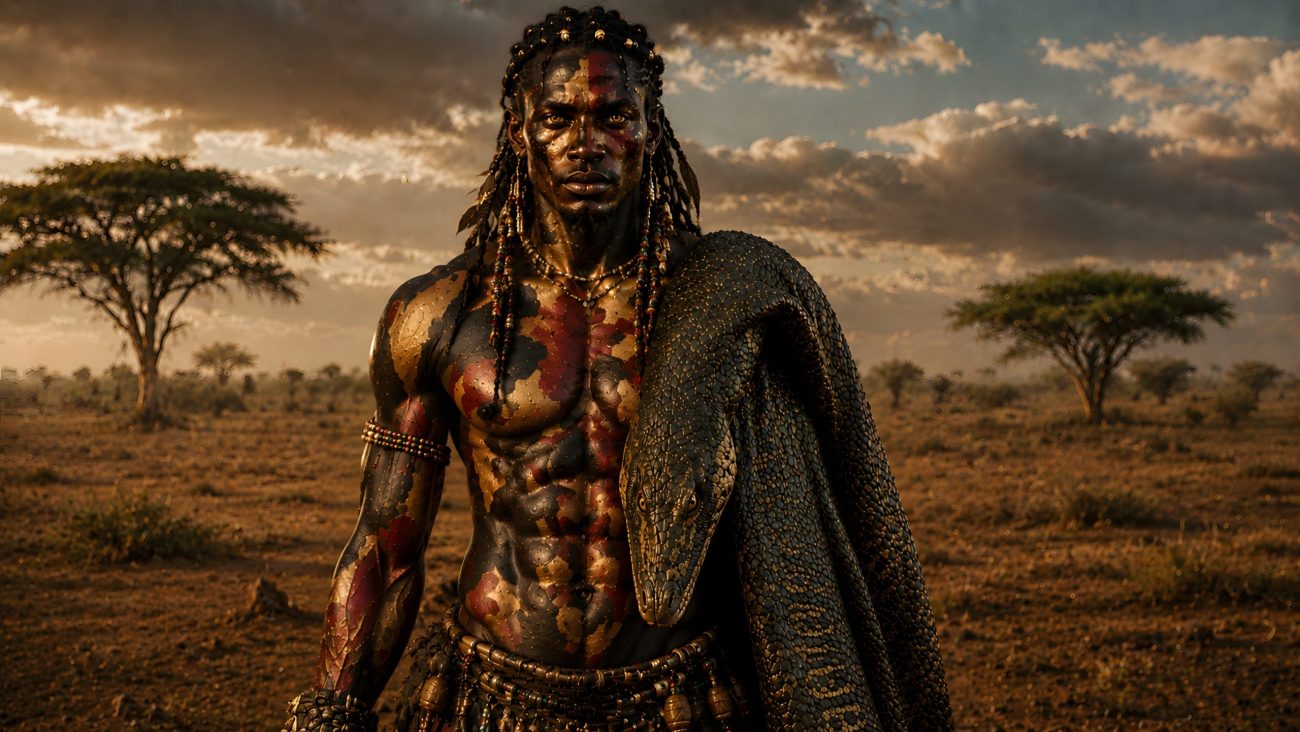
Agany was a supernatural man from Dinka folklore whose true appearance was hidden beneath the skin of a monstrous reptile. Outwardly he appeared terrifying — tall, scaled, awkward, and almost inhuman — because he wore a full suit made from the stitched hides of giant monitor lizards. His body was covered in rough green-black scales, with clawed hands, stiff reptilian limbs, and an elongated lizard-like face. People feared him and treated him like a strange creature rather than a man.

Beneath the disguise, however, Agany possessed extraordinary beauty. When his lizard skin was removed, he appeared as an impossibly handsome young cattle-warrior with glowing skin marked by shifting patterns of black, bronze, pale gold, and deep red like living ritual paint. His body seemed almost radiant beside the fires of the cattle-camp. He was tall and lean yet strongly built, with calm amber-gold eyes, thick dark braided hair decorated with beads and feathers, and graceful movements that fascinated everyone who saw him.

Agany matured unnaturally quickly, growing from infancy into adulthood in a short time. As he grew older, he became famous for his dancing during the goor ceremonies held in the great Dinka cattle-camps beneath the open savannah sky. At dusk, while cattle moved through dust and smoke drifted from the fires, Agany danced among singers and spear-warriors with hypnotic elegance. His presence overwhelmed people despite his quiet voice and calm behavior.

The story describes Agany as a hidden supernatural being whose frightening outer form concealed an almost divine nature. Those who judged only the monstrous reptilian disguise failed to recognize the powerful and beautiful figure hidden beneath it.


Sources

Deng, F. M. (1974). Dinka folktales: African stories from the Sudan. New York: Africana Publishing Company.

Miyar

Tradition / Region: Sudanese Mythology
Alternative names: Muyar
Category: Lion


The Myth

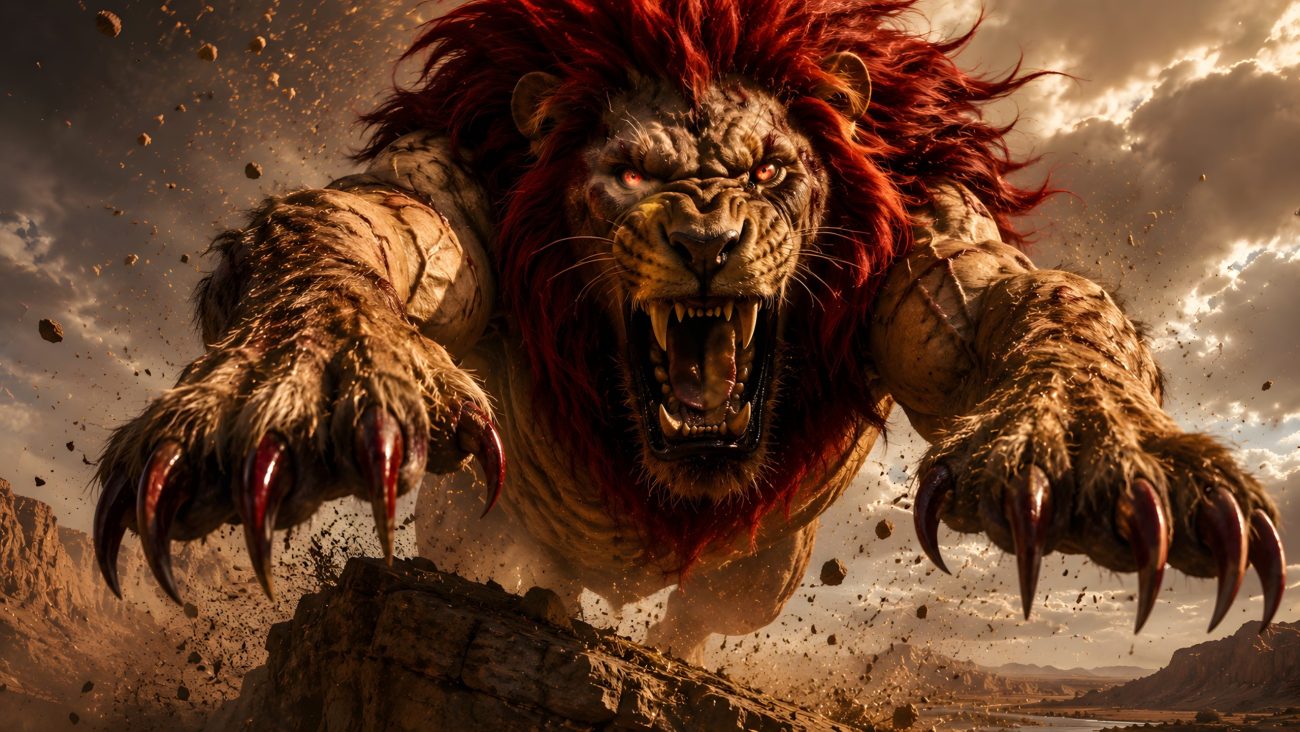
Miyar was a powerful lion-chief from Dinka folklore who ruled over a hidden settlement of lions living like human cattle-herders deep in the wilderness. He was the son of Yor, a lion warrior, and the nephew of a lioness who had once raised two human brothers named Deng.

After the lioness was killed by her own son for attacking his human foster-brother, Yor came seeking revenge but was himself slain. Before dying, Yor warned that his son Miyar would someday avenge him.

Miyar later became chief among the lion people. His cattle-camp was feared and well known, and both lions and strange hornless cattle lived under his rule. These hornless cattle were believed to belong to the lions and could themselves become lions and lionesses.

The two brothers eventually traveled into the land of the lions to confront Miyar before he could attack them first. Carrying only axes and a club, they searched through lion settlements while singing a song announcing themselves and the deaths of Miyar’s relatives.

When Miyar finally heard the song, he recognized Deng immediately and came out to meet him. Instead of attacking like a wild beast, Miyar chose to wrestle as though he were human. The two fought for a long time before Deng threw Miyar to the ground. Deng’s brother then struck Miyar in the head with an axe and killed him.

After Miyar’s death, panic spread through the lion camp. The lions fled into the wilderness, and the hornless cattle transformed into lions and disappeared with them into the forest. Only ordinary horned cattle remained behind for the brothers to take home.


Sources

Deng, F. M. (1974). Dinka folktales: African stories from the Sudan. New York: Africana Publishing Company.

Hornless Lion Cattle

Tradition / Region: Sudanese Mythology
Alternative names: Lion Cattle, Hornless Cattle of the Lions
Category: Lion, Cow


The Myth

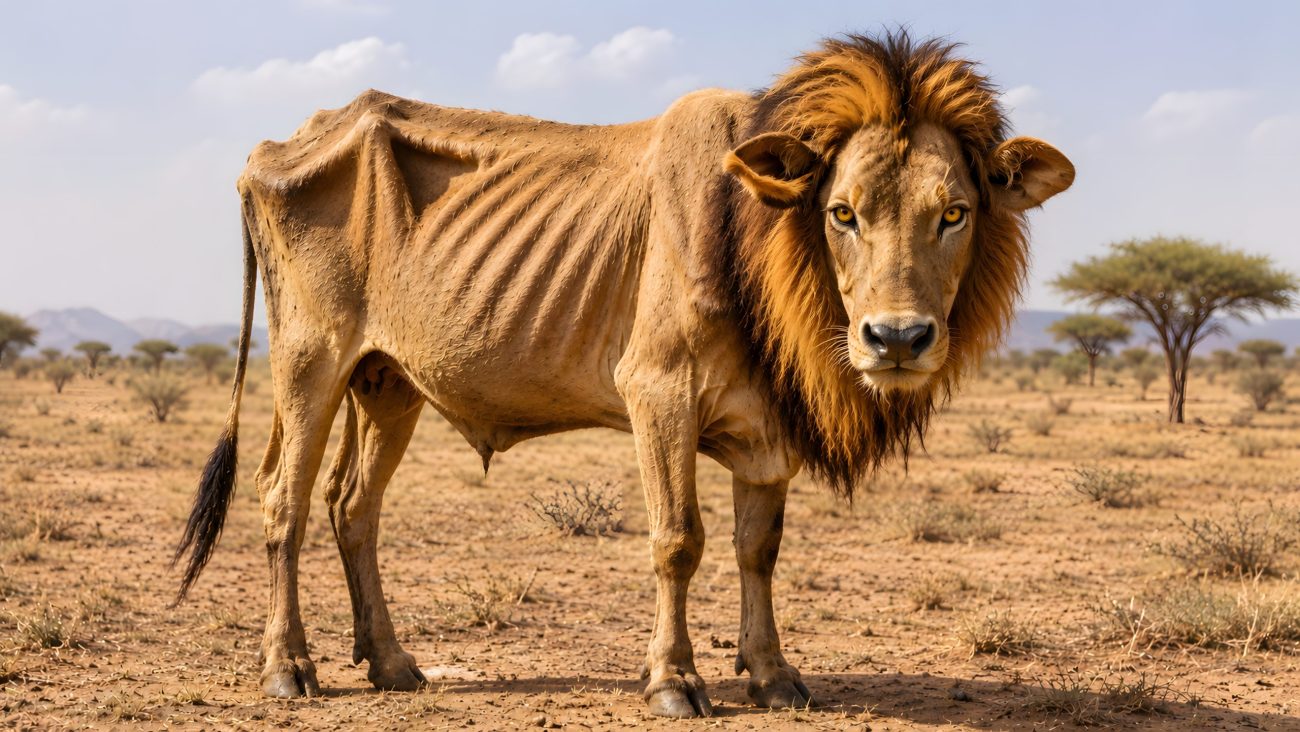
Among the Dinka, hornless cattle were believed to be dangerous and unnatural animals closely connected to lions and wilderness spirits. Unlike ordinary cattle with horns, hornless cattle were feared for their aggression and strange behavior. Folktales claimed they did not truly belong to human beings at all, but to lions.

One famous story tells of two brothers both named Deng. One was born to a human mother, while the other was the son of a lioness who had raised both boys together as brothers. Although the lioness cared for them for many years, she eventually turned against the human Deng and attacked him out of jealousy and beastly hunger. After many struggles, the lioness was killed by her own son to protect his brother.

Later, the lioness’s relatives sought revenge. The two brothers traveled into the land of the lions to confront Miyar, the lion-chief and cousin of Deng of the lioness. After reaching the lion settlement, Deng challenged Miyar and killed him in combat.

The death of the lion chief caused panic throughout the camp. The lions fled into the wilderness, and with them fled the strange hornless cattle that belonged to them. According to the tale, these hornless cows transformed into lions and lionesses and disappeared into the forest alongside their masters.

Only the ordinary horned cattle remained behind for the human brothers to take home.

The story explains an old Dinka belief that hornless cattle possessed something wild and dangerous within them. They were thought to follow lions naturally, behave more fiercely than ordinary cattle, and even share a spiritual connection with predatory beasts. In folklore, hornless cattle were not fully separated from the world of lions, but stood somewhere between domesticated animal and supernatural creature.


Sources

Deng, F. M. (1974). Dinka folktales: African stories from the Sudan. New York: Africana Publishing Company.

Apedemak

Tradition / Region: Kingdom of Kush, Sudan Mythology, Egyptian Mythology
Name: –
Category: Deity, Lion


The Myth

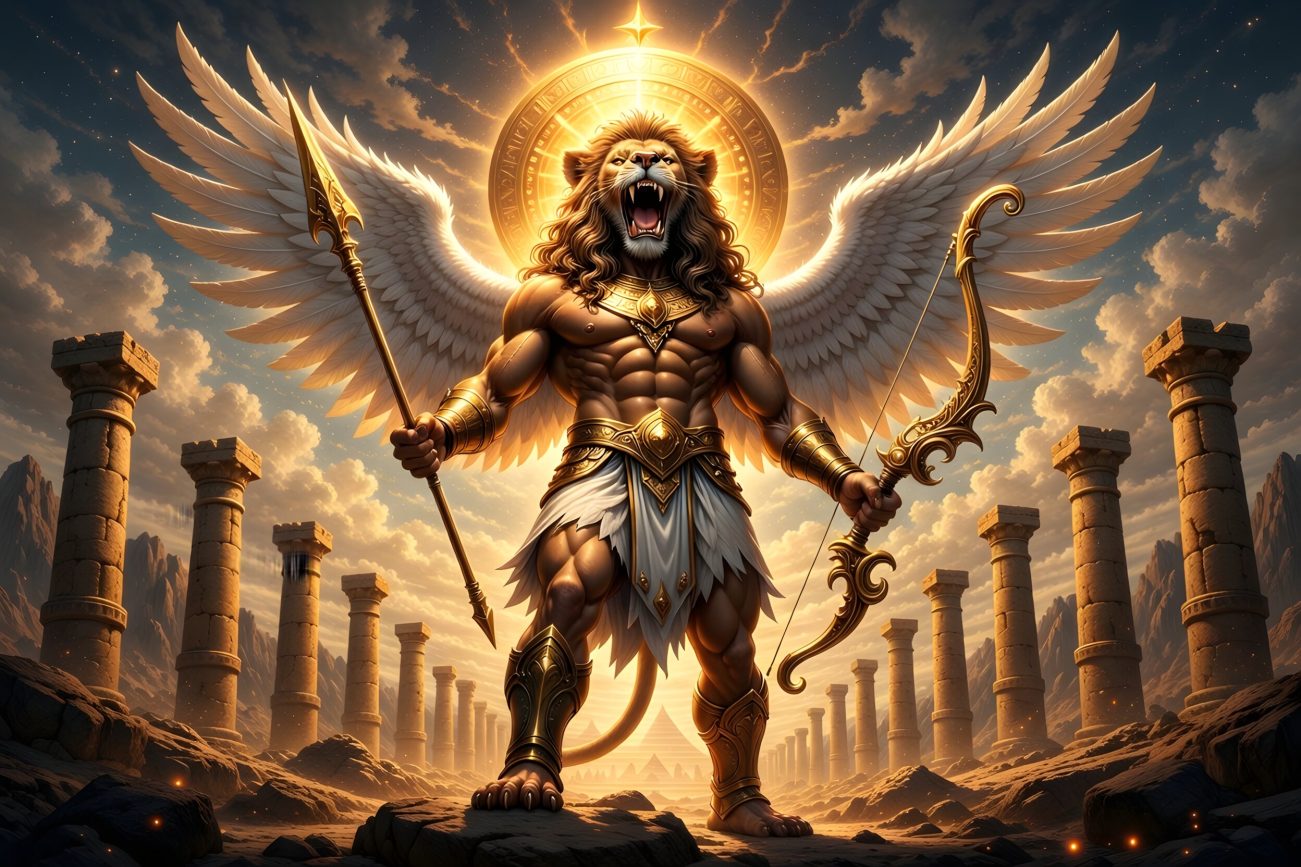
In the lands of Kush, along the life-giving Nile, Apedemak was known as the lion-headed god of war and royal power. He appeared with the body of a man and the head of a lion, radiating strength, authority, and ferocity. In some representations his form was even more fearsome, combining lion, man, and serpent, emphasizing his supernatural nature and his command over chaos and battle.

Apedemak was the divine force behind conquest and kingship. When armies marched and rulers sought to expand their dominion, he was believed to stand behind them, guiding their victories and striking fear into their enemies. He embodied courage, discipline, and the unyielding force of war. To oppose him was to face destruction, for he represented war not as disorder, but as divine judgment.

Yet Apedemak was not solely a god of bloodshed. He was also a giver of life and abundance. In temple reliefs he is shown holding stalks of grain, blessing the land with fertility and ensuring prosperity for those under his protection. Through him, war and life were bound together: victory brought order, and order allowed the land and people to flourish.

His worship was centered at great temple complexes such as Naqa and Musawwarat es-Sufra. These sanctuaries served as places where kings received divine legitimacy. By honoring Apedemak, rulers affirmed that their power flowed not merely from human strength, but from a god who embodied both might and rightful authority.

To the people of Kush, Apedemak was more than a warrior god. He was the living symbol of sovereignty itself—the roar of the lion behind the throne, the unseen hand guiding the fate of kingdoms, and the divine presence that bound war, rule, and fertility into a single, commanding force.


Sources

Wikipedia contributors. (n.d.). Apedemak. In Wikipedia, from https://en.wikipedia.org/wiki/Apedemak