Tur

Tradition / Region: Bosnian Mythology
Alternate Names: —
Category: Cow


The Myth

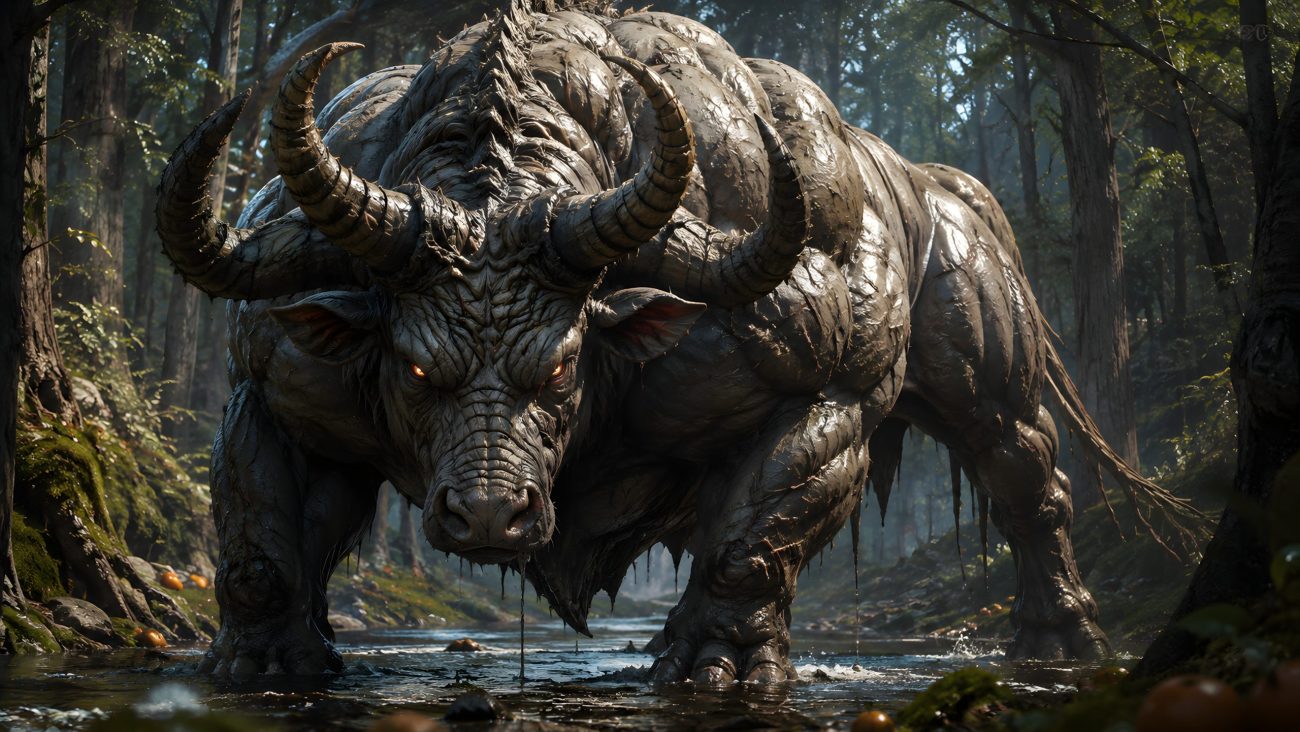
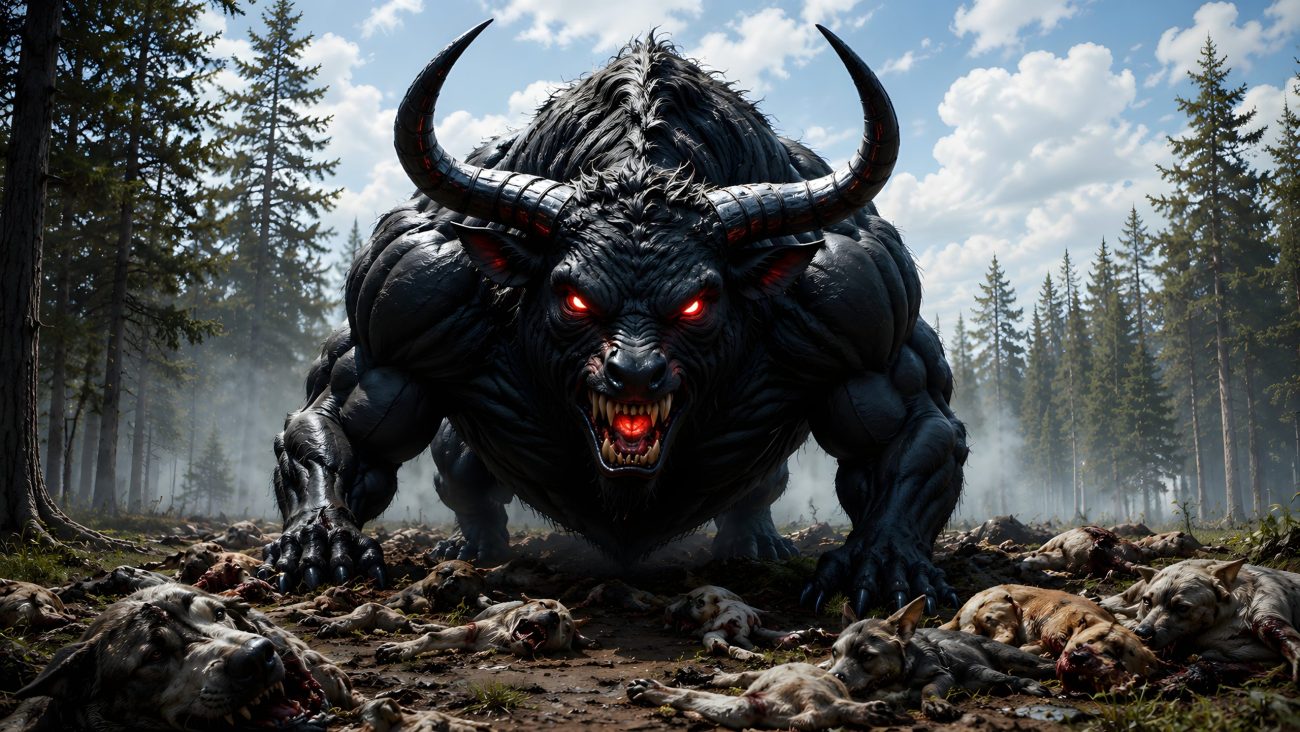
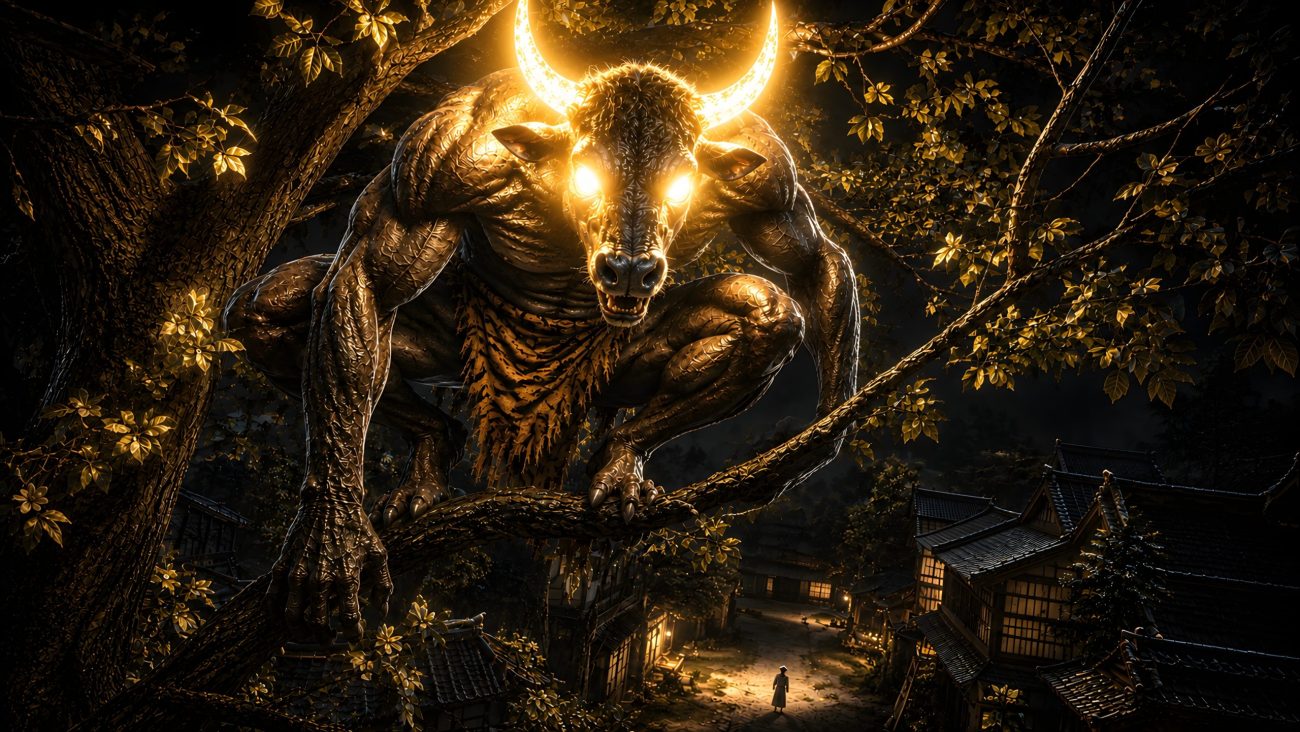
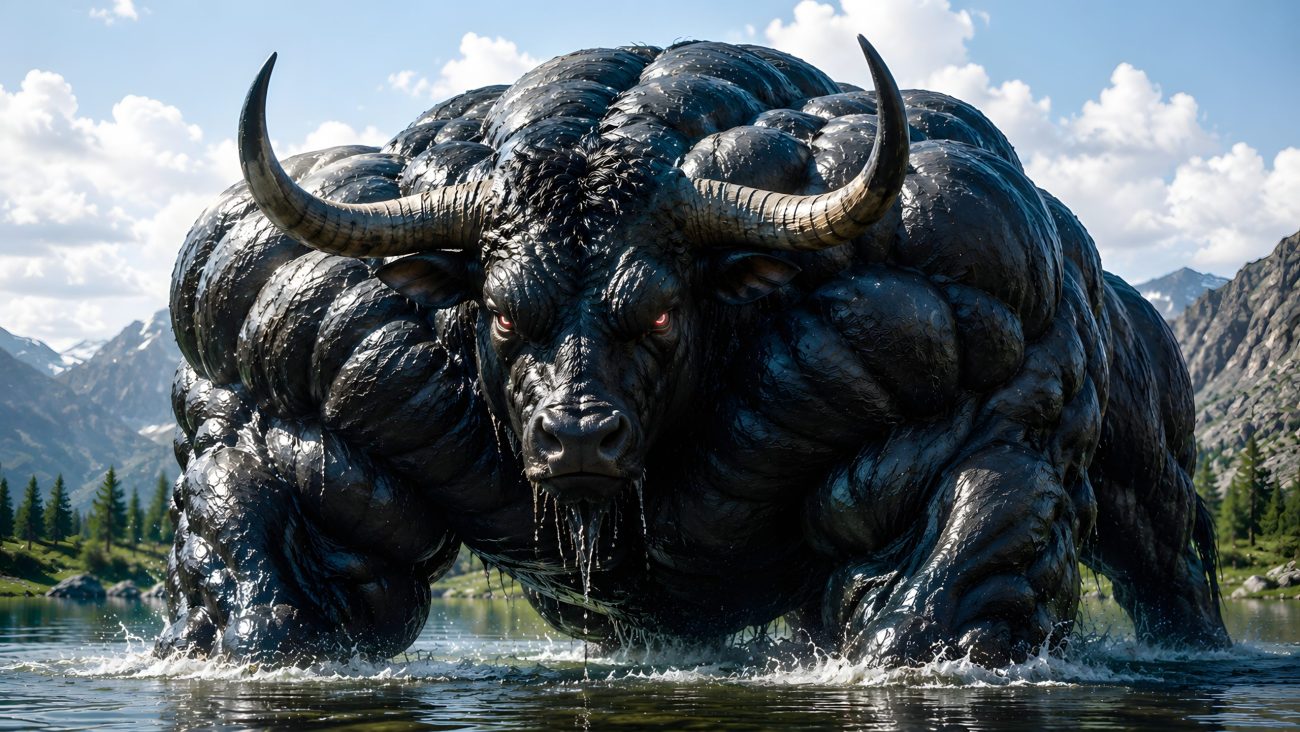
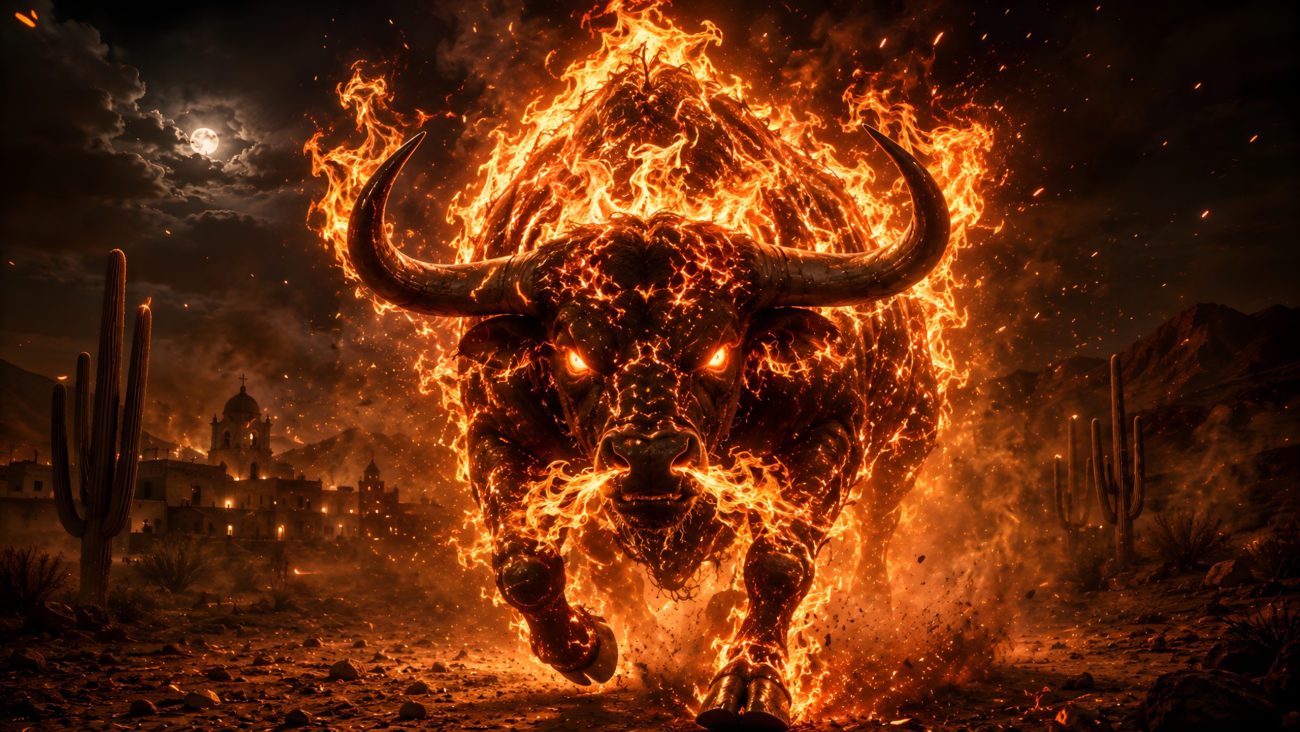
Tur is a colossal black bull believed to carry the weight of the Earth upon his back. He is not merely an animal, but a cosmic being whose existence sustains the balance of the world itself.

Described as immense beyond measure, Tur’s body stretches like a living foundation beneath the world. His dark coat shines like night, and his massive horns are said to reach into the sky, sometimes imagined as piercing the clouds.

According to legend, earthquakes and tremors occur when Tur shifts his horns. Even the smallest movement can shake mountains and disturb the land. Because of this, people believed that the stability of the world depended entirely on his stillness.

Tur is usually calm and unmoving, but this calm is what keeps existence intact. If he were ever to rise or fully move his body, it was said that the Earth would collapse—mountains would fall, seas would overflow, and the world would be destroyed.

For this reason, Tur was both feared and respected. People would offer prayers or small sacrifices to keep him at peace, hoping to prevent any movement that could bring catastrophe.

Tur represents a powerful mythological idea:
a world-bearing creature whose stability maintains reality, where even the slightest disturbance reminds humanity how fragile the order of the world truly is.


Sources

Wikipedia contributors. (n.d.). Tur (Bosnian-Slavic mythology). In Wikipedia, from https://en.wikipedia.org/wiki/Tur_(Bosnian-Slavic_mythology)


Minotaur

Tradition / Region: Greek Mythology
Alternate Names: Asterion, Minotauros
Category: Cow, Hybrid


The Myth

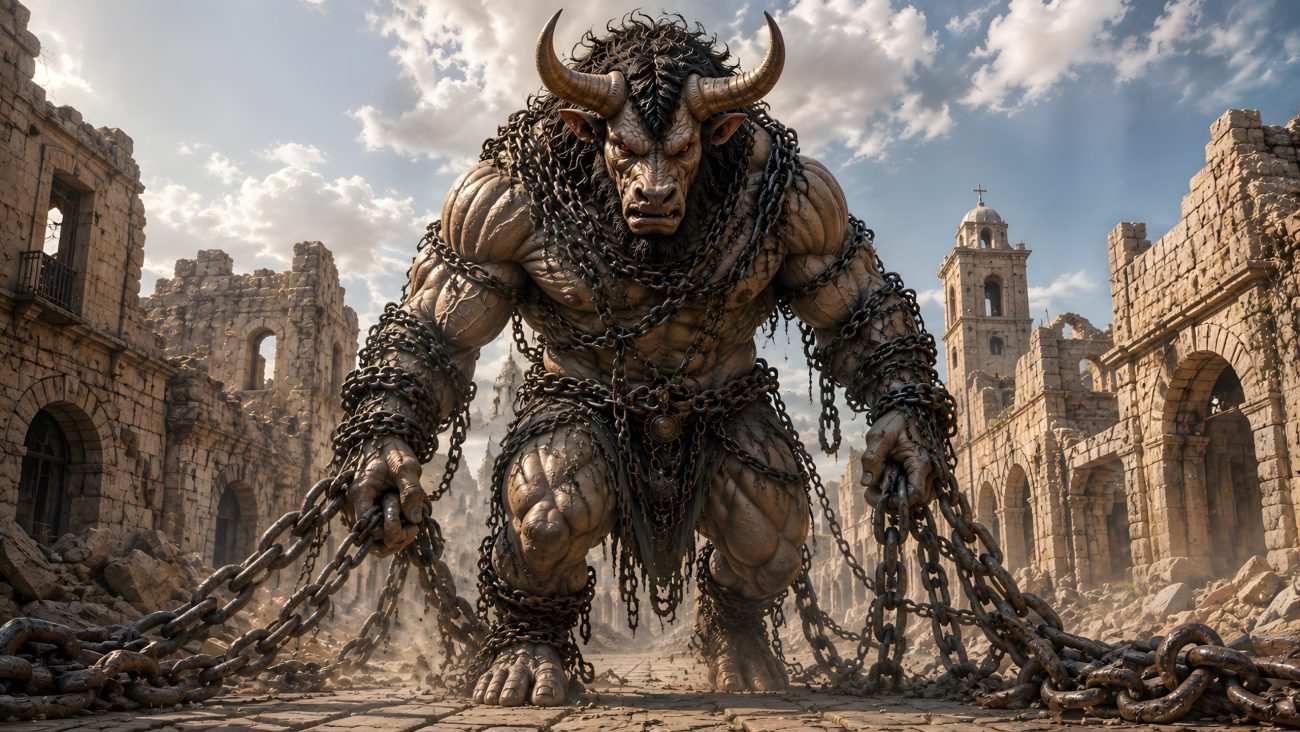
The Minotaur is a creature born from Pasiphaë, wife of King Minos of Crete, and a divine bull sent by Poseidon. It possessed the body of a man and the head of a bull and was confined within a labyrinth constructed by Daedalus, where it was fed human victims sent from Athens.

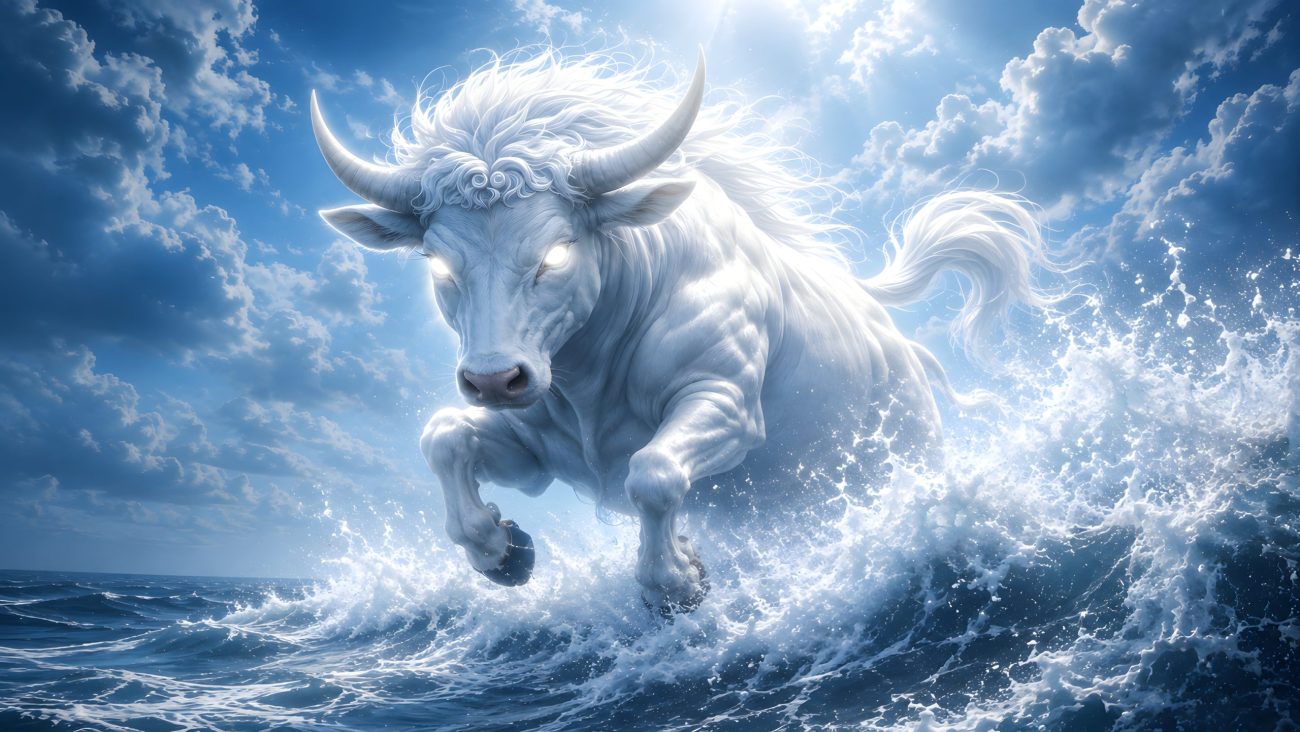
After Minos became king of Crete, he prayed to Poseidon for a sign of divine favor. The god sent a white bull, which Minos was meant to sacrifice, but he kept it instead. As punishment, Poseidon caused Pasiphaë to fall in love with the bull. With the help of Daedalus, she entered a wooden cow and mated with it, giving birth to Asterius, called the Minotaur. The creature grew large and ferocious and fed on humans. Minos, following an oracle, had Daedalus build a labyrinth to contain it.

After the death of Minos’s son Androgeus, Athens was forced to send seven youths and seven maidens as tribute to be devoured by the Minotaur. When the time came again, Theseus volunteered to go. In Crete, Ariadne helped him by giving him a thread to navigate the labyrinth. Theseus entered, found the Minotaur, and killed it. He then used the thread to escape and led the others out.


Sources

Theoi Project contributors. (n.d.). Minotauros (Minotaur). In Theoi Greek Mythology, from https://www.theoi.com/Ther/Minotauros.html

Wikipedia contributors. (n.d.). Minotaur – Creation myth. In Wikipedia, from https://en.wikipedia.org/wiki/Minotaur#Creation_myth


Kubiore Neushi

Tradition / Region: Japanese Mythology
Alternate Names: Sleeping Cow with a Broken Neck
Category: Cow, Statue


The Myth

Kubiore Neushi is remembered as a stone cow statue connected to Takimiya Hachiman Shrine in Sanuki.

In the year 888, the land of Sanuki suffered a terrible drought. Rivers dried up, rice fields withered, and the villagers feared famine. Sugawara no Michizane, then governor of the province, fasted, purified himself, and climbed Mount Shiroyama to pray for rain.

At first, the heavens sent firestones and then pebbles, which frightened the people, but Michizane continued his devotions. On the final night of his ritual, the god of Mount Shiroyama appeared to him in a dream and told him that if he offered even a single drop of water to the heavens, a heavy rain would come.

Michizane threw his ink-soaked brush into the sky. At once, black clouds gathered, thunder rolled, and rain poured over the land. The dying crops revived and the villagers rejoiced. They gathered at Takimiya Hachiman Shrine and danced in celebration.

It is said that the joy of that day was so great that the stone cow statue before the shrine joined the dance. In its enthusiasm, the cow broke its neck and became known as the Sleeping Cow with a Broken Neck. The villagers preserved their celebration as the Takimiya Nembutsu Dance in memory of the rain and the event.


Gallery


Sources

TYZ Yokai Blog. (2021). 首折れ寝牛 (Kubiore Neushi). From https://tyz-yokai.blog.jp/archives/1078437894.html


Interpretive Lenses

Religious Readings
  • Christian Ascetic Deep Dive
Philosophical Readings
  • Nietzschean Deep Dive
Psychological Readings
  • Jungian Deep Dive
Esoteric Deep Dive
  • Hermetic Deep Dive
Political / Social Readings
  • Marxist Deep Dive

Fairy Cow

Tradition / Region: Irish Mythology
Alternate Names:
Category: Cow


The Myth

In Ireland it was often said that the fairy folk kept herds of magical cattle and sometimes shared their bounty with humans. These fairy cows were usually hornless, often red or speckled, and known for their endless milk and for bearing calves year after year.

One winter in County Donegal, a poor family with many children faced starvation. One stormy night they heard the lowing of a cow outside their home. When they went out, they found a red-speckled cow standing quietly at their door. They brought her into their barn, and the very next day she calved and gave rich, plentiful milk.

The family searched to see if the animal belonged to anyone, but no one claimed her. For years she stayed with them, producing calves and filling their vessels with milk, keeping the household alive.

One day, however, the father found her grazing in a newly sown field. In anger he lifted his staff to strike her, forgetting the blessing she had been. At once the cow gathered her calves and vanished, and neither she nor her offspring were ever seen again.

Other tales told of fairy cattle that seemed to die suddenly. People believed that in such cases the fairies had taken the real animal and left behind a piece of enchanted wood shaped like a cow. Because of this, it was thought unwise to eat meat from a beast that had died strangely, for it might belong to the fairy world.

By the sea, it was also said that undersea folk kept their own herds, which grazed on the ocean’s growth and sometimes appeared to human eyes as seals.

Thus the fairy cow was remembered as a creature of otherworldly kindness, one that could bring life and plenty, yet would vanish the moment gratitude gave way to anger.


Sources

Monaghan, P. (2004). The Encyclopedia of Celtic Mythology and Folklore. Facts on File, p. 170.


Eshō

Tradition / Region: Japanese Mythology
Alternate Names:
Category: Cow


The Myth

At Enkō-ji Temple there once lived a monk named Shaku Eshō. During his lifetime, he took a bundle of firewood belonging to the temple—wood meant for boiling water—and gave it away to another person. Not long after this act, Eshō died.

Some time later, a cow at the temple gave birth to a calf. As it grew, the animal was put to work pulling carts and hauling heavy loads of firewood each day without rest.

One day, while the ox strained beneath its burden, a monk unknown to the temple appeared at the gate. Watching the animal struggle, he said quietly:

“Monk Eshō may have been skilled in reciting the Nirvana Sutra, but it seems he is not very good at pulling a cart.”

At these words, the ox burst into tears, gave a deep sigh, and fell down dead.

The driver accused the visiting monk of causing the animal’s death and had him seized and reported. Yet the monk’s appearance was noble and radiant, unlike that of an ordinary person. Artists were summoned to paint him, and each portrait they made resembled Kannon Bodhisattva. Soon afterward, the monk vanished, and it was said that Kannon had appeared in human form and then departed.

From that time on, people told that the ox had been none other than Monk Eshō reborn, condemned to labor for his wrongdoing. Similar stories were also told of other monks who misused temple goods and were reborn as cattle, forced to pull carts and bear burdens as punishment.

Thus the tale endured as a warning that even small acts of theft could bind a soul to a life of toil, and that the lowing of a weary ox might carry the regret of a human past.


Gallery


Sources

Keikai. (822). Nihon-koku genpō zen’aku ryōiki [日本国現報善悪霊異記, Miraculous Stories of Reward and Punishment in This World]. Nara: Yakushiji Temple.

TYZ Yokai Encyclopedia. 恵勝, from https://tyz-yokai.blog.jp/archives/1078437911.html


Interpretive Lenses

Religious Readings
  • Christian Ascetic Deep Dive
Philosophical Readings
  • Nietzschean Deep Dive
Psychological Readings
  • Jungian Deep Dive
Esoteric Deep Dive
  • Hermetic Deep Dive
Political / Social Readings
  • Marxist Deep Dive

El Toro el Súpay

Tradition / Region: Argentinian Mythology
Alternate Names: Devil Bull; Toro Supray
Category: Cow


The Myth

In the lands of Santiago del Estero, near the Saladillo River, people speak of a fearsome creature called the Toro el Súpay.

This bull is said to be enormous beyond any natural size. Its head appears partly human and partly bovine, set upon a strong upright neck. Its mane and tail bristle, and smoke pours from its nostrils. Some say its horns shine like gold, flashing in the light as it moves.

Though terrible to behold, the bull is not always a bringer of harm. It is believed to guard the herds of the one who owns it, ensuring that livestock thrive and multiply beyond ordinary fortune. Yet such prosperity is never free, for people say the owner must have made a pact with the Supay, the devil of the region.

The truth of this bond is revealed only when the master dies. At that moment, the Toro el Súpay gathers the soul of the dead and drives away every animal belonging to him. By dawn, while mourners may still sit beside the body, the corrals stand empty, and no beast remains.

Thus the Toro el Súpay is remembered as a bull of dark blessing, one that brings wealth in life but claims all in death, leaving behind only silence where herds once stood.


Gallery


Sources

Colombres, A. (1984). Seres sobrenaturales de la cultura popular argentina. Ediciones Del Sol, p. 48.


Interpretive Lenses

Religious Readings
  • Christian Ascetic Deep Dive
Philosophical Readings
  • Nietzschean Deep Dive
Psychological Readings
  • Jungian Deep Dive
Esoteric Deep Dive
  • Hermetic Deep Dive
Political / Social Readings
  • Marxist Deep Dive

Endure and Refrain

Tradition / Region: Alchemical Mythology
Alternate Names:
Category: Cow


The Myth

In an old alchemical image, there is shown a powerful bull held in check by a man with a rod. Behind the animal stand several cows, calm and watchful, some heavy with young.

The bull strains forward with great strength, but its leg is bound so that it cannot rush ahead. The herdsman stands firm before it, guiding and restraining the beast so that it does not break loose among the cows.

The scene is quiet, yet full of tension. The bull’s power is clear, but it is not destroyed. Instead, it is held and directed. The cows behind remain safe, and the herd continues in order.

The image has been remembered as a lesson shown through animals: that strength must be governed, that force must sometimes be held back, and that endurance and restraint preserve what is meant to grow.

Thus the bound bull and the waiting herd became a lasting emblem, showing how power, when guided, protects life rather than bringing ruin.


Gallery


Sources

Alciato at Glasgow: Emblem: Anechou kai apechou. Sustine & abstine. (n.d.). https://www.emblems.arts.gla.ac.uk/alciato/emblem.php?id=A21a034


Interpretive Lenses

Religious Readings
  • Christian Ascetic Deep Dive
Philosophical Readings
  • Nietzschean Deep Dive
Psychological Readings
  • Jungian Deep Dive
Esoteric Deep Dive
  • Hermetic Deep Dive
Political / Social Readings
  • Marxist Deep Dive

Dun Cow of Saint Ciarán

Tradition / Region: Irish Mythology
Alternate Names:
Category: Cow


The Myth

When Saint Ciarán went to study at Clonard, he carried little with him. Instead of wealth or fine possessions, he brought only a dun-colored cow as his offering.

Though the animal seemed humble, it proved a great blessing. Wherever Ciarán stayed, the cow gave milk in abundance, enough to sustain not only him but the scholars and clergy around him. Its supply never failed, and it became known as a gift that supported the holy community.

After Ciarán’s death, the memory of the cow remained strong. It was said that when the animal died, its hide was preserved and made into parchment. From that hide came the pages of a great book known as the Book of the Dun Cow, on which were written many ancient stories, lives of saints, and heroic tales of Ireland.

In this way, the cow of Saint Ciarán was remembered as a creature that first nourished the living with its milk and later preserved the words and history of the land, carrying them forward through time.


Gallery


Sources

Wikipedia contributors. (n.d.). Ciarán of Clonmacnoise. In Wikipedia, The Free Encyclopedia, from https://en.wikipedia.org/wiki/Ciar%C3%A1n_of_Clonmacnoise


Interpretive Lenses

Religious Readings
  • Christian Ascetic Deep Dive
Philosophical Readings
  • Nietzschean Deep Dive
Psychological Readings
  • Jungian Deep Dive
Esoteric Deep Dive
  • Hermetic Deep Dive
Political / Social Readings
  • Marxist Deep Dive

Dun Cow

Tradition / Region: Irish Mythology
Alternate Names: The Great Dun Cow; Y Fuch Frech; Y Fuwch Laethwen Lefrith
Category: Cow


The Myth

In the lands of Ireland and Britain there wandered a great and wondrous animal known as the Dun Cow. She was immense in size and known for her generosity, for she gave milk freely to anyone who asked. Her bounty seemed without end, and people came from far and wide to receive her gift.

In some tellings, she bore two mighty long-horned oxen, who later became famous for their strength and deeds. Yet though the cow gave willingly, not all treated her with respect. In certain stories, greedy people tried to take more than was fair, milking her without care or gratitude. Because of such acts, she was eventually killed, and in some places her enormous bones were said to remain as proof of her size and wonder.

Another tale speaks of a Dun Cow that belonged to a holy man in Ireland. After the cow died, her hide was preserved and turned into vellum. From this hide came the pages of a great book that held many ancient stories of Ireland. In this way, even after death, the cow continued to give, for her body became the keeper of the land’s tales and memories.

Thus the Dun Cow was remembered as a creature of abundance and marvel, whose generosity fed both people and legend, and whose gift endured even after her life had ended.


Sources

Monaghan, P. (2004). The Encyclopedia of Celtic Mythology and Folklore. Facts on File, p. 141.


Donn Cuailnge and Finnbennach

Tradition / Region: Irish Mythology
Alternate Names:
Category: Cow

The Myth

In ancient Ireland there lived two mighty bulls whose strength was said to surpass that of all other cattle. One was Finnbennach, owned by the queen of Connacht, admired throughout the land for his size and power. The other was Donn Cuailnge, the great bull of Ulster, the only beast believed capable of matching him.

Their rivalry became the heart of a great conflict. When the rulers of Connacht sought to possess Donn Cuailnge, the attempt set off the struggle remembered as the great cattle raid of Cooley. Warriors marched and kingdoms clashed, for the possession of the bull was seen as a matter of honor and power.

Whenever the two bulls met, their battles were terrible to behold. They charged with thunderous force, locking horns while their hooves tore the ground apart. Hills and fields were scarred by their fights, and men watched in awe as the land seemed to shake beneath them.

At last, in their final encounter, Donn Cuailnge overcame Finnbennach and slew him. Yet the victory cost him dearly, for he too was left wounded from the struggle.

Thus the two bulls passed into legend, remembered as creatures whose strength stirred war among kings and whose clashes were counted among the greatest marvels of Ireland.


Sources

Monaghan, P. (2004). The Encyclopedia of Celtic Mythology and Folklore. p. 135.