Khalkotauroi

Tradition / Region: Greek Mythology
Alternative names: Colchis Bulls, Bronze Bulls, Tauroi Khalkeoi
Category: Cow


The Myth

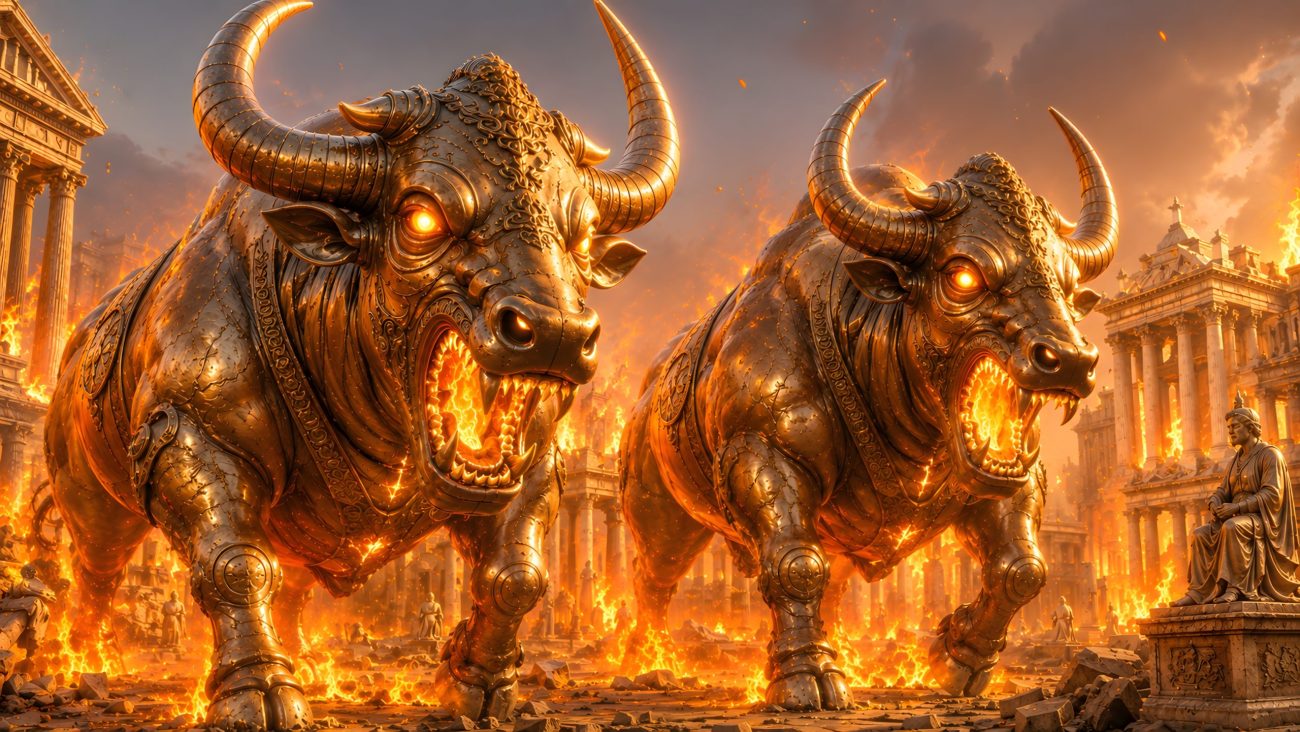
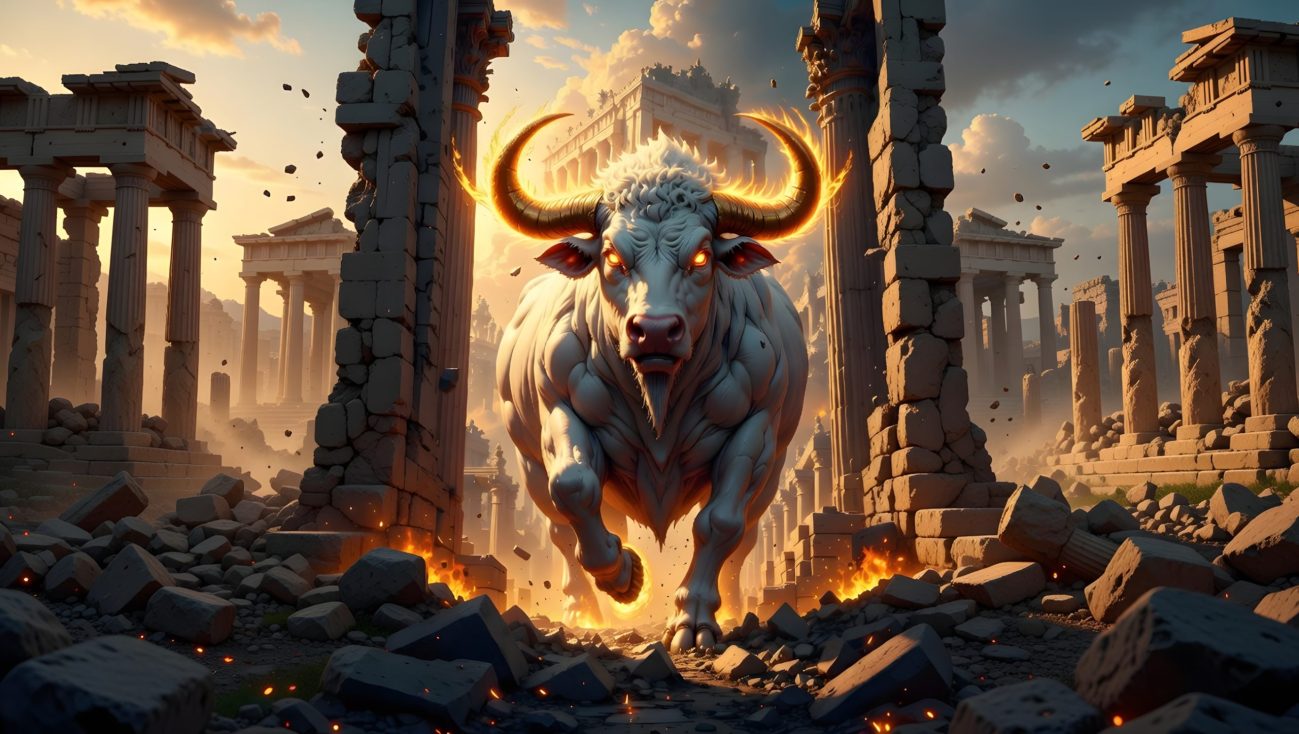
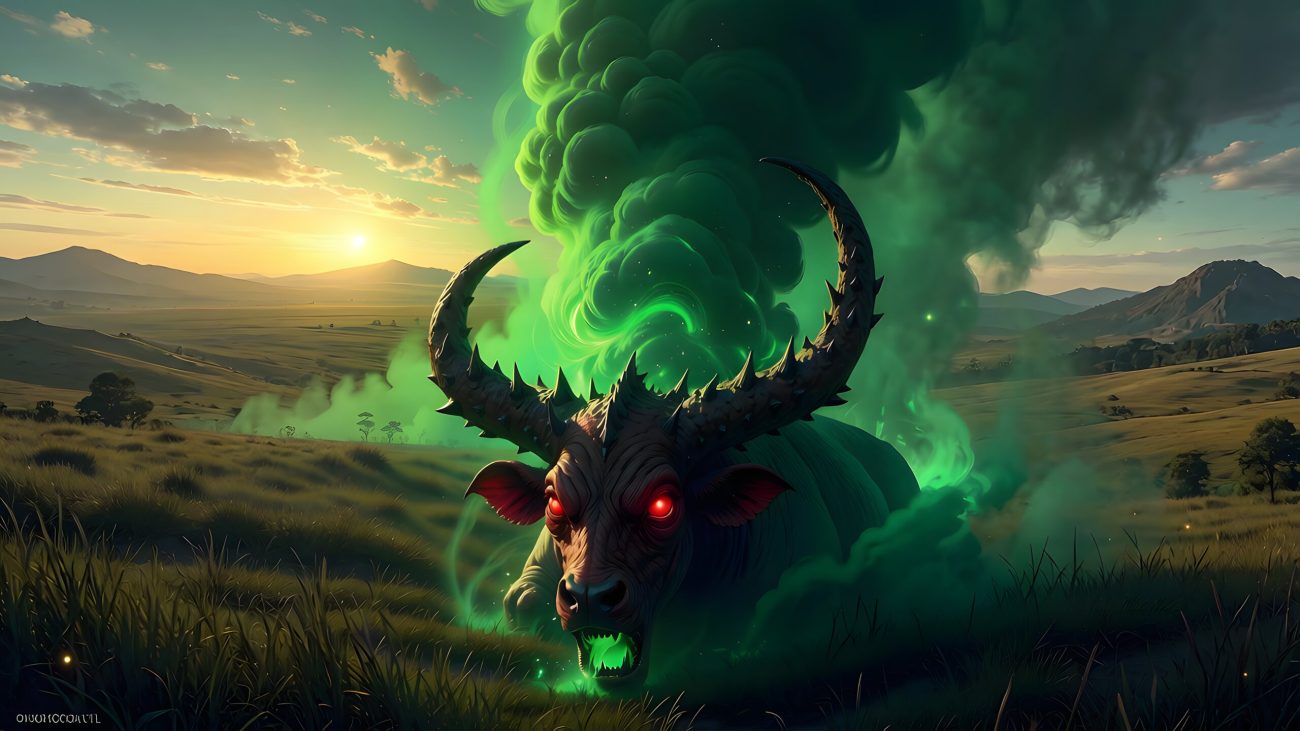
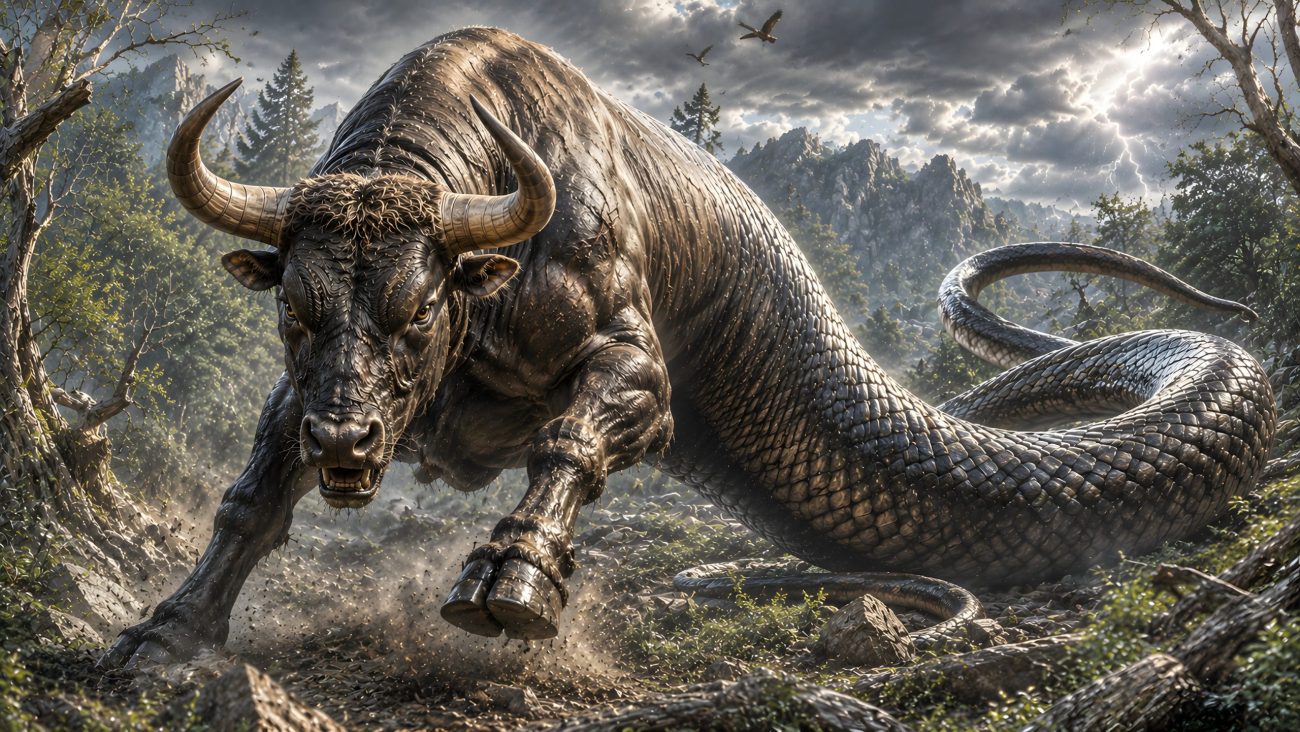
The Khalkotauroi are two enormous bulls with bronze hooves and bronze mouths. Flames pour from their mouths, making them dangerous even before they begin to charge.

The bulls were forged by Hephaestus, the divine blacksmith, and given to King Aeetes of Colchis. Aeetes guarded the Golden Fleece and set the creatures as one of the impossible tasks that Jason had to complete.

Aeetes promised Jason the Golden Fleece if he could yoke the two bronze bulls and use them to plough a field. Afterward, Jason was required to sow the freshly ploughed earth with dragon’s teeth.

The heat of the bulls made the task nearly impossible. Their fiery breath could burn anyone who approached them, but Medea, the daughter of Aeetes, had fallen in love with Jason and secretly gave him a magical potion that protected his body from the flames.

Protected by Medea’s potion, Jason approached the Khalkotauroi, endured their fire, yoked the enormous bulls, and forced them to plough the field.


Sources

“Khalkotauroi.” Wikipedia: The Free Encyclopedia. Wikimedia Foundation. Accessed August 16, 2026. https://en.wikipedia.org/wiki/Khalkotauroi


Foha

Tradition / Region: Greek Mythology
Alternative names: Fohi, Sea Bull
Category: Cow


The Myth

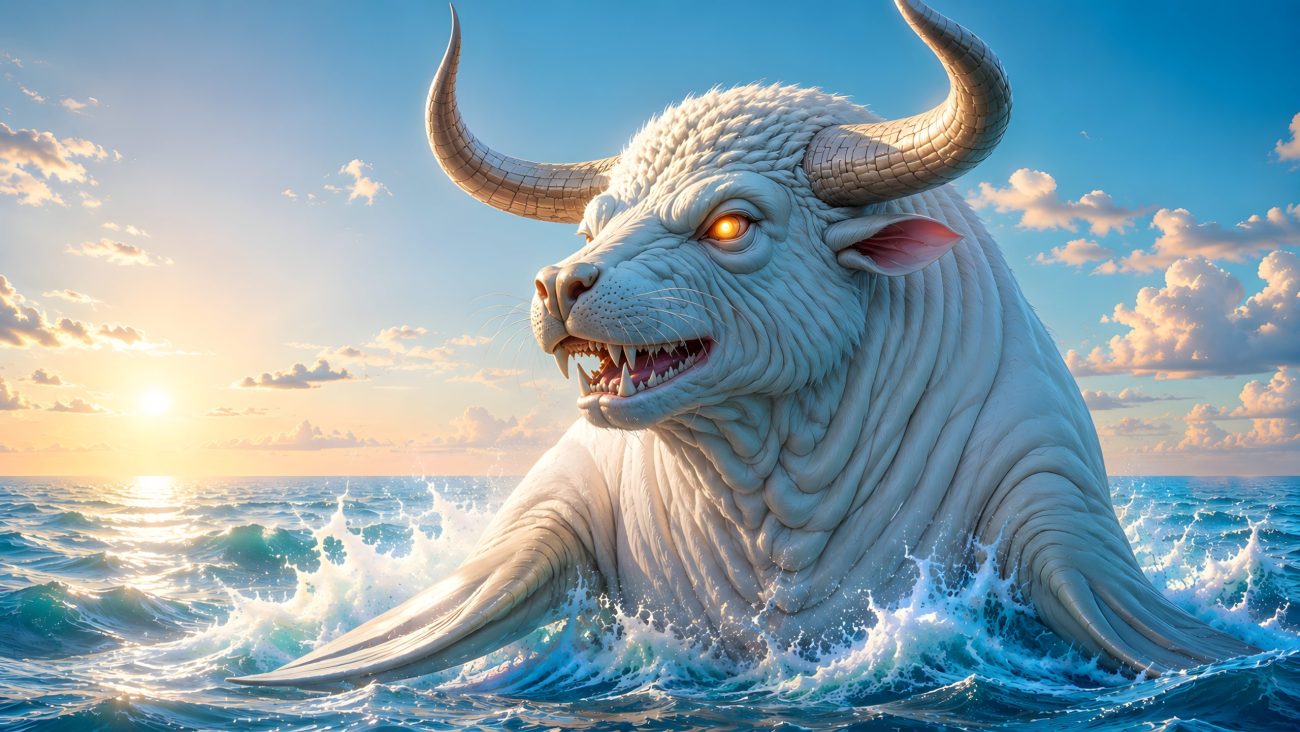
The Foha is an enormous sea bull of legendary strength. It is known for its sedentary nature and tends to remain in one place rather than roaming through the sea. Despite its immense size, it is also said to come onto land in herds to feed on grass without harming people or livestock.

According to the legend, the Foha is exceptionally irascible, especially toward its own kind. Aristotle recorded that these creatures would fight fiercely among themselves, particularly the females.

When a male Foha killed a female during one of these battles, it would seek out another female and continue the same brutal behavior. This succession of violent encounters could continue until the male eventually killed all the females it encountered.

In one account, the Foha is described as a creature with the face of a calf and human-like hands.

Despite its appearance as a gigantic sea bull, the creature was ultimately said to be nothing more than a seal.


Sources

“Фоха (Foha).” New Bestiary (Bestiary.us). Accessed August 15, 2026. https://www.bestiary.us/foha


Henichires

Tradition / Region: Greek Mythology
Alternative names:
Category: Cow


The Myth

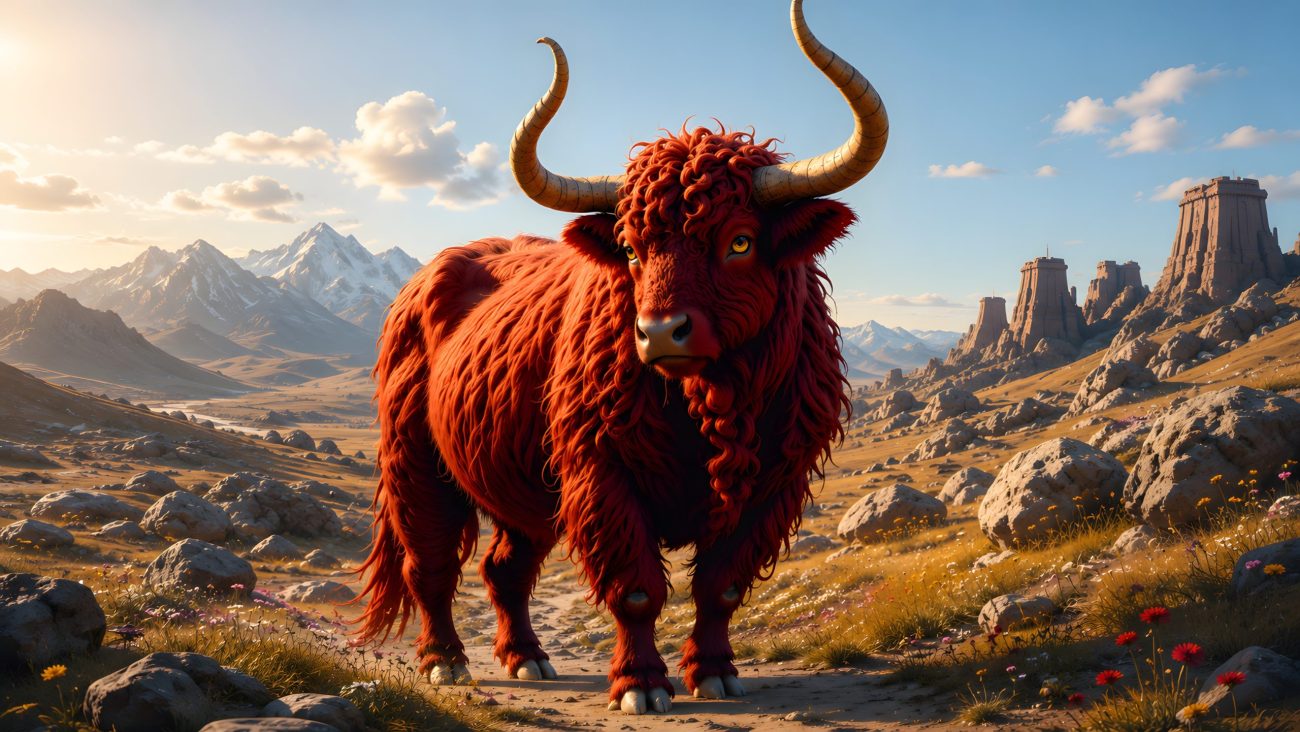
The Henichires is a strange animal said to occur in the Orient. It resembles a bull with short, soft hair like a horse’s mane hanging down from its shoulders. Its body is covered in reddish-brown woolly hair, and its cry resembles the bellowing of a bull. It has curved horns, strong enough to make it a formidable fighter.

The hair on its forehead divides above the eyes and falls toward either side of the head. Its teeth, legs, and tail resemble those of a cow, although its tail is shorter. Its hide is exceptionally tough and can withstand powerful blows.

According to the tradition, the flesh of the Henichires has a sweet taste, and hunters therefore pursue it for its meat. When hunted against its will, however, the animal may suddenly stop and stand completely motionless before turning to defend itself. During such encounters it scatters its dung widely around itself, making it difficult for anyone to approach.

When a female Henichires is about to give birth, the other animals gather around her. They build a barrier of dung around the mother, forming a kind of protective wall that prevents anyone from approaching her or disturbing the birth.


Sources

Biesheuvel, Ingrid, trans. Der Naturen Bloeme. Zutphen: Walburg Pers, 2024. ISBN 9789464563214.


Minotaur

Tradition / Region: Greek Mythology
Alternate Names: Asterion, Minotauros
Category: Cow, Hybrid


The Myth

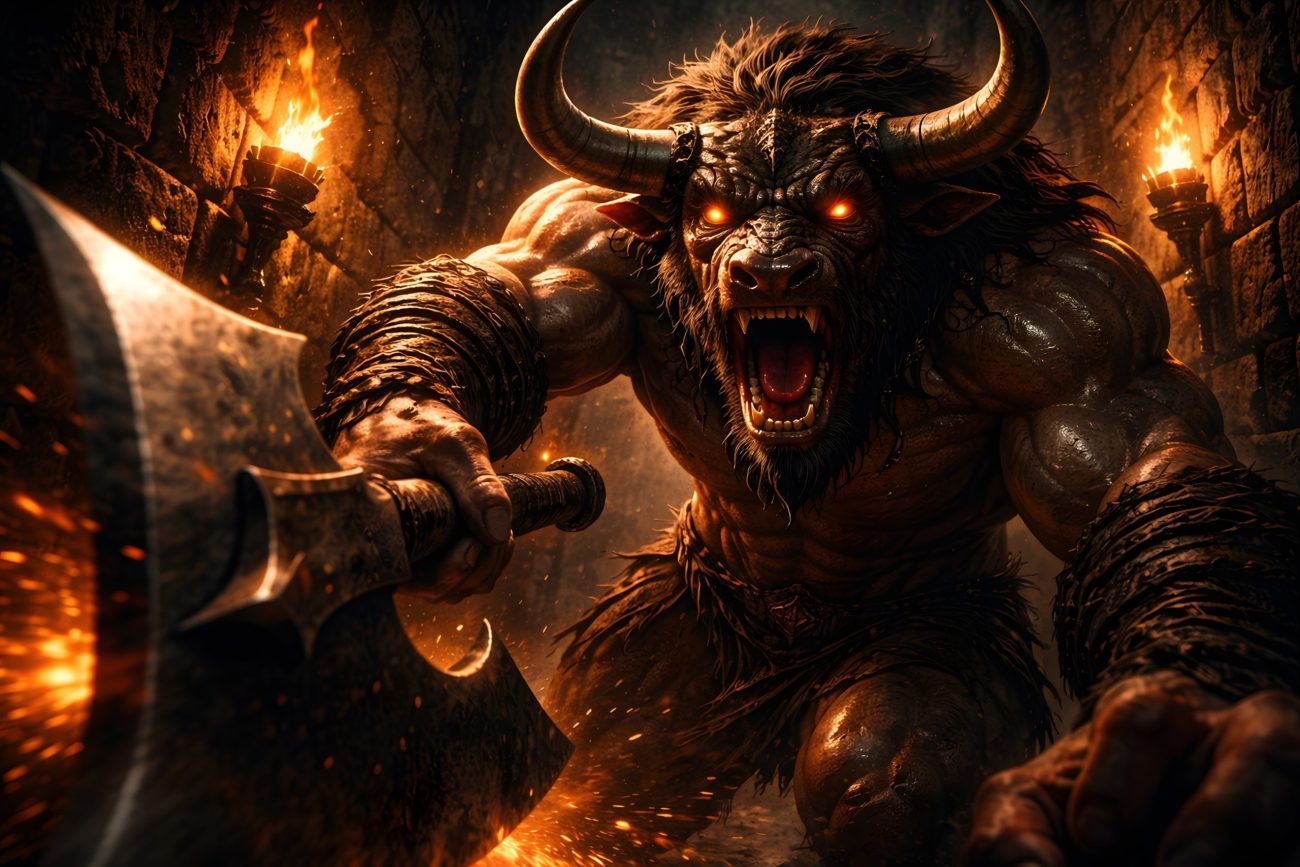
The Minotaur is a creature born from Pasiphaë, wife of King Minos of Crete, and a divine bull sent by Poseidon. It possessed the body of a man and the head of a bull and was confined within a labyrinth constructed by Daedalus, where it was fed human victims sent from Athens.

After Minos became king of Crete, he prayed to Poseidon for a sign of divine favor. The god sent a white bull, which Minos was meant to sacrifice, but he kept it instead. As punishment, Poseidon caused Pasiphaë to fall in love with the bull. With the help of Daedalus, she entered a wooden cow and mated with it, giving birth to Asterius, called the Minotaur. The creature grew large and ferocious and fed on humans. Minos, following an oracle, had Daedalus build a labyrinth to contain it.

After the death of Minos’s son Androgeus, Athens was forced to send seven youths and seven maidens as tribute to be devoured by the Minotaur. When the time came again, Theseus volunteered to go. In Crete, Ariadne helped him by giving him a thread to navigate the labyrinth. Theseus entered, found the Minotaur, and killed it. He then used the thread to escape and led the others out.


Sources

Theoi Project contributors. (n.d.). Minotauros (Minotaur). In Theoi Greek Mythology, from https://www.theoi.com/Ther/Minotauros.html

Wikipedia contributors. (n.d.). Minotaur – Creation myth. In Wikipedia, from https://en.wikipedia.org/wiki/Minotaur#Creation_myth


Cretan Bull

Tradition / Region: Greek Mythology
Alternate Names: Marathonian Bull
Category: Cow


The Myth

In the time when the gods still intervened openly in the affairs of men, Poseidon sent a magnificent snow-white bull from the sea to King Minos of Crete. The god meant this beast to confirm Minos’ right to rule, on the condition that the king would sacrifice the animal in honor of the god.

But when Minos saw the bull, he judged it too splendid to lose. Instead of offering it to Poseidon, he sacrificed another, lesser animal and kept the divine bull for himself.

The god saw the deception and grew angry. As punishment, he caused Minos’ wife, Pasiphaë, to be seized by a strange and terrible desire for the bull. From their union was born the Minotaur, half man and half bull. To hide the monster, Minos ordered the craftsman Daedalus to build the Labyrinth, a vast and winding maze in which the creature was shut away.

Meanwhile the bull itself fell under the god’s curse. It grew wild and furious, rampaging across Crete, tearing up crops and destroying orchards, and no one could subdue it.

At last the hero Heracles was commanded by King Eurystheus to capture the beast as one of his labors. Minos allowed him to take it, and Heracles wrestled the bull into submission and carried it across the sea to Tiryns. Later the animal escaped again and wandered into the land of Marathon, where it continued to terrorize the countryside.

The bull’s fate crossed again with that of heroes. It was said to have caused the death of Androgeus, Minos’ son, which in turn led to the tribute of Athenian youths sent to Crete for the Minotaur. Eventually the hero Theseus captured the bull near Marathon and brought it to Athens, where it was sacrificed to the gods.

Thus the Cretan Bull became known as a creature sent by a god, the sire of the Minotaur, and a beast whose fury shaped the deeds of kings and heroes alike.


Sources

Wikipedia contributors. (n.d.). Cretan Bull. In Wikipedia, from https://en.wikipedia.org/wiki/Cretan_Bull


Catoblepas

Tradition / Region: Greek Mythology
Alternate Names:
Category: Cow


The Myth

In ancient times, in the distant lands of Africa near the sources of great rivers and marshes, there lived a dreadful creature called the Catoblepas.

It was shaped somewhat like a bull, though more monstrous and misshapen. Its limbs were heavy, and its head was enormous, so large that it could scarcely lift it from the ground. Because of this weight, the beast always walked with its gaze turned downward. This was considered a mercy, for its eyes were said to bring instant death to any who met them.

Its face was grim and terrible. A mane like that of a horse hung over its head, and its eyes were small, red, and bloodshot. It fed only on poisonous plants that grew in the marshes, and the foulness of its food filled its breath with deadly vapor. When angered or disturbed, the creature released a noxious breath that poisoned the air itself, so that animals and men who inhaled it lost their strength, their voice, and their life.

Because of this, all creatures avoided the places where it dwelled, and even hunters feared to approach its marsh.

Stories were told of travelers and soldiers who unknowingly came near it. Some died from its gaze, others from its breath, until at last men armed with long spears managed to kill the monster from a distance. Its hide was said to have been taken as a trophy and placed in a temple dedicated to a mighty hero.

Yet the terror of the Catoblepas lived on in tales, for it was remembered as a beast so foul and dangerous that even its mere presence could bring death, a creature that kept its head forever bowed, as though the world itself could not bear its sight.


Sources

George of Pisidia. Hexaemeron, p. 29

Bestiary.us, Katoblepas. Retrieved May 28, 2025, from https://www.bestiary.us/katoblepas

Pliny the Elder. Natural Histories, Book VIII, Chapter 32, p. 209–210.