Guguli

Tradition / Region: Georgian Mythology
Alternate Names:
Category: Bird, Hybrid


The Myth

The Guguli are a strange people encountered by Mindia after he escaped from captivity and lost his way, arriving in their land instead of returning home. They questioned him about his origin and why he had come, and he told them his story.

Among them was a one-eyed Guguli who reproached Mindia, reminding him that as a child he had thrown a stone and blinded him, even though he was the one who brought spring to the land. Mindia remembered this and asked for forgiveness.

The Guguli lived in houses made of small dry branches. One day they became alarmed and began strengthening their homes, saying that an enemy army was approaching. Soon a black host attacked their land and began destroying it. Mindia took a stick and fought them off, killing the attackers.

After this, the Guguli became fond of Mindia and told him they would grant whatever he wished. He asked them to take him back to his homeland.

They then prepared a meal and brought forth a flock of white snakes. One of the snakes was killed in his honor. Mindia was afraid and reluctant, but was persuaded to eat it. After eating, he became unwell and restless.

The Guguli women prepared three beds for him and told him to lie on each in turn until he found rest. On the third bed he recovered. When he awoke, he found swellings under his arms. The Guguli instructed him to cut them open, and many biting creatures came out. After this, he became light, so much so that he had to carry a stone with him so the wind would not carry him away.


Sources

Tsanava, A. (1992). ქართული მითოლოგია [Georgian Mythology]. In Tbilisi: Merani P. 28.

Valravn

Tradition / Region: Danish Mythology
Alternate Names: Valravnen
Category: Bird, Wolf


The Myth

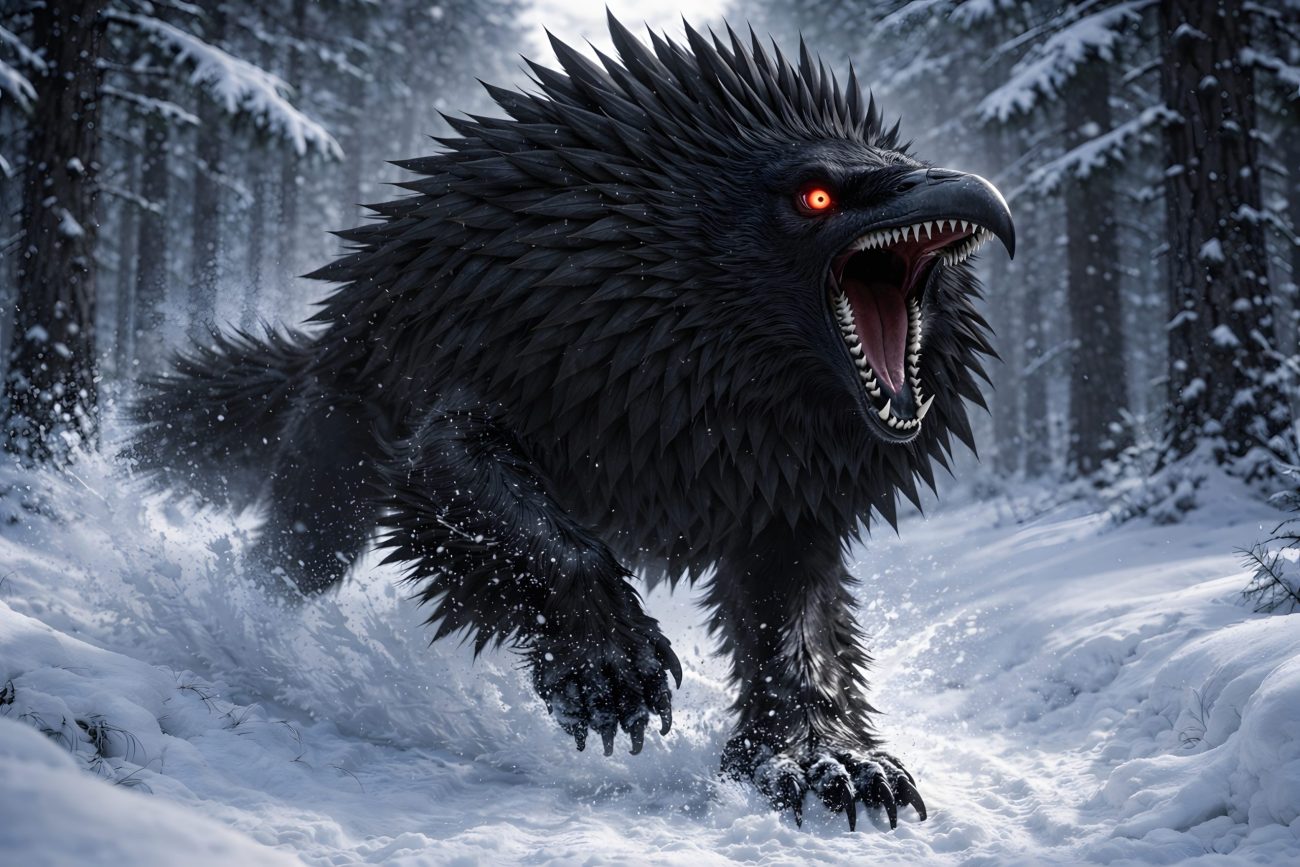
The Valravn is a supernatural raven connected with death, transformation, and dark power. It is often described as either a human turned into a raven or a raven that gains human nature through consuming the dead.

In the central ballad tradition, the Valravn appears as a cursed knight in raven form. He encounters a maiden and offers to carry her to her betrothed, but demands a price: the first son she will bear. The woman accepts, and after she is reunited and later gives birth, the raven returns to claim the child.

No bargain or wealth can stop him. When the child is brought forth, the Valravn pierces the boy and drinks his heart’s blood. Through this act, the curse is broken—the raven transforms back into a human knight.

After the transformation, the child is restored to life, and the danger passes. Yet the event reveals the cost of the change: the Valravn’s return to humanity requires blood and sacrifice.

Another tradition presents a different origin. Ravens that feed on the bodies of fallen kings or warriors—especially consuming the heart—gain human intelligence and supernatural abilities. These creatures can harm people, alter forms, and possess unnatural strength.

The Valravn represents a darker transformation motif:
a being caught between animal and human, whose return to humanity is achieved through violence, death, and the crossing of natural boundaries.


Sources

Wikipedia contributors. (n.d.). Valravn. In Wikipedia, from https://en.wikipedia.org/wiki/Valravn


Phlachal

Tradition / Region: Armenian Mythology
Alternate Names: Elephant-Goat
Category: Sheep, Elephant, Hybrid


The Myth

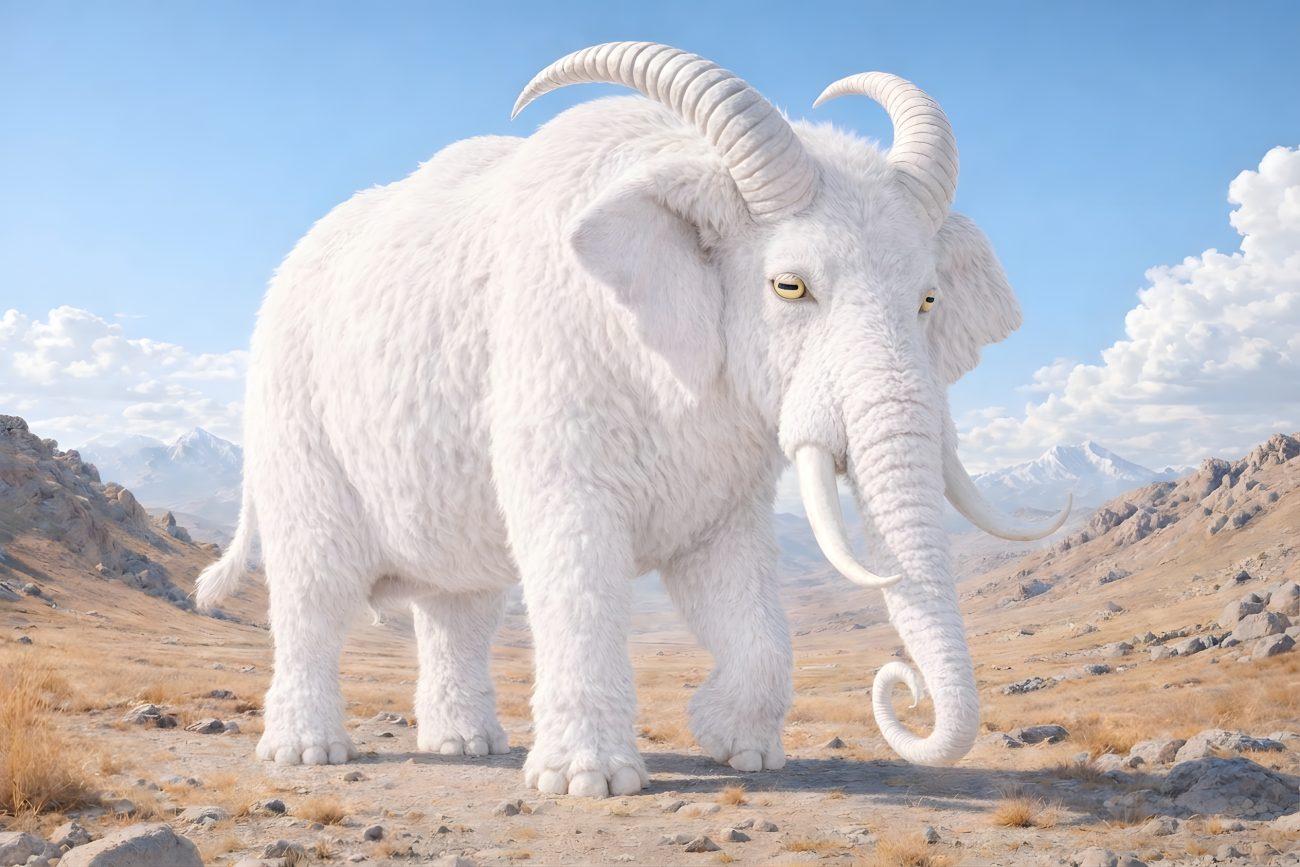
The Phlachal is a rare and obscure creature in Armenian mythology, described simply as an “elephant-goat.” It belongs to a class of chimeric beings—monsters formed by combining traits of different animals.

Very little detailed information survives about the Phlachal, but its name suggests a hybrid of immense size and unnatural composition, likely blending the strength and mass of an elephant with the agility or form of a goat. Like other chimeras in regional folklore, it would have been perceived as unnatural and unsettling.

It appears in the same context as other hybrid creatures such as the sea-bull, indicating that it was part of a broader mythological tradition of monstrous animals that defied natural order. These beings were often associated with fear, unpredictability, and the boundaries between land, sea, and the supernatural.


Sources

Ananikian, M. H. (1925). Armenian Mythology. In The Mythology of All Races, Vol. 7. Published by the Archaeological Institute of America p. 92.


Minotaur

Tradition / Region: Greek Mythology
Alternate Names: Asterion, Minotauros
Category: Cow, Hybrid


The Myth

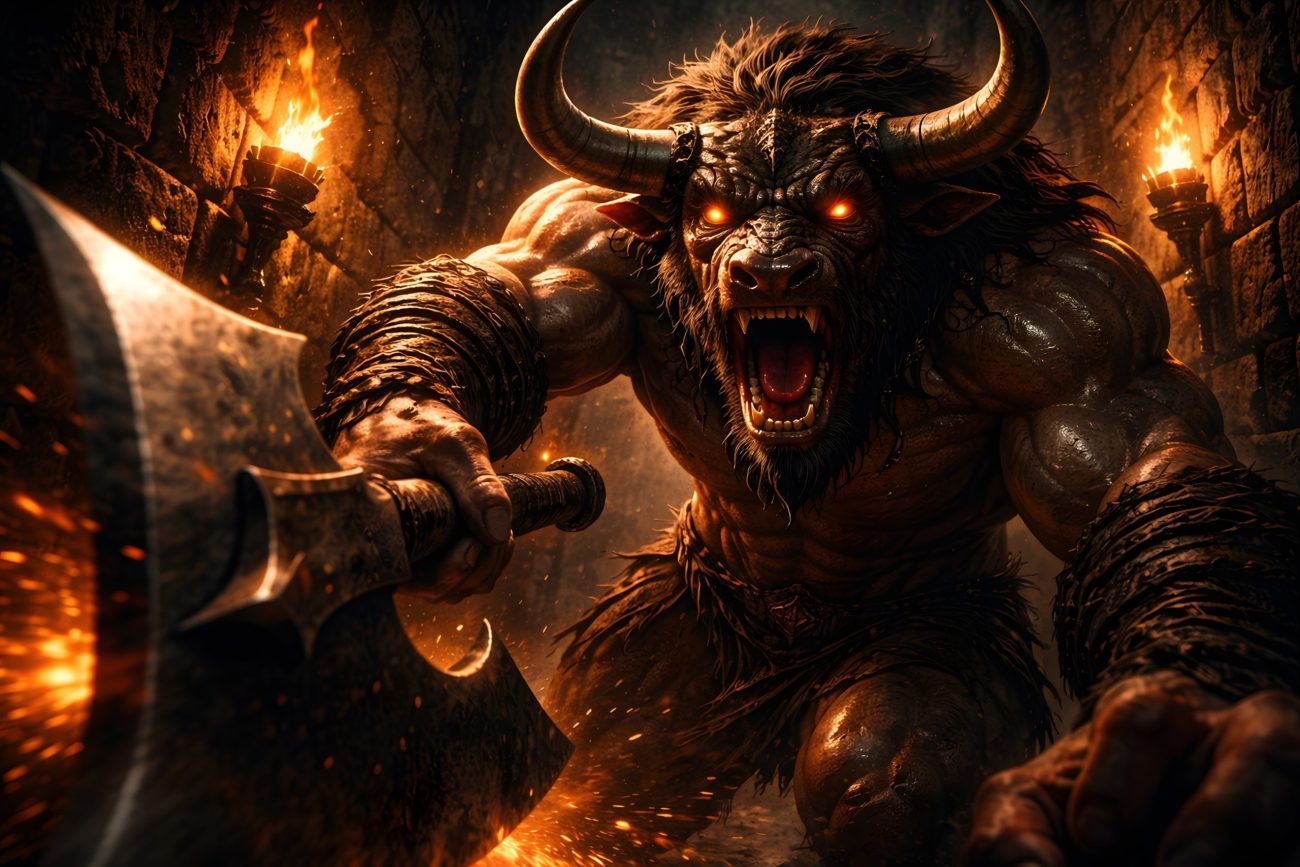
The Minotaur is a creature born from Pasiphaë, wife of King Minos of Crete, and a divine bull sent by Poseidon. It possessed the body of a man and the head of a bull and was confined within a labyrinth constructed by Daedalus, where it was fed human victims sent from Athens.

After Minos became king of Crete, he prayed to Poseidon for a sign of divine favor. The god sent a white bull, which Minos was meant to sacrifice, but he kept it instead. As punishment, Poseidon caused Pasiphaë to fall in love with the bull. With the help of Daedalus, she entered a wooden cow and mated with it, giving birth to Asterius, called the Minotaur. The creature grew large and ferocious and fed on humans. Minos, following an oracle, had Daedalus build a labyrinth to contain it.

After the death of Minos’s son Androgeus, Athens was forced to send seven youths and seven maidens as tribute to be devoured by the Minotaur. When the time came again, Theseus volunteered to go. In Crete, Ariadne helped him by giving him a thread to navigate the labyrinth. Theseus entered, found the Minotaur, and killed it. He then used the thread to escape and led the others out.


Sources

Theoi Project contributors. (n.d.). Minotauros (Minotaur). In Theoi Greek Mythology, from https://www.theoi.com/Ther/Minotauros.html

Wikipedia contributors. (n.d.). Minotaur – Creation myth. In Wikipedia, from https://en.wikipedia.org/wiki/Minotaur#Creation_myth


Itbarak

Tradition / Region: Turkic Mythology
Alternate Names: Baraks
Category: Dog, Hyrbid


The Myth

In the ancient Turkic epics, especially the stories of Oghuz Khagan, there is mention of a strange people known as the Itbaraks.

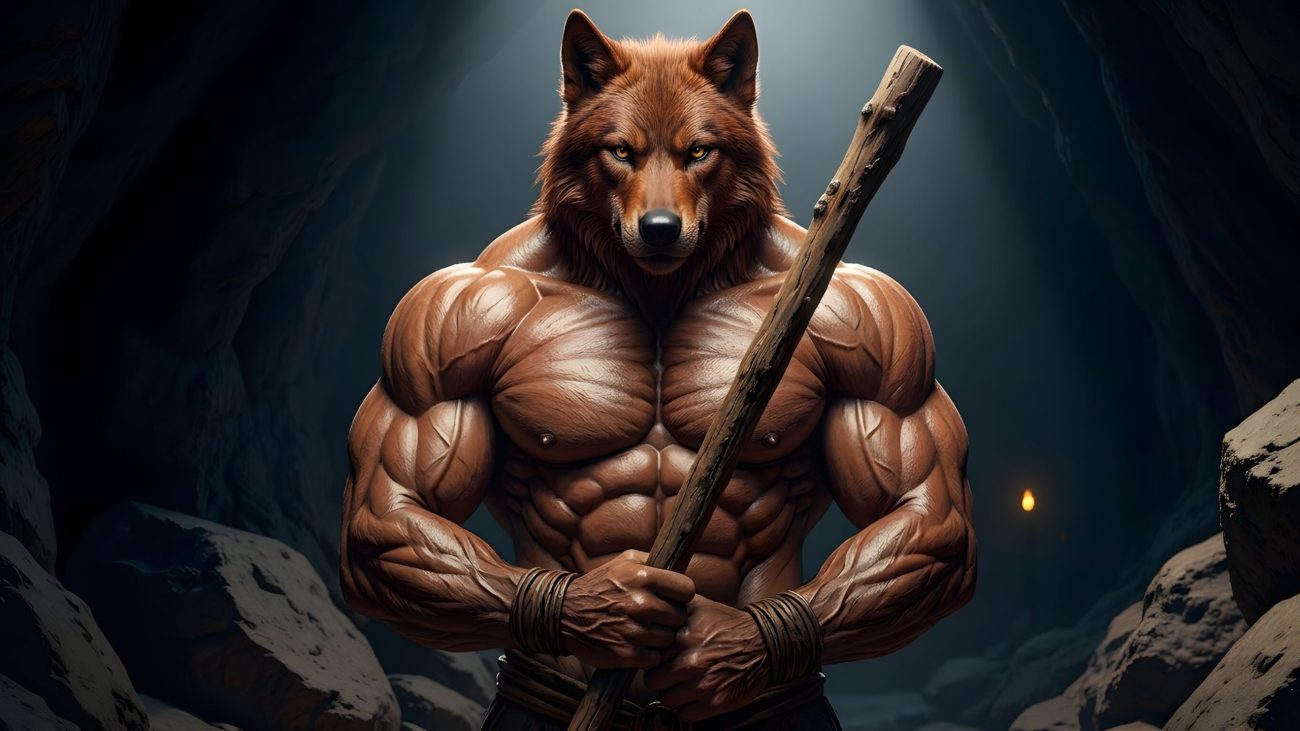
Their name came from the Turkic words for dog and for a dark, shaggy breed of hound. They were said to be powerful beings with the bodies of men but the heads of dogs. Their skin was dark, and they were described as fierce, strong, and difficult to defeat. Their homeland lay far to the northwest, in lands unknown to the Turkic peoples, somewhere beyond the familiar steppe.

When Oghuz Khagan set out to conquer distant regions, he marched against the Itbaraks. But their land proved difficult, and the dog-headed warriors were strong. In this first campaign, Oghuz could not defeat them and was forced to retreat with his army to a small island.

While they were encamped there, one of his warriors’ widows gave birth. With no tent or shelter, the child was born in a hollow. Oghuz named him Kıpçak, a word meaning “hollow” in the old tongue.

Years passed, and Oghuz gathered strength again. After seventeen years he returned to the land of the Itbaraks and this time overcame them. According to the tales, even the women of that land played a role in ending the struggle.

When the victory was won, Oghuz gave the conquered territory to the grown Kıpçak to rule. From him, it was said, came the lineage of the Kipchak people, whose name preserved the memory of his birth and of the long war in the land of the dog-headed folk.

Thus the Itbaraks remained in Turkic legend as a distant and powerful race — part man, part dog — whose land lay on the edge of the known world and whose defeat marked the rise of a new people.


Gallery


Sources

Wikipedia contributors. (n.d.). Itbarak. In Wikipedia, from https://en.wikipedia.org/wiki/Itbarak


Interpretive Lenses

Religious Readings
  • Christian Ascetic Deep Dive
Philosophical Readings
  • Nietzschean Deep Dive
Psychological Readings
  • Jungian Deep Dive
Esoteric Deep Dive
  • Hermetic Deep Dive
Political / Social Readings
  • Marxist Deep Dive

Adlet

Tradition / Region: Inuit mythology, Canadian Mythology, Greenlandic Mythology
Alternate Names: Erqigdlet, Adlit
Category: Dog, Hybrid


The Myth

The Adlet are a race of beings spoken of in Inuit tradition. They are said to be taller than ordinary people and to live inland, away from the coast. Their form is half human and half dog: from the waist up they resemble a man, but their lower bodies are those of dogs. They run swiftly across the land and are often remembered as fierce enemies of humankind. In some stories they are cannibals, and encounters with them are dangerous and violent.

Their origin is told in an old story about a young woman named Niviarsiang, who lived with her father, Savirqong. Though many men wished to marry her, she refused every suitor. Because she would not take a husband, people came to call her “she who would not marry.”

At last, instead of choosing a man, she took a dog as her husband. The dog, named Ijirqang, had white and red spots on his coat. From this strange union ten children were born. Five of them were fully dogs, but the other five were unlike any people before them: their upper bodies were human, while their lower halves were those of dogs. These children were the first Adlet.

Ijirqang did not hunt, and the household was soon starving. The hungry children cried constantly, and Savirqong, their grandfather, was forced to bring them food. At last he grew weary of this burden. He carried his daughter, her husband, and their children out to a small island and left them there, saying that he would provide meat if the dog swam to shore each day to fetch it.

To help her husband, Niviarsiang hung a pair of boots around Ijirqang’s neck so he could carry the meat back across the water. The dog swam to shore as instructed. But when he arrived, Savirqong did not fill the boots with food. Instead, he filled them with stones. Weighted down, Ijirqang drowned in the sea.

When Niviarsiang learned what had happened, she sought revenge. She sent her young dogs across the water to attack her father. They gnawed off his hands and feet as punishment for killing their father.

Later, when Niviarsiang herself came near Savirqong in his boat, he seized his chance. He pushed her overboard. She clung to the side, trying to pull herself back in, but he cut off her fingers one by one. As they fell into the ocean, each finger changed form and became a sea creature. From them came the seals and the whales that fill the waters.

Fearing that her father might next destroy her strange children, Niviarsiang sent the Adlet away from the coast and into the interior lands. There they multiplied and became a great inland people.

Her dog children she placed in a makeshift boat and sent them across the sea. It is said that when they reached the far shore, they became the ancestors of distant northern peoples.

From that time on, the Adlet lived inland, remembered as swift, powerful, and dangerous beings whose blood was both human and animal.


Gallery


Sources

Wikipedia contributors. (n.d.). Adlet. In Wikipedia, from https://en.wikipedia.org/wiki/Adlet


Interpretive Lenses

Religious Readings
  • Christian Ascetic Deep Dive
Philosophical Readings
  • Nietzschean Deep Dive
Psychological Readings
  • Jungian Deep Dive
Esoteric Deep Dive
  • Hermetic Deep Dive
Political / Social Readings
  • Marxist Deep Dive

Buffalo Woman

Tradition / Region: Pawnee mythology, American Mythology
Alternate Names:
Category: Cow, Hybrid


The Myth

In the earliest days, when the Pawnee still wandered and lived on roots and wild plants, a strange woman appeared at dusk near their gambling grounds. She moved in silence, her body wrapped in a covering that hid her hair, and she passed through the place where the people played before vanishing over the hills.

The next morning, her tracks were found—but they were not human footprints. They were the split hooves of an animal. Still, the people continued their games.

On another evening, the woman returned. This time she ran across the gambling ground and circled it. As she fled over the hills, a man saw her transform before his eyes into a buffalo. He pursued her for many days, until he reached a place where there was nothing but water. There, exhausted, he lost consciousness.

When he awoke, the Buffalo Woman touched him and led him into a lodge. Inside sat four ancient men, the gods of the west. They told him that the buffalo were being given to the people so they might live. They taught him how the buffalo were to be prepared and honored, showing him that the heart and tongue were sacred and must be offered in gratitude. They also entrusted him with seeds—corn, beans, squash, and tobacco—tied in buffalo hide, gifts meant to sustain the people.

Thus the Buffalo Woman was revealed as a messenger between worlds. She crossed between human and animal, bringing food, life, and sacred instruction. From that time on, the Pawnee lived by the buffalo and honored the western gods first in their offerings, remembering the woman who came at dusk and changed the fate of the people.


Gallery


Sources

Dorsey, G. A. (1906). The Pawnee Mythology (Part I).


Interpretive Lenses

Religious Readings
  • Christian Ascetic Deep Dive
Philosophical Readings
  • Nietzschean Deep Dive
Psychological Readings
  • Jungian Deep Dive
Esoteric Deep Dive
  • Hermetic Deep Dive
Political / Social Readings
  • Marxist Deep Dive
Other
  • How to Invite The Buffalo Woman

Bucentaur

Tradition / Region: Spanish mythology
Alternate Names:
Category: Cow, Hybrid


The Myth

In the old tales, there is mention of a creature rarely seen and seldom challenged: the Bucentaur.

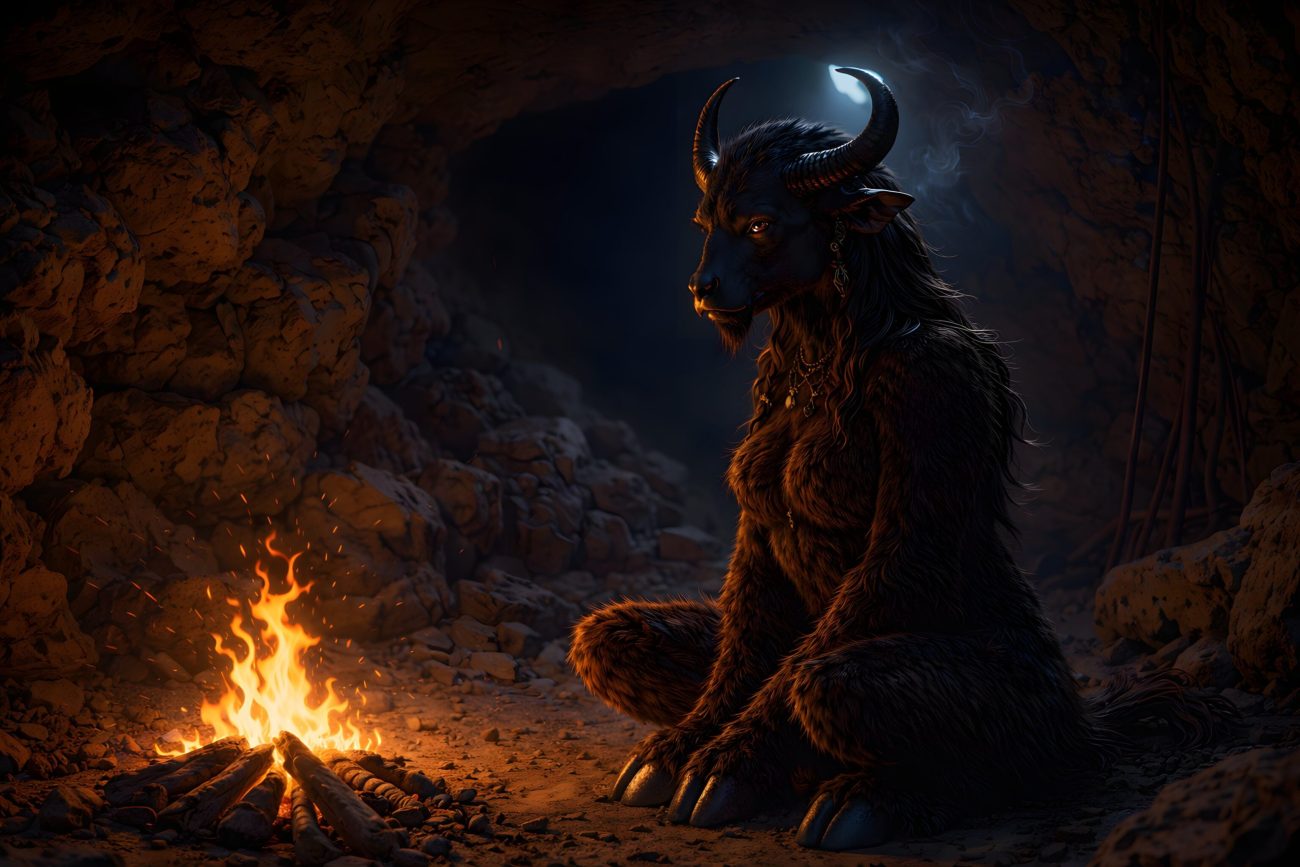
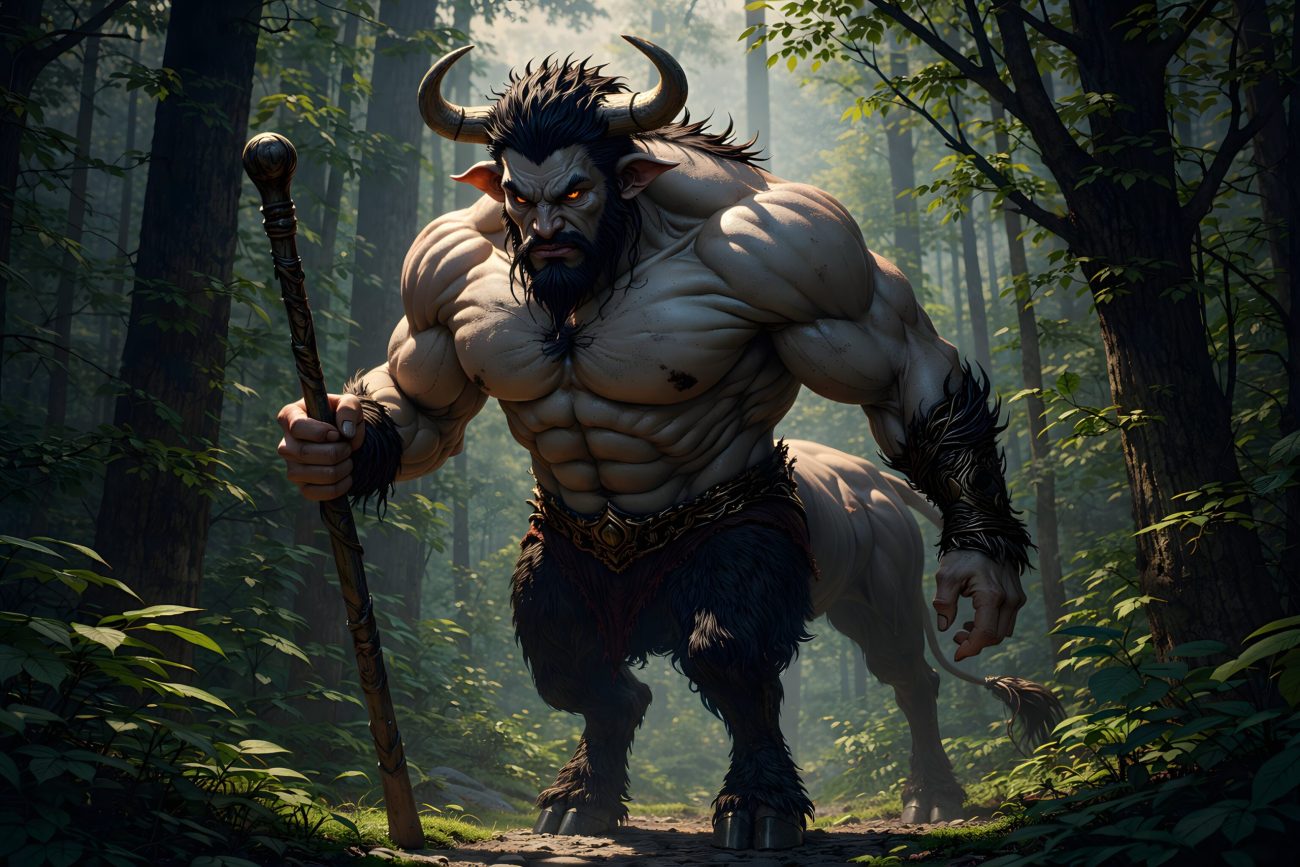
It bears the upper body of a man, broad-shouldered and upright, with human eyes that can glare with anger or dull with indifference. From the waist down, however, its body is that of a massive bull—thick-limbed, heavy, and powerful, with hooves that strike the ground like stone. In its arms lies great strength, and in its bovine form rests an immense weight that anchors it to the earth.

The Bucentaur is ill-tempered and easily provoked. When disturbed, it bellows and threatens, pawing the ground and raising its fists as if to crush whatever stands before it. Yet despite its fearsome appearance, it is slow. Its great body moves with difficulty, and its rage burns hotter than its ability to act upon it. Those who encounter it and keep their distance often find that escape is easy, for the Bucentaur cannot pursue for long.

It does not hunt, nor does it scheme. It lingers in lonely places, half man and half beast, caught between thought and instinct. It is said that its human half knows frustration, while its bull’s body binds it to brute force and inertia.

Thus the Bucentaur remains a creature of warning rather than conquest: powerful, dangerous, yet limited—an image of strength weighed down by its own nature, and of a mind trapped within the body of a beast.


Sources

Bestiary. (n.d.). Букентавр — в европейском символизме чудовищная разновидность кентавра: получеловек, полубык. https://www.bestiary.us/bukentavr


Fish-Man of Liérganes

Tradition / Region: Cantabrian mythology, Spanish Mythology
Alternate Names: El Hombre Pez
Category: Fish, Hyrbid


The Myth

In the middle of the seventeenth century, in the village of Liérganes near Santander, there lived a poor widow named María del Casar and her sons. After her husband’s death, she sent one of the boys, Francisco de la Vega Casar, to Bilbao to learn the trade of carpentry.

Francisco lived there for years, strong and skilled, and known as a capable swimmer. On the eve of Saint John’s Day in 1674, he went with friends to swim in the estuary. The river’s currents seized him, and he was carried out toward the open sea. He was last seen swimming away, and all believed he had drowned.

Five years passed.

In 1679, fishermen working the waters of the Bay of Cádiz far to the south found a strange being caught in their nets. It fought with inhuman strength and slipped free more than once. After repeated sightings, they finally captured it by luring it with bread. When they hauled it aboard, they saw that it had the shape of a man: pale-skinned, thin, with reddish hair. Yet its body bore signs of the sea—bands of scales ran from its throat to its belly and along its spine, and slits like gills marked its neck.

Fearing it was a monster, the fishermen brought the being to a nearby Franciscan convent. It was exorcised and questioned in many languages, but it did not respond. After several days, it spoke a single word: “Liérganes.”

No one knew what the word meant, until a sailor from the north recognized it as the name of a village near Santander. Word was sent there, and it was learned that a young red-haired man named Francisco de la Vega had vanished years earlier while swimming in Bilbao.

A friar proposed that the sea-creature might be that same Francisco. With permission, he took the being north. Near Liérganes, the friar released it, and followed as it moved unerringly through the countryside. It led him straight to the house of María del Casar, who recognized the creature as her lost son.

Francisco was taken in and lived quietly with his family. He walked barefoot and showed no shame in nakedness unless clothed by others. He rarely spoke, uttering only a few words without clear purpose. He ate voraciously at times, yet could go many days without food. Gentle and obedient, he performed simple tasks when asked, but without interest or joy.

For nine years he lived in this strange, half-human state. Then one day, he walked to the sea, entered the water, and swam away. He was never seen again.


Sources

Wikipedia contributors. (n.d.). Fish-man. In Wikipedia, The Free Encyclopedia, from https://en.wikipedia.org/wiki/Fish-man


Lingyu

Tradition / Region: Chinese mythology
Category: Fish


The Myth

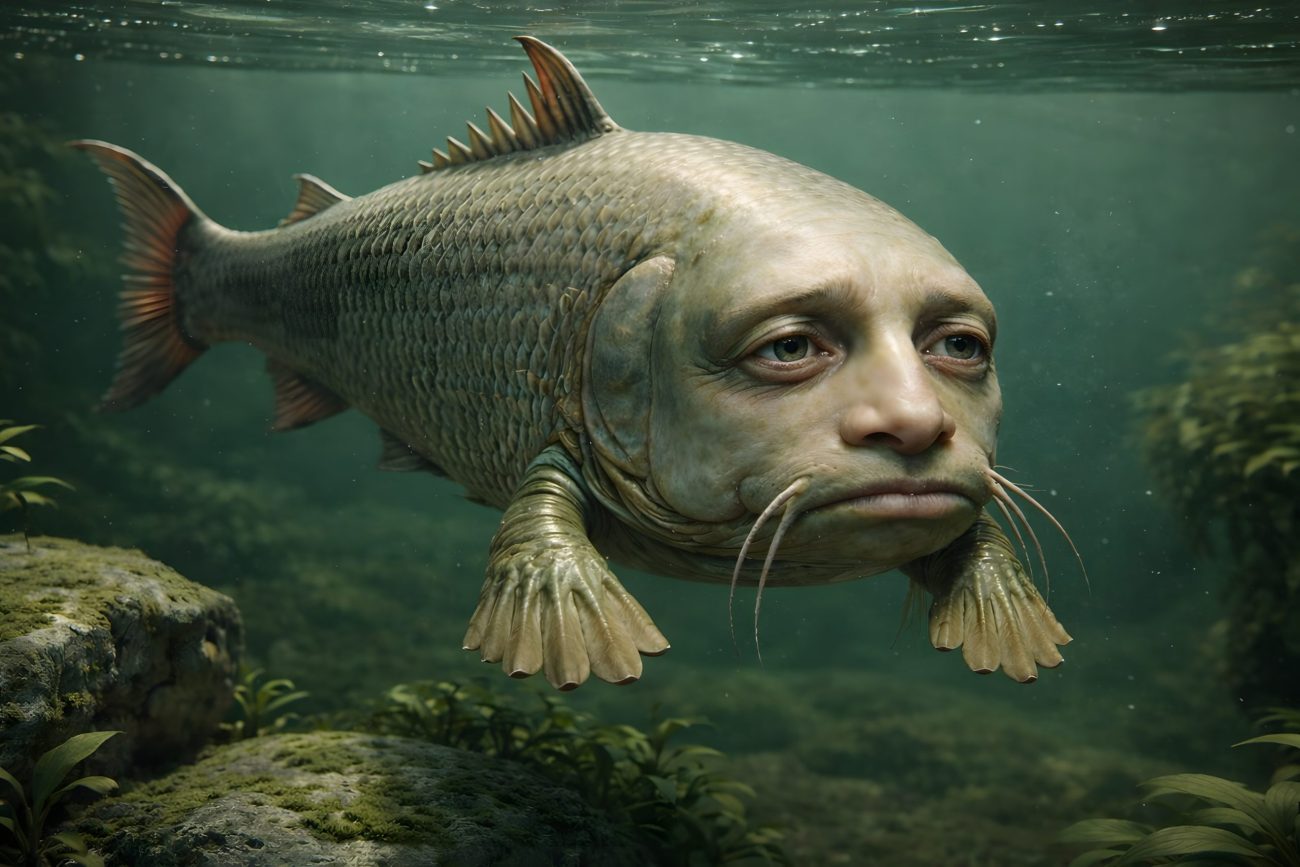
Lingyu is a strange fish of the sea, known for its human-like face and barbels shaped like hands. Its body moves through the water like an ordinary fish, yet its features mark it as something far from natural.

Lingyu lives in the sea near Lieguye Mountain, appearing and disappearing among the waves. When it emerges, the sea does not remain calm. It is said that whenever Lingyu appears, violent winds rise and storms suddenly break out, churning the water and darkening the sky.

Because of this, Lingyu is feared as an omen of chaos and upheaval. Sailors and coastal people believe its presence signals danger, and its human face is seen as a warning rather than a comfort.

Lingyu does not attack ships or people directly. Instead, it moves the sea itself, bringing sudden storms as it travels, leaving destruction in its wake before vanishing again into the depths.


Gallery


Sources

Wikipedia contributors. (n.d.). 陸魚. In Wikipedia, The Free Encyclopedia, from https://zh.wikipedia.org/wiki/%E9%99%B5%E9%B1%BC


Interpretive Lenses

Religious Readings
  • Christian Ascetic Deep Dive
Philosophical Readings
  • Nietzschean Deep Dive
Psychological Readings
  • Jungian Deep Dive
Esoteric Deep Dive
  • Hermetic Deep Dive
Political / Social Readings
  • Marxist Deep Dive
Other
  • How to Invite The Lingyu