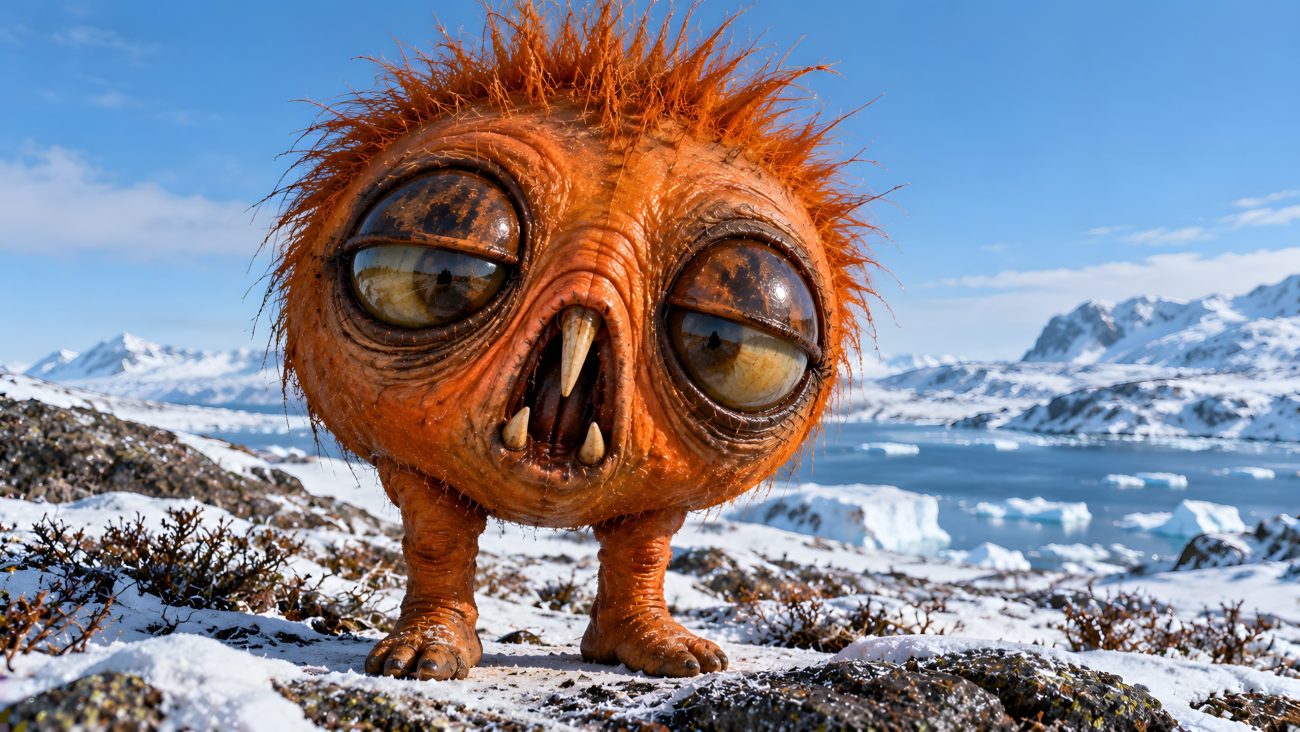
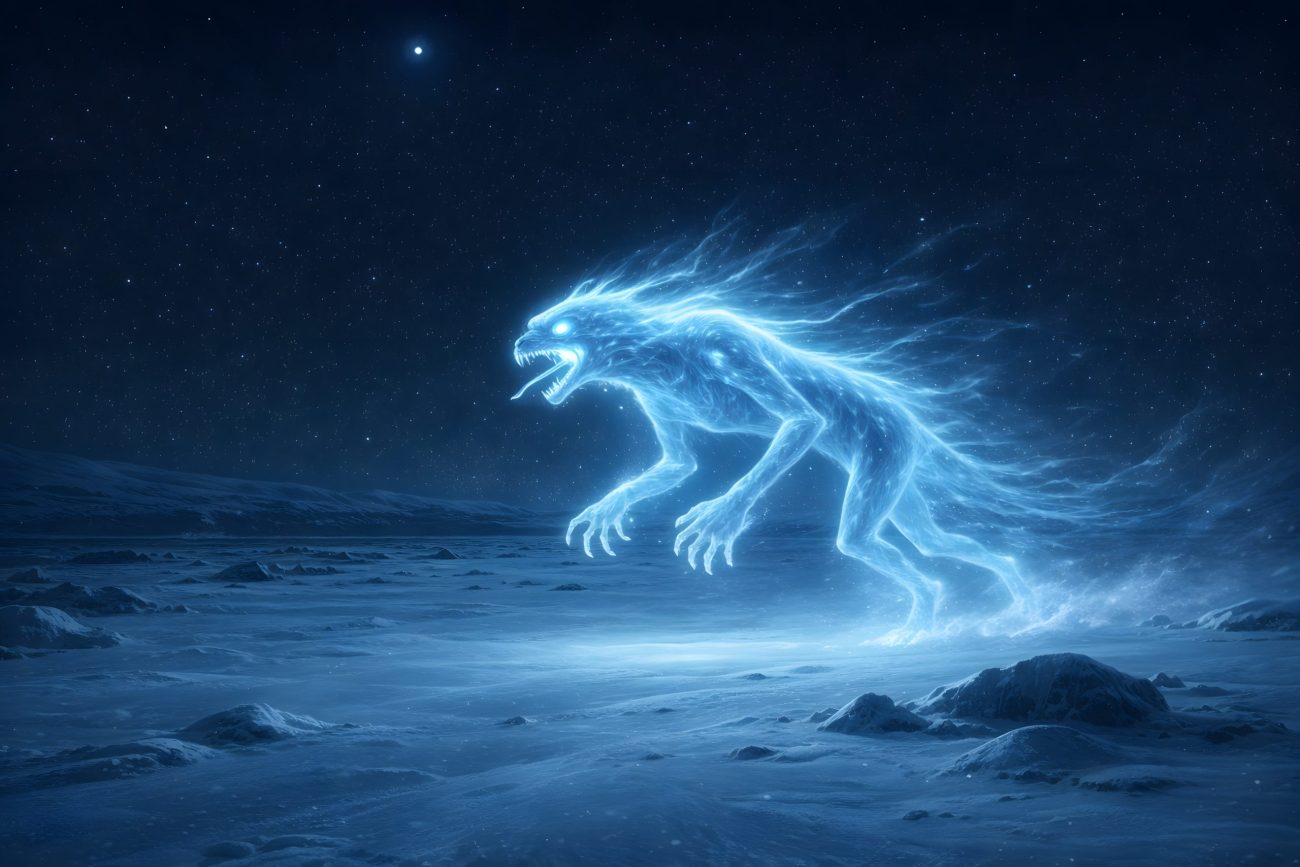
Issitoq was a gloomy helping spirit with a strange and unsettling appearance. It had only a head and legs, with short, bristly hair that stood straight upward. Its enormous eyes were each divided into two sections, while its mouth was set vertically and contained one long tooth at the top and two shorter teeth at the sides. In another depiction, Issitoq had hair made from willow twigs.
Issitoq was originally the helping spirit of a fox, but later came into the possession of Anarqåq. It was said to appear to someone who had lost their parents, approaching the grieving person and telling them not to fear it because it too struggled with sad thoughts. Issitoq would then accompany them as a helping spirit. Its particular ability was to find people who had broken a taboo, making it a spirit closely associated with the discovery and punishment of taboo violations.
Sources
Rasmussen, Knud. Intellectual Culture of the Hudson Bay Eskimos. Copenhagen: Gyldendal, 1930. 3 vols.
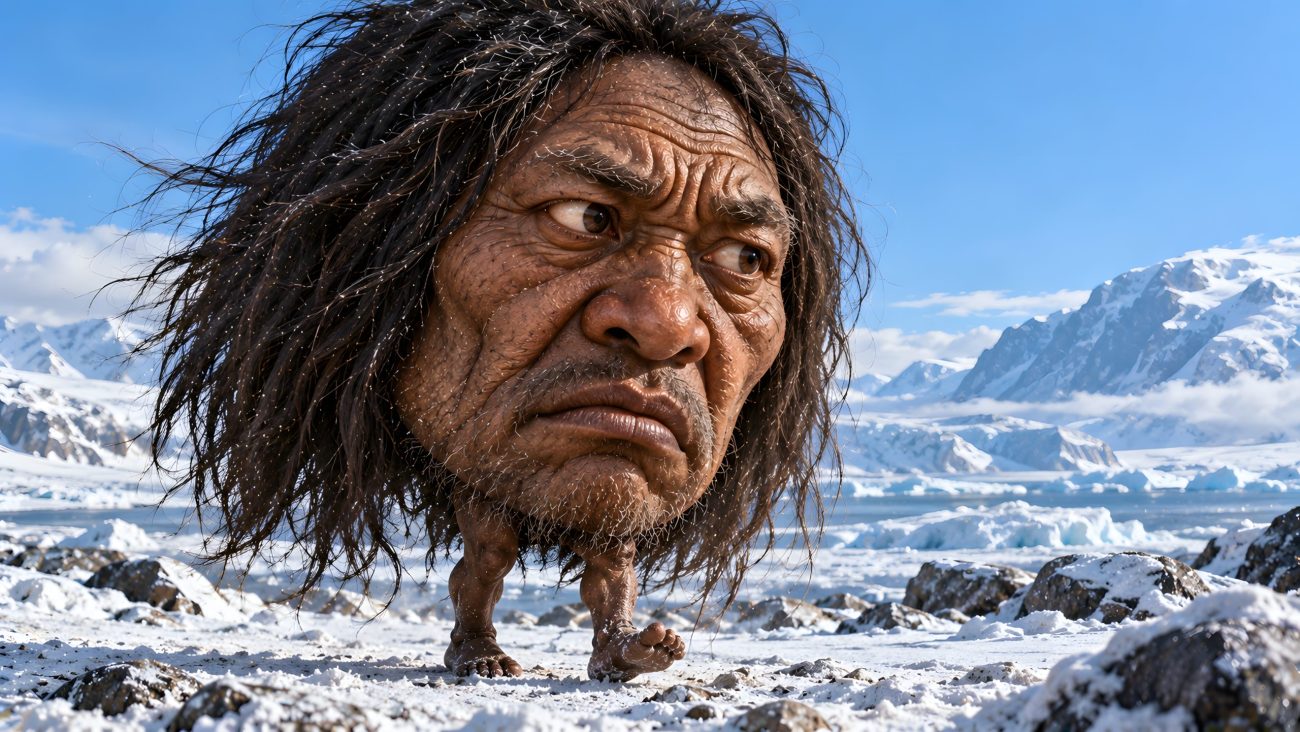
The Katutayuk are a strange race of dwarfs with enormous human-like heads carried on tiny legs. Their bodies are extremely small, with some traditions describing them as having no arms or torsos at all, only legs extending directly from beneath their oversized heads. Other accounts say that they have only three toes.
Very little is known about the Katutayuk, but they are associated with misfortune and wandering. Their lives are said to consist of one unfortunate event after another, leaving them doomed to roam the earth without ever finding a permanent home. They wander through the wilderness, appearing in places where strange disturbances have occurred.
Their presence may sometimes be detected without seeing the creatures themselves. The sounds of the Katutayuk moving through the night can be heard in the wilderness, while their wandering may leave behind broken or overturned objects. They are also blamed for strange holes suddenly appearing in the walls of igloos. These disturbances are caused by the Katutayuk as they continue their endless wandering through the land.
Sources
“Katutajuk.” New Bestiary (Bestiary.us). Accessed October 4, 2026. https://www.bestiary.us/katutajuk
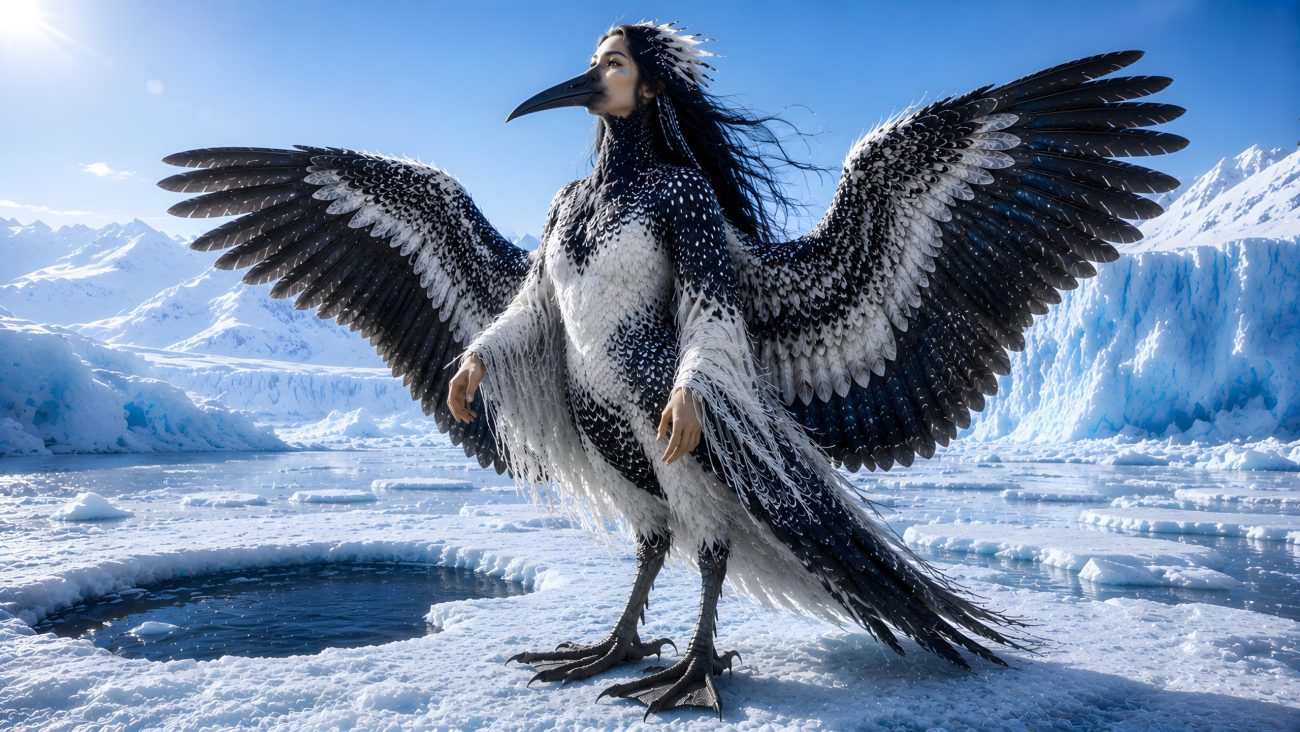
The Ice Loon is a mysterious spirit being described as half bird and half human. Inuit shamans sought out the creature when ordinary means failed, believing it possessed the power to grant life and alter fate. One powerful shaman, desperate after losing many children, traveled onto the inland ice to ask the Ice Loon for help in giving him a child who would survive.
The spirit answered his plea, and his daughter was said to have been born through the aid of the Ice Loon. During a time of famine, the shaman asked the spirits for a sign of whether the child would live. As long as a seal’s breathing hole in the ice remained open and seals continued to appear, he knew his daughter had been spared. Even when she later fell gravely ill, further omens confirmed that her life had been protected.
As the child grew older, she could see and play with the spirits of her dead brothers and sisters, mistaking them for living children. Her father learned through his helping spirits that, because of her supernatural birth, she remained closely connected to the world of the dead. To keep her from being taken away by them, the spirits raised an invisible rocky barrier whenever she tried to follow the ghostly children, ensuring that the child born through the Ice Loon’s blessing would continue to live among the living.
Sources
A Book of Creatures. (2016, January 29). Peteu. Retrieved June 29, 2026, from https://abookofcreatures.com/2016/01/29/peteu/
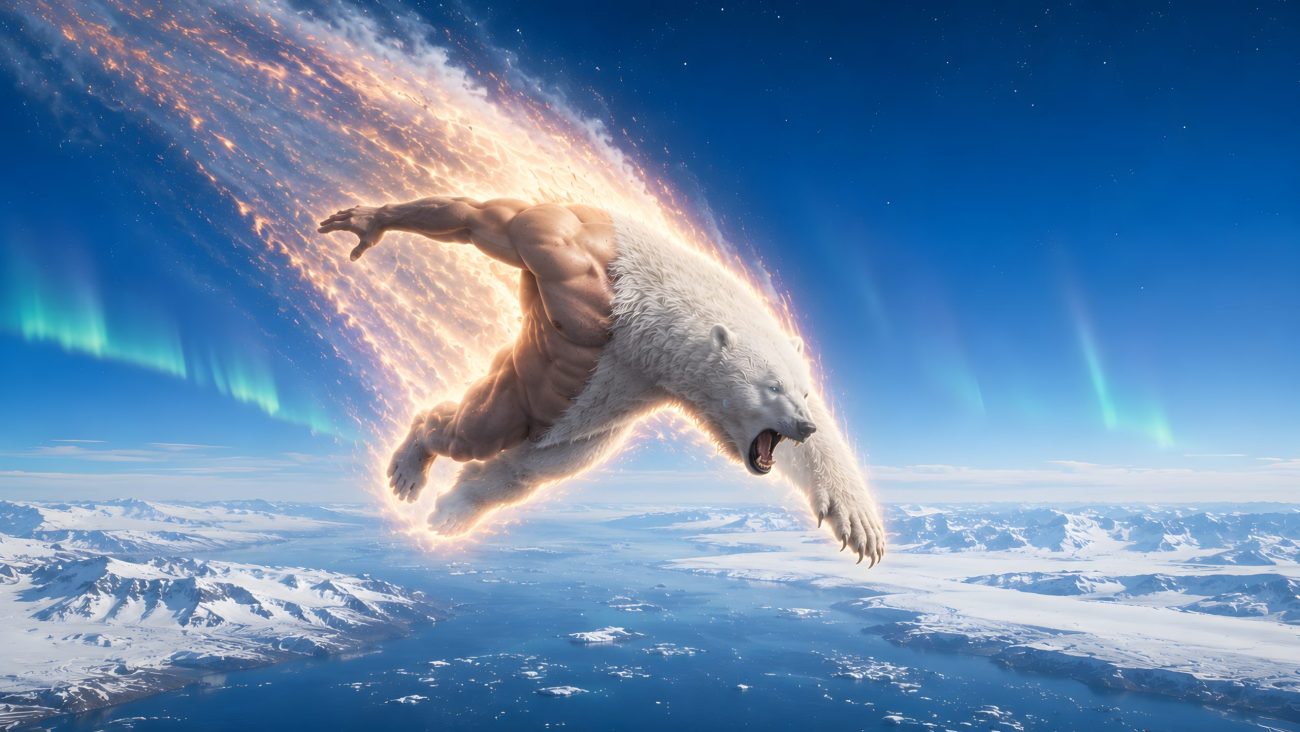
ImiEru’jap Inua is the spirit of a meteor that appears in Inuit tradition. It is described as a supernatural being with a body divided between human and bear. One side of its glowing form is that of a bear, while the other is human, and its head is human in shape but bears the tusks of a bear.
The spirit is most closely associated with the shaman Uvavnuk. One winter night, as she stepped outside her home, she saw a brilliant ball of fire descend from the sky. Before she could escape, the meteor struck her and entered her body. She immediately perceived an inner light before losing consciousness. At that moment, the spirit of the meteor entered her, transforming her into a powerful shaman.
When Uvavnuk regained consciousness, she returned to her home singing without understanding why. Filled with supernatural knowledge, she began revealing the hidden wrongdoings of everyone present. Those who confessed their misdeeds cast them away with symbolic gestures, believing themselves cleansed of evil. Whenever the spirit possessed her, she could see, hear, and know things beyond ordinary human perception.
Outside these moments of possession, Uvavnuk was an ordinary woman with no special abilities. Only when the spirit of the meteor illuminated her from within did her extraordinary powers return.
Before her death, Uvavnuk held one final ceremony and declared that humanity should never suffer from hunger. Through her connection with the spirits, she brought forth an abundance of game from beneath the earth. After her passing, her people experienced an exceptionally prosperous year, with plentiful whales, walruses, seals, and caribou, fulfilling her final blessing.
Sources
Rasmussen, K. (1930). Intellectual culture of the Hudson Bay Eskimos (Vols. 1–3). Gyldendal.
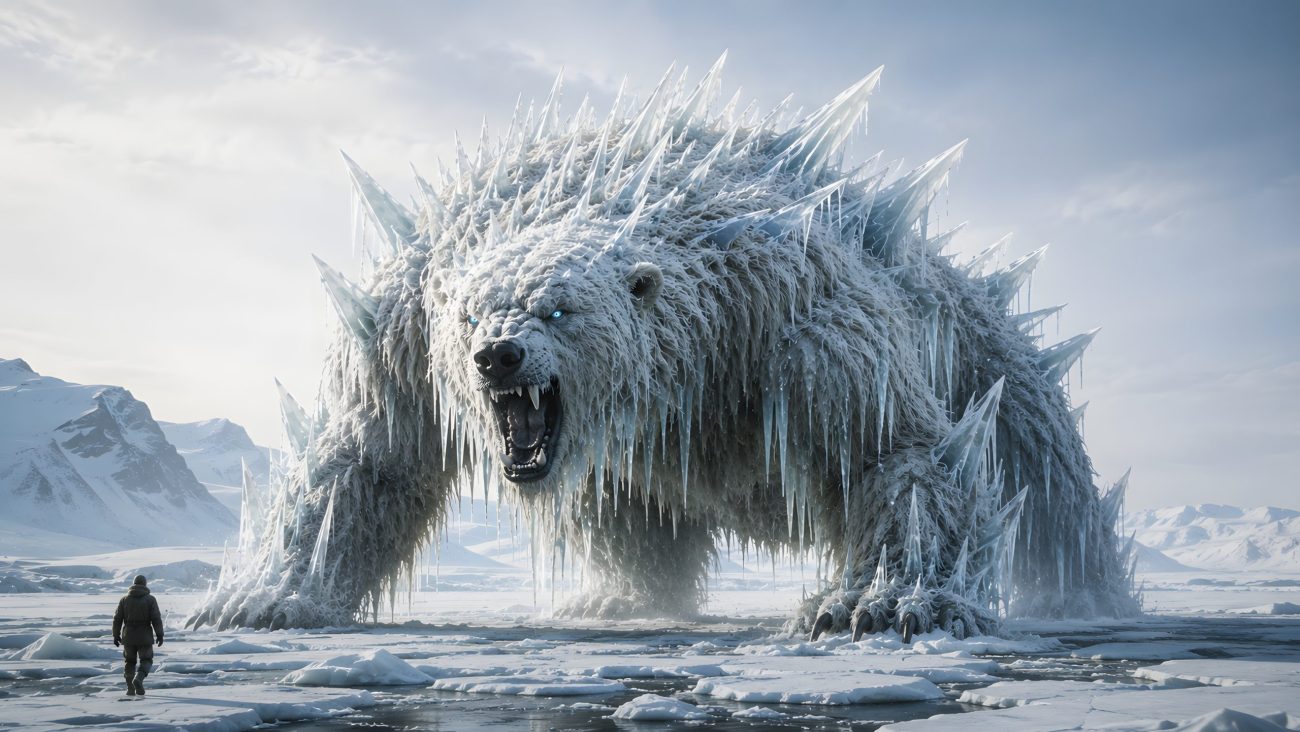
The Sermilik, meaning “ice-clad,” is a gigantic and extremely dangerous polar bear said to inhabit the seas around Aasiaat in Greenland. Although it resembles an ordinary polar bear, its exceptionally long fur is completely coated in ice, allowing it to blend into its frozen surroundings.
The creature is known for lying in ambush beneath the surface of the water. Hunters are taught that what appear to be four harmless lumps of floating ice may actually be the four paws of a waiting Sermilik.
According to tradition, young hunters are warned never to paddle near these suspicious patches of ice, for the hidden beast may suddenly emerge from the sea and attack anyone who ventures too close.
Sources
A Book of Creatures. (2019, June 21). Sermilik. Retrieved June 29, 2026, from https://abookofcreatures.com/2019/06/21/sermilik/
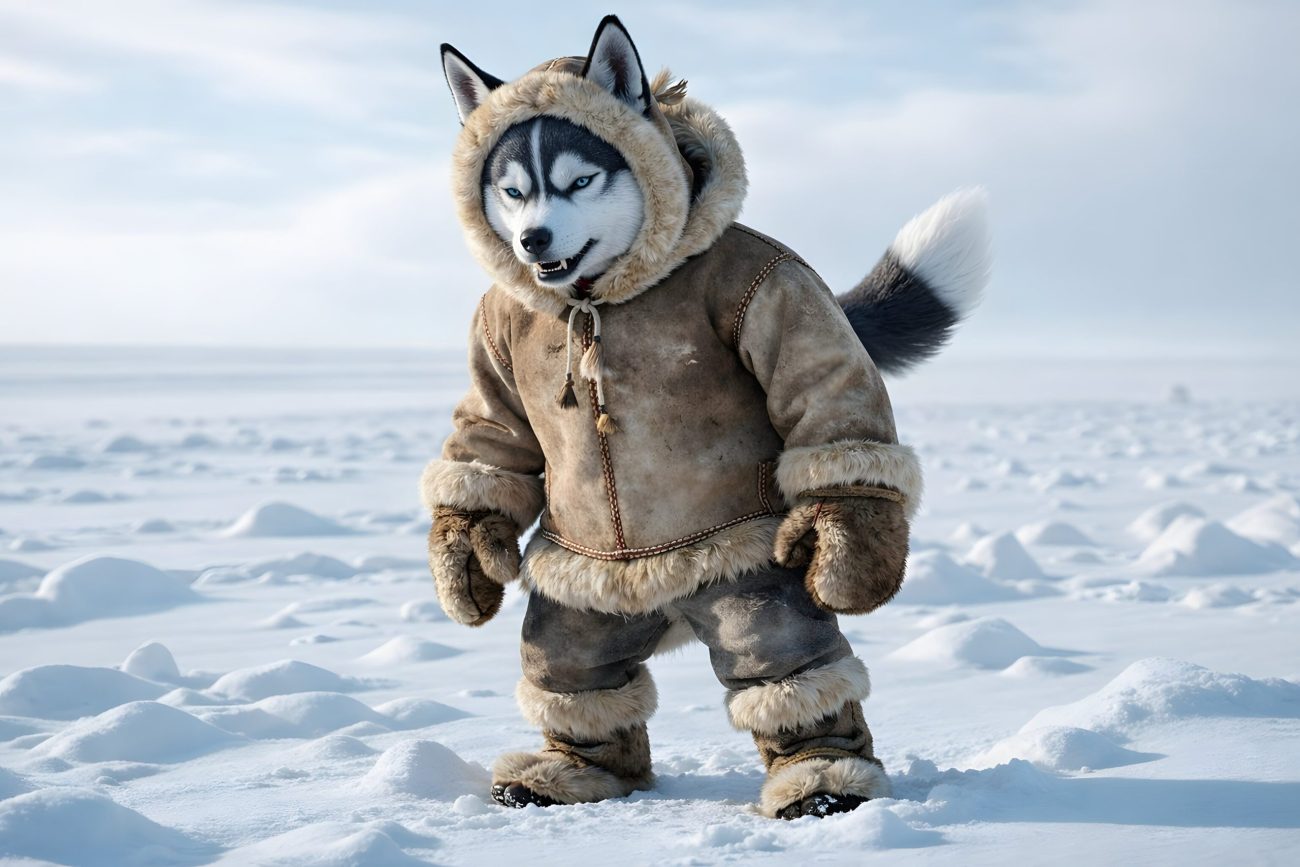
The Adlet are a race of beings spoken of in Inuit tradition. They are said to be taller than ordinary people and to live inland, away from the coast. Their form is half human and half dog: from the waist up they resemble a man, but their lower bodies are those of dogs. They run swiftly across the land and are often remembered as fierce enemies of humankind. In some stories they are cannibals, and encounters with them are dangerous and violent.
Their origin is told in an old story about a young woman named Niviarsiang, who lived with her father, Savirqong. Though many men wished to marry her, she refused every suitor. Because she would not take a husband, people came to call her “she who would not marry.”
At last, instead of choosing a man, she took a dog as her husband. The dog, named Ijirqang, had white and red spots on his coat. From this strange union ten children were born. Five of them were fully dogs, but the other five were unlike any people before them: their upper bodies were human, while their lower halves were those of dogs. These children were the first Adlet.
Ijirqang did not hunt, and the household was soon starving. The hungry children cried constantly, and Savirqong, their grandfather, was forced to bring them food. At last he grew weary of this burden. He carried his daughter, her husband, and their children out to a small island and left them there, saying that he would provide meat if the dog swam to shore each day to fetch it.
To help her husband, Niviarsiang hung a pair of boots around Ijirqang’s neck so he could carry the meat back across the water. The dog swam to shore as instructed. But when he arrived, Savirqong did not fill the boots with food. Instead, he filled them with stones. Weighted down, Ijirqang drowned in the sea.
When Niviarsiang learned what had happened, she sought revenge. She sent her young dogs across the water to attack her father. They gnawed off his hands and feet as punishment for killing their father.
Later, when Niviarsiang herself came near Savirqong in his boat, he seized his chance. He pushed her overboard. She clung to the side, trying to pull herself back in, but he cut off her fingers one by one. As they fell into the ocean, each finger changed form and became a sea creature. From them came the seals and the whales that fill the waters.
Fearing that her father might next destroy her strange children, Niviarsiang sent the Adlet away from the coast and into the interior lands. There they multiplied and became a great inland people.
Her dog children she placed in a makeshift boat and sent them across the sea. It is said that when they reached the far shore, they became the ancestors of distant northern peoples.
From that time on, the Adlet lived inland, remembered as swift, powerful, and dangerous beings whose blood was both human and animal.
Long ago, there lived a young woman named Sedna, daughter of a man who could not find a husband worthy of her—or, in some tellings, a maiden who refused every suitor who came.
At last a stranger arrived, promising riches and plenty of food. Sedna’s father agreed to the marriage, and she went away with the man. But once she reached his home, she discovered the truth: he was not a man at all, but a great bird spirit. She lived in misery among the cliffs and the screaming birds until her father returned to rescue her.
They fled together in his kayak across the sea. But the bird-spirit raised a terrible storm. Waves rose high, and the sea roared around them. Terrified that the boat would sink, Sedna’s father pushed her overboard.
She clung to the side of the kayak, begging for help. In fear for his life, her father took a knife or axe and cut off her fingers one by one. As they fell into the water, her fingers became the creatures of the sea—seals, walruses, whales, and all the animals hunted by humans.
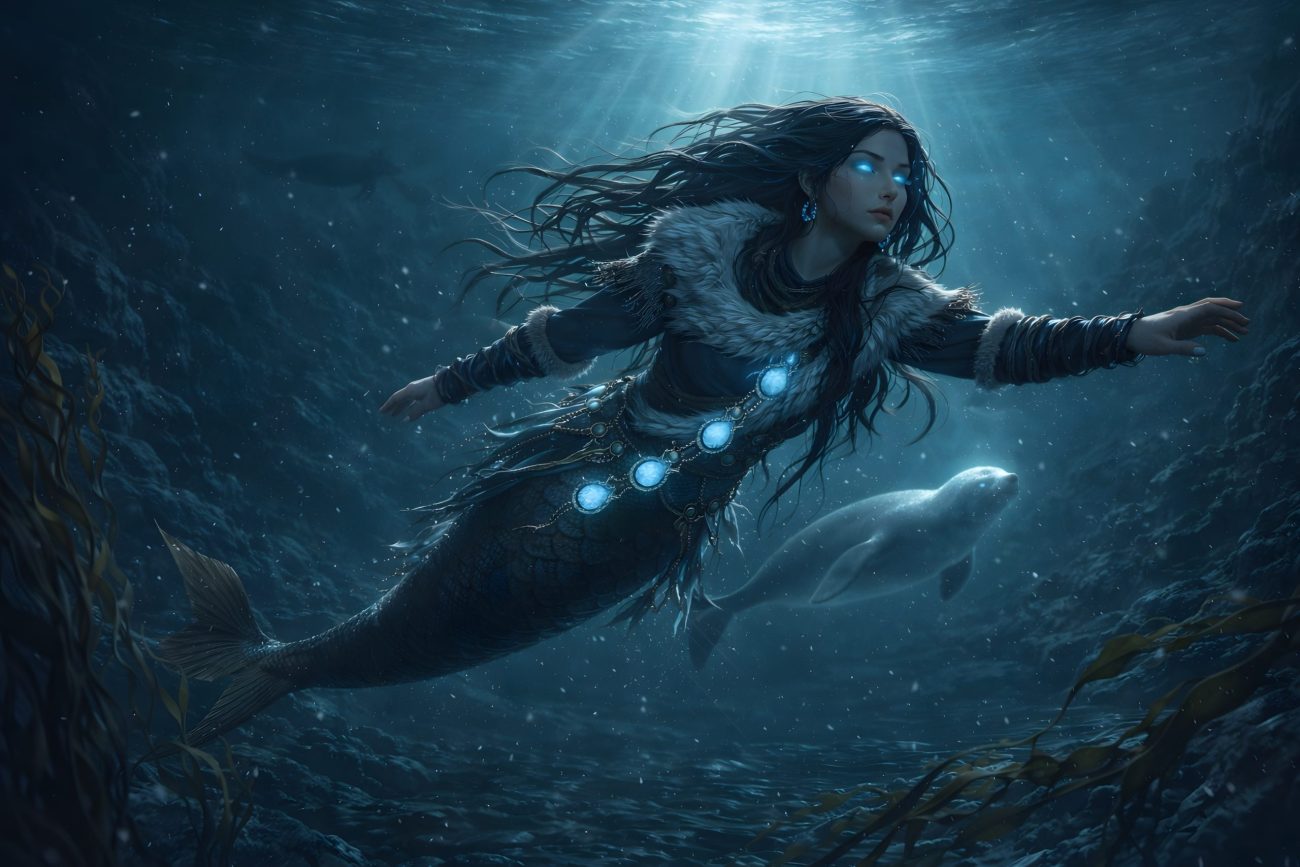
Sedna sank beneath the waves and fell to the bottom of the ocean. There she did not die. Instead she became the great mistress of the deep, ruler of the undersea world and guardian of all marine animals.
From that time on, the people believed that the success of every hunt depended on her will. When she was angered by human wrongdoing, she kept the animals hidden, and famine followed. Shamans would then journey in spirit to her underwater dwelling, where Sedna sat with tangled hair she could not comb because she had no fingers. The shaman would soothe her, wash and braid her hair, and calm her anger so she would release the animals again.
And so Sedna remains beneath the sea, watching over the creatures of the deep and deciding whether the hunters above will live or starve.
Sources
Wikipedia contributors. (n.d.). Sedna (mythology). In Wikipedia, The Free Encyclopedia. Retrieved February 14, 2026, from https://en.wikipedia.org/wiki/Sedna_(mythology)
Sailors in the northern seas told of a strange being that appeared only when storms were near.
It was called the margyg.
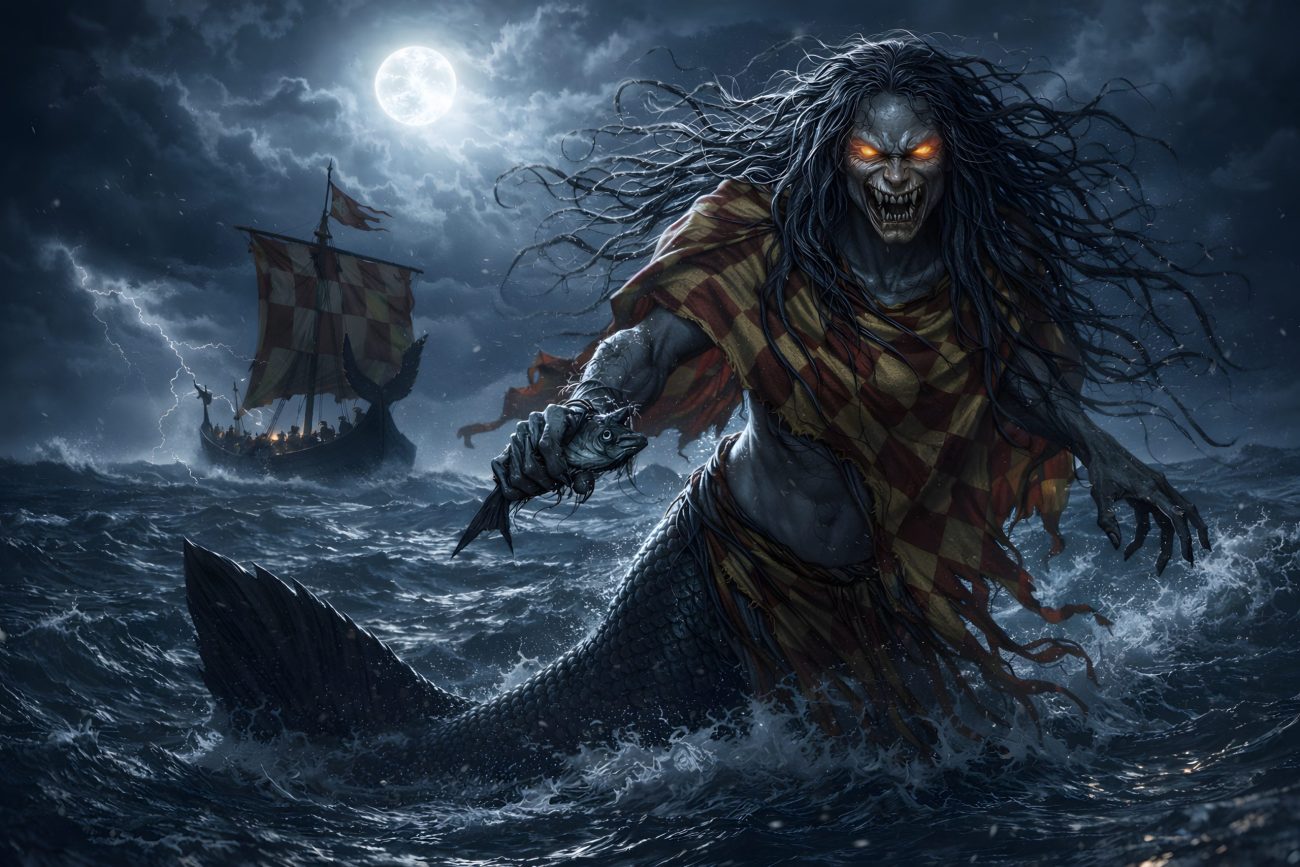
Those who saw it said it rose from the sea like a woman from the waist up, but vast and unsettling in form. Its chest was heavy, its arms long, and its hair streamed down wet over its shoulders. Its head and neck resembled those of a human, yet its face was coarse and fearsome, with a wide mouth, heavy cheeks, and a low brow. Its hands were large, and the fingers were joined together by webbing like the feet of seabirds.
Below the waist, it was wholly a fish, covered in scales with fins and a powerful tail.
The margyg was said to appear rarely, and almost always before a great storm. Sailors would spot it rising above the waves, holding a fish in its hands.
If it swam toward a ship, tossing the fish toward the vessel or playing with them as it approached, the crew believed disaster was coming and feared they would not survive the storm.
But if the margyg ate the fish, or threw them away from the ship and turned aside, the sailors took heart. Though the storm might still strike, they believed they would live through it.
For this reason, the margyg was not merely a monster of the sea, but a sign — a creature whose brief appearance foretold the fate of those who sailed beneath the darkening sky.
Sources
Bestiary.us contributors. (n.d.). Margjug. In Bestiary.us, from https://www.bestiary.us/margjug/
Nålaqnaq, known as the Listener, is a strange and unsettling spirit distinguished by its exaggerated sensory features. It is described as having a large, gaping mouth, two prominent teeth, and a tongue that protrudes outward, emphasizing its nature as a being that listens, hears, and perceives beyond ordinary limits. Its hands are shapeless, each bearing six fingers, marking it unmistakably as non-human.
Nålaqnaq is said to move at a run, suggesting constant alertness and restless awareness, as though it is forever attuned to sounds, words, or cries that escape human notice. Rather than embodying physical strength, it represents heightened perception—a spirit whose power lies in attention and awareness of the unseen.
As the Listener, Nålaqnaq reflects an Inuit understanding that nothing spoken—or unspoken—passes unheard. Its presence reinforces the importance of caution, respect, and mindfulness in speech and behavior, reminding people that words, intentions, and hidden actions may always be perceived by forces beyond the human world.
Tradition / Region: Inuit mythology (Tuneq people) Alternate Names: — Category: Spirit of the dead
The Myth
Kamingmålik is the spirit of a woman belonging to the Tuneq people. She is remembered as a human spirit that persists after death, retaining her identity as a woman of the Tuneq. Her presence places her among the spirits that originate from human lives rather than purely natural or animal forces.