Clíodhna

Tradition / Region: Irish mythology
Alternative names: Clídna, Clionadh, Clíodna, Clíona, Cleena
Category: Deity, Ghost


The Myth

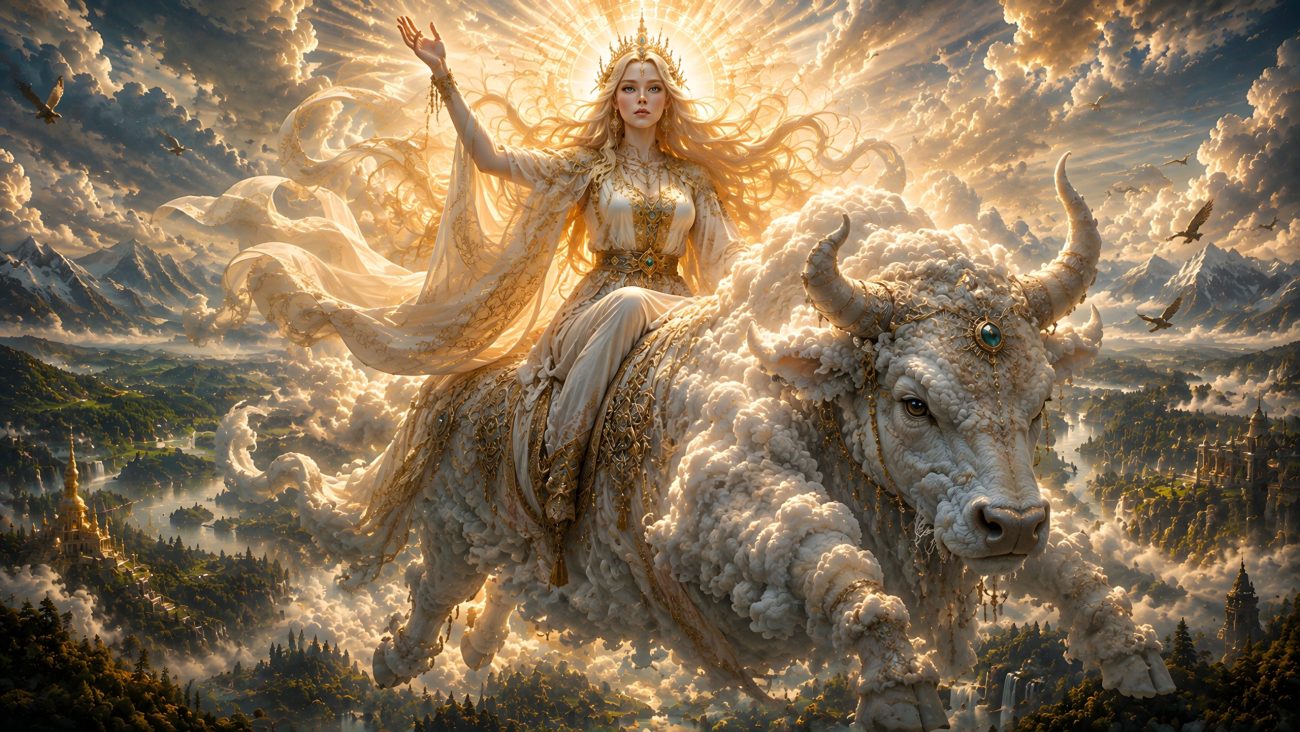
Clíodhna is one of the greatest fairy queens of Irish mythology and the legendary Queen of the Banshees. Counted among the Tuatha Dé Danann, she is celebrated as a goddess of love, beauty, and the Otherworld, while also serving as the powerful ruler of the sídhe (fairies) of South Munster. Her hidden palace lies beneath the rocky hill of Carrigcleena in County Cork, where Irish tradition says she continues to reign over her fairy court.

Among Clíodhna’s greatest wonders are her three brilliantly colored magical birds. Feeding upon apples from a sacred tree in the Otherworld, their sweet songs possess extraordinary healing powers, curing sickness, soothing sorrow, and lulling listeners into a deep enchanted sleep. Their music was said to be unlike anything heard in the mortal world.

One of her oldest legends tells of her love for the mortal prince Ciabhan, whom she met in the Otherworldly kingdom ruled by Manannán mac Lir. The two fled together to Ireland, hoping to live among humans. As Ciabhan went ashore to hunt, Clíodhna remained sleeping in their boat. The servants of Manannán pursued the lovers and enchanted Clíodhna into a magical sleep with supernatural music. A gigantic wave then swept her out to sea before she could escape. Ever afterward that wave became known as Tonn Chlíodhna (“Clíodhna’s Wave”), one of Ireland’s most famous mythological landmarks. Whether she drowned or simply returned to the Otherworld varies between traditions.

In another medieval tale, The Voyage of Teigue, Son of Cian, Clíodhna appears as a noble lady dwelling on the mysterious island of Inis Derglocha. There she aids the hero by giving him three magical birds to guide and comfort his companions with their music, along with an emerald cup capable of turning water into wine. She warns him never to lose the cup, for doing so would bring about his death. Thanks to her gifts, Teigue rescues his captured people and safely returns to Ireland.

Many later Irish legends portray Clíodhna not only as a fairy queen but also as a passionate and deeply emotional supernatural being. One famous story tells of the prince Caiov O’Keeffe and the two daughters of the last great druid, Clíodhna and Aoivil. Both sisters fell in love with the young prince, but his heart belonged to Aoivil. Consumed by jealousy, Clíodhna secretly cursed her own sister, imprisoned her within a hidden cave, and eventually transformed her into a beautiful white cat doomed to guard vast treasures of gold and silver. Though Clíodhna later regretted her actions, she had lost the magical wand needed to undo the spell. According to legend, the enchantment will only be broken by someone who loves Aoivil more than the riches she guards.

Clíodhna also appears in romantic tales involving the Fitzgerald family. In one legend she abducts the handsome chieftain Fitz-Gerald, carrying him away to her fairy palace beneath Carrigcleena because she desired him for herself. His beloved Ellen O’Brien journeyed to the fairy queen’s dwelling and pleaded so movingly for his release that Clíodhna, touched by her devotion, returned him to the mortal world, allowing the lovers to marry.

Another tradition links Clíodhna to the famous Blarney Stone. Before appearing in court, Cormac MacCarthy, lord of Blarney Castle, sought the fairy queen’s help. Clíodhna instructed him to kiss the first stone he encountered that morning. After following her advice, he spoke with such irresistible charm and eloquence that he won his legal dispute. The stone was later built into the walls of Blarney Castle, where it became renowned for granting the legendary “gift of the gab” to those who kiss it.

For centuries Clíodhna was regarded as the supernatural protector of many noble families of Munster, especially the MacCarthys, O’Keeffes, O’Donovans, and FitzGeralds, who believed she watched over their fortunes and occasionally intervened in their affairs. Local folklore describes fairy gatherings at Carrigcleena, where, under the light of the moon, Clíodhna leads her fairy court in magnificent dances among the ancient rocks before disappearing once more into her hidden palace beneath the earth.

Thus Clíodhna is remembered not merely as a fairy queen, but as one of Ireland’s most beloved mythological figures—a goddess of beauty and love, a healer through the songs of her magical birds, a passionate lover, a patron of kings and noble families, and the eternal sovereign of the fairies of Munster.


Sources

Wikipedia contributors. (n.d.). Clíodhna. In Wikipedia. Retrieved June 27, 2026, from https://en.wikipedia.org/wiki/Cl%C3%ADodhna


Ginseng

Tradition / Region: Japanese Mythology
Alternate Names: Ninjin no Kami, Ginseng Deity
Category: Plant, Deity


The Myth

In old illustrated books of curious gods, there is mention of a strange deity known simply as the Carrot.

This being was said to have come from Korea and to dwell in the form of a precious medicinal root. It was believed that the true plant possessed great power, able to cure even illnesses thought impossible to heal. Apothecaries prized it, and those who obtained it treated it almost like a divine object.

The deity was imagined with a human face bearing a foreign beard, while its body was formed from roots. Bundles of carrot-like tendrils served as its arms and legs, giving it the appearance of a spirit grown directly from the soil.

People also spoke of another plant with the same name found at ordinary greengrocers. This one, however, had no power at all. Though it looked similar, it was merely a vegetable and brought no blessings to those who ate it.

Thus the Carrot Deity was remembered as a spirit of the rare medicinal root — a being whose strength lay hidden in the earth, revered when genuine, but easily mistaken for the humble plant that shared its name.


Sources

Tyz-Yokai Blog. (n.d.). Ginseng. Retrieved March 1, 2026, from https://tyz-yokai.blog.jp/archives/1076296170.html


Am-heh

Tradition / Region: Egyptian Mythology
Alternate Names:
Category: Dog


The Myth

Am-heh was a feared being of the Egyptian underworld.

His name was said to mean “Devourer of Millions” or “Eater of Eternity,” and he was imagined as a powerful and dreadful presence among the spirits of the dead. He was depicted with the body of a man and the head of a hunting dog, marking him as one of the dangerous beings that dwelled beyond the world of the living.

Am-heh was believed to reside in a lake of fire deep in the underworld. From this burning place he threatened the souls who passed through the realm of the dead, and his presence was associated with punishment, destruction, and divine retribution. In some traditions he was connected with other devouring beings who judged or consumed the wicked.

Though terrifying, he was not beyond control. It was said that only the creator god Atum possessed the power to repel him and keep his destructive force in check.

Thus Am-heh was remembered as a fiery devourer of the underworld — a dog-headed god who lurked in the burning depths, waiting among the spirits of the dead.


Sources

Wikipedia contributors. (n.d.). Am-heh. In Wikipedia, from https://en.wikipedia.org/wiki/Am-heh


Chiyou

Tradition / Region: Chinese Mythology
Alternate Names:
Category: Cow, God


The Myth

In the ancient age before the rise of dynasties, when the tribes of the world still fought for dominion, there ruled a powerful leader named Chiyou, chief of the Nine Li.

From birth he was unlike other men. His body was human, but his head was that of a bull, crowned with great horns. His brow was said to be as hard as bronze or iron, and his strength was immense. Some said his limbs were like those of a beast, and that he carried many weapons, wielding them with unstoppable force. Wherever he marched, it was as though a great animal thundered across the land.

Chiyou led his people into battle as a bull lowers its head before the charge. He possessed knowledge of ancient magic and commanded the powers of wind and storm. In war he called down rain and thick, blinding fog that swallowed entire armies.

At the great Battle of Zhuolu, he used this power against the Yellow Emperor. A vast mist covered the battlefield so that soldiers wandered helplessly, unable to find their way. Under this shroud Chiyou fought fiercely, supported by his many followers, whether counted as eighty-one brothers or eighty-one tribes bound to him.

Yet in the end the Yellow Emperor overcame him through skill and divine aid. Chiyou fell, and the power of his people was broken.

Though defeated, he was not forgotten. In later times warriors honored him as a spirit of battle, remembering the bull-headed lord whose strength shook the earth and whose fury in war was like that of a charging ox.


Gallery


Sources

Wikipedia contributors. (n.d.). Chiyou. In Wikipedia, The Free Encyclopedia, from https://en.wikipedia.org/wiki/Chiyou


Interpretive Lenses

Religious Readings
  • Christian Ascetic Deep Dive
Philosophical Readings
  • Nietzschean Deep Dive
Psychological Readings
  • Jungian Deep Dive
Esoteric Deep Dive
  • Hermetic Deep Dive
Political / Social Readings
  • Marxist Deep Dive

Mami Wata

Tradition / Region: Congo Mythology
Alternate Names: Mammy Water, Mami Muntu, Mamba Muntu, Papi Wata (male counterpart in some traditions)
Category: Mermaid, Deity


The Myth

In the rivers, lakes, and ocean shores of Africa, there is said to dwell a powerful spirit of the waters known as Mami Wata.

She appears most often as a woman of striking beauty, sometimes with the lower body of a fish, sometimes entirely human, sometimes adorned with serpents coiled about her body. Her hair is long, her gaze mesmerizing, and her presence both alluring and dangerous. She is a being of wealth, mystery, and deep water.

Mami Wata rises from rivers or from the sea to encounter humans. She may appear to travelers at night, to fishermen on the water, or to those who wander too close to sacred pools. Those she favors may be drawn into her world beneath the water, where she offers them riches, power, or secret knowledge.

Some who are taken by her return to the world of the living with sudden fortune, beauty, or spiritual gifts. Others never return at all.

She is known to demand devotion from those she chooses. Shrines are raised to her beside water, decorated with mirrors, combs, perfumes, bright cloth, and foreign objects she is said to love. Those who honor her properly may receive protection, healing, prosperity, or children.

But she is not always gentle. If neglected or angered, she may bring misfortune, illness, poverty, or madness. She may wreck boats, claim lovers, or pull the unwary beneath the water.

In some traditions she is accompanied by a male spirit, sometimes called Papi Wata, who shares her watery domain.

Thus Mami Wata is remembered as a spirit of beauty and danger, wealth and temptation—
a queen of the waters who gives blessings to the devoted,
and whose depths remain beyond human control.


Sources

Wikipedia contributors. (n.d.). Mami Wata. In Wikipedia, The Free Encyclopedia. Retrieved February 14, 2026, from https://en.wikipedia.org/wiki/Mami_Wata


Akshit

Tradition / Region: Egyptian mythology
Alternate Names:
Category: Cow, Deity


The Myth

In the city of Oxyrhynchus there was honored a quiet goddess named Akshit, a sacred cow whose destiny was bound to the gods themselves. From her body was born Apis, the holy bull, chosen to walk among humans as a living sign of divine power.

Akshit nurtured her son knowing he was more than a calf. Within him lived fertility, strength, and the will of the gods. As Apis grew, he became the center of reverence: temples rose for him, offerings were brought, and the people watched his movements for meaning. Through him, the gods spoke without words.

Akshit remained in the background of this sacred life, yet everything depended on her. Without her care, the divine bull could not exist. As his mother, she guarded the passage by which divine force entered the world in living form.

Thus Akshit was remembered not for command or spectacle, but for creation itself—the sacred mother who gave the gods a body through which they could dwell among humankind.


Gallery


Sources


Budge, E. A. W. (1920). An Egyptian hieroglyphic dictionary : with an index of English words, king list and geological list with indexes, list of hieroglyphic characters, coptic and semitic alphabets, etc. (p. 95) J. Murray.


Báihǔ

Tradition / Region: Chinese mythology
Alternative names: –
Category: Tiger, Deity


The Myth

Báihǔ, the White Tiger, is the celestial guardian of the western sky and one of the Four Symbols that structure the cosmos in ancient Chinese thought. More than a constellation, Báihǔ is a living spirit of heaven, born from early star worship and later integrated into Daoist cosmology. In classical texts it is known by many sacred titles—Jianbing, Dijun, Shengjiang, Shenjiang, and Buguijiang—each emphasizing its role as commander, judge, and enforcer of cosmic order.

The White Tiger governs the west, the element of metal, and the season of autumn, embodying discipline, justice, and controlled violence. Its form is mapped across seven constellations—Kui, Lou, Wei, Mao, Bi, Zi, and Shen—which together were understood as a celestial army. These stars did not merely mark time; they represented moral law, hierarchy, and readiness to act when order was threatened.

Báihǔ is revered as a god of war and punishment, overseeing weapons, soldiers, and righteous conflict. It protects those who act with virtue and courage, while striking down evildoers who disrupt harmony. Though fierce and terrifying, the White Tiger is not a force of chaos. It is both shield and blade: capable of averting disasters, granting prosperity, blessing marriages, and guarding the just—yet merciless toward corruption and moral decay.

Its worship flourished during the Han dynasty, when shrines were raised in places such as Weiyang, and specific festival days were dedicated to honoring its power. Long before imperial China, tribes such as the Qiang and Rong venerated the White Tiger, and later peoples—including the Yi, Bai, Buyi, and Tujia—claimed descent from it. In these traditions, Báihǔ descends to earth as a celestial king, fathering seven sons and seven daughters, anchoring human lineages to the heavens.

To behold Báihǔ in the western sky was never a neutral act. It was both reassurance and warning. Its presence affirmed that justice was being watched, that virtue had cosmic backing, and that imbalance would be corrected. Striped across the heavens and mirrored in human conduct, the White Tiger stands as an eternal reminder that order is maintained not only through mercy, but through the disciplined force that defends it.


Sources

Wikipedia contributors. (n.d.). 白虎. In Wikipedia, from https://zh.wikipedia.org/wiki/%E7%99%BD%E8%99%8E


Centzon Tōtōchtin

Tradition / Region: Aztec Mythology, Mexcian Mythology
Alternate Names: Centzontōtōchtin (“Four Hundred Rabbits”)
Category: Rabbit, deity


The Myth

In Mexica mythology, the Centzon Tōtōchtin are a great company of divine rabbits known as the Four Hundred Rabbits. They are gods associated with pulque, the fermented drink made from the maguey plant, and they are said to gather frequently for feasts and drunken celebrations. The number four hundred does not signify a precise count, but rather an uncountable multitude.

The Centzon Tōtōchtin are the children of Mayahuel, the goddess of the maguey plant, and Patecatl. Mayahuel was believed to nourish her children with the sap of the maguey, which became pulque. Through this parentage, the rabbits are bound to the plant and its intoxicating drink.

Each of the Centzon Tōtōchtin embodies a different aspect of drunkenness and behavior brought on by pulque. Among them are Tepoztecatl, Texcatzonatl, Colhuatzincatl, and Macuiltochtli, whose name means “Five Rabbit.” Tepoztecatl is often described as their leader and is closely associated with ritual calendars and sacred festivals.

The rabbits are said to assemble together, drinking pulque and celebrating noisily. In these gatherings, they represent the many forms intoxication can take, from joy and laughter to disorder and excess. Their presence explains why different people react differently when they drink, each one being touched by a different rabbit god.

The Centzon Tōtōchtin appear in myths surrounding the discovery and ritual use of pulque. In some stories, a rabbit is involved in revealing the maguey’s hidden properties, linking the animal directly to the sacred drink. Shrines and temples, including those dedicated to Tepoztecatl, honored these gods through offerings of pulque during festivals and ceremonies.

Thus, the Centzon Tōtōchtin remain remembered as a divine multitude of rabbit gods, born from the maguey, gathering endlessly in celebration, and inseparably bound to pulque and its effects among gods and humans alike.


Interpretive Lenses

Religious Readings
Philosophical Readings
Psychological Readings
Esoteric Deep Dive
Political / Social Readings
Other