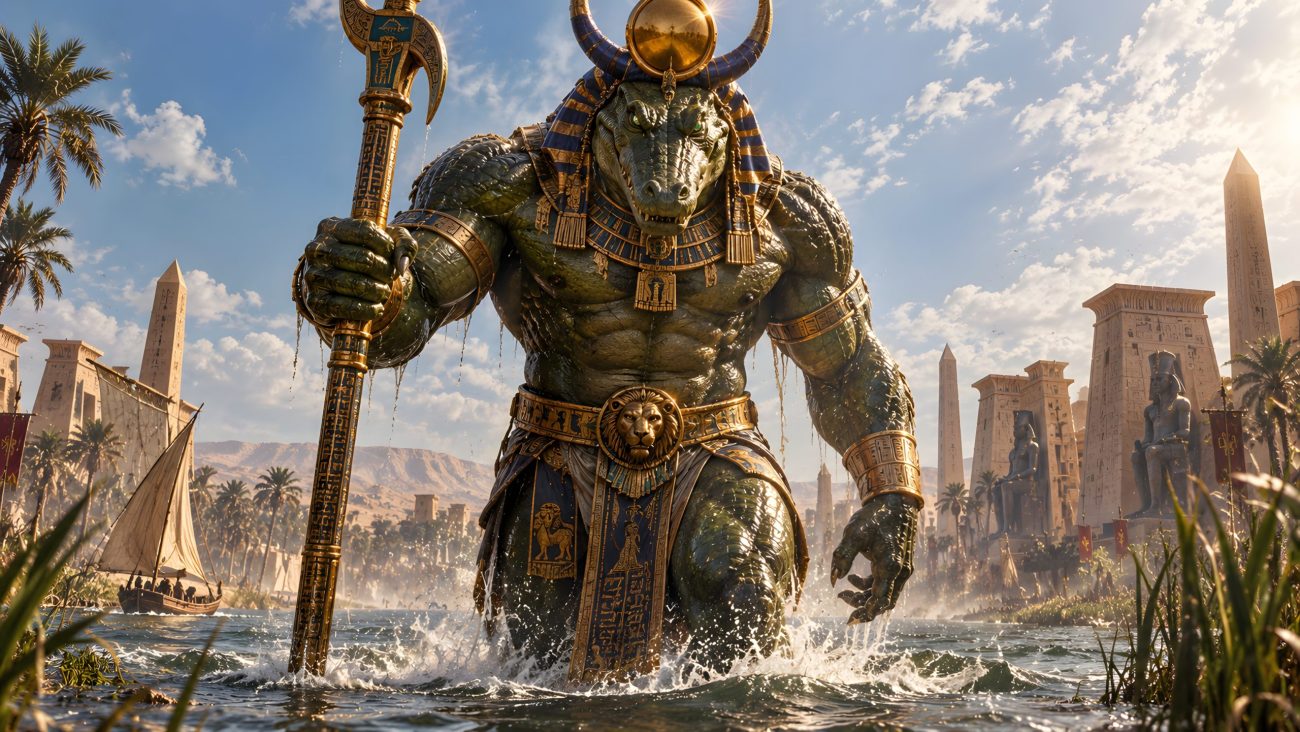
Apophis

Tradition / Region: Egyptian Mythology
Alternative names: Apep, Aphoph
Category: Snake


The Myth

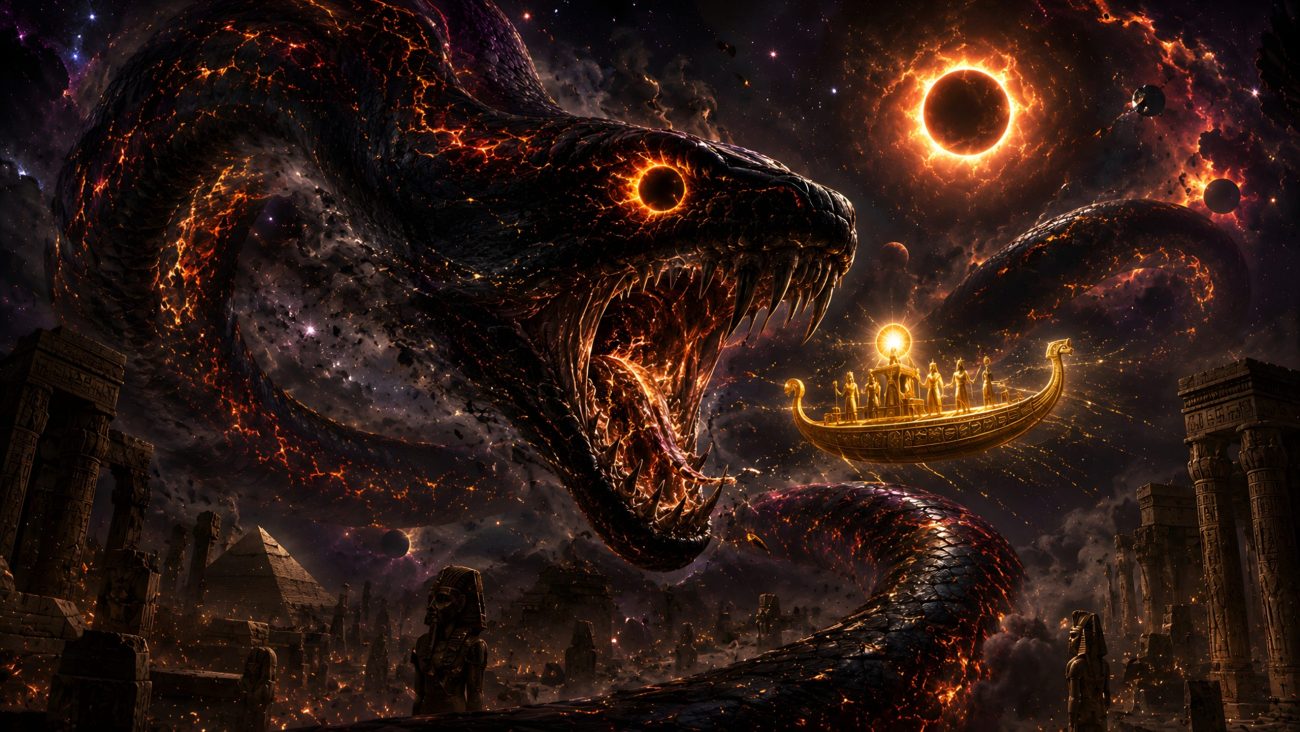
Apophis was the great serpent of chaos in ancient Egyptian mythology and the eternal enemy of the sun god Ra. Usually depicted as a gigantic snake or dragon-like serpent, Apophis represented darkness, destruction, disorder, and everything opposed to divine order and truth.

Egyptians believed that every night, as Ra traveled through the underworld in his solar boat, Apophis attempted to stop him and plunge the world into eternal darkness. The giant serpent attacked the sun boat with coils, hypnotic gazes, storms, and monstrous strength.

Some traditions described Apophis as enormous beyond imagination, stretching dozens of yards in length with a terrifying flint-like head. His movements were believed to cause earthquakes and thunder, while his roar shook the underworld itself.

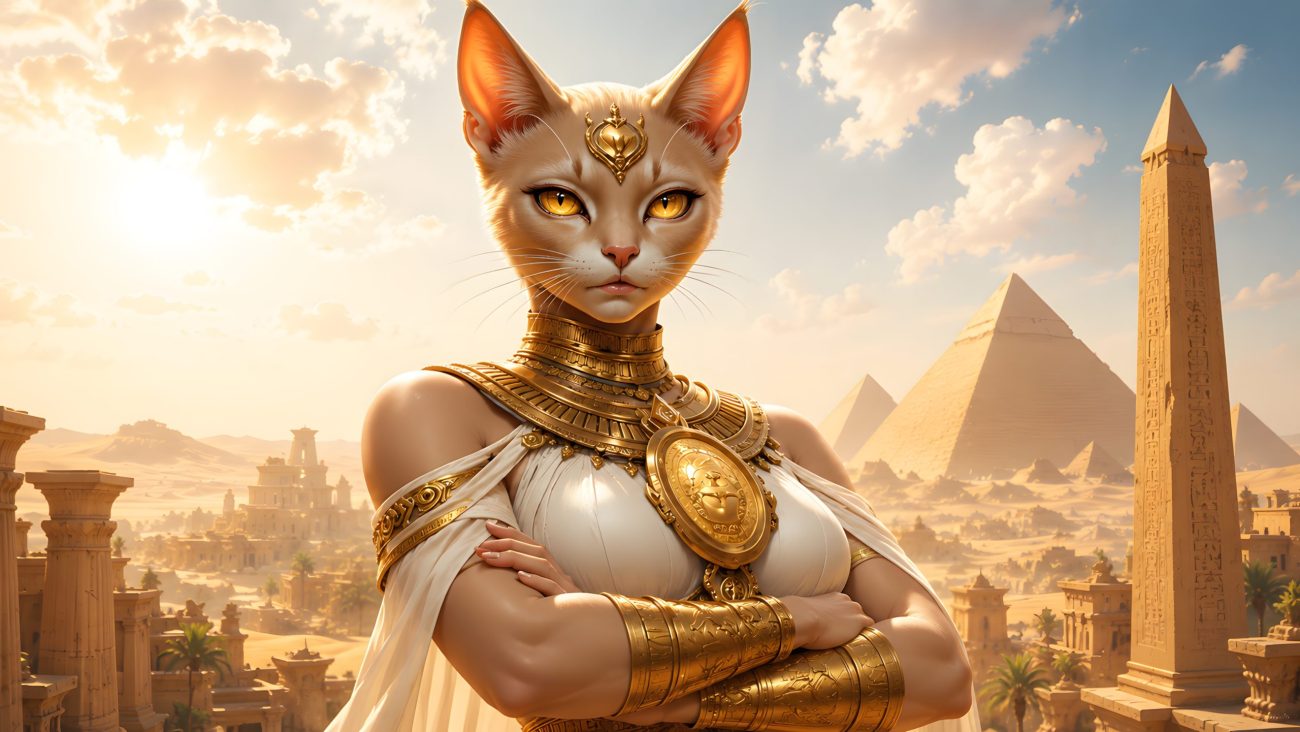
Ra did not fight alone. Other gods traveled with the solar barque and helped defend the sun against the chaos serpent. The god Set was especially associated with spearing Apophis during these nightly battles, while in other stories Ra himself slew the monster in the form of a giant cat.

Although Apophis was repeatedly defeated, he could never be fully destroyed. Each night he returned again from the primordial waters of chaos to renew the struggle against the sun.

Because the serpent symbolized cosmic evil and disorder, Egyptian priests performed rituals specifically meant to weaken him. In ceremonies known as the Overthrowing of Apophis, priests created wax figures or drawings of the serpent which were spat upon, stabbed, burned, mutilated, and destroyed while protective spells were recited.

Apophis was also feared in funerary beliefs. Some traditions described him as an eater of souls lurking in the underworld, and protective spells were buried with the dead to defend them against his attacks.

Among all Egyptian monsters and hostile beings, Apophis became the ultimate symbol of chaos battling against light, life, and cosmic order.


Sources

Wikipedia contributors. (n.d.). Apophis. In Wikipedia. Retrieved May 15, 2026, from https://en.wikipedia.org/wiki/Apophis


Apshait

Tradition / Region: Egypt Mythology
Alternative names: Apshait Beetle
Category: Insect


The Myth

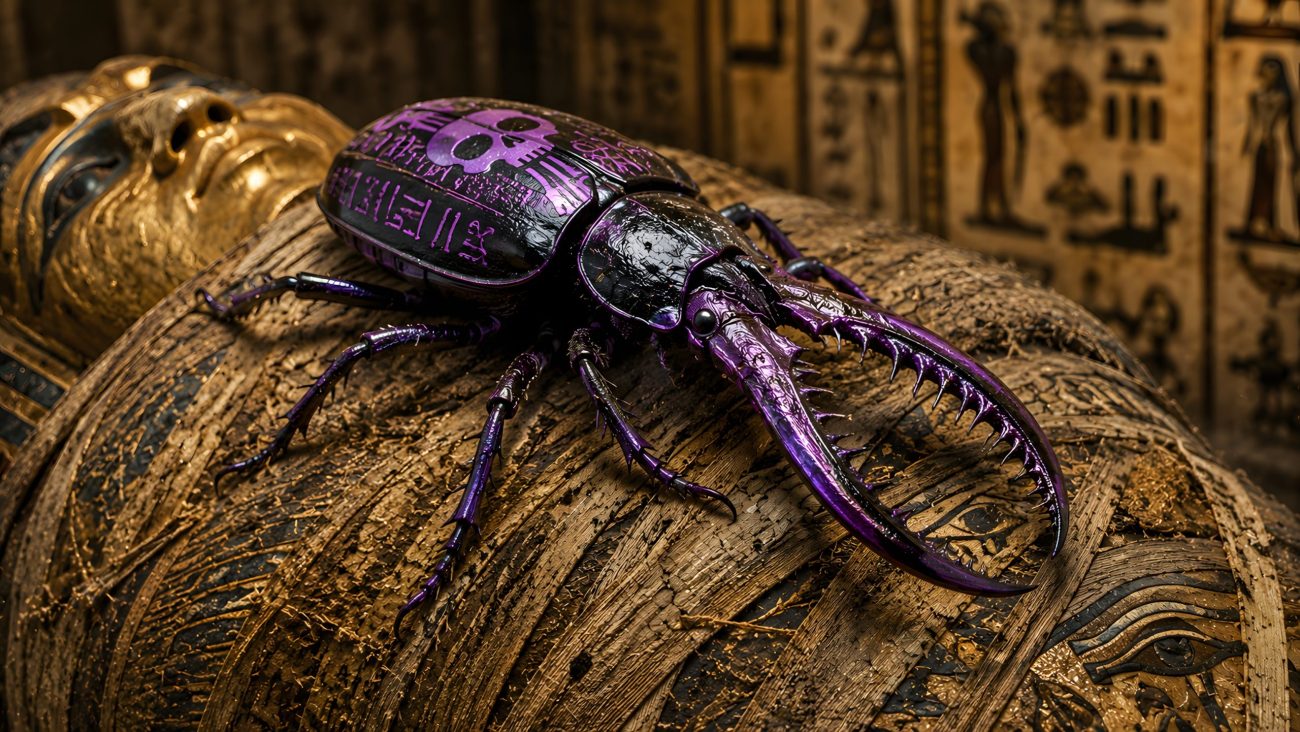
The Apshait was a monstrous flesh-eating beetle from ancient Egyptian mythology and funerary tradition. It appears in the Book of the Dead, particularly in Chapter 36, where it is described as a corpse-devouring creature feared by the dead.

The creature was believed to gnaw upon bodies and consume corpses, making it a symbol of decay and destruction within the tomb. Egyptian funerary spells were designed to protect the deceased from beings like the Apshait during the journey through the afterlife.

In protective rituals, the soul of the dead threatens the Apshait with weapons such as knives and spears, magically driving the monster away before it can damage the body.

Some scholars believe the myth may have originated from real carrion beetles found inside damaged or poorly preserved mummies, where insects fed upon the wrappings and flesh of the dead.

Later Egyptian texts sometimes confused the Apshait with the tortoise, another creature occasionally associated with darkness and enemies of the sun god Ra.


Sources

A Book of Creatures. (2017, May 22). Apshait. Retrieved May 15, 2026, from https://abookofcreatures.com/2017/05/22/apshait/

Wikipedia contributors. (n.d.). Apshait. In Wikipedia. Retrieved May 15, 2026, from https://en.wikipedia.org/wiki/Apshait


Bāa-ta

Tradition / Region: Egyptian Mythology
Alternative names: Ba-ta
Category: Snake


The Myth

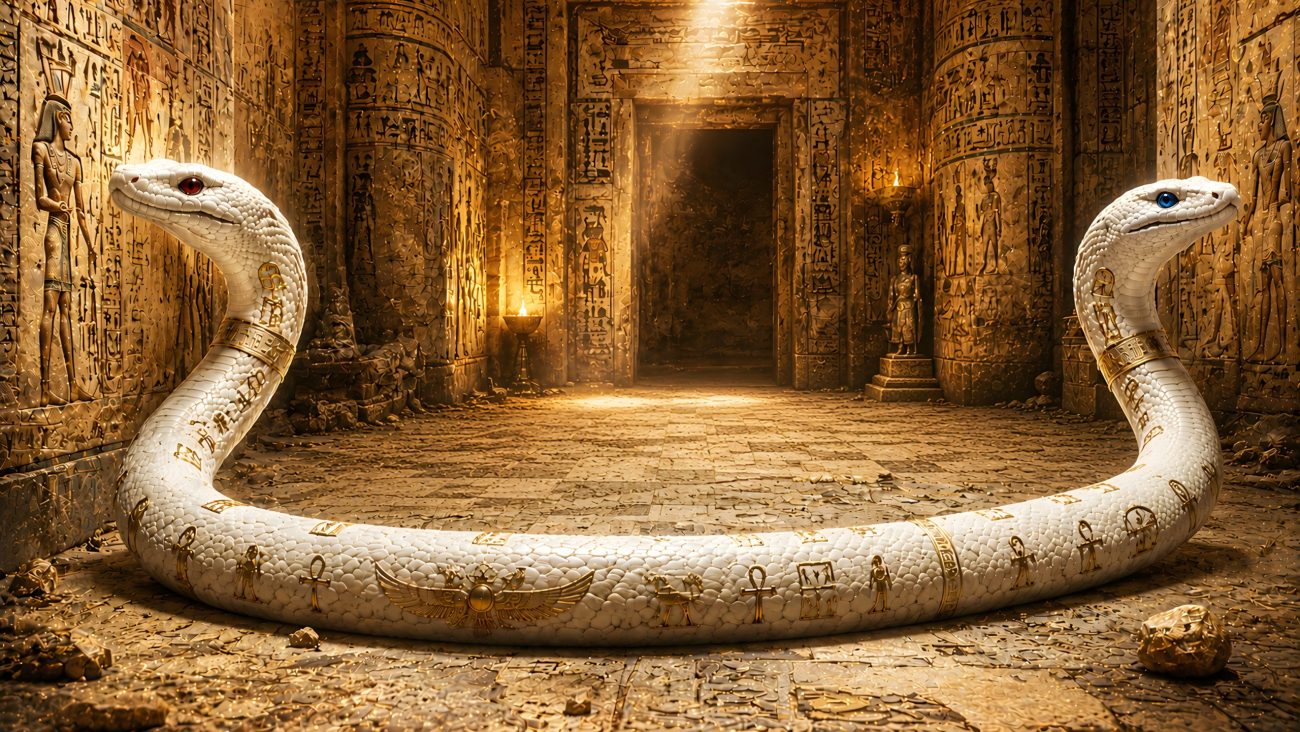
Bāa-ta was a monster serpent mentioned in ancient Egyptian mythology. It was described as a strange snake with a head at each end of its body.

Very little information about the creature survives, and it is mainly known from old Egyptian texts that briefly mention its appearance. Unlike better-known Egyptian monsters, Bāa-ta does not have a large surviving mythology or detailed stories attached to it.

Its unusual double-headed form made it one of the stranger creatures recorded in Egyptian mythological tradition.


Sources

Budge, E. A. W. (1920). An Egyptian hieroglyphic dictionary: With an index of English words, king list and geographical list with indexes, list of hieroglyphic characters, Coptic and Semitic alphabets, etc. (Vol. 1). London: J. Murray.


Wepwawet

Tradition / Region: Egyptian Mythology
Alternate Names: Upuaut, Wep-wawet, Wepawet, Apuat, Ophois
Category: Wolf


The Myth

Wepwawet is one of the oldest gods of ancient Egypt, known as the “Opener of the Ways.” He was worshiped at Asyut, a city the Greeks later called Lycopolis — the City of Wolves — and he was seen as a divine scout who clears paths for gods, kings, and the dead.

He is most often depicted as a wolf or jackal standing at the front of a procession or at the prow of the sun-boat of Ra, forever leading the way forward. In war he marches ahead of the army, opening the road to victory. In royal rituals he appears on the first standard, guiding the other sacred banners behind him and symbolizing the divine authority of the pharaoh.

The Pyramid Texts declare that the face of the king is the face of Wepwawet, for the god protects the ruler’s rise to power and accompanies him on the hunt and in battle. One inscription even proclaims that Wepwawet “opens the way” to victory itself.

Over time, his role as a war-scout expanded into the realm of death. Just as he clears the path for armies, Wepwawet also opens the roads of the Duat, the Egyptian underworld. He guides souls through the dangerous passages beyond death and stands beside funerary rites, helping the dead begin their journey into the afterlife. Because of this role, he became closely associated with Anubis and was sometimes considered his brother.

Different traditions tell of his birth in sacred places: some say he emerged from the holy shrine of the goddess Wadjet, while others claim he sprang from a tamarisk bush. In later texts he is even linked to the rising sun itself, opening the sky at the horizon as Ra ascends.

Whether leading armies, guiding kings, or escorting the dead, Wepwawet stands forever at the front — the divine pathfinder who walks first into every unknown road.


Gallery


Sources

Wepwawet.Wikipedia, The Free Encyclopedia. Retrieved March 1, 2026, from https://en.wikipedia.org/wiki/Wepwawet.


Interpretive Lenses

Religious Readings
  • Christian Ascetic Deep Dive
Philosophical Readings
  • Nietzschean Deep Dive
Psychological Readings
  • Jungian Deep Dive
Esoteric Deep Dive
  • Hermetic Deep Dive
Political / Social Readings
  • Marxist Deep Dive

Am-heh

Tradition / Region: Egyptian Mythology
Alternate Names:
Category: Dog


The Myth

Am-heh was a feared being of the Egyptian underworld.

His name was said to mean “Devourer of Millions” or “Eater of Eternity,” and he was imagined as a powerful and dreadful presence among the spirits of the dead. He was depicted with the body of a man and the head of a hunting dog, marking him as one of the dangerous beings that dwelled beyond the world of the living.

Am-heh was believed to reside in a lake of fire deep in the underworld. From this burning place he threatened the souls who passed through the realm of the dead, and his presence was associated with punishment, destruction, and divine retribution. In some traditions he was connected with other devouring beings who judged or consumed the wicked.

Though terrifying, he was not beyond control. It was said that only the creator god Atum possessed the power to repel him and keep his destructive force in check.

Thus Am-heh was remembered as a fiery devourer of the underworld — a dog-headed god who lurked in the burning depths, waiting among the spirits of the dead.


Sources

Wikipedia contributors. (n.d.). Am-heh. In Wikipedia, from https://en.wikipedia.org/wiki/Am-heh


Buchis

Tradition / Region: Egyptian mythology
Alternate Names:
Category: Cow


The Myth

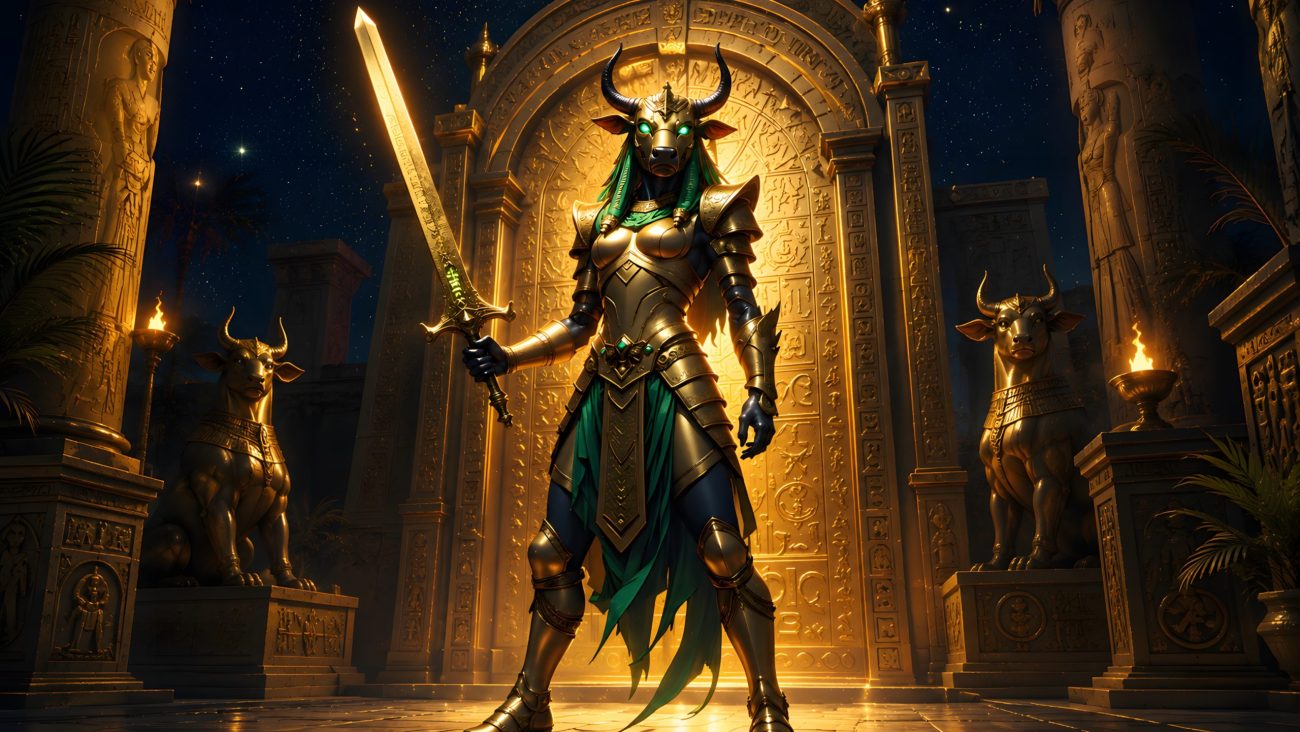
In the city of Hermonthis there appeared a bull unlike any other. Its body shone white as sunlight, while its face was dark as night. The people knew at once that this was no ordinary beast. It was Buchis, the living presence of Montu, god of war and strength, whose life-force had taken flesh.

Buchis was not worshipped as an animal, but as a god walking among humans. Every movement of the bull was watched closely, for within its steps and gestures the will of Montu was believed to be revealed. Priests cared for it with reverence, tending to its needs as one would attend a divine king. Where Buchis lived, Montu himself was thought to be present.

When Buchis died, it did not pass away like common cattle. Its body was prepared with sacred rites, preserved so that the divine force within it would endure beyond death. The bull was laid to rest in a holy place set aside for such beings, and the land mourned as if a god had withdrawn from the world.

Yet Buchis did not end with a single life. Another bull would be born bearing the same signs—white body, black face—and Montu would again walk among mortals. In this way, Buchis embodied the cycle of divine presence, death, and return.

To the people of Egypt, Buchis was proof that the gods were not distant. They could live, breathe, and stand silently among humankind, their power contained within the calm, watchful form of a sacred bull.


Gallery


Sources

Dodson, A. (2005). Bull Cults. In American University in Cairo Press eBooks (pp. 72–102). https://doi.org/10.5743/cairo/9789774248580.003.0004


Interpretive Lenses

Religious Readings
  • Christian Ascetic Deep Dive
Philosophical Readings
  • Nietzschean Deep Dive
Psychological Readings
  • Jungian Deep Dive
Esoteric Deep Dive
  • Hermetic Deep Dive
Political / Social Readings
  • Marxist Deep Dive
Other
  • How to Invite The Buchis

Apis

Tradition / Region: Egyptian Mythology
Alternate Names: Hapis; Hapi-ankh
Category: Cow


The Myth

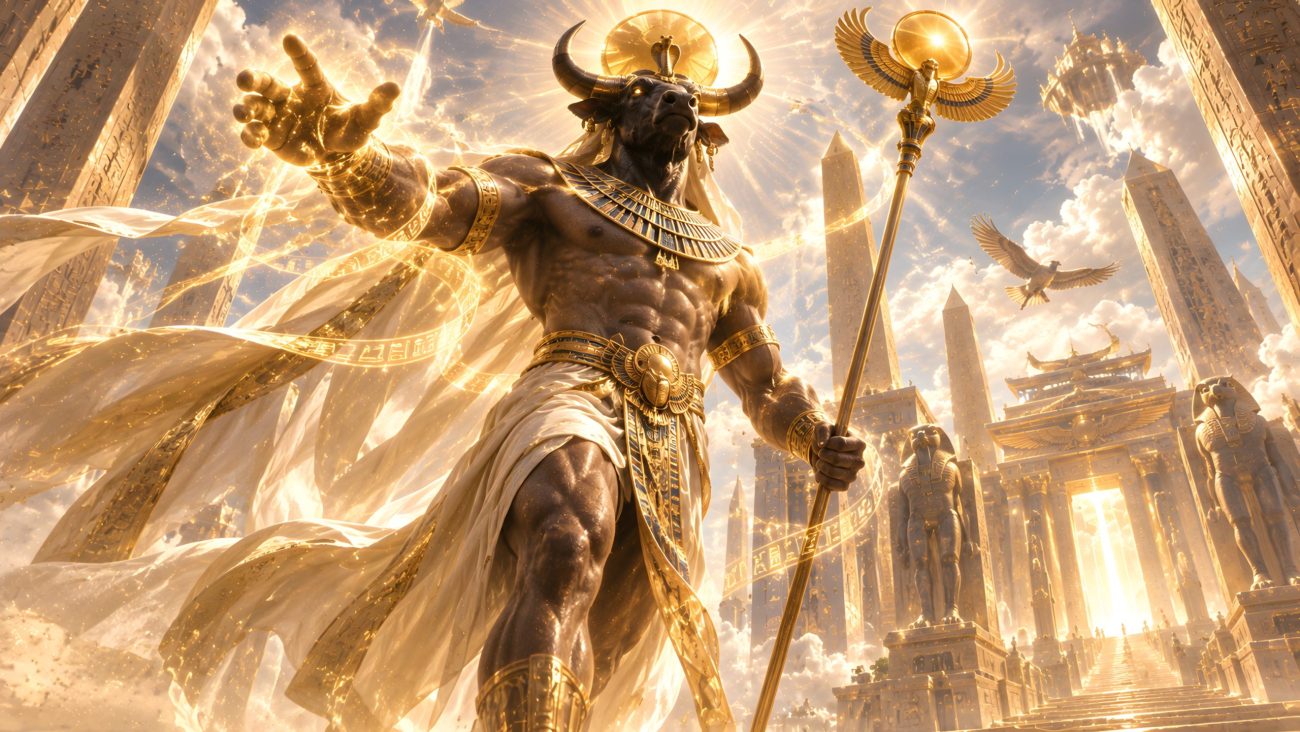
In ancient Egypt, the gods did not always speak through thunder or visions. Sometimes, they walked the earth in living form. One such presence was Apis, the sacred bull of Memphis.

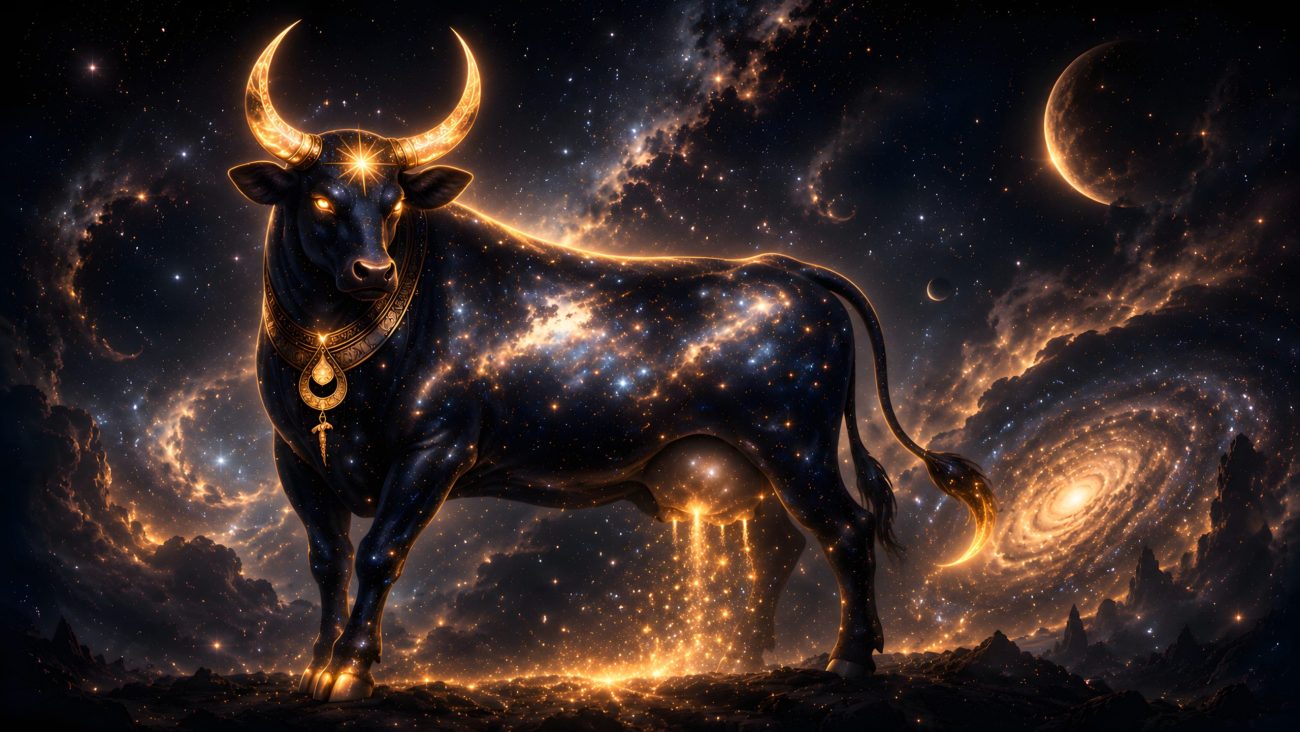
Apis was born when a ray of divine light struck a cow, filling her womb with the power of the heavens. From this miracle came a calf unlike any other, marked from birth as holy. His black body bore signs placed by the gods themselves, and through these signs the people knew that a divine will now walked among them.

Apis lived in a temple, tended with great care. He was not worshipped as an animal alone, but as a bridge between worlds. Through his movements, his moods, and his behavior, the gods revealed their intentions. When Apis was calm, the land prospered. When he grew restless, people feared change was coming.

He was bound to great gods. In life, he carried the presence of Ptah, the shaper of the world. In death, he became one with Osiris, lord of rebirth and the underworld. Thus Apis embodied the cycle of existence itself: birth, power, death, and return.

When Apis died, he was mourned as a king. His body was laid to rest with ceremony and reverence, and the people waited for his return, knowing another Apis would be born. Each new bull was not a replacement, but a continuation—the same divine force entering the world again in living flesh.

Through Apis, the Egyptians believed the gods remained close. He was strength made visible, fertility given form, and the promise that life, even in death, never truly ends.


Sources

Herodotus. (1921). The Histories, Book 3, Section 28 (A. D. Godley, Trans.). Loeb Classical Library, Vol. II. Cambridge, MA: Harvard University Press.

Wikipedia contributors. (n.d.). Apis (deity). In Wikipedia, The Free Encyclopedia. Retrieved May 28, 2025, from https://en.wikipedia.org/wiki/Apis_(deity)


Akshit

Tradition / Region: Egyptian mythology
Alternate Names:
Category: Cow, Deity


The Myth

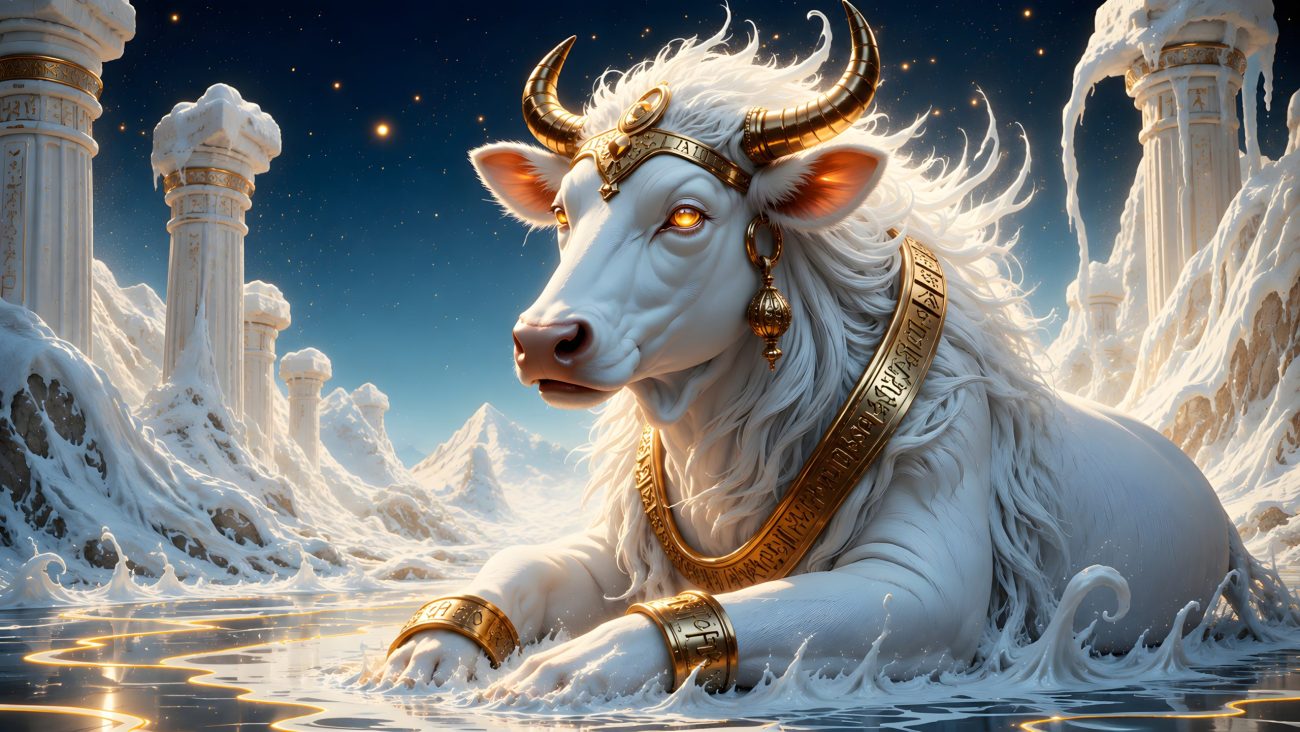
In the city of Oxyrhynchus there was honored a quiet goddess named Akshit, a sacred cow whose destiny was bound to the gods themselves. From her body was born Apis, the holy bull, chosen to walk among humans as a living sign of divine power.

Akshit nurtured her son knowing he was more than a calf. Within him lived fertility, strength, and the will of the gods. As Apis grew, he became the center of reverence: temples rose for him, offerings were brought, and the people watched his movements for meaning. Through him, the gods spoke without words.

Akshit remained in the background of this sacred life, yet everything depended on her. Without her care, the divine bull could not exist. As his mother, she guarded the passage by which divine force entered the world in living form.

Thus Akshit was remembered not for command or spectacle, but for creation itself—the sacred mother who gave the gods a body through which they could dwell among humankind.


Gallery


Sources


Budge, E. A. W. (1920). An Egyptian hieroglyphic dictionary : with an index of English words, king list and geological list with indexes, list of hieroglyphic characters, coptic and semitic alphabets, etc. (p. 95) J. Murray.