Tradition: Egyptian mythology
Alternative Names: Suchus, Souk
Category: Crocodile, Deity
The Myth
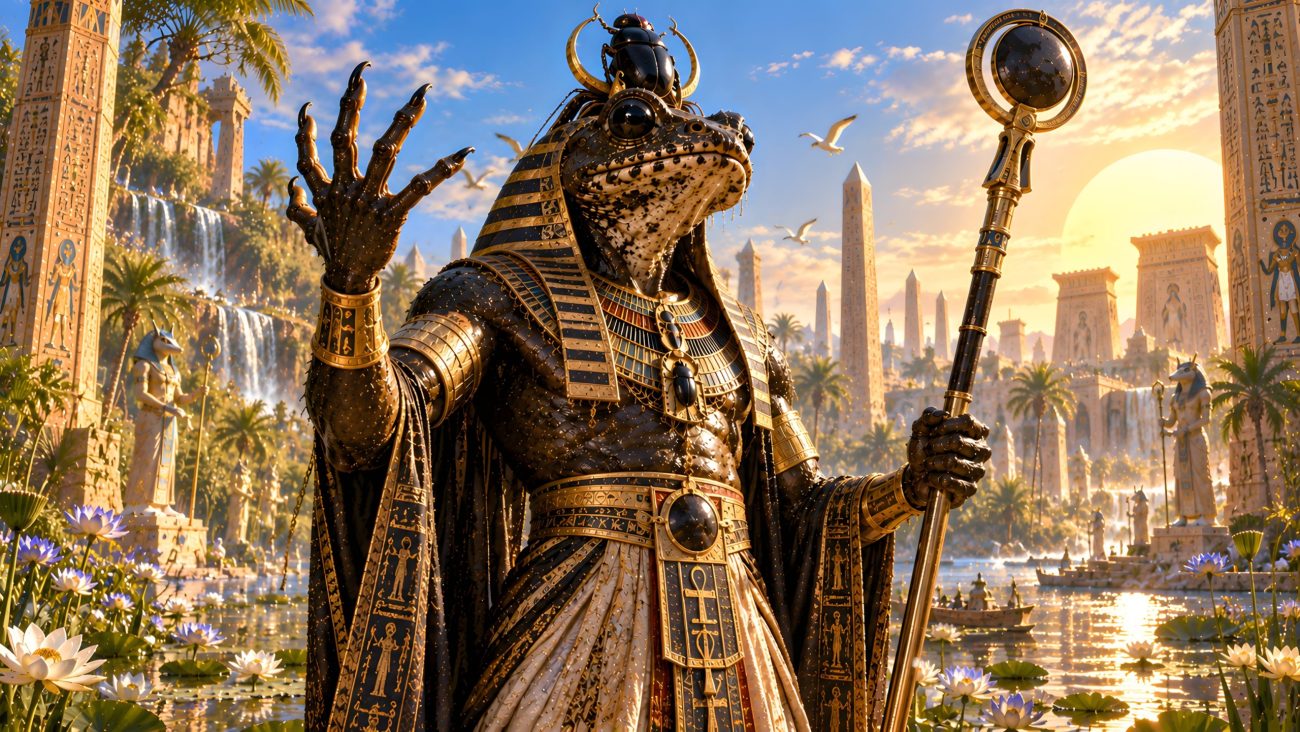
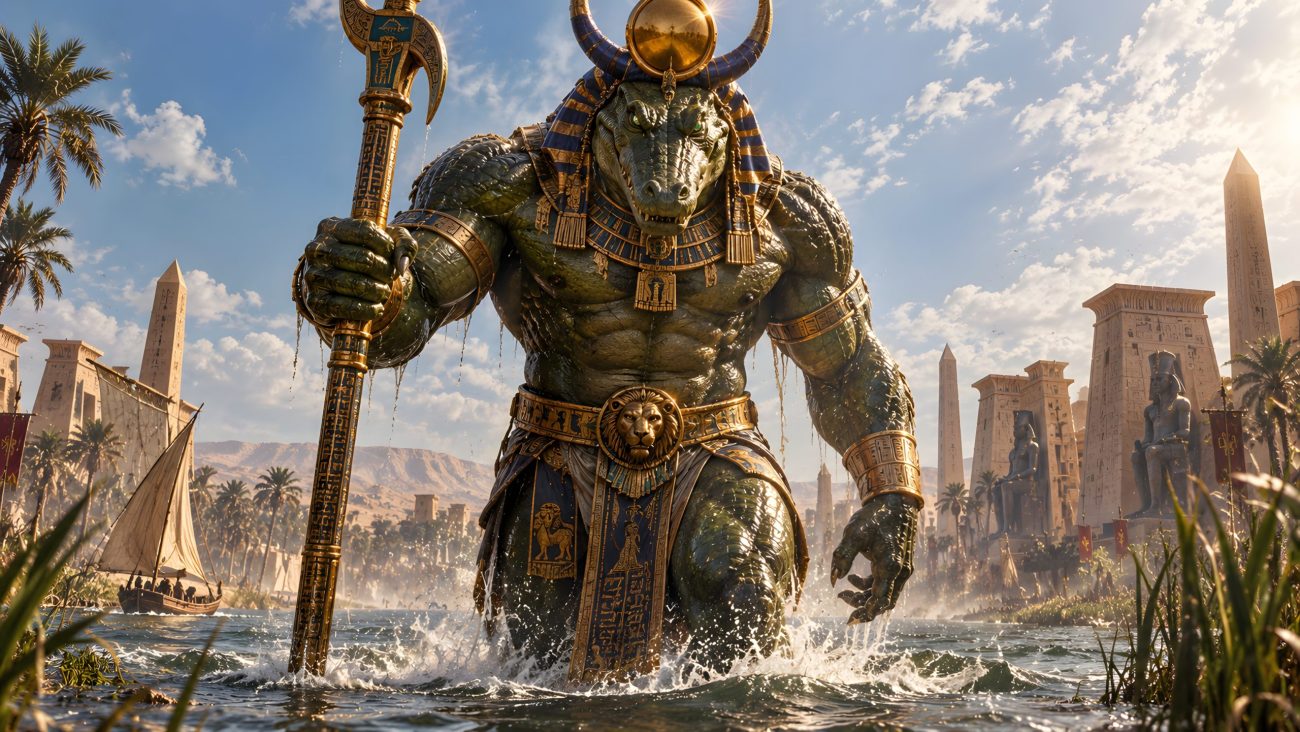
Sobek is an ancient Egyptian deity associated with the Nile crocodile. He is usually represented either as a crocodile or as a human figure with the head of a crocodile. He was associated with pharaonic power, fertility, military prowess, and protection, particularly protection from the dangers of the Nile.
Sobek was worshipped from the Old Kingdom through the Roman period, but became especially prominent during the Middle Kingdom. He was strongly associated with the Faiyum, where crocodiles were worshipped as living manifestations of the god. Crocodiles were raised at temples dedicated to Sobek, and after their deaths they were mummified and presented as sacred manifestations of the deity.
Sobek possessed a fierce and aggressive nature reflecting that of the crocodile. Some of his epithets describe him as one who loves robbery, one who eats while he mates, and one who is sharp of teeth. Yet this dangerous character was accompanied by a protective nature. His fierceness could be directed against evil while defending the innocent, making him a powerful protective deity.
Sobek also became connected with Horus and, through this association, with Osiris and Isis. In this role he was associated with the healing of the dead Osiris after his murder by Set. Some interpretations of Sobek’s name connect it with the idea of impregnating, while another interpretation associates it with uniting or restoring the dismembered limbs of Osiris. His association with healing strengthened his role as a protective deity.
In the Old Kingdom, Sobek already appeared in the Pyramid Texts. One spell praises the pharaoh as an incarnation of the crocodile god, presenting him in the form and power of Sobek. The god later became associated with the sun through his connection with Horus, eventually producing the composite deity Sobek-Ra, who combined the crocodile god with the great Egyptian sun god Ra.
The Faiyum was the principal center of Sobek’s worship. His most prominent form there was Sobek Shedety, the patron deity of Shedet, the region’s capital. Other communities worshipped localized forms of the god, and temples maintained priests whose duties included caring for sacred crocodiles and their bodies.
Sobek’s cult continued into the Ptolemaic and Roman periods. During this time, crocodiles were frequently preserved as mummies and offered at his cult centers. Some crocodile mummies were found with young crocodiles in their mouths or on their backs, emphasizing the protective and nurturing aspect of the otherwise fierce god.
Sobek was therefore a deity of contrasts: an aggressive crocodile god associated with violence, fertility, kingship, and military power, but also a healer and protector. His frightening nature was itself part of his protective power, allowing him to ward off evil and defend those under his protection.
Sources
“ Sobek.” Wikipedia: The Free Encyclopedia. Wikimedia Foundation. Accessed September 5, 2026. https://en.wikipedia.org/wiki/Sobek