Kek

Tradition: Egyptian Mythology
Alternative Names: Kekui, Kekuy, Kekuit
Category: Frog, Deity


The Myth

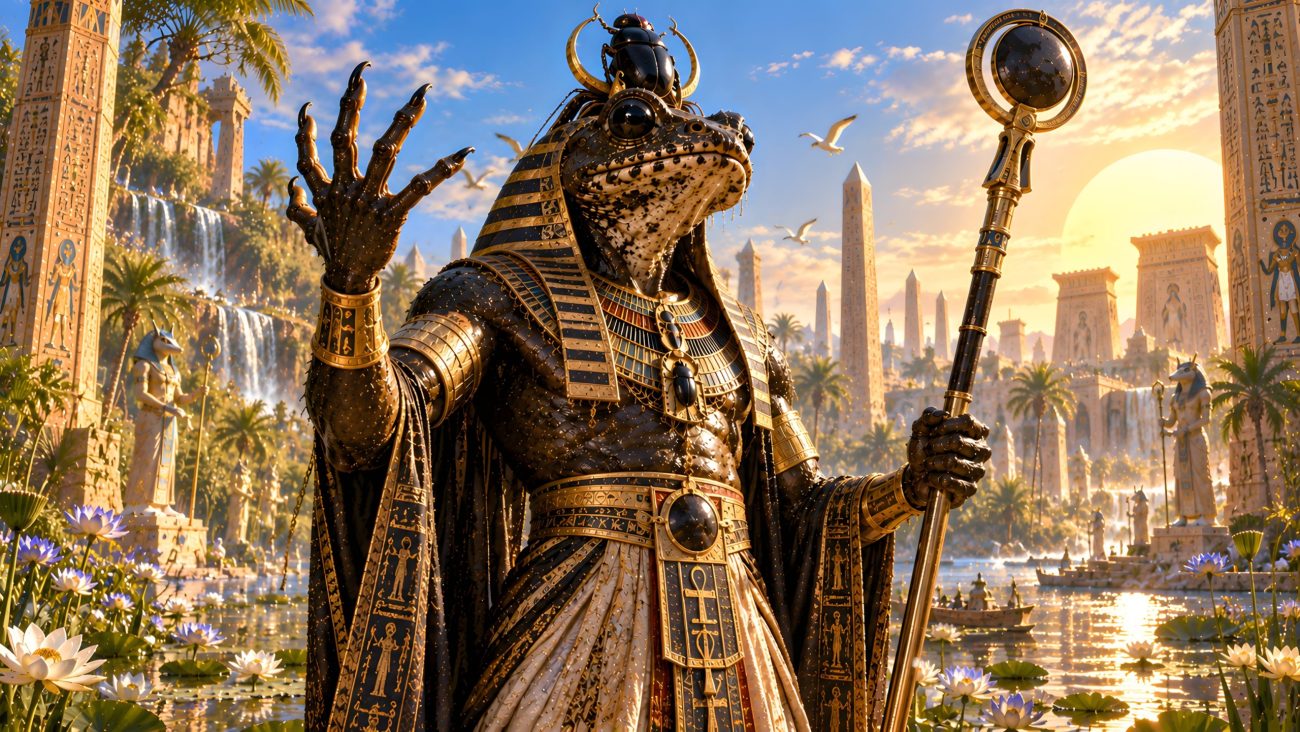
Kek is the ancient Egyptian deification of primordial darkness, one of the fundamental forces that existed before the creation of the world. He belongs to the Ogdoad of Hermopolis, a group of eight primordial deities arranged in four male-female pairs. Together, these divine beings represented the original conditions of existence from which creation emerged. Kek’s female counterpart is Kauket, who shares his association with darkness and the primordial world.

Kek is traditionally depicted as a man with the head of a frog, while Kauket appears as a woman with the head of a serpent. In some representations, Kek’s frog head is surmounted by a beetle, while Kauket’s serpent head bears a disk. These animal features distinguish the pair among the primordial gods and connect them with the mysterious forces that existed before the ordered world.

Kek and Kauket are also associated with night and day. Their complementary roles express the movement between darkness and the arrival of light, with Kek connected to the rising of the day and Kauket to the coming of night in certain traditions. As members of the Ogdoad, they embody the primordial darkness from which the ordered universe would eventually emerge.


Sources

“Kek (mythology).” Wikipedia: The Free Encyclopedia. Wikimedia Foundation. Accessed October 14, 2026. https://en.wikipedia.org/wiki/Kek_%28mythology%29

Heqet

Tradition: Egyptian Mythology
Alternative Names: Heket, Heqtit, Ḥqtyt
Category: Frog


The Myth

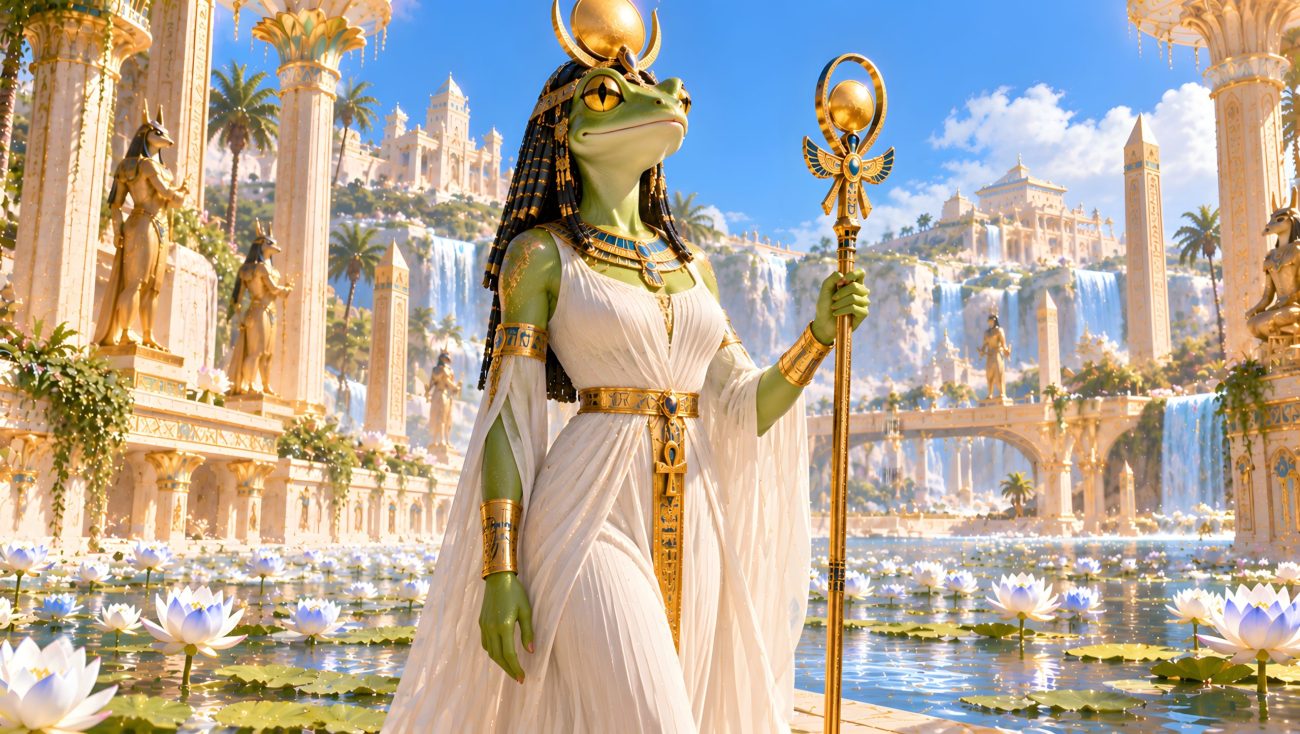
Heqet is an Egyptian goddess of fertility, childbirth, and resurrection, represented as a frog or a woman with the head of a frog. The frog was a symbol of fertility and new life, associated with the annual flooding of the Nile and the growth of crops. Heqet was believed to bring life and renewal, and she was closely connected to the final stages of childbirth. She was known as the one who hastens birth, helping children enter the world safely.

Heqet was the wife of Khnum, the ram-headed god who shaped human bodies on his potter’s wheel. While Khnum formed the bodies of unborn children, Heqet helped bring them to life. She was also associated with the birth of Horus. In the myth of Osiris, Heqet breathed life into the newborn Horus, giving her an important role in the divine cycle of birth, death, and resurrection.

Her power extended beyond childbirth to the renewal of life itself. As the myths of Osiris and Horus became connected with resurrection, Heqet also came to represent the return of life after death. Frog-shaped amulets bearing her image were worn by women seeking protection during childbirth and an easier delivery. Through her association with fertility, birth, and resurrection, Heqet embodied the power that allows life to emerge, flourish, and begin again.


Sources

“Heqet.” Wikipedia: The Free Encyclopedia. Wikimedia Foundation. Accessed October 14, 2026. https://en.wikipedia.org/wiki/Heqet