Ginseng

Tradition / Region: Japanese Mythology
Alternate Names: Ninjin no Kami, Ginseng Deity
Category: Plant, deity


The Myth

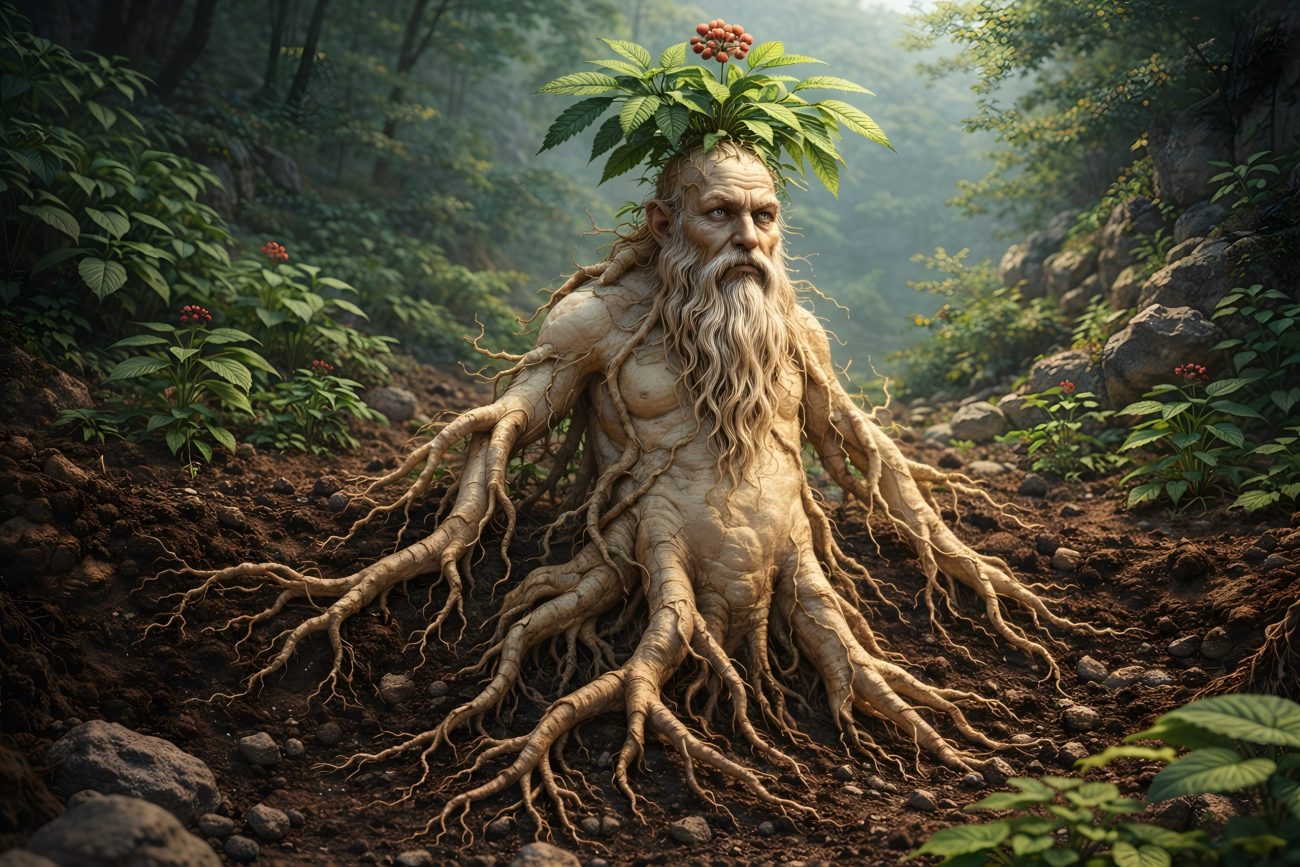
In old illustrated books of curious gods, there is mention of a strange deity known simply as the Carrot.

This being was said to have come from Korea and to dwell in the form of a precious medicinal root. It was believed that the true plant possessed great power, able to cure even illnesses thought impossible to heal. Apothecaries prized it, and those who obtained it treated it almost like a divine object.

The deity was imagined with a human face bearing a foreign beard, while its body was formed from roots. Bundles of carrot-like tendrils served as its arms and legs, giving it the appearance of a spirit grown directly from the soil.

People also spoke of another plant with the same name found at ordinary greengrocers. This one, however, had no power at all. Though it looked similar, it was merely a vegetable and brought no blessings to those who ate it.

Thus the Carrot Deity was remembered as a spirit of the rare medicinal root — a being whose strength lay hidden in the earth, revered when genuine, but easily mistaken for the humble plant that shared its name.


Gallery


Sources

Tyz-Yokai Blog. (n.d.). Ginseng. Retrieved March 1, 2026, from https://tyz-yokai.blog.jp/archives/1076296170.html
Interpretive Lenses

Religious Readings
  • Christian Ascetic Deep Dive
Philosophical Readings
  • Nietzschean Deep Dive
Psychological Readings
  • Jungian Deep Dive
Esoteric Deep Dive
  • Hermetic Deep Dive
Political / Social Readings
  • Marxist Deep Dive

Ya-Te-Veo

Tradition / Region: Cuban Mythology
Alternate Names: Yateveo, “I See You” Plant, Man-Eating Tree
Category: Plant


The Myth

In tales told during the late nineteenth century, explorers and storytellers spoke of a dreadful plant known as the Ya-Te-Veo — a living tree said to hunt like a beast.

The plant was said to grow in remote jungles, far from settled lands. From a distance it resembled a strange, squat tree or enormous shrub. But those who drew near claimed it revealed its true nature. Its trunk was surrounded by long, flexible tendrils covered in sharp spines. These limbs moved restlessly, writhing like serpents, as though the plant were watching for prey.

When a creature stepped within its reach, the tendrils lashed out. They wrapped around the victim with terrible speed, tightening until bones snapped and breath failed. The spines pierced flesh, and the plant drew nourishment from the body as it struggled.

People said the tree gave a warning before it struck. A faint hissing sound rose from it, like whispering breath or a voice in the leaves. Those who heard it thought the sound resembled the words “ya te veo” — “I see you.” From this, the plant took its name.

Stories placed the Ya-Te-Veo in distant forests of Africa or South America, lands imagined as wild and unknown. Whether seen or only spoken of, it became one of the most feared plants of travelers’ tales — a reminder that in the deep jungle, even a tree might watch, wait, and feed upon the living.


Gallery


Sources

Wikipedia contributors. (n.d.). Man-eating plant. In Wikipedia. Retrieved March 1, 2026, from https://en.wikipedia.org/wiki/Man-eating_plant


Interpretive Lenses

Religious Readings
  • Christian Ascetic Deep Dive
Philosophical Readings
  • Nietzschean Deep Dive
Psychological Readings
  • Jungian Deep Dive
Esoteric Deep Dive
  • Hermetic Deep Dive
Political / Social Readings
  • Marxist Deep Dive

Devouring Gourd

Tradition / Region: Bantu Mythology, Congolese Mythology
Alternate Names: Man-Eating Gourd, Usambara Gourd
Category: Plant


The Myth

In some lands it is said that when a powerful sorcerer or ogre dies, the earth where they fall may grow strange plants. From that soil can rise gourds and pumpkins that are no longer harmless crops, but living beings with hunger and will.

One such gourd once grew in Usambara. A group of boys playing nearby noticed it swelling larger and larger. One of them laughed and said, “Look at how big that gourd is getting!”
To their shock, the gourd answered, “If you pluck me, I’ll pluck you!”

The boys fled and told their mother, but she did not believe them. Their sisters went to see for themselves and repeated the same words. This time the gourd remained silent, and the girls returned home mocking their brothers.

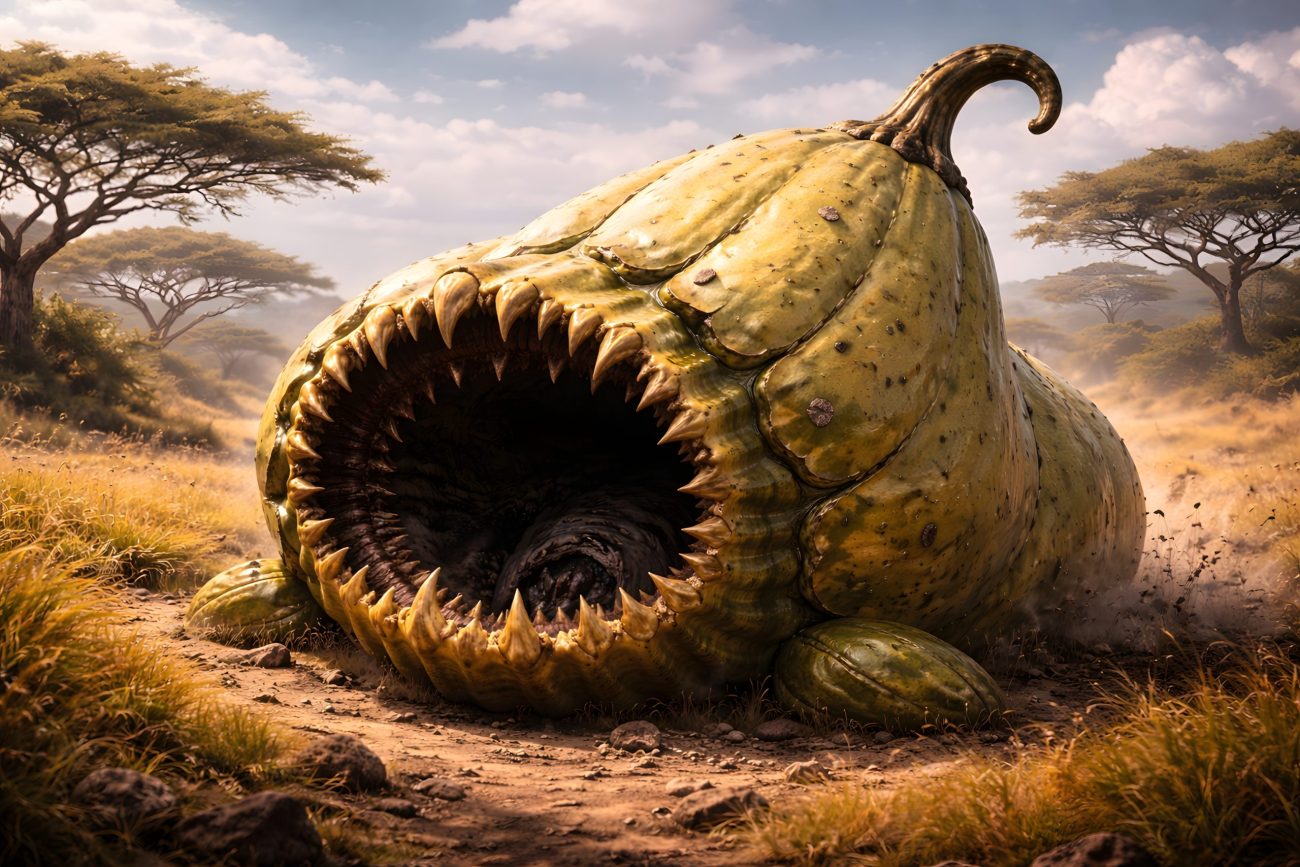
Since no one dared pick it, the gourd kept growing. It swelled until it was as large as a house. Then one day it tore itself free from the earth and began to move. Rolling through the village, it swallowed everyone it found, devouring men, women, and children alike. When no one remained, it rolled into a nearby lake and settled beneath the water.

Only one woman survived, and she was with child. She gave birth to a son, and the two lived alone among the empty huts. When the boy grew older, he asked about his father. His mother told him that the man had been swallowed by the great gourd now lying in the lake.

The boy vowed to avenge him. He went to the shore, where parts of the monster could be seen above the water, and shouted insults to provoke it.

“Gourd, come out!”

Angered, the creature rose from the lake and rolled toward him. But the boy was ready. He shot arrow after arrow into its body. When the tenth arrow struck, the gourd gave a thunderous roar that echoed across the land and fell dead. The boy cut it open, and all the villagers came out alive from inside it. In time he became a great leader among his people.

Other tales speak of similar plants. A pumpkin once grew over the grave of a wicked shapeshifter and echoed every word spoken to it until it swallowed those who came to cut it down. Among the Ronga, poisonous fruits are said to walk with arms and legs, carrying spears and shields.

Thus in these stories, the quiet plants of the earth may hide something terrible — and when they grow from places touched by evil, they may rise not to feed people, but to devour them.


Gallery


Sources

A Book of Creatures. (n.d.). Devouring Gourd. Retrieved March 1, 2026, from https://abookofcreatures.com/?s=Devouring+Gourd


Interpretive Lenses

Religious Readings
  • Christian Ascetic Deep Dive
Philosophical Readings
  • Nietzschean Deep Dive
Psychological Readings
  • Jungian Deep Dive
Esoteric Deep Dive
  • Hermetic Deep Dive
Political / Social Readings
  • Marxist Deep Dive

Muirdris

Tradition / Region: Irish mythology
Alternate Names: Sea Bramble, Sea Briar, Sínach / Sinech
Category: Plant,


The Myth

Fergus mac Léti, king of Ulster, loved the water more than any man of his land. He swam in rivers, lakes, and the sea, and none could match his strength beneath the waves.

One day, while he slept beside the shore, water spirits known as lúchorpáin crept upon him and tried to carry him into the sea. The chill of the water woke him, and he seized three of them before they could escape. To buy their freedom, the sprites granted him a wish. Fergus demanded the power to breathe underwater in seas, lakes, and pools.

They gave him enchanted earplugs and a tunic to wrap about his head, granting him the power he desired. But they warned him of one thing: he must never use these gifts at Loch Rudraige in his own land.

Fergus ignored the warning.

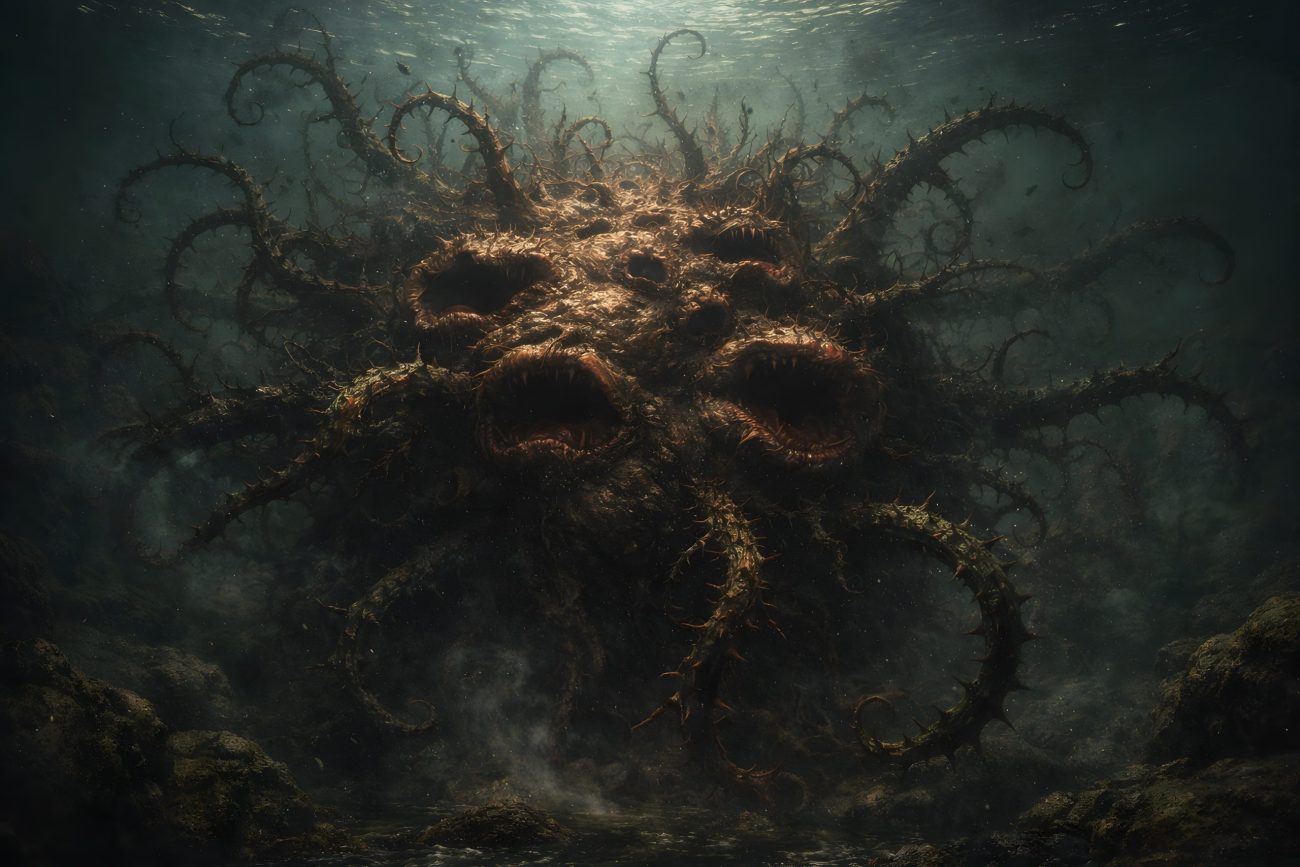
At Loch Rudraige he plunged beneath the surface, proud of his new power. There, in the dark water, he encountered a horror unlike any creature of land or sea. It was called the Muirdris — the Sea Bramble.

The monster loomed vast and shapeless, swelling and shrinking like a bellows. Its form bristled like a thornbush, covered in stings and branching growths. Its very appearance carried deadly power. When Fergus beheld it, the sight alone twisted his body, leaving him horribly disfigured. His mouth shifted to the back of his head, and he emerged from the water changed.

His court hid the truth from him for years, knowing that a king marked by such a blemish could not rule. They kept mirrors from him and guarded the secret until, after many years, the truth was finally revealed.

Enraged and shamed, Fergus returned alone to the loch to face the creature that had cursed him.

For a full day and night the waters churned as he battled the Muirdris beneath the surface. The lake boiled like a great cauldron. At last Fergus killed the monster with his bare hands and rose from the water holding its head in triumph.

But the struggle had taken all his strength. No sooner had he reached the shore than he fell and died, his victory won at the cost of his life.

Thus the Muirdris remained in story as a terror of the deep waters — a bramble of the sea whose mere sight could break a king, and whose defeat cost the hero everything.


Sources

A Book of Creatures. (n.d.). Muirdris. Retrieved March 1, 2026, from https://abookofcreatures.com/2016/09/23/muirdris/


Yedua

Tradition / Region: Lebanese Mythology
Alternate Names: Adne Hasadeh, Abne Hasadeh, Bar Nash D’Tur
Category: Plant


The Myth

In the wild and lonely places of the earth there was said to live a strange being called the Yedua, a creature neither fully plant nor fully animal.

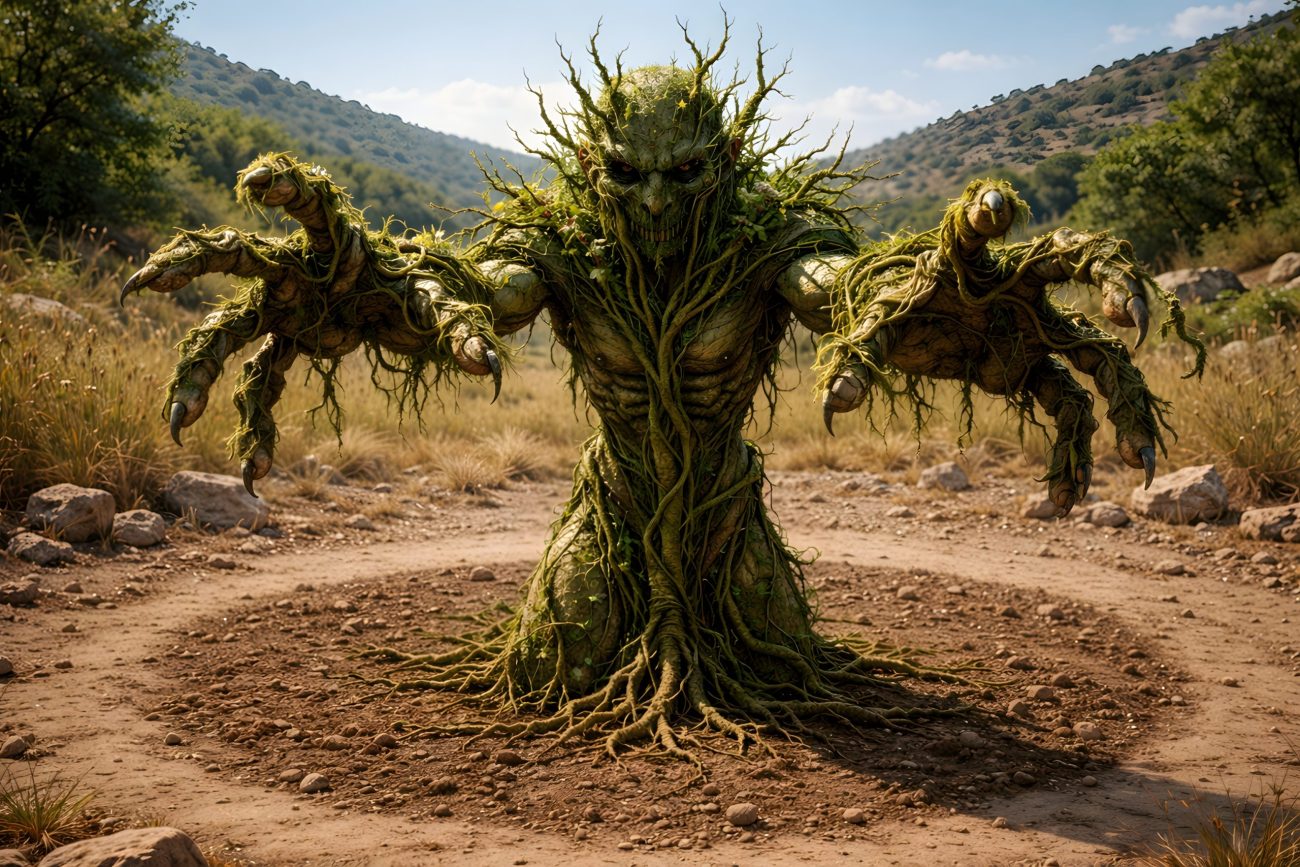
It stood in human shape, with a face, body, arms, and feet like those of a person. Yet it did not walk freely upon the land. From its navel grew a stem, thick and living like the vine of a gourd, which fastened it to the ground. Through this cord the creature drew its life, feeding from the soil beneath it.

The Yedua roamed only within the circle that its tether allowed. Anything living that entered this boundary was in danger, for the creature would seize and kill animals or people who came too close. Within that same circle it devoured every plant and blade of grass, leaving the ground stripped bare around it.

Because its life depended on the stem, hunters knew how it could be slain. They dared not approach, but instead shot arrows from afar, aiming for the cord at its navel. Once the stem was cut or uprooted, the creature’s strength failed at once, and it fell lifeless to the earth.

The remains of the Yedua were thought to hold strange power. Its bones were prized by those who practiced secret arts, for it was said that if one placed them in the mouth and spoke certain words, hidden knowledge and visions of the future might appear.

Thus the Yedua was remembered as a being rooted between worlds — a man of the field bound to the earth like a plant, fierce while alive, and mysterious even after death.


Gallery


Sources

A Book of Creatures. (n.d.). Yedua. Retrieved March 1, 2026, from https://abookofcreatures.com/2016/01/18/yedua/


Interpretive Lenses

Religious Readings
  • Christian Ascetic Deep Dive
Philosophical Readings
  • Nietzschean Deep Dive
Psychological Readings
  • Jungian Deep Dive
Esoteric Deep Dive
  • Hermetic Deep Dive
Political / Social Readings
  • Marxist Deep Dive

Yohualtepoztli

Tradition / Region: Aztec Mythology, Mexico Mythology
Alternate Names: Night Axe Spirit, Night Hatchet Phantom
Category: Plant


The Myth

In the mountains and lonely paths of Mexico, travelers sometimes hear a dull and dreadful sound in the night.

Thud. Thud. Thud.

It echoes through the darkness like an axe striking wood. Those who hear it know that the Yohualtepoztli is near — a spirit of the night sent to test the courage of those who wander after sunset.

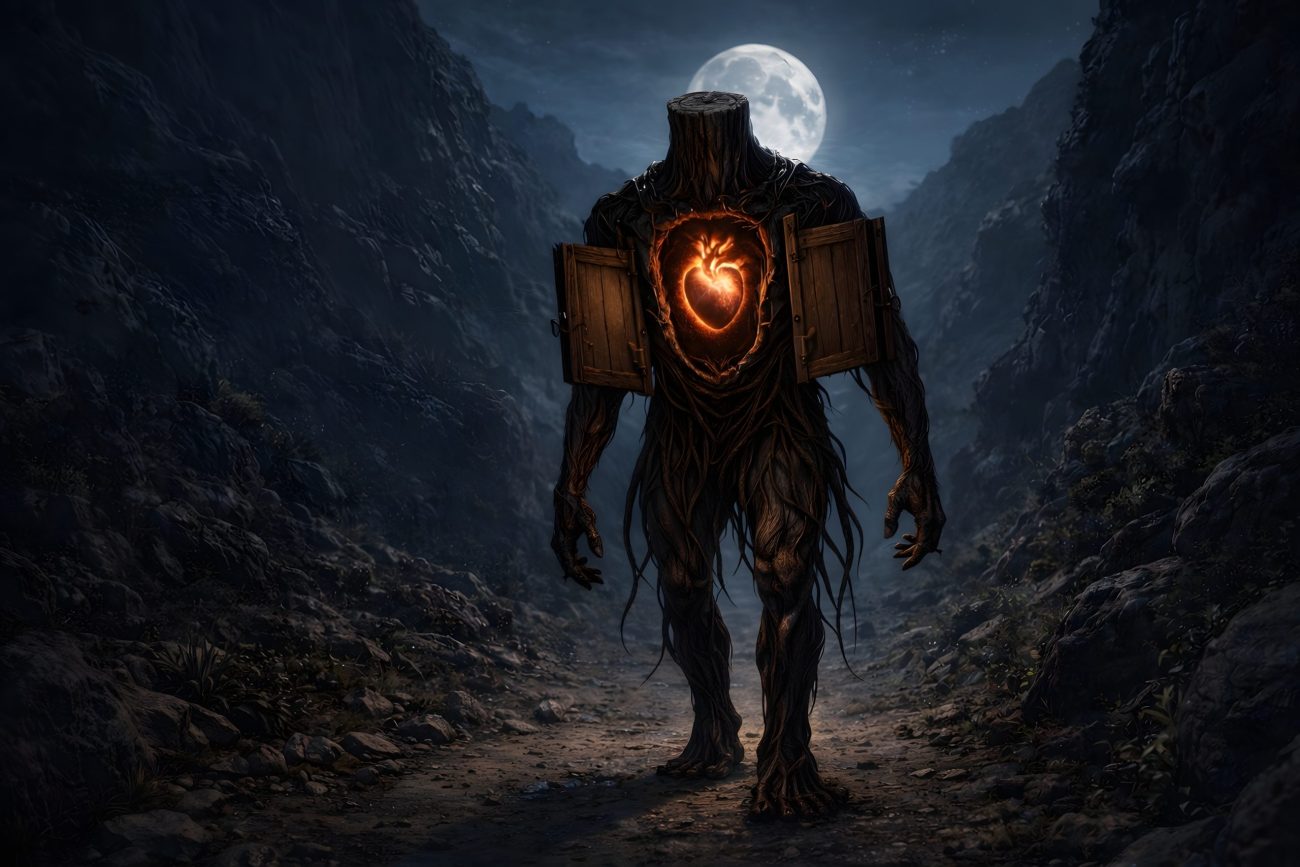
The being appears in a terrifying form. It resembles a man’s body, yet where its head should be there is only a stump, like the trunk of a tree cut clean through. Its chest is hollow, the heart exposed inside, and on either side hang small door-like flaps. As the creature walks, these doors swing and strike together, making the heavy, wooden blows that echo through the night.

When the sound begins, fear urges travelers to flee. Yet those who run from the noise gain nothing, and misfortune may follow them home. The brave know that they must instead approach the spirit.

If a warrior, priest, or fearless person dares to confront it, they must seize the exposed heart and hold it tight, threatening to tear it free. Only then will the Yohualtepoztli bargain for its release. It offers gifts in return — agave thorns that promise success in war, renown, strength, and riches.

The spirit may try to escape by offering only one thorn, but the wise hold firm until several have been given.

Some, too frightened to bargain, may tear out the heart and flee. If the heart is wrapped and left overnight, it may transform by morning into bird down, cotton, or agave thorns, signs of good fortune. But if it turns into coal or rags, it foretells bad luck.

Thus the Yohualtepoztli wanders the night roads, its hollow chest echoing like an axe on wood, waiting for those who will face it. For the fearless, it may grant rewards. For the timid, it leaves only dread and misfortune in its wake.


Gallery


Sources

A Book of Creatures. (n.d.). Yohualtepoztli. Retrieved March 1, 2026, from https://abookofcreatures.com/2017/05/19/yohualtepoztli/


Interpretive Lenses

Religious Readings
  • Christian Ascetic Deep Dive
Philosophical Readings
  • Nietzschean Deep Dive
Psychological Readings
  • Jungian Deep Dive
Esoteric Deep Dive
  • Hermetic Deep Dive
Political / Social Readings
  • Marxist Deep Dive

Nobiagari

Tradition / Region: Japanese Mythology
Alternate Names: Nobiagari Nyūdō, Mikoshi Nyūdō, Miage Nyūdō
Category: Plant


The Myth

In the bamboo groves of Shikoku, people tell of a strange and dangerous being known as the Nobiagari.

It hides low among the stalks, no larger than a small stone or clump of shadow. At rest it is hardly noticeable — a dark, smoky shape about the height of a hand above the ground, blending perfectly with the fallen leaves and tangled roots of the grove.

But when a traveler comes close and notices it, the creature suddenly rises.

The Nobiagari stretches upward at once, its body lengthening like smoke pulled toward the sky. It grows taller than a person, then taller still. No matter how high the traveler lifts their head, the being continues to rise, forcing them to look higher and higher.

While the victim’s gaze is drawn upward, their throat is exposed. That is when the attack comes.

In some places, people say the creature bites into the throat and tears it open. In others, it coils its long body around the neck and strangles its prey. Elsewhere, it simply collapses forward, crushing the victim beneath its towering form.

Yet there is said to be one way to escape. If a person keeps their eyes lowered and refuses to look up, the creature cannot seize them. Striking at the ground where it first appeared — just above the height of a small stone — may cause it to vanish at once.

Thus the Nobiagari is remembered as a lurking danger of the bamboo forest: a thing that begins small and harmless, but rises without limit the moment one gives it their gaze.


Gallery


Sources

yokai.com. (n.d.). Nobiagari. Retrieved March 1, 2026, from https://yokai.com/nobiagari/?srsltid=AfmBOopGYBhws1WGqT7ZdR81Jq_G9tMhQFZ1E3612EWys_7dEQsouyO5


Interpretive Lenses

Religious Readings
  • Christian Ascetic Deep Dive
Philosophical Readings
  • Nietzschean Deep Dive
Psychological Readings
  • Jungian Deep Dive
Esoteric Deep Dive
  • Hermetic Deep Dive
Political / Social Readings
  • Marxist Deep Dive

Tree Demon

Tradition / Region: Chinese mythology and folklore
Alternate Names: Dryad, Tree Spirit, Tree Monster
Category: Plant


The Myth

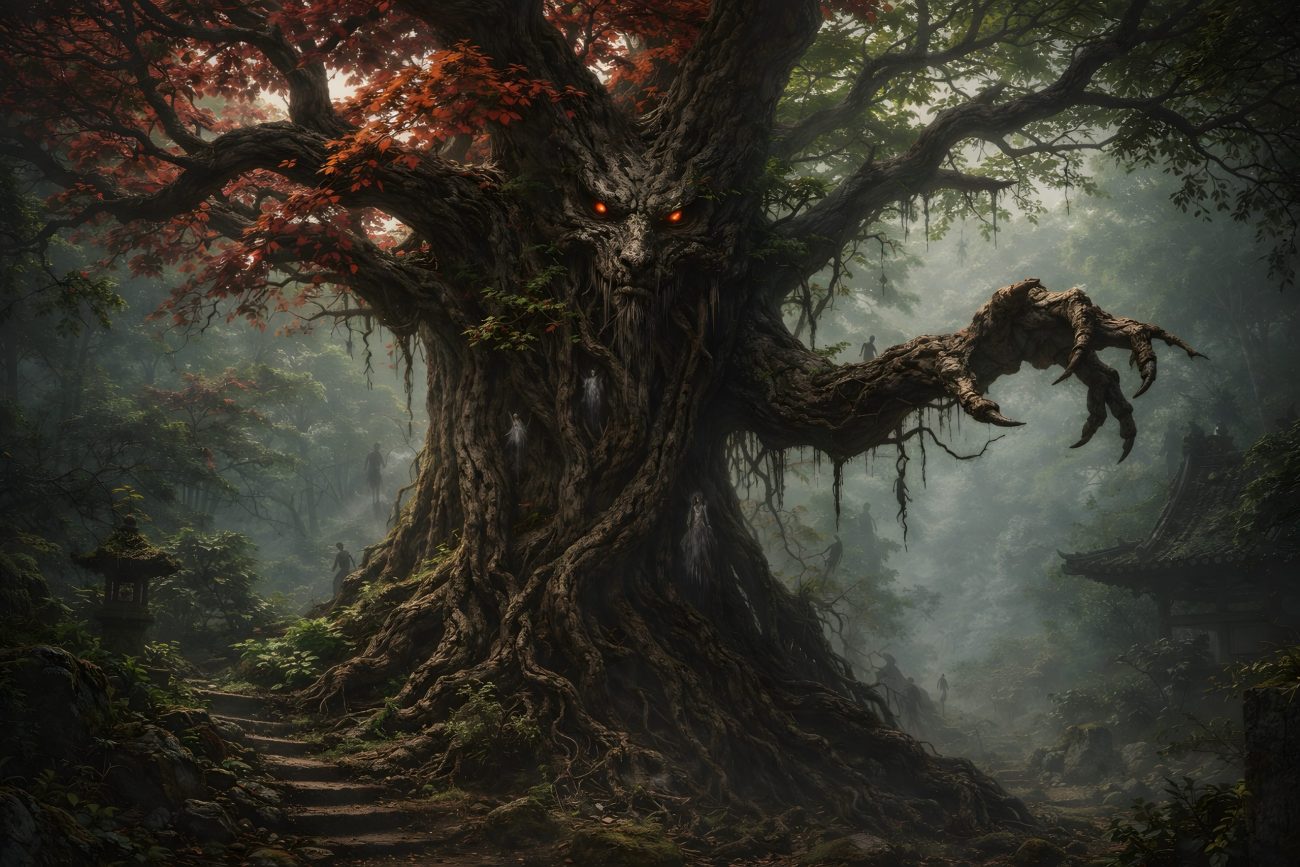
It is said that trees which stand for many centuries may gather the energy of heaven and earth, drinking in the light of the sun and the glow of the moon. When this power grows strong enough, the tree awakens into a spirit and leaves its ordinary nature behind.

Ancient writings tell of such beings. Some say that the spirit of a thousand-year-old tree may wander the world in animal form, appearing as a blue ox or a strange green sheep. Others say that once a tree becomes a spirit, its branches, leaves, and flowers carry healing power, able to cure illness or drive away harm.

Not all tree spirits are gentle. Some tales speak of beings that stretch dark hands from trunks or branches, reaching toward human dwellings in hunger. One story tells of a great ginkgo tree that revealed its nature when a hand reached from outside a window, begging for food. When the household tricked it with a firecracker, the tree was blasted apart, revealing the spirit hidden within.

In old romances and strange tales, tree spirits often take human shape. Pine, cypress, bamboo, plum, and apricot were said to appear as wandering immortals or mysterious guests. In other stories, they ruled over ghosts. One powerful tree demon was said to command spirits of the dead, sending them to lure men so that the tree might feed on their life force and strengthen its power.

There are also tales of warrior spirits born from trees. Two such beings, formed from a peach tree and a willow, served in battle and possessed keen sight that allowed them to perceive events far away. Only when their original trees were burned did their power fade and their spirits depart.

Thus the tree demon appears in many forms — healer, wanderer, deceiver, or tyrant. Whether gentle or cruel, all share the same origin: a tree that stood long enough for the world’s hidden breath to awaken something living within it.


Gallery


Sources

Wikipedia contributors. (n.d.). 樹妖. In Wikipedia. Retrieved March 1, 2026, from https://zh.wikipedia.org/wiki/%E6%A8%B9%E5%A6%96


Interpretive Lenses

Religious Readings
  • Christian Ascetic Deep Dive
Philosophical Readings
  • Nietzschean Deep Dive
Psychological Readings
  • Jungian Deep Dive
Esoteric Deep Dive
  • Hermetic Deep Dive
Political / Social Readings
  • Marxist Deep Dive

Guā Jīng

Tradition / Region: Chinese Mythology
Alternate Names: Melon Spirit, Melon Essence
Category: Plant


The Myth

In old stories performed on the stage, there is mention of the Guā Jīng, the spirit of a melon that had taken on life and will of its own.

When Liu Zhiyuan and Li Sanniang were separated by hardship and intrigue, enemies plotted against Liu Zhiyuan and sent him into a melon garden. There he was told that a dangerous melon spirit lived among the vines and that he must destroy it.

Liu Zhiyuan went to the garden prepared for battle, expecting a monster to emerge from the plants. But the being he encountered was not what he had been led to believe. The melon spirit revealed itself as a creature transformed by heavenly powers, not a demon seeking harm.

Instead of fighting him, the spirit aided him. It brought armor for his protection and stood beside him in the trials that followed. For ten days it fought in the unseen realms, moving between the world of men and the world below, until at last it departed into the earth.

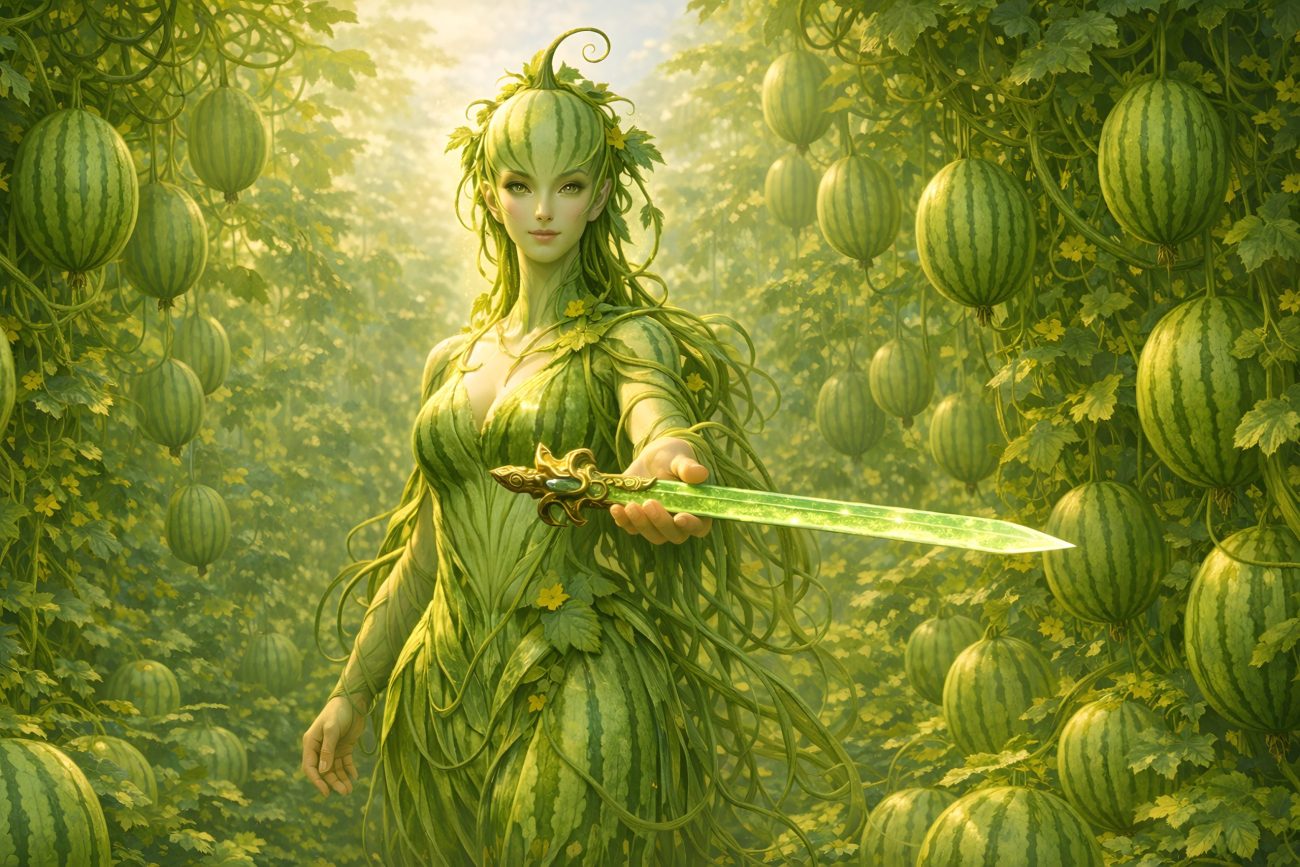
Before leaving, the Guā Jīng left behind a military book and a sword. With these gifts, Liu Zhiyuan gained the knowledge and strength he needed to face his enemies and continue his path.

Thus the melon spirit was remembered not as a creature of danger, but as one of hidden purpose — a plant transformed by heaven, appearing at a turning point to guide a man toward his destiny.


Gallery


Sources

Wikipedia contributors. (n.d.). 瓜精. In Wikipedia. Retrieved March 1, 2026, from https://zh.wikipedia.org/wiki/%E7%93%9C%E7%B2%BE


Interpretive Lenses

Religious Readings
  • Christian Ascetic Deep Dive
Philosophical Readings
  • Nietzschean Deep Dive
Psychological Readings
  • Jungian Deep Dive
Esoteric Deep Dive
  • Hermetic Deep Dive
Political / Social Readings
  • Marxist Deep Dive

Jubokko

Tradition / Region: Japanese folklore
Alternate Names: Tree Child, Shrub Child
Category: Plant


The Myth

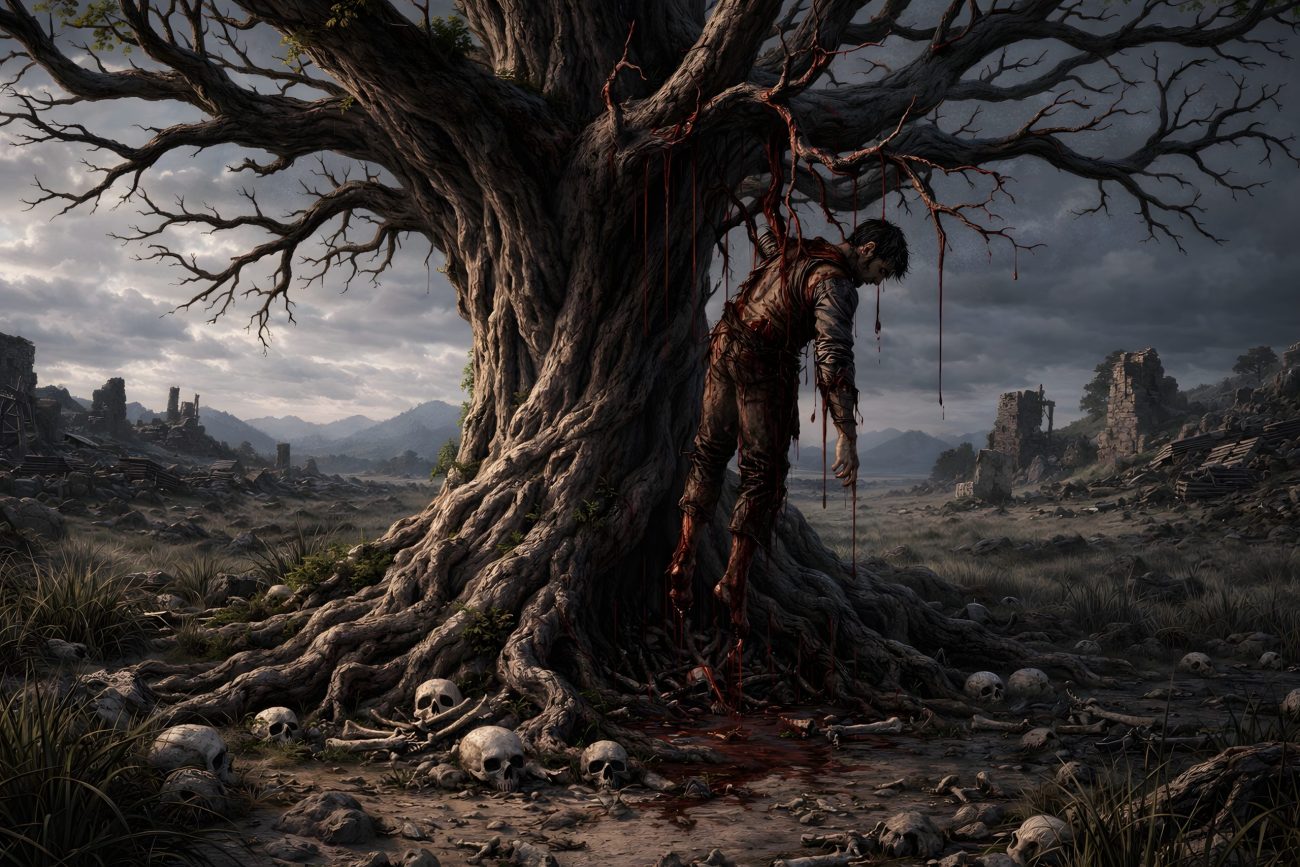
On old battlefields and places where many people died, there are said to grow strange trees known as Jubokko. At first glance they appear no different from any other tree. They stand quietly among the grasses and ruins, their trunks weathered and their branches spreading like any woodland growth.

Yet those who look more closely notice unsettling signs. The branches seem twisted and grasping, like fingers waiting to close. Beneath the tree, half-hidden in the weeds, lie scattered bones bleached pale by sun and time.

These trees were once ordinary. But where the soil became soaked with the blood of countless dead, their roots drank deeply of it. Over the years, this nourishment changed them. They awakened into something else, a living tree that no longer drew strength from water alone but hungered for human blood.

The Jubokko waits in stillness for a traveler to pass beneath its branches. When someone comes too near, the limbs lash down with sudden force, seizing the victim and lifting them high into the canopy. Thin, sharp twigs pierce the skin and draw out the blood until the body is emptied.

What remains is left to the birds, insects, and beasts of the field. In time, only dry bones fall back to the ground, joining the others that lie beneath the tree.

From a distance, the Jubokko stands silent and unchanged, just another tree among many. Only when it is too late does a traveler understand that this is no ordinary plant, but a tree grown from the memory of war, still feeding on the lives of the living.


Gallery


Sources

Wikipedia contributors. (n.d.). Jubokko. In Wikipedia. Retrieved March 1, 2026, from https://en.wikipedia.org/wiki/Jubokko


Interpretive Lenses

Religious Readings
  • Christian Ascetic Deep Dive
Philosophical Readings
  • Nietzschean Deep Dive
Psychological Readings
  • Jungian Deep Dive
Esoteric Deep Dive
  • Hermetic Deep Dive
Political / Social Readings
  • Marxist Deep Dive