Ellén Trechend

Tradition / Region: Irish Mythology
Alternative names: Ellen Trechend
Category: Bird


The Myth

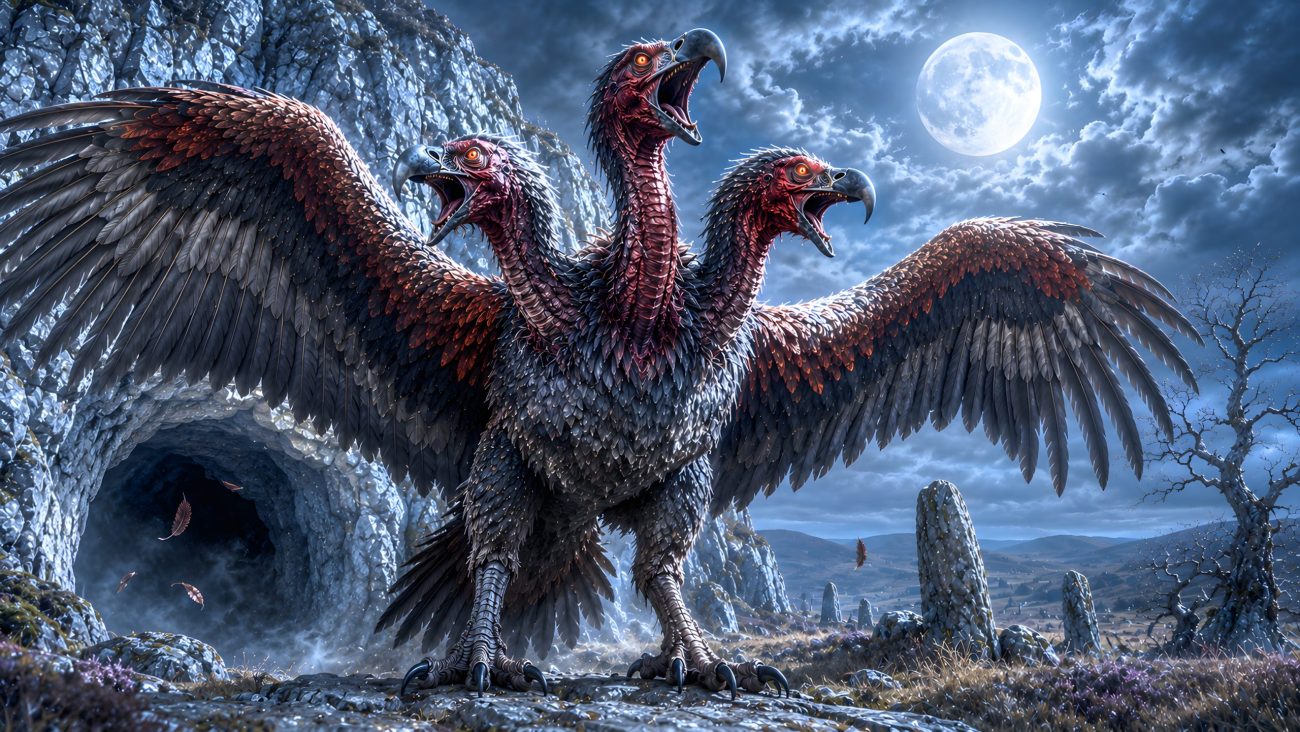
The Ellén Trechend is a terrifying three-headed monster from Irish mythology, often described as a monstrous three-headed bird or vulture. It emerged from the cave of Cruachan during a time of great destruction and ravaged Ireland, bringing devastation wherever it flew.

According to the Cath Maige Mucrama, the creature laid waste to the land until it was confronted by the Ulster poet and hero Amergin, who succeeded in slaying the monstrous being and ending its reign of terror.

Later Irish tradition associates the Ellén Trechend with the horrors released from the cave of Cruachan on Samhain. Alongside a host of goblins came a flock of copper-red birds led by a gigantic three-headed vulture, a creature widely believed to be the Ellén Trechend itself. As the leader of these supernatural birds, it became one of the most fearsome monsters associated with the opening of the Otherworld.


Sources

Wikipedia contributors. (n.d.). Ellén Trechend. In Wikipedia. Retrieved June 29, 2026, from https://en.wikipedia.org/wiki/Ell%C3%A9n_Trechend


Finnguala

Tradition / Region: Irish Mythology
Alternative names: Fionnghuala, Fionnuala, Finola, Fenella, Nuala
Category: Bird


The Myth

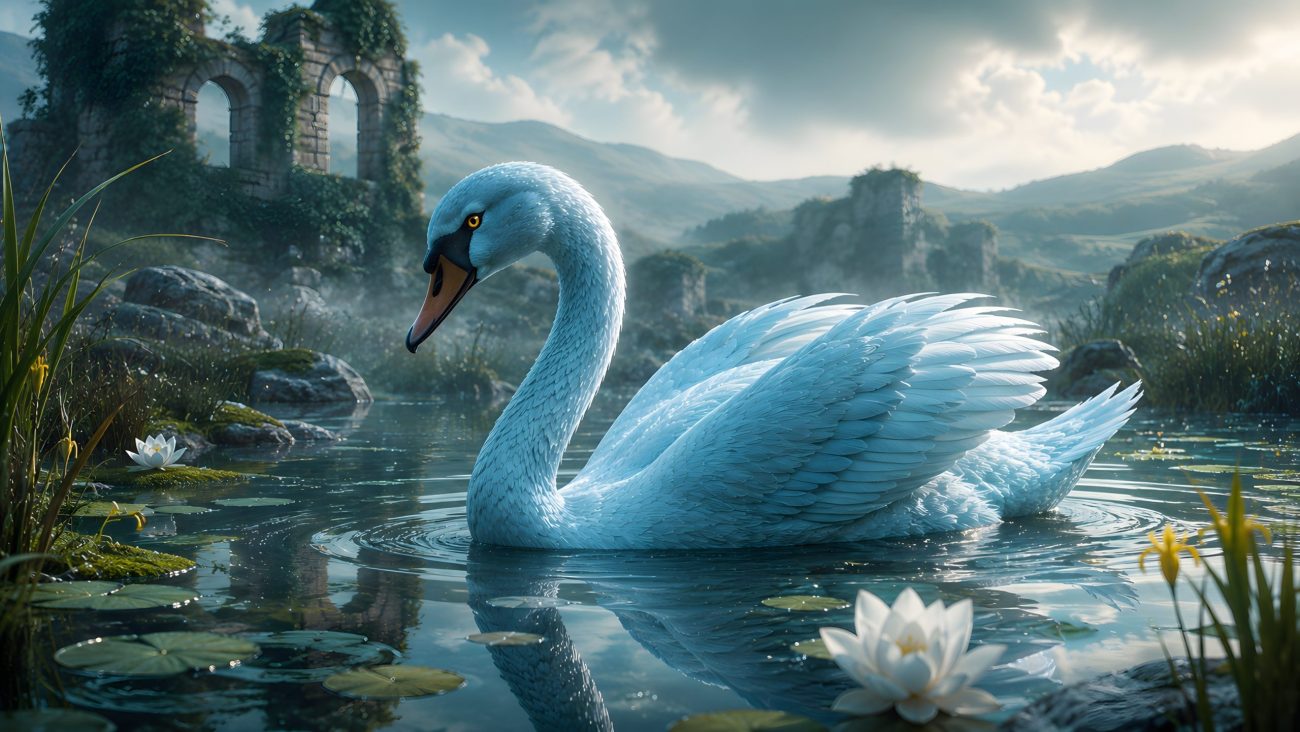
Finnguala was the daughter of Lir of the Tuatha Dé Danann and the eldest of the four Children of Lir. Out of jealousy, their stepmother Aoife cursed Finnguala and her brothers—Fiachra, Conn, and Aodh—transforming them into swans.

The curse condemned the four siblings to wander the lakes, rivers, and seas of Ireland for nine hundred years. Though they retained their human minds and voices, they were forced to live as swans, enduring loneliness, harsh winters, and the passing of kingdoms and generations while singing mournful songs.

At the end of the long exile, the curse could only be broken by the marriage of Lairgren, son of Colman, and Deoch, daughter of Finghin. When the prophecy was fulfilled, the swans regained their human forms, but they had become ancient with age. After receiving Christian baptism, Finnguala and her brothers peacefully died, bringing their centuries of suffering to an end.


Sources

Wikipedia contributors. (n.d.). Fionnuala. In Wikipedia. Retrieved June 29, 2026, from https://en.wikipedia.org/wiki/Fionnuala.


Each-Uisge

Tradition / Region: Scottish Mythology, Irish Mythology
Alternative names: Each-Uisge, Each-Uisce, Water Horse, Aughisky (Ireland), Cabbyl-Ushtey (Isle of Man)
Category: Horse


The Myth

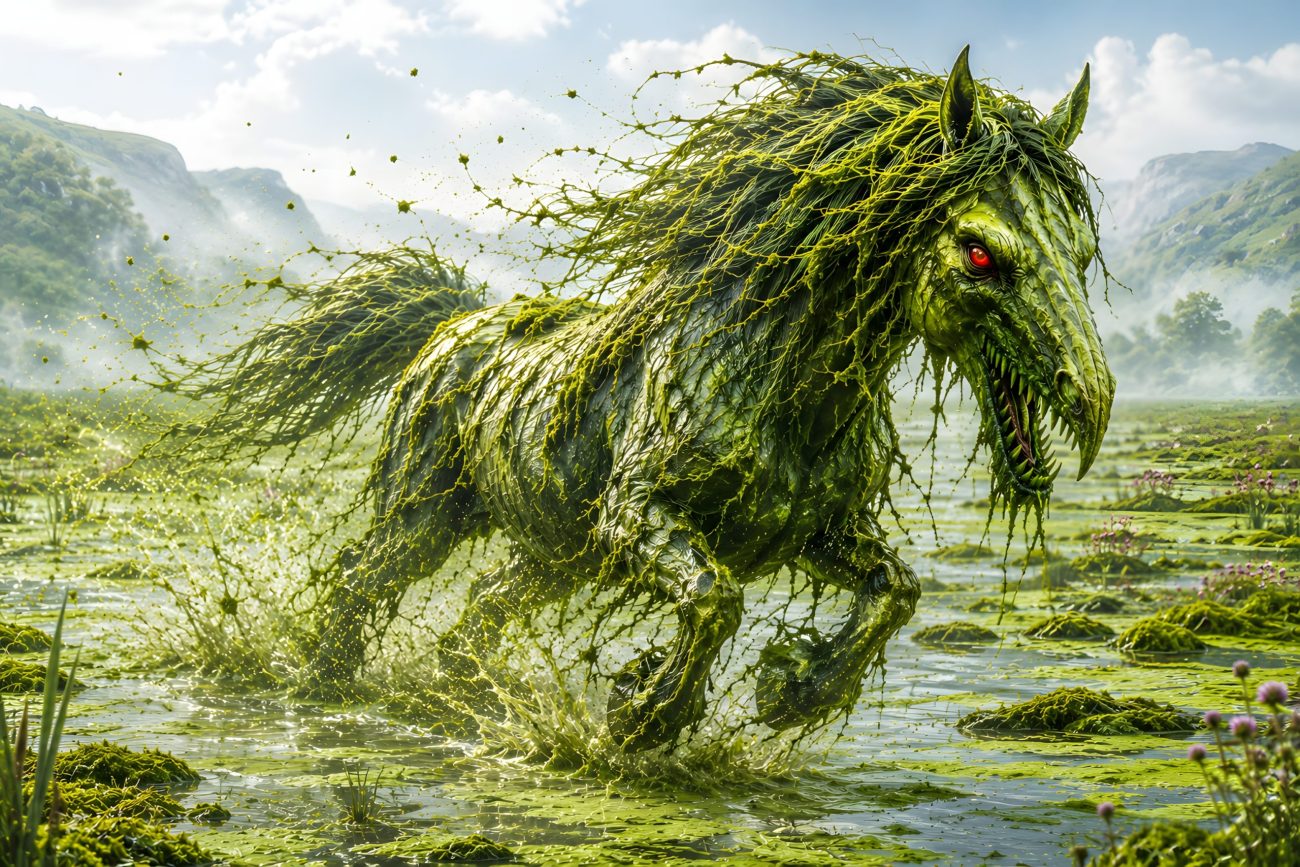
The Each-Uisge, meaning “water horse,” is one of the most feared supernatural creatures of Scottish and Irish folklore. It inhabits sea lochs, freshwater lochs, and the sea itself, and is considered far more dangerous than the kelpie.

The creature is a shapeshifter, most commonly appearing as a magnificent horse waiting by the water’s edge. It may also take the form of a handsome young man or, more rarely, a great bird. In human guise, it can often be recognized by horse’s hooves or by seaweed, sand, and water plants tangled in its hair.

When someone mounts the horse, they remain safe only while it stays away from water. As soon as it reaches a loch or the sea, the rider’s hands become stuck fast to its hide. The Each-Uisge plunges into the deepest water, drowning its victim before devouring the body. According to legend, only the liver floats back to the surface.

The Each-Uisge preys not only on people but also on livestock, especially cattle and sheep. It is said to possess an insatiable appetite for human flesh. Some tales also claim it mates with ordinary horses, producing unusually powerful foals distinguished by their blazing eyes, great strength, and wild temperament.

Many legends tell of encounters with the creature. In one story, seven girls climbed onto what appeared to be a harmless pony, unaware that its back lengthened to carry them all. When it raced into the loch, their hands became trapped, and they drowned. Only a boy who refused to mount the animal escaped. Another tale tells of a young man who freed himself by cutting off the finger that had become stuck to the creature’s reins, while his companions were carried into the water.

Although immensely dangerous, the Each-Uisge can sometimes be subdued. Placing a cow’s shackle or cap upon it, or stealing its magical bridle, robs it of its power and forces it into obedience. However, should the restraint be removed, it immediately flees back to the water and may drag its owner to a watery death.

Some traditions tell of the Each-Uisge taking the form of a charming suitor to lure women. If its true identity is discovered, it is often killed by the woman’s family before it can claim its victim. After death, its body is said to dissolve into a shapeless mass of jelly-like slime.

Every loch was once believed to have its own Each-Uisge, making the creature a constant warning against the hidden dangers that lurked beneath Scotland’s dark waters.


Sources

A Book of Creatures. (2016, September 9). Each Uisge. Retrieved June 29, 2026, from https://abookofcreatures.com/2016/09/09/each-uisge/.

Wikipedia contributors. (n.d.). Each-uisge. In Wikipedia. Retrieved June 29, 2026, from https://en.wikipedia.org/wiki/Each-uisge.


Clíodhna

Tradition / Region: Irish mythology
Alternative names: Clídna, Clionadh, Clíodna, Clíona, Cleena
Category: Deity, Ghost


The Myth

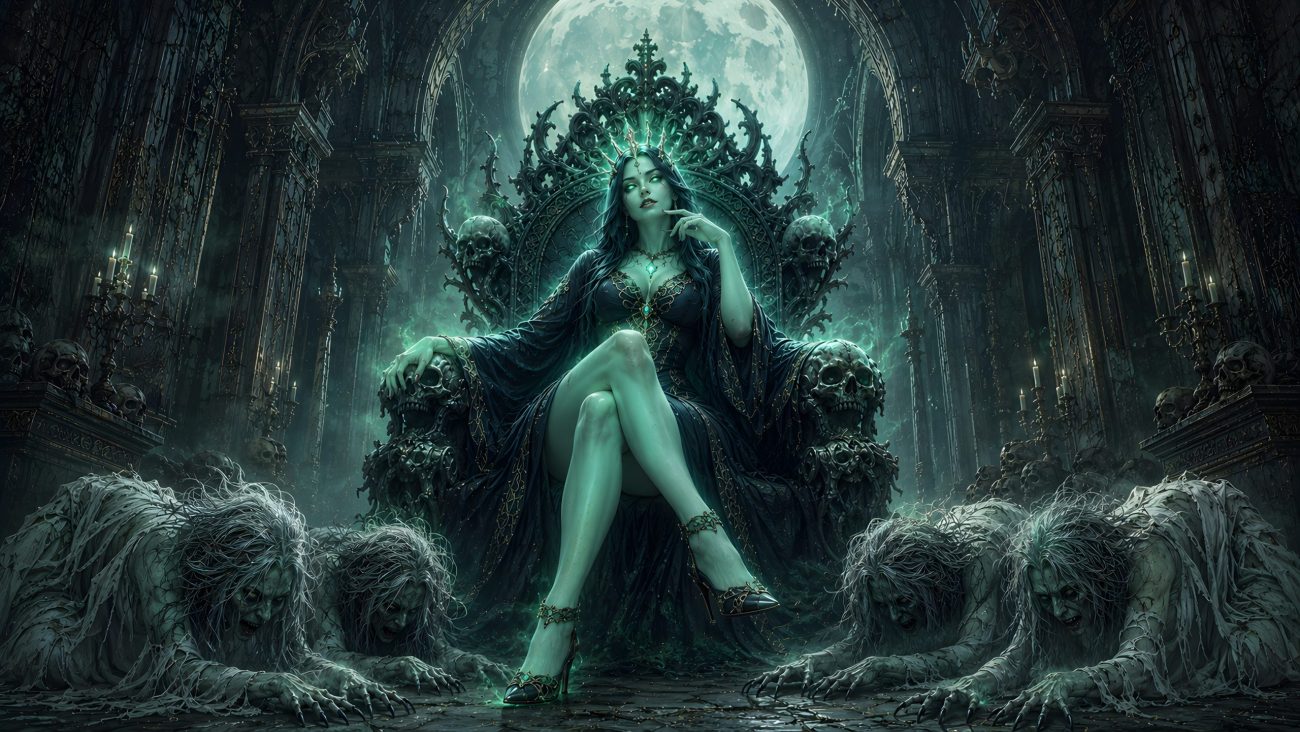
Clíodhna is one of the greatest fairy queens of Irish mythology and the legendary Queen of the Banshees. Counted among the Tuatha Dé Danann, she is celebrated as a goddess of love, beauty, and the Otherworld, while also serving as the powerful ruler of the sídhe (fairies) of South Munster. Her hidden palace lies beneath the rocky hill of Carrigcleena in County Cork, where Irish tradition says she continues to reign over her fairy court.

Among Clíodhna’s greatest wonders are her three brilliantly colored magical birds. Feeding upon apples from a sacred tree in the Otherworld, their sweet songs possess extraordinary healing powers, curing sickness, soothing sorrow, and lulling listeners into a deep enchanted sleep. Their music was said to be unlike anything heard in the mortal world.

One of her oldest legends tells of her love for the mortal prince Ciabhan, whom she met in the Otherworldly kingdom ruled by Manannán mac Lir. The two fled together to Ireland, hoping to live among humans. As Ciabhan went ashore to hunt, Clíodhna remained sleeping in their boat. The servants of Manannán pursued the lovers and enchanted Clíodhna into a magical sleep with supernatural music. A gigantic wave then swept her out to sea before she could escape. Ever afterward that wave became known as Tonn Chlíodhna (“Clíodhna’s Wave”), one of Ireland’s most famous mythological landmarks. Whether she drowned or simply returned to the Otherworld varies between traditions.

In another medieval tale, The Voyage of Teigue, Son of Cian, Clíodhna appears as a noble lady dwelling on the mysterious island of Inis Derglocha. There she aids the hero by giving him three magical birds to guide and comfort his companions with their music, along with an emerald cup capable of turning water into wine. She warns him never to lose the cup, for doing so would bring about his death. Thanks to her gifts, Teigue rescues his captured people and safely returns to Ireland.

Many later Irish legends portray Clíodhna not only as a fairy queen but also as a passionate and deeply emotional supernatural being. One famous story tells of the prince Caiov O’Keeffe and the two daughters of the last great druid, Clíodhna and Aoivil. Both sisters fell in love with the young prince, but his heart belonged to Aoivil. Consumed by jealousy, Clíodhna secretly cursed her own sister, imprisoned her within a hidden cave, and eventually transformed her into a beautiful white cat doomed to guard vast treasures of gold and silver. Though Clíodhna later regretted her actions, she had lost the magical wand needed to undo the spell. According to legend, the enchantment will only be broken by someone who loves Aoivil more than the riches she guards.

Clíodhna also appears in romantic tales involving the Fitzgerald family. In one legend she abducts the handsome chieftain Fitz-Gerald, carrying him away to her fairy palace beneath Carrigcleena because she desired him for herself. His beloved Ellen O’Brien journeyed to the fairy queen’s dwelling and pleaded so movingly for his release that Clíodhna, touched by her devotion, returned him to the mortal world, allowing the lovers to marry.

Another tradition links Clíodhna to the famous Blarney Stone. Before appearing in court, Cormac MacCarthy, lord of Blarney Castle, sought the fairy queen’s help. Clíodhna instructed him to kiss the first stone he encountered that morning. After following her advice, he spoke with such irresistible charm and eloquence that he won his legal dispute. The stone was later built into the walls of Blarney Castle, where it became renowned for granting the legendary “gift of the gab” to those who kiss it.

For centuries Clíodhna was regarded as the supernatural protector of many noble families of Munster, especially the MacCarthys, O’Keeffes, O’Donovans, and FitzGeralds, who believed she watched over their fortunes and occasionally intervened in their affairs. Local folklore describes fairy gatherings at Carrigcleena, where, under the light of the moon, Clíodhna leads her fairy court in magnificent dances among the ancient rocks before disappearing once more into her hidden palace beneath the earth.

Thus Clíodhna is remembered not merely as a fairy queen, but as one of Ireland’s most beloved mythological figures—a goddess of beauty and love, a healer through the songs of her magical birds, a passionate lover, a patron of kings and noble families, and the eternal sovereign of the fairies of Munster.


Sources

Wikipedia contributors. (n.d.). Clíodhna. In Wikipedia. Retrieved June 27, 2026, from https://en.wikipedia.org/wiki/Cl%C3%ADodhna
Onchú

Tradition / Region: Irish Mythology
Alternate Names: Enfield, Alphyn
Category: Fox


The Myth

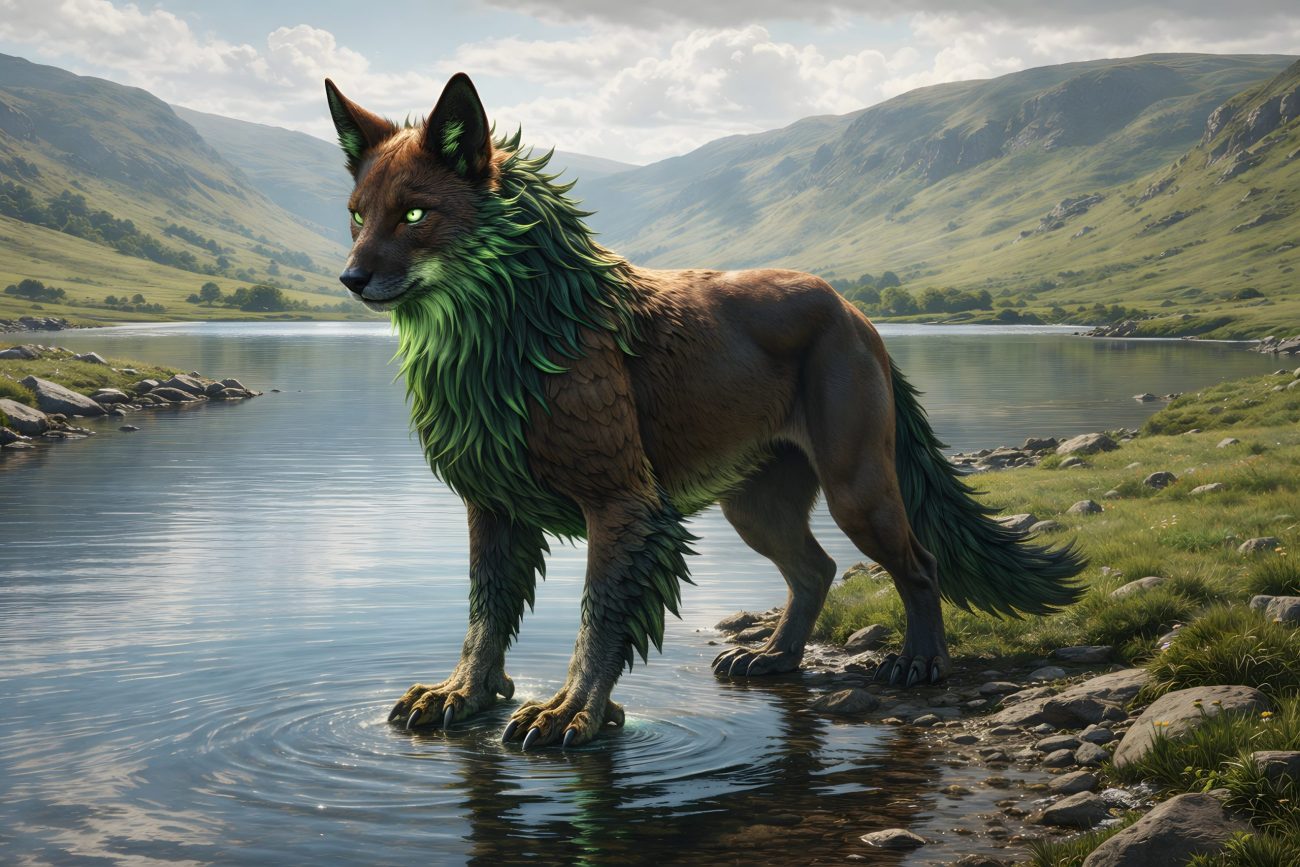
In old Irish tradition there is a strange creature called the Onchú, known in later times by the names Enfield or Alphyn. It is said to be a beast of mixed form, combining the traits of several animals into one powerful body.

Many describe it with the head of a fox, the chest of a hound, the talons or forelimbs of a bird of prey, and the hindquarters of a wolf or lion. It moves with the speed of a hunter and the strength of a great beast, carrying the cunning of the fox, the bravery of the hound, and the ferocity of the wolf.

Stories say the Onchú dwells near water or in lonely places where land meets lake or sea. In ancient times, one such creature lived between Loch Con and Loch Cuilinn and killed many men who crossed its path. A warrior named Muiredach pursued it into the water and slew it, earning a title for his bravery afterward.

Another tale links the creature to the battlefield. When the warrior Tadhg Mór Ua Ceallaigh fell at the battle of Clontarf, it is said that a strange beast rose from the sea and guarded his body, keeping it safe until his kin recovered it. Because of this, the creature later appeared on the family’s crest, remembered as a protector as well as a monster.

Thus the Onchú was remembered both as a fearsome beast of land and water and as a guardian spirit of warriors — a fox-headed creature whose form blended many animals, and whose presence could mean either danger or protection depending on the tale.


Sources

A Book of Creatures. (n.d.). Onchú. Retrieved March 1, 2026, from https://abookofcreatures.com/2017/04/03/onchu/.

Wikipedia contributors. (n.d.). Onchú. In Wikipedia. Retrieved March 1, 2026, from https://en.wikipedia.org/wiki/Onch%C3%BA.


Muirdris

Tradition / Region: Irish mythology
Alternate Names: Sea Bramble, Sea Briar, Sínach / Sinech
Category: Plant,


The Myth

Fergus mac Léti, king of Ulster, loved the water more than any man of his land. He swam in rivers, lakes, and the sea, and none could match his strength beneath the waves.

One day, while he slept beside the shore, water spirits known as lúchorpáin crept upon him and tried to carry him into the sea. The chill of the water woke him, and he seized three of them before they could escape. To buy their freedom, the sprites granted him a wish. Fergus demanded the power to breathe underwater in seas, lakes, and pools.

They gave him enchanted earplugs and a tunic to wrap about his head, granting him the power he desired. But they warned him of one thing: he must never use these gifts at Loch Rudraige in his own land.

Fergus ignored the warning.

At Loch Rudraige he plunged beneath the surface, proud of his new power. There, in the dark water, he encountered a horror unlike any creature of land or sea. It was called the Muirdris — the Sea Bramble.

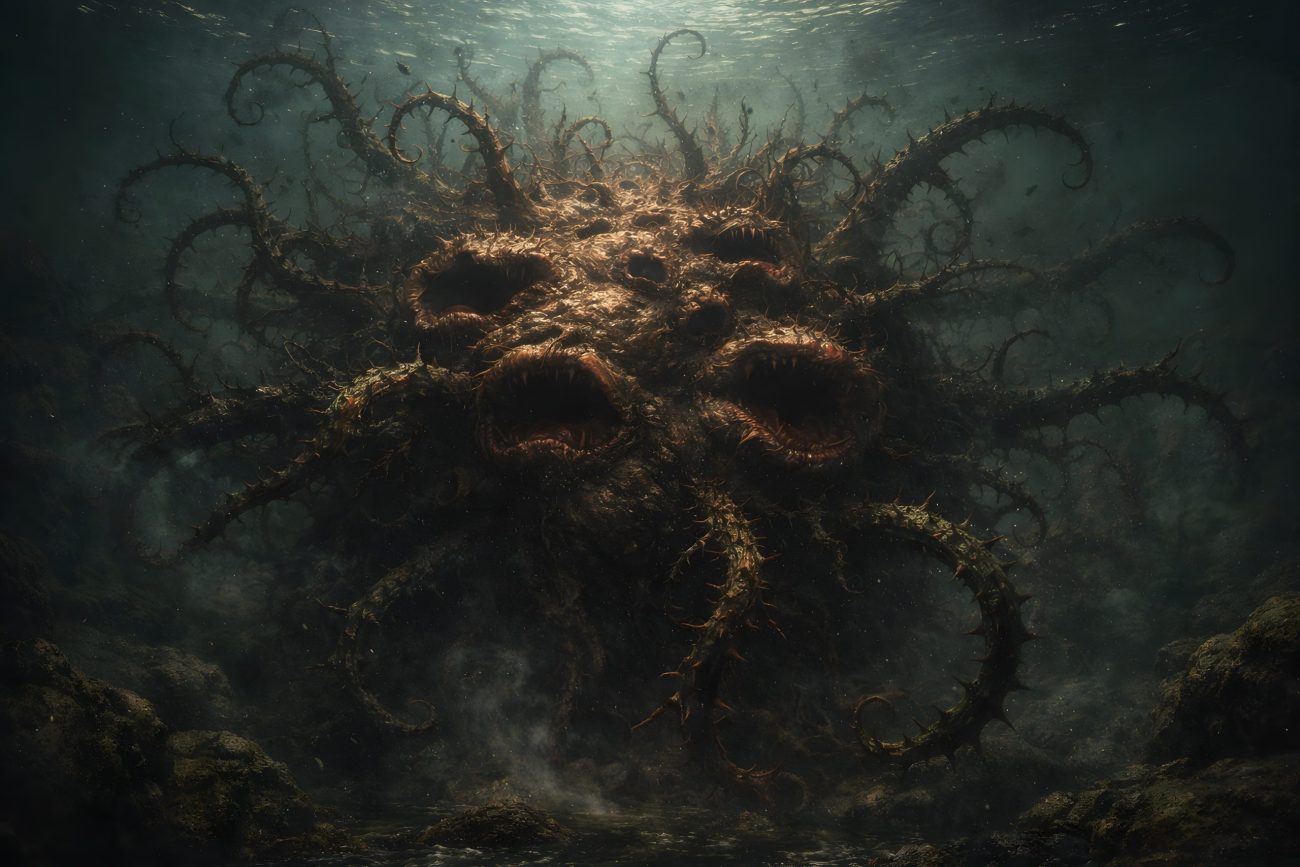
The monster loomed vast and shapeless, swelling and shrinking like a bellows. Its form bristled like a thornbush, covered in stings and branching growths. Its very appearance carried deadly power. When Fergus beheld it, the sight alone twisted his body, leaving him horribly disfigured. His mouth shifted to the back of his head, and he emerged from the water changed.

His court hid the truth from him for years, knowing that a king marked by such a blemish could not rule. They kept mirrors from him and guarded the secret until, after many years, the truth was finally revealed.

Enraged and shamed, Fergus returned alone to the loch to face the creature that had cursed him.

For a full day and night the waters churned as he battled the Muirdris beneath the surface. The lake boiled like a great cauldron. At last Fergus killed the monster with his bare hands and rose from the water holding its head in triumph.

But the struggle had taken all his strength. No sooner had he reached the shore than he fell and died, his victory won at the cost of his life.

Thus the Muirdris remained in story as a terror of the deep waters — a bramble of the sea whose mere sight could break a king, and whose defeat cost the hero everything.


Sources

A Book of Creatures. (n.d.). Muirdris. Retrieved March 1, 2026, from https://abookofcreatures.com/2016/09/23/muirdris/


Failinis

Tradition / Region: Irish Mythology
Alternate Names: Shalinnis, Salinnis, Fer Mac
Category: Dog


The Myth

Failinis was a marvelous hound belonging to Lugh Lámhfhada of the Tuatha Dé Danann. The dog was one of the great treasures demanded as reparation from the sons of Tuireann after they killed Lugh’s father, Cian.

The hound originally came from the distant land of Iruaid, where it belonged either to a king or a royal smith. From there it passed into the hands of the sons of Tuireann, who were forced to surrender it to Lugh as part of their punishment.

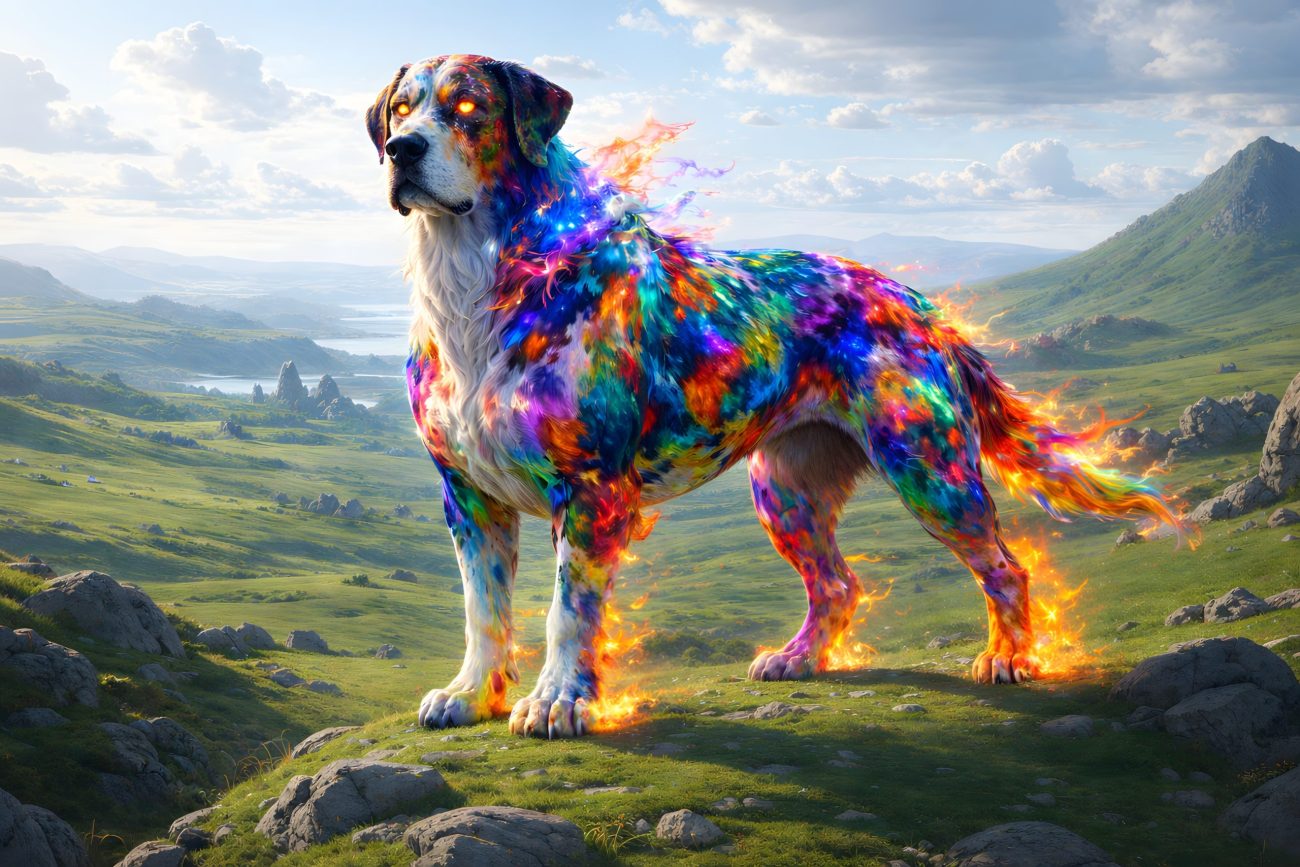
Failinis was no ordinary dog. It was invincible in battle and could catch any beast it pursued, whether on land or in water. It held mastery over animals and was said to hunt everything from deer to fish. It possessed wondrous magic as well: whenever it bathed in running water, the water turned into wine or mead. In some tellings, it could even disgorge drink, gold, or silver from its mouth.

By day, the hound was immense and powerful, strong enough to overcome many warriors. By night it was like a bolt of fire, blazing and swift. Some tales describe it as beautifully colored, others as patterned in many hues — white, black, blue, and more.

In later stories of the Fenian Cycle, the same hound appears again, now in the hands of three foreign warriors from Iruaid who arrive in Ireland. They use the dog’s magic to create strong drink and defend themselves against spies. When warriors attempt to watch them in secret, the hound raises a supernatural wind with its tail that strips their weapons away. At its masters’ command it breathes upon the slain, reducing their bodies to dust so that nothing remains.

In some versions, the foreign warriors eventually lose the hound as compensation to the Fianna led by Fionn mac Cumhaill. In another telling they swear never to take the dog alive from Ireland, so they kill it and carry away its hide instead.

Thus Failinis is remembered as one of the great mythic hounds of Ireland — a creature of battle, magic, wealth, and loyalty, tied to heroes, kings, and warriors across multiple cycles of legend.


Sources

Wikipedia contributors. (n.d.). Failinis. In Wikipedia, from https://en.wikipedia.org/wiki/Failinis


Dobhar-chú

Tradition / Region: Irish Mythology
Alternate Names: King Otter, Dobharcu, Dorraghow, Anchu
Category: Dog, Lake dweller


The Myth

The Dobhar-chú is a feared creature of lakes and rivers in Irish tradition, remembered as a monstrous water hound.

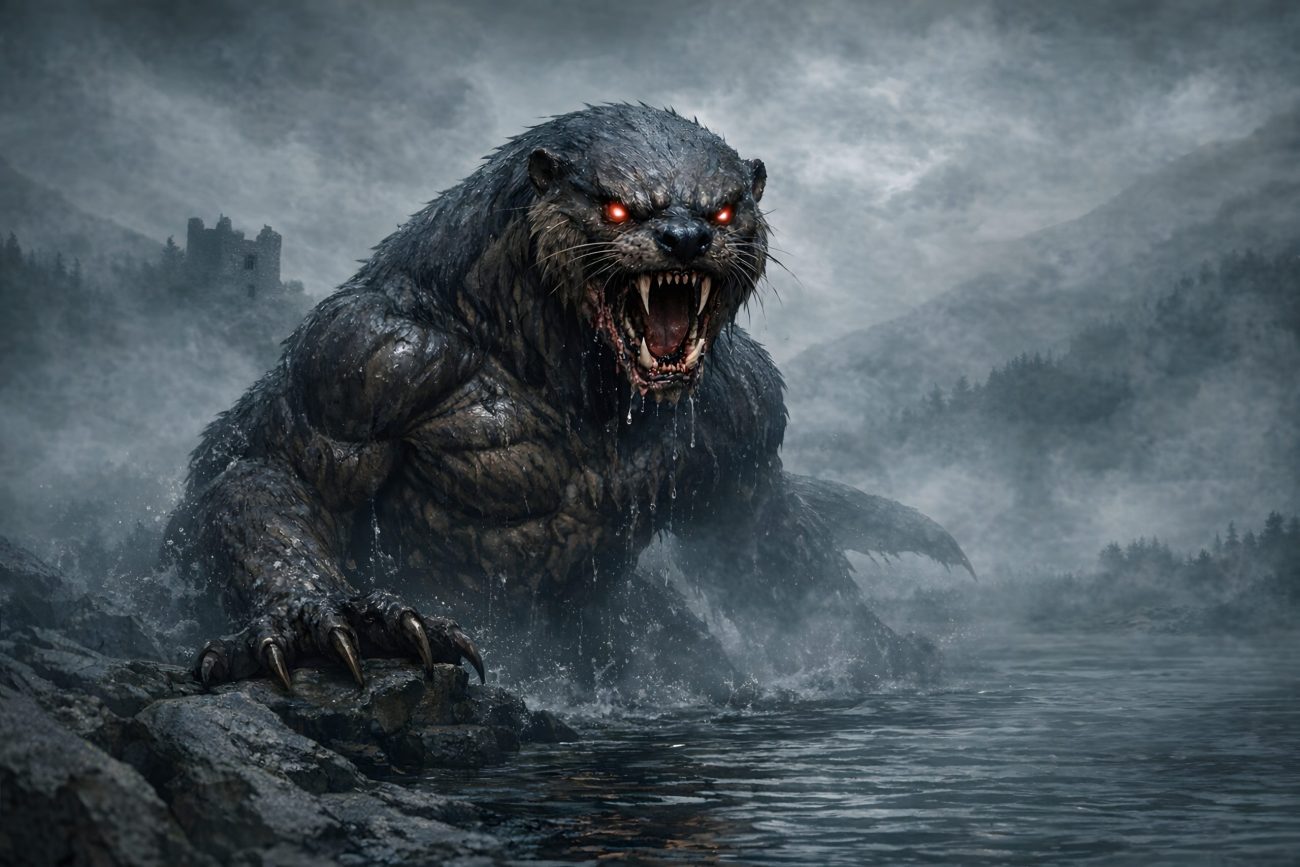
It is said to resemble a great otter but with the strength and build of a dog. Far larger than any natural animal, it could grow many times the size of a normal otter. Some tales describe it with a pale coat marked by darker patches, while others say its fur appears dark from the waters it inhabits. Its body is powerful, with strong limbs and a long tail, and it moves easily both on land and in water.

The creature is believed to dwell in deep lakes and hidden waters, rarely seen but greatly feared by those who live nearby. Stories of it were passed down mostly by word of mouth, and many people believed it to be a dangerous predator of both livestock and humans.

One well-known tale tells of a woman who went to the lakeshore to wash clothes. When she did not return, her husband went to search for her and found her dead by the water. Lying beside her was the great beast itself, resting near its kill.

The man hurried home, armed himself, and returned to face the creature. After a struggle he managed to kill it. But as the beast died, it gave out a piercing cry. From the lake rose another of its kind, drawn by the call. The second monster pursued him, and after a fierce fight he killed that one as well.

The place where the woman died was long remembered, and a stone marking her grave was said to bear the image of a great dog-like animal, keeping alive the memory of the water hound.

Thus the Dobhar-chú was remembered as the king of the waters — a great lake beast shaped like a hound, feared along lonely shores and whispered about in stories of the deep.


Sources

Wikipedia contributors. (n.d.). Dobhar-chú. In Wikipedia, from https://en.wikipedia.org/wiki/Dobhar-ch%C3%BA


Bran and Sceólang

Tradition / Region: Irish Mythology
Alternate Names:
Category: Dog


The Myth

Bran and Sceólang were the two great hounds of the hero Fionn mac Cumhaill, leader of the Fianna.

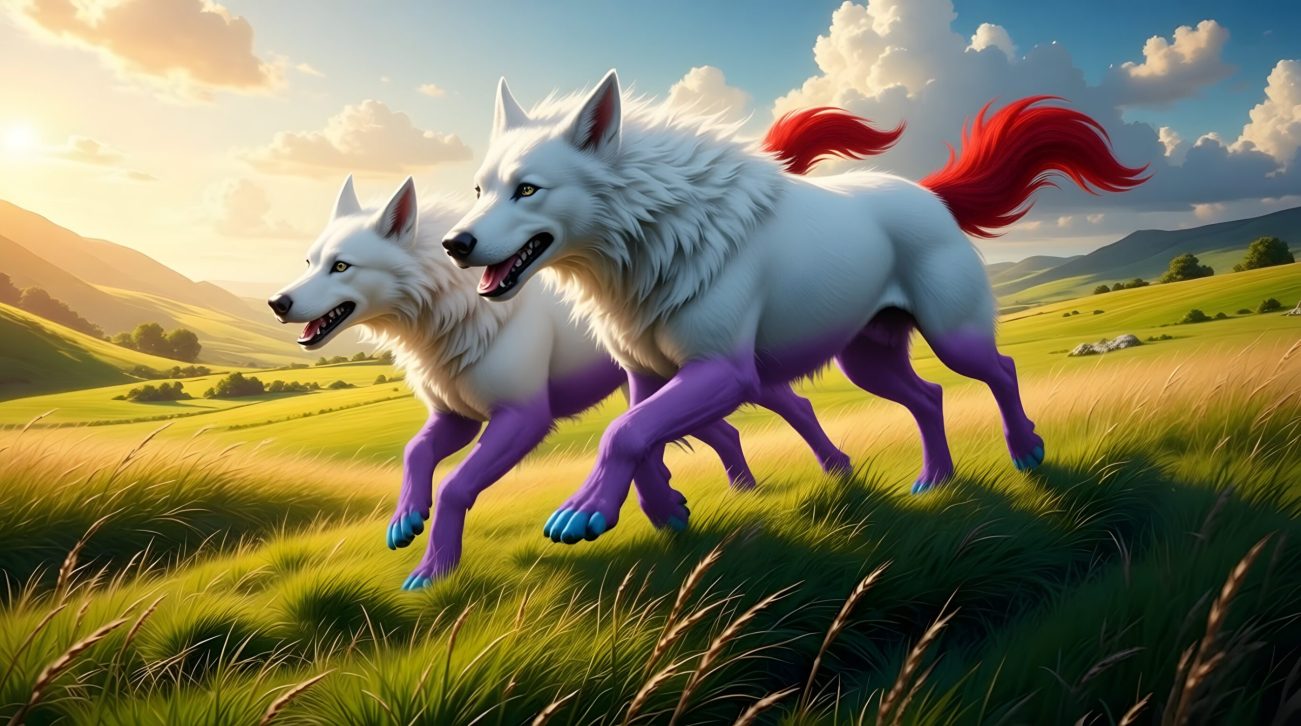
They were no ordinary dogs. Both were said to be mostly white, with striking colors marking their bodies — purple upon their flanks, a crimson tail, and blue feet. They were enormous, standing as high as Fionn’s shoulder, and were famed for their speed, loyalty, and intelligence.

Their birth was itself strange. Their mother, Uirne, sister to Fionn’s own mother, had been transformed into a dog while pregnant. In that form she gave birth to the twins. Afterward she was restored to her human shape, but the two children remained hounds. Because of this, Bran and Sceólang were not only companions to Fionn, but also his kin.

The two dogs accompanied Fionn throughout many of his adventures and hunts. Bran in particular was said to remain always at his master’s side. In later stories it was told that the two hounds grew up together and were inseparable.

They were the first to find Fionn’s son Oisín when the boy wandered alone in the wilderness, discovering him naked in the forest and bringing him back to the world of men.

Yet the end of the two hounds came in sorrow.

Sceólang died during a hunt in the place later called Thrush Glen. There she chased a strange doe that was half black and half white, pursuing it until she met her death.

Bran’s end came later. In a moment of anger or impulse, Fionn struck his beloved hound. Whether from grief, injury, or the breaking of their bond, Bran afterward chose to cast himself into the water and drown.

So the two great hounds of the Fianna passed from the world, remembered not only as hunting dogs, but as companions of heroes and creatures whose lives were bound by blood and fate to the family of Fionn himself.


Sources

Wikipedia contributors. (n.d.). Bran and Sceólang. In Wikipedia, from https://en.wikipedia.org/wiki/Bran_and_Sce%C3%B3lang


Fairy Cow

Tradition / Region: Irish Mythology
Alternate Names:
Category: Cow


The Myth

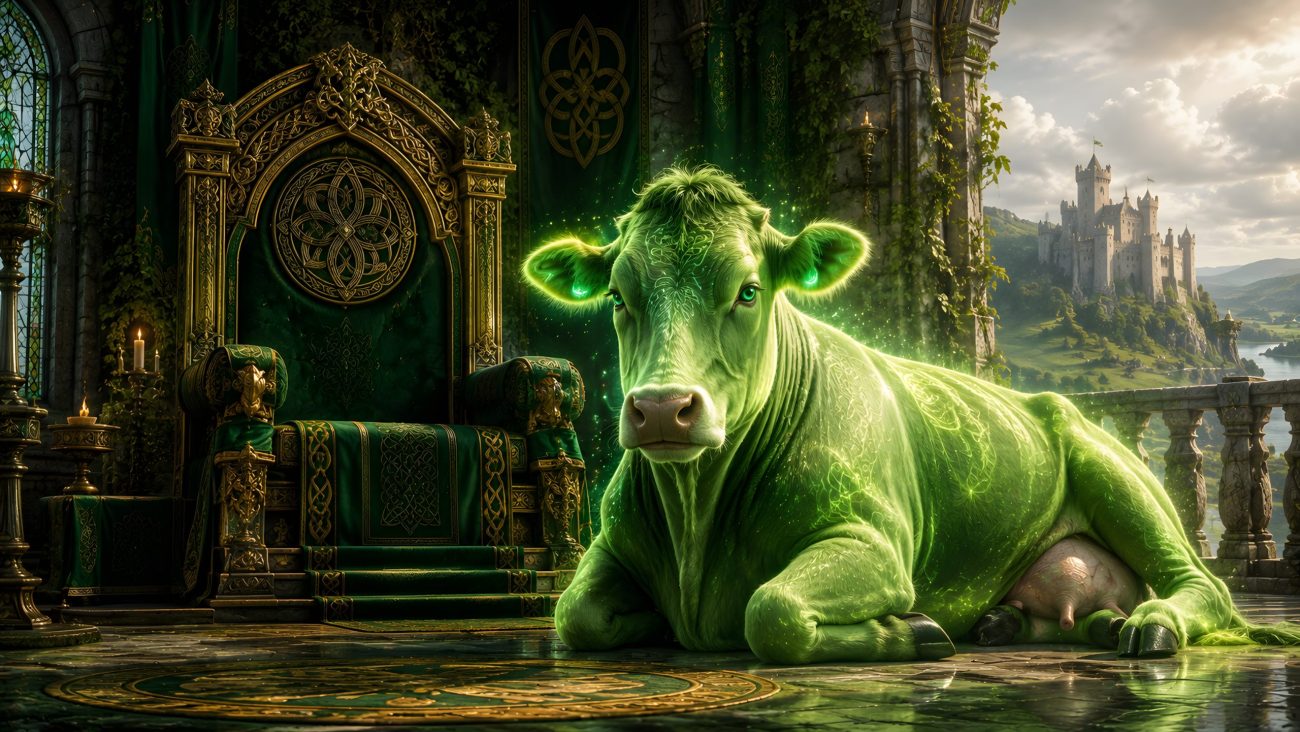
In Ireland it was often said that the fairy folk kept herds of magical cattle and sometimes shared their bounty with humans. These fairy cows were usually hornless, often red or speckled, and known for their endless milk and for bearing calves year after year.

One winter in County Donegal, a poor family with many children faced starvation. One stormy night they heard the lowing of a cow outside their home. When they went out, they found a red-speckled cow standing quietly at their door. They brought her into their barn, and the very next day she calved and gave rich, plentiful milk.

The family searched to see if the animal belonged to anyone, but no one claimed her. For years she stayed with them, producing calves and filling their vessels with milk, keeping the household alive.

One day, however, the father found her grazing in a newly sown field. In anger he lifted his staff to strike her, forgetting the blessing she had been. At once the cow gathered her calves and vanished, and neither she nor her offspring were ever seen again.

Other tales told of fairy cattle that seemed to die suddenly. People believed that in such cases the fairies had taken the real animal and left behind a piece of enchanted wood shaped like a cow. Because of this, it was thought unwise to eat meat from a beast that had died strangely, for it might belong to the fairy world.

By the sea, it was also said that undersea folk kept their own herds, which grazed on the ocean’s growth and sometimes appeared to human eyes as seals.

Thus the fairy cow was remembered as a creature of otherworldly kindness, one that could bring life and plenty, yet would vanish the moment gratitude gave way to anger.


Sources

Monaghan, P. (2004). The Encyclopedia of Celtic Mythology and Folklore. Facts on File, p. 170.