Tradition: Irish Mythology
Alternative Names: Grogoch, Gelt, Puka, Tipperary Wolfman, Ossary Wolfman
Category: House dweller
The Myth
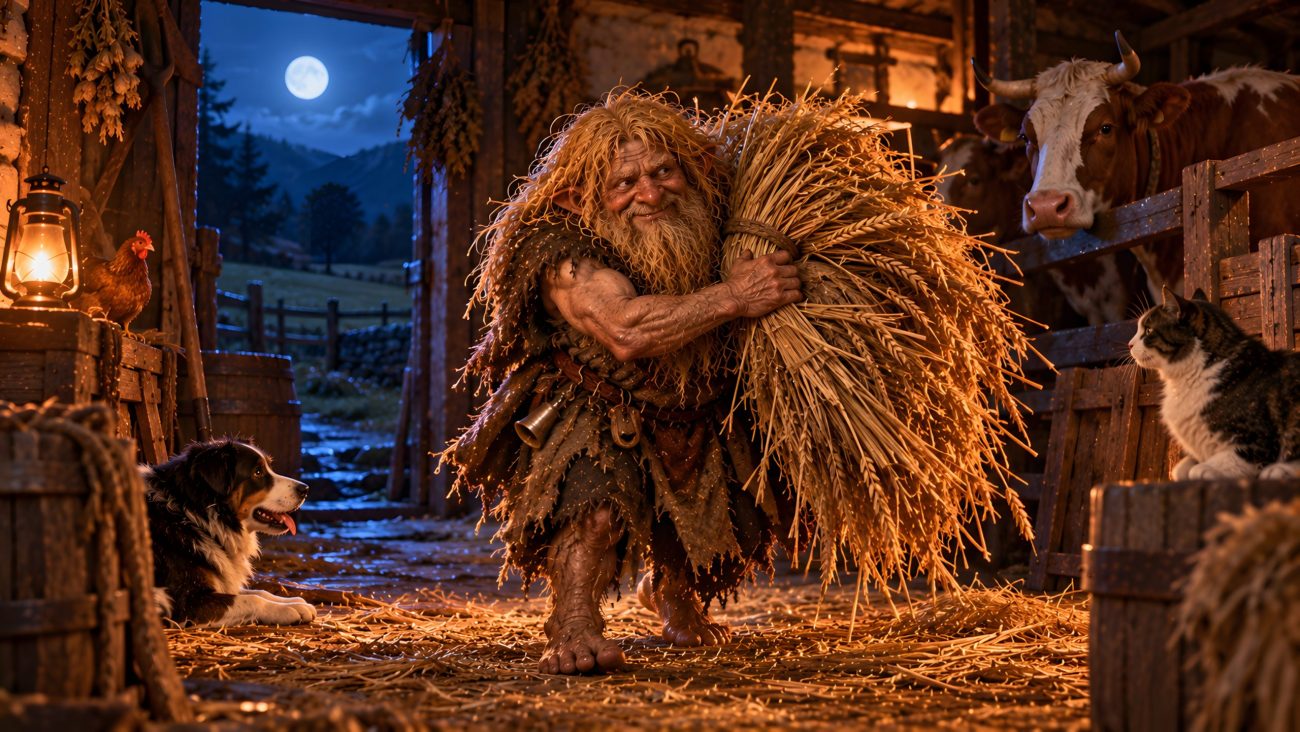
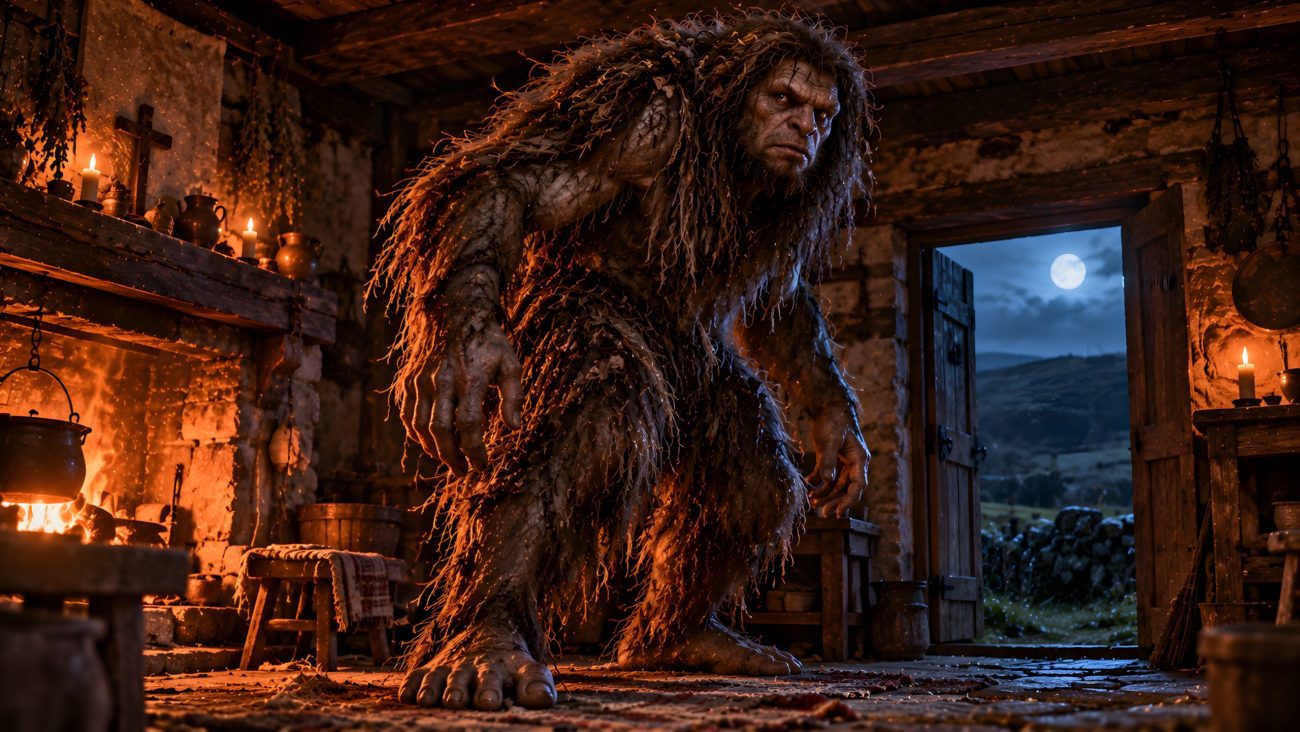
The Gruagach is a large, bipedal, ape-like creature reportedly encountered in Ireland. Although sightings are rare, accounts describe it across both Northern Ireland and the south of the country. It resembles other Bigfoot-like creatures, but witnesses often portray it as more human-like than the traditional image of a giant ape. Its reported appearance has led to comparisons with the Woodwose, another wild, human-like figure, and even with Neanderthals.
The Gruagach is generally described as having a broad, relatively high-set nose, sometimes characterised as pig-like, a mostly flat face, and a prominent brow ridge. Unlike many depictions of Bigfoot, it is usually said to lack a sagittal crest, the ridge of bone that can give the skulls of certain apes a peaked appearance. Some accounts do describe such a crest, however, so its reported features are not entirely consistent. Its facial structure has been compared to that attributed to Neanderthals, although this resemblance is based on descriptions rather than any confirmed physical evidence.
Reported encounters occur in various parts of Ireland, with sightings said to be particularly concentrated around Slieveanorra and Ballyboley. County Wicklow is also associated with at least one alleged sighting. Despite these reports, the creature receives relatively little attention, partly because Ireland’s landscape is considered by some to offer limited habitat for a large, elusive animal.
The Gruagach’s supposed existence is often questioned because Ireland has relatively little forest cover, potentially limiting the places where a large creature could remain hidden and find sufficient food. The accounts nevertheless present it as an elusive inhabitant of the countryside, occasionally seen but rarely encountered.
The Gruagach occupies a place between traditional wildman folklore and modern cryptid reports. Its more human-like features distinguish it from familiar Bigfoot descriptions, while the scattered sightings and uncertainty surrounding its habitat contribute to its mysterious reputation. No conclusive evidence establishes the creature’s existence, and its descriptions remain based on reported encounters.
Sources
“Gruagach.” Cryptid Wiki. Fandom. https://cryptidz.fandom.com/wiki/Gruagach#Sources_and_links_for_research