Great-hand

Tradition: Scottish Mythology
Alternative Names: Great Hand
Category: House dweller


The Myth

Great-hand is a terrifying creature said to haunt the underground passages beneath Edinburgh’s Old Town. It dwells in a tunnel running beneath the Royal Mile, between Edinburgh Castle and the Palace of Holyrood. The passage was once used by soldiers to launch surprise attacks, but after it fell into disuse, Great-hand took up residence there. Its presence made the tunnel so feared that it was eventually abandoned entirely. According to the legend, nobody who entered ever came out alive.

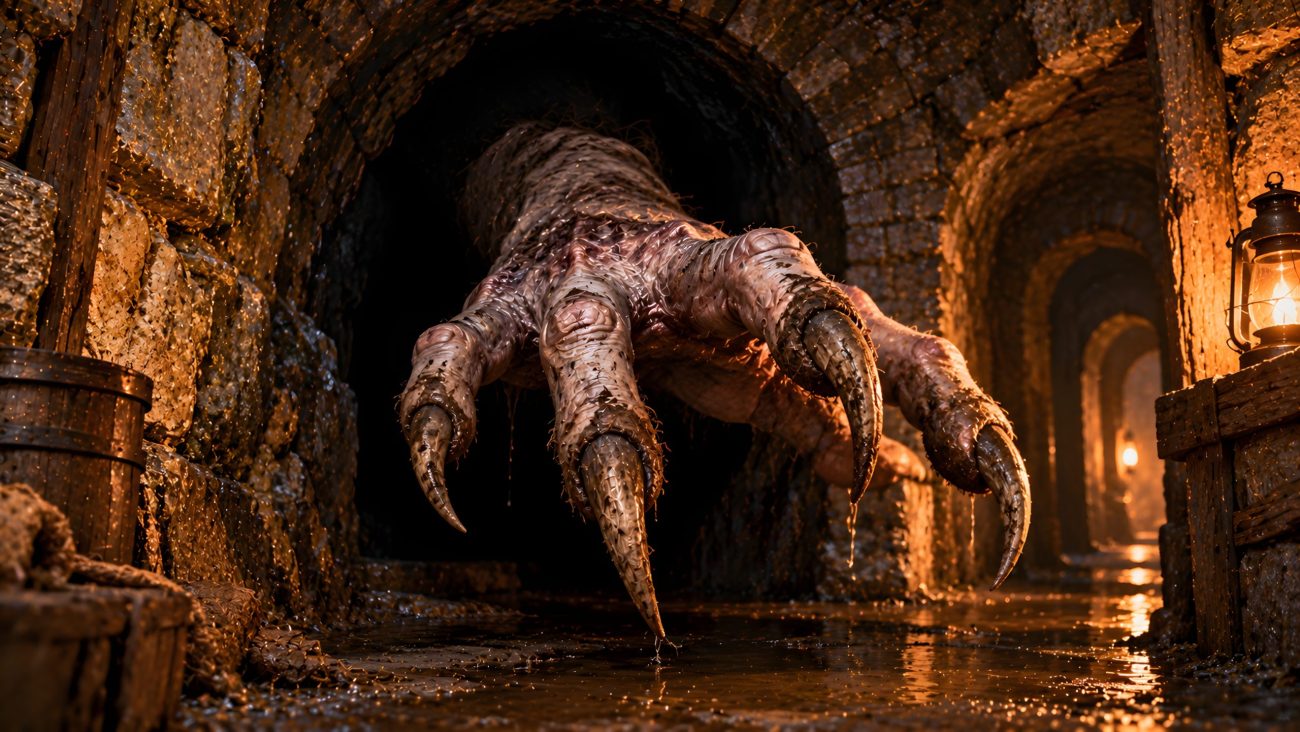
The creature’s appearance is almost entirely unknown. The only part of Great-hand ever seen is an enormous, grisly hand with fingernails resembling the claws of an eagle. Whether the hand belongs to a larger body remains a mystery, as nobody has reportedly seen anything beyond this monstrous limb.

Eventually, a piper decided to challenge the terror surrounding the tunnel. He announced that he would walk through it while playing his pipes, allowing those waiting outside to follow his progress by listening to the music. He took his dog with him and entered through a cave near the Castle. As he descended underground, the sound of his pipes could be heard travelling beneath the city.

When the music reached the Heart of Midlothian, it suddenly stopped. The waiting crowd became alarmed and returned to the cave entrance. The piper was nowhere to be seen, but his dog came running out in absolute terror, having lost all its hair. Whatever had happened underground had frightened the animal so severely that it emerged completely hairless. After this incident, the tunnel was blocked up at both ends, sealing off the place where Great-hand was believed to dwell.

Great-hand belongs to a wider tradition of Scottish stories about haunted caves and dangerous underground places. Similar tales feature bold pipers who attempt to cross forbidden passages, only for their music to stop and their animals to return in a state of terror. These stories warn against venturing into places where the living world seems to give way to unknown horrors. Great-hand’s unseen body and monstrous hand make it especially unsettling: the audience is left to imagine the creature lurking in the darkness, beyond the reach of ordinary sight.


Sources

“Great Hand.” A Book of Creatures, April 5, 2019. https://abookofcreatures.com/2019/04/05/great-hand/
Maggy Moulach

Tradition: Scottish Mythology
Alternative Names: Meg Mullach, Maggie Moloch, Maug Moulack, Maug Moulach, Mieg Moulach, Maug Vuluchd, May Moulach, Meg Molloch, Manch Monlach, Hairy Meg
Category: House dweller


The Myth

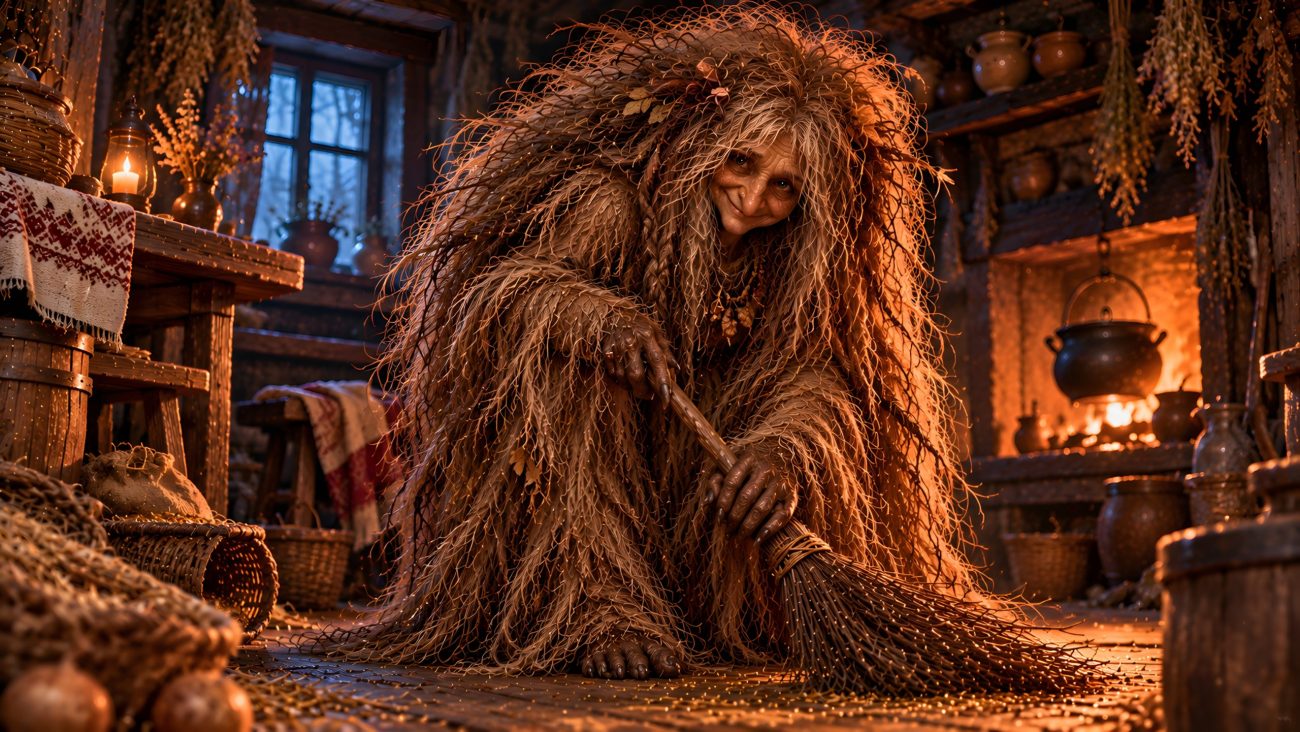
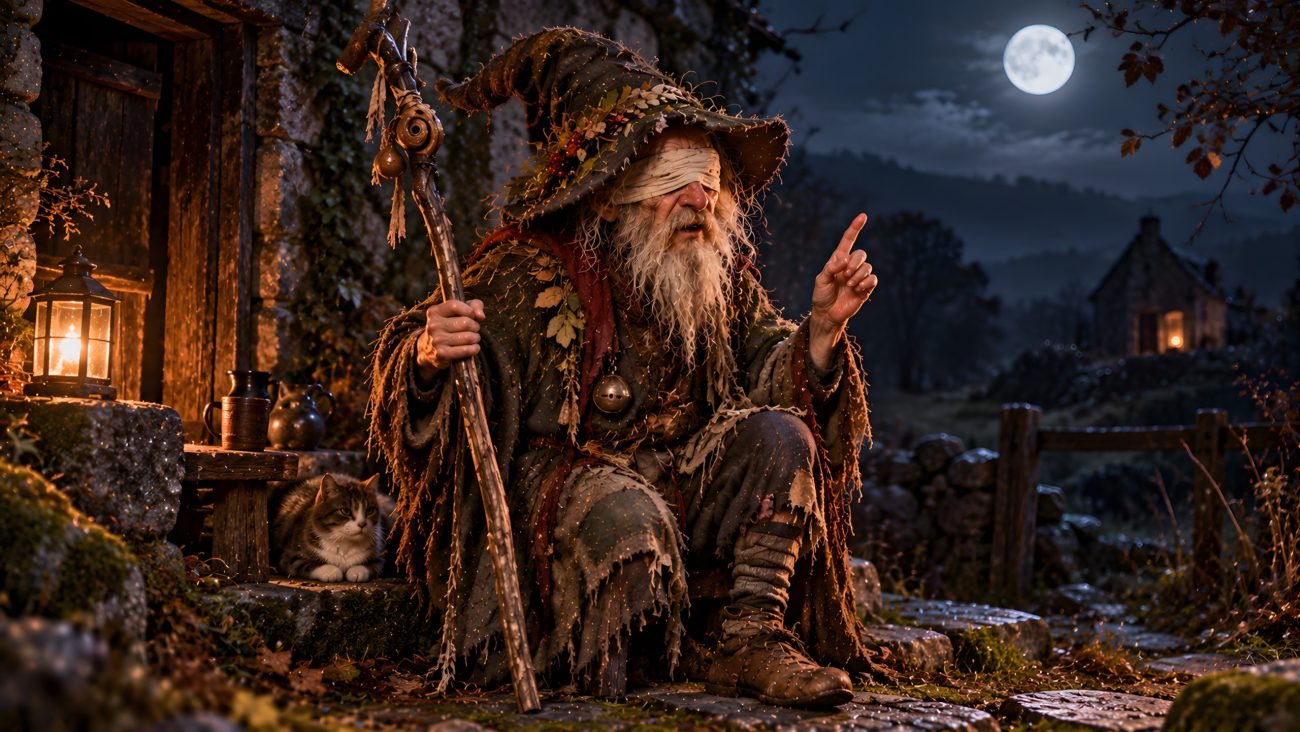
Maggy Moulach is a supernatural creature from Scottish Highland folklore, described as a brownie who performs household and agricultural labour. She is unusually small, standing around two feet tall, and is distinguished by her impressive head of hair or, in some accounts, her hairy hands. These features earned her the alternative name Hairy Meg. She is also said to possess the ability to transform into a grasshopper. Her son, Brownie-Clod, is a dobie: a well-intentioned but somewhat dull-witted variety of brownie.

In earlier legends, Maggy and her son lived at Tullochgorm Castle, which belonged to the Grant family. There, Maggy performed the ordinary duties of a brownie, helping with the work of the household. She also assisted the clan chief in defeating opponents at chess. However, her role extended beyond domestic service, as she functioned as a banshee who announced the deaths of members of the Grant family. Her presence therefore combined helpful labour with a supernatural association with death.

One tale concerns Fincastle Mill, where brownies were feared as guardians against trespassers. A young woman preparing for her wedding discovered that she did not have enough flour for her wedding cake. Since the miller had already left, she entered the mill herself and began grinding the grain, placing a pot of water over the fire while she worked. Brownie-Clod heard the noise and approached to discover who had entered the mill. When he asked the woman’s name, she repeatedly answered, “Mi fein,” meaning “me myself.”

As Brownie-Clod approached, the woman threw boiling water over him. Fatally burned, he fled to his mother, who asked him who had injured him. He could only repeat the words “Me fein,” leaving Maggy unable to understand what had happened. She later discovered the woman’s trickery when she overheard her boasting about outsmarting a brownie. Enraged by the deception and the death of her son, Maggy threw a stool through the woman’s window with such force that it killed her instantly.

Another legend describes Maggy settling near a farm, where her labour proved so effective that the farmer dismissed all his other workers and relied entirely on her. Angered by this treatment, Maggy went on strike and transformed into a boggart, a troublesome spirit similar to a poltergeist. She began causing disturbances and playing tricks on the farmer until he was forced to rehire his workers. The story presents Maggy as a capable but independent supernatural servant who refuses to tolerate exploitation.

Later versions of Maggy’s legend give her a more frightening role. Some accounts claim that she could reach down chimneys and steal children, adding a child-snatching aspect to her character. These stories differ from the earlier accounts of her work at Tullochgorm Castle, where she appears primarily as a helpful brownie and a herald of death.

Maggy Moulach embodies the unpredictable nature of the Scottish brownie. She can perform valuable work, assist a noble family, and protect her own interests, but she is also capable of violent revenge when wronged. Her stories emphasize that supernatural servants cannot simply be exploited or deceived without consequences. Those who treat them unfairly may lose their assistance and instead face the mischief or wrath of a powerful household spirit.


Sources

“Maggy Moulach.” Wikipedia: The Free Encyclopedia. Wikimedia Foundation. Accessed October 18, 2026. https://en.wikipedia.org/wiki/Maggy_Moulach


Billy Blind

Tradition: English Mythology, Scottish Mythology
Alternative Names: Billy Blin, Billy Blynde, Billie Blin, Belly Blin
Category: House dweller


The Myth

Billy Blind is a household spirit in English and Lowland Scottish folklore, similar to a brownie. Unlike many domestic spirits known for performing chores, Billy Blind is chiefly remembered for his appearances in traditional ballads, where he frequently offers advice to the human characters. His guidance can help them understand their circumstances and decide how to act.

Billy Blind’s appearance and exact nature are not described in the available account. His role is instead defined by his presence in ballad narratives, where he acts as a supernatural adviser who assists people through his knowledge and counsel. His association with the household-spirit tradition places him among the supernatural beings believed to exist alongside ordinary human life.

Some scholars have suggested that Billy Blind may preserve a folk memory of the Germanic god Woden, also known as Odin, particularly a more playful aspect of that deity. This remains a proposed interpretation rather than an established origin. He has also been speculated to be the same character as Blind Harie, described in Scottish tradition as the “blind man of the game.”

Billy Blind is therefore best understood through his function in traditional storytelling: a supernatural figure who appears at important moments to advise the characters. His connection to household spirits, together with the possible links to older Germanic mythology, gives him a place between domestic folklore and the supernatural advisers of traditional ballads.


Sources

“Billy Blind.” Wikipedia: The Free Encyclopedia. Wikimedia Foundation. Accessed October 18, 2026. https://en.wikipedia.org/wiki/Billy_Blind


Grogan

Tradition: Scottish Mythology, Irish Mythology
Alternative Names: Grogach, Grogan, Gruagach
Category: House dweller


The Myth

The Grogan is a short, hairy supernatural being known in Scottish and Irish folklore for its industrious nature. Similar to a brownie, it is a household spirit associated with farm work, though its appearance and behaviour vary between regional traditions. Descriptions portray it as a small, broad-shouldered, exceptionally strong creature, sometimes with a large head and a soft body that allows it to roll down hillsides as though it had no bones.

In Scotland, the Grogan is known for helping with agricultural labour. One story tells of a farmer who left a certain number of sheaves overnight for the Grogan to thresh the following morning. One night, the farmer forgot to leave the usual number of sheaves. The Grogan, assuming that it had to thresh the entire barn, set to work regardless. The next morning, the farmer found the creature dead on a pile of grain. The story warns of the consequences of overwork, even for a spirit renowned for its industry.

The Grogan also appears as a guardian of cattle. In the Scottish Highlands, the Gruagach was described as a handsome being with golden hair who watched over livestock and wore rich clothing. In Ulster, however, the Grogach was depicted as a naked, hairy male figure standing roughly four feet tall. One tale describes such a being tending a farmer’s flock. When the farmer’s daughter, believing its nakedness was a trick to frighten her away, sewed a shirt onto it, the creature wandered away weeping bitterly.

These traditions portray the Grogan as a powerful but sometimes vulnerable supernatural helper. Although it may work tirelessly for farmers or protect their animals, it can also suffer from excessive demands or be driven away by human interference. Its contrasting appearances and stories reflect the varied ways Scottish and Irish folklore imagined the relationship between supernatural beings and rural life.


Sources

“Grogan.” New Bestiary (Bestiary.us). https://www.bestiary.us/grogan


Vagateva

Tradition: Scottish Mythology
Alternative Names: Wag-at-the-Wa’
Category: House dweller


The Myth

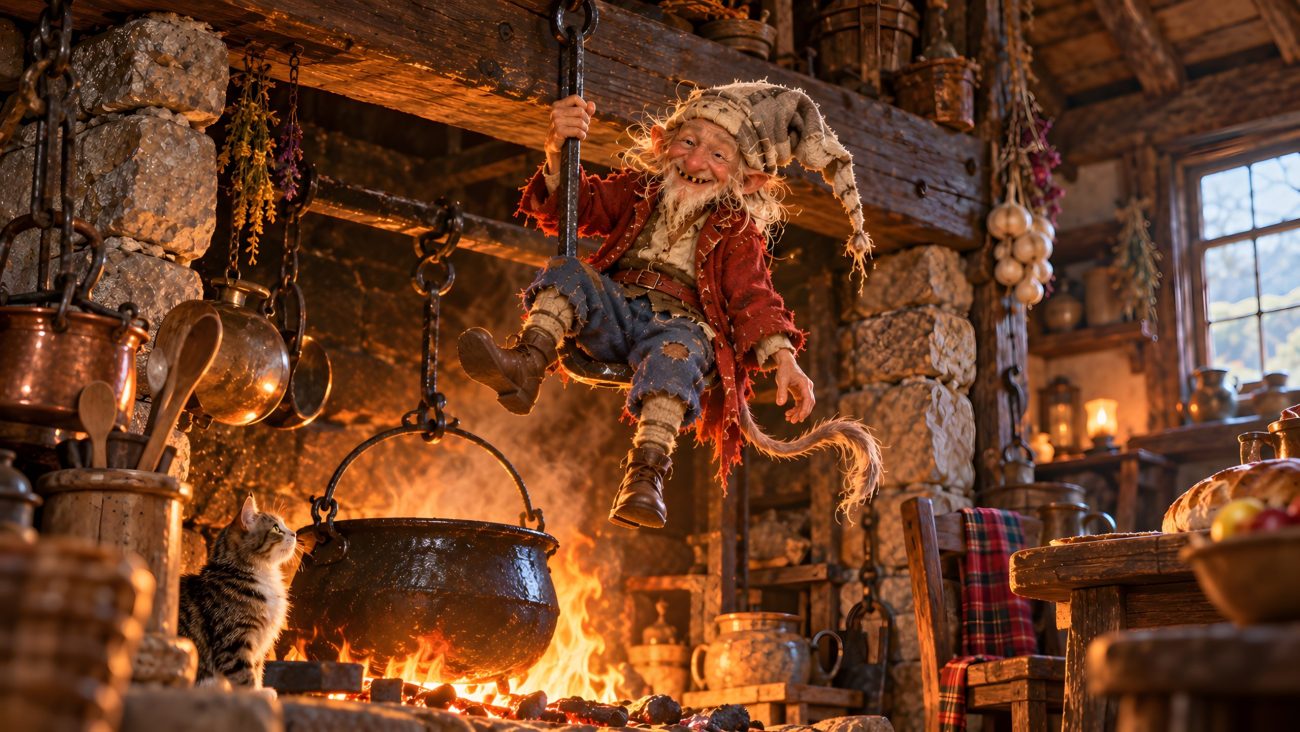
Wag-at-the-Wa’ is an eccentric household spirit of the Scottish Borders, belonging to the brownie family. He appears as a grisly old man with short, crooked legs and a long tail, which he uses to keep his seat on a swinging pot-hook. Sometimes he wears a grey mantle with the remains of an old nightcap on his head, drawn down over the side of his face that has been disfigured by a harelip and a constant grimace. More commonly, he wears a red coat and blue breeches made of familiar woo, a traditional woollen fabric.

Wag-at-the-Wa’ is especially fond of human cheerfulness and the company of children. His usual seat is the swinging pot-hook above the kitchen fire. When the hook is empty, he sits on it and swings himself to and fro, laughing and chuckling at the merriment of the household. He enjoys watching children play and is delighted by the sound of a lively, cheerful home.

Despite his fondness for merriment, Wag-at-the-Wa’ has little patience for lazy cooks and kitchen servants. He punishes those who neglect their work, sometimes with a good deal of rough humour. His cheerfulness is considered a great credit to him, particularly because he suffers from a perpetual toothache. However, he is not especially concerned with the cleanliness or neatness of the house, and his presence can become a torment to slow or careless kitchen workers.

Wag-at-the-Wa’ also has an unusual fear of cold iron and, in some accounts, the sign of the cross. When the swinging pot-hook was marked with a cross to protect the fire from witches, the spirit was said to disappear. A tale recorded by William Henderson tells of a woman who visited a house where the pot-hook had been marked in this way. When she asked one of the women why the spirit no longer lived there, she was told that it would not remain in a house where such protection was practised.

Wag-at-the-Wa’ is therefore a distinctive Scottish brownie: a mischievous but cheerful household presence whose love of children and laughter contrasts with his harsh treatment of lazy servants and his fear of traditional protections against supernatural beings.


Sources

“Wag-at-the-Wa’.” Encyclopedia Mythica. https://pantheon.org/articles/w/wag-at-the-wa.html


Bodachan Sabhail

Tradition: Scottish Mythology
Alternative Names: Little Old Man of the Barn
Category: House dweller


The Myth

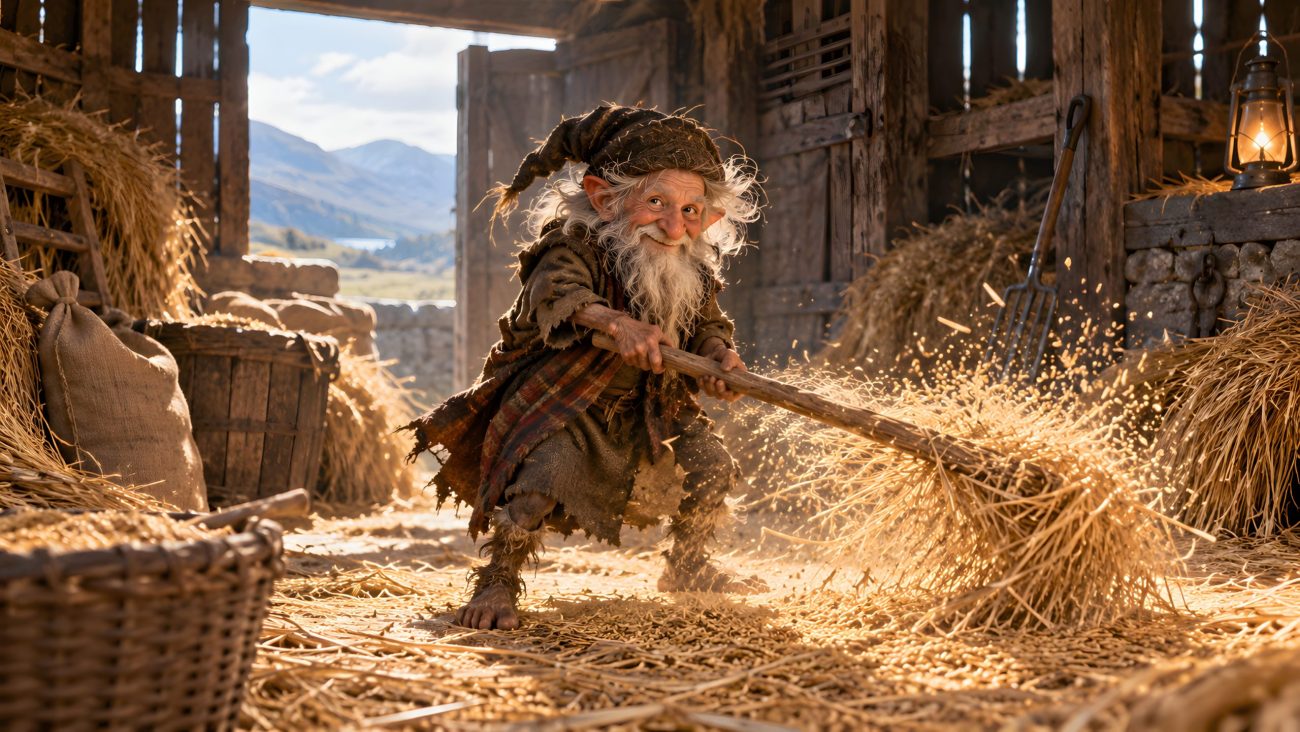
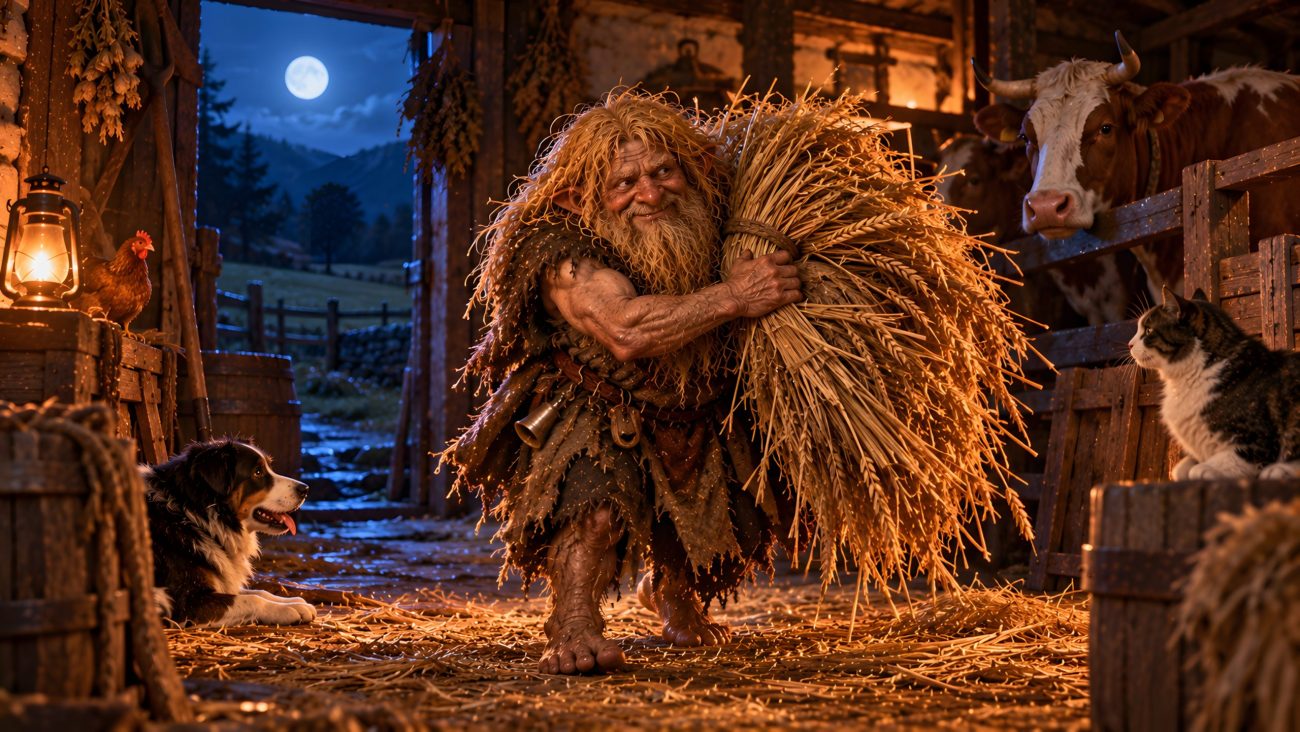
Bodachan Sabhail is a Scottish Highland brownie associated with barns and agricultural work. Known by the nickname “Little Old Man of the Barn,” he is a helpful supernatural being who takes pity on elderly men and assists them with threshing. His role connects him to traditional farming life, particularly the labour of separating grain from its stalks after harvesting.

Unlike malevolent spirits that trouble people, Bodachan Sabhail is remembered for his compassion towards those who struggle with their work. He helps old men with threshing, easing the burden of demanding agricultural labour. His presence in the barn reflects the belief that supernatural helpers could assist people with everyday tasks, especially when age or weakness made those tasks difficult.

Bodachan Sabhail is also mentioned in a Scottish poem that evokes the arrival of night and the end of the day’s work. As the peat fire turns grey and shadows deepen, the Little Old Man of the Barn is imagined threshing in the darkness, continuing his labour when the old man Galium is asleep. This portrayal reinforces his association with tireless work and his quiet presence in the agricultural world of the Scottish Highlands.


Sources

“Botukan Sovil.” New Bestiary (Bestiary.us). https://www.bestiary.us/botukan-sovil/en