Biasd Na Srogaig

Tradition / Region: Scottish Mythology
Alternative names: Biasd Na Sgrogag, Béist Na Sgrogaig, The Beast of the Lowering Horn
Category: Horse


The Myth

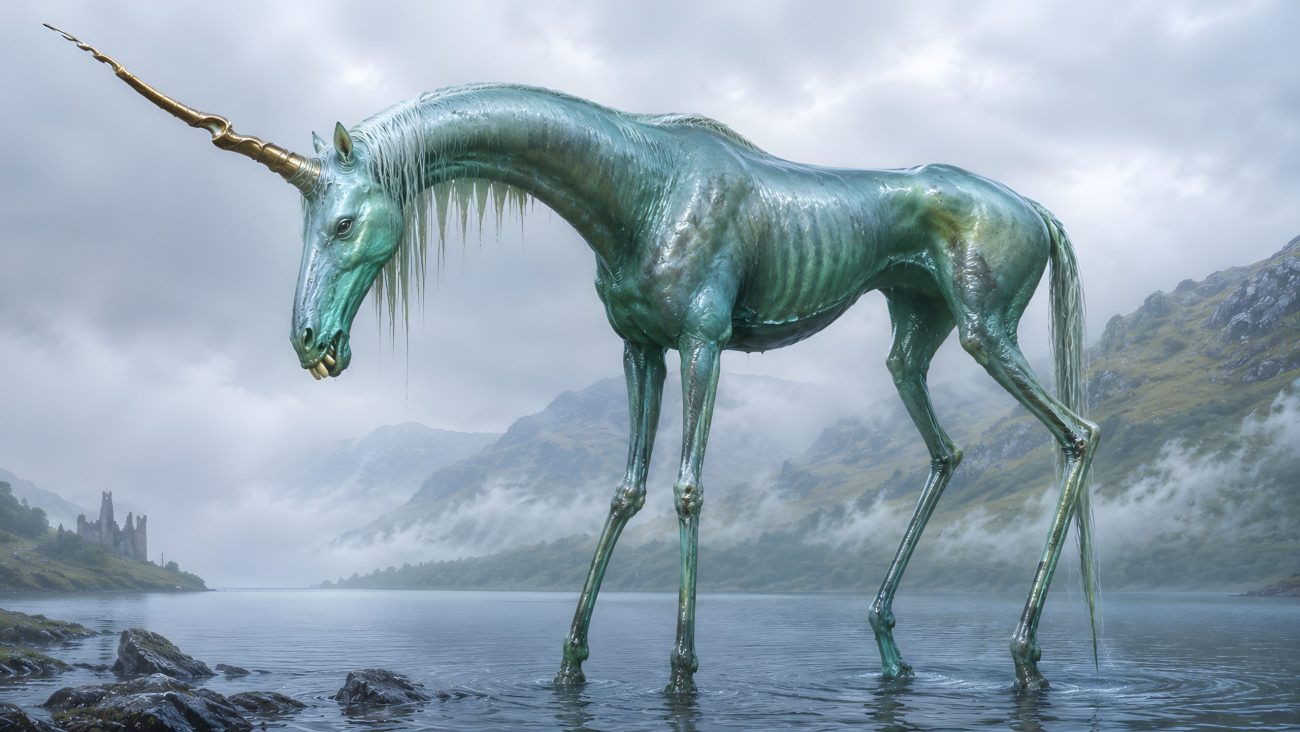
The Biasd Na Srogaig, or “Beast of the Lowering Horn,” is a legendary creature said to inhabit the lochs of the Isle of Skye in Scotland.

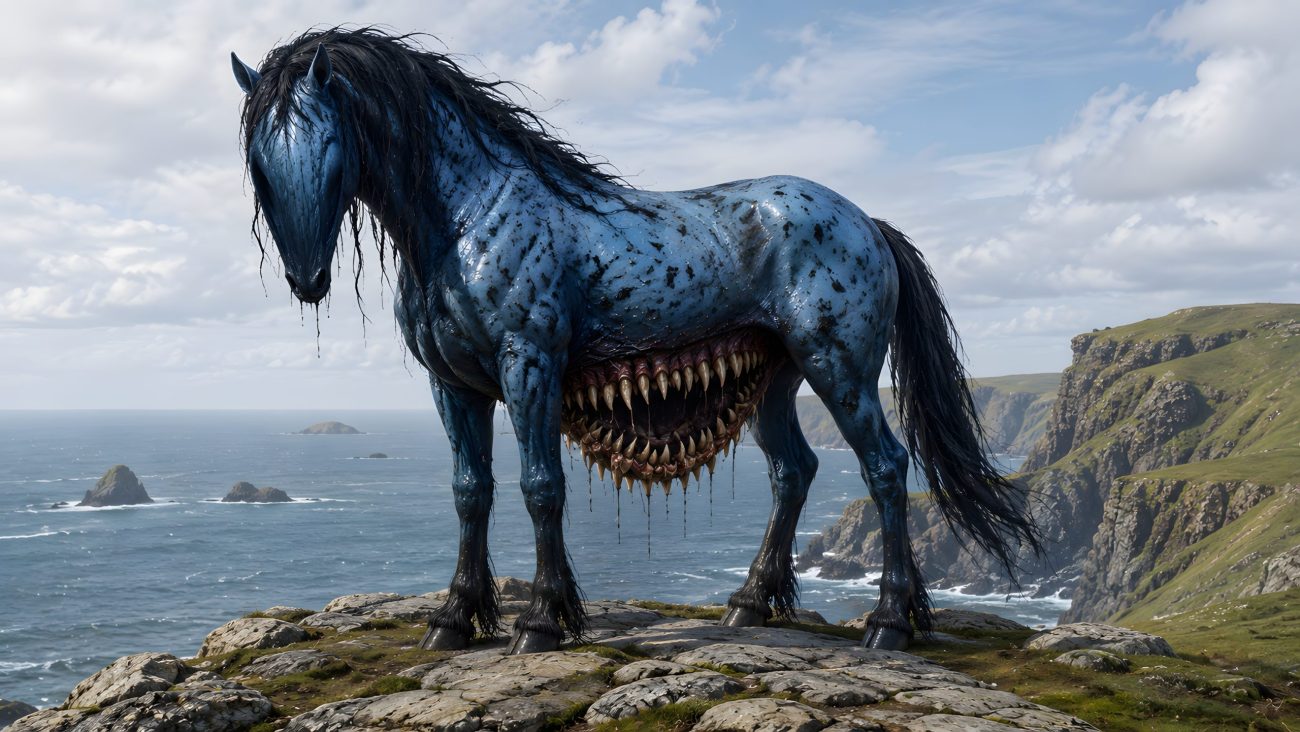
Although sometimes described as a unicorn, it bears little resemblance to the graceful unicorn of later tradition. The creature is portrayed as tall and ungainly, with long, gangly legs, an awkward gait, and a single large horn projecting from its forehead.

The Biasd Na Srogaig is believed to have originated as a nursery bogey used to frighten children. Over time, however, the creature became an established figure of local folklore as stories about it continued to be told into adulthood.

Its name is derived from the Gaelic sgrogag, meaning “crumpled horn.” In later usage, the name Béist Na Sgrogaig was also applied to the heraldic unicorn.


Sources

Campbell, J. G. (1900). Superstitions of the Highlands & Islands of Scotland: Collected entirely from oral sources. James MacLehose and Sons. Retrieved June 29, 2026, from https://www.gutenberg.org/ebooks/61728.


Shoopiltee

Tradition / Region: Scottish Mythology
Alternative names: Cabyll-ushtey
Category: Horse


The Myth

Shoopiltee is a water spirit from the folklore of the Shetland Islands. It appears in the form of a beautiful little horse.

The creature attempts to entice people into mounting its back. Once a rider climbs on, the Shoopiltee suddenly gallops into the sea, carrying its victim with it.


Sources

Bestiary.us. (n.d.). Shupilti. In New Bestiary: Encyclopedia of Imaginary Beings. Retrieved June 29, 2026, from https://www.bestiary.us/shupilti/en


Kelpie

Tradition / Region: Scottish Mythology
Alternative names: Water Kelpie, Each-uisge
Category: Horse


The Myth

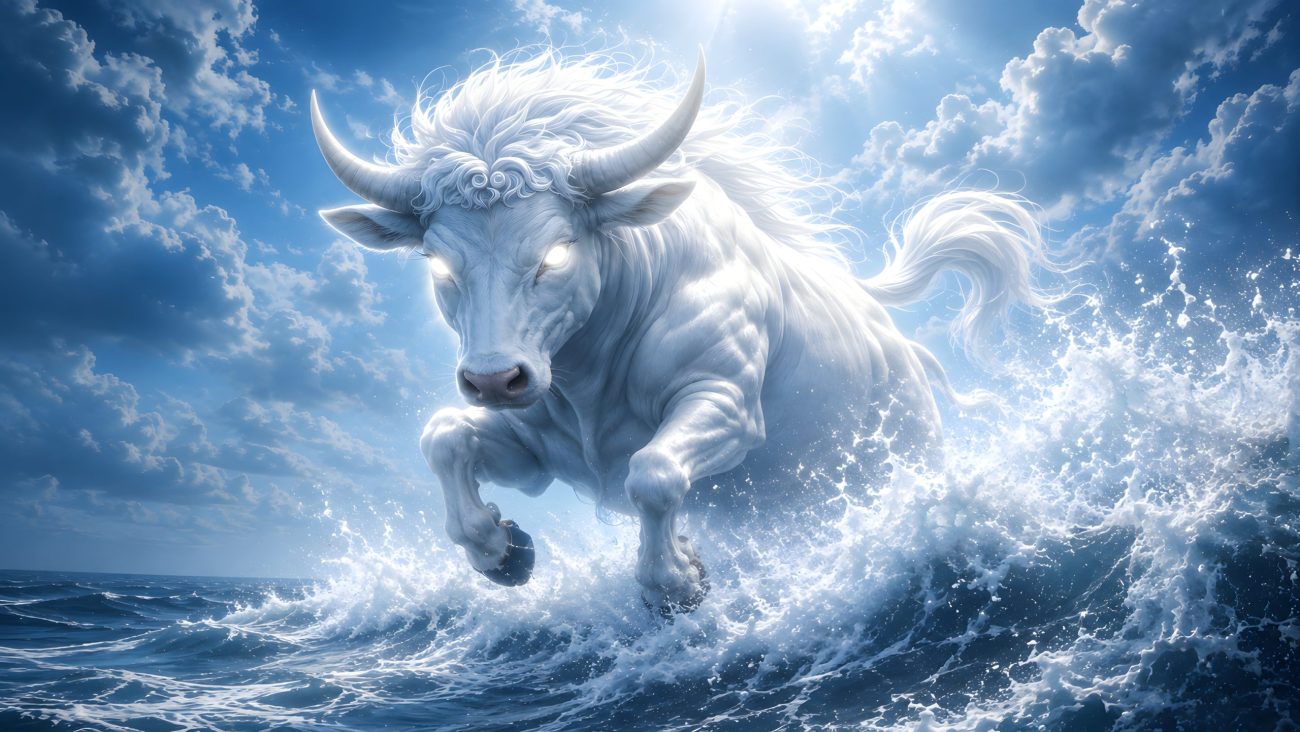
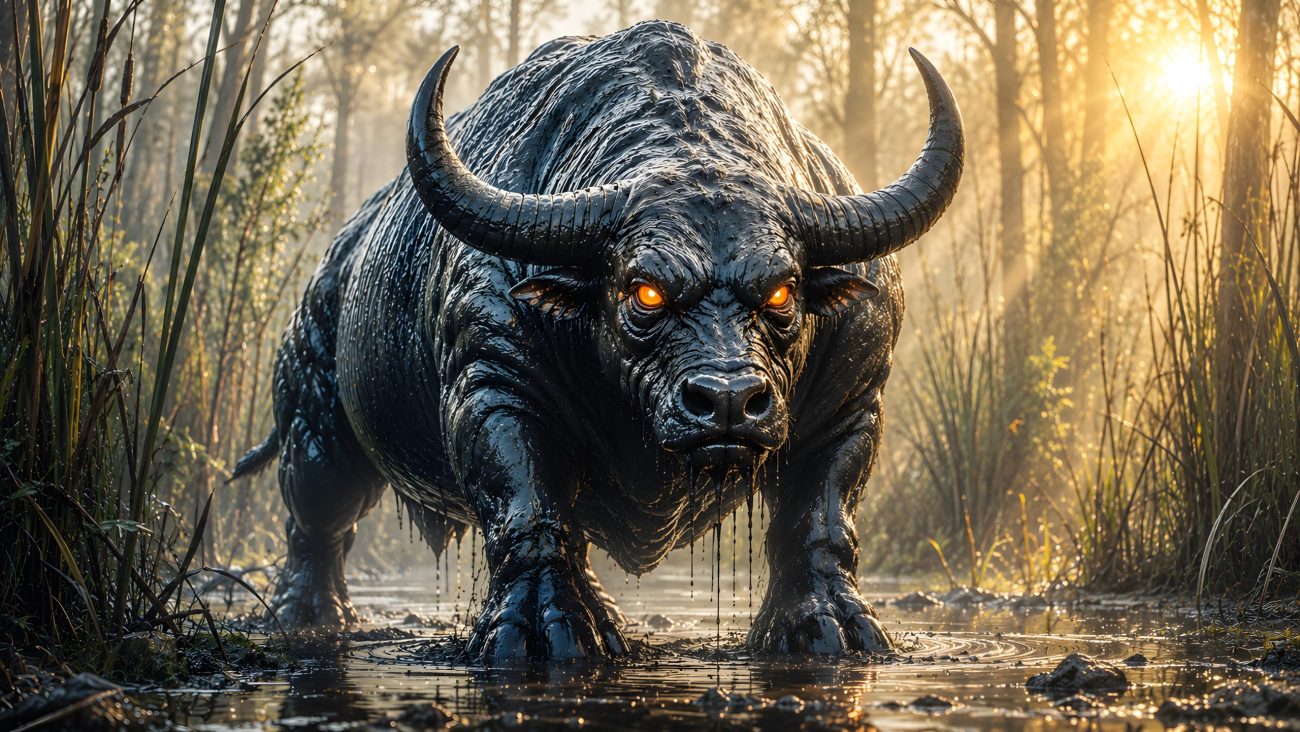
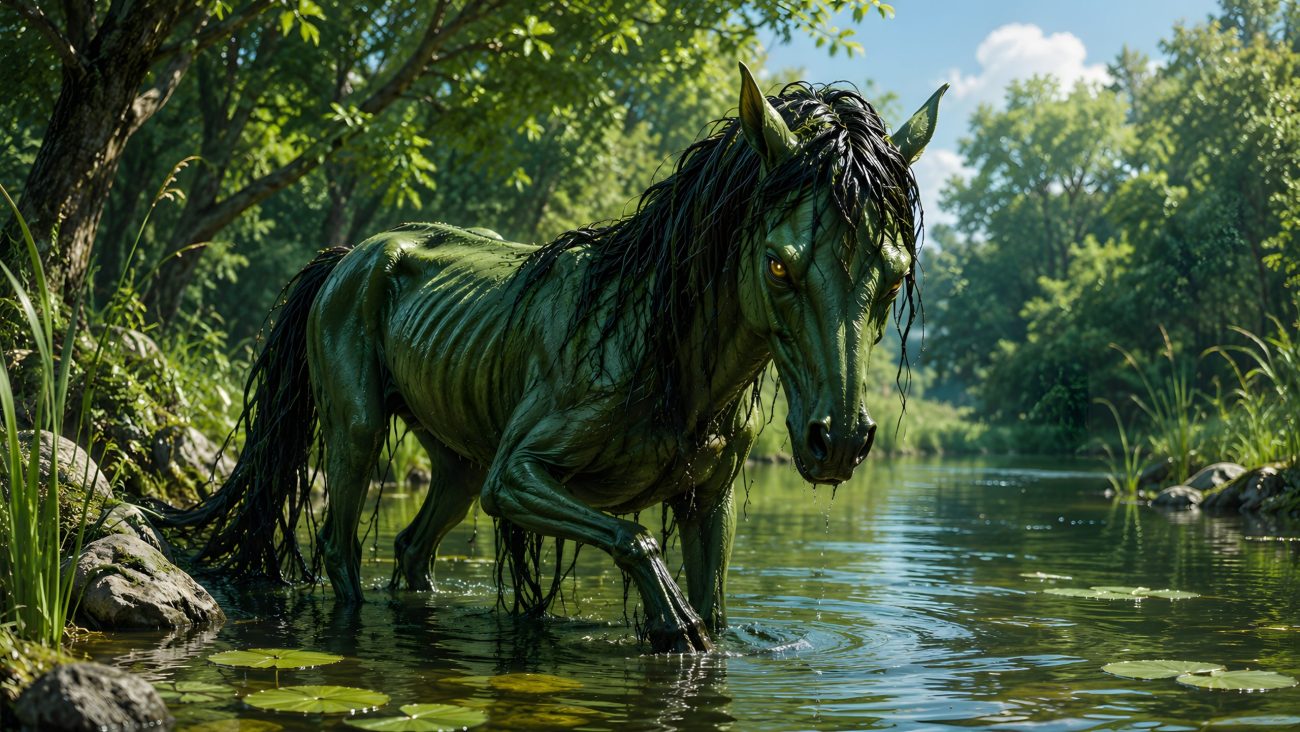
The Kelpie is a mythical shape-shifting water spirit that inhabits the lochs, rivers, and streams of Scotland. It is most commonly described as a powerful black horse, although some traditions describe it as grey or white.

The creature lurks near the water’s edge, preying upon anyone it encounters. One of its distinguishing features is its reversed hooves. It is able to lengthen its back so that many riders can climb aboard at once. Once they do, they become unable to escape as the Kelpie carries them into the depths, where it drowns and devours them, often leaving only their entrails washed ashore. Many stories tell of children climbing onto its back, with only one surviving after cutting off his own fingers or hand to free himself from the creature’s sticky hide.

The Kelpie is also a master of disguise and can transform into a human. It often appears as a handsome young man to lure victims, though some tales describe it as a rough, shaggy man or even an old man. When in human form, it may betray its true nature by retaining horse hooves or having water weeds tangled in its hair. One legend tells of a young woman who recognized a Kelpie, removed its silver bridle while it slept, and forced it to serve on her family’s farm. When the bridle was eventually returned, the Kelpie chose to become a mortal man and married her.

According to tradition, a Kelpie could be captured with a halter marked by the sign of the cross and compelled to perform enormous feats of labor, such as hauling heavy stones. Removing a Kelpie’s magical bridle could also break its power, while the bridle itself was said to possess supernatural abilities. Some stories claim that a Kelpie could be destroyed by a silver bullet or by piercing it with heated iron spears, after which its body dissolved into a soft, jelly-like mass.


Sources

Wikipedia contributors. (n.d.). Kelpie. In Wikipedia. Retrieved June 29, 2026, from https://en.wikipedia.org/wiki/Kelpie.


Each-Uisge

Tradition / Region: Scottish Mythology, Irish Mythology
Alternative names: Each-Uisge, Each-Uisce, Water Horse, Aughisky (Ireland), Cabbyl-Ushtey (Isle of Man)
Category: Horse


The Myth

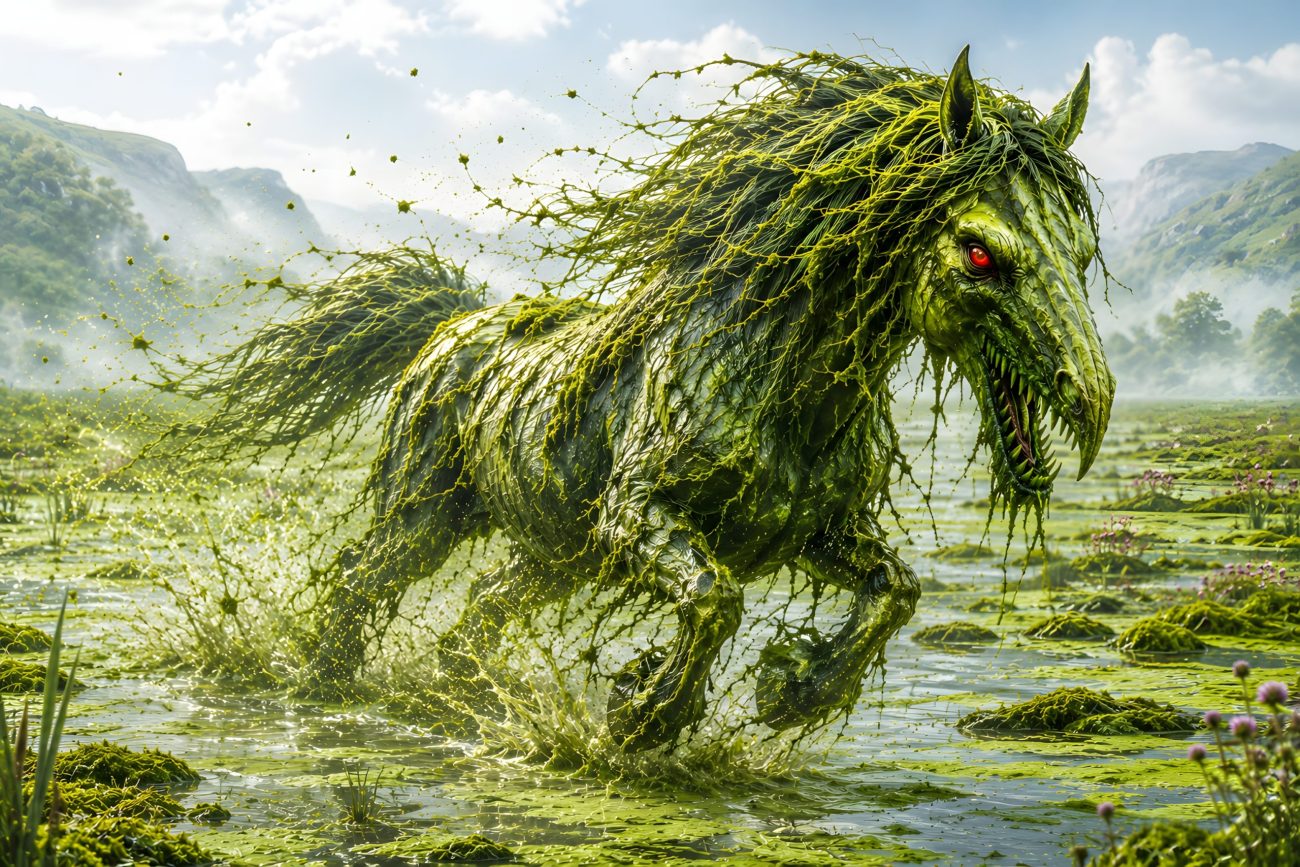
The Each-Uisge, meaning “water horse,” is one of the most feared supernatural creatures of Scottish and Irish folklore. It inhabits sea lochs, freshwater lochs, and the sea itself, and is considered far more dangerous than the kelpie.

The creature is a shapeshifter, most commonly appearing as a magnificent horse waiting by the water’s edge. It may also take the form of a handsome young man or, more rarely, a great bird. In human guise, it can often be recognized by horse’s hooves or by seaweed, sand, and water plants tangled in its hair.

When someone mounts the horse, they remain safe only while it stays away from water. As soon as it reaches a loch or the sea, the rider’s hands become stuck fast to its hide. The Each-Uisge plunges into the deepest water, drowning its victim before devouring the body. According to legend, only the liver floats back to the surface.

The Each-Uisge preys not only on people but also on livestock, especially cattle and sheep. It is said to possess an insatiable appetite for human flesh. Some tales also claim it mates with ordinary horses, producing unusually powerful foals distinguished by their blazing eyes, great strength, and wild temperament.

Many legends tell of encounters with the creature. In one story, seven girls climbed onto what appeared to be a harmless pony, unaware that its back lengthened to carry them all. When it raced into the loch, their hands became trapped, and they drowned. Only a boy who refused to mount the animal escaped. Another tale tells of a young man who freed himself by cutting off the finger that had become stuck to the creature’s reins, while his companions were carried into the water.

Although immensely dangerous, the Each-Uisge can sometimes be subdued. Placing a cow’s shackle or cap upon it, or stealing its magical bridle, robs it of its power and forces it into obedience. However, should the restraint be removed, it immediately flees back to the water and may drag its owner to a watery death.

Some traditions tell of the Each-Uisge taking the form of a charming suitor to lure women. If its true identity is discovered, it is often killed by the woman’s family before it can claim its victim. After death, its body is said to dissolve into a shapeless mass of jelly-like slime.

Every loch was once believed to have its own Each-Uisge, making the creature a constant warning against the hidden dangers that lurked beneath Scotland’s dark waters.


Sources

A Book of Creatures. (2016, September 9). Each Uisge. Retrieved June 29, 2026, from https://abookofcreatures.com/2016/09/09/each-uisge/.

Wikipedia contributors. (n.d.). Each-uisge. In Wikipedia. Retrieved June 29, 2026, from https://en.wikipedia.org/wiki/Each-uisge.


Habetrot

Tradition / Region: English Mythology, Scottish Mythology
Alternate Names: Habitrot, Habtrot, Habbitrot
Category: Cave dweller


The Myth

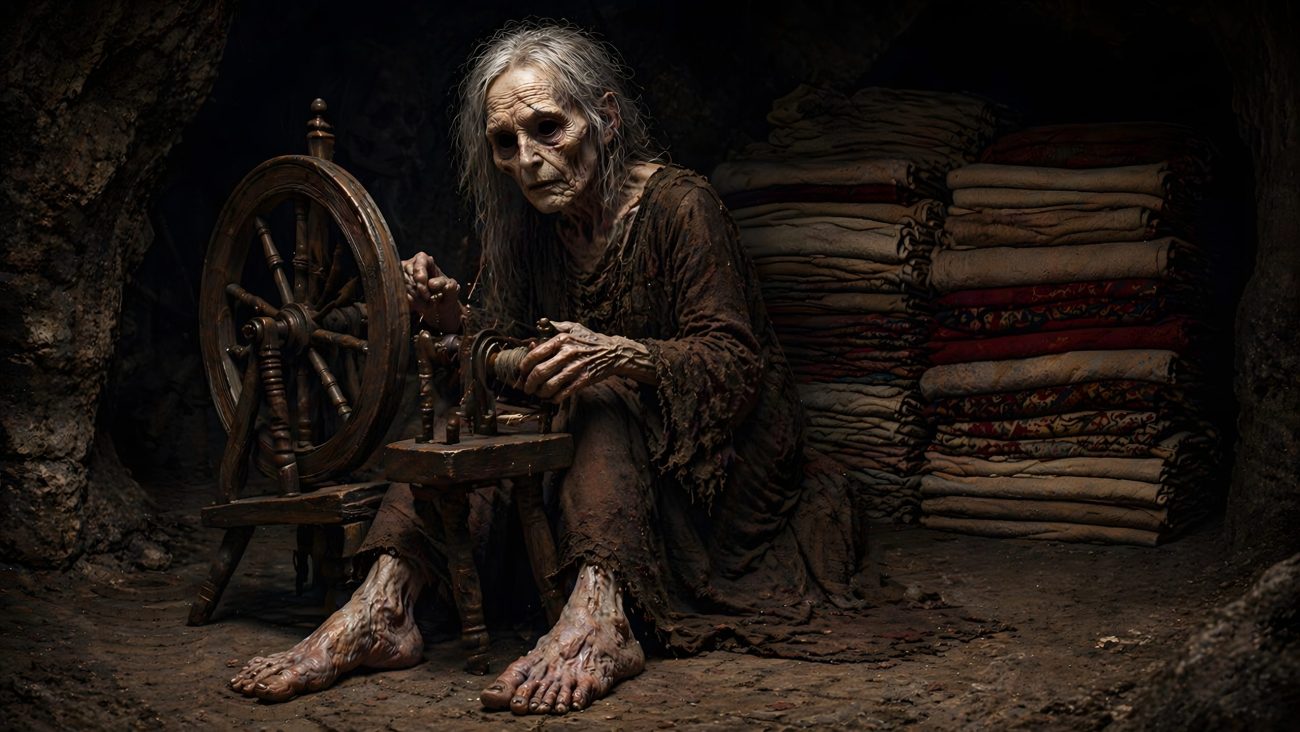
Habetrot is an ancient and mysterious figure tied to spinning, cloth-making, and the hidden world beneath the earth. She is described as an old, deformed woman who lives underground, surrounded by other spinsters like herself—women whose bodies have been twisted and marked by endless years of spinning thread.

These women bear the physical cost of their craft. Some have flattened thumbs, others misshapen feet, and many have long, distorted lips from constantly wetting thread as they worked. Their appearance reflects both dedication and burden—beings shaped by labor to the point of becoming something almost inhuman.

Despite this unsettling form, Habetrot is not malevolent.

In the most well-known tale, she comes to the aid of a young woman who refuses or is unable to spin—an essential skill expected of women. Instead of punishing her, Habetrot secretly spins the yarn for her. When the girl later marries, Habetrot reveals herself (or is revealed) to the husband, showing the consequences of a life spent spinning.

Seeing the deformities of Habetrot and her companions, the husband is horrified and declares that his wife must never spin, sparing her from the same fate. In this way, Habetrot acts as both helper and warning—protecting the girl while embodying the extreme outcome of relentless labor.

Beyond this tale, Habetrot’s name appears in darker beliefs.

In border folklore, there were fears tied to stepping on “unchristened ground,” places where unbaptized or stillborn children were buried. Those who did were said to fall ill with a strange affliction—burning skin, trembling limbs, and difficulty breathing. This condition could not be cured by ordinary means.

The only remedy required an object of great purity and effort: a linen garment made under strict conditions—grown, spun, and crafted through a chain of honest and untouched processes. Crucially, the thread itself had to be spun by Habetrot.

This suggests that her work carried a special, almost sacred quality. Though she lived in darkness and appeared deformed, the products of her labor held protective and healing power.

Habetrot exists at the intersection of hardship and necessity. She is both a relic of relentless work and a quiet guardian who intervenes when needed—never fully kind, never truly cruel, but bound to the rhythms of labor, fate, and tradition.


Sources

Wikipedia contributors. (n.d.). Habetrot. In Wikipedia, from https://en.wikipedia.org/wiki/Habetrot


Wulver

Tradition / Region: Scottish Mythology
Alternate Names: Wullver
Category: Wolf, Cave Dweller


The Myth

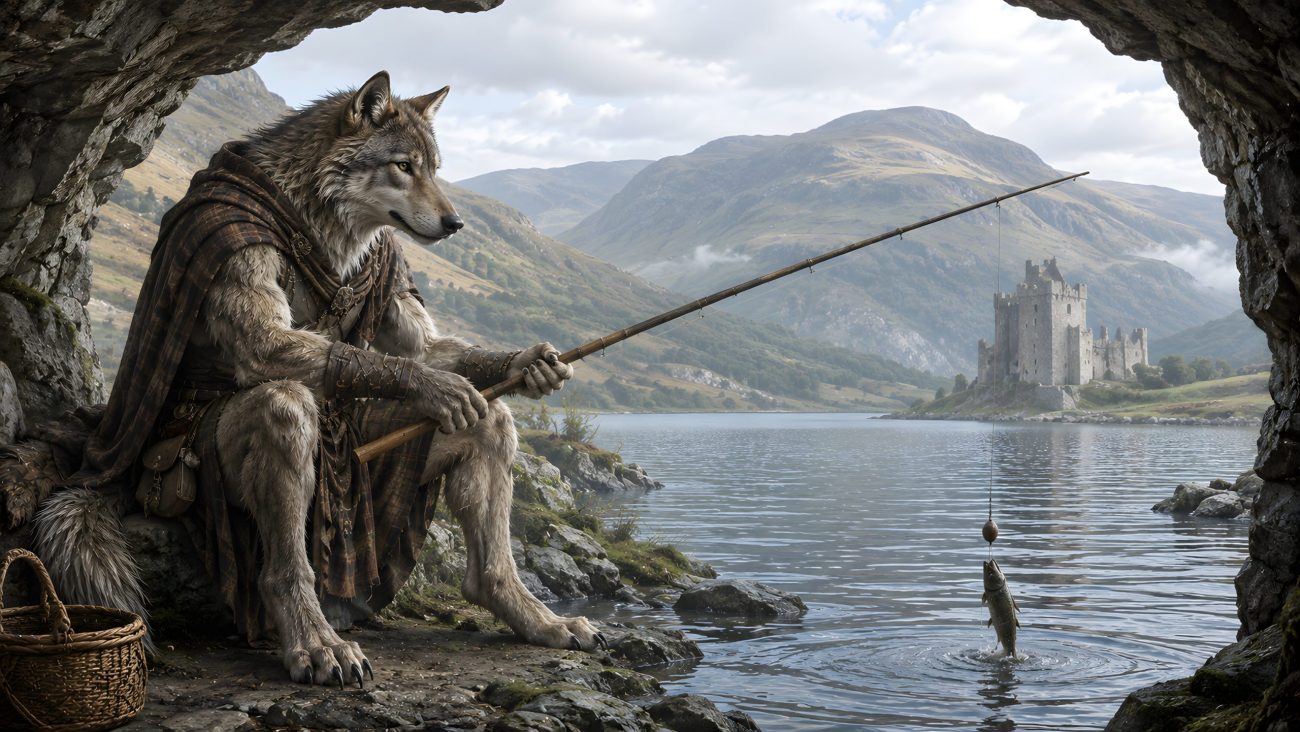
The Wulver is a strange being said to dwell in the Shetland Islands. Unlike many wolf-creatures of legend, it is not remembered as savage, but as solitary and oddly kind.

The Wulver is described as having the body of a man covered in short brown hair, with the head of a wolf. It lives alone in a cave dug into the side of a hill, keeping to itself and rarely approaching human settlements.

Though fearsome in appearance, the Wulver is not known to attack people without cause. Instead it spends its time fishing along the shore. It is said to sit for hours upon a rock in deep water, catching fish with patience and skill.

In many stories, the Wulver shows quiet generosity. After a successful catch, it sometimes leaves fish on the windowsills of poor families, slipping away unseen before anyone can thank it. Because of this, locals came to regard it not as a monster but as a strange neighbor — a creature of the wild who could be respected if left in peace.

The Wulver remains a figure of solitude rather than terror: a wolf-headed being who lives apart from mankind, neither fully beast nor fully human, sharing the land without seeking to rule it.


Sources

Wikipedia contributors. (n.d.). Wulver. In Wikipedia, from https://en.wikipedia.org/wiki/Wulver


Loch Oich Monster

Tradition / Region: Scottish Mythology
Alternate Names:
Category: Dog, Lake dweller


The Myth

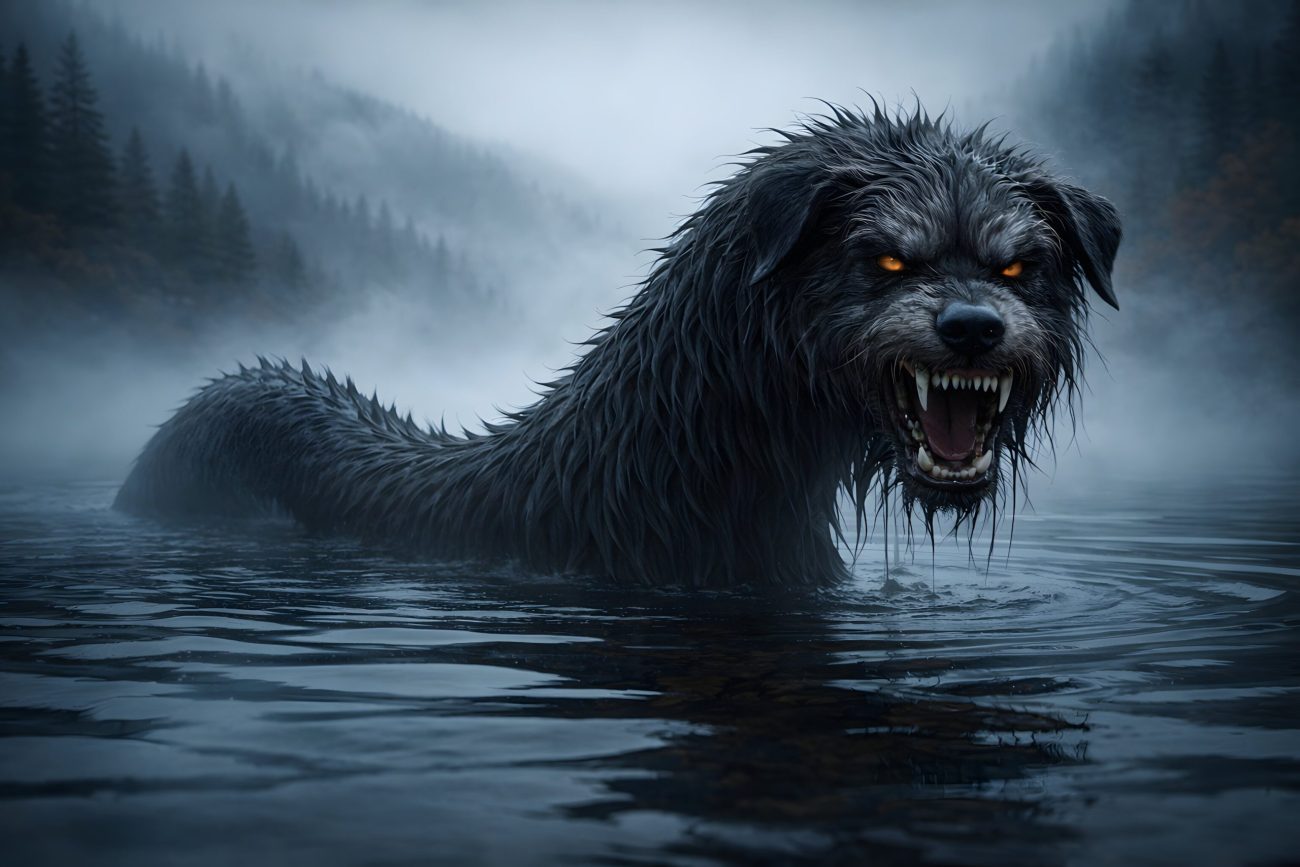
The Loch Oich Monster is a lesser-known creature from Scottish legend, associated with Loch Oich in the Great Glen of Inverness-shire. Though overshadowed by the famous Loch Ness Monster, it occupies a similar place in Highland folklore as a mysterious aquatic beast.

One of the most notable reported sightings occurred on 13 August 1936, when Alderman Richards and companions saw a strange creature while boating near Laggan. They described it as a black animal with two humps, resembling coils of a serpent rising above the water. Each hump was said to be about three feet high and spaced a few feet apart.

Most strikingly, the creature’s head was described as shaggy and dog-like, giving the monster a hybrid appearance between a lake serpent and a giant canine. This unusual combination of features led to its reputation as a rare example of a dog-headed water monster in Scottish tradition.

Unlike Nessie, the Loch Oich creature never became widely mythologized, but it remains part of local Highland lore about strange beings inhabiting the deep, dark lochs.


Gallery


Sources

A Book of Creatures. (2021, January 18). Loch Oich Monster. From https://abookofcreatures.com/2021/01/18/loch-oich-monster/


Interpretive Lenses

Religious Readings
  • Christian Ascetic Deep Dive
Philosophical Readings
  • Nietzschean Deep Dive
Psychological Readings
  • Jungian Deep Dive
Esoteric Deep Dive
  • Hermetic Deep Dive
Political / Social Readings
  • Marxist Deep Dive

Cù-Sìth

Tradition / Region: Scottish Mythology
Alternate Names: Cú Sídhe, Coin-Shìth (plural)
Category: Dog


The Myth

The Cù-Sìth is a great supernatural hound spoken of in the traditions of the Highlands.

It is said to dwell among rocky clefts and lonely hills, wandering the moors and wild places far from settled land. The creature is immense, as large as a small cow, and covered in a shaggy coat that is often described as dark green, blending with the moss and heather of the hills.

Though huge, the Cù-Sìth is a silent hunter. It moves without sound across the land, appearing suddenly and vanishing just as quickly. Most of the time it gives no warning of its presence.

But at times it does cry out.

When it does, the sound is terrible to hear. The hound gives three barks — and only three. These cries carry for great distances, even out across the sea, and those who hear them know that something otherworldly is near.

Legend says that anyone who hears the barking must reach a place of safety before the third cry sounds. If they fail, terror will overwhelm them, and the fear itself may bring their death.

Because of this, the Cù-Sìth was feared as a creature tied to the fairy world and to fate. It roamed the lonely places between hills and shore, its voice a warning that the boundary between the human world and the unseen one had grown thin.

So the great green hound of the Highlands was remembered as a silent wanderer of the moors, whose three terrible barks could decide whether a traveler lived or died.


Gallery


Sources

Wikipedia contributors. (n.d.). Cù-sìth. In Wikipedia, from https://en.wikipedia.org/wiki/C%C3%B9-s%C3%ACth


Interpretive Lenses

Religious Readings
  • Christian Ascetic Deep Dive
Philosophical Readings
  • Nietzschean Deep Dive
Psychological Readings
  • Jungian Deep Dive
Esoteric Deep Dive
  • Hermetic Deep Dive
Political / Social Readings
  • Marxist Deep Dive

Crod Mara

Tradition / Region: Scottish Mythology
Alternate Names: Sea Cow
Category: Cow


The Myth

In the Highlands and islands of Scotland, people speak of the Crod Mara, the sea cows that come from the waters and sometimes walk among earthly herds.

These cattle are said to be gentle compared to other creatures of the lochs. They have no horns and are often brown, though in some places they appear red, piebald, or black. When one of these sea cattle joins a farmer’s herd, the animals are said to grow strong and thrive, though the presence of such a creature is never without mystery or danger.

At times a sea cow follows a herd wherever it goes. It may lead the cattle toward an elfin hill, and when the mound opens, the animals can pass inside. Any beast that enters the hill is never seen again unless someone stops it in time.

Stories are also told of calves born from the union of water bulls and ordinary cows. One such calf, known by its unusually round ears, was recognized as special by a wise old woman. She ordered that it be kept apart from the rest of the herd and fed carefully for many years, so that it might grow safely and bring fortune.

In the same district, a maid once met a young man by the lakeside who asked her to comb his hair while he rested. As she did so, she saw green lake weeds tangled in it and realized he was no man but a water being. She calmed him until he slept and escaped, though she was chased by a terrible water horse. Only when the water bull itself was released did the two beasts clash in the lake, and afterward the danger was gone.

Thus the Crod Mara are remembered as cattle of the water world, sometimes a blessing to herds, sometimes a guide toward the hidden hills, and always creatures whose coming links the land to the mysterious depths beyond it.


Sources

Campbell, J. G. (1900). Superstitions of the Highlands & Islands of Scotland: Collected entirely from oral sources. Glasgow: James MacLehose and Sons.

Bestiary.us. (n.d.). Crodhmara, from https://www.bestiary.us/crodhmara


Finfolk

Tradition / Region: Scottish Mythology
Alternate Names: Finnfolk, Finman, Finwife
Category: Mermaid, Shapshifter


The Myth

In the seas around the Orkney Islands lives a mysterious race known as the Finfolk, powerful shapeshifters who dwell beneath the waves in their hidden kingdom of Finfolkaheem. From that deep and glittering realm they rise each year in the warmer months, wading, swimming, or rowing silently to the shores of the islands in search of human captives.

The Finfolk are masters of magic and deception. They can disguise themselves as fishermen, animals, floating weeds, or drifting clothes upon the sea, drawing close to their chosen victim before suddenly seizing them. Fishermen working too far from shore, or young people wandering near the water’s edge, may be carried off in an instant and never seen again.

A captive taken by the Finfolk is forced into marriage and bound to a life beneath their rule. A man captured by a Finwife is carried to her people’s domain or sometimes to the enchanted island of Hildaland, where he must remain forever as her husband and servant. A woman taken by a Finman becomes his unwilling bride, doomed to live in fear of his temper and magic.

The Finman is said to be tall and gaunt, with a stern and gloomy face. He commands strong enchantments: he can cross the sea between Norway and Orkney in only a few strokes of his oars, hide his vessel from sight, and summon phantom fleets upon the waves. He fiercely guards the waters he claims as his own, wrecking the boats of those who intrude. Yet he is said to fear the sign of the cross, and some fishermen would mark it secretly on their boats for protection.

The Finwife begins her life as a creature of striking beauty, often appearing as a golden-haired mermaid with a voice as enchanting as any siren’s. She seeks a human husband, for only by marrying a man of the land can she keep her beauty. If she fails, she must wed a Finman, and from that time she grows steadily uglier, forced to labor and send her earnings back to her husband. Some tales say she keeps a black cat that can change into a fish and carry messages to her kin beneath the sea.

The Finfolk possess two homes. In winter they dwell in Finfolkaheem, a vast underwater palace lit by the glow of sea creatures, its halls hung with drifting curtains of weed and surrounded by gardens beneath the waves. In summer they travel to Hildaland, a magical island hidden by mist or lying just beneath the surface of the sea, where the stolen men and women live out their lives in captivity.

Because the Finfolk prize silver above all things, some say that a victim may escape by throwing coins into the water, distracting the creature long enough to flee. Yet many are not so fortunate, and the old stories warn that once a Finfolk hand has closed upon you, the sea will claim you forever.

Thus the Finfolk are remembered in Orkney lore not as gentle sea-folk, but as dark masters of the deep—
shapeshifters of the tide,
hunters of human brides and grooms,
and rulers of a hidden kingdom beneath the waves.


Gallery


Sources

Wikipedia contributors. (n.d.). Finfolk. In Wikipedia, The Free Encyclopedia. Retrieved February 14, 2026, from https://en.wikipedia.org/wiki/Finfolk


Interpretive Lenses

Religious Readings
  • Christian Ascetic Deep Dive
Philosophical Readings
  • Nietzschean Deep Dive
Psychological Readings
  • Jungian Deep Dive
Esoteric Deep Dive
  • Hermetic Deep Dive
Political / Social Readings
  • Marxist Deep Dive
Other
  • How to Invite The Finfolk