Tradition: Scottish Mythology
Alternative Names: Nessie, Uilebheist Loch Nis
Category: Lizard
The Myth
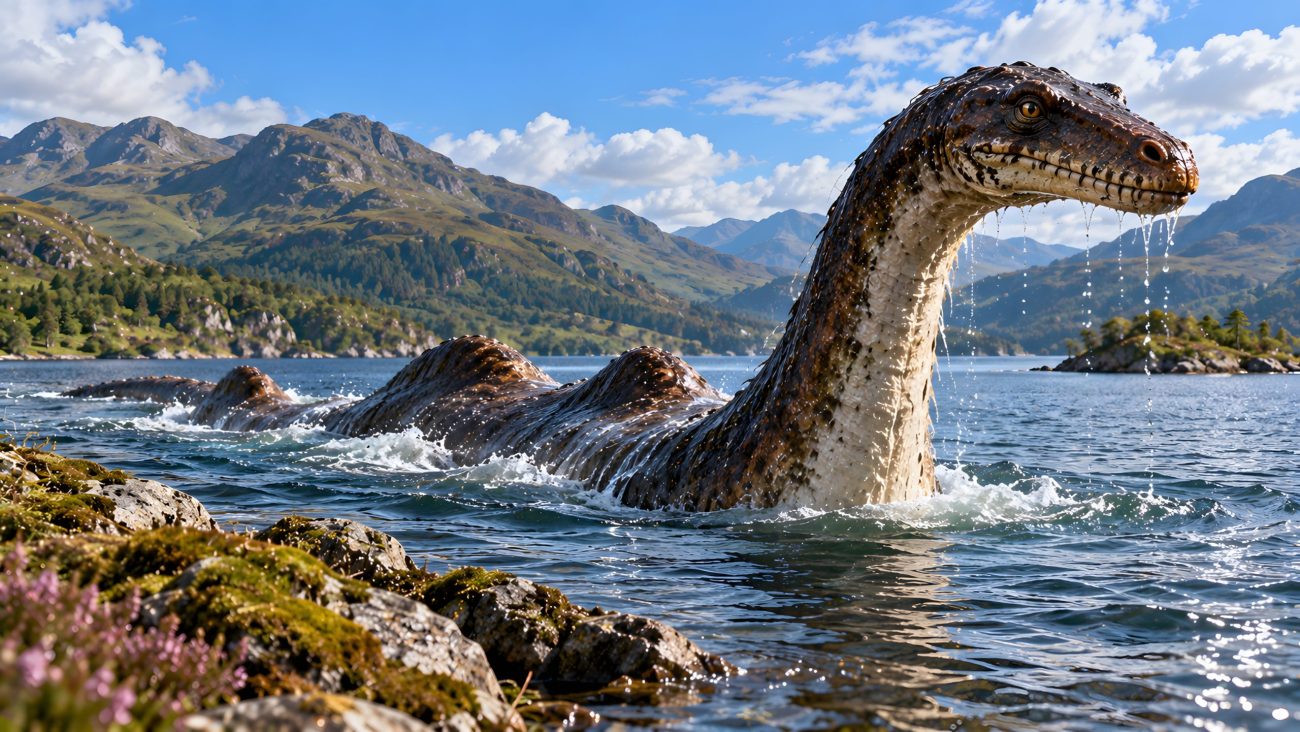
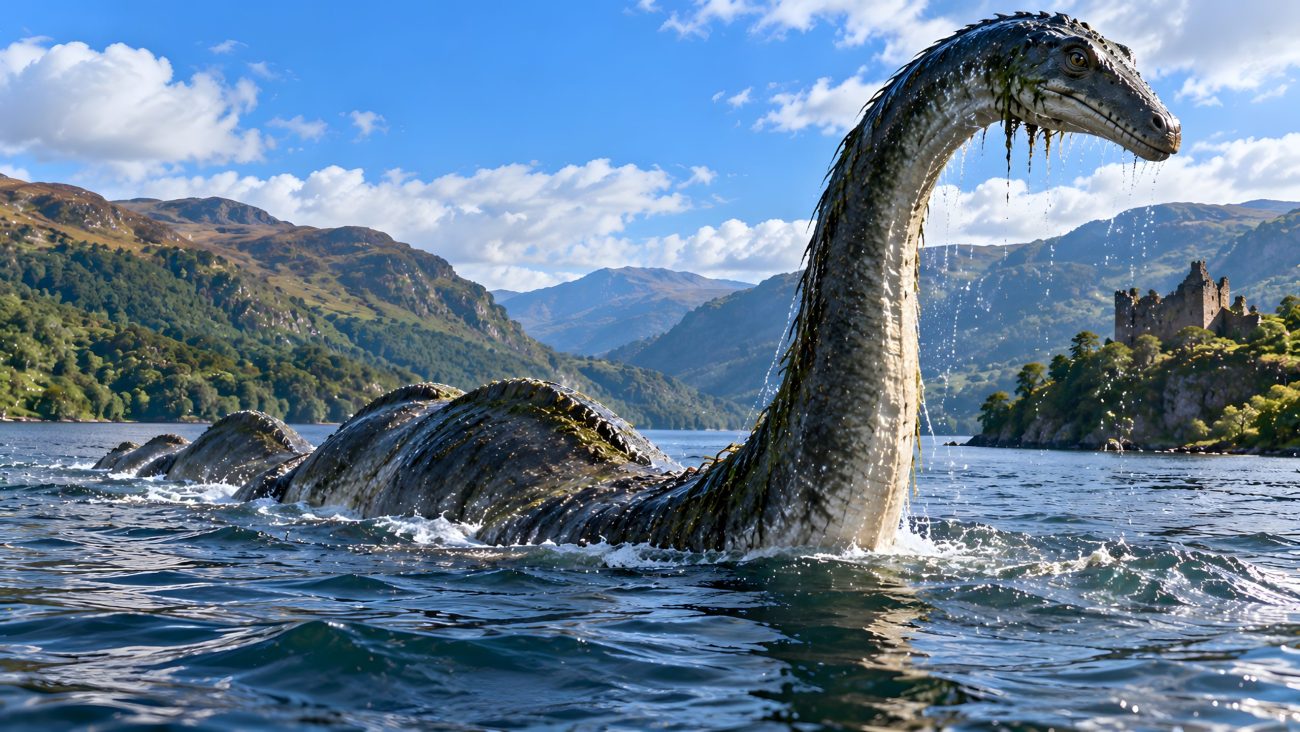
The Loch Ness Monster, affectionately known as Nessie, is a mysterious creature said to inhabit Loch Ness in the Scottish Highlands. It is most often described as a large animal with a long neck and one or more humps protruding above the water. Reports of the creature became internationally famous in 1933, when accounts of sightings attracted widespread attention. Since then, numerous witnesses have claimed to see something unusual in the loch, although photographs and sonar readings presented as evidence have remained disputed.
One of the earliest stories associated with Nessie dates to the sixth century and concerns Saint Columba, an Irish monk who travelled among the Picts. According to the account, Columba encountered people burying a man who had been attacked by a water beast in the River Ness. When one of Columba’s companions entered the river, the creature approached him. Columba made the sign of the cross and commanded the beast to retreat. It immediately stopped, turned away, and disappeared beneath the water. The people present interpreted the event as a miracle, and the story later became associated with the Loch Ness Monster, although the original encounter took place in the river rather than the loch.
Nessie has become one of Scotland’s best-known legendary creatures, inspiring generations of sightings and speculation. Some believe the stories preserve evidence of an unknown aquatic animal, while skeptics attribute the reports to misidentified wildlife, floating objects, optical illusions, hoaxes, or mistaken observations. The connection between Saint Columba’s water beast and the modern monster legend is also disputed, since stories of dangerous water creatures were common in medieval religious narratives. Despite the lack of conclusive evidence, Nessie remains an enduring figure of Scottish mythology and a symbol of the mysteries associated with Loch Ness.
Sources
“Loch Ness Monster.” Wikipedia: The Free Encyclopedia. Wikimedia Foundation. Accessed October 21, 2026. https://en.wikipedia.org/wiki/Loch_Ness_Monster