Mokele-Mbembe

Tradition / Region: Congo Mythology, Bantu Mythology
Alternate Names: Mokèlé-mbèmbé
Category: Lizard, Lake dweller


The Myth

Deep within the rivers, swamps, and dense jungles of the Congo Basin, there are stories of a powerful and mysterious being known as Mokele-Mbembe. It is said to dwell in remote waterways—hidden lakes, slow-moving rivers, and thick marshlands where the water is dark and the vegetation nearly impenetrable.

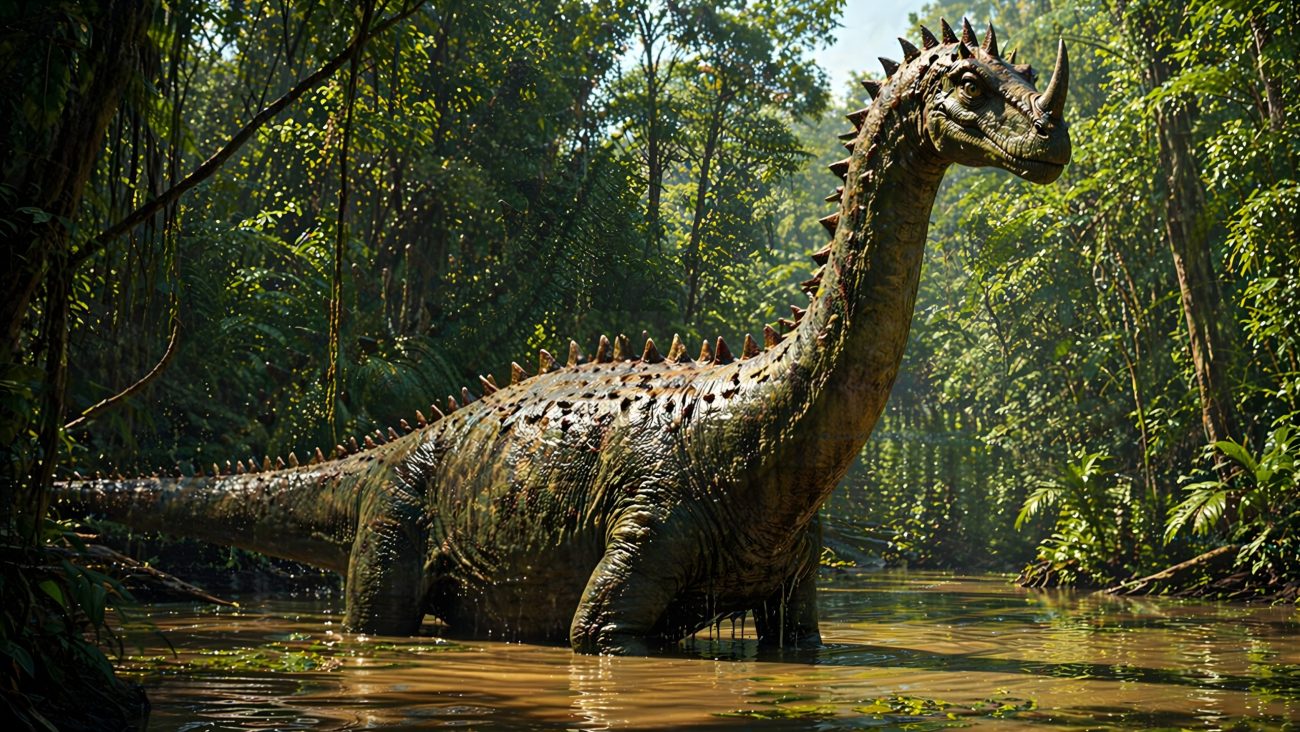
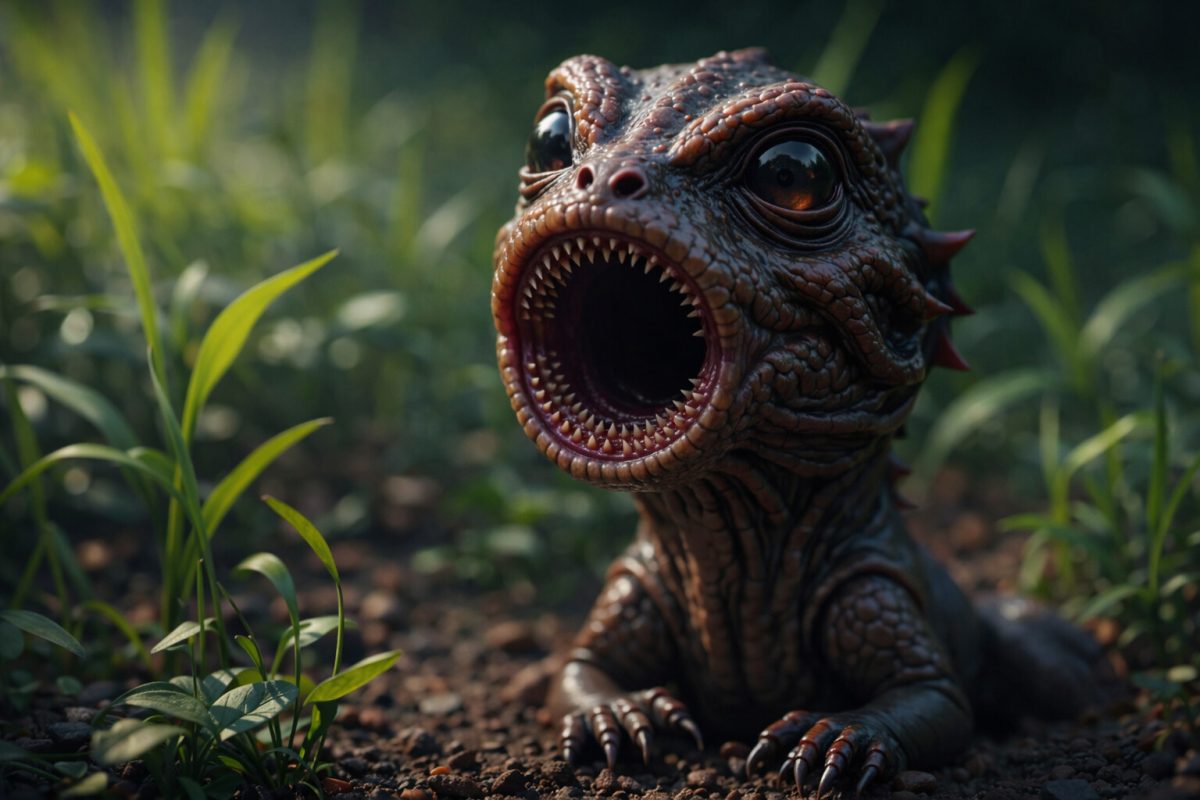
The creature is described as enormous, with a body comparable in size to an elephant or hippopotamus. Its form is unlike any ordinary animal: a heavy, muscular body, a long flexible neck, a small head often compared to that of a snake, and a long tail that moves through the water with great force. Its skin is smooth and dark, usually said to be reddish-brown or gray.

Mokele-Mbembe is not just large—it is territorial and feared.

It is said to guard certain stretches of river and will attack intruders, especially boats or canoes that pass too close. Those who encounter it risk being overturned into the water, where they may drown or disappear entirely. In many accounts, the creature destroys vessels without consuming the people, suggesting that its aggression is not driven by hunger but by dominance over its domain.

Unlike typical monsters, it is often described as herbivorous. It feeds on vegetation growing along riverbanks—particularly certain plants with large leaves or white blossoms. Despite this, it reacts violently to disturbance, making it one of the most feared beings of the waterways.

Mokele-Mbembe is said to live in deep, hidden places—caves carved into riverbanks or secluded bends in the water where the current slows. It moves between land and water, sometimes emerging during the day to feed, leaving behind paths where vegetation has been trampled or pushed aside.

Its presence is rarely seen directly. Instead, it is known through signs: massive disturbances in the water, sudden waves in otherwise still areas, broken plants along the shore, or the feeling that something enormous is moving just beneath the surface.

In some traditions, it is described almost like a guardian spirit of the river—an embodiment of its danger and power. It does not hunt humans for food, but it enforces boundaries. Those who respect the river may never encounter it. Those who intrude carelessly may not return.


Sources

Wikipedia contributors. (n.d.). Mokele-mbembe. In Wikipedia, from https://en.wikipedia.org/wiki/Mokele-mbembe


Crowned Lizards of the Windau Moor

Tradition / Region: Romanian Mythology
Alternate Names: The Windau Moor Lizards; The Crowned Lizard Prince
Category: Lizard


The Myth

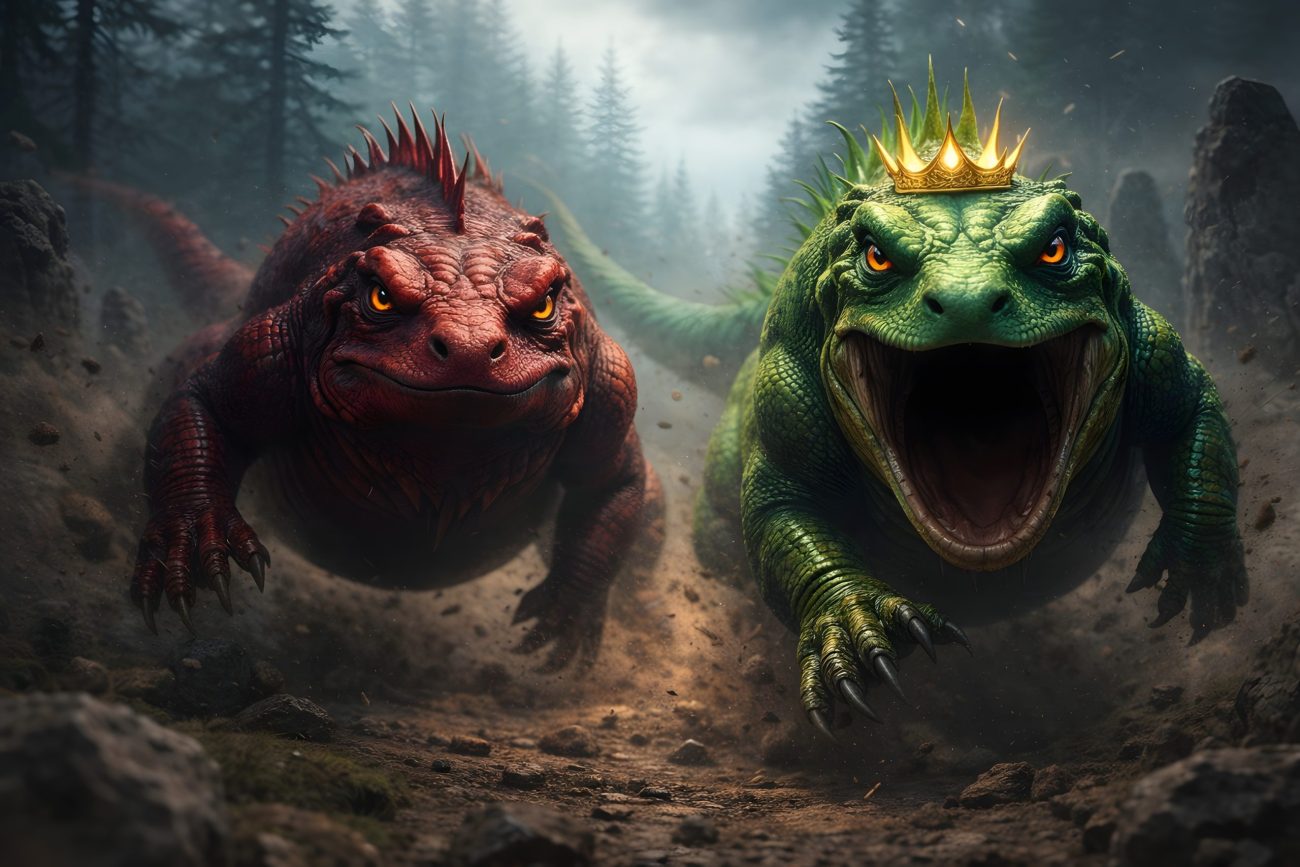
In the deepest and darkest part of the Windau Forest lies a lonely moor, ringed about with stones of strange and wondrous shapes. People say this desolate place is the domain of two gigantic lizards.

One of them wears a splendid crown that gleams with a radiant light. Whenever a human passes near the moor, the creatures crawl out from their hiding places and look upon the traveler with pleading eyes, as though begging for help.

But the sight of the monstrous beasts fills people with terror. Instead of pity, they seize stones and hurl them at the lizards. At once a dreadful punishment falls upon them — those who cast the stones are themselves turned into stone, adding to the strange ring that surrounds the moor.

For the crowned creature is said to be no ordinary beast but a prince, cursed long ago by his cruel father. With him were cursed his beautiful bride and his whole kingdom, bound to this lonely place in enchanted form.

Yet the tale also says that the curse is not eternal. One day a pure and strong-hearted maiden will come to the moor. She alone will understand the creatures’ pleading gaze, and through her courage and compassion the prince, his bride, and his lost realm will finally be redeemed.


Sources

sagen.at contributors. (n.d.). Das Windauer Moor. In sagen.at, from https://www.sagen.at/texte/sagen/rumaenien/siebenbuergen/windauermoor.html


Eterari

Tradition / Region: Papua New Guinea Mythology
Alternate Names:
Category: Lizard


The Myth

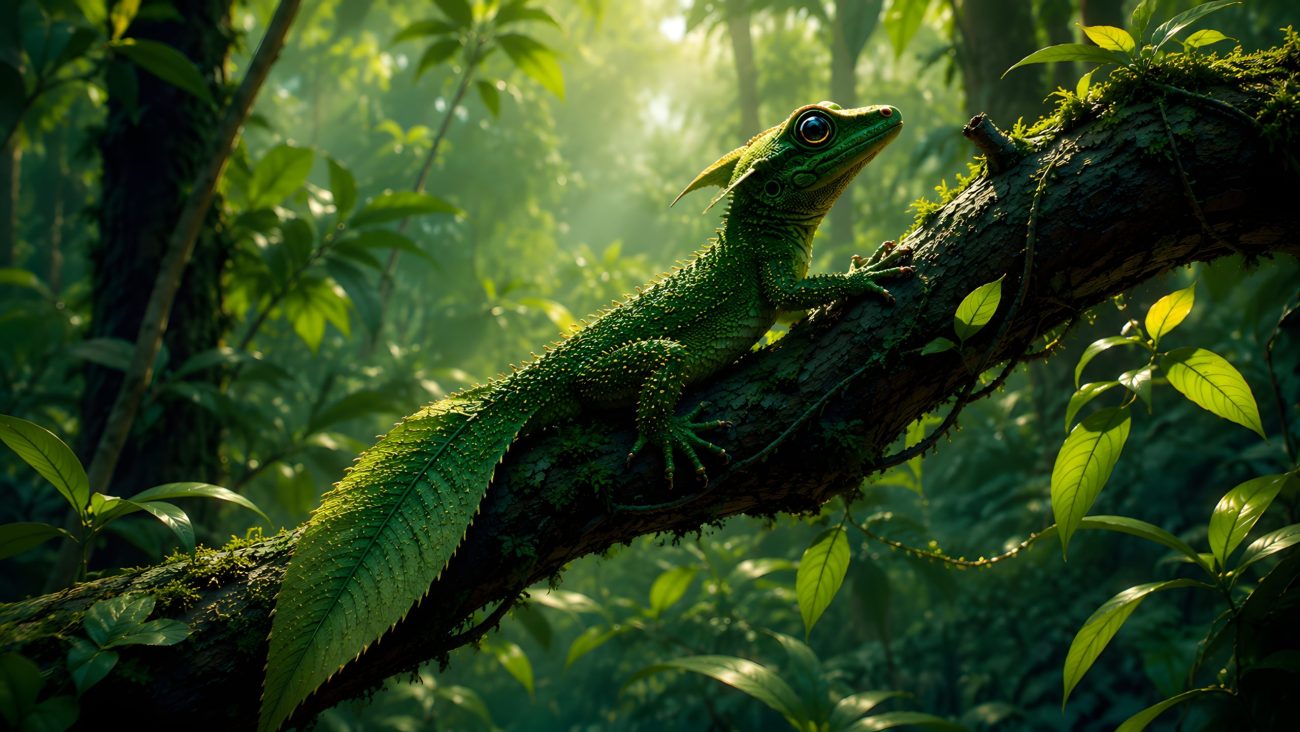
In Kiwai Papuan folklore, Eterari is a mythical being that appears in the form of a giant lizard. It is sometimes described as a speaking creature, capable of communicating with people.

According to Kiwai belief, eterari are not entirely distant from humans. They are said to interact with people on occasion, and in some areas these beings are regarded with special respect. Certain villages consider an eterari to be their patron, treating it as a protective or ancestral figure connected to the community.

Because of this role, the eterari functions both as a mythical creature and as a totemic being within Kiwai tradition.


Gallery


Sources

Bestiary.us contributors. (n.d.). Eterari. In Bestiary.us, from https://www.bestiary.us/eterari/


Interpretive Lenses

Religious Readings
  • Christian Ascetic Deep Dive
Philosophical Readings
  • Nietzschean Deep Dive
Psychological Readings
  • Jungian Deep Dive
Esoteric Deep Dive
  • Hermetic Deep Dive
Political / Social Readings
  • Marxist Deep Dive
Other
  • How to Invite The Eterari

Tube

Tradition / Region: Papua New Guinea Mythology
Alternate Names:
Category: Lizard, Shapeshifter, Snake


The Myth

At Haemuba lives a being named Tube, one of the etengena—spirits connected to the land and its fertility.

Tube is closely bound to a particular man of the Mawata people. To him, Tube appears in dreams, teaching the knowledge of garden medicines and the proper ways to use them. The man, in turn, shares this knowledge with others, spreading what Tube has revealed.

At times, Tube does not remain unseen. He may appear in the garden or the bush in the form of a snake or an iguana. Though his shape is that of an animal, the man recognizes him by signs made with the creature’s head, subtle movements that reveal its true identity.

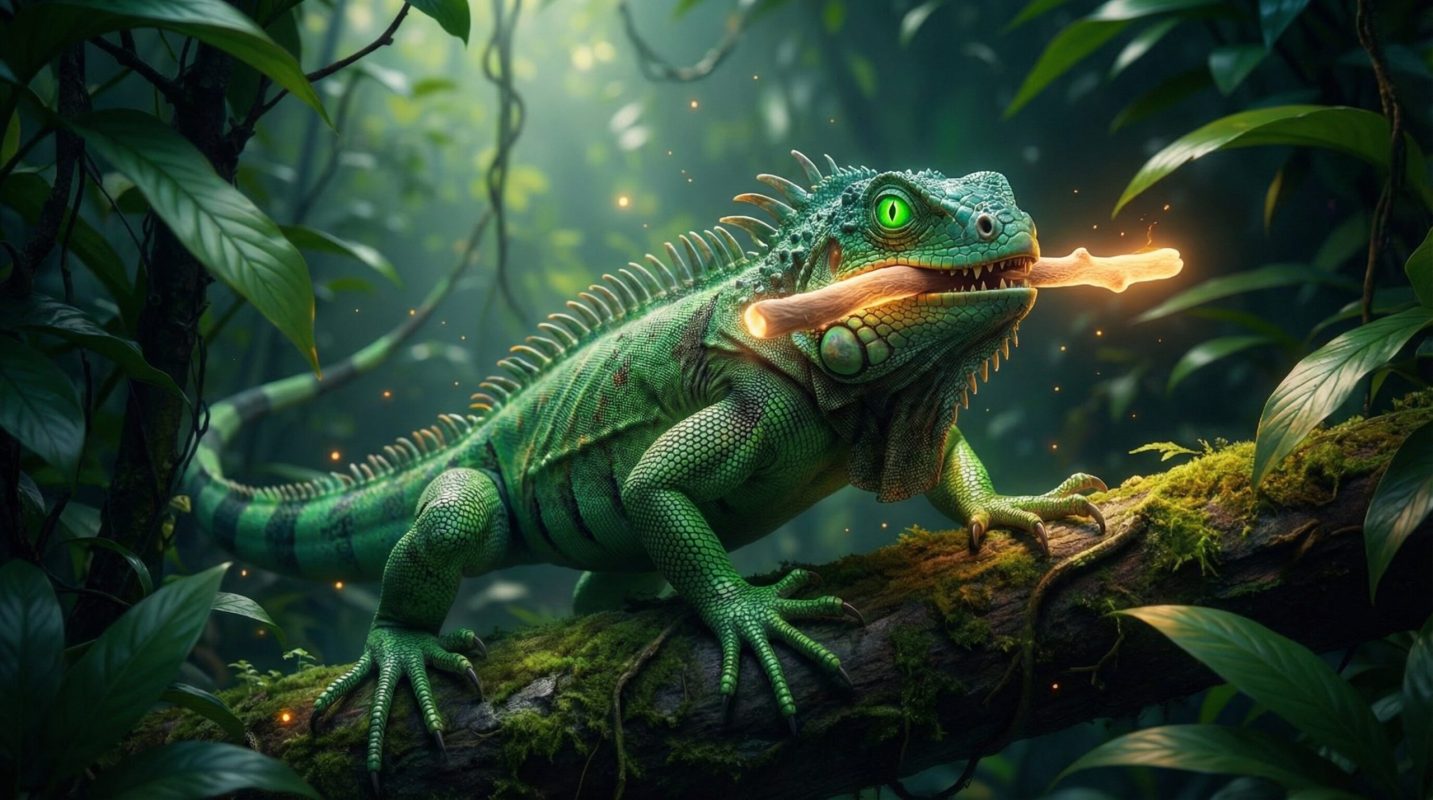
Once, the man encountered Tube in the bush in the form of an iguana. The animal held a small branch in its mouth—a branch that was itself a medicine. The man gently patted the creature on the head, and by this act received the medicine from Tube.

The bond between them is sealed through sharing. When the first taro is pulled from the ground, it is divided between the man and Tube, acknowledging the spirit’s role in the growth of the garden and honoring the partnership between human and land-being.

Thus Tube remains a quiet teacher and guardian of cultivated ground, passing knowledge through dreams, signs, and shared harvest, and ensuring that the wisdom of the land continues among the people.


Gallery


Sources

Landtman, G. (1970). The Kiwai Papuans of British New Guinea: A nature-born instance of Rousseau’s ideal community.


Interpretive Lenses

Religious Readings
  • Christian Ascetic Deep Dive
Philosophical Readings
  • Nietzschean Deep Dive
Psychological Readings
  • Jungian Deep Dive
Esoteric Deep Dive
  • Hermetic Deep Dive
Political / Social Readings
  • Marxist Deep Dive
Other
  • How to Invite The Tube

Alp-Luachra

Tradition / Region: Irish Mythology
Alternate Names:
Category: Lizard, Newt


The Myth

The Alp-Luachra is a dark fairy said to dwell throughout Ireland, feared for its quiet and dreadful way of feeding upon humans. Small and newt-like in form, it resembles a smooth, slippery creature of the grass and water, yet it is far from harmless. It waits for the careless sleeper who lies upon the earth beneath the open sky.

When a person sleeps outdoors with mouth unguarded, the Alp-Luachra slips silently inside. It passes down the throat and settles in the stomach, unseen and unfelt. There it does not eat flesh, but lives upon the essence of food itself, draining the strength and nourishment meant for the host. As time passes, the creature grows and multiplies within the body, while the victim feels constant hunger no matter how much is eaten.

Because of the fairy’s enchantment, the afflicted person does not know the true cause of their suffering. Months or even years may pass as the body weakens and wastes away. If nothing is done, the victim eventually dies of starvation, though food was always close at hand.

Those who know the old ways say the Alp-Luachra can be driven out by cunning rather than force. Strong-smelling or savory foods tempt it toward the mouth, while heavily salted meat brings unbearable thirst. When the victim lies near running water and opens their mouth, the creatures crawl out one by one, seeking the stream. Sometimes many emerge, and at last a larger one, said to be their mother.

Once expelled, the Alp-Luachra loses its power over the host. It is said that the creature itself still holds strange virtue, and that licking it can cure burns. But none who have suffered its presence ever forget the lesson it brings.

Thus the Alp-Luachra remains a warning in Irish lore: that unseen dangers dwell close to the body, that hunger may come from within, and that the earth itself is not always a safe bed for the unwary.


Sources

A Book of Creatures contributors. (2015). Alp-luachra. In ABookOfCreatures.com, from https://abookofcreatures.com/2015/03/17/alp-luachra/