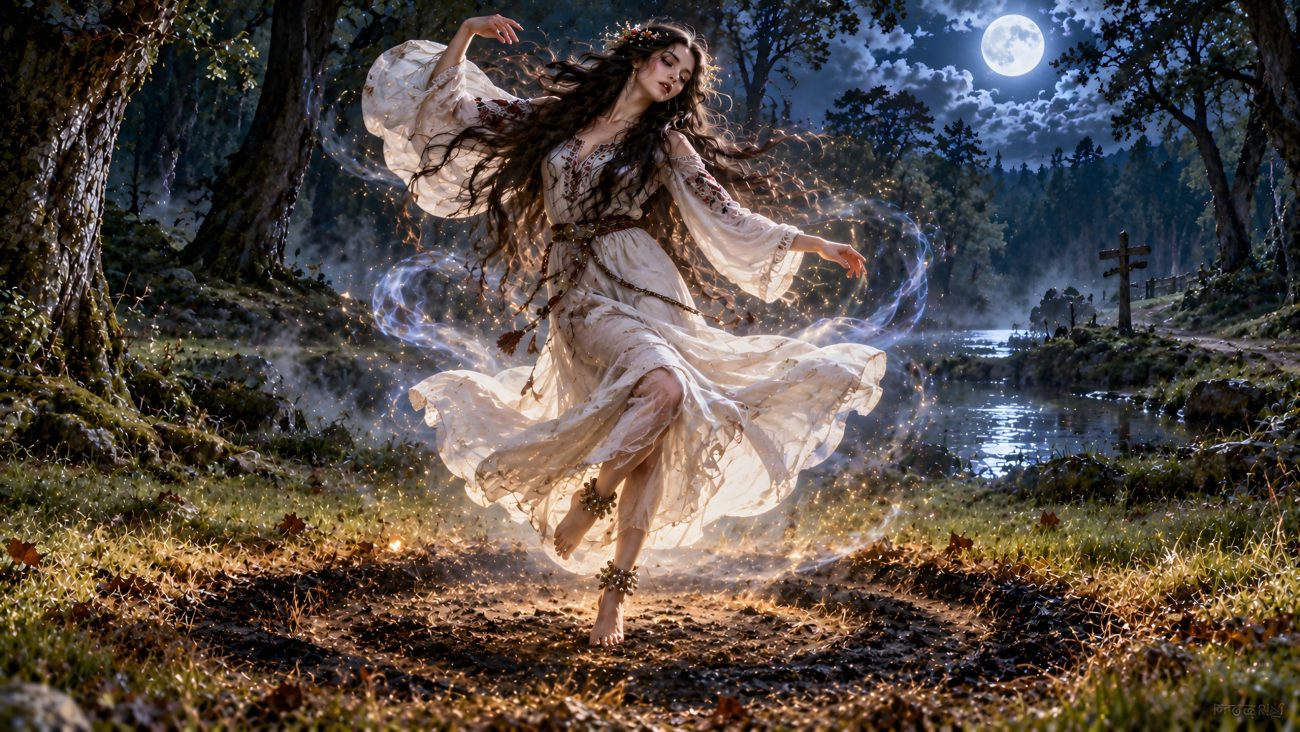
Pasărea Măiastră

Tradition / Region: Romanian Mythology
Alternative names: Andilandi (in some tales)
Category: Bird


The Myth

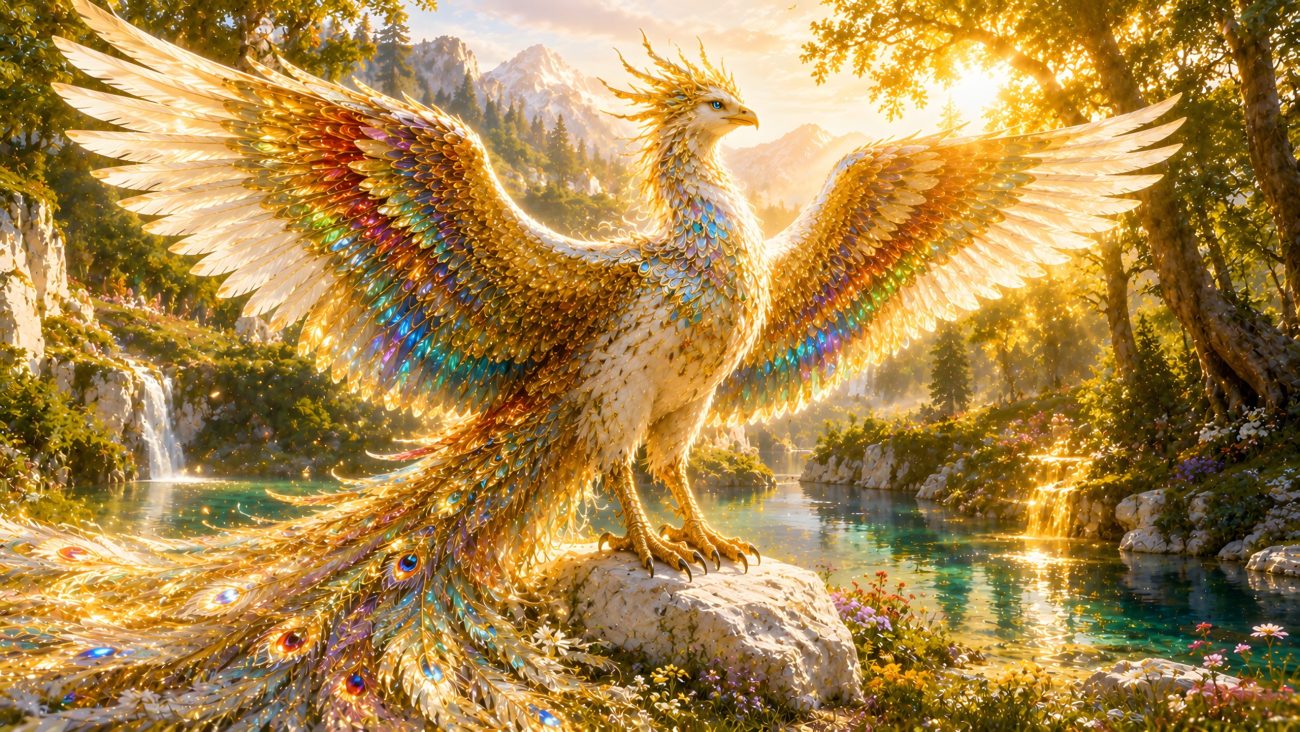
The Pasărea Măiastră is the Queen of Birds in Romanian mythology, a radiant supernatural being who dwells in the Otherworld. She is renowned for her incomparable beauty, dazzling light, and magnificent multicolored plumage. As the messenger of the fairies, she possesses immense magical power and reveals herself only to the most fortunate of mortals.

The bird’s enchanting song is said to be heard only in solitude, and anyone privileged enough to listen to it is restored to youth. As a magical guardian and bringer of justice, the Pasărea Măiastră rarely leaves her hidden home, appearing only when her powers are needed or when fate calls her into the world of humans.

In some Romanian folktales, the Pasărea Măiastră is known as Andilandi, the cursed daughter of an emperor who was transformed into a marvelous bird. Despite her enchantment, she retains her royal nature and extraordinary powers, remaining one of the greatest and most wondrous birds of Romanian legend.


Sources

Contribuitorii Wikipedia. (n.d.). Pasărea măiastră. În Wikipedia. Retrieved June 29, 2026, from https://ro.wikipedia.org/wiki/Pas%C4%83rea_m%C4%83iastr%C4%83


Calul Năzdrăvan

Tradition / Region: Romanian Mythology
Alternative names:
Category: Horse


The Myth

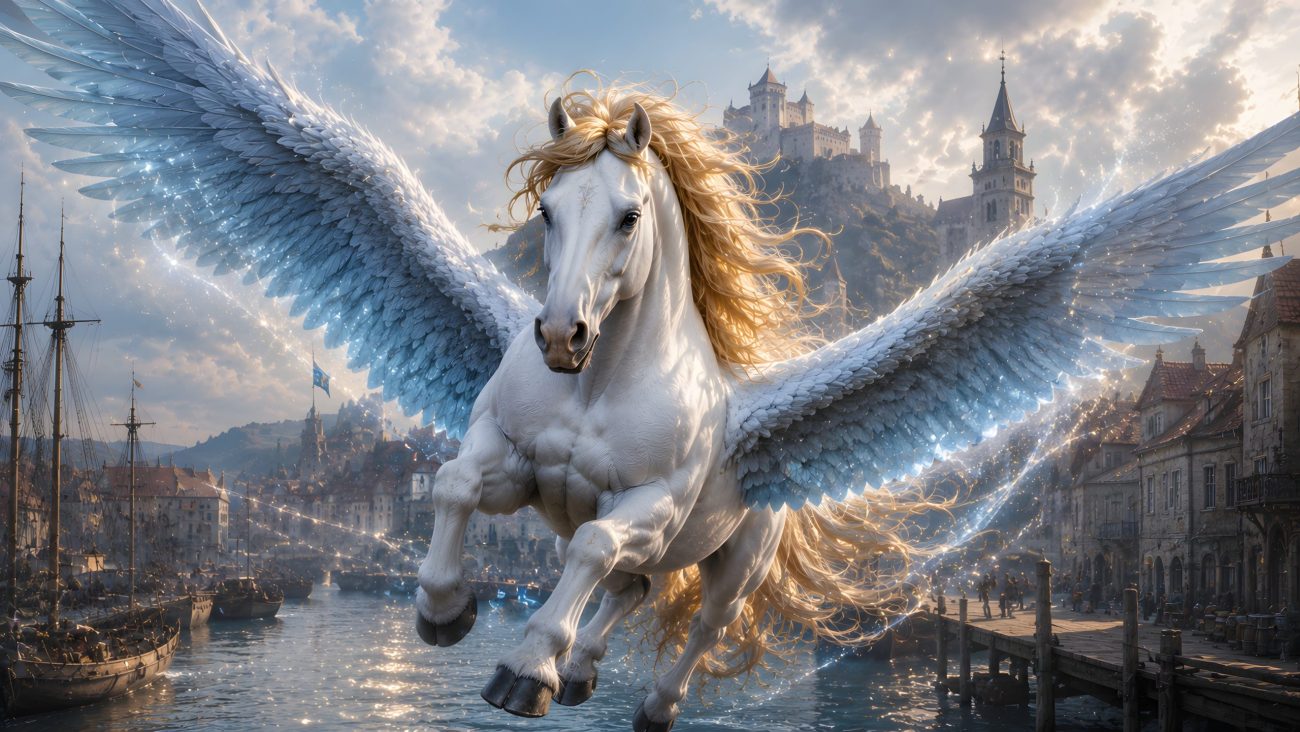
The Calul Năzdrăvan is a magical horse that appears throughout Romanian fairy tales. It serves both as a flying steed and as the wise adviser of the hero, guiding its rider through dangerous quests with intelligence and supernatural abilities.

When first encountered, the horse usually appears to be an old, weak, and worthless nag. Its true nature is only revealed after it is fed burning embers, which restore its hidden strength. Even then, the horse first tests its renewed power before taking flight.

The Calul Năzdrăvan possesses both magical wisdom and extraordinary abilities. It often carries enchanted objects hidden within its ears, such as a brush that becomes an impenetrable forest when thrown behind it, or a whetstone or ring that transforms into an impassable mountain or wall to block pursuing enemies.

Throughout the hero’s adventures, the horse performs many of the most difficult tasks. It provides advice, solves problems, and accomplishes feats beyond human ability. It can heat or cool an emperor’s bath with its breath, travel swiftly across the earth, fly through the air, and even pass between different realms. During battles against creatures such as dragons, Scorpia, and Ghionoaia, it maneuvers with great speed, placing its rider in the best position to defeat the enemy.

Some tales describe the magical horse eventually growing old after long service. Before it can no longer continue the journey, it advises its master to ride its younger brother instead, assuring the hero that the new horse will provide the same faithful guidance and supernatural assistance.

More than a simple mount, the Calul Năzdrăvan is the hero’s most trusted companion, combining unmatched speed, magical power, and wisdom throughout the quest.


Sources

Wikipedia contributors. (n.d.). Calul năzdrăvan. In Wikipedia, enciclopedia liberă. Retrieved June 29, 2026, from https://ro.wikipedia.org/wiki/Calul_n%C4%83zdr%C4%83van


Pricolici

Tradition / Region: Romanian Mythology
Alternate Names:
Category: Wolf, Vampire


The Myth

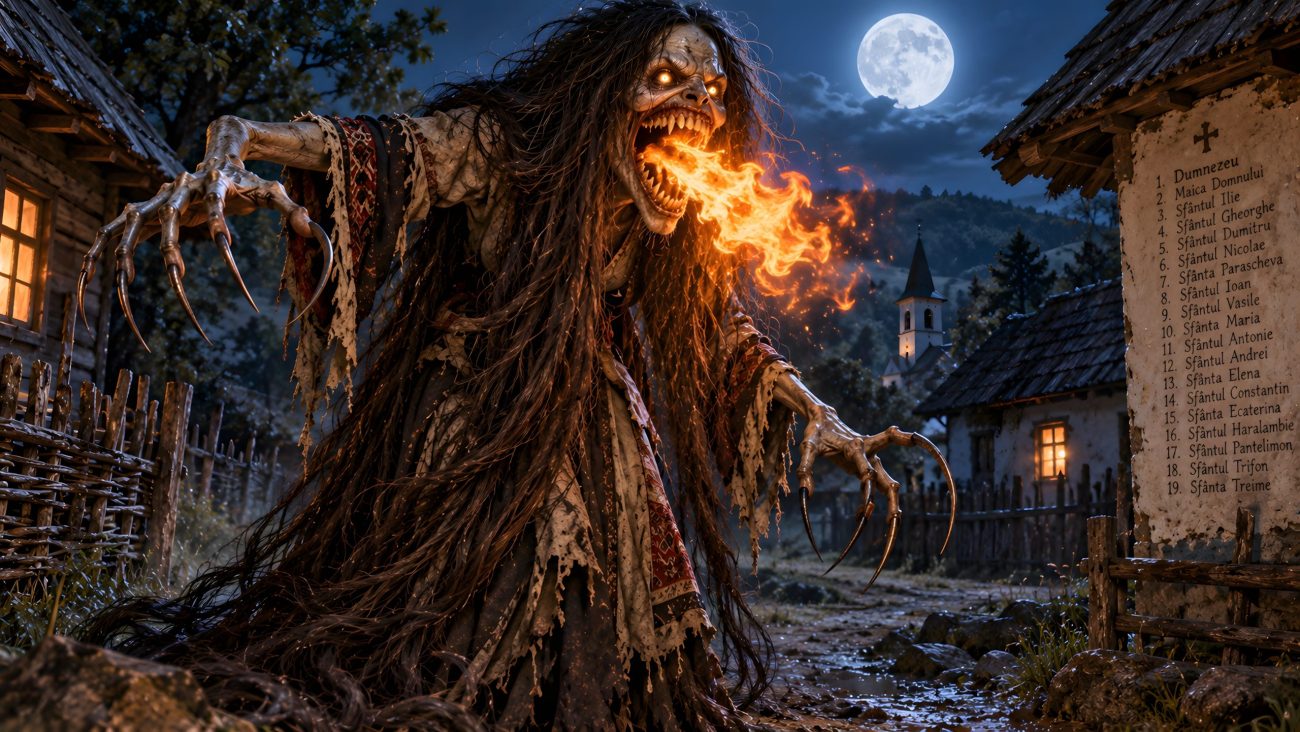
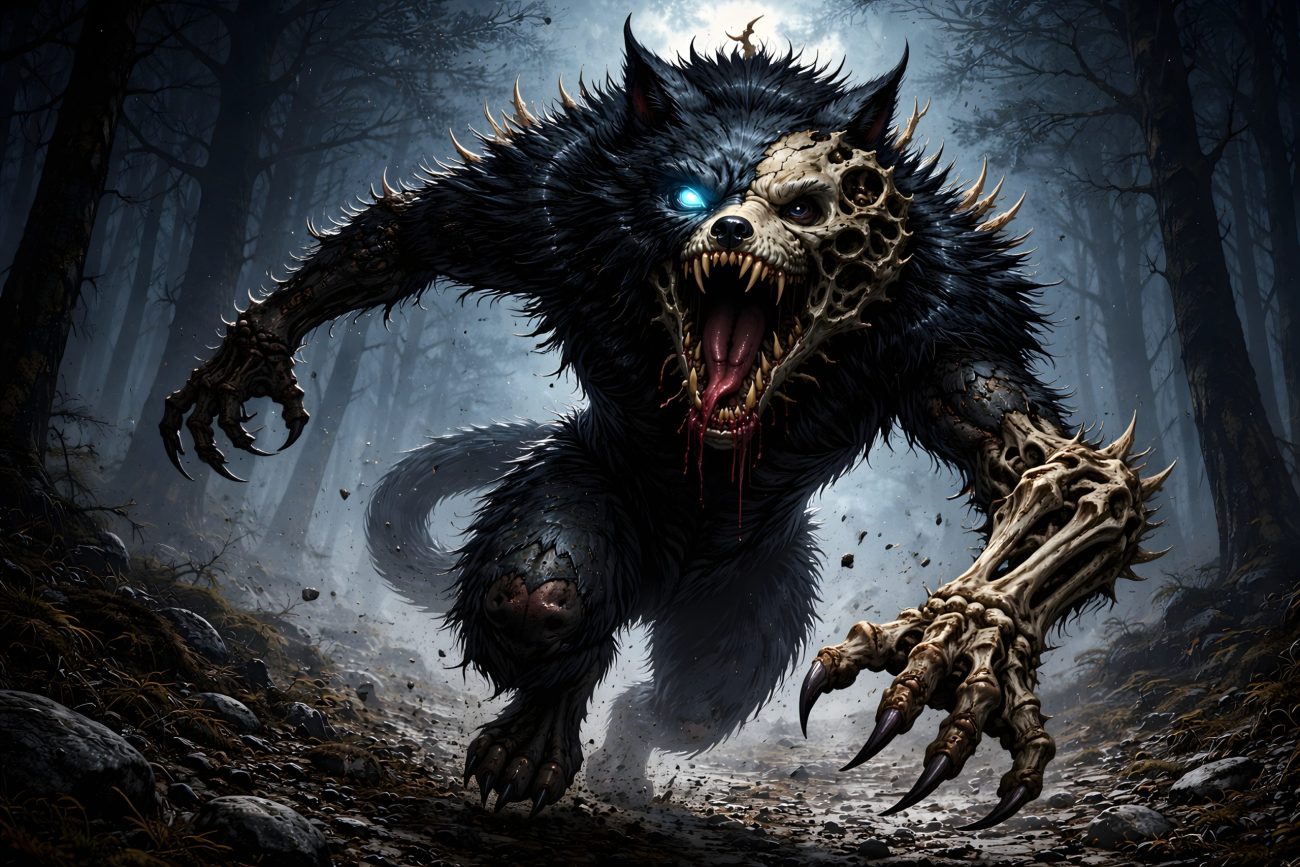
The Pricolici is a terrifying undead creature in Romanian folklore — a being that combines traits of werewolf, vampire, and restless spirit.

It is often said to arise from a malicious or violent person after death, returning to the world in the form of a wolf-like monster in order to continue harming the living. In some traditions, a child improperly weaned or breastfed too long could also be fated to become a pricolici later in life.

Unlike the strigoi, which keeps a human-like form, the pricolici almost always appears as a wolf, dog, or wolf-human hybrid. It may also take human form or disguise itself as other animals. In some stories it walks upright on two legs, making it more uncanny than an ordinary wolf.

Many folktales treat the pricolici as the final stage of a werewolf: a person cursed in life becomes a werewolf, and after death returns as a vampire-like wolf spirit. Because of this, the creature helped shape Romanian beliefs about vampires transforming into nocturnal animals such as wolves, dogs, bats, or owls.

Even into modern times, some rural communities explained mysterious wolf attacks as the work of pricolici — not natural predators, but revenants returning from the grave to hunt humans.

The pricolici therefore stands as one of the most unsettling figures of Romanian folklore: not merely a monster, but a dead soul that refuses to stop preying on the living.


Sources

Wikipedia contributors. (n.d.). Pricolici. In Wikipedia, from https://en.wikipedia.org/wiki/Pricolici


Heavy Wagon of Malmkrog

Tradition / Region: Romanian Mythology
Alternate Names: The Heavy Wagon; The Mountain Car; The Vespers Wagon
Category: Object, Wagon


The Myth

About thirty years before the tale was told, a farmer’s wife from Malmkrog was harvesting grain on a field high up the mountainside. Her small son, no more than four or five years old, sat in the shade of a few sheaves, restless and bored while she worked.

Below the field the slope dropped steeply into an old, half-cleared forest. It was late afternoon, and the village bells began to ring for vespers. According to custom and belief, people were meant to stop their labor and return home at that hour, but the woman remained in the field.

Then from the nearby woods came a sudden uproar.

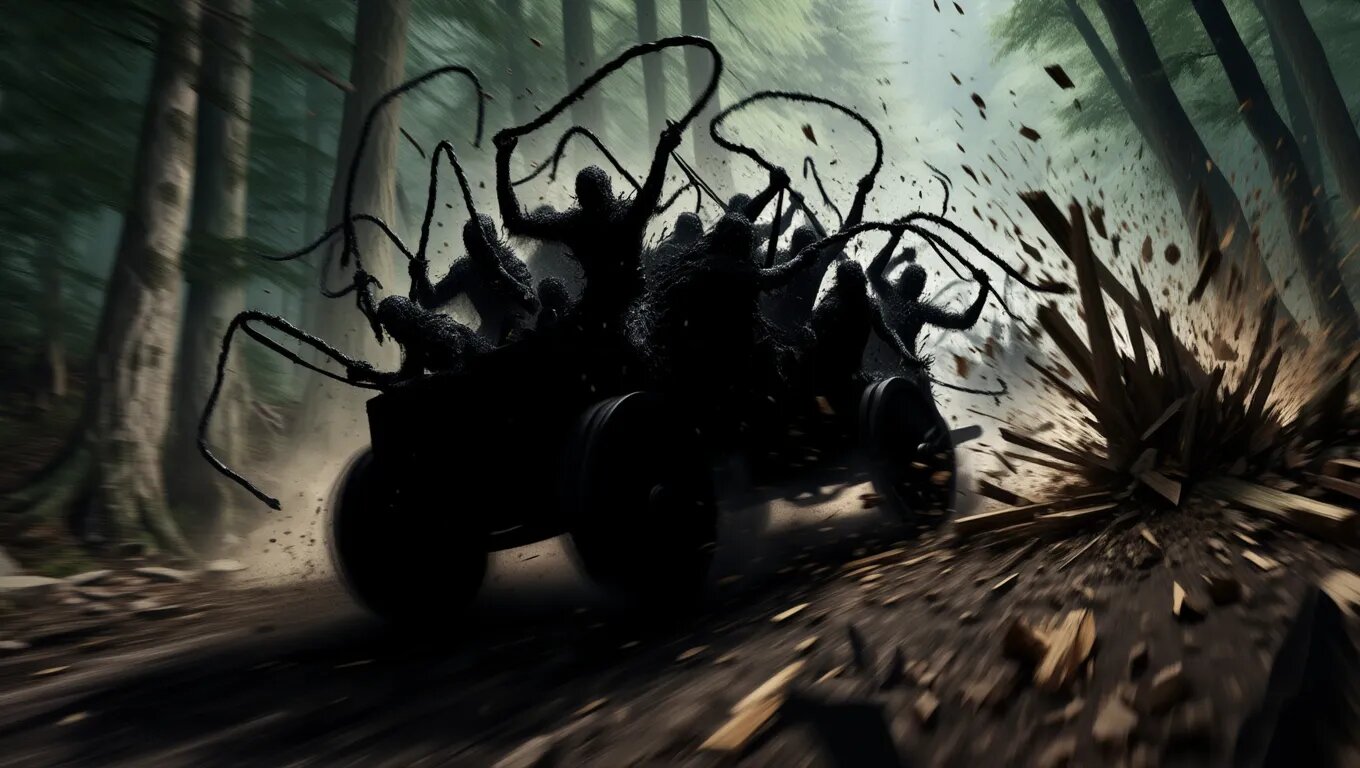
The boy later said he heard the crack of whips echoing through the trees, along with loud shouting and calls of “Hi!” and “Ho!” It sounded as if many unseen men were straining to haul a heavily laden cart up the steep, trackless mountainside. The noise of wheels, crashing wood, and clattering harness rang through the forest, though no one could be seen.

Panic seized the woman. She ran to her child, snatched up what she had brought from home, and took his hand. Behind them the din grew louder — the shouts, the cracking whips, the grinding of the burdened wagon — as if the unseen drivers were drawing ever nearer.

Without looking back, she fled with the boy down the mountain toward the village.

That evening she told the men who had already returned from their work:

“When the bell rang for vespers, they came with the Heavy Wagon. Never again will I stay on the Hattert once the church bell rings.”

And from that time on, people remembered the tale and kept to the old custom, leaving the mountain fields when the bells began to sound.


Sources

sagen.at contributors. (n.d.). Der schwere Wagen. In sagen.at, from https://www.sagen.at/texte/sagen/rumaenien/siebenbuergen/derschwerewagen.html


Smo of Minarken

Tradition / Region: Romanian Mythology
Alternate Names:
Category: Dragon


The Myth

A shepherd from Minarken once told how his companion Simon proved himself against the dreaded Smo.

In those days, the young men of the village often kept watch over their masters’ flocks at night. They would gather around their fire in the hills, laughing, boasting, and telling stories to pass the long hours.

One night Simon suddenly said, half in jest, “Do you think I could summon the Smo if I saw him flying past?”

The others laughed, but wagers were quickly made. Bottles of brandy were promised if he could do it, and Simon agreed.

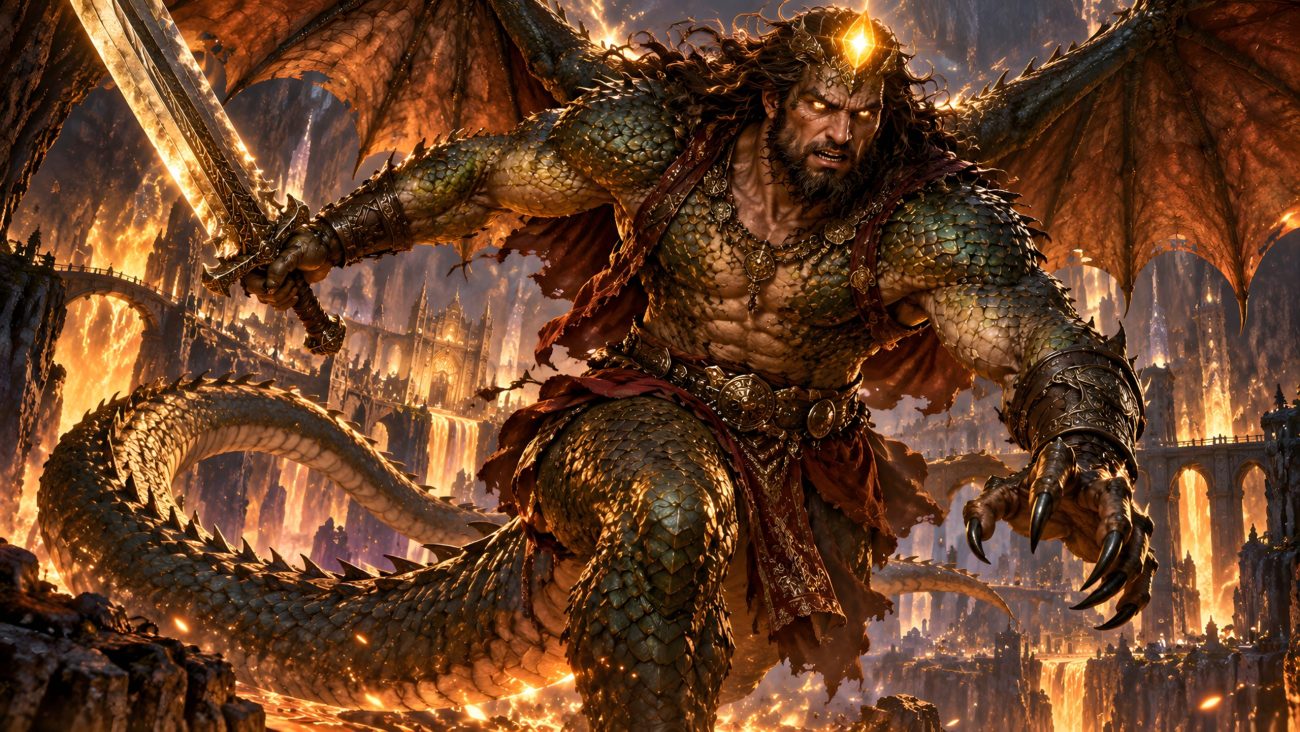
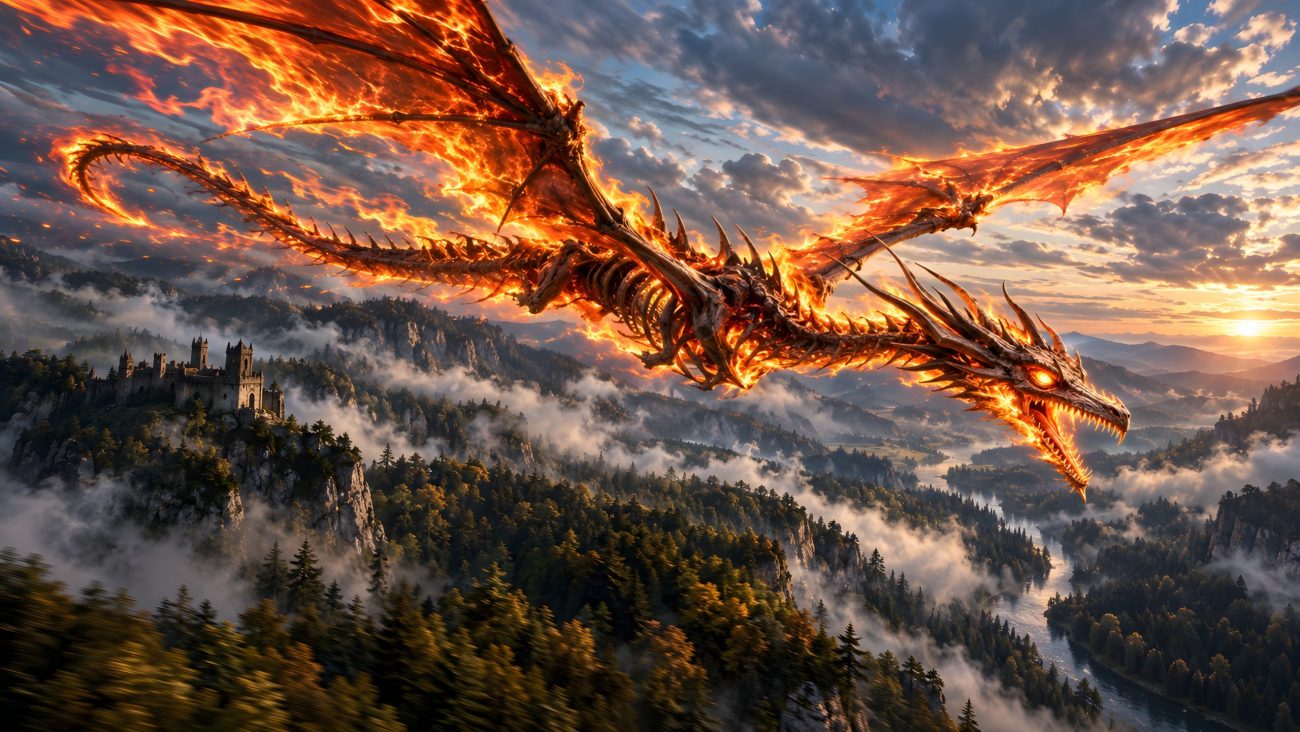
Not long afterward, a flash of lightning appeared in the western sky. Soon the men saw what they feared most — the fiery Smo drawing nearer. Sparks streamed from it as it flew high through the darkness.

Simon sprang up. From his belt he drew the small iron fork he carried beside his knife. He swung it three times above his head and hurled it into the ground before him. Then he shouted across the mountains:

“When I call you, you must follow me and come to this place!”

Far away, the blazing dragon suddenly turned and came snarling toward them. At Simon’s command it halted before him.

“Where are you going?” Simon demanded.

With a dull voice and fire pouring from its mouth and eyes, the Smo answered, “I go to my sweetheart in the village below.”

“She is mine, not yours,” Simon declared. “You will stay here as long as I wish.”

And the spirit obeyed him.

For a long time Simon held the fiery dragon there beside the fire while the others watched in fear and amazement. Only toward morning did he lift the fork again, cast it once more into the ground, and command:

“Go back where you came from — but you shall not go to my village.”

At once the Smo rose into the air and drifted westward, slowly vanishing toward the dark horizon. By then the roosters were already crowing and the sky over the mountains was turning pale.

For when dawn comes, the spirits of the night must withdraw, and the world belongs again to humankind.


Sources

sagen.at contributors. (n.d.). Stephan und der Drachen. In sagen.at, from https://www.sagen.at/texte/sagen/rumaenien/siebenbuergen/stephan.html

sagen.at contributors. (n.d.). Berufung des Smo. In sagen.at, from https://www.sagen.at/texte/sagen/rumaenien/siebenbuergen/berufungdessmo.html


Crowned Lizards of the Windau Moor

Tradition / Region: Romanian Mythology
Alternate Names: The Windau Moor Lizards; The Crowned Lizard Prince
Category: Lizard


The Myth

In the deepest and darkest part of the Windau Forest lies a lonely moor, ringed about with stones of strange and wondrous shapes. People say this desolate place is the domain of two gigantic lizards.

One of them wears a splendid crown that gleams with a radiant light. Whenever a human passes near the moor, the creatures crawl out from their hiding places and look upon the traveler with pleading eyes, as though begging for help.

But the sight of the monstrous beasts fills people with terror. Instead of pity, they seize stones and hurl them at the lizards. At once a dreadful punishment falls upon them — those who cast the stones are themselves turned into stone, adding to the strange ring that surrounds the moor.

For the crowned creature is said to be no ordinary beast but a prince, cursed long ago by his cruel father. With him were cursed his beautiful bride and his whole kingdom, bound to this lonely place in enchanted form.

Yet the tale also says that the curse is not eternal. One day a pure and strong-hearted maiden will come to the moor. She alone will understand the creatures’ pleading gaze, and through her courage and compassion the prince, his bride, and his lost realm will finally be redeemed.


Sources

sagen.at contributors. (n.d.). Das Windauer Moor. In sagen.at, from https://www.sagen.at/texte/sagen/rumaenien/siebenbuergen/windauermoor.html


Linddur of the Peak

Tradition / Region: Romanian Mythology
Alternate Names: The Kronstadt Lindworm; Peak Dragon; The Mountain Linddur
Category: Dragon


The Myth

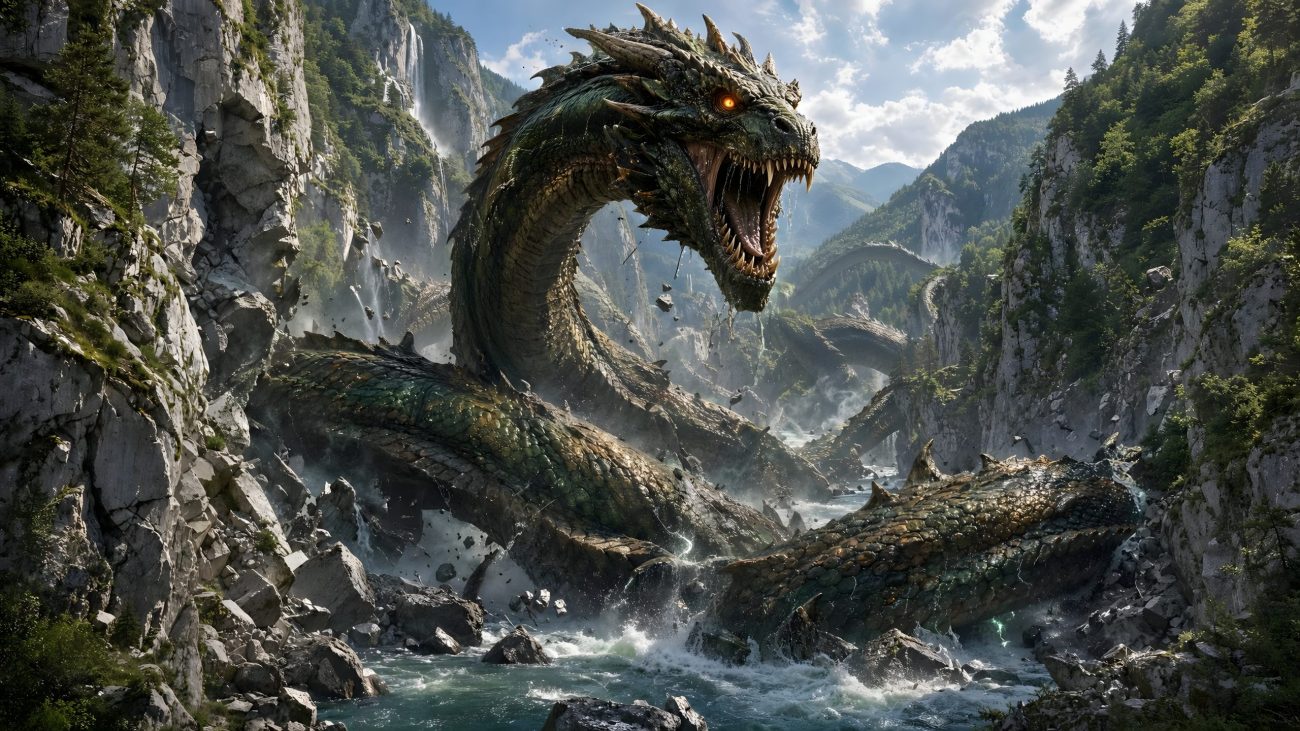
Not long after the town of Kronstadt was founded among the mountains, people said a dreadful dragon lived in a small cave high on a peak above the settlement. The creature, called the Linddur, would fly down into the valley whenever hunger drove it, devouring both people and animals and filling the region with fear.

One day the son of the town judge, a student preparing to preach, went outside the walls to memorize his sermon. Near the city wall he found a quiet place and began to recite his words aloud. He spoke so loudly and earnestly that the Linddur heard him from its mountain cave.

The dragon swooped down before the youth could escape and swallowed him whole.

Grief spread through the town, for the young man was well loved, and his parents were overcome with sorrow. While they mourned, a stranger came before the judge and said, “Strength cannot defeat such a beast, but cunning may. If we act quickly, your son may yet be saved.”

The judge promised him a rich reward. The stranger took a calfskin and filled it with quicklime. He laid it out in an open patch of grass near the castle and hid nearby, bleating like a calf.

Hearing the sound, the Linddur descended at once. It saw what it thought was prey and devoured the calfskin greedily. Soon afterward it was seized by a terrible thirst and flew to the nearest water to drink deeply.

But the quicklime within it drank the water faster still and burned with such heat that the dragon’s body swelled and burst apart. When the beast split open, the student was found still alive inside and was rescued.

In gratitude, the judge rewarded the clever stranger with many gifts. And to remember the deliverance, the image of the Lindworm was set upon the wall that leads from the eastern corner of the city up toward the archer’s battlement, so that all would recall the dragon that once haunted the peak above Kronstadt.


Sources

sagen.at contributors. (n.d.). Der Lindwurm auf der Zinne. In sagen.at, from https://www.sagen.at/texte/sagen/rumaenien/siebenbuergen/lindwurm.html


Zwergel

Tradition / Region: Romanian Mythology
Alternate Names: The Dragon of Wendchenberg; The Rock Dragon; Fire Dragon of Klein-Logdes
Category: Dragon


The Myth

In the hills near Kreisch, high on the Wendchenberg, there lies a rocky cleft known as the Zwergelloch. Long ago, people said a terrible creature lived there, called the Zwergel.

The villagers feared it greatly. To keep the monster from descending upon them, they were forced to offer it a human sacrifice every week. Only by feeding it could they keep it in its rocky lair and spare the village from destruction.

The same creature was also seen in other places. Once, it flew over Klein-Logdes, breathing fire as it crossed the sky. Yet whenever the flames touched the earth, they died at once, as if the ground itself would not burn.

The Zwergel was not only a devourer but also a spirit that could seize human bodies. It once possessed a Wallachian maid, who wasted away under its power. Her mother, in desperation, laid her out on a bier as if she were already dead and called neighbors and relatives to mourn her. Through this false funeral, the creature was driven out, and the girl was freed.

But in the mountains, people still spoke of the cleft in the rock and of the being that once lived there — the Zwergel, the dragon that demanded flesh and could enter the living as easily as it flew through the sky.


Sources

sagen.at contributors. (n.d.). Drachen. In sagen.at, from https://www.sagen.at/texte/sagen/rumaenien/siebenbuergen/drachen.html


Black Chicken of Pretai

Tradition / Region: Romanian Mythology
Alternate Names: The Money Chicken; The Hearth Chicken; Black Familiar Chicken
Category: Chicken


The Myth

A man from Pretai was once returning home from the mill when he noticed something small and black lying by the roadside. When he bent down to look, he saw it was a chicken, entirely black. He picked it up and carried it home, placing it beneath the hearth and feeding it.

After some time, one night he heard a voice coming from the hearth. It was the chicken speaking.

“What should I bring you?” it asked.

Startled, the man muttered, “Be quiet! What could you possibly bring me?”

The following night, the chicken spoke again.
“What should I bring you?”

This time the man answered, “If you truly want to bring me something, then bring me plenty of money.”

From that night on, the chicken did exactly that, and the man soon became rich.


Sources

sagen.at contributors. (n.d.). Das schwarze Huhn. In sagen.at, from https://www.sagen.at/texte/sagen/rumaenien/siebenbuergen/dasschwarzehuhn.html


Little One of Reussen

Tradition / Region: Romanian Mythology
Alternate Names: The Little One; The Bought Little One; The Farmer’s Familiar
Category: House dweller, Gnome


The Myth

In the village of Reussen there once lived a farmer who had acquired a being known as the Little One. He had obtained it for money, and from that time onward wealth flowed to him in such abundance that he scarcely knew what to do with it.

Every year he built new stables, barns, and sheds, only to tear them down again and rebuild them, simply to spend the money that continued to pour in.

Yet despite his riches, he found no peace. At last, wishing to be rid of the being, he bored a hole into a heavy floor beam with a large drill. Into this hole he forced the Little One and sealed it tightly, hoping to imprison it there forever.

But the Little One would not be confined. It burst the prison apart and destroyed everything the farmer possessed. His buildings were ruined, his property laid waste, and all his wealth vanished.

In the end, when the farmer went into the forest and leaned his rifle against a ladder, the Little One seized the weapon. It fired the gun and shot the man who had tried to betray it.

Thus the farmer lost both his fortune and his life to the very being that had once made him rich.


Sources

sagen.at contributors. (n.d.). Der „Kleine“ in Reußen. In sagen.at, from https://www.sagen.at/texte/sagen/rumaenien/siebenbuergen/reussen.html