Crowned Lizards of the Windau Moor

Tradition / Region: Romanian Mythology
Alternate Names: The Windau Moor Lizards; The Crowned Lizard Prince
Category: Lizard


The Myth

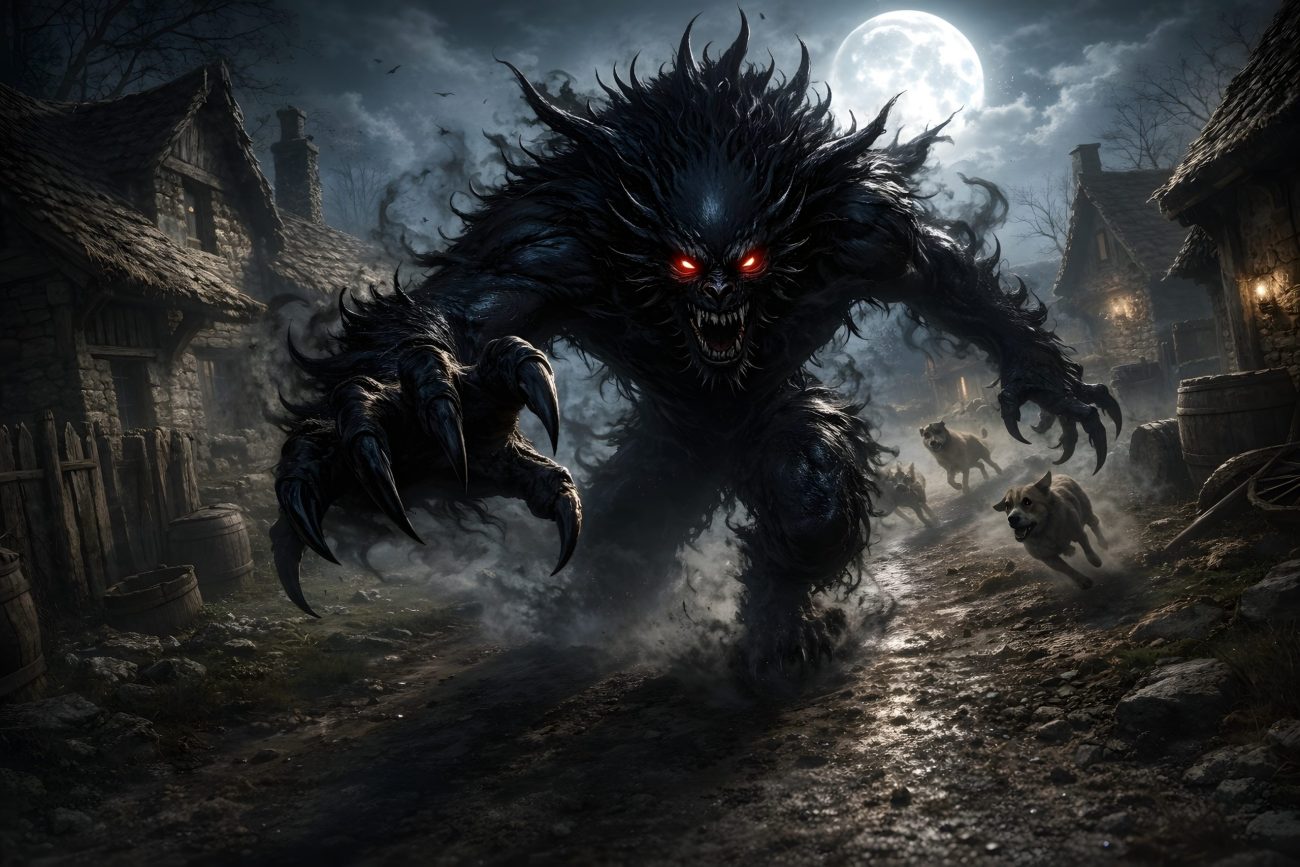
In the deepest and darkest part of the Windau Forest lies a lonely moor, ringed about with stones of strange and wondrous shapes. People say this desolate place is the domain of two gigantic lizards.

One of them wears a splendid crown that gleams with a radiant light. Whenever a human passes near the moor, the creatures crawl out from their hiding places and look upon the traveler with pleading eyes, as though begging for help.

But the sight of the monstrous beasts fills people with terror. Instead of pity, they seize stones and hurl them at the lizards. At once a dreadful punishment falls upon them — those who cast the stones are themselves turned into stone, adding to the strange ring that surrounds the moor.

For the crowned creature is said to be no ordinary beast but a prince, cursed long ago by his cruel father. With him were cursed his beautiful bride and his whole kingdom, bound to this lonely place in enchanted form.

Yet the tale also says that the curse is not eternal. One day a pure and strong-hearted maiden will come to the moor. She alone will understand the creatures’ pleading gaze, and through her courage and compassion the prince, his bride, and his lost realm will finally be redeemed.


Sources

sagen.at contributors. (n.d.). Das Windauer Moor. In sagen.at, from https://www.sagen.at/texte/sagen/rumaenien/siebenbuergen/windauermoor.html

Linddur of the Peak

Tradition / Region: Romanian Mythology
Alternate Names: The Kronstadt Lindworm; Peak Dragon; The Mountain Linddur
Category: Dragon


The Myth

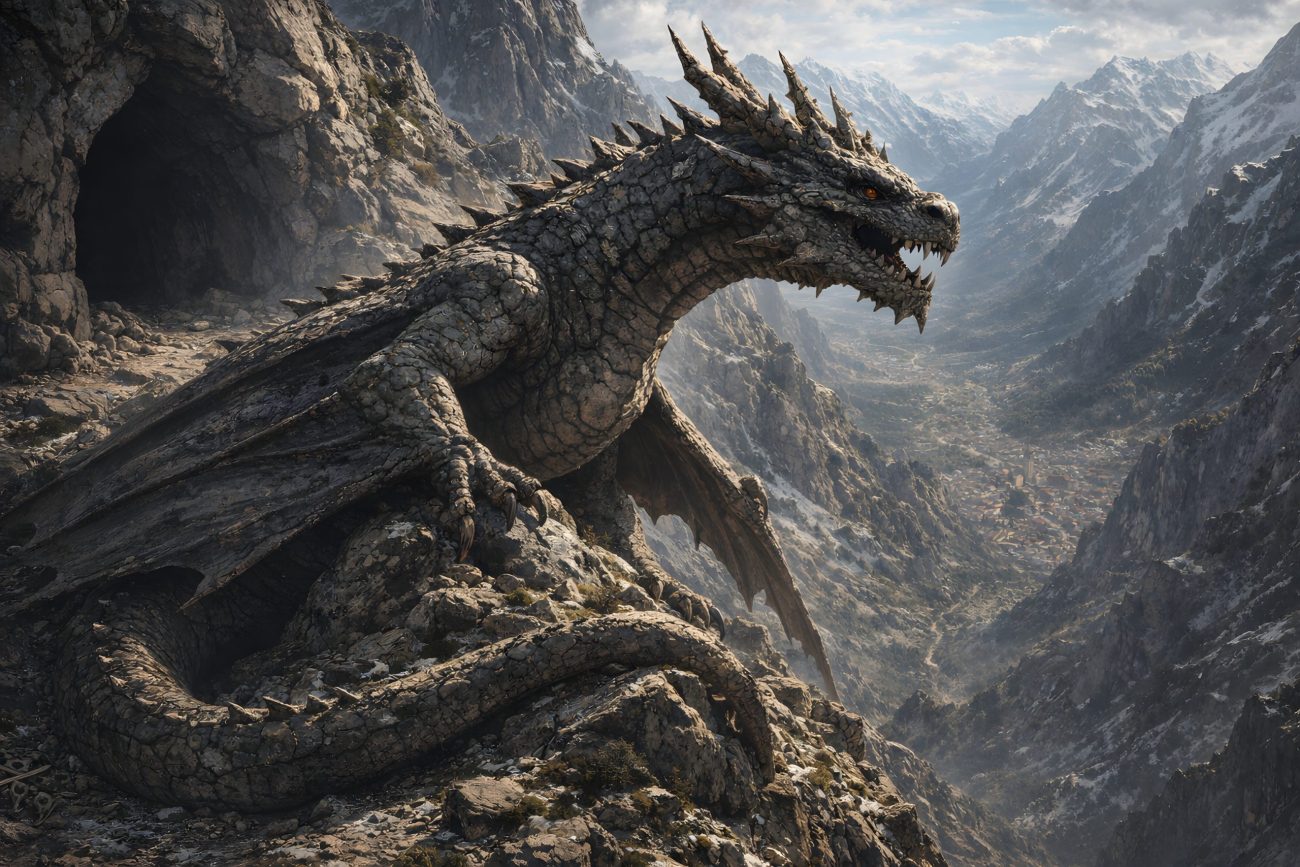
Not long after the town of Kronstadt was founded among the mountains, people said a dreadful dragon lived in a small cave high on a peak above the settlement. The creature, called the Linddur, would fly down into the valley whenever hunger drove it, devouring both people and animals and filling the region with fear.

One day the son of the town judge, a student preparing to preach, went outside the walls to memorize his sermon. Near the city wall he found a quiet place and began to recite his words aloud. He spoke so loudly and earnestly that the Linddur heard him from its mountain cave.

The dragon swooped down before the youth could escape and swallowed him whole.

Grief spread through the town, for the young man was well loved, and his parents were overcome with sorrow. While they mourned, a stranger came before the judge and said, “Strength cannot defeat such a beast, but cunning may. If we act quickly, your son may yet be saved.”

The judge promised him a rich reward. The stranger took a calfskin and filled it with quicklime. He laid it out in an open patch of grass near the castle and hid nearby, bleating like a calf.

Hearing the sound, the Linddur descended at once. It saw what it thought was prey and devoured the calfskin greedily. Soon afterward it was seized by a terrible thirst and flew to the nearest water to drink deeply.

But the quicklime within it drank the water faster still and burned with such heat that the dragon’s body swelled and burst apart. When the beast split open, the student was found still alive inside and was rescued.

In gratitude, the judge rewarded the clever stranger with many gifts. And to remember the deliverance, the image of the Lindworm was set upon the wall that leads from the eastern corner of the city up toward the archer’s battlement, so that all would recall the dragon that once haunted the peak above Kronstadt.


Sources

sagen.at contributors. (n.d.). Der Lindwurm auf der Zinne. In sagen.at, from https://www.sagen.at/texte/sagen/rumaenien/siebenbuergen/lindwurm.html


Zwergel

Tradition / Region: Romanian Mythology
Alternate Names: The Dragon of Wendchenberg; The Rock Dragon; Fire Dragon of Klein-Logdes
Category: Dragon


The Myth

In the hills near Kreisch, high on the Wendchenberg, there lies a rocky cleft known as the Zwergelloch. Long ago, people said a terrible creature lived there, called the Zwergel.

The villagers feared it greatly. To keep the monster from descending upon them, they were forced to offer it a human sacrifice every week. Only by feeding it could they keep it in its rocky lair and spare the village from destruction.

The same creature was also seen in other places. Once, it flew over Klein-Logdes, breathing fire as it crossed the sky. Yet whenever the flames touched the earth, they died at once, as if the ground itself would not burn.

The Zwergel was not only a devourer but also a spirit that could seize human bodies. It once possessed a Wallachian maid, who wasted away under its power. Her mother, in desperation, laid her out on a bier as if she were already dead and called neighbors and relatives to mourn her. Through this false funeral, the creature was driven out, and the girl was freed.

But in the mountains, people still spoke of the cleft in the rock and of the being that once lived there — the Zwergel, the dragon that demanded flesh and could enter the living as easily as it flew through the sky.


Sources

sagen.at contributors. (n.d.). Drachen. In sagen.at, from https://www.sagen.at/texte/sagen/rumaenien/siebenbuergen/drachen.html


Black Chicken of Pretai

Tradition / Region: Romanian Mythology
Alternate Names: The Money Chicken; The Hearth Chicken; Black Familiar Chicken
Category: Chicken


The Myth

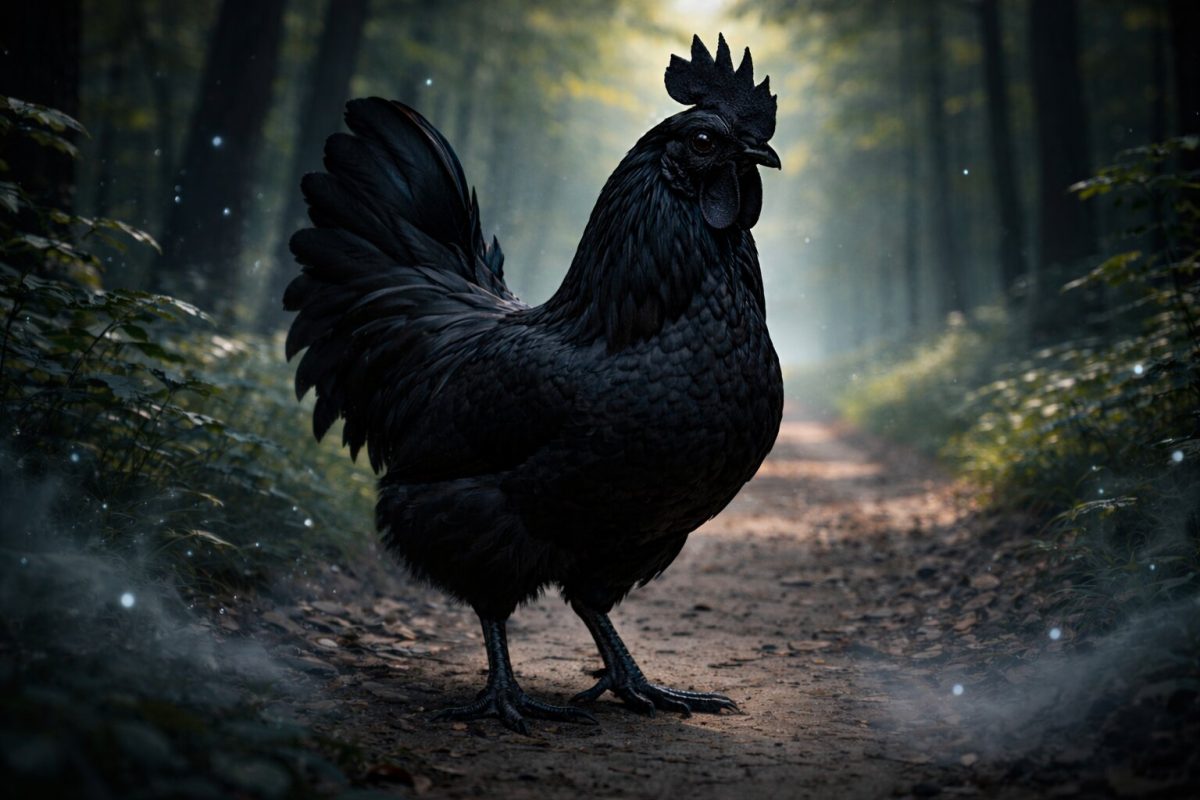
A man from Pretai was once returning home from the mill when he noticed something small and black lying by the roadside. When he bent down to look, he saw it was a chicken, entirely black. He picked it up and carried it home, placing it beneath the hearth and feeding it.

After some time, one night he heard a voice coming from the hearth. It was the chicken speaking.

“What should I bring you?” it asked.

Startled, the man muttered, “Be quiet! What could you possibly bring me?”

The following night, the chicken spoke again.
“What should I bring you?”

This time the man answered, “If you truly want to bring me something, then bring me plenty of money.”

From that night on, the chicken did exactly that, and the man soon became rich.


Sources

sagen.at contributors. (n.d.). Das schwarze Huhn. In sagen.at, from https://www.sagen.at/texte/sagen/rumaenien/siebenbuergen/dasschwarzehuhn.html


Little One of Reussen

Tradition / Region: Romanian Mythology
Alternate Names: The Little One; The Bought Little One; The Farmer’s Familiar
Category: House dweller, Gnome


The Myth

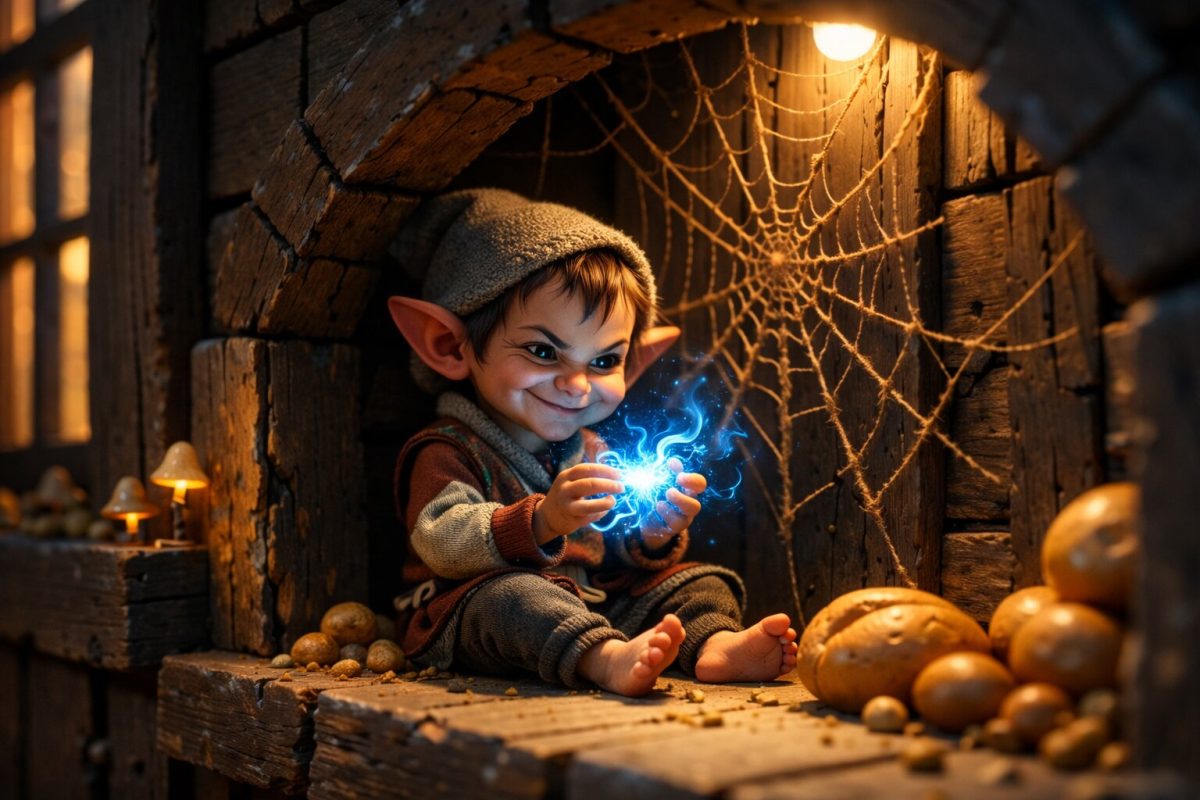
In the village of Reussen there once lived a farmer who had acquired a being known as the Little One. He had obtained it for money, and from that time onward wealth flowed to him in such abundance that he scarcely knew what to do with it.

Every year he built new stables, barns, and sheds, only to tear them down again and rebuild them, simply to spend the money that continued to pour in.

Yet despite his riches, he found no peace. At last, wishing to be rid of the being, he bored a hole into a heavy floor beam with a large drill. Into this hole he forced the Little One and sealed it tightly, hoping to imprison it there forever.

But the Little One would not be confined. It burst the prison apart and destroyed everything the farmer possessed. His buildings were ruined, his property laid waste, and all his wealth vanished.

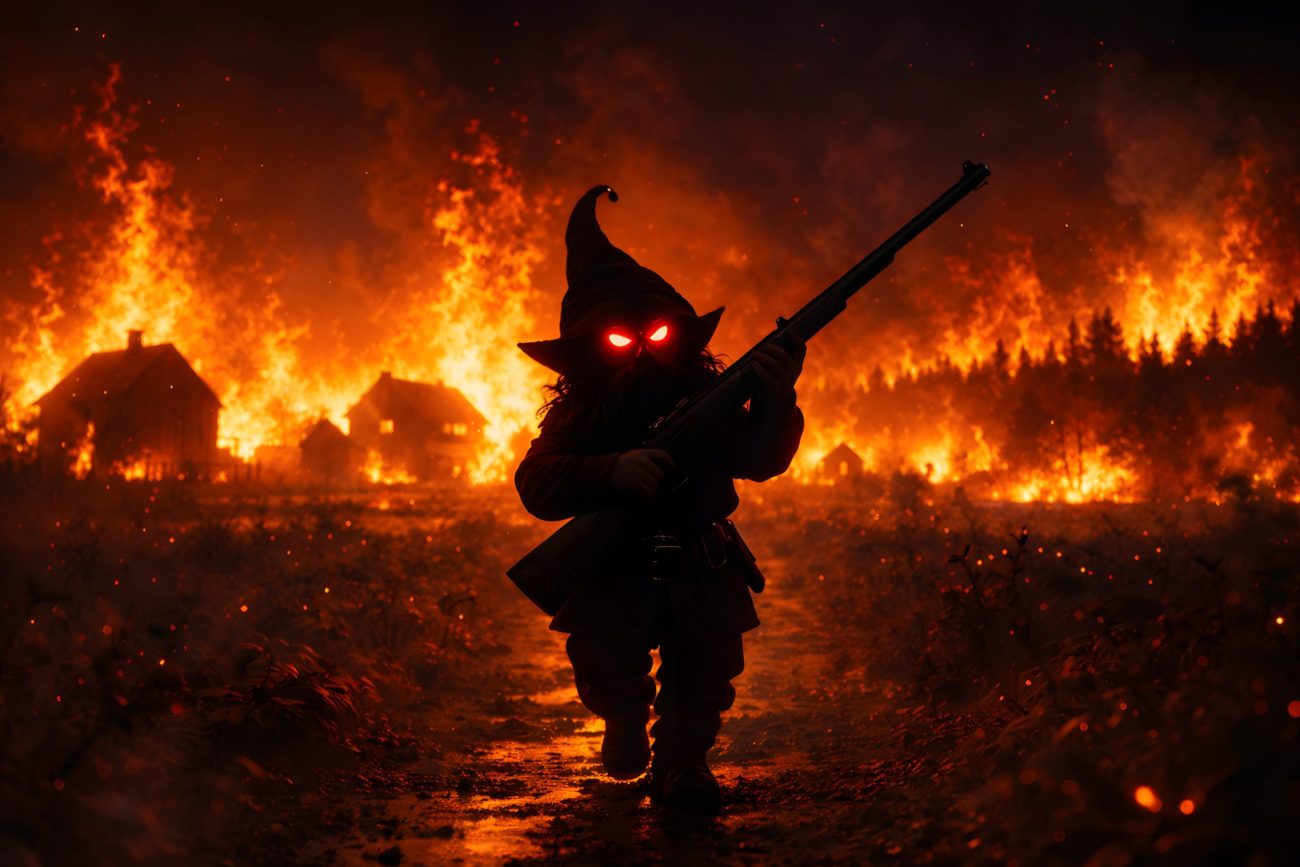
In the end, when the farmer went into the forest and leaned his rifle against a ladder, the Little One seized the weapon. It fired the gun and shot the man who had tried to betray it.

Thus the farmer lost both his fortune and his life to the very being that had once made him rich.


Sources

sagen.at contributors. (n.d.). Der „Kleine“ in Reußen. In sagen.at, from https://www.sagen.at/texte/sagen/rumaenien/siebenbuergen/reussen.html


Little One of Alzen

Tradition / Region: Romanian Mythology
Alternate Names: The Little One; The Hidden Boy; House Little One
Category: House dweller, Gnome


The Myth

In the village of Alzen there once lived a farmer named Stefan Guipets. In his house, people said, there lived a small unseen being known only as the Little One.

Whenever the family sat down to eat, they always threw the first bite beneath the table for him. In return, the household prospered. In the pantry stood a sack of grain that was never empty, no matter how much was taken from it. Yet no one was allowed to touch this sack carelessly, for it belonged to the Little One.

On the chimney of the house the farmer had written a warning:

“Whoever wants to keep something secret
must not tell any woman.”

And so the Little One remained in the house, unseen, fed, and quietly guarding the farmer’s fortune.


Sources

sagen.at contributors. (n.d.). Der „Kleine“ in Alzen. In sagen.at, from https://www.sagen.at/texte/sagen/rumaenien/siebenbuergen/alzen.html


Blanket Ghost of Mühlbach

Tradition / Region: Romanian Mythology
Alternate Names: The Grey-Bearded Ghost; The Workshop Spirit of Mühlbach
Category: Ghost


The Myth

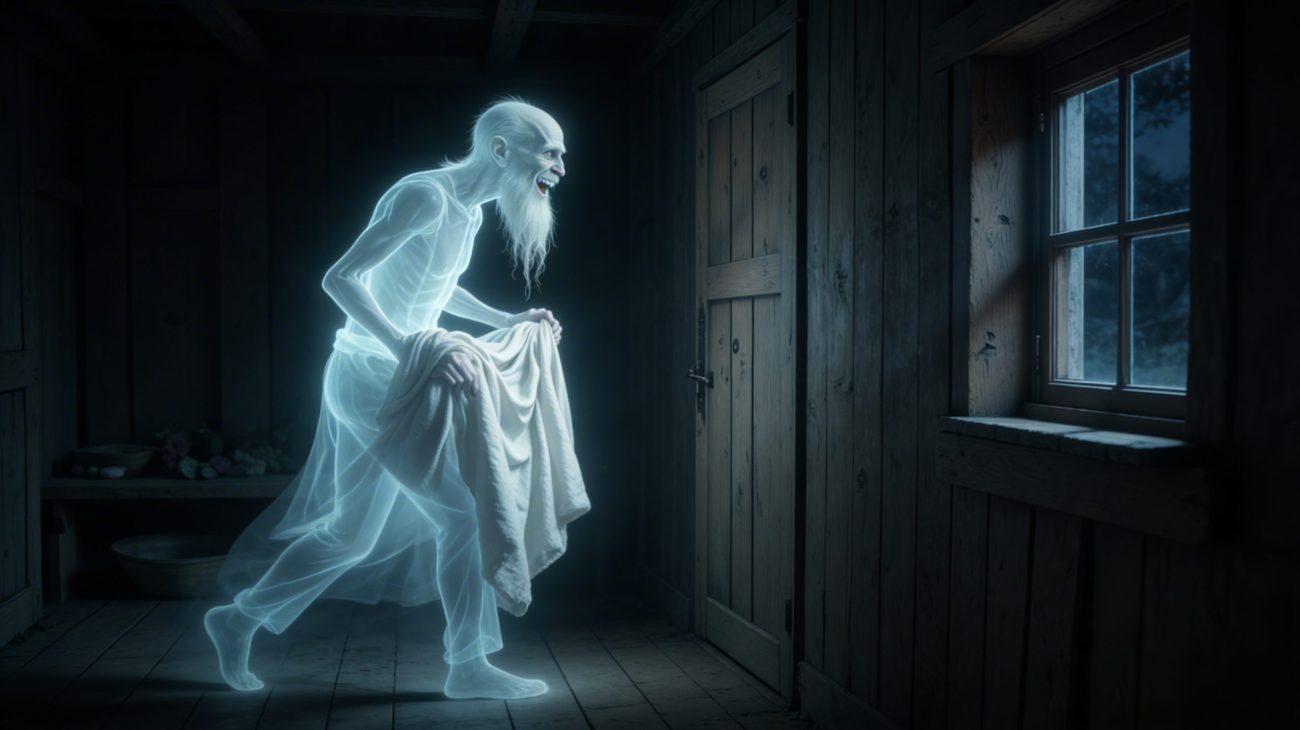
In the town of Mühlbach, a carpenter was plagued by a strange problem: none of his journeymen would remain with him for long. They were required to sleep in the workshop, and one bed stood in a corner opposite the door. Whoever slept there soon grew pale and thin. Each complained that during the night his blanket was pulled from him, and by morning it would always be found lying behind the door.

Since no one could endure this for long, the men soon left the carpenter’s service. At last a determined apprentice decided he would uncover the truth. The others laughed at his complaints each morning, and he suspected they were playing tricks on him.

That night he lay down as usual but only pretended to sleep. Before midnight had passed, an old man with a long grey beard appeared from behind the door. Without a word, the figure walked to the bed and seized the blanket. The apprentice held on tightly, refusing to release it. But the old man pulled it away with a stubborn, unwilling look, wrapped himself in it, and shuffled back to the corner behind the door.

There the figure seemed to sink into the wall itself, and the blanket slipped from him onto the floor. The apprentice rose, picked it up, and, shaken though he was, managed to sleep.

In the morning, however, the blanket once again lay behind the door.

No one ever discovered why the spirit troubled the workshop in this way, and in the end the carpenter was forced to forbid his apprentices from sleeping there at all.


Sources

sagen.at contributors. (n.d.). Von einem Gespenst in Mühlbach. In sagen.at, from https://www.sagen.at/texte/sagen/rumaenien/siebenbuergen/muehlbach.html


Fiery Men

Tradition / Region: Romanian Mythology
Alternate Names: Fiery Man; Fire Spirit of the Mountains
Category: Spirit, Mountain dweller


The Myth

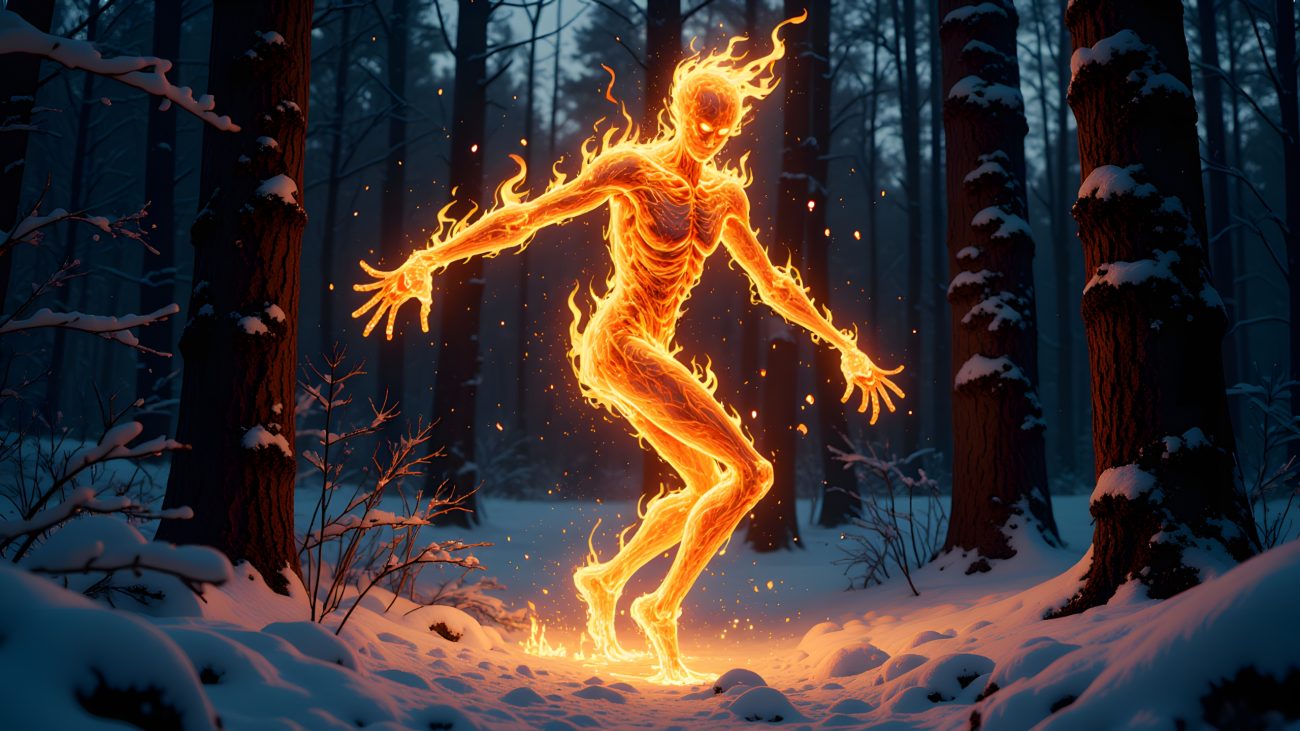
In the mountains near Pretai, people said that the Fiery Men wandered even at dusk, appearing suddenly and vanishing just as quickly.

One evening, several women gathered at the spinning room. As they opened the door, one of them mockingly called out into the dark, “Fiery man, come and kiss me!”

Hardly had they shut the door when a violent blow struck it from outside. The impact was so fierce that the wood itself was scorched, and the print of a burning hand was left branded into it.

From then on, the women believed that one of the Fiery Men had truly answered the call.


Sources

sagen.at contributors. (n.d.). Die feurigen Männer. In sagen.at, from https://www.sagen.at/texte/sagen/rumaenien/siebenbuergen/diefeurigenmaenner.html


Prikulich of Stolzenberg

Tradition / Region: Romanian Mythology
Alternate Names: Prikulitsch; The Stolzenberg Dog Fiend
Category: Dog


The Myth

One night, a villager was walking along the path near the clay pit known as the Leimkel. As he paused beside one of the deep holes, something suddenly tumbled out into the path. It was a thick, black creature, as large as a wolf, rolling from the pit and plunging into the ditch beside the road.

Terrified, the man folded his hands and began to pray the Lord’s Prayer. The prayer protected him, and the creature did not approach. Later he learned what it had been — a Prikulich.

He saw the being again in Stolzenberg itself, once more around midnight. He had just come from his mother’s house when a dark shape slipped out of a courtyard and crossed the street only a few steps in front of him. Its large, dark eyes rolled strangely in its head as it passed.

People in the village said the creature was none other than a Galician Jewish tradesman who had settled there. At night he wandered in the form of a beast, and many claimed to have seen him fighting with the village dogs. They said this was why the man’s face was often torn and scratched.

Once, the gendarmes seized him and stabbed him until he bled. At that moment the creature’s power broke, and he stood before them again in human form. Instead of cursing them, he spoke with relief:

“Thank you for doing this to me. Now I am redeemed.”


Sources

sagen.at contributors. (n.d.). Der Prikulitsch in Stolzenberg. In sagen.at, from https://www.sagen.at/texte/sagen/rumaenien/siebenbuergen/stolzenberg.html


Prikulich of Giesshübel

Tradition / Region: Romanian Mythology
Alternate Names: Prikulich; The Dog Prikulich
Category: Dog


The Myth

In the village of Giesshübel there once lived a reckless young man known for chasing after the maids and living without restraint. One day, when he returned home, something uncanny happened. As he entered, he suddenly flipped over, and in that instant he was no longer a man but a white dog marked with grey spots.

From then on, the creature lived a double existence. By day the dog stayed quietly in the stable, keeping out of sight. But each night, when midnight came, it slipped out into the street. There it ran through the village and fought fiercely with the other dogs, as if driven by some restless and savage urge.

One night, when the dog returned home, his mother was waiting. Suspecting what he truly was, she struck him in the side with an awl. At the touch of the iron, the dog tumbled over once, twice, and a third time.

With the last turn, the animal vanished, and the young man lay there again in human form, freed from his strange condition.


Sources

sagen.at contributors. (n.d.). Der Prikulitsch in Giesshübel. In sagen.at, from https://www.sagen.at/texte/sagen/rumaenien/siebenbuergen/giesshuebel.html