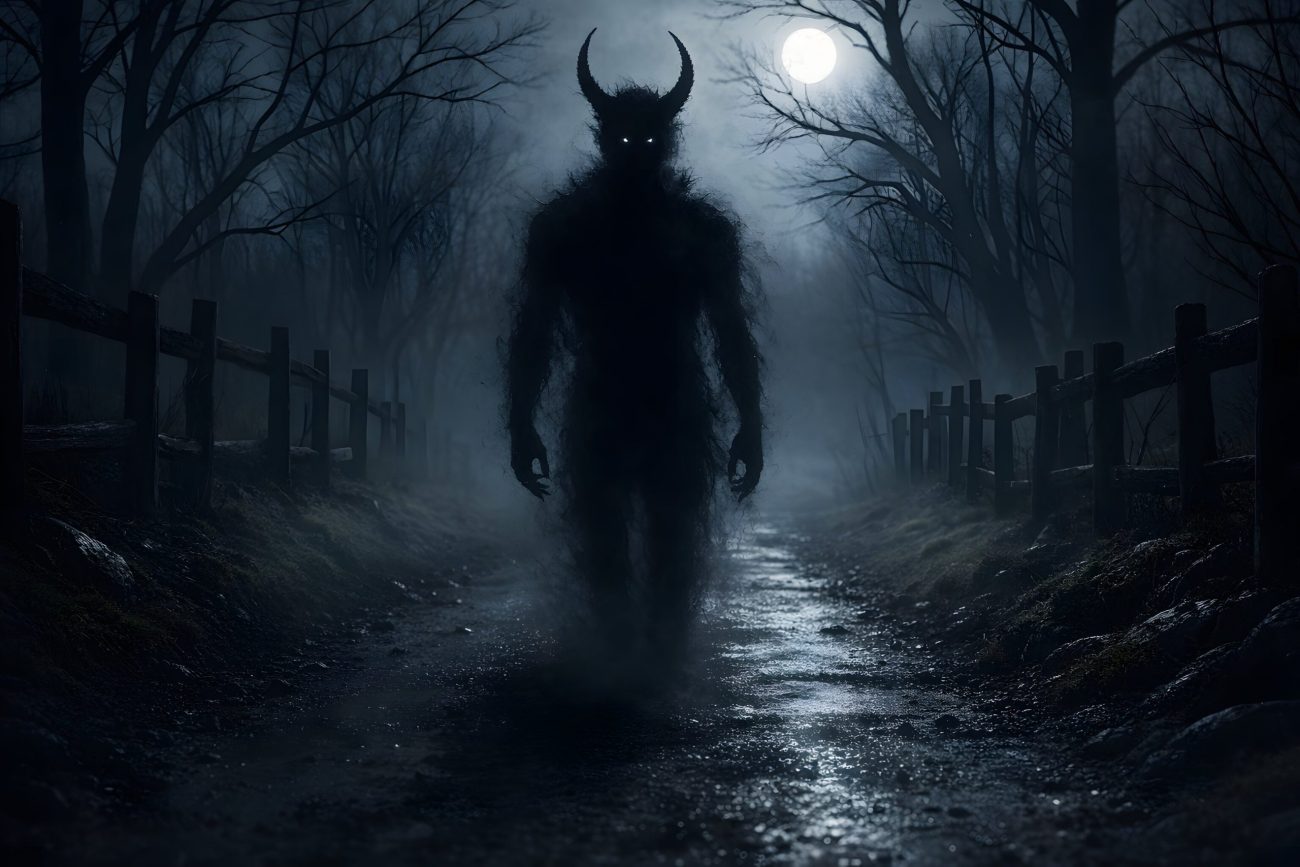
Alzen Bridge Devil

Tradition / Region: Romanian Mythology
Alternate Names: —
Category: Demon


The Myth

Many years ago, the pastor of Alzen had the habit of visiting the casino in Leschkirch twice each week. At midnight his coachman was sent to fetch him home. This duty troubled the servant greatly, for he had to drive alone across the Altmühl bridge at that lonely and haunted hour.

It was the custom to halt on the far side of the bridge so the horses could rest. Whether the coachman wished it or not, the animals were trained to stop there, and no urging could make them do otherwise.

One cold, bright night, under a clear moon, the coachman drove out as usual. The pastor’s coat lay folded on the back seat for the journey home. When the carriage reached the far side of the bridge, the horses halted of their own accord.

At that moment the coachman saw, in the pale light, a silent figure detach itself from the shadow of the bridge. Hat in hand, it climbed lightly onto the back seat and put on the priest’s coat.

The coachman trembled with fear. He thought he had glimpsed two horns upon the stranger’s head. His hands shook so violently he could scarcely hold the reins, and he dared not turn around again. The horses, as if driven by some unseen force, sped onward at a furious pace until they reached the appointed place.

Only then did the coachman gather the courage to look back. The seat was empty. The coat lay exactly where he had left it, untouched, and there was no sign of the strange passenger.

In the days that followed, people in every tavern spoke of the event. It was said that the pastor’s servant had unwittingly driven the Devil himself, and that he nearly left his master’s service rather than face such a night again.


Sources

sagen.at contributors. (n.d.). Alzener Pfarrersknecht als des Teufels Fuhrmann. In sagen.at, from https://www.sagen.at/texte/sagen/rumaenien/siebenbuergen/alzenerpfarrersknecht.html


Prepelitsch

Tradition / Region: Romanian Mythology
Alternate Names: —
Category: Dog, Shapeshifter


The Myth

Near Agnetheln, a young married couple once worked together in the fields. When their drinking water was gone, the husband told his wife he would fetch more. Before leaving, he warned her that if a dog should come and attack her, she must defend herself bravely.

No sooner had he gone than a large dog appeared and rushed at the woman. It was fierce and relentless. She fought back as best she could, struggling to drive it away, but the beast managed to seize her apron and tear off a corner before finally running off across the fields.

Some time later her husband returned with the water. As she turned toward him, she froze in horror. Caught between his teeth was the very piece torn from her apron.

From that moment it was clear that the dog had not been an ordinary animal, but the man himself in another form.


Sources

sagen.at contributors. (n.d.). Prepelitsch. In sagen.at, from https://www.sagen.at/texte/sagen/rumaenien/siebenbuergen/prepelitsch.html


Servant as a Goat

Tradition / Region: Romanian Mythology
Alternate Names: —
Category: Sheep


The Myth

In the Transylvanian village of Heitau, a Romanian farmhand once walked along the road with two maids. As they went, the man suddenly threw himself into a somersault. Then he somersaulted a second time, and a third.

At once he was no longer a man but a grey-spotted billy goat.

The animal charged furiously at the two girls. With its horns it gored and tore at their red katana, shredding the garments into pieces. The maids fled in terror as the goat raged around them.

After some time, the creature again threw itself into three somersaults. As it completed the last one, the goat vanished and the farmhand stood there once more in human form.

Yet the transformation had not left him untouched. A small shred of the torn red cloth had grown fast to his ears, and this strange mark, it was said, remained with him for the rest of his life.


Sources

sagen.at contributors. (n.d.). Knecht als Ziegenbock. In sagen.at, from https://www.sagen.at/texte/sagen/rumaenien/siebenbuergen/knechtalsziegenbock.html


Detta

Tradition / Region: Romanian Mythology
Alternate Names: —
Category: Fairy


The Myth

In the old town of Timișoara there once lived two fairies, Mazura and Detta. Mazura was cruel and ill-tempered, while Detta was gentle and beautiful. The two quarreled constantly, for Mazura wished to rule the city alone and often threatened to destroy her rival. Detta, who longed for peace and would not live in hatred, finally chose to leave.

One morning she rose early and walked out into the open countryside, not knowing where she would go. She crossed fields and meadows, always heading west. By evening the sun burned red in the sky, and Detta came upon a small river whose waters murmured softly. Pleased with the place, she said, “Here I will stay. I like it here.”

She lifted her hands and whispered a spell, and at once a splendid house appeared on the riverbank. Yet Detta soon felt lonely and wished for human company. The next day she spoke another charm, and an inn sprang up beside her home. Still, she feared no one would pass that way, so she cast a third spell, and a country road formed, running close to the inn.

Now Detta was content. Travelers came along the road and stopped at the welcoming inn of the kind and beautiful hostess. A year later a band of Swabian settlers arrived from the Black Forest, searching for a place to live. Detta urged them to remain, telling them the land had forests, fields, and water enough for all. The Swabians liked what they saw and settled there.

Before long, the bravest and most handsome young hunter among them, Franzl, fell in love with Detta. When he asked her to marry him, she answered, “Franzl, I love you, but you must promise me one thing: never walk beside me in the street and never touch me in public or before strangers. If you break this promise, great misfortune will follow.” Franzl agreed, and they wed.

Ten years passed, and they had two children. One day they were invited to a wedding. Detta told her husband she would go ahead and meet him there, as always. But Franzl felt ashamed. The villagers whispered that husband and wife never appeared together and must not truly love each other. Determined to silence the gossip, he decided to ignore her warning. He believed her fears were only fancy.

He left the house and hurried after her. When he caught up, he slipped his arm around her shoulder and smiled.

Detta turned pale. “Franzl, why did you do that? Now I am lost…”

At once a blinding flash burst forth. In that instant the beautiful fairy, her grand house, and the inn vanished forever.

In memory of her, the settlers named their village Detta. And the place bore that name for generations afterward.


Sources

sagen.at contributors. (n.d.). Die bildschöne Detta. In sagen.at, from https://www.sagen.at/texte/sagen/rumaenien/banat/detta.html