Corcoaia

Tradition: Romanian Mythology
Alternative Names: Corcoaia, the Dragon of Corcoaia
Category: Dragon


The Myth

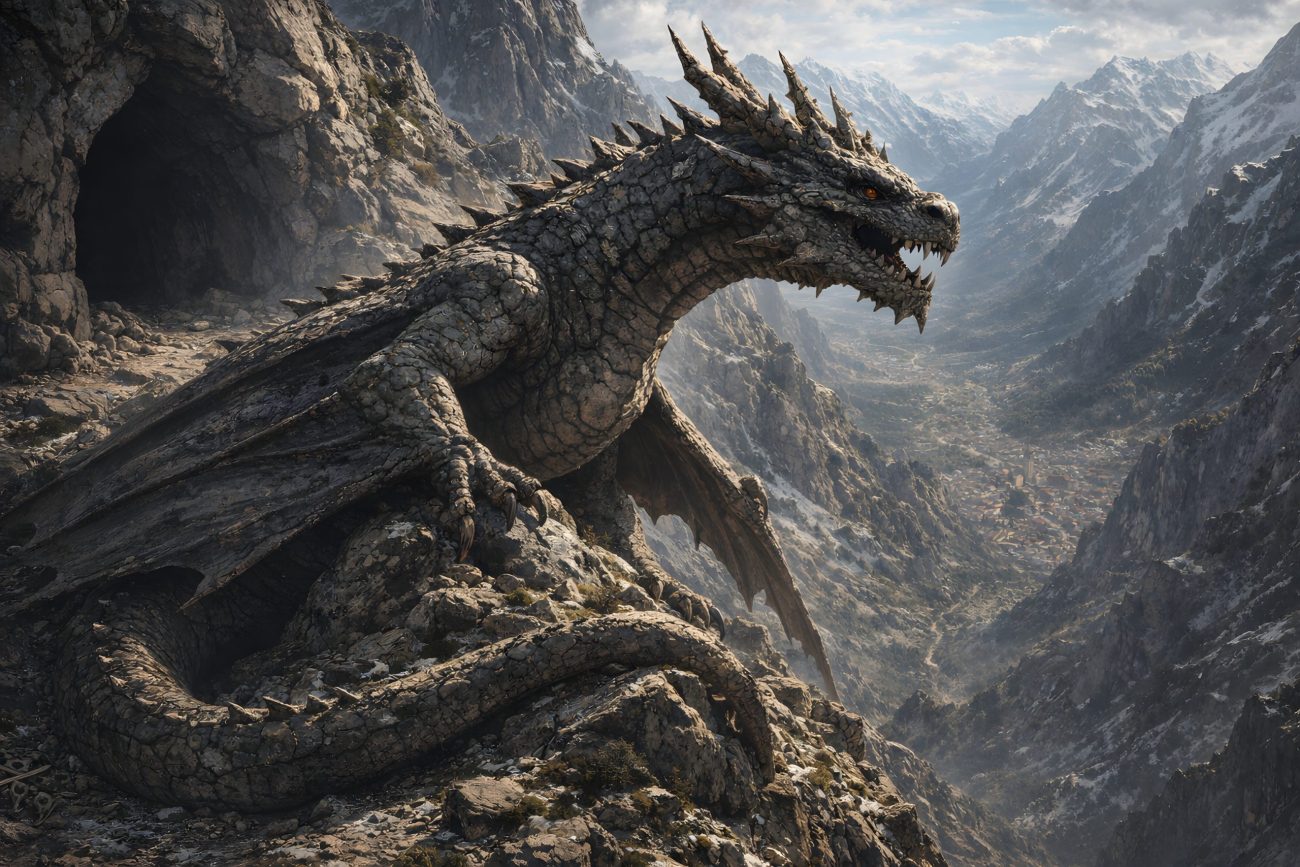
Corcoaia is a legendary dragon associated with the Cerna Valley between Banat and Mehedinți. In the versions where Corcoaia is the monster itself, it takes the form of a great balaur that confronts the hero Heracle.

Heracle encounters the dragon in the Cerna Valley and battles the beast. Their struggle is said to have transformed the landscape itself, with the violence of the confrontation shaping the course of the Cerna River and producing the dramatic gorge known as the Cheile Corcoaiei.

Other versions of the legend give Corcoaia a very different role: rather than being the dragon, she is an old woman who guides Heracle during his journey. The dragon remains the creature with which the hero must contend, while Corcoaia helps him overcome the danger.

Local tradition later associated the story with Iovan Iorgovan, a Romanian legendary hero whose figure was superimposed onto that of Heracle. The story has consequently been compared by Romanian ethnologists with the ancient Greek myth of Heracle’s battle against the Hydra of Lerna.


Sources

“Corcoaia.” Wikipedia, enciclopedia liberă (Romanian Wikipedia). Wikimedia Foundation. Accessed October 3, 2026.
https://ro.wikipedia.org/wiki/Corcoaia


Zmeu

Tradition: Romanian mythology
Alternative Names: Zmei, Zmeoaică, Zmeoaice
Category: Dragon


The Myth

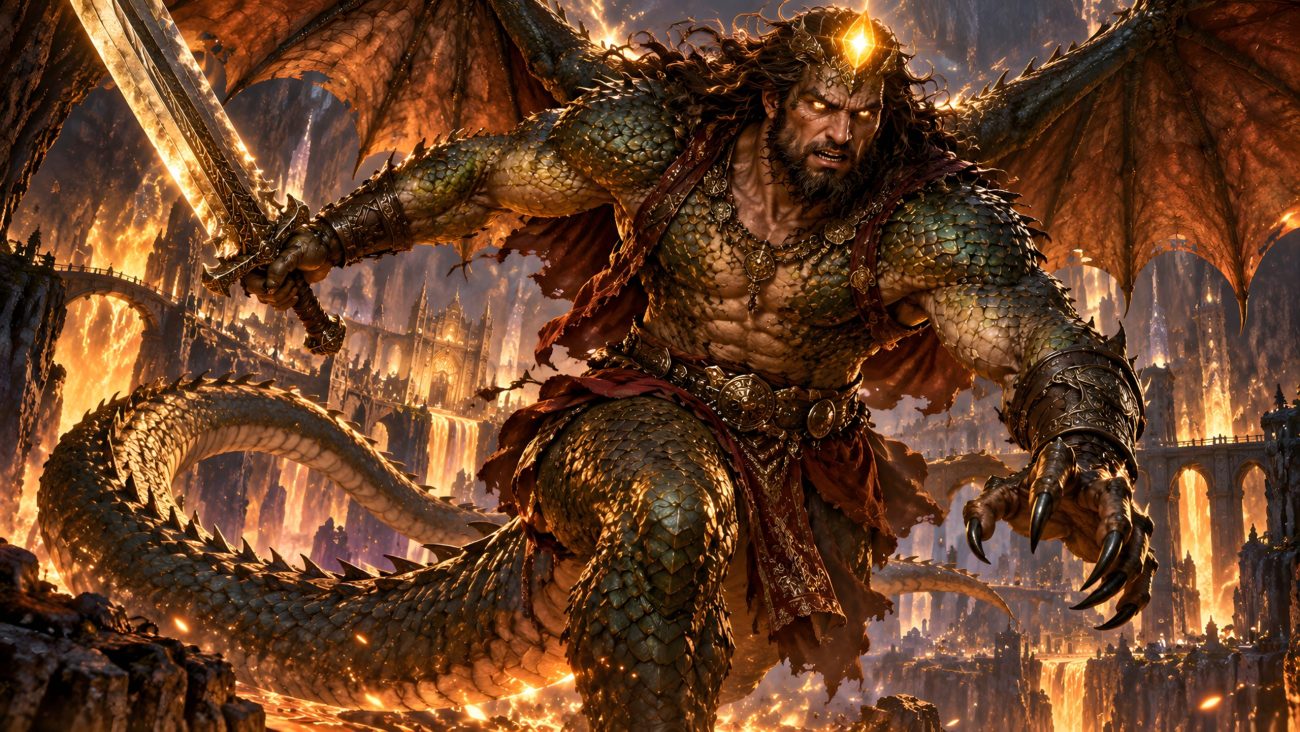
The Zmeu is a strange and formidable creature, neither fully dragon nor fully human. It is often imagined as a humanoid being with arms and legs, a human-like face, and a large, thick body. Some descriptions give it a body covered in scales, a serpent’s tail, and bat-like wings, while others describe a man’s head upon a bird-like body ending in a serpent’s tail. It can speak, ride a horse, wield weapons, create magical objects, and move through the world much like a monstrous human warrior. Some traditions instead portray the Zmeu as an enormous man-eating giant with a rocky tail, while others reduce it to a somewhat larger and heavier human figure.

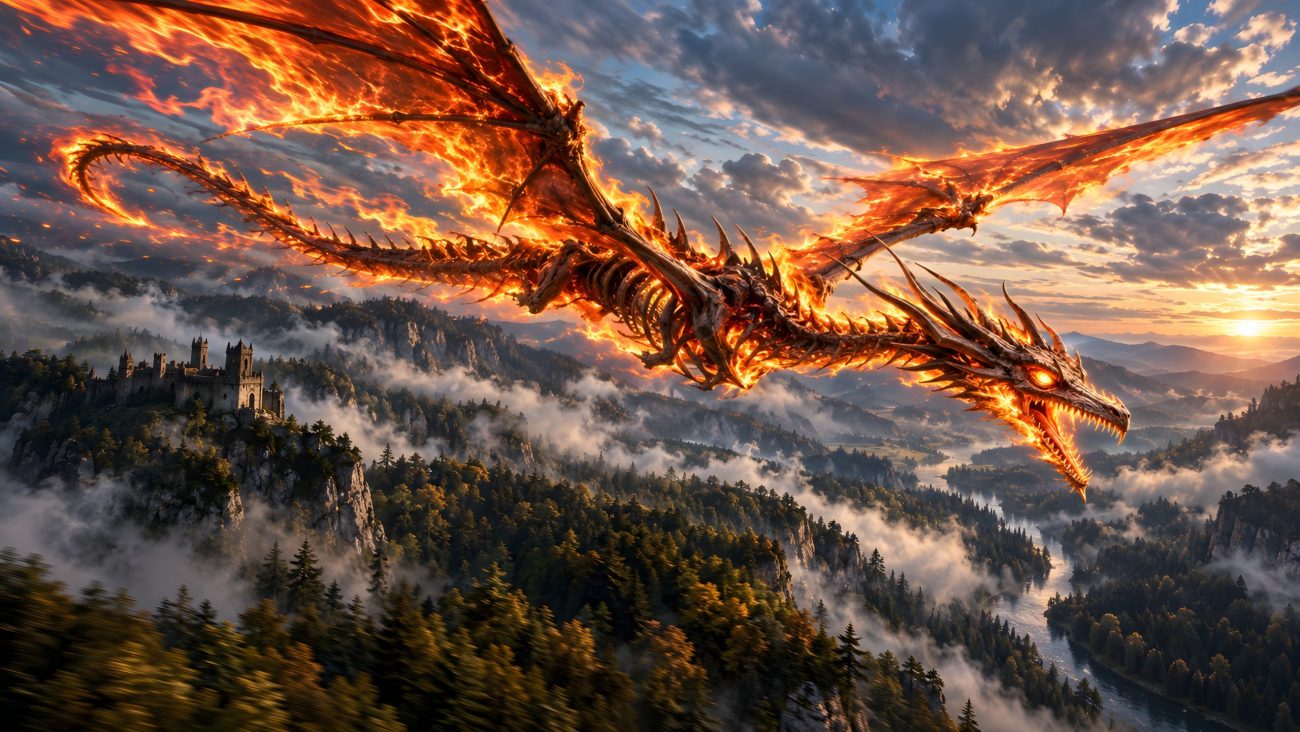
The creature can also take more overtly supernatural forms. Some Zmei fly through the sky breathing fire, while others can change their shape. They may appear as a living trail of flame or something resembling fireworks moving through the night sky. In certain stories, the Zmeu possesses a magical precious stone fixed to its head, shining with a brilliance like the sun. Other tales reduce the creature to a king of serpents, while popular tradition sometimes confuses the Zmeu with the Balaur, another Romanian dragon. The supernatural creatures ridden by the Șolomonarii are likewise identified as either Zmei or Balauri depending on the tradition.

The Zmeu is one of the great adversaries of Romanian fairy-tale heroes. It commonly dwells in the other world, celălalt tărâm, sometimes beneath the earth in a dark and supernatural kingdom. From there it enters the human world to steal treasures, abduct women, or impose its destructive power upon mankind. Its enormous strength, ability to fly and shapeshift, and mastery of magical objects make it a formidable enemy, but its powers ultimately fail against the courage and martial skill of the heroic Făt-Frumos.

The Zmeu is especially associated with greed and selfishness. It steals things of immense value, forcing a heroic prince to journey into danger and recover what has been taken. In the ballad of Greuceanu, the creature commits one of its greatest acts of theft: it steals the sun and the moon from the sky, plunging humanity into darkness. Greuceanu must confront the supernatural forces responsible and restore light to the world.

In Prâslea the Brave and the Golden Apples, the Zmeu repeatedly steals the king’s precious golden apples. Prâslea follows the trail of the theft into the supernatural realm, pursuing the creature into its dark domain. In some forms of the tale, the Zmeu can even transform into a bird while stealing the apples, linking the Romanian story to a wider family of European tales in which a magical bird carries away a king’s precious treasure.

The Zmeu is also a kidnapper of young women. It frequently carries a beautiful maiden away to its otherworldly fortress, intending to make her his wife. The heroic Făt-Frumos then enters the Zmeu’s realm, confronts the monster, and kills it, freeing the captive woman. She subsequently becomes the hero’s bride-to-be. The Zmeu can therefore stand between the hero and both the treasure and the woman he must rescue, making the confrontation a struggle against the creature’s greed, violence, and desire to possess what belongs to the human world.

The creature’s courtship can take an even more sinister form. Sometimes a Zmeu appears not as a monstrous warrior but as a flame entering the chamber of a young girl or widow. Once inside, the flame transforms into a man and attempts to seduce her. Its ability to cross from supernatural fire into human form makes the Zmeu a particularly uncanny presence: it can arrive as something apparently impossible, only to become a human-looking lover once it reaches its victim.

The Zmeu is almost invariably overcome by the courage of a young prince or wandering knight. Its supernatural strength and magical abilities cannot compensate for the hero’s determination and martial skill. Whether it has stolen the sun and moon, carried away golden apples, or abducted a maiden into its underground kingdom, the creature ultimately becomes the monster standing between Făt-Frumos and the restoration of order.

The female Zmeu is known as the Zmeoaică, and the plural forms are Zmei and Zmeoaice. Together, the Zmei occupy a broad place in Romanian folklore, sometimes resembling dragons, giants, ogres, devils, vampires, or monstrous serpent-kings. Yet their distinctly human qualities—walking on two legs, speaking, riding horses, making weapons, taking lovers, and ruling supernatural kingdoms—set them apart from the purely animal-like dragon.


Sources

“Zmeu.” Wikipedia: The Free Encyclopedia. Wikimedia Foundation. Accessed October 3, 2026. https://en.wikipedia.org/wiki/Zmeu
Balaur

Tradition: Romanian Mythology
Alternative Names: Balaur, Balauri, Balaurul
Category: Dragon


The Myth

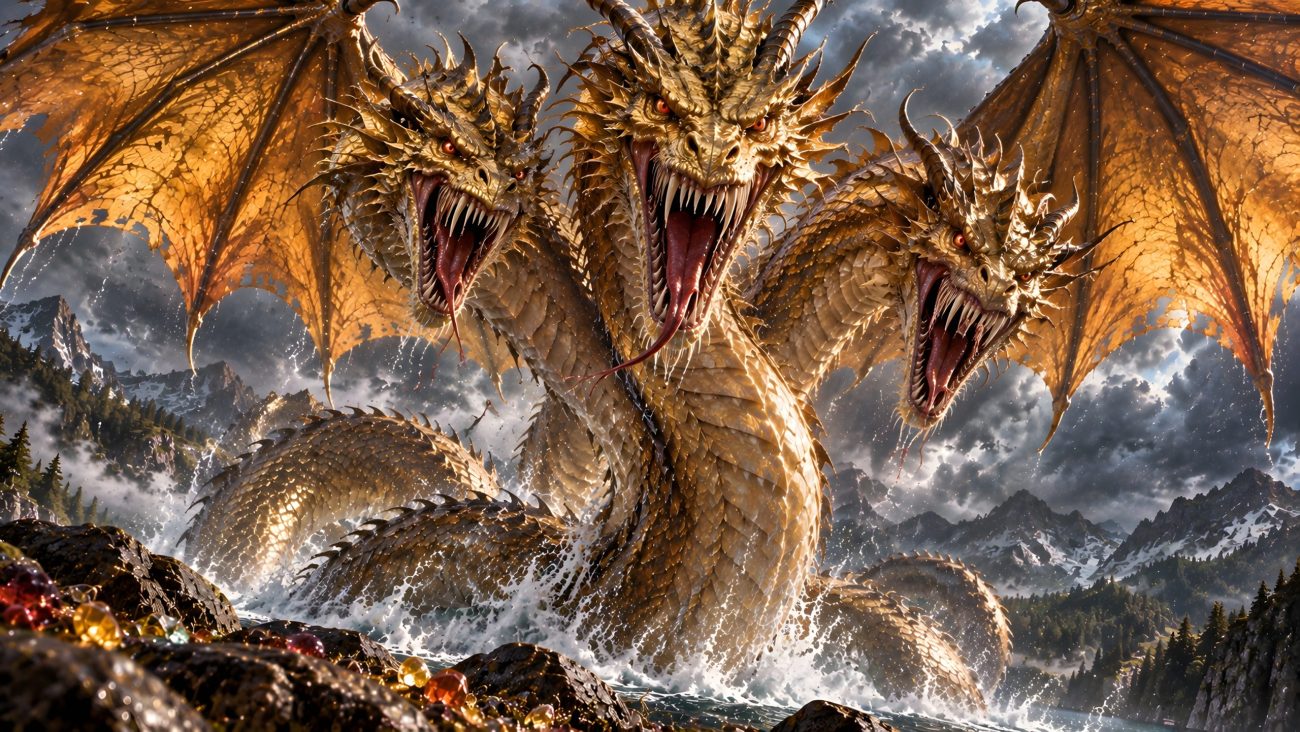
The Balaur is a monstrous serpent or dragon, usually described as having several heads. It commonly has three heads, although legends also describe Balauri with seven or twelve heads. Some versions give it wings, and descriptions may portray it as a winged, golden dragon.

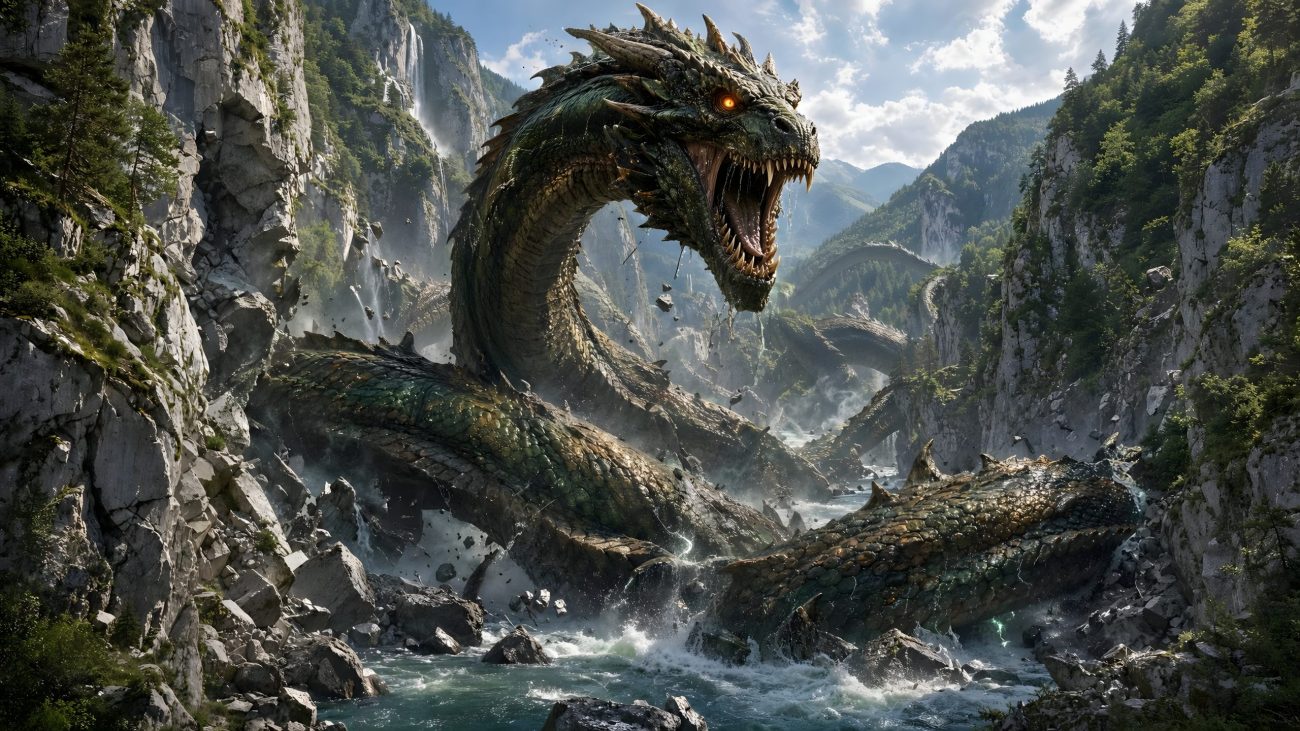
Balauri inhabit different environments depending on the tradition. Some live in water, others on land, while others dwell in the air. Water-dwelling Balauri can inhabit wells, lakes, and other bodies of water. One seven-headed Balaur was said to live in a village well and demand young maidens as sacrifices until it was defeated by the hero Busuioc or Saint George.

Balauri are often portrayed as dangerous creatures that abduct or devour young maidens and princesses. In tales of Făt-Frumos, the dragon is defeated by the hero, while other stories describe a Balaur as the guardian or abductor of a princess. The Balaur is sometimes confused with the Zmeu, another Romanian monstrous being.

Some Balauri are associated with precious stones. One tradition says that Balauri living in the Armenian land produce precious stones, while in Wallachia it was believed that precious stones could form from a Balaur’s saliva. It was also said that anyone who succeeded in killing a Balaur would have one of their sins forgiven.

The air-dwelling Balaur is associated with storms and weather. When two Balauri meet and fight in the sky, their struggle causes destruction on the ground, uprooting trees and throwing objects through the air. Another tradition says that the Balaur travels along the rainbow and sucks moisture from the earth, causing rain. In other accounts, it draws water from the sea to fill the clouds.

Balauri could also serve the Solomonari, the weather-controlling sorcerers. In these traditions, the dragons were kept hidden in the depths of lakes until the Solomonari summoned them. A Solomonar controlled a Balaur with a golden bridle and rode it through the air to influence the weather. Some traditions instead describe the dragons ridden by the Solomonari as Zmei.

The Balaur therefore appears in several forms: as a water monster demanding sacrifices, a land-dwelling treasure-producing dragon, or a flying creature associated with storms and rain.


Sources

“Balaur.” Wikipedia: The Free Encyclopedia. Wikimedia Foundation. Accessed September 20, 2026. https://en.wikipedia.org/wiki/Balaur


Smo of Minarken

Tradition / Region: Romanian Mythology
Alternate Names: –
Category: Dragon


The Myth

The Smo is a long, fiery dragon with a human head and a long reddish-yellow, serpentine body. It flies through the night surrounded by sparks, fire, hissing and rushing sounds. It is described as an evil spirit of the night, and is feared by those who encounter it alone. It is said that the Smo comes from the west and that it may dwell in Hell.

One evening, the old laborer Stephan and his companions were working in the forest until after dark. As they prepared to leave, they saw a red streak over the Magura. Stephan immediately recognized it as the Smo and told his companions not to be afraid. The fiery creature rushed through the air, scattering sparks on both sides. When it passed directly over them, there was a crackling and rushing sound, and suddenly the Smo stood among them. The other men fled in terror and hid behind the oak trees.

Stephan, however, stepped forward without fear. Remembering what his grandmother had taught him, he quickly named every individual part of their wagon, from the largest wheel to the smallest nail, making sure that not a single piece was omitted. At this, the Smo withdrew. It quietly rose into the air and flew away, hissing and spraying sparks as its long reddish-yellow body twisted through the sky. Only then did Stephan’s companions emerge from hiding, and afterwards they never again left the forest so late.

The Smo could also be summoned and commanded by a sufficiently courageous person. One night, a young herdsman named Simon was sitting with other shepherds around their fire while they guarded their masters’ herds. Simon jokingly claimed that he could call the Smo to them if he saw it flying overhead. His companions laughed and challenged him, offering him bottles of brandy if he succeeded.

Soon a flash appeared in the western sky, and the dreaded spirit came flying toward them, throwing fiery sparks down from the heights. Simon immediately stood up. He carried a small iron fork beside his knife, as was customary among the shepherds. He pulled it from his belt, swung it three times in a circle above his head, and threw it into the ground in front of him. Then he loudly commanded the Smo to follow him when he called.

The fiery dragon turned in the distance and came rushing toward them, breathing fire. Simon ordered it to stop, and the spirit obeyed the human voice, coming to a halt before him. Simon asked where it was going. The Smo answered in a deep voice that it had a sweetheart in the village below. Fire poured from its mouth and eyes as it spoke.

Simon told the Smo that the girl belonged to him, not to the spirit, and ordered it to remain where it was for as long as he wished. The dragon remained there under his command for a long time. Near dawn, Simon again took up his iron fork, threw it from the air toward the ground, and ordered the Smo to return to where it had come from and never go back to the village.

The dragon rose and slowly flew westward, in the direction from which it had come. By then the first cocks were already crowing and the mountains were beginning to turn pale red with the approaching sunrise. When daylight came, the Smo and the other spirits of the night could no longer walk among humans. The night belonged to the spirits, while the day belonged to human beings and their work.


Sources

sagen.at contributors. (n.d.). Stephan und der Drachen. In sagen.at, from https://www.sagen.at/texte/sagen/rumaenien/siebenbuergen/stephan.html

sagen.at contributors. (n.d.). Berufung des Smo. In sagen.at, from https://www.sagen.at/texte/sagen/rumaenien/siebenbuergen/berufungdessmo.html


Linddur of the Peak

Tradition / Region: Romanian Mythology
Alternate Names: The Kronstadt Lindworm; Peak Dragon; The Mountain Linddur
Category: Dragon


The Myth

Not long after the town of Kronstadt was founded among the mountains, people said a dreadful dragon lived in a small cave high on a peak above the settlement. The creature, called the Linddur, would fly down into the valley whenever hunger drove it, devouring both people and animals and filling the region with fear.

One day the son of the town judge, a student preparing to preach, went outside the walls to memorize his sermon. Near the city wall he found a quiet place and began to recite his words aloud. He spoke so loudly and earnestly that the Linddur heard him from its mountain cave.

The dragon swooped down before the youth could escape and swallowed him whole.

Grief spread through the town, for the young man was well loved, and his parents were overcome with sorrow. While they mourned, a stranger came before the judge and said, “Strength cannot defeat such a beast, but cunning may. If we act quickly, your son may yet be saved.”

The judge promised him a rich reward. The stranger took a calfskin and filled it with quicklime. He laid it out in an open patch of grass near the castle and hid nearby, bleating like a calf.

Hearing the sound, the Linddur descended at once. It saw what it thought was prey and devoured the calfskin greedily. Soon afterward it was seized by a terrible thirst and flew to the nearest water to drink deeply.

But the quicklime within it drank the water faster still and burned with such heat that the dragon’s body swelled and burst apart. When the beast split open, the student was found still alive inside and was rescued.

In gratitude, the judge rewarded the clever stranger with many gifts. And to remember the deliverance, the image of the Lindworm was set upon the wall that leads from the eastern corner of the city up toward the archer’s battlement, so that all would recall the dragon that once haunted the peak above Kronstadt.


Sources

sagen.at contributors. (n.d.). Der Lindwurm auf der Zinne. In sagen.at, from https://www.sagen.at/texte/sagen/rumaenien/siebenbuergen/lindwurm.html


Zwergel

Tradition / Region: Romanian Mythology
Alternate Names: The Dragon of Wendchenberg; The Rock Dragon; Fire Dragon of Klein-Logdes
Category: Dragon


The Myth

In the hills near Kreisch, high on the Wendchenberg, there lies a rocky cleft known as the Zwergelloch. Long ago, people said a terrible creature lived there, called the Zwergel.

The villagers feared it greatly. To keep the monster from descending upon them, they were forced to offer it a human sacrifice every week. Only by feeding it could they keep it in its rocky lair and spare the village from destruction.

The same creature was also seen in other places. Once, it flew over Klein-Logdes, breathing fire as it crossed the sky. Yet whenever the flames touched the earth, they died at once, as if the ground itself would not burn.

The Zwergel was not only a devourer but also a spirit that could seize human bodies. It once possessed a Wallachian maid, who wasted away under its power. Her mother, in desperation, laid her out on a bier as if she were already dead and called neighbors and relatives to mourn her. Through this false funeral, the creature was driven out, and the girl was freed.

But in the mountains, people still spoke of the cleft in the rock and of the being that once lived there — the Zwergel, the dragon that demanded flesh and could enter the living as easily as it flew through the sky.


Sources

sagen.at contributors. (n.d.). Drachen. In sagen.at, from https://www.sagen.at/texte/sagen/rumaenien/siebenbuergen/drachen.html