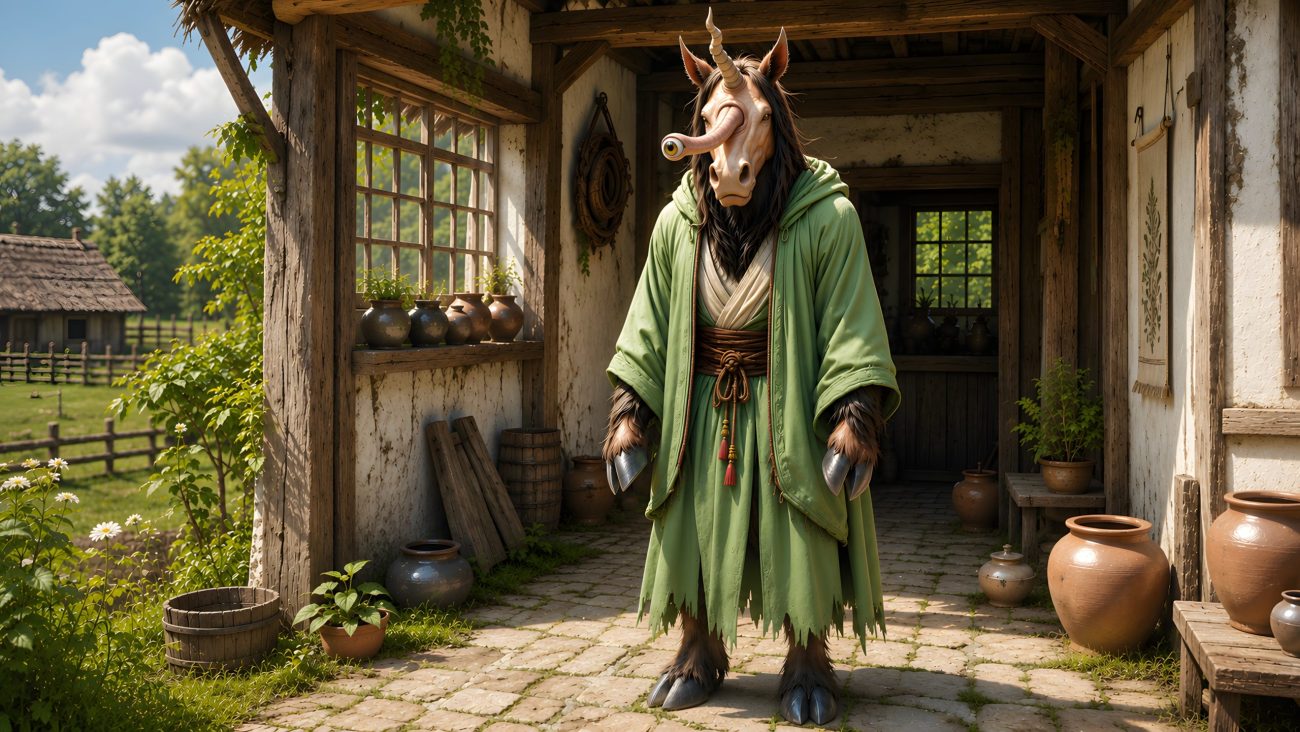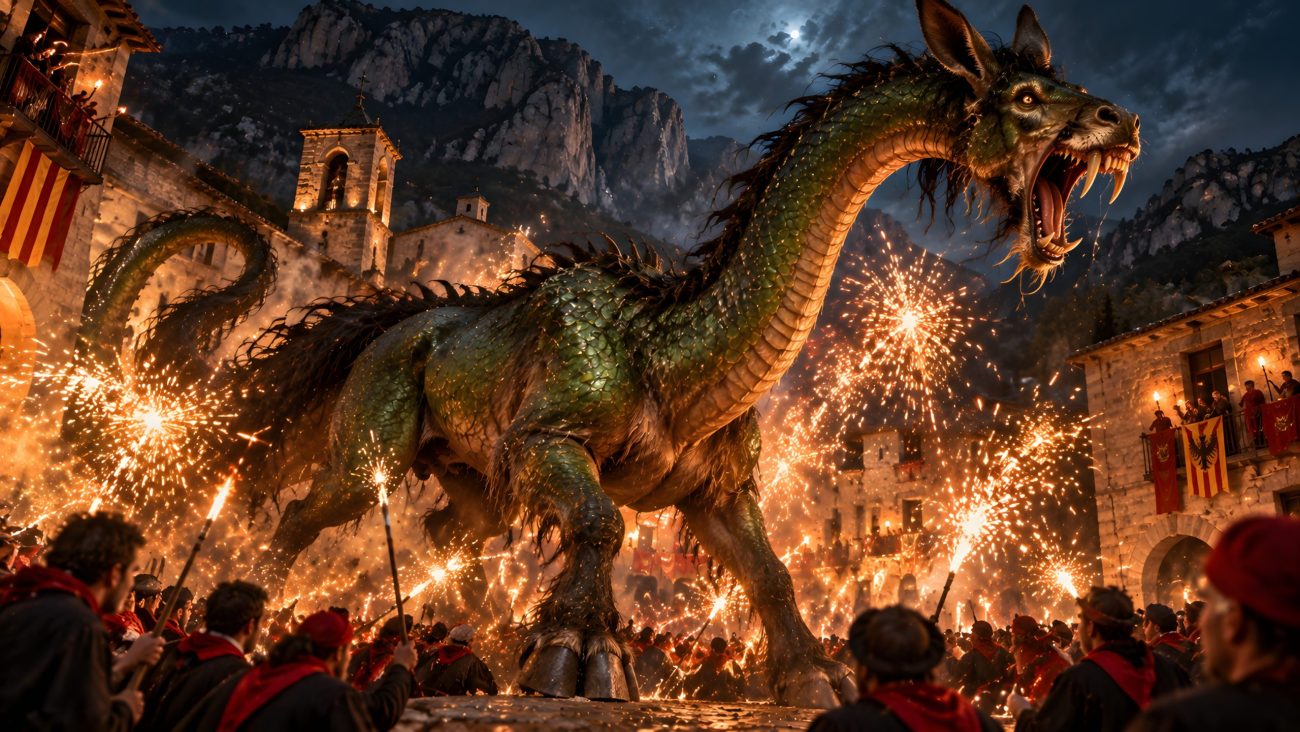
Lochgass Schimmel

Tradition / Region: Liechtenstein Mythology
Alternative names: The Lochgasse White Horse
Category: Horse


The Myth

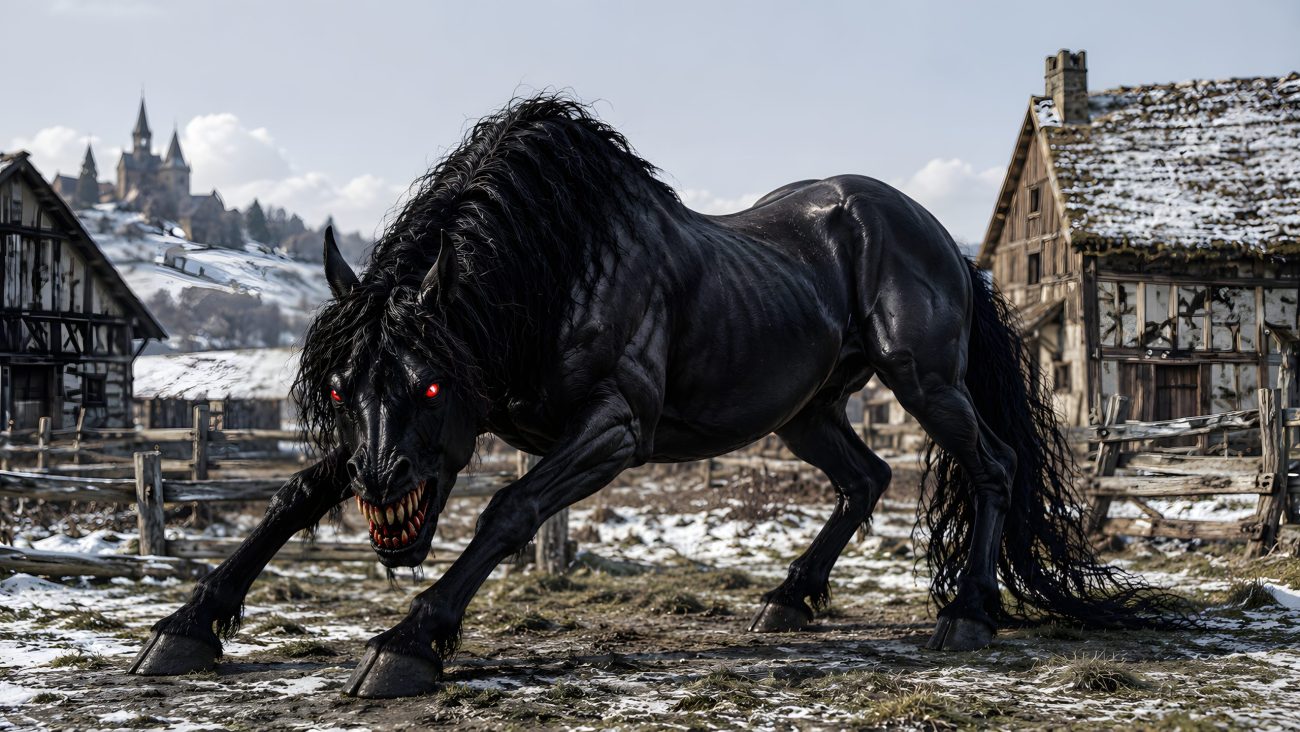
Near the narrow road known as the Lochgasse in Vaduz, there once lived a cruel and greedy farmer feared for his dishonesty. Nothing was safe from him, not even horses, which he regularly stole and sold in secret.

One Christmas Eve, he decided to continue his crimes even during the holy night. Crossing near a church shortly before midnight, he noticed a magnificent white horse tied beside the wall. The animal was beautiful, powerful, and calm beneath the winter stars.

The farmer quickly untied the horse, leapt into the saddle, seized the reins, and struck its flanks.

At once the white horse exploded forward with a terrible neigh, racing wildly through the frozen night. The rider could barely control it as it thundered up the Lochgasse at unnatural speed.

Just as the thief believed the horse was finally his, the animal stopped with violent force. The farmer was hurled from the saddle onto the road, where he broke his neck.

As he lay dying, his eyes opened in horror when the white horse transformed before him into the Devil himself.

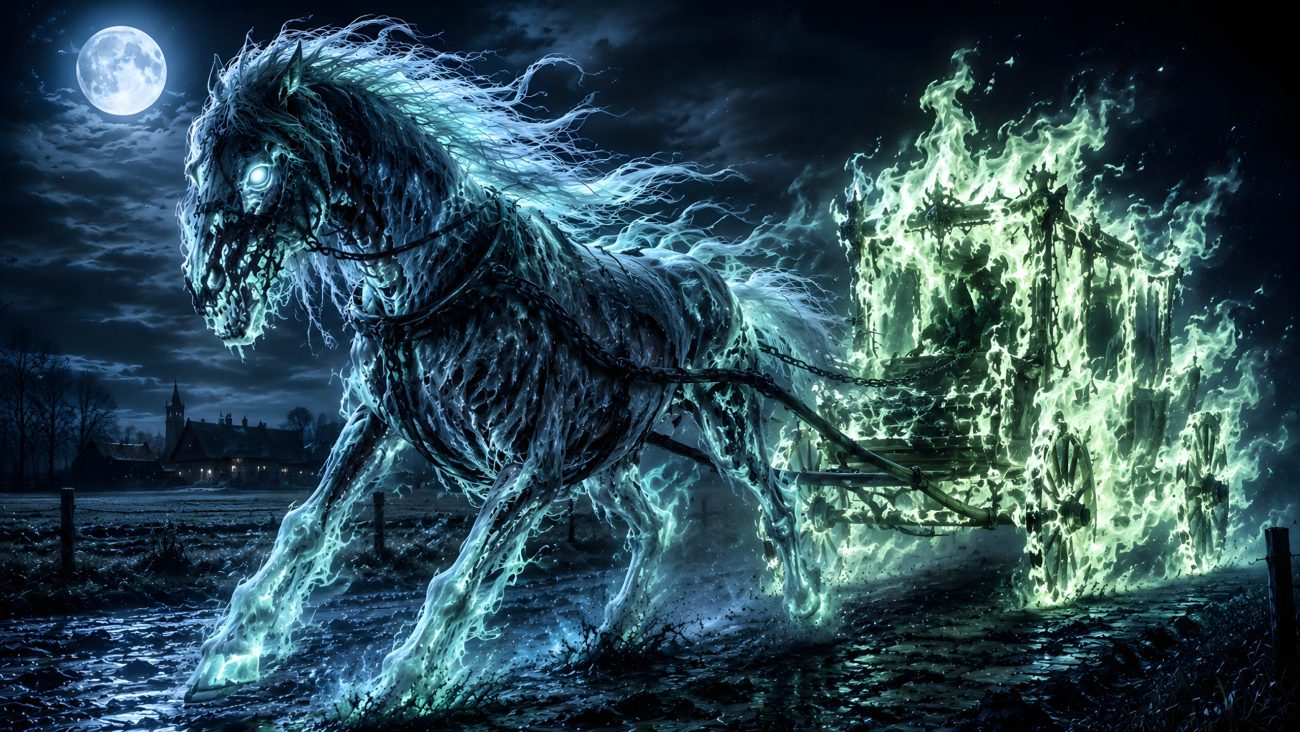
After death, the greedy farmer found no peace. His spirit was condemned to wander the Lochgasse in the form of a ghostly white horse, endlessly roaming the road where he had died. The phantom continued to appear for many years until a sacred cross was finally placed there, bringing the haunting to an end.


Sources

SAGEN.at. (n.d.). Der Lochgass-Schimmel. In SAGEN.at – Plattform für Kultur und Volkskunde. Retrieved May 23, 2026, from SAGEN.at


Bidi-Camoun

Tradition / Region: Chad Mythology
Alternative names: The Flying Horse of Tchouroma
Category: Horse


The Myth

In a Bulala legend from the region of Lake Fitri in Chad, Bidi-Camoun is a miraculous chestnut horse given to the young prince Tchouroma during childhood.

The horse is described as splendid and unusually intelligent, but its supernatural nature only becomes clear after the death of Tchouroma’s mother. The women of the royal harem, jealous of the Sultan’s affection for his son, secretly attempt to poison the young prince with enchanted cakes.

Before Tchouroma can eat them, Bidi-Camoun warns him in a human voice:

“Eat nothing but what your father eats, drink nothing but what your father drinks.”

The horse repeatedly protects the prince from assassination attempts, revealing hidden dangers and exposing the schemes of the harem women. When the conspirators discover that the horse is betraying their plots, they arrange for Bidi-Camoun to be sacrificed through the advice of a corrupt witchdoctor.

Before the execution, the horse devises an escape.

During a public equestrian ceremony, Tchouroma rides Bidi-Camoun before the entire kingdom while drums sound and singers praise the prince. In the middle of the performance, the horse suddenly rises into the sky and flies away into the clouds, carrying his master far beyond Lake Fitri.

After the miraculous flight, Bidi-Camoun brings Tchouroma to a distant kingdom ruled by King Dongo. There the horse reveals even greater magical powers. He can become invisible, appear instantly when summoned by burning hairs from his mane, and travel with supernatural speed across enormous distances.

The horse helps the exiled prince survive hardship, win the love of Princess Aicha, obtain sacred healing milk from the wilderness, and defeat invading armies in battle. Whenever Tchouroma faces danger or humiliation, Bidi-Camoun returns to aid him.

In the war against the plunderers, the horse carries Tchouroma through battle like a storm. Mounted on Bidi-Camoun, the prince cuts through enemy forces and turns the tide of war almost single-handedly.

At the end of the story, Tchouroma reveals his royal identity and marries Princess Aicha. The tale concludes by stating that Bidi-Camoun became the ancestor of the swift and powerful horses of the Bulala people.

The horse is remembered not merely as a mount, but as a loyal supernatural guardian associated with kingship, destiny, wisdom, miraculous rescue, and divine protection.


Sources

Seid, J. B. (2007). Told by starlight in Chad (K. H. Hoenig, Trans.). Trenton, NJ: Africa World Press.


Peixe Caball

Tradition / Region: Cape Verde Mythology
Alternative name: Peix’ Caball’, Horse-Fish
Category: Horse, Fish


The Myth

Peixe Caball is a strange sea creature from the folktales of Cape Verde, especially stories collected from the islands’ Lob and Tubinh trickster tradition.

The creature is described as a fish with the head or upper body of a horse and the tail of a fish. In the tales, Peixe Caball lives in the sea and possesses intelligence, emotion, and supernatural strength.

One famous story tells how Lob, a greedy and cruel wolf-like trickster, became stranded on an island after borrowing feathers from birds to attend a dance. During the celebration, Lob insulted each bird one after another until they angrily reclaimed their feathers and abandoned him.

As Lob cried alone on the island, Peixe Caball appeared from the sea and asked what had happened. Feeling pity for him, the creature agreed to carry him safely back across the water.

While riding on Peixe Caball’s back, Lob secretly admired the creature’s large breasts and planned to tear one off once they reached shore. The moment they arrived on land, Lob attacked the creature and ripped away one of its breasts before fleeing.

Wounded and crying on the beach, Peixe Caball later encountered Tubinh, Lob’s clever nephew and enemy. Tubinh promised revenge and tricked Lob into returning to the shore by pretending the stranded creature was a giant cow. When Lob approached to kill it, Peixe Caball seized him and dragged him deep beneath the ocean.

At first Lob laughed and told his wife the creature was only “playing.” But Peixe Caball continued diving deeper and deeper until Lob finally realized he was about to die. The Horse-Fish drowned him beneath the sea, ending the tale.

Peixe Caball is unusual among Atlantic African folk beings because it combines traits of a mer-creature, sea spirit, and monstrous animal. Despite its frightening strength, the creature is not evil by nature. In the story, it acts more as a supernatural being capable of both mercy and vengeance, punishing betrayal and cruelty.


Sources

Parsons, E. C. (1917). Ten folk-tales from the Cape Verde Islands. The Journal of American Folklore, 30(116), 230–238.


Jushkaparik

Tradition / Region: Armenian Mythology
Alternate Names: Vushkaparik, Ass-Pairika
Category: Horse, Demon


The Myth

The Jushkaparik is a strange and unsettling creature from Armenian folklore, described as a hybrid being that exists between human and beast, spirit and monster.

It is most often portrayed as a half-human, half-animal entity—commonly with the body or form of a donkey. In some traditions, it appears as a demonic female spirit, a pairika, known for seductive and dangerous tendencies. In others, it is a grotesque fusion: part man, part ass, sometimes even described with unnatural features such as a metallic or brass-like mouth.

The Jushkaparik is not a creature of open lands or civilization.

It inhabits abandoned places—ruins, empty landscapes, and desolate areas where human life has faded. These forgotten spaces are said to belong to such beings, where they linger unseen, emerging only when approached or disturbed.

Its nature is ambiguous and shifting.

At times, it is described as a deceiver or tempter, taking on forms that confuse or mislead those who encounter it. In other accounts, it is simply a presence—something unnatural that inhabits the edges of the human world, neither fully animal nor fully spirit.

Because of its hybrid form and unclear nature, the Jushkaparik is often grouped with other chimerical beings—creatures that blur boundaries and resist clear definition. It is neither fully demon nor fully beast, but something in between, shaped by both.

Encounters with it are rare and unclear, but always unsettling.

It belongs to the category of beings that do not openly attack or hunt, but whose very presence signals that one has crossed into a place where normal rules no longer apply.


Sources

Ananikian, M. H. (1925). Armenian Mythology. In The Mythology of All Races, Vol. 7. New York. Compiled by Bedrosian, R., p. 91-92.


Chilote Seahorse

Tradition / Region: Chile Mythology
Alternate Names: Caballo Marino de Chiloé
Category: Horse


The Myth

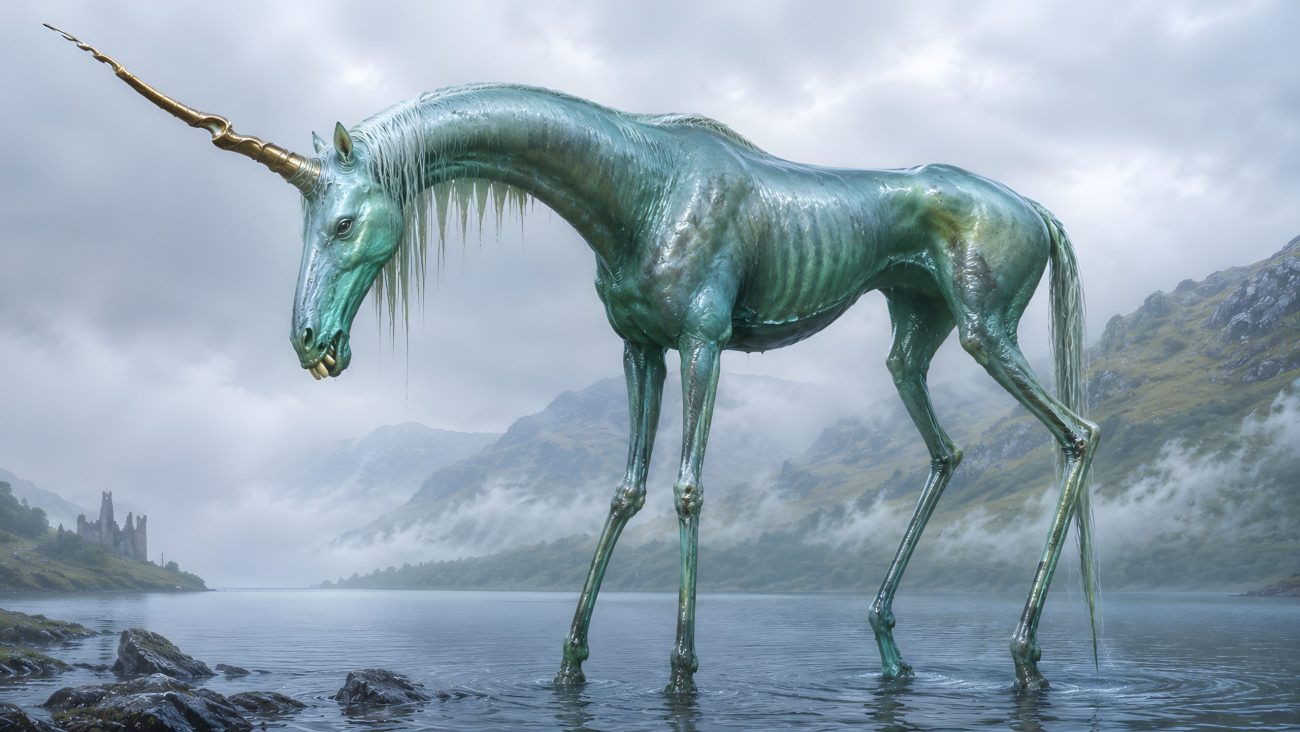
The Chilote Seahorse is a supernatural aquatic creature said to inhabit the seas surrounding the island of Chiloé. Though resembling a horse, it possesses distinctly marine features: a long snout, a flowing mane, four fin-like limbs, and a powerful fish-like tail that propels it through the water. Its body is often described as having a dark greenish-yellow coloration, attributed to its diet of seaweed.

Despite its physical presence, the creature is invisible to ordinary people. Only sorcerers—those initiated into the secret traditions of Chiloé—can see, summon, and control it. For everyone else, its existence can only be inferred indirectly, through disturbances in the water: sudden movements among rocks, splashes without visible cause, or strange ripples near the shore.

The Chilote Seahorse plays a central role in the practices of these sorcerers. It serves as their exclusive means of transportation across the sea, particularly for reaching the legendary ghost ship known as the Caleuche. According to myth, sorcerers are forbidden from using their own magic to reach this ship directly. Doing so would violate the laws of the sea and provoke punishment from Millalobo, the sovereign of the ocean. Because of this restriction, the seahorse becomes essential—a necessary intermediary between land, sea, and the supernatural.

To summon one, a sorcerer must stand at the shore and whistle in a specific pattern, typically four times. The call travels across the water, and the creature emerges from the depths. It is then controlled using reins made of seaweed, which bind it temporarily to the rider’s will. Once mounted, the seahorse moves swiftly across the surface of the sea, leaving visible trails in the water despite remaining unseen.

Some seahorses are enormous, large enough to carry multiple riders at once. In certain accounts, groups of sorcerers—sometimes numbering thirteen—mount a single massive specimen together, traveling as a collective to their destination.

Each sorcerer is said to claim and mark their own seahorse, binding it permanently into their service. This relationship is not portrayed as hostile or forced; the creature is loyal and responsive, acting as both mount and messenger.

The Chilote Seahorse has a short lifespan. After only a few years, it dies and its body dissolves into a gelatinous substance that blends back into the sea, leaving no lasting trace. Because of this, sorcerers must periodically seek out and claim new ones from the depths.

Unlike many creatures associated with witchcraft, the Chilote Seahorse is not inherently malicious. It does not attack or deceive humans. Its role is functional—serving as a bridge between the human world and the hidden, supernatural realm beneath the sea.


Sources

Wikipedia contributors. (n.d.). Caballo marino chilote. In Wikipedia, from https://es.wikipedia.org/wiki/Caballo_marino_chilote


Sihuanaba

Tradition / Region: El Salvador Mythology, Guatemala Mythology, Honduras Mythology, Nicaragua Mythology, Costa Rica Mythology, Mexican Mythology
Alternate Names: Siguanaba, Cegua, Cigua, Sihuehuet, Macihuatli
Category: Horse


The Myth

The Sihuanaba is a supernatural shapeshifter that manifests as a beautiful woman, almost always seen from behind, with long hair covering her face. She appears at night in liminal places—riverbanks, crossroads, forest paths, ravines, and empty roads—where people are isolated and vulnerable.

Her primary method is seduction through illusion. She presents herself as desirable, approachable, and often familiar. To some men, she appears as a stranger bathing or washing clothes; to others, she may resemble a lover or someone they know. She moves just ahead of her target, encouraging pursuit without ever fully revealing her face.

She specifically targets men who are morally compromised—drunkards, womanizers, unfaithful husbands, or those wandering at improper hours. These individuals follow her willingly, often believing they are in control of the situation.

Once the victim is sufficiently isolated—deep in a forest, near a ravine, or far from any path—she reveals her true form. Her face transforms into something grotesque: most commonly the head of a horse, but also described as a skull, a rotting face, or another distorted horror. The transformation is sudden and overwhelming.

The outcome varies but is always destructive. Some victims die instantly from terror. Others lose their sanity, becoming permanently disturbed or disoriented. Many are simply never seen again, having been led too far into wilderness or danger to return.

The Sihuanaba is not limited to one form of deception. She can adapt her appearance depending on the victim. Lovestruck men may see the woman they desire most. Children may see their own mother. In all cases, the illusion is tailored to lower suspicion and ensure the victim follows.

She does not attack physically at first—her power lies in manipulation and psychological control. The victim chooses to follow, and that choice seals their fate. Only at the final moment does she reveal her monstrous nature.

In some traditions, there are ways to resist or repel her, such as invoking sacred symbols or performing specific actions, which break her hold and dispel the illusion. However, these defenses only work if the victim recognizes the danger in time, which is rare.

Across regions, her behavior remains consistent even if details vary: she appears alone, lures through beauty, conceals her face, isolates the victim, and then reveals a horrific truth that leads to death, madness, or disappearance.


Sources

Wikipedia contributors. (n.d.). Sihuanaba. In Wikipedia, from https://en.wikipedia.org/wiki/Sihuanaba


Cheval Mallet

Tradition / Region: French Mythology
Alternate Names: Malet Horse
Category: Horse


The Myth

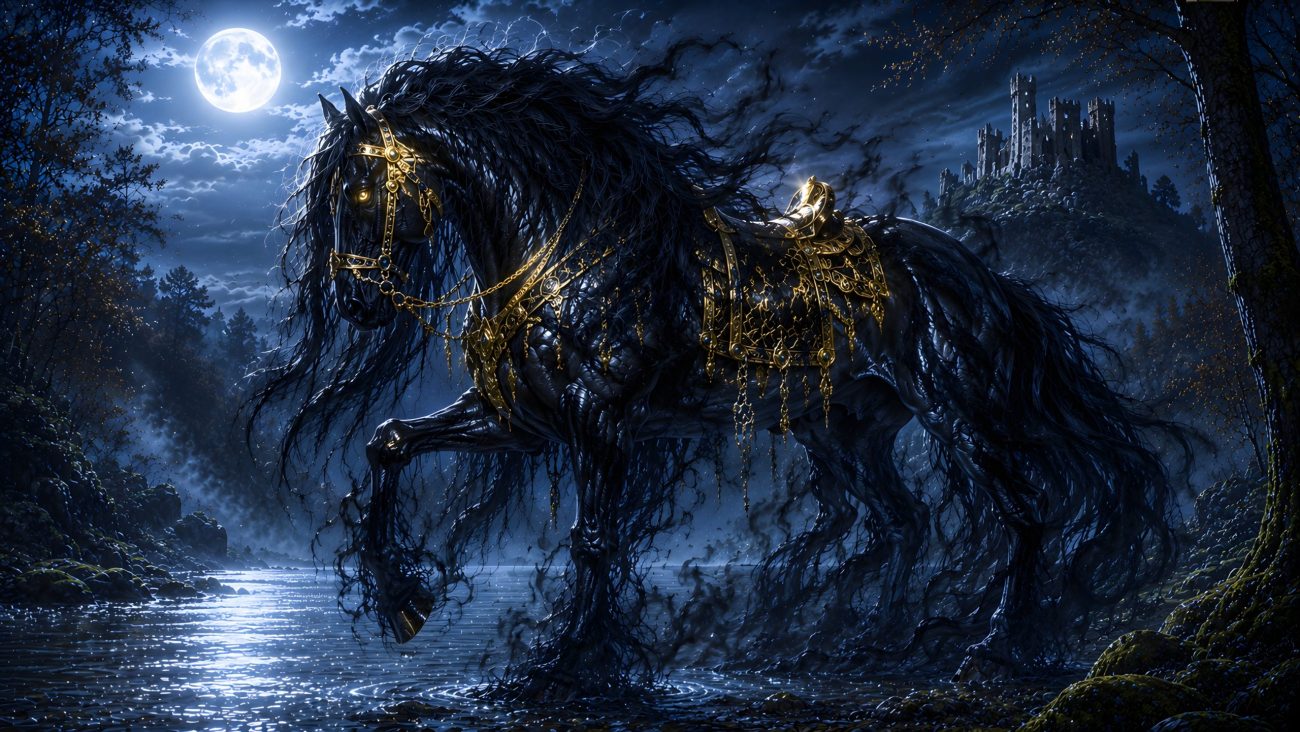
The Cheval Mallet is a sinister supernatural horse from western French folklore, especially associated with the marshlands and rural paths near Lac de Grand Lieu. It typically appears at night as a beautiful, well-equipped horse—either white or black, already saddled and bridled.

It preys on exhausted travelers. After long journeys, when a person is most vulnerable, the horse presents itself as an easy means of transport. Those who accept the offer and mount it seal their fate.

Once ridden, the Cheval Mallet reveals its true nature. It carries its rider away at unnatural speed, often into dangerous or unreachable places such as marshes, deep waters, or unknown distances. Most victims are never seen again.

In some versions, survival is possible but rare. Protection may come from carrying a sacred object, such as a medal of Saint Benedict, or by offering something in return—suggesting the creature follows certain supernatural rules or conditions.

The horse is not merely a beast but a trap: it does not chase or attack directly. Instead, it relies on temptation—offering help, then turning that choice into destruction.


Sources

Wikipedia contributors. (n.d.). Garmr. In Wikipedia, from https://en.wikipedia.org/wiki/Garmr


Cheval Gauvin

Tradition / Region: French Mythology, Swiss Mythology
Alternate Names: Gauvin Horse, Gauvain Horse, tchevâ Gâvïn
Category: Horse


The Myth

The Cheval Gauvin is a malevolent supernatural horse from the folklore of eastern France and western Switzerland, particularly the Jura region. It is described as a wandering entity that appears near rivers, forests, graveyards, and isolated paths.

Unlike ordinary animals, the Cheval Gauvin actively seeks human victims. It lures people—especially travelers—into mounting it, only to kill them afterward. Its methods vary: it may throw riders into abysses, drag them into deep waters to drown, or carry them away to their deaths. In Swiss variations, it is said to abduct young girls as it runs through villages.

The creature is strongly associated with death and misfortune. Encounters with it are often interpreted as omens, and its presence signals danger or impending doom. Because of this, it functioned in folklore as a warning figure, particularly used to frighten children away from dangerous places.

Historically, the legend was first formally recorded in 1854 by Désiré Monnier, though similar stories existed across multiple towns such as Chamblay, Montbarrey, Dole, and into the Swiss Jura. The consistency of the myth across regions suggests a deeply rooted shared tradition.

Some versions link the horse to Amauri III de Joux, portraying it as his cursed or spectral mount. Others interpret it as a transformed goblin or hobgoblin, placing it within a broader category of shapeshifting or deceptive spirits.


Sources

Wikipedia contributors. (n.d.). Cheval Gauvin. In Wikipedia, from https://en.wikipedia.org/wiki/Cheval_Gauvin


Invisible Horse

Tradition / Region: Georgian Mythology
Alternate Names:
Category: Horse


The Myth

The Invisible Horse is a supernatural mount belonging to divine beings, particularly associated with the sacred figure known as Lashari’s Cross (ლაშარის ჯვარი). It is described as completely unseen to ordinary people, visible only to select individuals such as seers or spiritual intermediaries (ქადაგი).

According to tradition, this horse possesses a striking but rarely witnessed appearance: it is said to have a dark or bluish body with a mane like black jet. It moves with unnatural speed, likened to a hawk in motion, and is accompanied by mist or fog as it travels.

The horse serves as a divine instrument, assisting sacred forces in moments when direct intervention is required. It can arrive swiftly to aid followers or carry out the will of higher powers, often appearing only when needed and vanishing just as quickly.

Its invisibility emphasizes its supernatural nature — it exists between the physical and spiritual realms. Only those with special perception or divine connection are capable of seeing or recognizing it, reinforcing its role as a sacred and exclusive entity within Georgian myth.


Sources

Tsanava, A. (1992). ქართული მითოლოგია [Georgian Mythology]. In Tbilisi: Merani P. 34.


Helhest

Tradition / Region: Danish Mythology
Alternate Names: Hel Horse
Category: Horse


The Myth

The Helhest is a spectral three-legged horse associated with death, illness, and the underworld. It is closely connected to Hel, the ruler of the realm of the dead in Norse belief.

According to tradition, the Helhest appears near graveyards, churches, and places tied to burial. It is often described as walking on three legs, producing an unnatural, heavy sound as it moves. Its presence is never neutral—it signals death, plague, or misfortune.

In times of epidemic, people believed that Hel herself rode across the land on this horse, spreading disease and claiming lives. The image of a three-legged horse moving through villages became a symbol of unavoidable death approaching.

A widespread belief held that in earlier times, before a cemetery could be used for burials, a living horse was buried within its grounds. This sacrificed animal would later return as the Helhest, bound eternally to the graveyard and serving as a guardian of the dead.

Encounters with the Helhest were rare but terrifying. In one account, a man looked out toward a cathedral yard after being told the Helhest was outside. After seeing it, he turned pale, refused to speak of what he had witnessed, and soon fell ill and died.

The Helhest also entered everyday speech. Expressions described people moving clumsily or ominously as “walking like a hel-horse,” reinforcing its association with something unnatural and foreboding.

The creature represents a deeper belief:
that death is not abstract, but moves through the world in visible form—slow, heavy, and inevitable.


Sources

Wikipedia contributors. (n.d.). Helhest. In Wikipedia, from https://en.wikipedia.org/wiki/Helhest