Fire-Red Goat

Tradition / Region: Liechtenstein Mythology
Alternative names: The Red Goat of the Treasure
Category: Sheep


The Myth

In Triesenberg there once lived a wealthy but extremely greedy farmer who trusted no one with his hidden fortune. One Sunday he told his wife, daughters, and servant to go to church while he remained home alone.

The servant became suspicious and secretly hid himself in the hayloft to watch.

During the church bells for the consecration, the farmer entered the barn carrying a pot filled with gold. He lifted part of the wooden floor and poured the treasure into a hidden cauldron buried beneath the barn. After the farmer left, the servant climbed down and stole a few pieces of gold.

Soon the farmer returned with another load of treasure. Looking into the hidden pit, he muttered that some gold seemed missing, even though he believed himself alone. Frightened, the servant did not dare move again.

When the farmer came a third time and emptied more gold into the hidden place, he sealed the floor and declared:

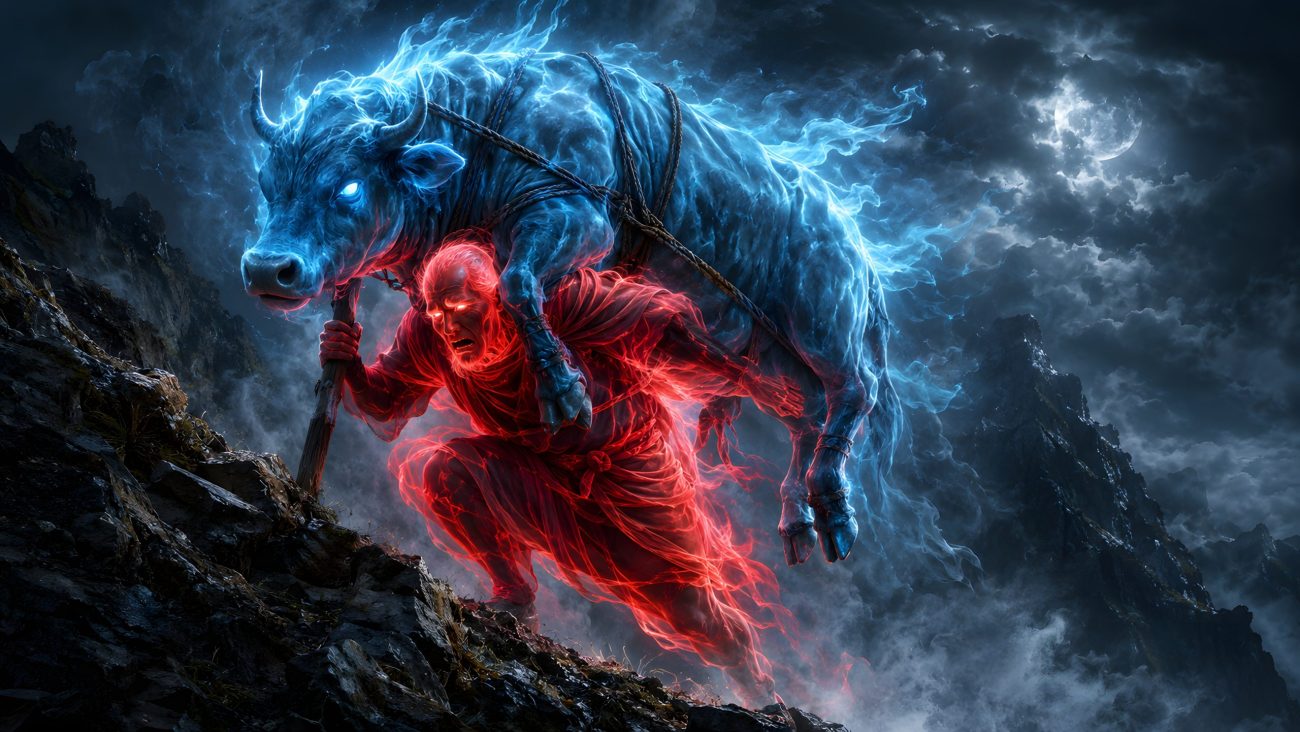
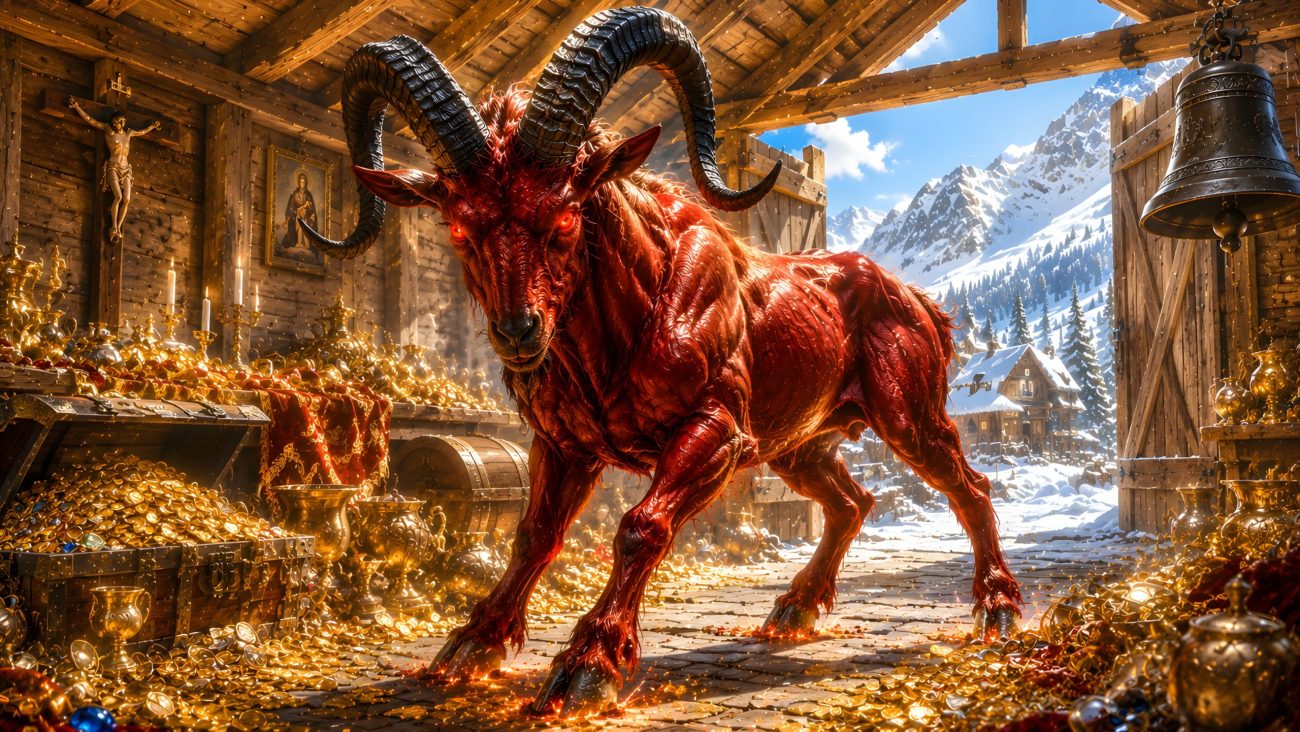
“Only the one who drives a fire-red goat three times around this treasure during the consecration bells, in the three highest names, shall ever reach this gold.”

Three weeks later the farmer died. No treasure or documents could be found, and his family fell into despair. The servant then told them to pray for him while he searched for something important.

After another three weeks he returned leading a terrifying fire-red goat. The wife and daughters laughed, believing all their prayers had only been for a strange red animal. But the servant warned them to wait and see.

The following Sunday, during the church bells, the servant and the widow opened the barn floor and drove the fire-red goat three times around the hidden treasure.

At that moment the ghost of the dead farmer suddenly appeared sitting upon the gold. When the church bells stopped ringing, the spirit vanished forever, finally released from its curse. The hidden fortune now belonged to the family.

As reward for his courage and cleverness, the servant was allowed to marry the farmer’s eldest daughter.


Sources

SAGEN.at. (n.d.). Der feuerrote Geissbock. In SAGEN.at – Traditionelle Sagen. Retrieved May 23, 2026, from https://www.sagen.at/texte/sagen/liechtenstein/seger/geissbock.html


Lochgass Schimmel

Tradition / Region: Liechtenstein Mythology
Alternative names: The Lochgasse White Horse
Category: Horse


The Myth

Near the narrow road known as the Lochgasse in Vaduz, there once lived a cruel and greedy farmer feared for his dishonesty. Nothing was safe from him, not even horses, which he regularly stole and sold in secret.

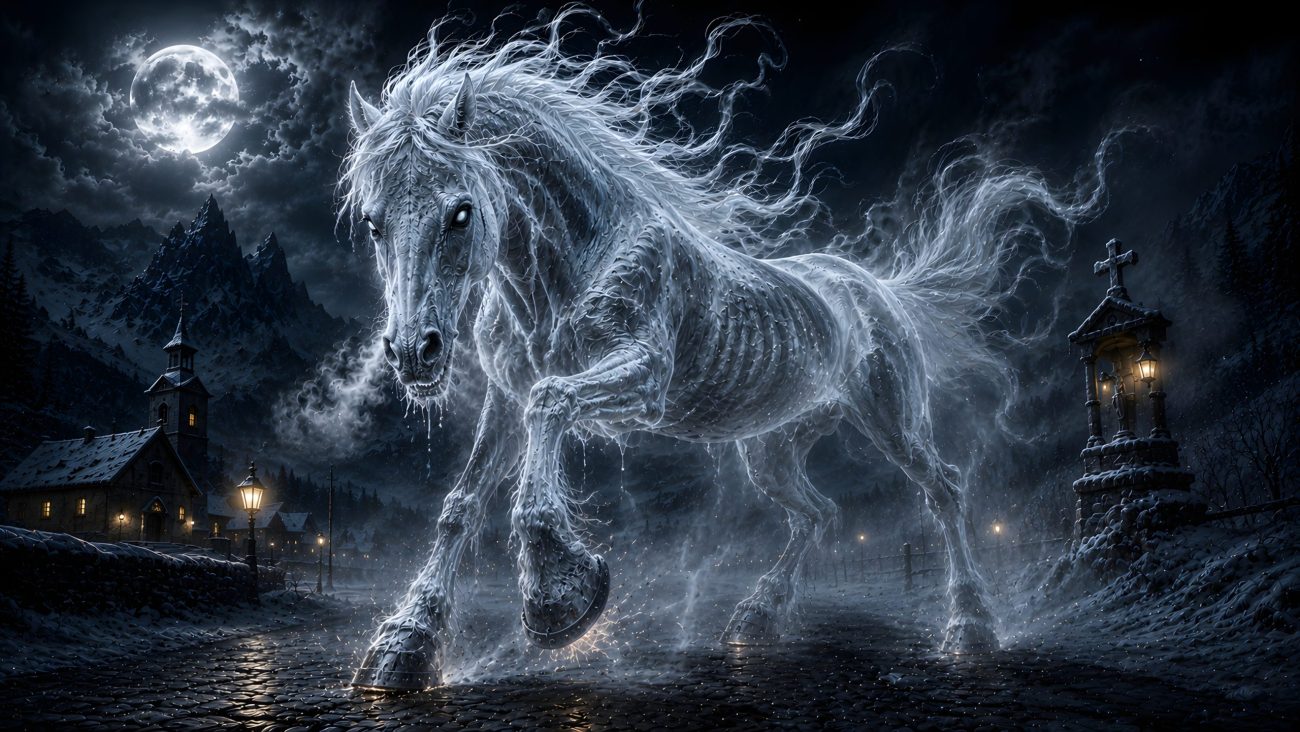
One Christmas Eve, he decided to continue his crimes even during the holy night. Crossing near a church shortly before midnight, he noticed a magnificent white horse tied beside the wall. The animal was beautiful, powerful, and calm beneath the winter stars.

The farmer quickly untied the horse, leapt into the saddle, seized the reins, and struck its flanks.

At once the white horse exploded forward with a terrible neigh, racing wildly through the frozen night. The rider could barely control it as it thundered up the Lochgasse at unnatural speed.

Just as the thief believed the horse was finally his, the animal stopped with violent force. The farmer was hurled from the saddle onto the road, where he broke his neck.

As he lay dying, his eyes opened in horror when the white horse transformed before him into the Devil himself.

After death, the greedy farmer found no peace. His spirit was condemned to wander the Lochgasse in the form of a ghostly white horse, endlessly roaming the road where he had died. The phantom continued to appear for many years until a sacred cross was finally placed there, bringing the haunting to an end.


Sources

SAGEN.at. (n.d.). Der Lochgass-Schimmel. In SAGEN.at – Plattform für Kultur und Volkskunde. Retrieved May 23, 2026, from SAGEN.at


Wildmannli

Tradition / Region: Liechtenstein Mythology
Alternative names: Wild Men / Wild Folk
Category: Cave Dweller


The Myth

The Wildmannli were mysterious mountain beings said to live in caves high in the Alps around the Nenzing Valley and the alpine pastures of Seris. Their homes were stone caves called “Kasten,” hidden among the mountains and cliffs.

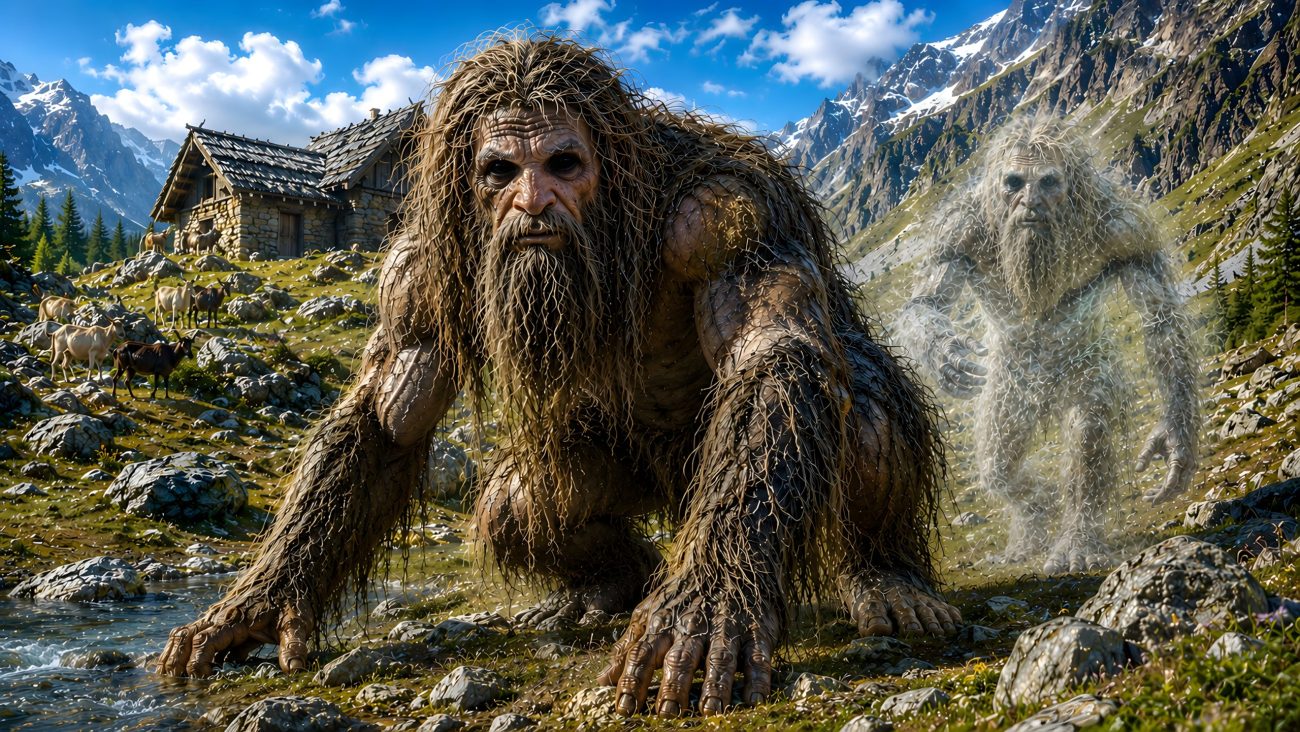
They appeared as small wild people completely covered in thick hair like bears. They wore no clothing and lived apart from ordinary humans in remote valleys and forests.

Despite their strange appearance, the Wildmannli often helped the mountain farmers. They came to the alpine meadows of Malbun and Steg and secretly cared for the cattle, feeding and watching over the animals while the herders remained below in the villages. Farmers trusted them so much that they sometimes stayed away from the high pastures for days, believing the Wildmannli would protect the livestock.

The Wildmannli, however, avoided violent weather, especially the warm alpine wind known as the Föhn. One autumn, while the wind raged high in the mountains, the farmers remained in the valley harvesting potatoes, assuming the Wildmannli would still tend the cattle. After several days, they finally climbed back into the Alps and found the animals nearly starving, because the Wildmannli had stayed hidden in their caves during the storm.

Another story tells how the Wildmannli summoned a midwife from Triesenberg to help a woman give birth deep in the mountains. After the child was born, the midwife was paid with an apron full of charcoal. Angry and disappointed, she threw away pieces of coal along the road home.

An invisible Wildmannli followed behind her, picking up the discarded coals and repeating: “The more you throw away, the less you will have.”

When the woman finally returned home, only a few pieces remained in her apron. But when she emptied them onto the stove, the charcoal had turned into shining silver coins. She rushed back to recover the discarded pieces, but they had vanished completely.

In later years, a Wildmannli was heard crying from the heights of the Ochsenkopf mountain: “Bitzi and Batzi have died!” After that night, the Wildmannli disappeared forever and were never seen again.

One cave near the mountain is still known as the Wildmannskirchle — the Little Church of the Wild Men.


Sources

SAGEN.at. (n.d.). Die Wildmannli. In SAGEN.at – Traditionelle Sagen. Retrieved May 23, 2026, from https://www.sagen.at/texte/sagen/liechtenstein/seger/wildmannli.html


St. Mamerten Hound

Tradition / Region: Liechtenstein Mythology
Alternate Names:
Category: Dog


The Myth

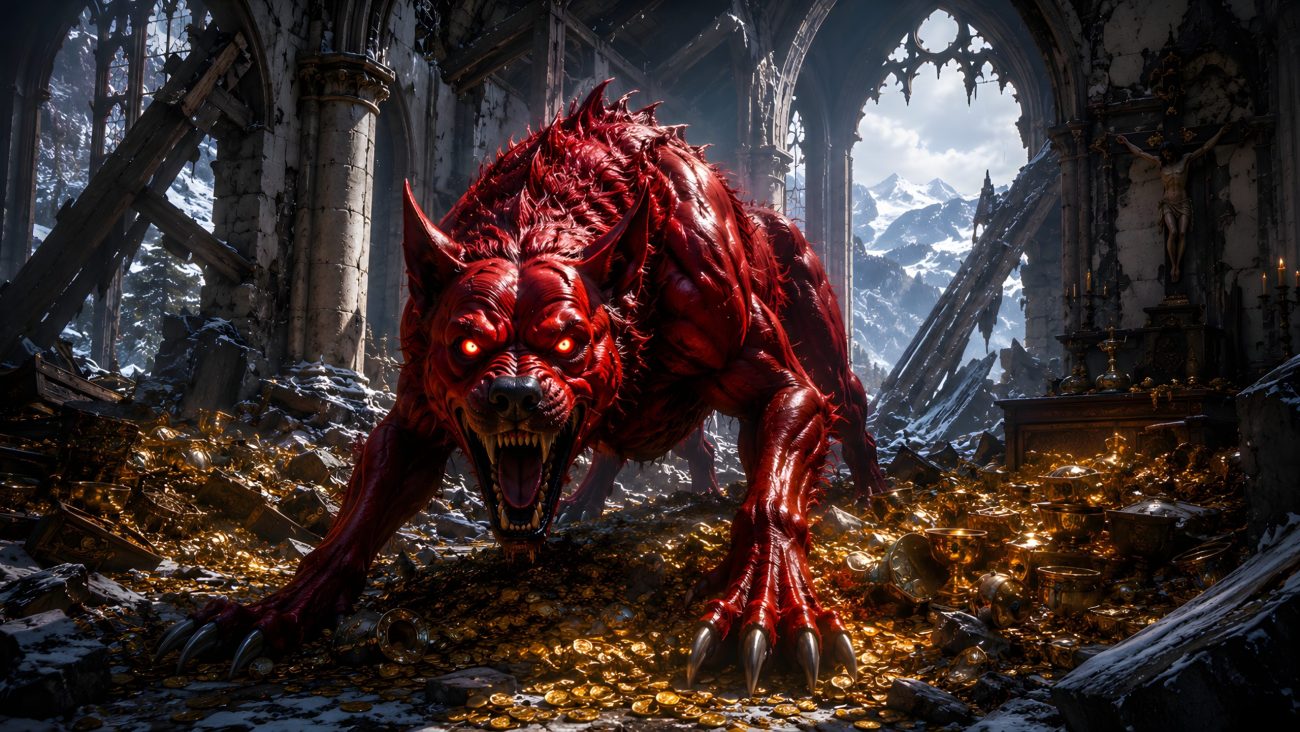
The St. Mamerten Hound appears as a dog with fiery eyes that sits upon a chest of gold inside the church of St. Mamerten, preventing it from being taken.

One evening, a young man from Triesen went into the church of St. Mamerten to pray. Suddenly, a spirit appeared to him and said that if he wanted to become rich, he should return at midnight with two other young men. He would see a chest full of gold, and on it would sit a dog. If they threw the dog down, all the gold would belong to them.

The next evening, the young man returned with two friends, and they knelt one behind the other in the pews. When the church bell struck midnight, the chest with the dog appeared. The young man in the front pew stood up and tried to throw the animal down, but it leaped up, stared at him with fiery eyes, barked and howled, and jumped from one side of the chest to the other. He called for help, and the second came, but he also failed. They then called the third, but he said in a trembling voice that he was afraid.

At that moment, they heard a piercing scream, and the dog and the chest disappeared. The spirit that had first appeared returned, wept, and cried out that he must now wait another hundred years before he could ask someone for help again.

It became completely dark in the church, and the friends could not move and had to remain inside until the sexton came to ring the morning bell.


Sources

SAGEN.at. (n.d.). Der Schatz von St. Mamerten. In SAGEN.at – Traditionelle Sagen. Retrieved May 23, 2026, from https://www.sagen.at/texte/sagen/liechtenstein/seger/mamerten.html