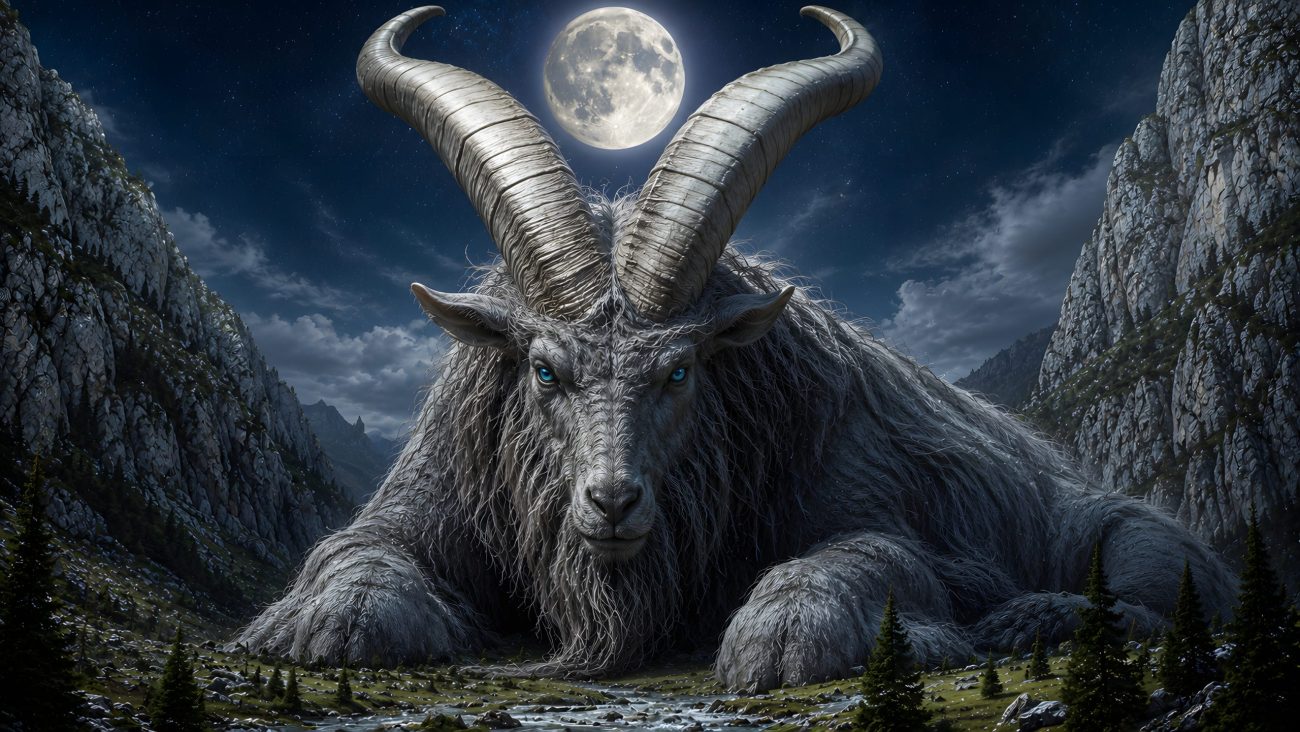
Goatmen

Tradition / Region: Kazakhstan Mythology
Alternate Names: None Recorded
Category: Sheep


The Myth

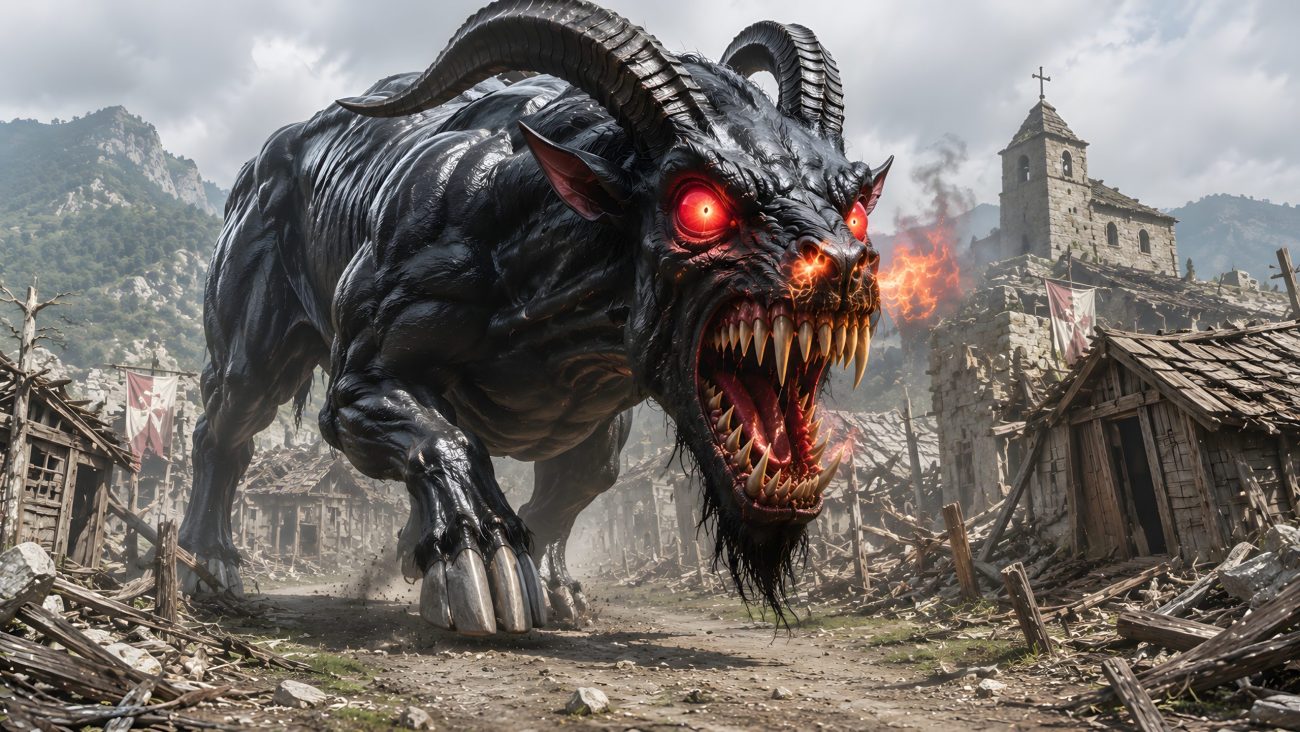
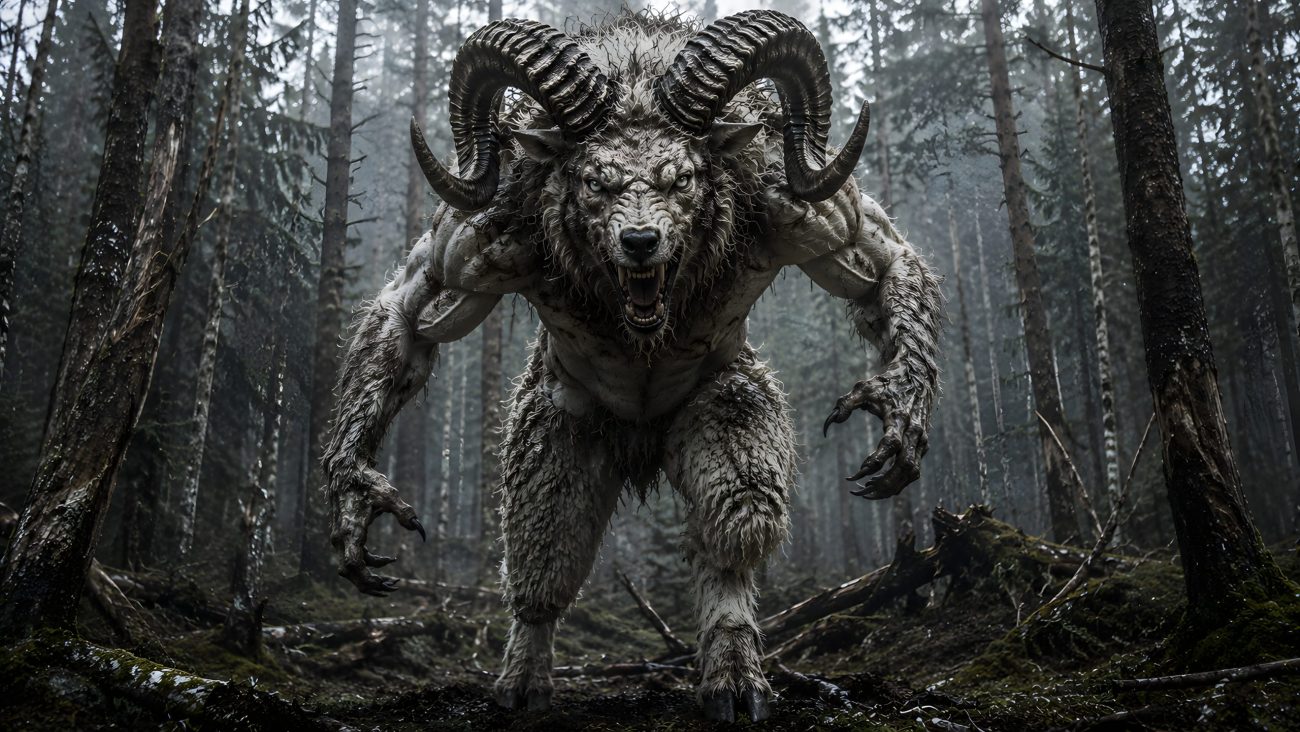
In Kazakh folklore, Goatmen are wild goats with human heads that once roamed the wilderness and attacked hunters. They were feared for their strength and were said to kill people with powerful blows from their shoulders. Because of this danger, many hunters became too frightened to enter the mountains or hunt game.

One story tells of a poor hunter and his teenage son who decided to hunt despite the danger. After gathering a large amount of game, the father ordered his son to collect brushwood for a fire. Both wore clothing made from sheepskin. The old hunter cut fat from the animals they had killed and secretly smeared it inside their coats, instructing his son to do the same.

The Goatmen watched them from nearby and became curious. Wanting to imitate the hunters, they asked for fat and covered themselves with it as well. The old hunter then held fire against the inside of his sheepskin coat, which did not burn. Believing this was safe, the Goatmen moved close to the flames. Their grease-soaked wool quickly caught fire, and as they tried to extinguish the flames by rubbing against one another, the fire spread even more fiercely.

According to the tale, the Goatmen were burned to death, and the old hunter freed the land from the dangerous creatures.


Sources

Bestiary contributors. (n.d.). Козлолюди (Kozloljudi). In Bestiary, from https://www.bestiary.us/kozloljudi


Ochokochi

Tradition / Region: Georgian Mythology
Alternate Names: Goat-Man
Category: Sheep


The Myth

Ochokochi is a dangerous and monstrous forest being from western Georgian folklore, especially among the Mingrelian people. He is imagined as a wild, humanoid creature — part man, part beast — who roams deep woods far from human settlements.

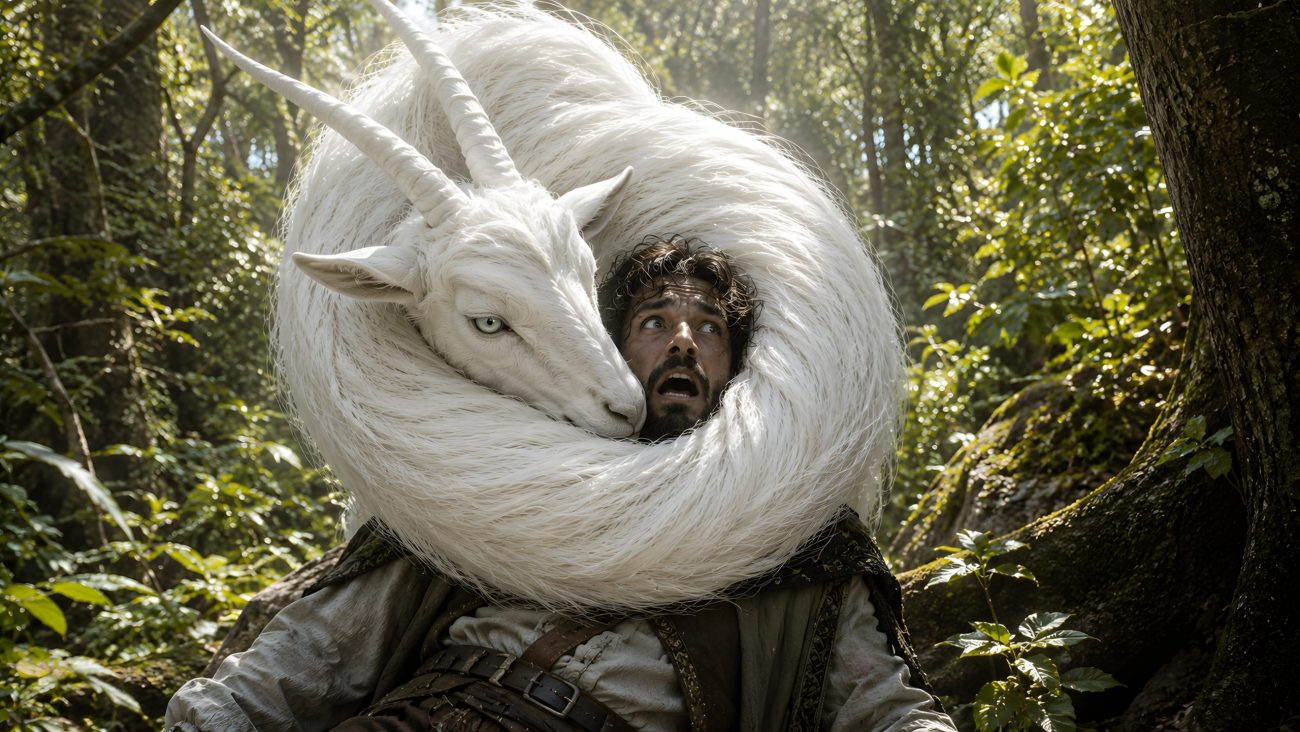
His most terrifying feature is not claws or fangs, but a sharp, protruding bone or axe-like growth jutting from his chest. When he encounters a human, he attacks by embracing them, driving this deadly spike into their body and killing them instantly.

Ochokochi is not only a predator but also a figure driven by obsession. He is said to be hopelessly infatuated with Tkashi-Mapa, the beautiful Queen of the Forest. Despite constantly chasing her through the wilderness, he is never able to capture her.

Hunters who enter the forest often interfere with his pursuit, preventing him from reaching her. This repeated failure adds to his image as both a relentless and frustrated creature — powerful, yet never fulfilled.

Ochokochi represents
the savage and dangerous side of the forest — a place where beauty exists, but is constantly threatened by brutal, untamed forces lurking in the shadows.


Sources

Wikipedia contributors. (n.d.). Ochokochi. In Wikipedia, from https://en.wikipedia.org/wiki/Ochokochi


Yule Vette

Tradition / Region: Danish Mythology
Alternate Names: Julevætten, Yule Goat
Category: Sheep


The Myth

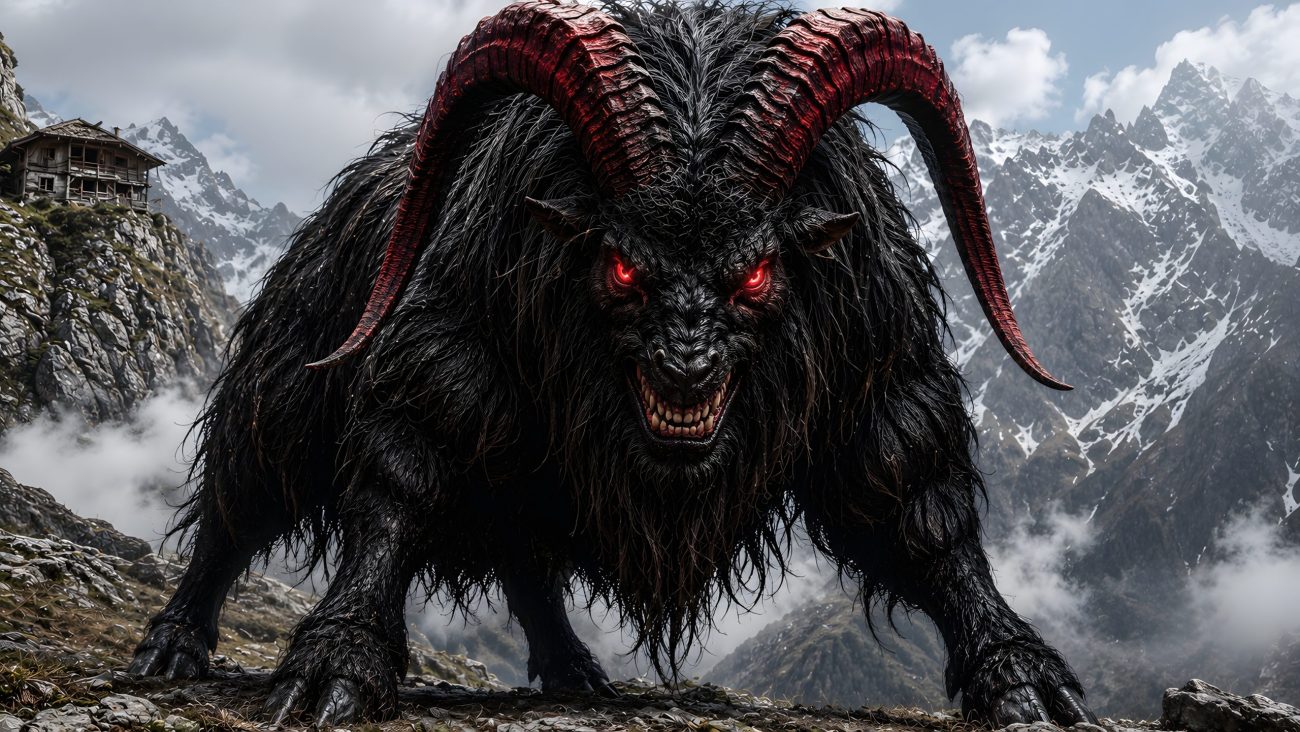
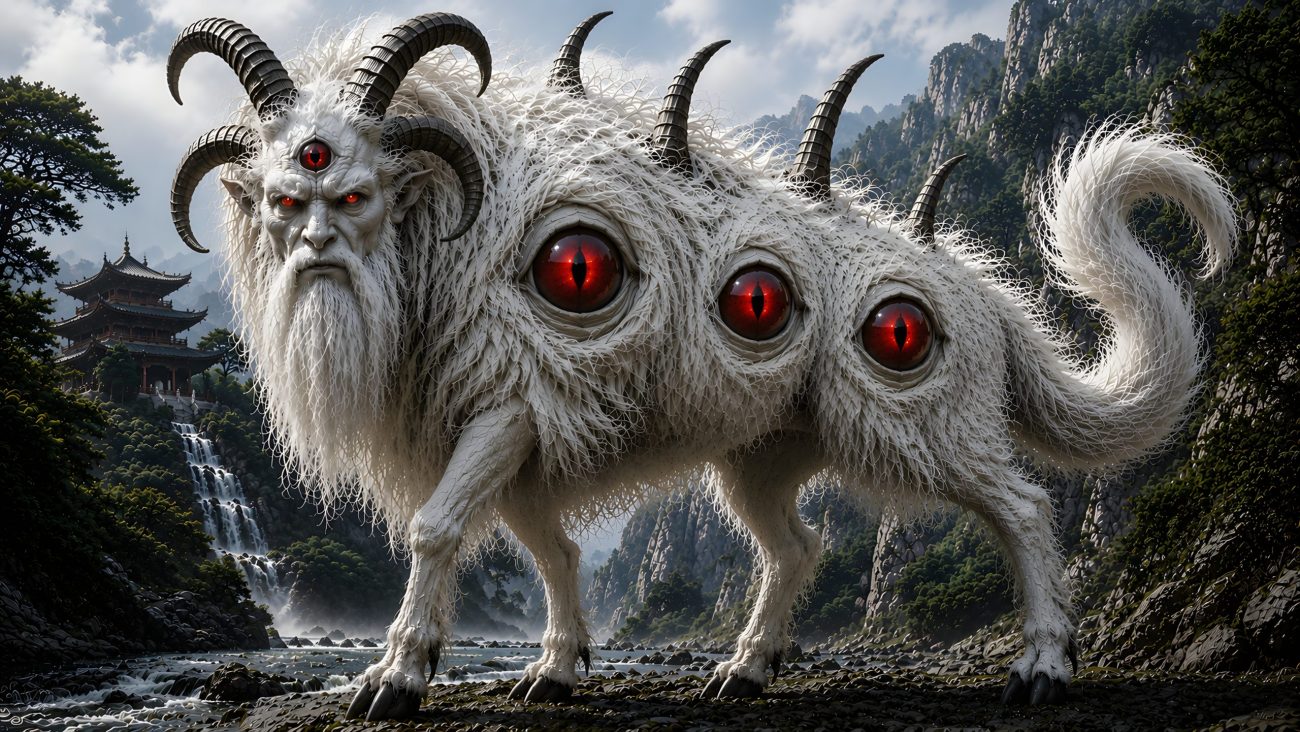
The Yule Vette is a strange, goat-like creature associated with Christmas in Danish folklore. It is described as a creeping being with long hair, a tail, and eight horns, blending animal and monstrous features.

It is said to dwell deep in forests throughout the year, but as Christmas approaches, it moves closer to human settlements. On Christmas Eve, it sneaks up to houses and attempts to enter quietly. Because of its enormous, hairy body, it often hides in the shadows, with only its horns visible.

The creature is not purely malevolent. It enters homes seeking food and drink, and if it finds what it wants, it consumes everything it can. Despite this, it does not usually harm the household if it is left undisturbed. However, if someone blocks its path or interferes with it, the Yule Vette may take them with it.

There are traditions that offerings—such as apples or nuts—can satisfy the creature. When properly fed, it leaves peacefully, full and content, without causing further trouble.

The Yule Vette is also connected to older, deeper forces. Its presence is linked to ancient beings and to the wild, untamed aspects of nature that persist even during sacred or festive times.

It represents a recurring idea in winter folklore:
a visitor from the wilderness during sacred nights, who must be respected and appeased rather than confronted.


Sources

Bestiary contributors. (n.d.). Йольский Вэттэ (Iolskii Vette). In Bestiary, from https://www.bestiary.us/iolskii-vette


Phlachal

Tradition / Region: Armenian Mythology
Alternate Names: Elephant-Goat
Category: Sheep, Elephant, Hybrid


The Myth

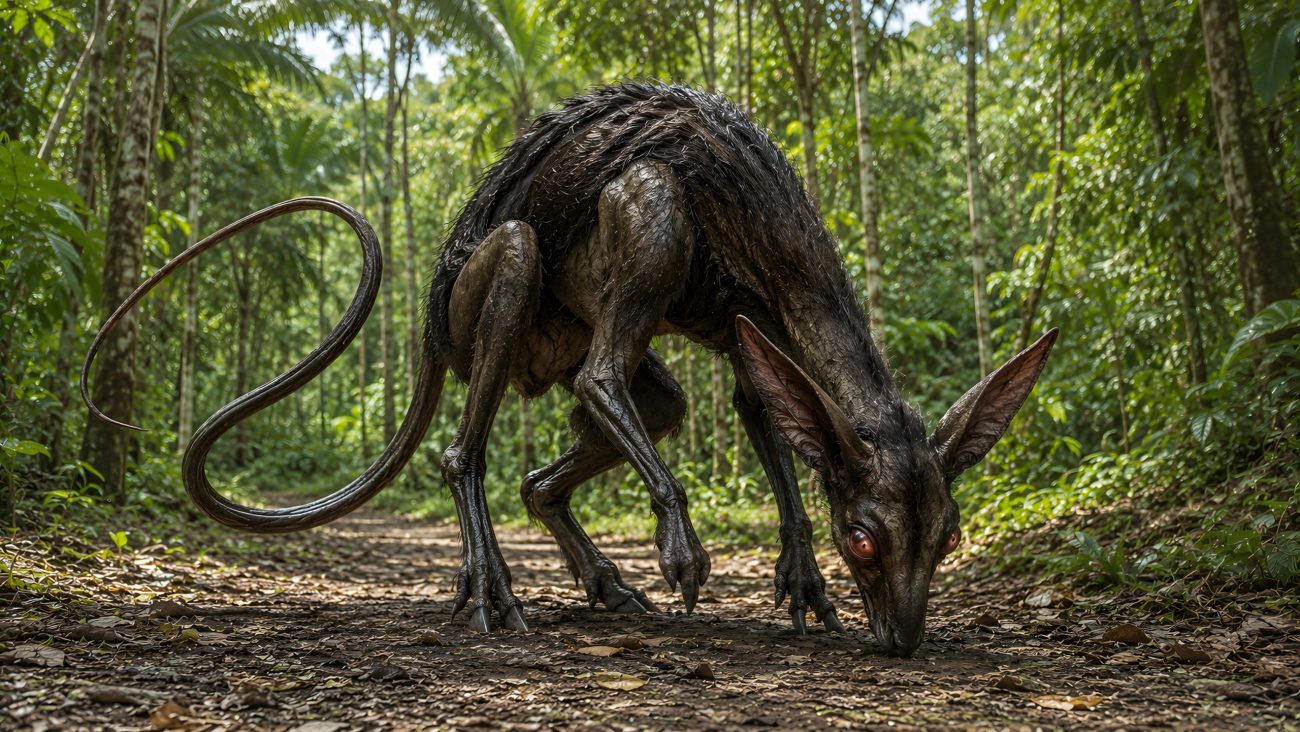
The Phlachal is a rare and obscure creature in Armenian mythology, described simply as an “elephant-goat.” It belongs to a class of chimeric beings—monsters formed by combining traits of different animals.

Very little detailed information survives about the Phlachal, but its name suggests a hybrid of immense size and unnatural composition, likely blending the strength and mass of an elephant with the agility or form of a goat. Like other chimeras in regional folklore, it would have been perceived as unnatural and unsettling.

It appears in the same context as other hybrid creatures such as the sea-bull, indicating that it was part of a broader mythological tradition of monstrous animals that defied natural order. These beings were often associated with fear, unpredictability, and the boundaries between land, sea, and the supernatural.


Sources

Ananikian, M. H. (1925). Armenian Mythology. In The Mythology of All Races, Vol. 7. Published by the Archaeological Institute of America p. 92.


Witches of Engolasters

Tradition / Region: Andorran Mythology
Alternate Names: —
Category: Witch, Sheep


The Myth

The Witches of Engolasters are a collective of witches from across the Pyrenees who gather at Lake Engolasters on the night of the summer solstice to renew their pact with the devil. The lake itself is considered a deeply esoteric place, associated with mystery and supernatural forces, where even falling stars are believed to sink into its depths.

On the night of Saint John, witches travel from distant mountains and valleys to assemble at the lake. Before the sabbath begins, they gather special herbs used to create a magical drink that grants them the power to cast spells. During this preparation, the devil marks them, altering their nature and distinguishing them from ordinary women.

At midnight, under the moonlight, the sabbath begins. The witches form circles around the devil, who appears in the form of a goat and plays music that drives the ritual forward. The dance becomes increasingly wild and chaotic, accompanied by shouting, whistling, and the drinking of enchanted potions. During this time, the witches declare the curses they will cast over their lands in the coming year.

Young men sometimes attempt to spy on the gathering, climbing toward the lake with protective branches. However, they are often discovered before reaching it. The witches use enchantment against them, transforming them into black cats and drawing them into the ritual itself.

By morning, the lake returns to silence. Those who were transformed awaken far from the scene, exhausted and with no memory of what occurred. The sabbath leaves no visible trace, but its effects are believed to linger throughout the year.


Sources

Valls, À., & Carol, R. (2023). Llegendes d’Andorra. In Encamp-Montellà: Anem Editors. p. 46.


Dream Black Wolf

Tradition / Region: Albanian Mythology
Alternate Names: —
Category: Sheep


The Myth

The Dream Black Wolf is a figure seen in a queen’s nightmare, appearing among a flock of sheep. It is described as resembling a large black ram and is associated with an ominous vision preceding events involving Halili and Tanusha.

In the city of Kotor, the queen suffered a troubling dream. She saw a great herd of sheep, three hundred in number, and among them stood a black wolf. The wolf resembled a large black ram as it moved within the flock. Disturbed by what she had seen, the queen rose in fear and went to the king.

She told him of the dream and urged him to act. The king prepared at once and rode out. When he reached the river, he counted the maidens and found one too many among them. This discovery led to the uncovering of Halili, who had been disguised among the maidens.


Sources

Albanian Literature contributors. (n.d.). Oral verse: Frontier Warriors (Këngë Kreshnikësh). In Albanian Literature, from http://www.albanianliterature.net/oralverse/verse_09_05.html

Palaj, B., & Kurti, D. (1937). Visaret e Kombit, vol. II (pp. 23–41); Haxhihasani, Q. (1966). Folklor shqiptar II, Epika legjendare (Cikli i kreshnikëve), Vëllimi i parë (pp. 71–86). In Tirana. Translated by Elsie, R., & Mathie-Heck, J. (2004), Songs of the Frontier Warriors (Këngë Kreshnikësh): Albanian Epic Verse.


Garmina Witches

Tradition / Region: Swiss Mythology
Alternate Names: Witches of Oute Garmina
Category: Sheep


The Myth

On the mountain path that runs from Vättis to Untervatz, across the Owaggis and Salatz Alps, there was once said to be a lonely place called Oute Garmina. There, long ago, three witches lived together.

A young hunter from Vättis often roamed the Calanda mountains and passed that way on his hunts. Several times he encountered the sisters, yet they could not harm him. He was said to wear “clean shoes,” and because of this, their magic failed against him.

Unable to touch him directly, the witches tried another trick. They transformed themselves into chamois and appeared on the slopes, hoping to lure him into danger. One day, as he crossed the Alp Gwaggis, he saw three chamois grazing peacefully on a grassy ledge. Thinking them ordinary game, he raised his gun and fired. Yet every shot missed.

Suddenly the animals sprang toward him. Sensing danger, he threw himself flat to the ground, and the attack failed. Later, an old man from Vatz told him the truth: the chamois were not beasts, but the witches of Garmina. He instructed the hunter how to defeat them.

The hunter followed his advice. He mixed Trinity-blessed salt into his powder and loaded a consecrated silver bullet. The next time he saw the chamois, he fired again. This time his aim did not fail. One of the animals was struck and fell from the rocks, tumbling down the cliff.

The hunter went at once to Garmina. There he found that he had indeed slain one of the witches, killed by a shot through the head.

And so the story remained among the mountain people, who remembered that on the high paths of Garmina, even grazing animals might hide something far more dangerous.


Sources

SAGEN.at. (n.d.). Die Garmina-Hexen. Retrieved March 1, 2026, from https://www.sagen.at/texte/sagen/schweiz/st_gallen/garmina_hexen.html.


Servant as a Goat

Tradition / Region: Romanian Mythology
Alternate Names:
Category: Shapeshifter, Sheep


The Myth

In the Transylvanian village of Heitau, a Romanian farmhand once walked along the road with two maids. As they went, the man suddenly threw himself into a somersault. Then he somersaulted a second time, and a third.

At once he was no longer a man but a grey-spotted billy goat.

The animal charged furiously at the two girls. With its horns it gored and tore at their red katana, shredding the garments into pieces. The maids fled in terror as the goat raged around them.

After some time, the creature again threw itself into three somersaults. As it completed the last one, the goat vanished and the farmhand stood there once more in human form.

Yet the transformation had not left him untouched. A small shred of the torn red cloth had grown fast to his ears, and this strange mark, it was said, remained with him for the rest of his life.


Sources

sagen.at contributors. (n.d.). Knecht als Ziegenbock. In sagen.at, from https://www.sagen.at/texte/sagen/rumaenien/siebenbuergen/knechtalsziegenbock.html


Badalisc

Tradition / Region: Italian Mythology
Alternate Names:
Category: Mountain dweller, Sheep


The Myth

High in the southern Alps, around the village of Andrista, there is said to live a strange creature called the Badalisc. It dwells in the dark forests above the settlement, hidden among rocks, snow, and twisted trees. It has a great head wrapped in goat skin, small horns, a vast gaping mouth, and glowing eyes that shine in the night.

The Badalisc does not live quietly. Throughout the year it troubles the people of the village. It lurks in the woods, watching, listening, knowing their secrets. Though rarely seen, its presence is felt—mischief, unease, whispers of wrongdoing. The villagers know it must be dealt with.

So every year, on the eve of Epiphany, when winter lies deep upon the mountains, the men of the village go out to capture the creature.

They enter the forest masked and disguised. Among them are hunters, sweepers who clear the way, an old man and old woman, a hunchback who strikes the ground with his stick, and a young maiden who serves as bait, for the Badalisc is said to be stirred by desire. After searching the woods, they bind the creature with a rope and drag it down from the mountains into the village.

It is led into the square before the gathered community.

The Badalisc itself does not speak. It is wild and dumb. But through an interpreter its words are given voice. A long speech is read aloud—its “confession.” In this speech the creature reveals the hidden faults, scandals, petty sins, and foolish schemes of the villagers. Nothing escapes it. It mocks, exposes, and ridicules the community. As the words are spoken, the hunchback beats his stick rhythmically, marking the weight of each accusation.

The villagers listen. They laugh, they wince, they recognize themselves in the creature’s gossip.

When the speech is finished, the mood shifts. Singing begins. Dancing follows. Food is shared, especially the great dish of polenta prepared for the occasion. The Badalisc sits in a place of honor during the feast, no longer a menace but part of the celebration.

On the following day, its time among humans ends. The rope is removed. The Badalisc is released and allowed to return to the forest, back to its mountain home.

There it waits through another year—watching, listening, gathering secrets—until once again winter comes, and the villagers climb into the woods to bring it down.


Sources

Wikipedia contributors. (n.d.). Badalisc. In Wikipedia, The Free Encyclopedia. Retrieved February 14, 2026, from https://en.wikipedia.org/wiki/Badalisc


Bagan

Tradition / Region: Belarusian mythology
Alternate Names:
Category: Cow, Spirit, Sheep


The Myth

In old times, when a family’s survival depended on the strength of its fields and the health of its animals, there lived a spirit known as the Bagan. This being watched over cattle with tireless care, guarding herds from wolves, bears, and all other dangers that crept from forest and night.

The Bagan knew when an animal fell ill and would bring relief or healing. When cows went into labor, it was said the spirit stood unseen nearby, guiding the birth so that both calf and mother lived. As long as the Bagan remained close, the herd thrived and the farm prospered.

The spirit asked for little—only a modest offering, a share of food, or a gesture of thanks. Such acts were enough to show respect and keep its goodwill. When honored, the Bagan remained gentle and vigilant, protecting the animals as if they were its own.

But when forgotten or ignored, the Bagan changed. The same spirit that once guarded the herd could turn harsh, bringing sickness, misfortune, and loss to the cattle it had once protected.

Thus the people believed that care and gratitude sustained not only animals, but the unseen forces that watched over them.


Sources

Dervlyansky, P. (n.d.). Belarusian folks legends. p. 257.

Bestiary.us. (n.d.). Bagan. from https://www.bestiary.us/bagan