Goatmen

Tradition / Region: Kazakhstan Mythology
Alternate Names: None Recorded
Category: Sheep


The Myth

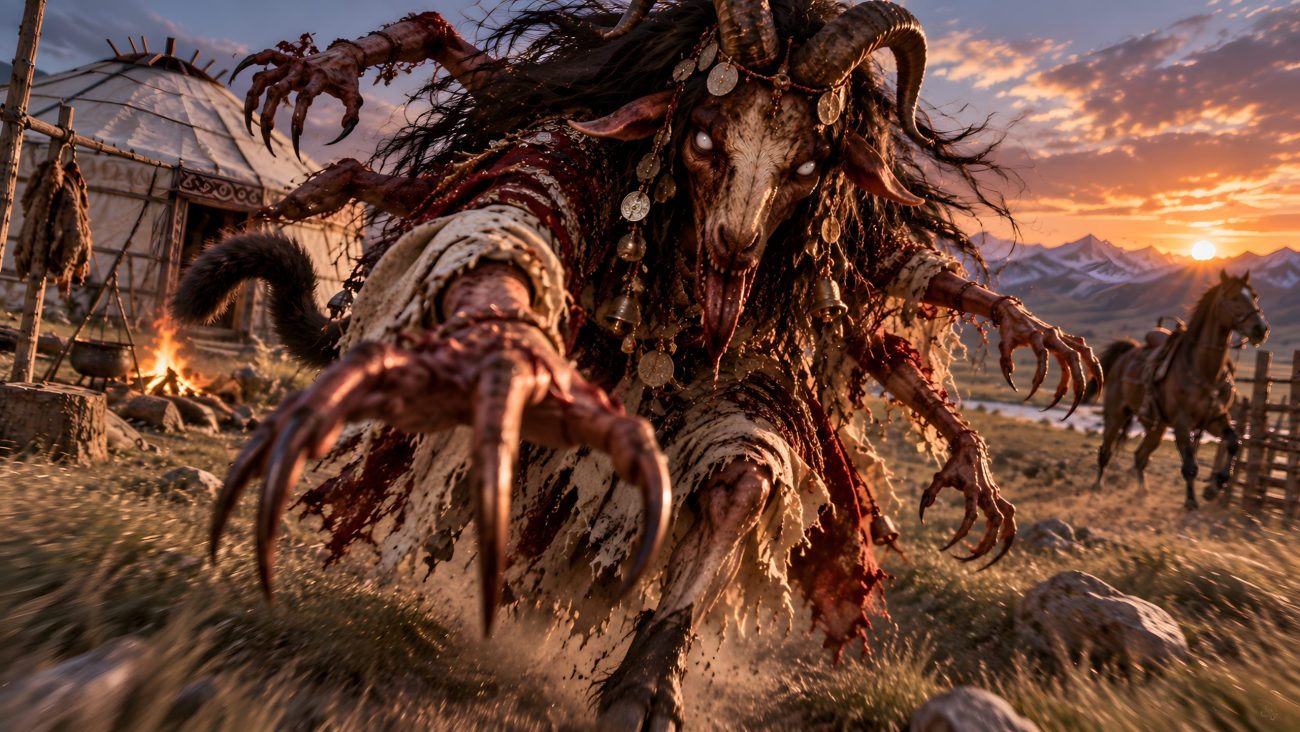
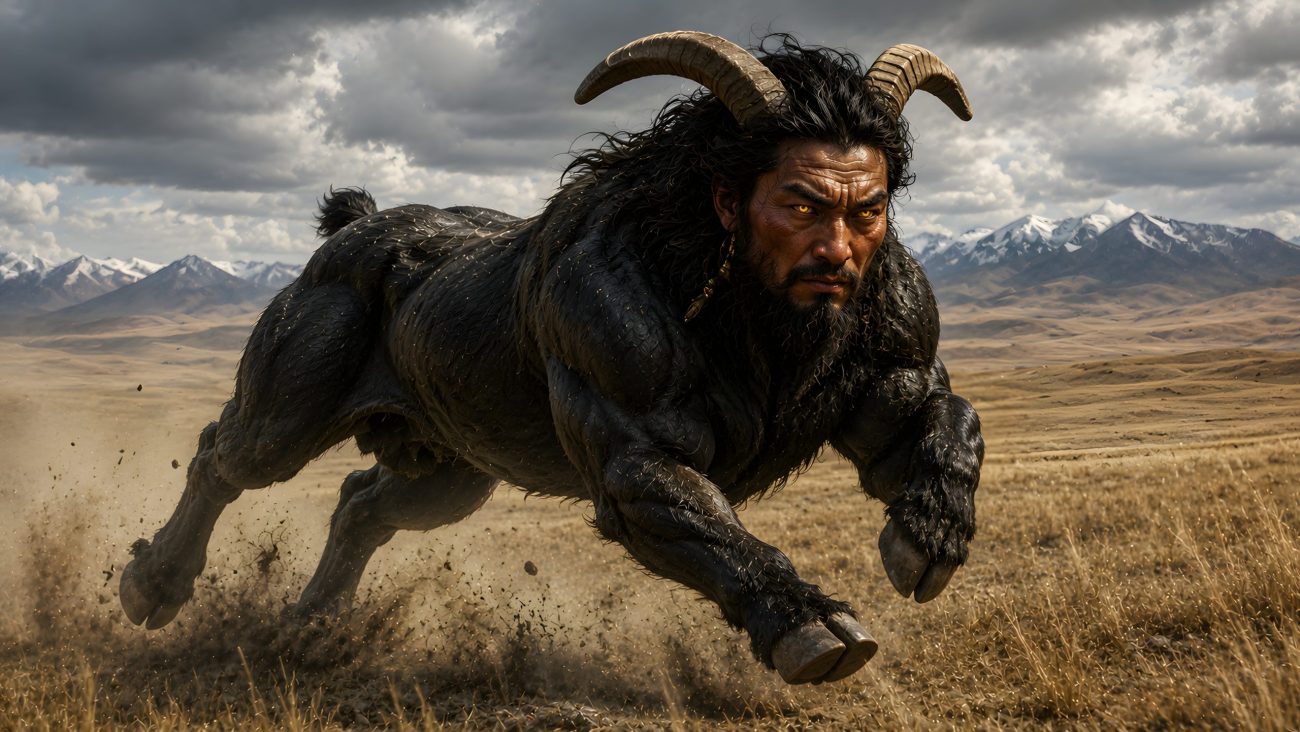
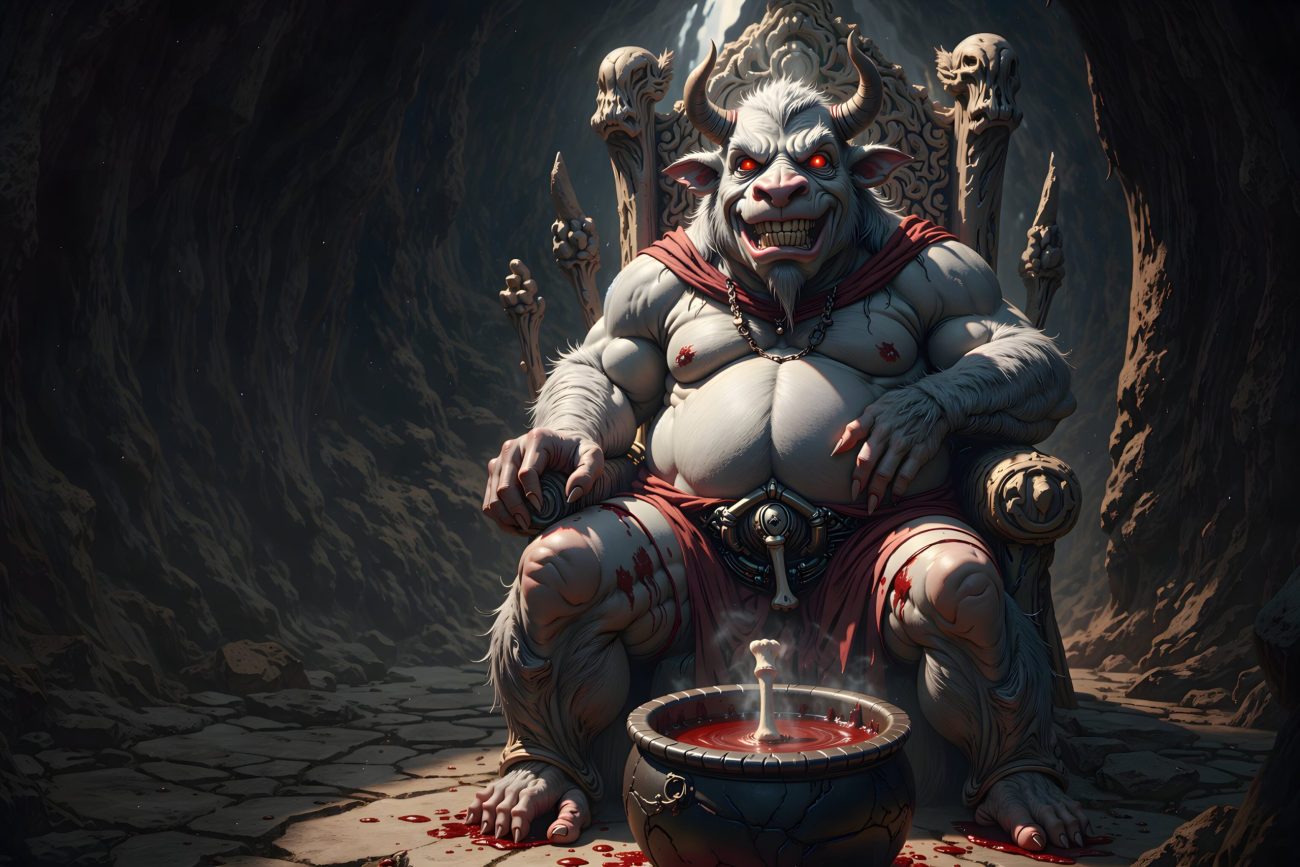
In Kazakh folklore, Goatmen are wild goats with human heads that once roamed the wilderness and attacked hunters. They were feared for their strength and were said to kill people with powerful blows from their shoulders. Because of this danger, many hunters became too frightened to enter the mountains or hunt game.

One story tells of a poor hunter and his teenage son who decided to hunt despite the danger. After gathering a large amount of game, the father ordered his son to collect brushwood for a fire. Both wore clothing made from sheepskin. The old hunter cut fat from the animals they had killed and secretly smeared it inside their coats, instructing his son to do the same.

The Goatmen watched them from nearby and became curious. Wanting to imitate the hunters, they asked for fat and covered themselves with it as well. The old hunter then held fire against the inside of his sheepskin coat, which did not burn. Believing this was safe, the Goatmen moved close to the flames. Their grease-soaked wool quickly caught fire, and as they tried to extinguish the flames by rubbing against one another, the fire spread even more fiercely.

According to the tale, the Goatmen were burned to death, and the old hunter freed the land from the dangerous creatures.


Sources

Bestiary contributors. (n.d.). Козлолюди (Kozloljudi). In Bestiary, from https://www.bestiary.us/kozloljudi


Mystan Kempir

Tradition / Region: Kazakhstan Mythology, Kyrgyzstan Mythology, Uzbekistan Mythology, and Tatar Mythology
Alternate Names: None Recorded
Category: Witch, Demon


The Myth

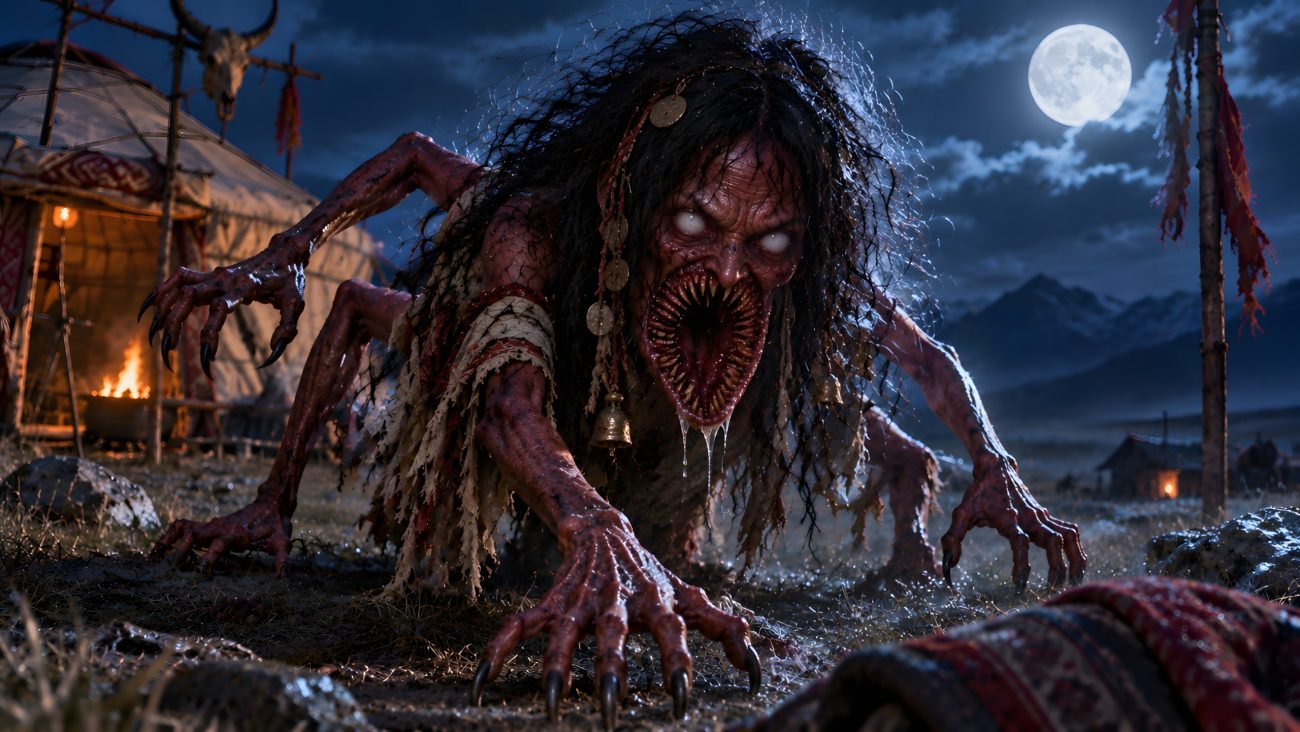
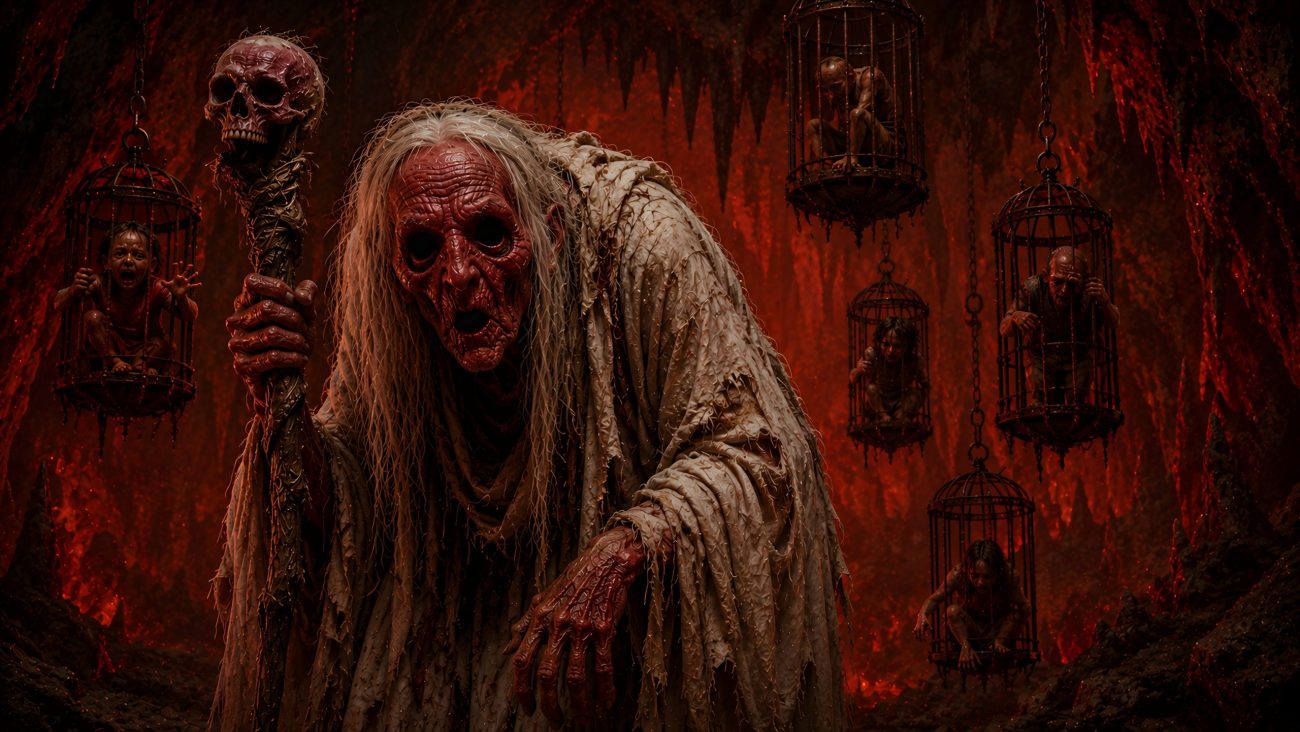
Mystan Kempir is a demonic old woman from Central Asian folklore. She is feared as a witch who steals and replaces children, poisons food, and places curses upon people. Some legends also describe her keeping captives in the underworld, where she devours them alive.

Although she appears as an elderly woman, Mystan Kempir is said to possess unnatural speed and strength, capable of outrunning or even catching a galloping horse. She is known more for deception than direct violence, often defeating people through tricks, manipulation, and cunning rather than force.

Stories describe Mystan Kempir disguising herself as an ordinary old woman in order to enter homes unnoticed. Once welcomed inside, she brings misfortune, danger, or death. In heroic tales, even powerful batyrs can struggle against her schemes and magical tricks.


Sources

Bestiary contributors. (n.d.). Мыстан кемпір (Mystan Kempir). In Bestiary, from https://www.bestiary.us/mystan-kemp%D1%96r


Maidyn Massalyk Ulesi

Tradition / Region: Kazakhstan Mythology
Alternate Names: Maidyn massalyk ulesi
Category: Spirit, Dwarf


The Myth

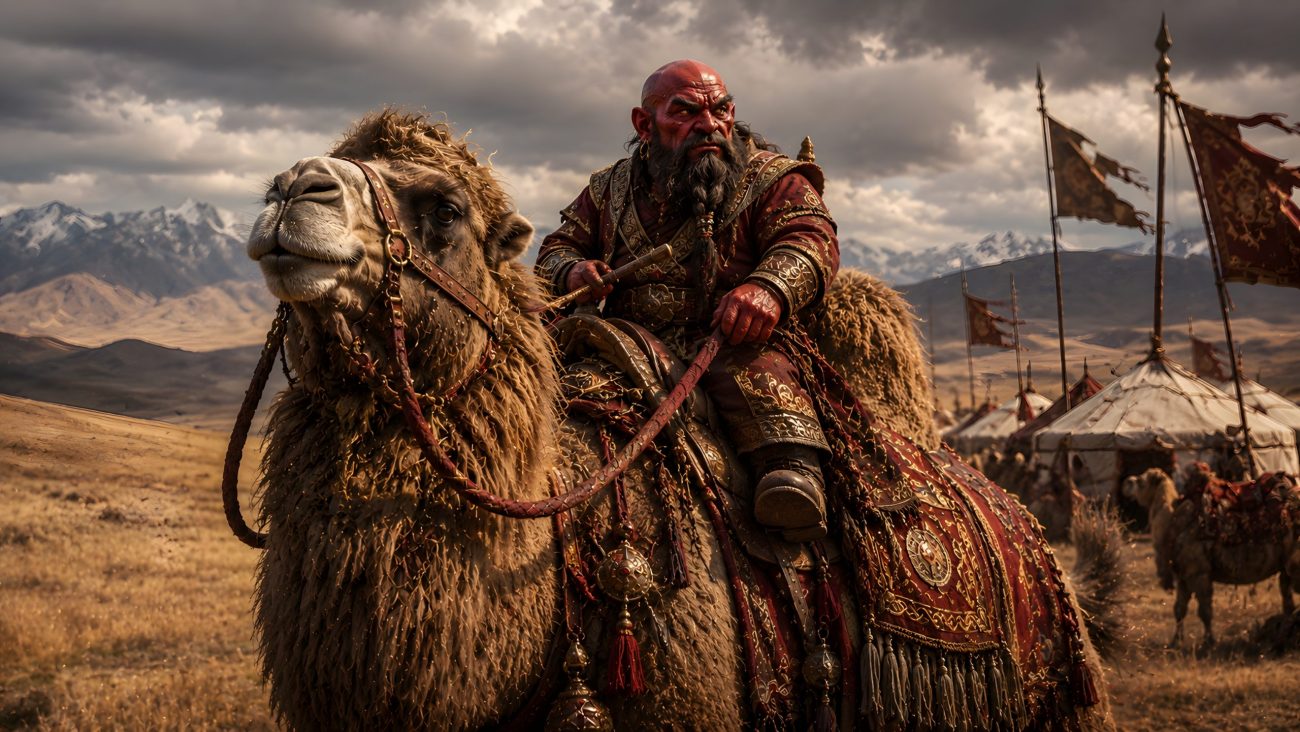
Maidyn Massalyk Ulesi is a spirit from Kazakh folklore associated with a mystical forest. The being is described as a patron spirit connected with happiness, fate, and guidance.

According to one belief, an unmarried woman who has not found love by the age of forty-five may travel alone into the steppe carrying kumiss and dried curd cakes. The first stranger she meets and shares food with is believed either to become her husband or reveal the man destined to become the father of her future children. Some women wandered for months without meeting anyone, while others eventually encountered a red-faced man who shared food and drink with them before disappearing. Later, the woman would meet a man with the same name and appearance and eventually form a family with him.

Another tradition says that people searching for lost horses, camels, or sheep may enter a fog-covered forest crossed by rivers of milk and ask Maidyn Massalyk Ulesi for help in recovering the missing animals. Berries and kumiss are offered to the spirit during this search. According to the legend, if the spirit accepts the offering, the lost animals will eventually be recovered, although the person who made the offering may later experience some form of loss themselves.


Sources

Bestiary contributors. (n.d.). Майдын массалык улеси (Majdyn Massalyk Ylesi). In Bestiary, from https://www.bestiary.us/majdyn-massalyk-ylesi


Buzhai

Tradition / Region: Kazakh mythology
Alternate Names:
Category: Bogeyman, Cow


The Myth

Across the steppes and valleys of Kazakhstan, parents once warned their children of a being called the Buzhai. It was not like other creatures of legend, for it had no fixed shape or face. No one could say what it truly looked like, and that was what made it feared.

The Buzhai was never seen clearly. It was said to linger in shadows, to hide in dark corners, or to wait just beyond the doorway when night fell. Its power did not lie in claws or teeth, but in uncertainty. Children were told that if they ignored their elders or misbehaved, the Buzhai might come for them, emerging from the darkness without warning.

Because it had no form, every child imagined it differently. To some it was enormous and looming, to others a strange animal with watching eyes, to others still something formless that could not be escaped once noticed. What mattered was not what it was, but that it might be there.

In this way, the Buzhai lived in the imagination rather than the world, a presence felt rather than seen. It endured as a shadow of the unknown, passed from voice to voice, reminding the young that unseen forces might be drawn close by careless behavior, and that the dark always listens.


Sources

Bestiary.us. (n.d.). Bézhəi, from https://www.bestiary.us/b%D3%A9zh%D3%99i