Phlachal

Tradition / Region: Armenian Mythology
Alternate Names: Elephant-Goat
Category: Sheep, Elephant, Hybrid


The Myth

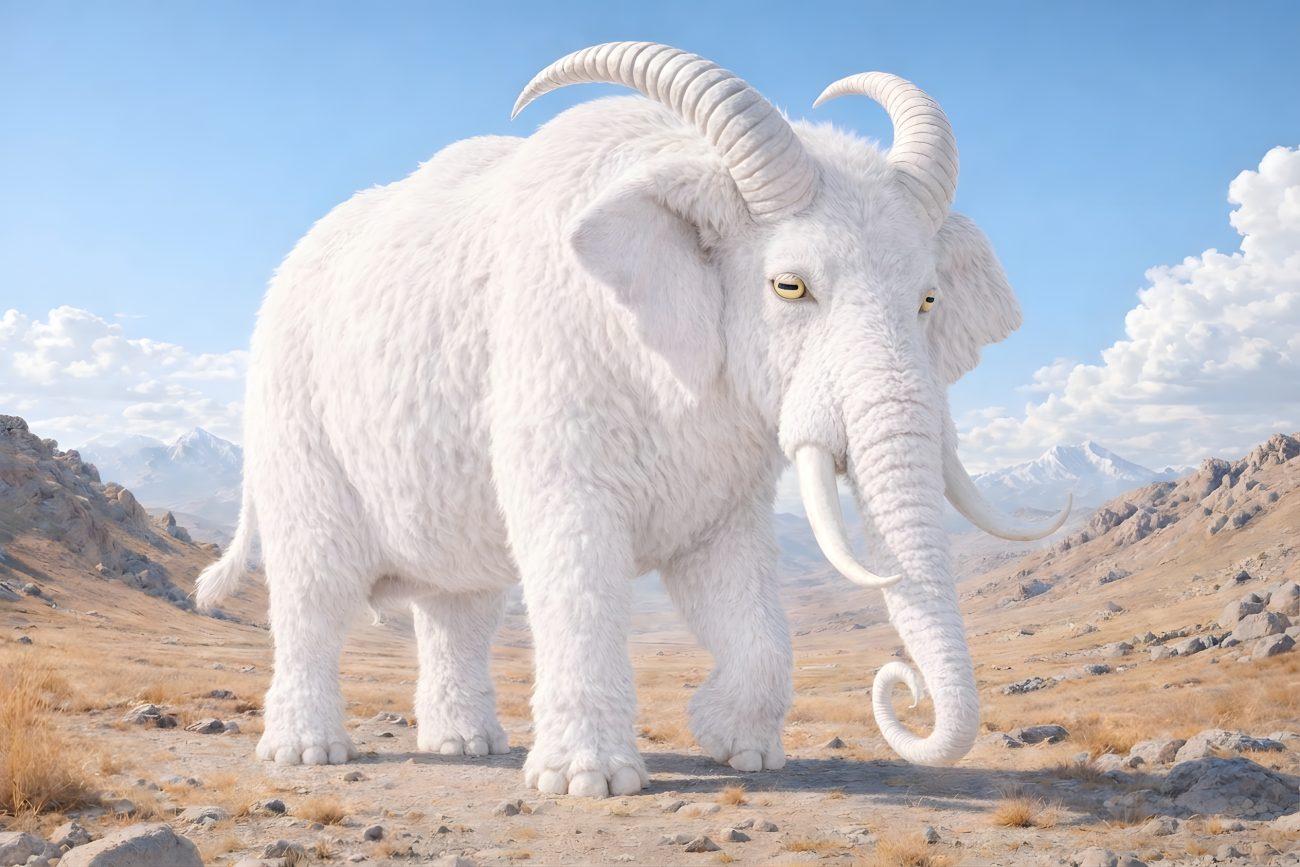
The Phlachal is a rare and obscure creature in Armenian mythology, described simply as an “elephant-goat.” It belongs to a class of chimeric beings—monsters formed by combining traits of different animals.

Very little detailed information survives about the Phlachal, but its name suggests a hybrid of immense size and unnatural composition, likely blending the strength and mass of an elephant with the agility or form of a goat. Like other chimeras in regional folklore, it would have been perceived as unnatural and unsettling.

It appears in the same context as other hybrid creatures such as the sea-bull, indicating that it was part of a broader mythological tradition of monstrous animals that defied natural order. These beings were often associated with fear, unpredictability, and the boundaries between land, sea, and the supernatural.


Sources

Ananikian, M. H. (1925). Armenian Mythology. In The Mythology of All Races, Vol. 7. Published by the Archaeological Institute of America p. 92.

Karnabo

Tradition / Region: French Mythology
Alternate Names:
Category: Mountain dweller


The Myth

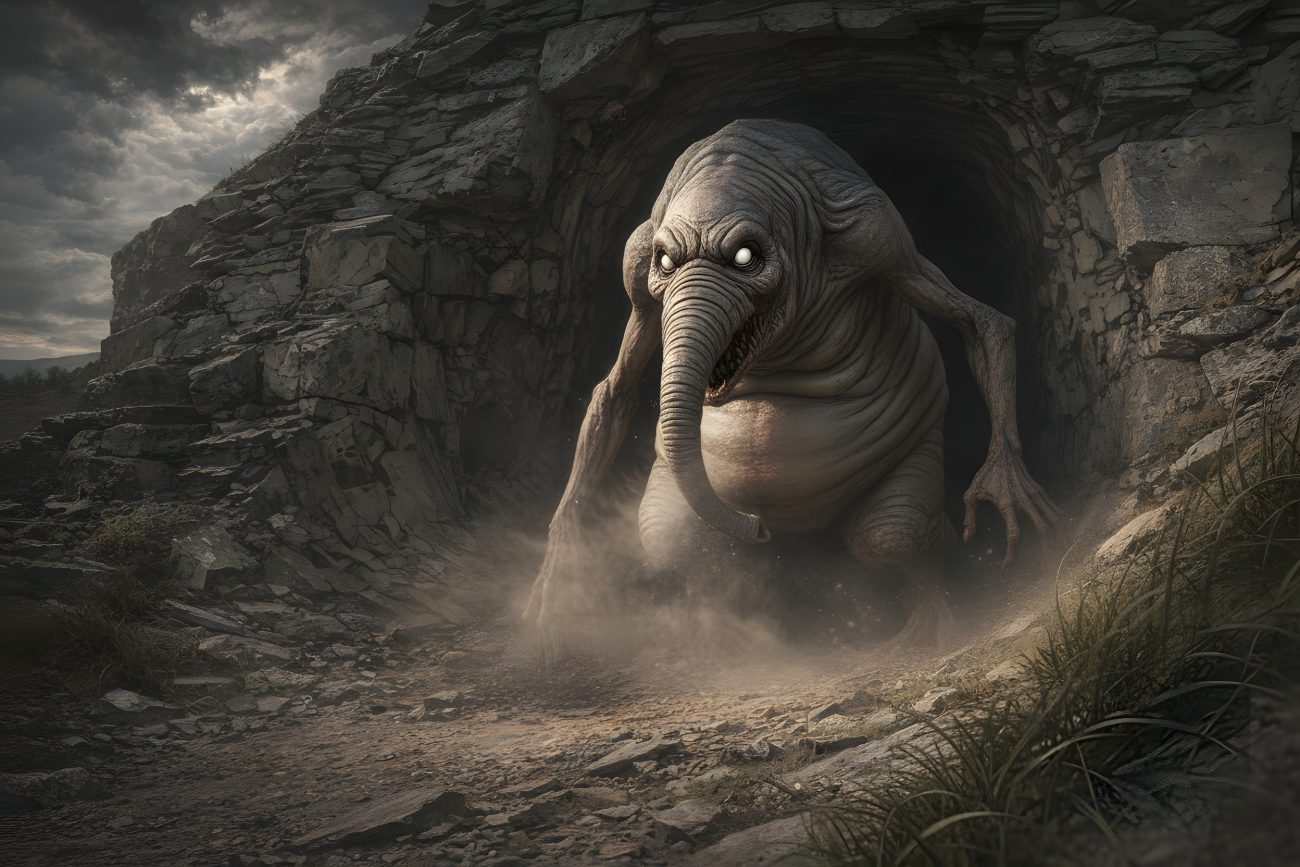
On the Rocroi plateau near the village of Regniowez lies an abandoned slate quarry, its entrance sealed and avoided. The people of the Ardennes say that within that dark place lives the Karnabo.

The Karnabo is a creature dreadful to behold. Its shape is almost human, yet twisted and unnatural. Its eyes gleam like those of a basilisk, cold and deadly. From its face hangs a long, trunk-like nose, and when it breathes, it produces a terrible whistling through its nostrils.

It is said that the Karnabo came long ago from the region of Rièzes. Some whisper that it was born of an itinerant sorcerer and an aged ghoul, conceived in secrecy and raised in shadow. From its father it inherited dark powers; from its mother, a hunger for harm. Its crimes are too many to count.

The whistling of the Karnabo is feared above all. When it echoes across the plateau, anyone foolish enough to wander near the quarry feels their limbs grow stiff, their breath catch in their throat. Some fall paralyzed. Others suffocate where they stand. Livestock that stray too close are found lifeless, as if struck down by the sound alone.

Yet the creature is not only a bringer of harm. On Good Fridays, it is said to chant strange formulas learned from its sorcerer father. With these whispered spells, it can cure certain afflictions of the flesh. Those brave—or desperate—enough to approach the sealed quarry on that holy day might find relief from illness, though they risk never returning.

Once, a young girl wandered near the quarry, daring to play where she had been warned never to go. As she neared the tunnel’s entrance, the Karnabo sprang from the darkness and dragged her underground. She was never seen again.

After that, the entrance to the quarry was sealed.

On stormy nights, when wind sweeps across the Rocroi plateau, villagers say they still hear it: the nasal roaring of the Karnabo rising from beneath the earth—and the faint, sorrowful sobbing of the girl echoing in the dark.


Sources

abookofcreatures.com contributors. (n.d.). Karnabo. In abookofcreatures.com, from https://abookofcreatures.com/2021/03/19/karnabo/


Kazou

Tradition / Region: Japanese Buddhist mythology
Alternate Names:
Category: Mountain dweller, Elephant


The Myth

In the depths of the Buddhist cosmos, beyond the human world and far below the mountains that encircle Mount Sumeru, lies the Fire Elephant Hell. There dwells the terrible beast known as Kazou.

This hell is reserved not for the ignorant, but for those who once knew the Dharma. They had entered the Buddhist path, shaved their heads, donned robes, and received the pure precepts of the Tathagata. Yet despite their vows, they succumbed to lust and desecrated sacred images. Their betrayal of faith cast them down into this inferno.

Between the vast Iron Encircling Mountains—those final barriers at the edge of the world—the Fire Elephant Hell burns without end. There stands the great fire elephant, enormous and dreadful. Smoke pours from its mouth and eyes. Flames surge from its body as though its flesh were a furnace.

When the condemned monks are brought before it, they are struck motionless by terror at its overwhelming presence. Paralyzed by fear and the heat of its blazing form, they cannot flee. Horse-headed jailers seize them and hurl them onto the elephant’s back.

With a roar like thunder, the fire elephant charges forward. Its burning hide scorches the sinners. The monks fall from its back into the flames below, where their bodies are crushed beneath its massive feet. Some are trampled into ash. Others are seized in its blazing jaws and devoured.

Yet death offers no release. Day and night, a thousand times over, they die and are reborn in that same place, only to suffer again. The elephant’s flames never dim, and its fury never tires.

Thus the Kazou stands as the terror of the Fire Elephant Hell—an embodiment of burning remorse and unending punishment for those who betrayed their sacred vows.


Gallery


Sources

tyz-yokai.blog.jp contributors. (n.d.). Kazou. In tyz-yokai.blog.jp, from https://tyz-yokai.blog.jp/archives/1010654402.html


Interpretive Lenses

Religious Readings
  • Christian Ascetic Deep Dive
Philosophical Readings
  • Nietzschean Deep Dive
Psychological Readings
  • Jungian Deep Dive
Esoteric Deep Dive
  • Hermetic Deep Dive
Political / Social Readings
  • Marxist Deep Dive
Other
  • How to Invite The Kuygorozh