Servant as a Goat

Tradition / Region: Romanian Mythology
Alternate Names:
Category: Shapeshifter, Sheep


The Myth

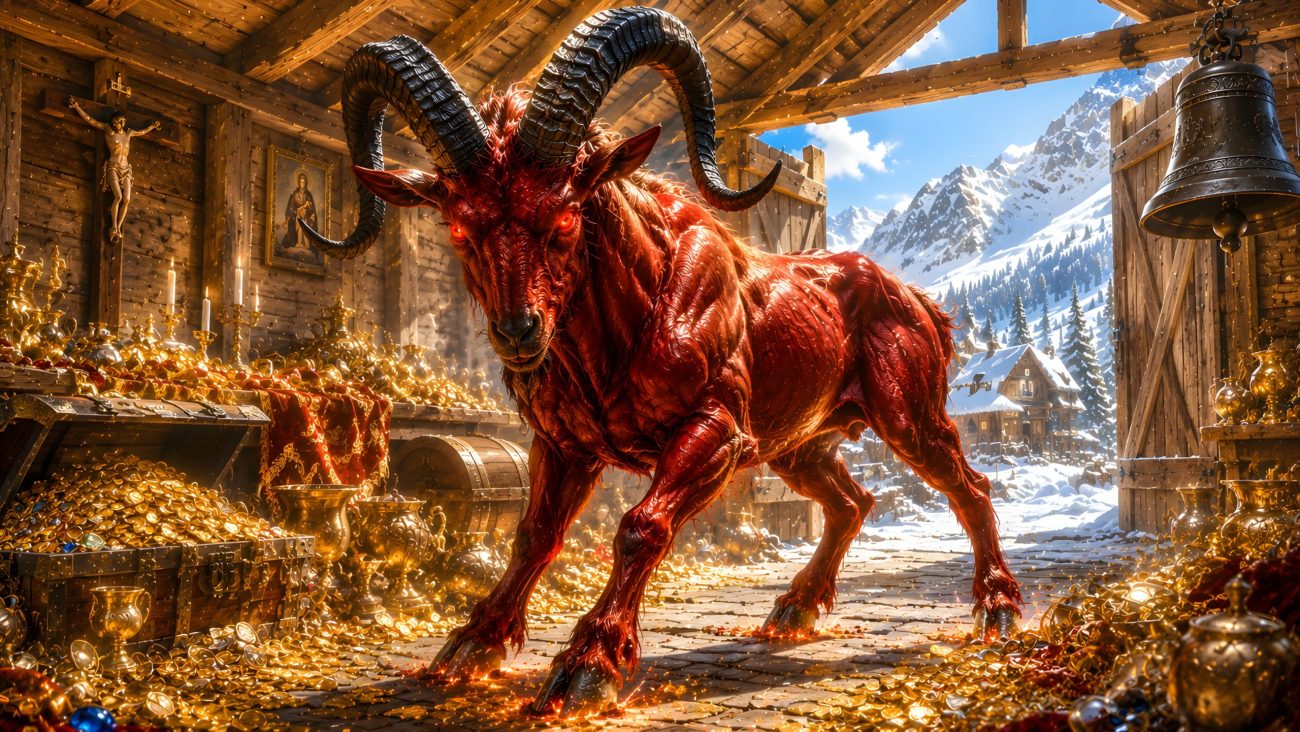
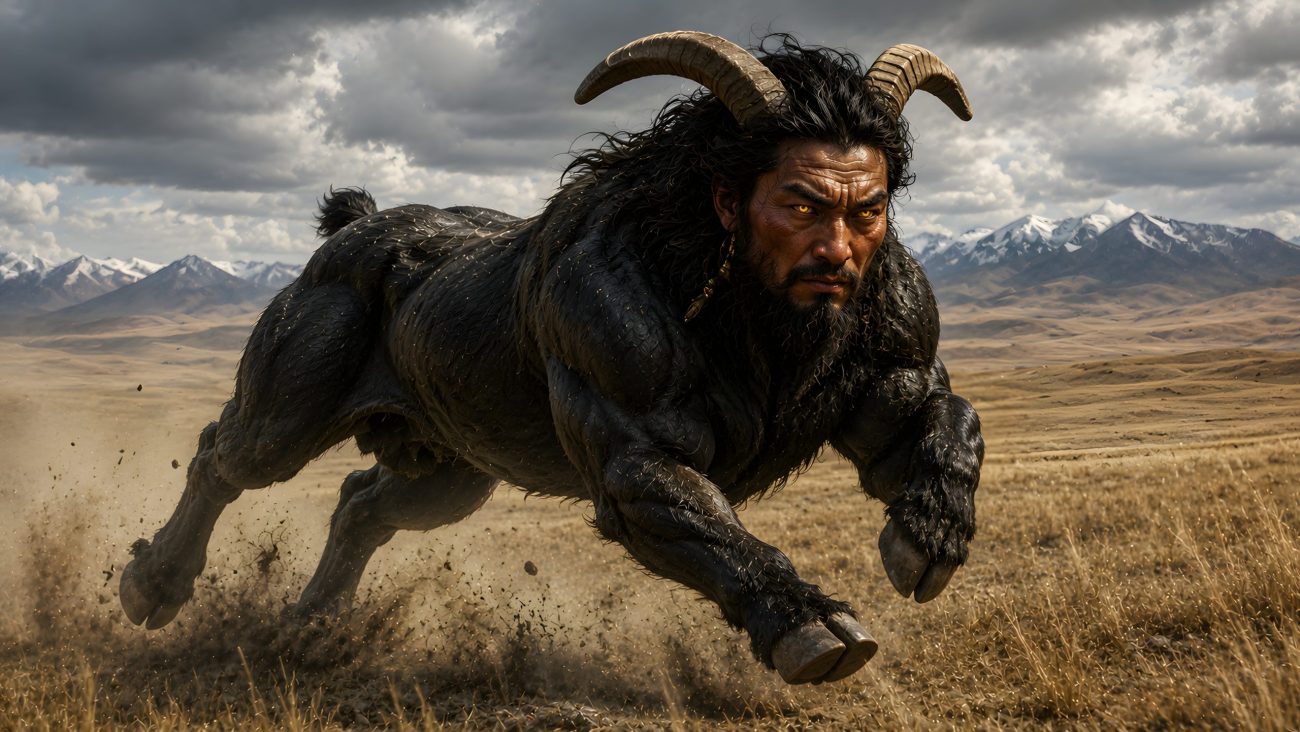
In the Transylvanian village of Heitau, a Romanian farmhand once walked along the road with two maids. As they went, the man suddenly threw himself into a somersault. Then he somersaulted a second time, and a third.

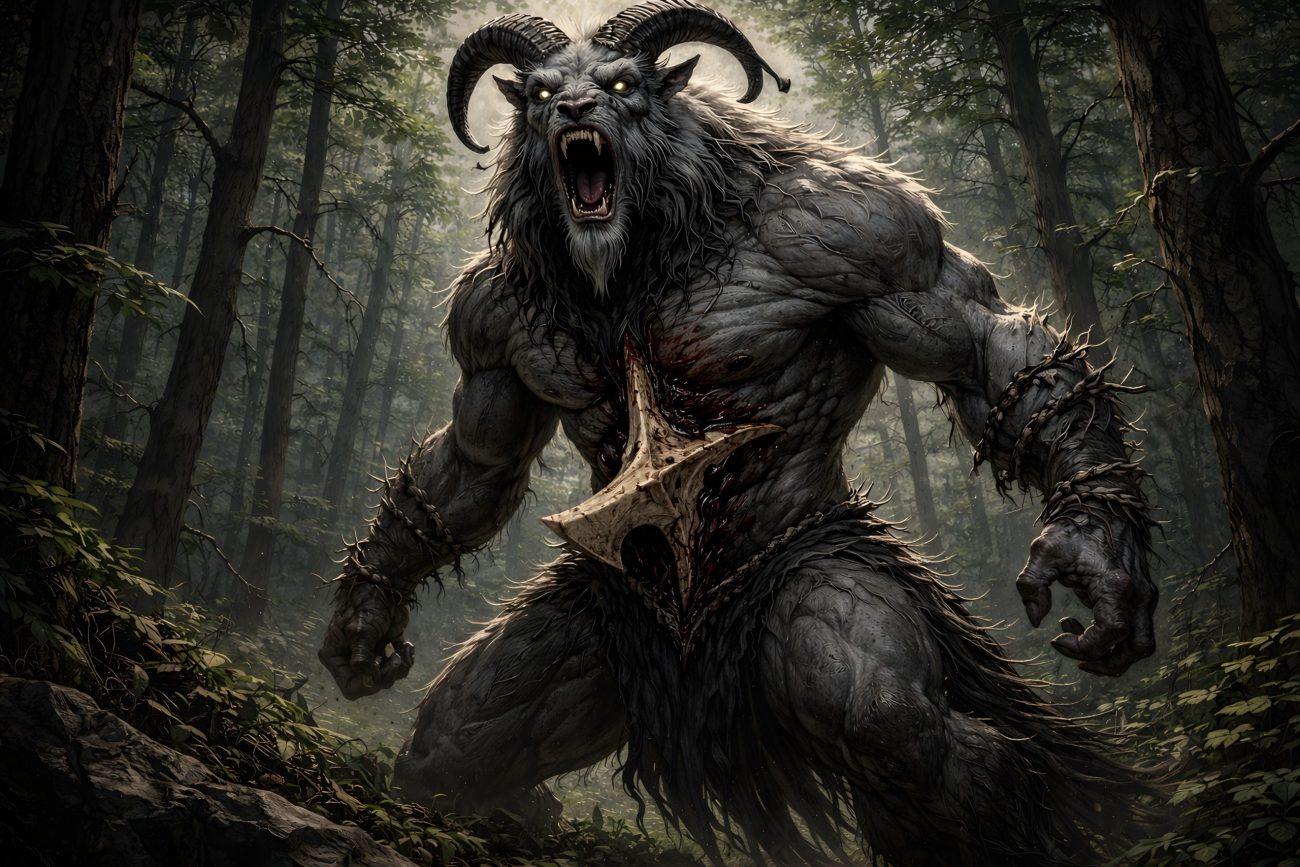
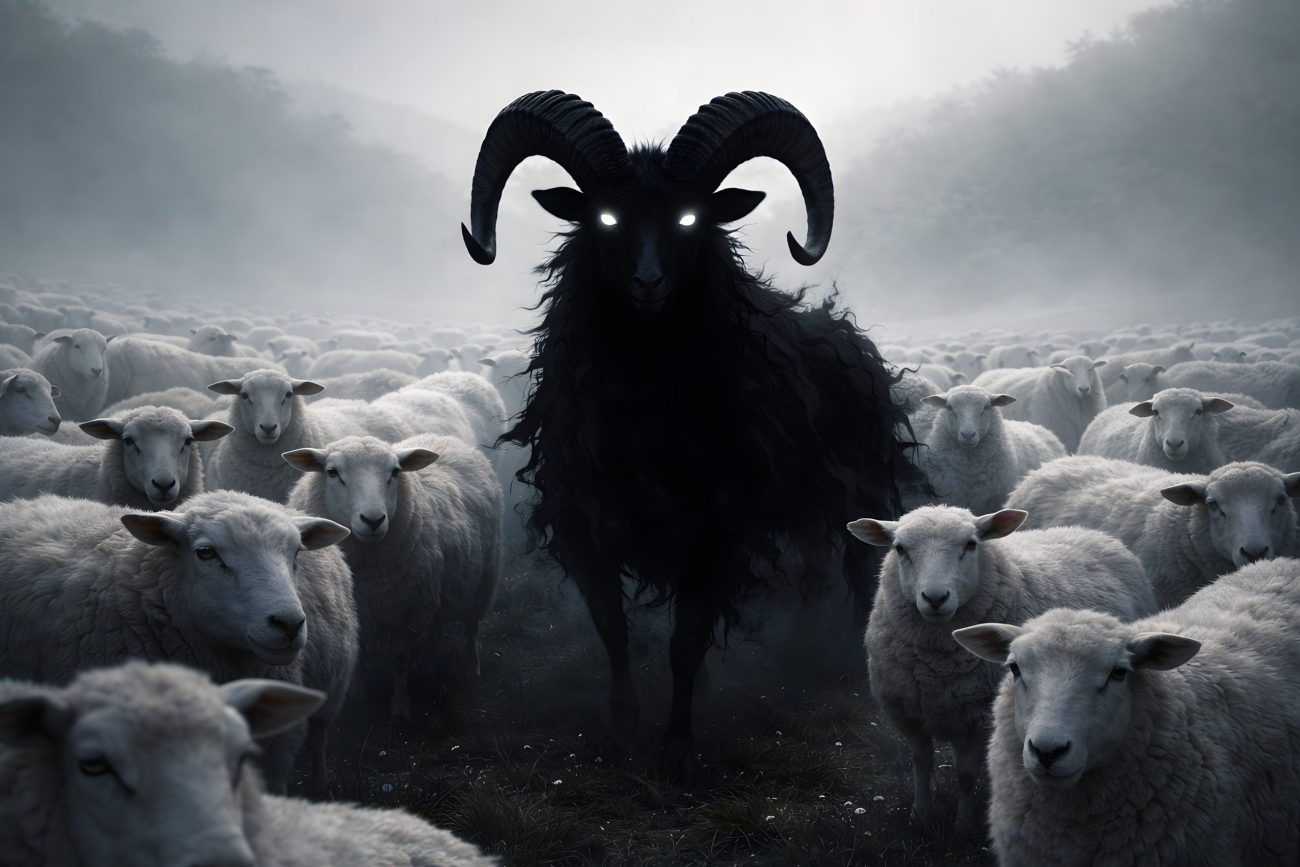
At once he was no longer a man but a grey-spotted billy goat.

The animal charged furiously at the two girls. With its horns it gored and tore at their red katana, shredding the garments into pieces. The maids fled in terror as the goat raged around them.

After some time, the creature again threw itself into three somersaults. As it completed the last one, the goat vanished and the farmhand stood there once more in human form.

Yet the transformation had not left him untouched. A small shred of the torn red cloth had grown fast to his ears, and this strange mark, it was said, remained with him for the rest of his life.


Sources

sagen.at contributors. (n.d.). Knecht als Ziegenbock. In sagen.at, from https://www.sagen.at/texte/sagen/rumaenien/siebenbuergen/knechtalsziegenbock.html


Badalisc

Tradition / Region: Italian Mythology
Alternate Names:
Category: Mountain dweller, Sheep


The Myth

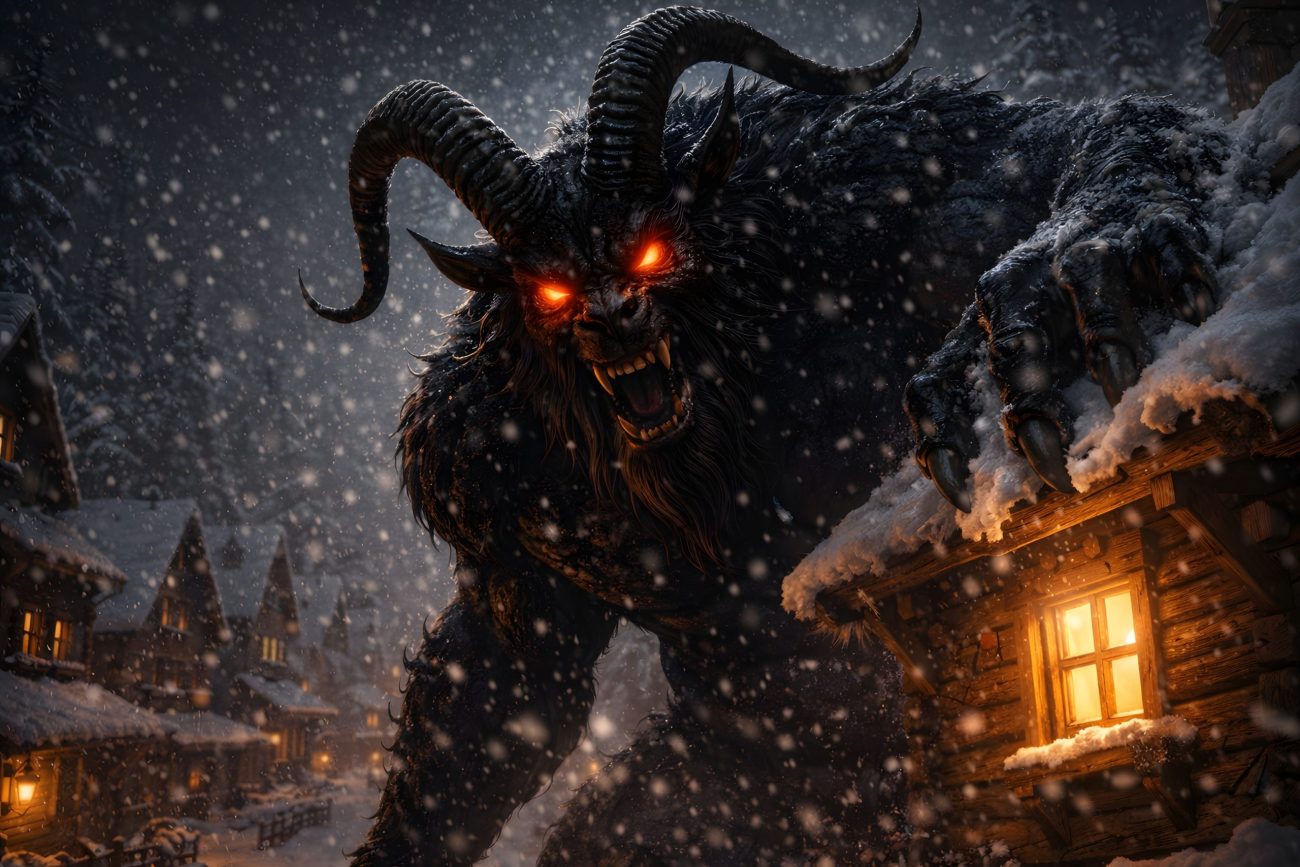
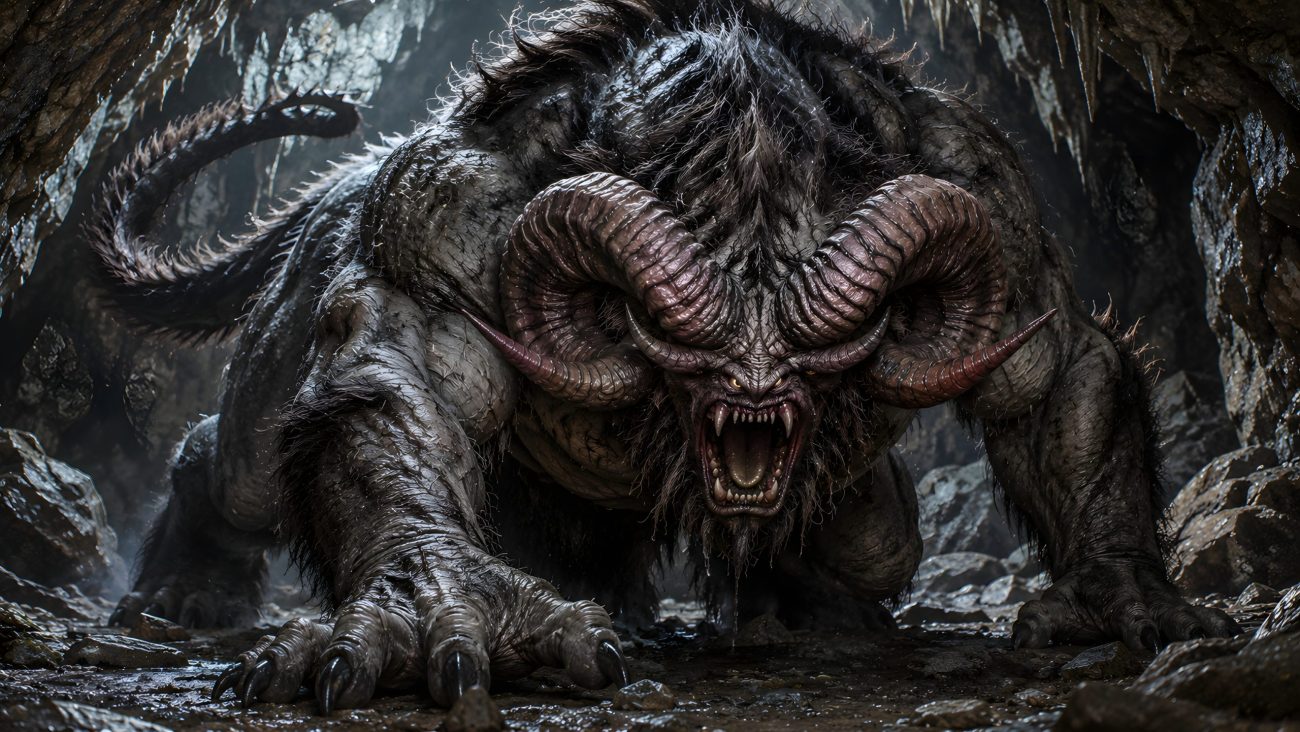
High in the southern Alps, around the village of Andrista, there is said to live a strange creature called the Badalisc. It dwells in the dark forests above the settlement, hidden among rocks, snow, and twisted trees. It has a great head wrapped in goat skin, small horns, a vast gaping mouth, and glowing eyes that shine in the night.

The Badalisc does not live quietly. Throughout the year it troubles the people of the village. It lurks in the woods, watching, listening, knowing their secrets. Though rarely seen, its presence is felt—mischief, unease, whispers of wrongdoing. The villagers know it must be dealt with.

So every year, on the eve of Epiphany, when winter lies deep upon the mountains, the men of the village go out to capture the creature.

They enter the forest masked and disguised. Among them are hunters, sweepers who clear the way, an old man and old woman, a hunchback who strikes the ground with his stick, and a young maiden who serves as bait, for the Badalisc is said to be stirred by desire. After searching the woods, they bind the creature with a rope and drag it down from the mountains into the village.

It is led into the square before the gathered community.

The Badalisc itself does not speak. It is wild and dumb. But through an interpreter its words are given voice. A long speech is read aloud—its “confession.” In this speech the creature reveals the hidden faults, scandals, petty sins, and foolish schemes of the villagers. Nothing escapes it. It mocks, exposes, and ridicules the community. As the words are spoken, the hunchback beats his stick rhythmically, marking the weight of each accusation.

The villagers listen. They laugh, they wince, they recognize themselves in the creature’s gossip.

When the speech is finished, the mood shifts. Singing begins. Dancing follows. Food is shared, especially the great dish of polenta prepared for the occasion. The Badalisc sits in a place of honor during the feast, no longer a menace but part of the celebration.

On the following day, its time among humans ends. The rope is removed. The Badalisc is released and allowed to return to the forest, back to its mountain home.

There it waits through another year—watching, listening, gathering secrets—until once again winter comes, and the villagers climb into the woods to bring it down.


Sources

Wikipedia contributors. (n.d.). Badalisc. In Wikipedia, The Free Encyclopedia. Retrieved February 14, 2026, from https://en.wikipedia.org/wiki/Badalisc


Bagan

Tradition / Region: Belarusian mythology
Alternate Names:
Category: Cow, Spirit, Sheep


The Myth

In old times, when a family’s survival depended on the strength of its fields and the health of its animals, there lived a spirit known as the Bagan. This being watched over cattle with tireless care, guarding herds from wolves, bears, and all other dangers that crept from forest and night.

The Bagan knew when an animal fell ill and would bring relief or healing. When cows went into labor, it was said the spirit stood unseen nearby, guiding the birth so that both calf and mother lived. As long as the Bagan remained close, the herd thrived and the farm prospered.

The spirit asked for little—only a modest offering, a share of food, or a gesture of thanks. Such acts were enough to show respect and keep its goodwill. When honored, the Bagan remained gentle and vigilant, protecting the animals as if they were its own.

But when forgotten or ignored, the Bagan changed. The same spirit that once guarded the herd could turn harsh, bringing sickness, misfortune, and loss to the cattle it had once protected.

Thus the people believed that care and gratitude sustained not only animals, but the unseen forces that watched over them.


Sources

Dervlyansky, P. (n.d.). Belarusian folks legends. p. 257.

Bestiary.us. (n.d.). Bagan. from https://www.bestiary.us/bagan


Rashamen

Tradition / Region: Japan (Edo period)
Alternate Names: Raschamen
Category: Sheep


The Myth

Rashamen was the name used for sheep brought to Japan by overseas ships. Because sheep were unfamiliar, people associated them with foreigners, and the name was said to come from rasha, the woolen clothing worn by Westerners.

In 1776, during the An’ei era, an animal called a raschamen was exhibited as a public spectacle in the districts of Ryōgoku and Asakusa in Edo. People paid to see it as a rare and strange creature from abroad. The animal on display was a sheep, with paint smeared over its body to make it look more unusual.

The spectacle became widely known. The sheep was taken around and shown to crowds, presented as something exotic rather than as an ordinary animal.

The event was later mentioned by Hiraga Gennai in his work Hoheiron Kohen, where he described the rashamen performance and noted that it was simply a painted sheep being displayed to the public.


Interpretive Lenses

Religious Readings
Philosophical Readings
Psychological Readings
Esoteric Deep Dive
Political / Social Readings
Other