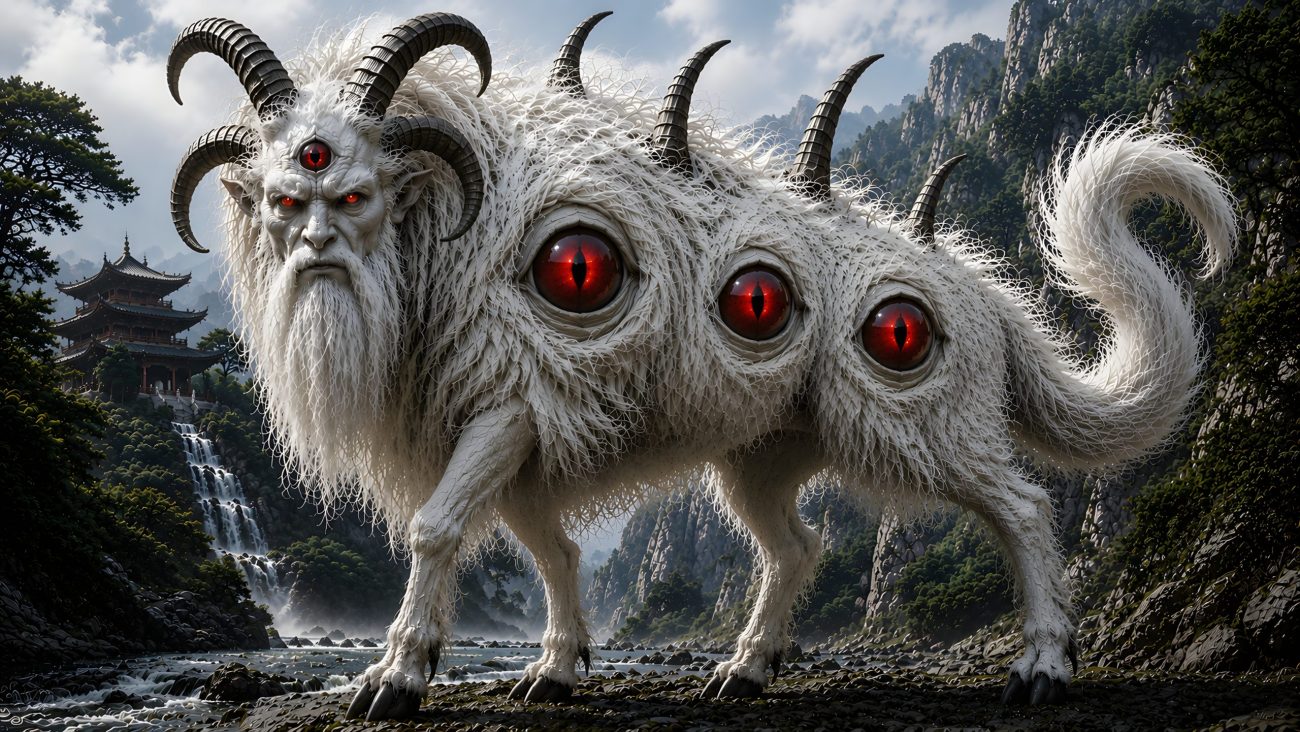
Bai Ze

Tradition / Region: Chinese Mythology
Alternative names: Hakutaku (Japanese), Bai Ze (Chinese)
Category: Sheep


The Myth

Bai Ze (Hakutaku) is one of the most revered divine beasts in Chinese mythology. Unlike most legendary creatures, Bai Ze is not feared as a monster but honored as a symbol of wisdom, protection, and supernatural knowledge. It is said to appear only during the reign of a wise and virtuous ruler, making its appearance an omen of peace and good governance.

According to legend, the Yellow Emperor (Huangdi) encountered Bai Ze while traveling through the eastern mountains. The creature spoke in human language and revealed that it possessed complete knowledge of the supernatural world. Bai Ze explained that the universe contained 11,520 different kinds of spirits, demons, monsters, ghosts, and magical beings, each born from condensed spiritual energy or wandering souls.

The emperor ordered scribes to record everything Bai Ze taught him, creating the famous Bai Ze Tu (Illustrated Guide of Bai Ze). Although the original work has been lost, ancient Chinese texts frequently mention it as an encyclopedia of supernatural creatures and methods for identifying and dealing with them. Stories even tell of scholars successfully recognizing dangerous spirits because they had consulted the Bai Ze Tu.

In Chinese tradition, Bai Ze is usually depicted as a lion-like or guardian-beast resembling an imperial protector. In Japan, however, its appearance evolved into something much stranger: a white beast with a human face, horns, and nine eyes—three on its face and three on each side of its body. This distinctive form became popular during the Edo period and was sometimes confused with the baku, another supernatural beast associated with dreams.

Because Bai Ze was believed to possess perfect knowledge of evil spirits and diseases, images of the creature became powerful protective talismans. During epidemics and outbreaks of illness, people displayed paintings and statues of Hakutaku to ward off disease, repel malevolent spirits, and invite good fortune. As a result, Bai Ze became not only a legendary creature but also one of East Asia’s most important symbols of divine protection and supernatural wisdom.


Sources

Bestiary.us. (n.d.). Giristis. In New Bestiary: Encyclopedia of Imaginary Beings. Retrieved June 28, 2026, from https://www.bestiary.us/giristis
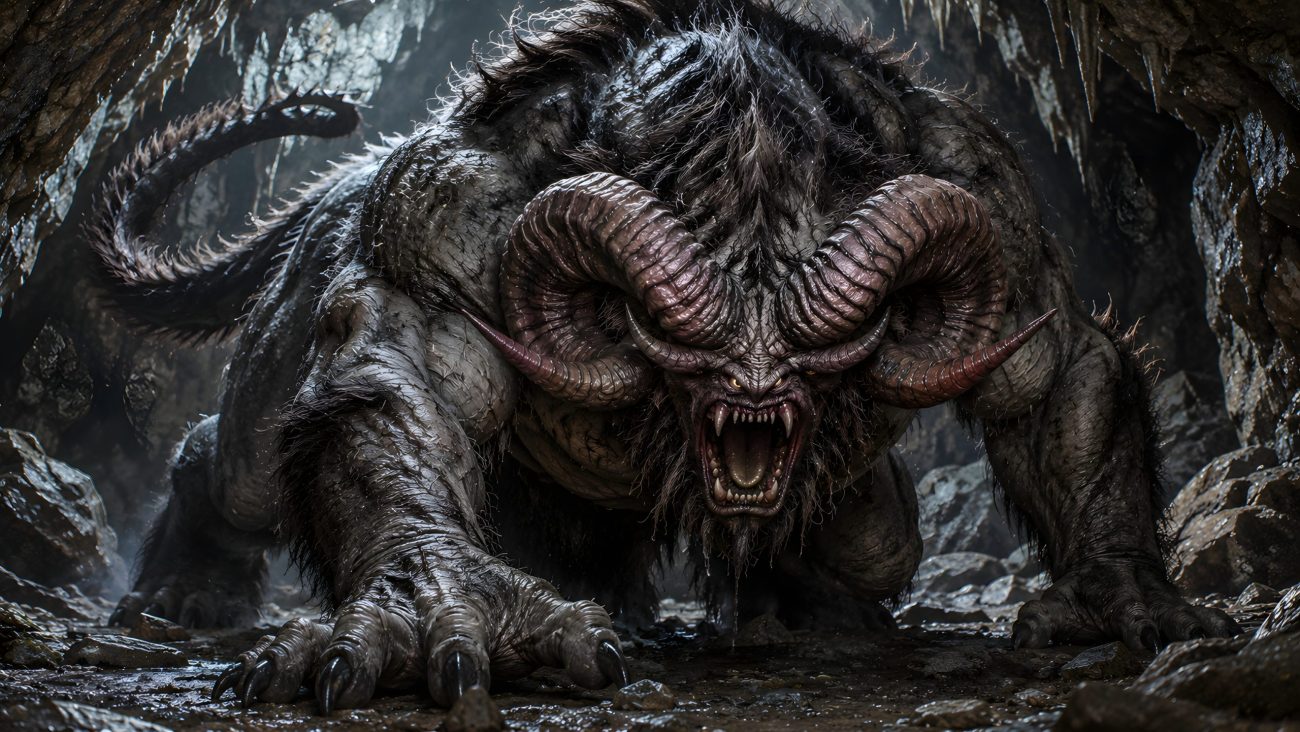

Taotie

Tradition / Region: Chinese Mythology
Alternative names: Taotie (饕餮)
Category: Sheep


The Myth

The Taotie is one of the most infamous monsters of Chinese mythology, representing insatiable greed and gluttony. Its name itself reflects this nature: “Tao” means to covet wealth, while “Tie” means to crave food. It is a creature whose hunger can never be satisfied.

Ancient sources describe the Taotie in several different forms. The most common depiction gives it the body of a sheep with the face of a human, eyes beneath its armpits, tiger-like fangs, human-like claws, and the cry of a crying infant. Other traditions describe it as little more than a gigantic devouring head with no body at all, emphasizing its endless appetite.

The Taotie is counted among China’s legendary Four Evils, alongside Hundun, Qiongqi, and Taowu. According to the Zuo Zhuan, it originated from the wicked and greedy son of the Jinyun clan, whose insatiable desire for wealth and excess caused him to become the monstrous Taotie. Afterward, Emperor Shun banished it to the western lands, where it ironically became a guardian against other monsters.

Other ancient texts describe it as a savage creature covered in thick hair that hoards riches without ever using them. It steals from others, bullies the weak, attacks solitary travelers, yet fears large crowds. Its overwhelming greed defines every aspect of its existence.

During the Ming Dynasty, the Taotie also became associated with the Nine Sons of the Dragon, while scholars linked it with the fearsome beast described in the Classic of Mountains and Seas, strengthening its image as a man-eating monster.

One of the Taotie’s greatest legacies is artistic rather than literary. The fearsome animal faces decorating ancient Shang and Zhou bronze ritual vessels became known as Taotie masks. Although this name was applied centuries later and it remains uncertain whether the original craftsmen intended to depict the Taotie, the monstrous face became one of the most recognizable symbols of ancient Chinese art.

Throughout Chinese tradition, the Taotie serves as the ultimate embodiment of uncontrolled greed—a creature that endlessly consumes wealth, food, and even human beings, yet can never satisfy its eternal hunger.


Sources

TYZ. (n.d.). Taotie [饕餮]. In 新版TYZ 妖怪図鑑. Retrieved June 27, 2026, from https://tyz-yokai.blog.jp/archives/1018146956.html