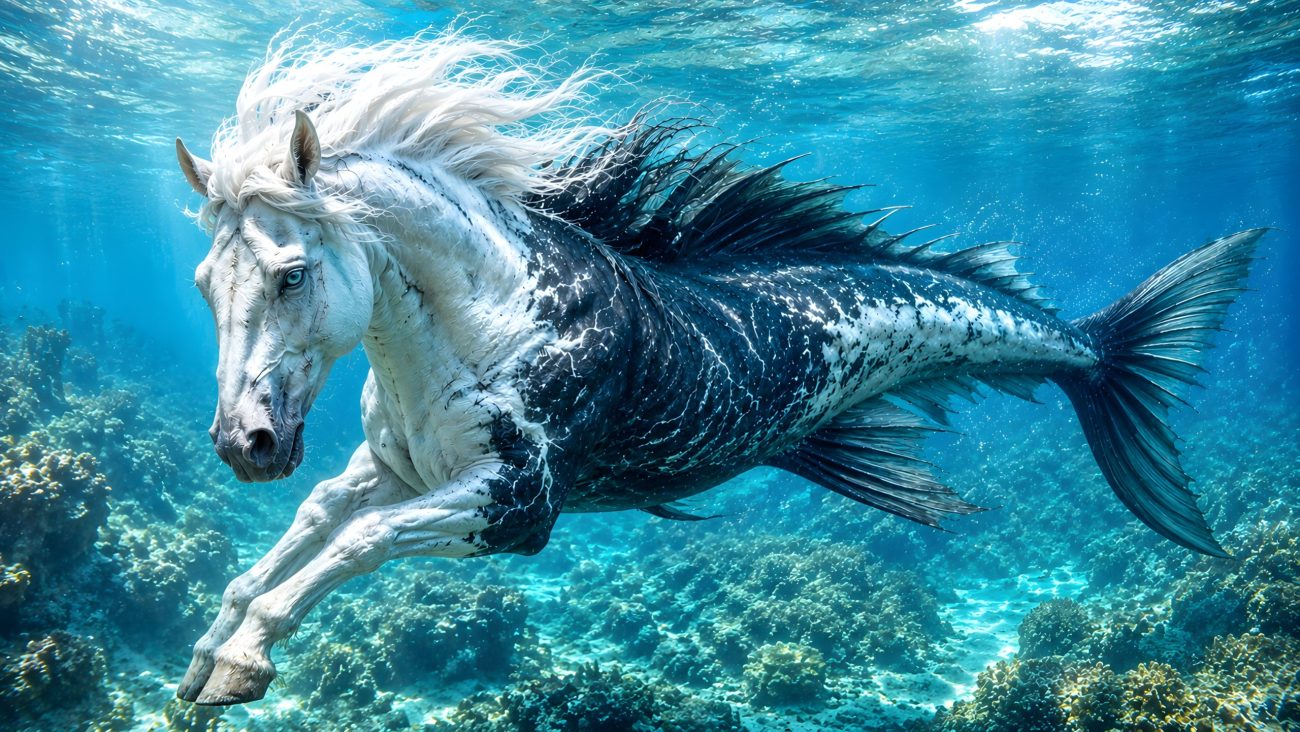
Tradition / Region: Cape Verde Mythology
Alternative name: Peix’ Caball’, Horse-Fish
Category: Horse, Fish
The Myth
Peixe Caball is a strange sea creature from the folktales of Cape Verde, especially stories collected from the islands’ Lob and Tubinh trickster tradition.
The creature is described as a fish with the head or upper body of a horse and the tail of a fish. In the tales, Peixe Caball lives in the sea and possesses intelligence, emotion, and supernatural strength.
One famous story tells how Lob, a greedy and cruel wolf-like trickster, became stranded on an island after borrowing feathers from birds to attend a dance. During the celebration, Lob insulted each bird one after another until they angrily reclaimed their feathers and abandoned him.
As Lob cried alone on the island, Peixe Caball appeared from the sea and asked what had happened. Feeling pity for him, the creature agreed to carry him safely back across the water.
While riding on Peixe Caball’s back, Lob secretly admired the creature’s large breasts and planned to tear one off once they reached shore. The moment they arrived on land, Lob attacked the creature and ripped away one of its breasts before fleeing.
Wounded and crying on the beach, Peixe Caball later encountered Tubinh, Lob’s clever nephew and enemy. Tubinh promised revenge and tricked Lob into returning to the shore by pretending the stranded creature was a giant cow. When Lob approached to kill it, Peixe Caball seized him and dragged him deep beneath the ocean.
At first Lob laughed and told his wife the creature was only “playing.” But Peixe Caball continued diving deeper and deeper until Lob finally realized he was about to die. The Horse-Fish drowned him beneath the sea, ending the tale.
Peixe Caball is unusual among Atlantic African folk beings because it combines traits of a mer-creature, sea spirit, and monstrous animal. Despite its frightening strength, the creature is not evil by nature. In the story, it acts more as a supernatural being capable of both mercy and vengeance, punishing betrayal and cruelty.
Sources
Parsons, E. C. (1917). Ten folk-tales from the Cape Verde Islands. The Journal of American Folklore, 30(116), 230–238.