Tradition / Region: Breton Mythology, French Mythology
Alternative names: Mourioche
Category: Horse, Demon
The Myth
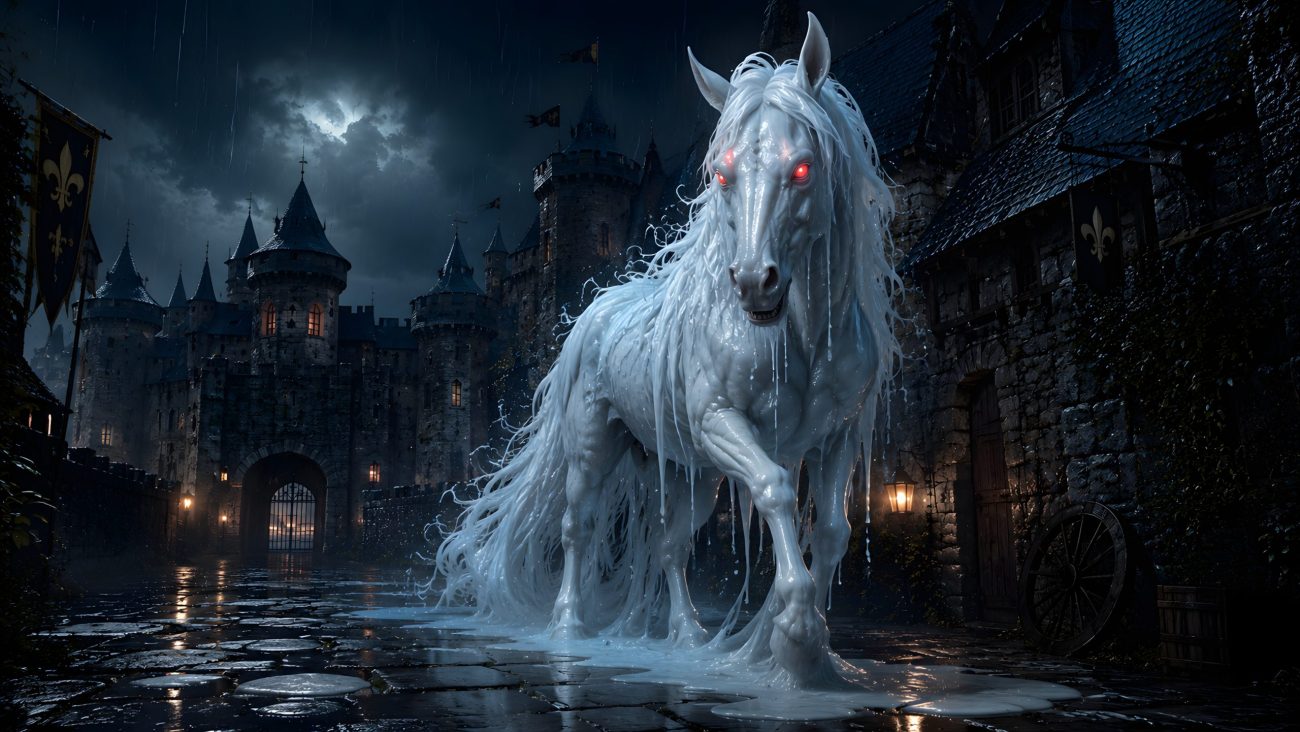
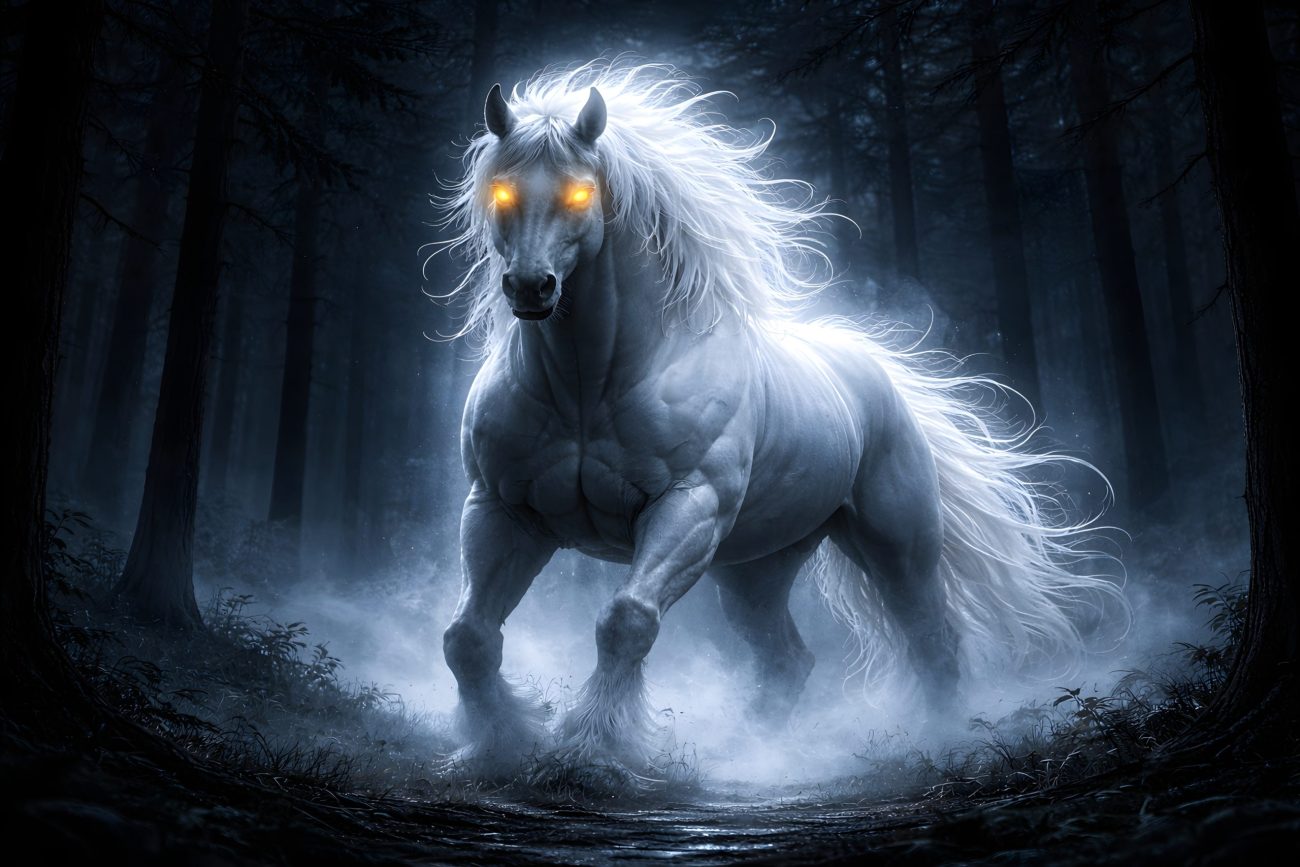
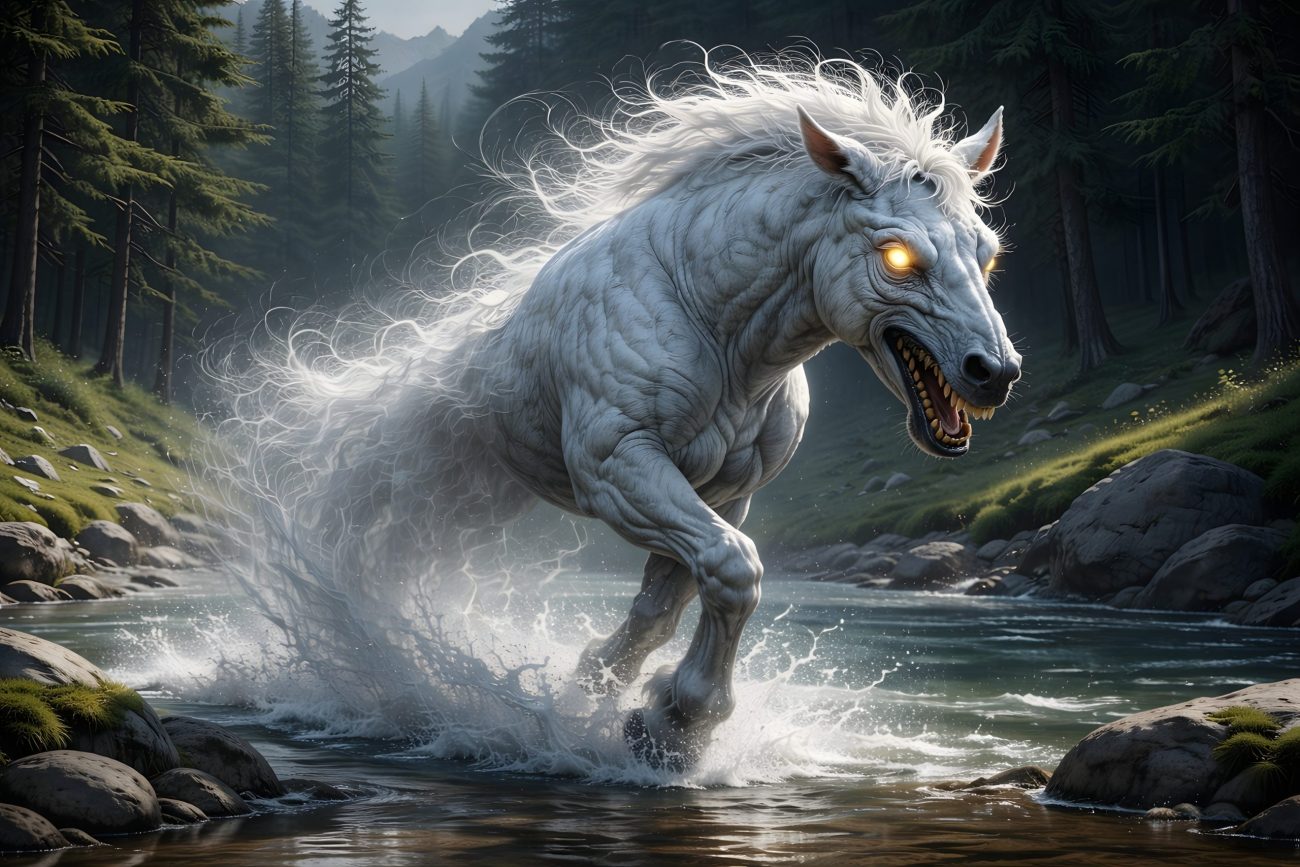
The Murioshe is a harmful demon of Breton folklore that can apparently transform into almost any animal. It has long been feared along the coast of the Côtes-d’Armor and around Jugon-le-Lac. Although it can assume many forms, it most commonly appears as a water horse or as a werewolf. It may also take the shape of a donkey, bull, pig, ox, sheep, or even a pair of human arms.
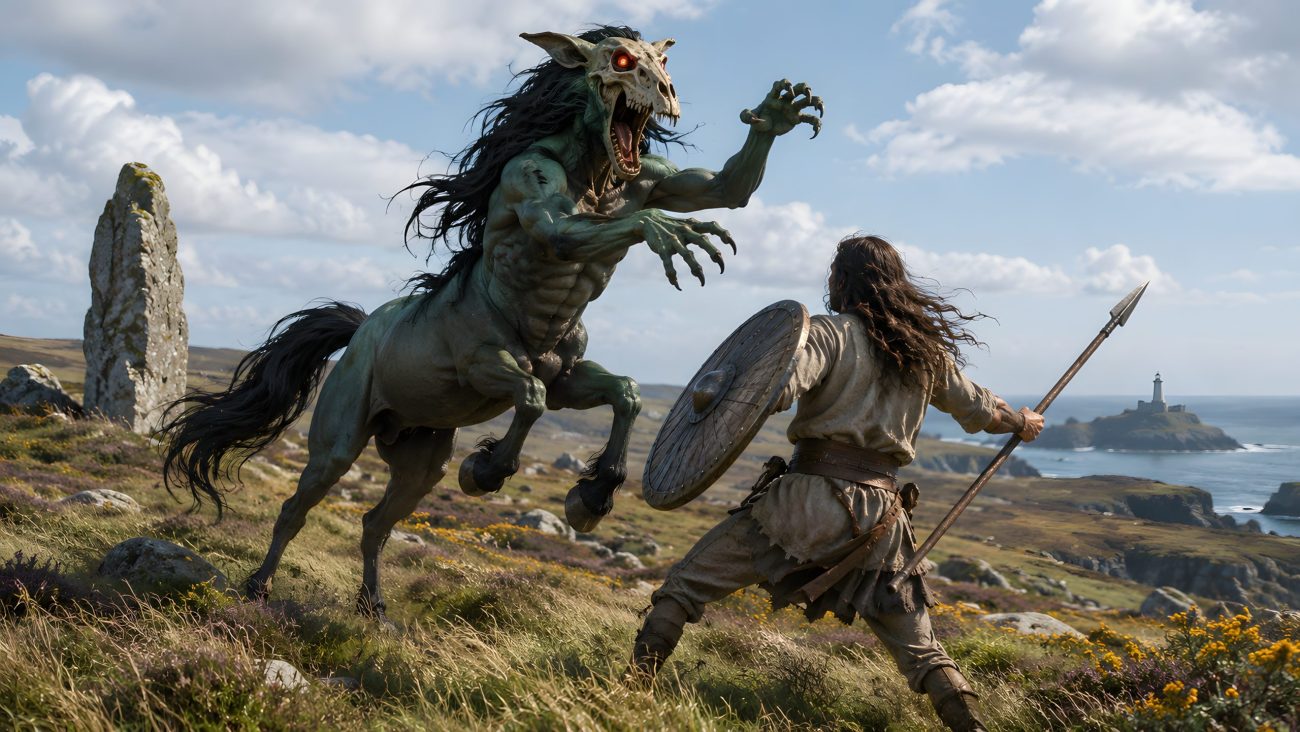
The Murioshe hunts at night, stalking lonely travelers. It sometimes appears as a horse standing quietly beside the road, waiting for someone to ride it. Once mounted, the victim finds the creature’s spine stretching beneath the saddle while it gallops into a lake, laughing as it drowns its rider. At other times it seizes travelers with its muscular arms and throws them into muddy ditches, or leaps onto a person’s back and forces them to carry it until they collapse from exhaustion.
One tale tells of a farmer from Saint-Cast who repeatedly found livestock missing from his barn. Each morning he discovered that a different animal had vanished, only to find another species in its place. After realizing all of his animals had been slaughtered, he armed himself with a shotgun, but the Murioshe destroyed his barn and kidnapped his three children, who were never seen again. Despite its cruelty, the creature left behind a gold necklace.
People believed the Murioshe could sometimes be driven away through cleverness rather than force. One story tells of a rider who escaped after threatening to cut off the ears of the werewolf-like horse with scissors.
The Murioshe was also used to frighten misbehaving children. Parents warned them, “If you don’t listen, a Murioshe will come for you!”
The creature’s true origin is uncertain. Some traditions claim it was once a Breton man or woman who practiced dark arts and sold their soul to the Devil. Others identify it as the Devil himself, while some describe it simply as a werewolf unable to control its transformations. Another tradition recorded by Pierre Dubois says that the Murioshe was once the court jester of the underwater king before being exiled for bad behavior.
Sources
Bestiary.us. (n.d.). Murioshe. In New Bestiary: Encyclopedia of Imaginary Beings. Retrieved June 29, 2026, from https://www.bestiary.us/murioshe