Headless Priest

Tradition / Region: Costa Rica Mythology, El Salvador Mythology, Guatemala Mythology, Philippine Mythology
Alternative names: El Padre sin Cabeza, El Cura sin Cabeza, Paring Pugot
Category: Ghost


The Myth

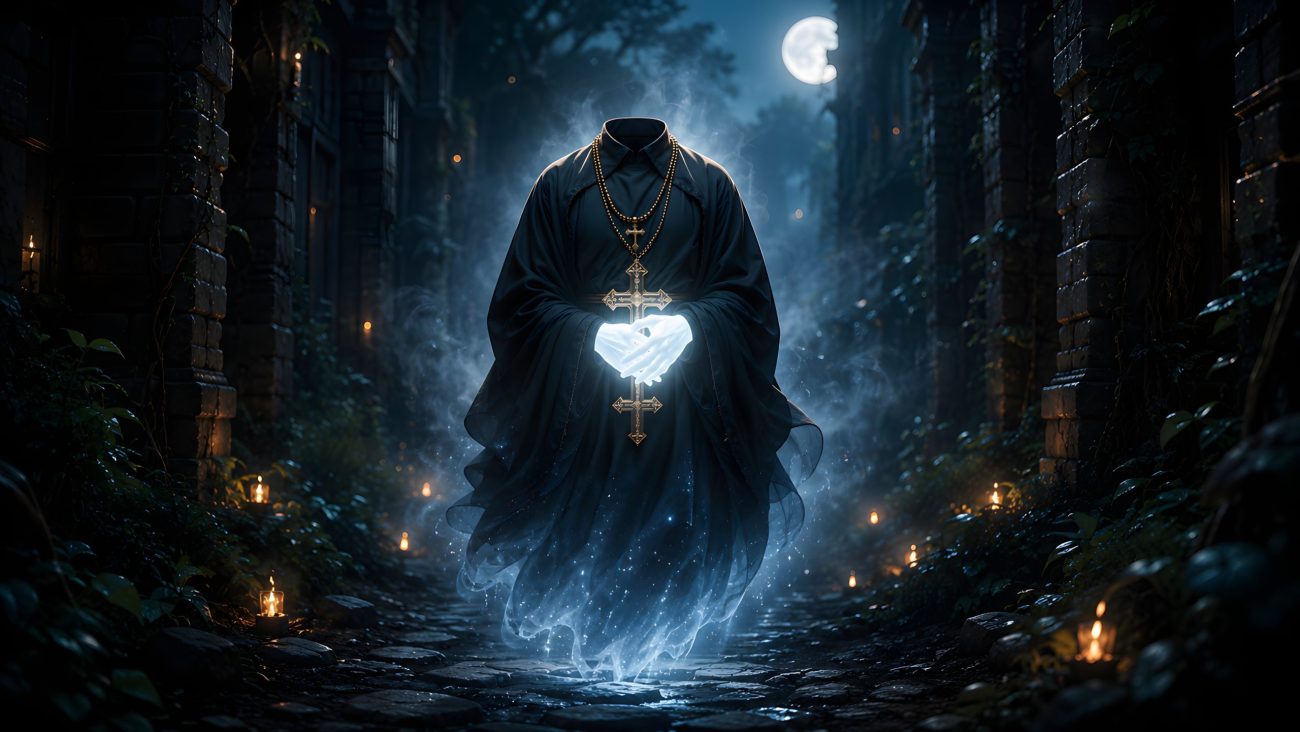
The Headless Priest is the spirit of a Catholic priest who died by decapitation. Condemned to wander after death, he appears as a dark figure dressed in clerical robes, carrying no head upon his shoulders. In some tales, his severed head is missing forever; in others, he carries it beneath his arm or searches endlessly for it.

The ghost is most often encountered at night near churches, abandoned chapels, cemeteries, and lonely roads. Travelers and sinners are said to hear the rustling of his robes or the sound of approaching footsteps before seeing the terrible headless figure emerge from the darkness.

Different lands preserve different stories about his fate. In Costa Rica, one tradition tells of a priest who won a fortune in gold and was beheaded while traveling. His spirit now guards the hidden treasure, appearing to anyone who seeks to steal it. Another says he lurks near churches and attacks drunkards and sinners to frighten them into repentance.

In El Salvador, the Headless Priest is believed to enter churches every Friday night in search of his missing head. Some say he died before making his final confession, while others claim he perished during a peasant revolt.

Guatemalan traditions place him among ruined churches and deserted roads, where muleteers and travelers occasionally glimpse the ghost wandering after dark. In Nicaragua, his restless spirit was blamed for earthquakes and floods that struck the old city of León Viejo.

Philippine folklore also remembers the Headless Priest, known as Paring Pugot, as a wandering spectre that appears on lonely roads and near churches, terrifying those who encounter him.

Forever separated from his head and denied peace, the Headless Priest remains one of the most widespread and haunting spirits of Latin American and Philippine folklore, wandering through the night in silent search of what was lost.


Sources

Wikipedia contributors. (n.d.). Headless priest. In Wikipedia. Retrieved June 20, 2026, from https://en.wikipedia.org/wiki/Headless_priest


Sihuanaba

Tradition / Region: El Salvador Mythology, Guatemala Mythology, Honduras Mythology, Nicaragua Mythology, Costa Rica Mythology, Mexican Mythology
Alternate Names: Siguanaba, Cegua, Cigua, Sihuehuet, Macihuatli
Category: Horse


The Myth

The Sihuanaba is a supernatural shapeshifter that manifests as a beautiful woman, almost always seen from behind, with long hair covering her face. She appears at night in liminal places—riverbanks, crossroads, forest paths, ravines, and empty roads—where people are isolated and vulnerable.

Her primary method is seduction through illusion. She presents herself as desirable, approachable, and often familiar. To some men, she appears as a stranger bathing or washing clothes; to others, she may resemble a lover or someone they know. She moves just ahead of her target, encouraging pursuit without ever fully revealing her face.

She specifically targets men who are morally compromised—drunkards, womanizers, unfaithful husbands, or those wandering at improper hours. These individuals follow her willingly, often believing they are in control of the situation.

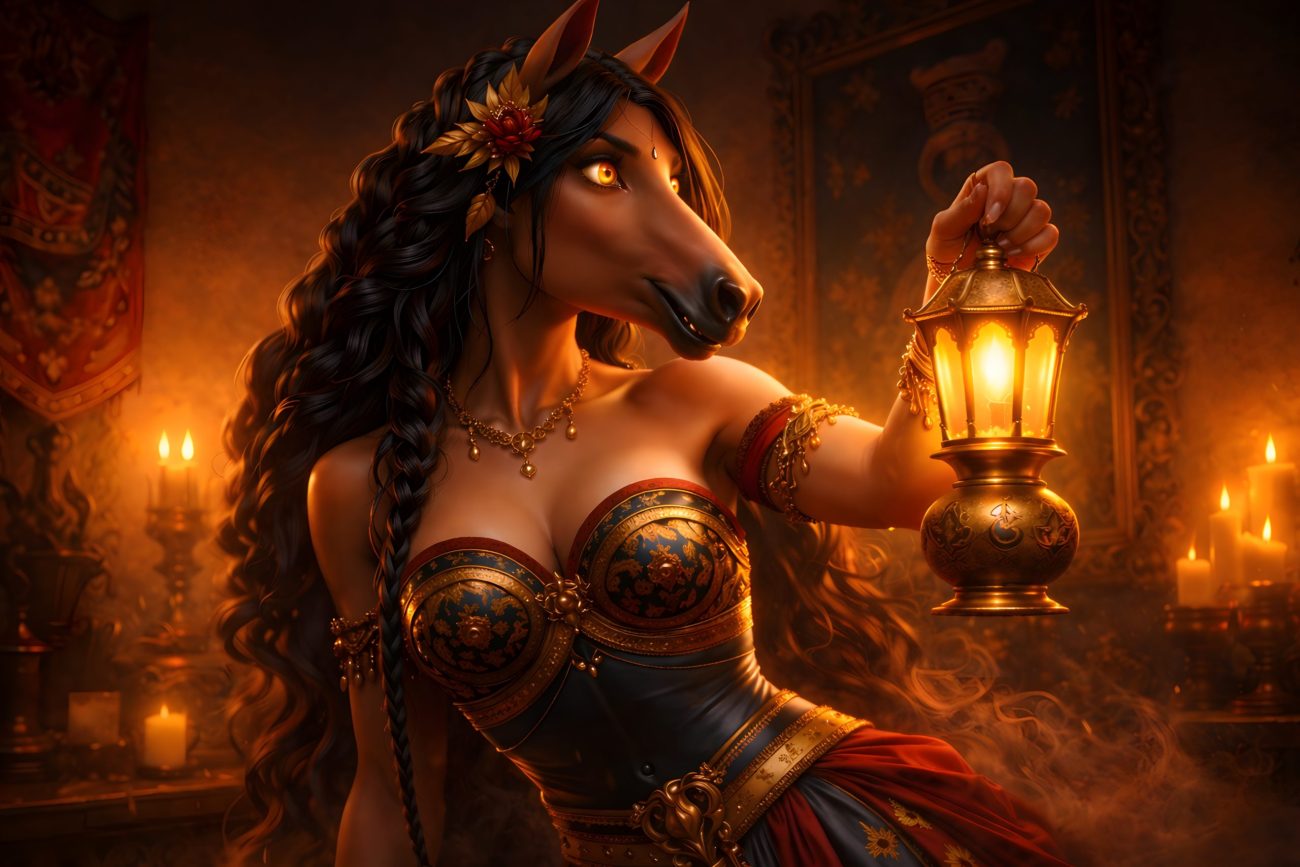
Once the victim is sufficiently isolated—deep in a forest, near a ravine, or far from any path—she reveals her true form. Her face transforms into something grotesque: most commonly the head of a horse, but also described as a skull, a rotting face, or another distorted horror. The transformation is sudden and overwhelming.

The outcome varies but is always destructive. Some victims die instantly from terror. Others lose their sanity, becoming permanently disturbed or disoriented. Many are simply never seen again, having been led too far into wilderness or danger to return.

The Sihuanaba is not limited to one form of deception. She can adapt her appearance depending on the victim. Lovestruck men may see the woman they desire most. Children may see their own mother. In all cases, the illusion is tailored to lower suspicion and ensure the victim follows.

She does not attack physically at first—her power lies in manipulation and psychological control. The victim chooses to follow, and that choice seals their fate. Only at the final moment does she reveal her monstrous nature.

In some traditions, there are ways to resist or repel her, such as invoking sacred symbols or performing specific actions, which break her hold and dispel the illusion. However, these defenses only work if the victim recognizes the danger in time, which is rare.

Across regions, her behavior remains consistent even if details vary: she appears alone, lures through beauty, conceals her face, isolates the victim, and then reveals a horrific truth that leads to death, madness, or disappearance.


Sources

Wikipedia contributors. (n.d.). Sihuanaba. In Wikipedia, from https://en.wikipedia.org/wiki/Sihuanaba


El Cadejo

Tradition / Region: Costa Rica Mythology, Nicaragua Mythology
Alternate Names: Cadejo Blanco, Cadejo Negro
Category: Dog


The Myth

El Cadejo is a mysterious night-walking creature known across many lands of Central America. It is said that there are two of them — one dark and one pale — and their nature depends on which one walks beside you.

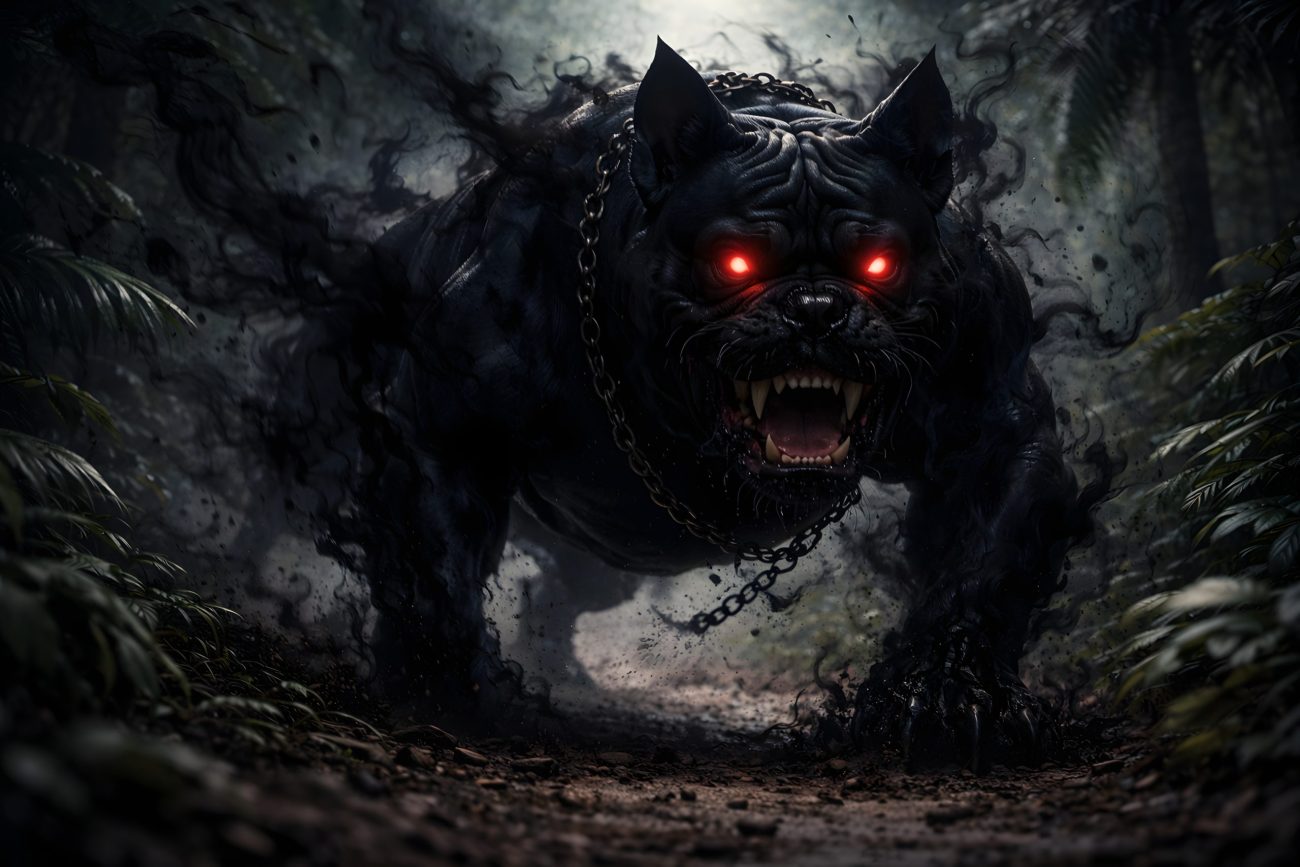
The Cadejo appears as a large dog-like beast, sometimes as big as a cow. Though shaped like a dog, it is not entirely one. Its eyes glow red in the darkness, its body gives off a strong goat-like smell, and some say its feet resemble hooves rather than paws. When it moves, the sound of dragging chains can often be heard.

One of the Cadejos is feared, while the other is said to protect. In some places the white one is the dangerous spirit that tries to trick travelers, while the black one guards the lonely and the drunk as they wander home at night. In other regions, the roles are reversed, and the dark Cadejo becomes the threatening one while the pale one is the protector.

The evil Cadejo is known to follow people silently through the night. Those who encounter it are warned never to speak to it, for doing so can drive a person mad. Turning one’s back on it is also said to bring misfortune or madness.

The other Cadejo, however, may walk beside a traveler and guide them safely home, keeping away its darker counterpart and any dangers that lurk in the night. Many believed that those who staggered through the streets alone after drinking were often unknowingly escorted by this protective spirit.

Thus El Cadejo was remembered as a double-natured hound of the night — a creature that might bring ruin or protection, depending on which form chose to follow you along the road.


Gallery


Sources

Wikipedia contributors. (n.d.). Cadejo. In Wikipedia, from https://es.wikipedia.org/wiki/Cadejo


Interpretive Lenses

Religious Readings
  • Christian Ascetic Deep Dive
Philosophical Readings
  • Nietzschean Deep Dive
Psychological Readings
  • Jungian Deep Dive
Esoteric Deep Dive
  • Hermetic Deep Dive
Political / Social Readings
  • Marxist Deep Dive