Minokawa

Tradition / Region: Phillippines mythology
Alternative names: Minokawa Bird
Category: Bird


The Myth

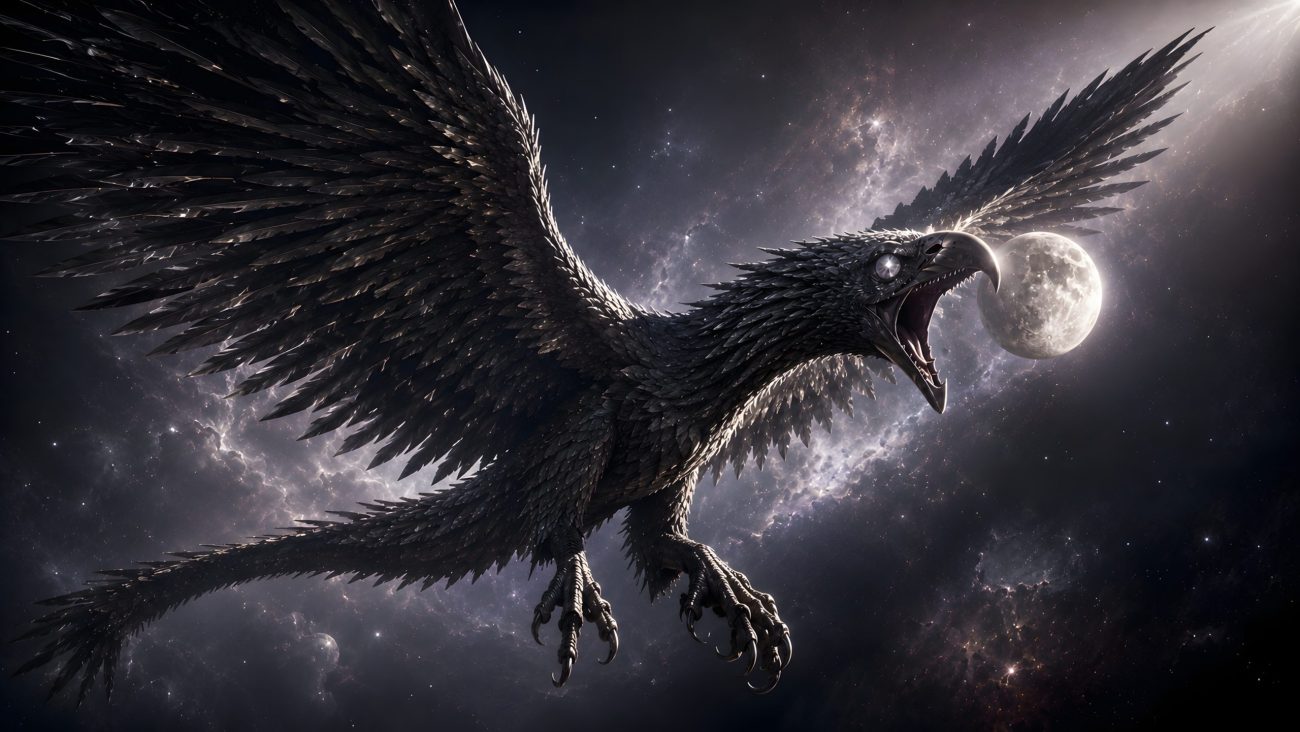
The Minokawa is a colossal bird that lives beyond the eastern edge of the sky. It is so enormous that it is said to be as large as an island. Its beak and claws are made of steel, its eyes shine like mirrors, and every feather is as sharp as a sword.

The great bird constantly hunts the Moon. To escape it, the Moon travels through eight hidden openings in the eastern horizon and eight in the western horizon. Whenever the Moon emerges, the Minokawa tries to swallow it, causing the sky to grow dark.

When the Moon disappears into the bird’s mouth, the people below fear that the Minokawa will next devour the Sun and then descend to consume the Earth and all humanity. To drive the monster away, they beat gongs, shout, and make as much noise as possible. Curious about the commotion, the Minokawa opens its mouth, allowing the Moon to leap free and return to the sky.

The bird then retreats beneath the world, waiting for another chance to seize the Moon.


Sources

“Minokawa.” Wikipedia: The Free Encyclopedia. Wikimedia Foundation. Accessed July 27, 2026. https://en.wikipedia.org/wiki/Minokawa


Tuglay Bird

Tradition / Region: Philippine Mythology
Alternative names: None
Category: Bird


The Myth

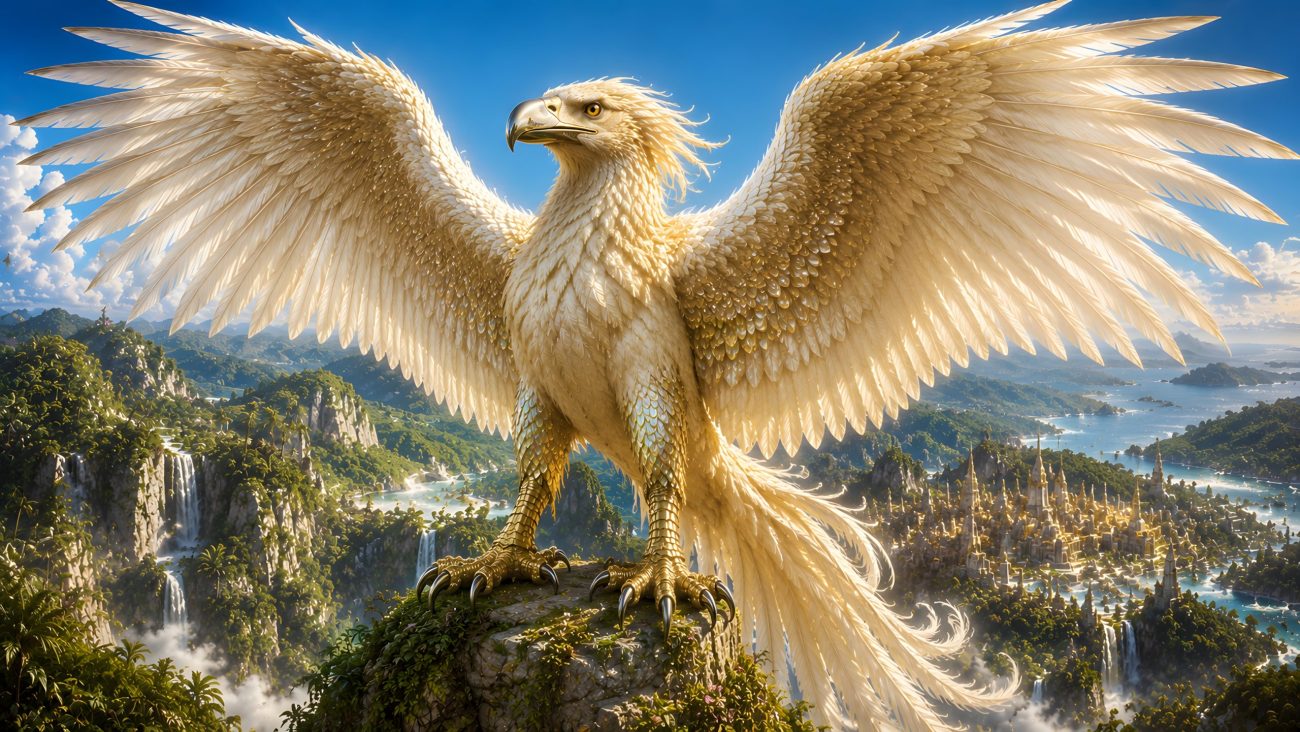
A Bagobo legend tells of a marvelous bird that lives at the rim of the sky. It is described as having soft, downy feathers, claws of steel, a beak like a mirror, and a body covered with countless overlapping scales.

One day the bird gazed upon the magnificent town of the legendary ancestor Tuglay. So beautiful was the city that the bird chose never to return to its distant home, remaining instead to admire the splendor of Tuglay’s realm.

This article stays faithful to the source without inventing details.


Sources

Benedict, L. E. W. (1916). A study of Bagobo ceremonial, magic and myth. [s.n.]. Originally presented as a doctoral dissertation, Columbia University (1914). Retrieved June 29, 2026, from https://archive.org/details/studyofbagobocer00bene


Sarimanok

Tradition / Region: Philippine Mythology
Alternative names: Papanok (feminine form)
Category: Bird


The Myth

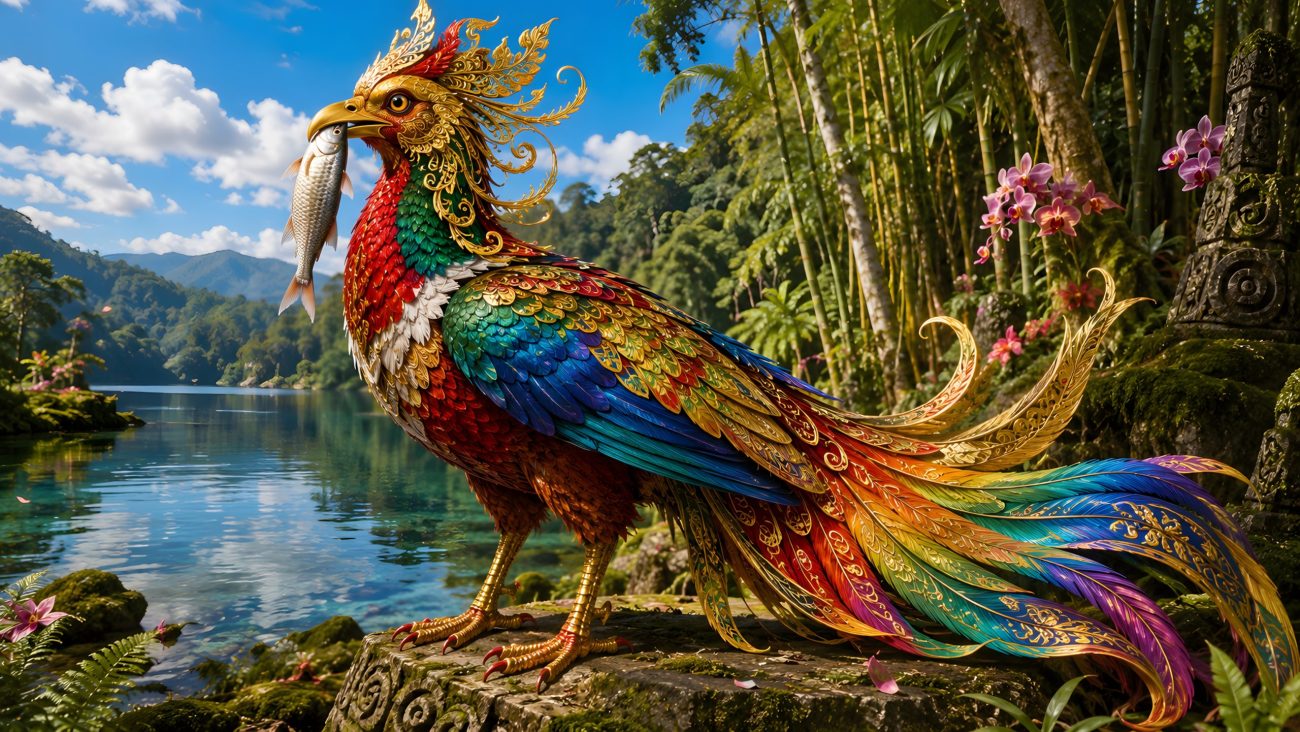
The Sarimanok is the legendary bird of the Maranao people of Mindanao and is regarded as a symbol of good fortune. It is portrayed as a magnificent bird with brilliantly colored wings and an elaborate tail, its head adorned with curling scrolls and leaf-like ornaments. It is almost always shown carrying a fish in its beak or talons.

According to Maranao tradition, the Sarimanok descends from a sacred totem bird known as the Itotoro. The Itotoro is believed to serve as a bridge between the human world and the spirit world through its unseen twin spirit bird, the Inikadowa, making the Sarimanok a creature closely associated with the supernatural.

Later Islamic tradition tells of a vast celestial rooster encountered by the Prophet Muhammad in the first of the seven heavens. The bird was so immense that its comb reached the second heaven, and its crow awakened every living creature except humankind. It is said that the Day of Resurrection will begin when this heavenly bird finally falls silent.

The Sarimanok remains one of the most recognizable figures in Philippine mythology, representing prosperity, spiritual power, and the enduring connection between the earthly and unseen worlds.


Sources

Wikipedia contributors. (n.d.). Sarimanok. In Wikipedia. Retrieved June 29, 2026, from https://en.wikipedia.org/wiki/Sarimanok


Limokun

Tradition / Region: Philippine Mythology
Alternative names:
Category: Bird


The Myth

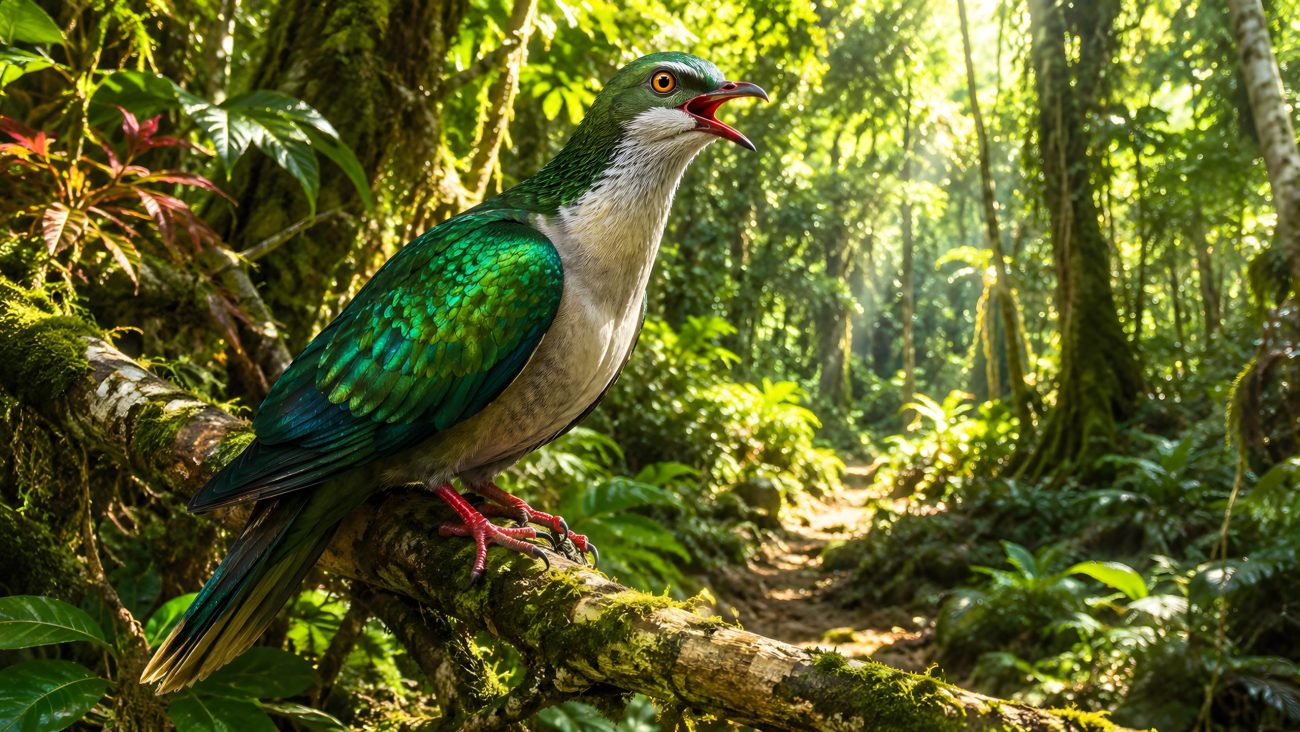
The Limokun is the sacred omen bird of the Bagobo people of Mindanao. It is identified as a beautiful green-and-white wood pigeon with red feet and a red beak, and its call is believed to carry messages that foretell fortune or disaster. Before beginning a journey, hunting expedition, or other important undertaking, people listen carefully for the Limokun’s voice to determine whether it is safe to proceed.

If the bird whistles at an unfavorable moment, the journey is abandoned or delayed until another day, preventing the misfortune that would otherwise occur. Some traditions also interpret the omen according to the direction from which the bird calls or flies, while others say travelers should look around for a sign in their surroundings. If the Limokun’s warning is ignored, disaster is expected to follow.

Because of its sacred status, the Limokun is known as the king of birds. Young men who have never slain an enemy are forbidden to eat its flesh, for doing so is believed to cause their skin to turn yellow, their bodies to waste away, and ultimately bring death. Only warriors who have earned distinction in battle may eat the bird without fear, making it a privilege reserved for the renowned rather than an ordinary source of food.

The Limokun also possesses healing associations. When a person suffers from fever and chills caused by a supernatural river spirit, one traditional remedy is to burn the abandoned nest of a Limokun and allow the patient to inhale the smoke. Thus, the bird is revered not only as a bearer of omens but also as a creature whose remains can help drive away illness.


Sources

Benedict, L. E. W. (1916). A study of Bagobo ceremonial, magic and myth. [s.n.].


Ekek

Tradition / Region: Philippine Mythology
Alternative names: Ek Ek
Category: Bat


The Myth

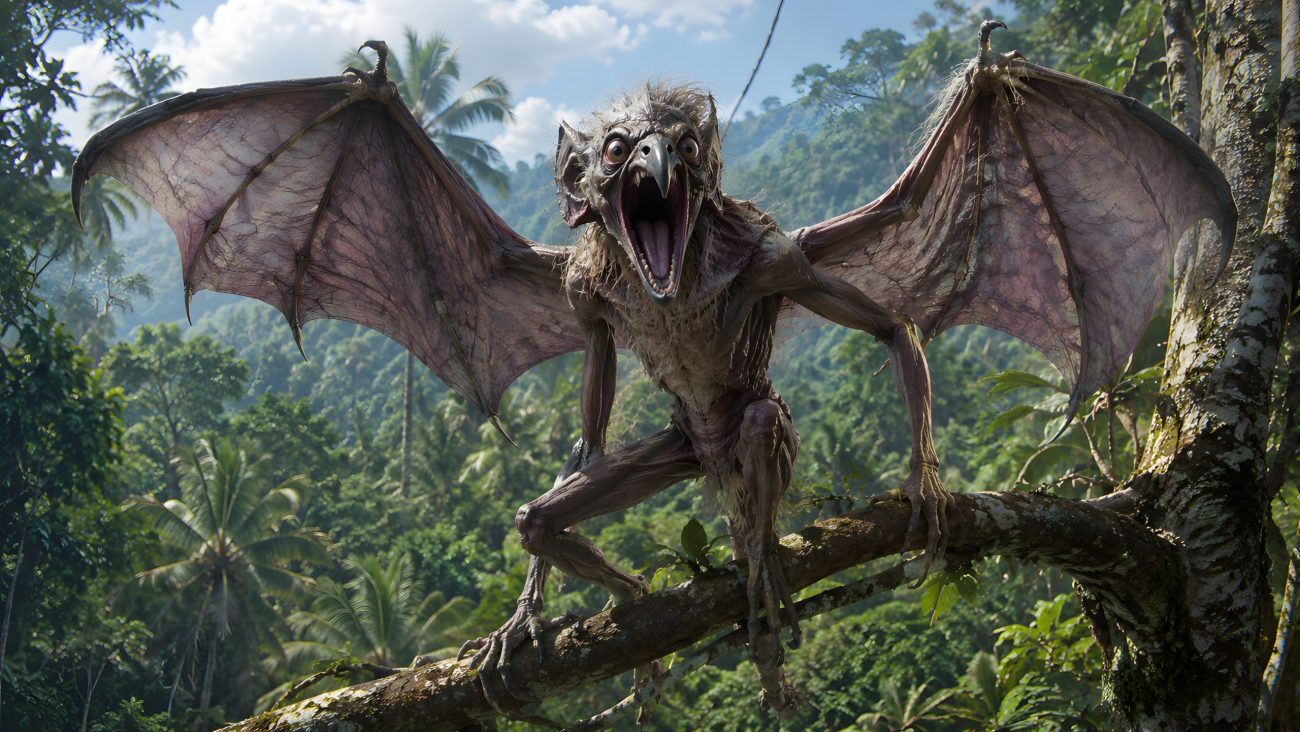
The Ekek is a winged, human-like creature that hunts at night in Philippine folklore. It feeds on human flesh and blood and is often compared to the Manananggal because of its appearance. Unlike the Manananggal, however, the Ekek cannot split its body in two.

By night, the Ekek transforms into a gigantic bird or bat and prowls in search of victims. It is especially known for preying upon sleeping pregnant women. Using an unusually long proboscis, it reaches into the womb to drain the blood of the unborn child, killing the fetus.

The creature is closely associated with the Wak Wak, as the two share many characteristics. The principal difference is that the Ekek possesses a bird-like bill, while the Wak Wak does not.

Its name comes from the eerie “ek-ek-ek” sound it makes while hunting. According to tradition, the cry is deceptive: when the sound seems faint and distant, the creature is actually very close to its intended victim.


Sources

Wikipedia contributors. (n.d.). Ekek. In Wikipedia. Retrieved June 29, 2026, from https://en.wikipedia.org/wiki/Ekek


Tikbalang

Tradition / Region: Philippine Folklore
Alternative names: Tigbalang, Tigbalan, Tikbalan, Tigbolan, Werehorse, Unglo (Visayan)
Category: Horse


The Myth

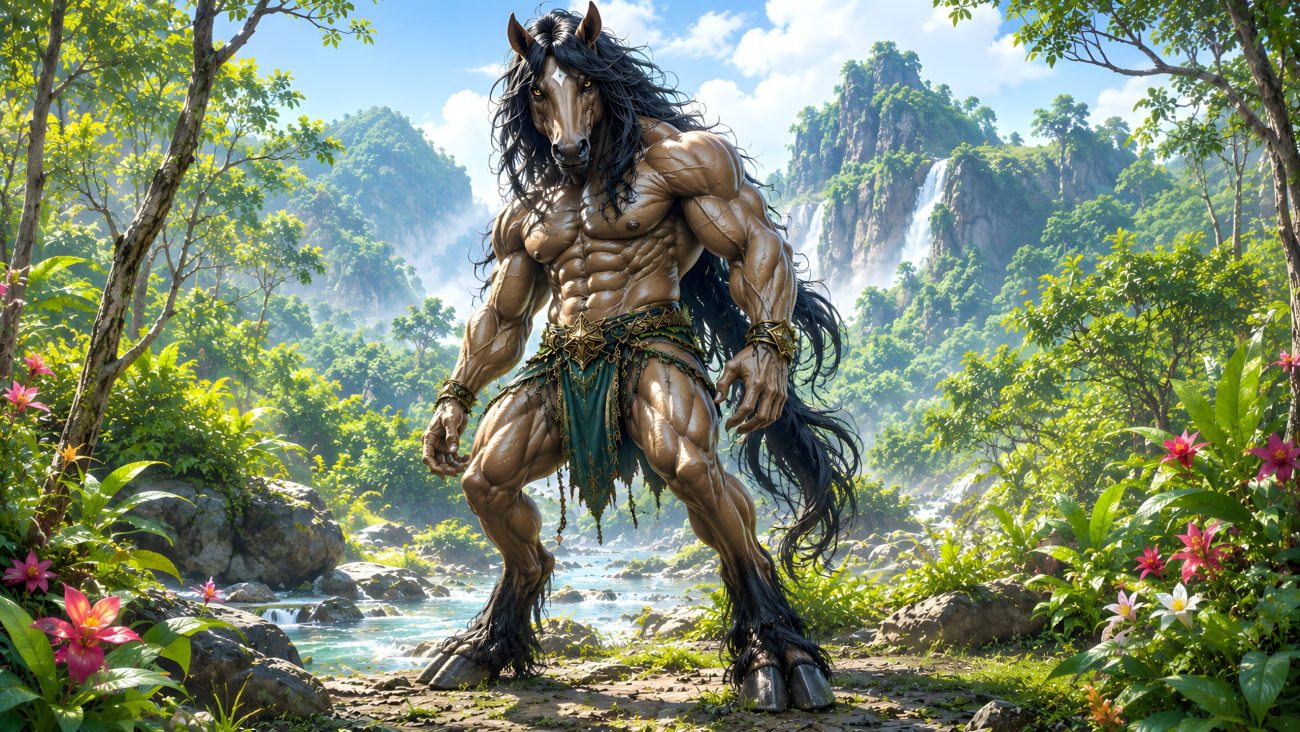
The Tikbalang is a supernatural creature of Philippine folklore that dwells in the mountains and rainforests. It is usually described as a tall, gaunt being with the head and hooves of a horse and the body of a human. Its limbs are unnaturally long, and when it squats, its knees rise above its head. Some traditions say it is the transformed spirit of an aborted fetus sent to earth from limbo.

Early Spanish accounts did not describe the Tikbalang as horse-like. Instead, it was regarded as a ghost or forest spirit that haunted wild places and could assume many frightening forms. Later, after horses became familiar in the Philippines during the Spanish colonial period, the creature came to be consistently portrayed as a half-human, half-horse being.

The Tikbalang is closely associated with forests and large sacred trees, particularly balete and kalumpang trees. It is believed to guard these places and is often encountered beneath bridges, in bamboo thickets, banana groves, or beneath ancient trees.

The creature is notorious for misleading travelers. It causes people to lose their way, making them unknowingly walk in circles and repeatedly return to the same place. According to tradition, this enchantment can be broken by turning one’s shirt inside out or by politely asking permission before passing through the forest.

Many legends also describe the Tikbalang as a shapeshifter capable of becoming invisible or taking human form. During sunshowers, Filipinos commonly say that a Tikbalang is getting married.

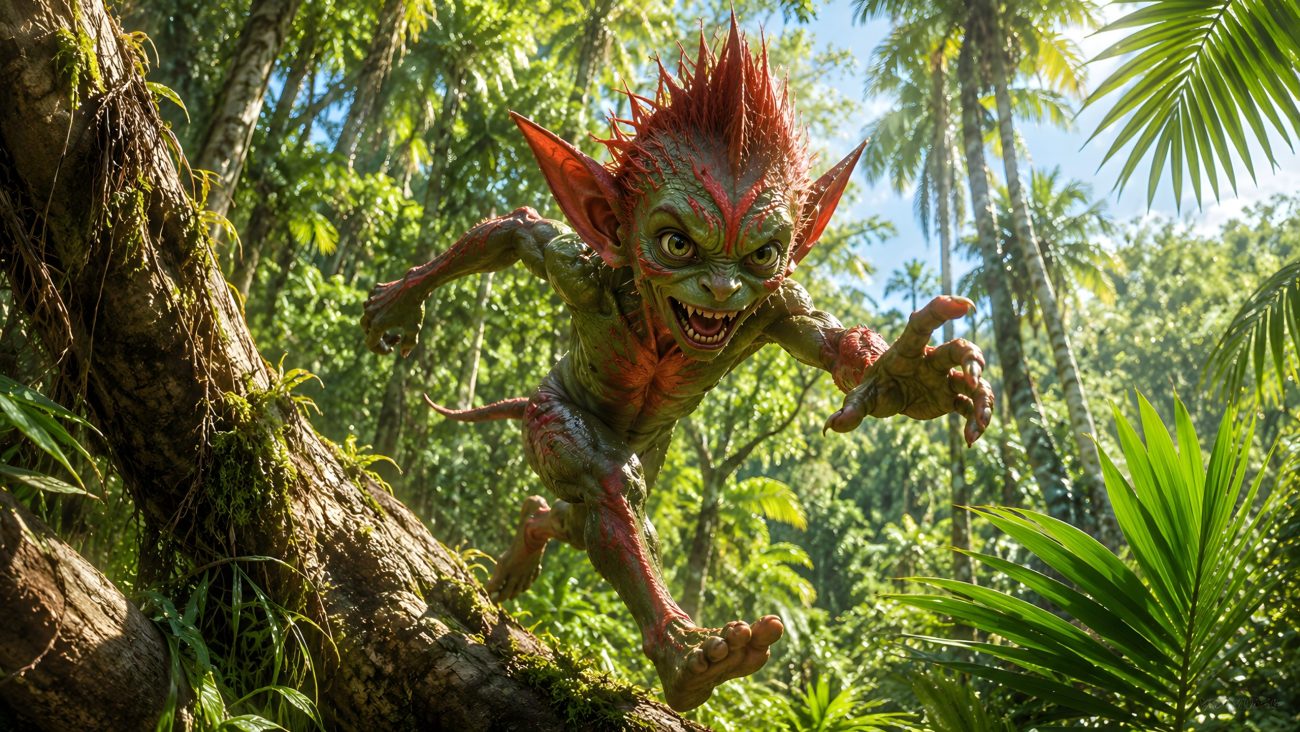
According to one tradition, the Tikbalang possesses a mane filled with sharp spines, among which three golden hairs hold magical power. A person brave enough to leap onto the creature, restrain it with a specially prepared cord, and remain mounted while it struggles through the air can pluck these three hairs. Once subdued, the Tikbalang becomes the person’s loyal servant, and the hairs may be kept as a powerful talisman.


Sources

Wikipedia contributors. (n.d.). Tikbalang. In Wikipedia. Retrieved June 29, 2026, from https://en.wikipedia.org/wiki/Tikbalang
Anggitay

Tradition / Region: Philippines Mythology
Alternative names:
Category: Horse


The Myth

The Anggitay is a mythical creature with the upper body of a woman and the lower body of a horse, making it the Philippine counterpart of the female centaur. Some depictions also give the Anggitay a single horn in the center of its forehead, resembling a unicorn.

According to tradition, the Anggitay is the female counterpart of the Tibalang. It is especially attracted to precious gemstones and jewelry.

The Anggitay is also believed to appear when rain falls while the sky remains clear, a phenomenon sometimes associated with its presence.


Sources

Bestiary.us. (n.d.). Anggitay. In New Bestiary: Encyclopedia of Imaginary Beings. Retrieved June 29, 2026, from https://www.bestiary.us/anggitai/en


Sigbin

Tradition / Region: Philippine Mythology
Alternative names: Sigben, Sigbinan’s Sigbin
Category: Sheep


The Myth

The Sigbin is one of the most feared supernatural creatures in Philippine folklore. It is described as a bizarre, goat-like demon with no horns, enormous bat-like ears, and a long whip-like tail. Rather than walking normally, the Sigbin moves backwards, with its head hanging between its hind legs. Folklore claims that this unnatural posture allows it to become invisible to ordinary humans.

The creature is believed to emerge primarily during Holy Week, especially on Easter, when the boundary between the human and supernatural worlds is thought to weaken. During these nights, the Sigbin leaves its hiding place to hunt, targeting children and unsuspecting travelers. According to legend, it tears out the hearts of its victims, using them to create powerful magical amulets. It is also said to feed on human blood, which it mysteriously draws from a person’s shadow rather than directly from the body.

Unlike many mythical beasts that roam freely, the Sigbin is often portrayed as a creature that can be owned and controlled. Certain families, known as sigbinan, are believed to inherit the ability to command Sigbins through secret magical knowledge. These demons are said to live hidden inside large clay jars during the day and are released only at night. They are also commonly associated with aswang witches, who supposedly keep Sigbins as supernatural servants, guardians, or hunting companions.

Although the Sigbin is deeply rooted in Philippine folklore, some researchers have suggested that its strange appearance may have originated from descriptions of unfamiliar animals, particularly kangaroos, whose upright posture, powerful hind legs, and long tails resemble aspects of the legendary creature. Over time, these observations blended with local supernatural beliefs, transforming the mysterious animal into one of the Philippines’ most enduring demonic legends.

Today, the Sigbin remains one of the best-known creatures in Philippine folklore, remembered as a terrifying nocturnal predator, a servant of witches, and a symbol of hidden supernatural dangers lurking beyond the edge of human sight.


Sources

Bestiary.us. (n.d.). Sigbin. In New Bestiary: Encyclopedia of Imaginary Beings. Retrieved June 28, 2026, from https://www.bestiary.us/sigbin


Headless Priest

Tradition / Region: Costa Rica Mythology, El Salvador Mythology, Guatemala Mythology, Philippine Mythology
Alternative names: El Padre sin Cabeza, El Cura sin Cabeza, Paring Pugot
Category: Ghost


The Myth

The Headless Priest is the spirit of a Catholic priest who died by decapitation. Condemned to wander after death, he appears as a dark figure dressed in clerical robes, carrying no head upon his shoulders. In some tales, his severed head is missing forever; in others, he carries it beneath his arm or searches endlessly for it.

The ghost is most often encountered at night near churches, abandoned chapels, cemeteries, and lonely roads. Travelers and sinners are said to hear the rustling of his robes or the sound of approaching footsteps before seeing the terrible headless figure emerge from the darkness.

Different lands preserve different stories about his fate. In Costa Rica, one tradition tells of a priest who won a fortune in gold and was beheaded while traveling. His spirit now guards the hidden treasure, appearing to anyone who seeks to steal it. Another says he lurks near churches and attacks drunkards and sinners to frighten them into repentance.

In El Salvador, the Headless Priest is believed to enter churches every Friday night in search of his missing head. Some say he died before making his final confession, while others claim he perished during a peasant revolt.

Guatemalan traditions place him among ruined churches and deserted roads, where muleteers and travelers occasionally glimpse the ghost wandering after dark. In Nicaragua, his restless spirit was blamed for earthquakes and floods that struck the old city of León Viejo.

Philippine folklore also remembers the Headless Priest, known as Paring Pugot, as a wandering spectre that appears on lonely roads and near churches, terrifying those who encounter him.

Forever separated from his head and denied peace, the Headless Priest remains one of the most widespread and haunting spirits of Latin American and Philippine folklore, wandering through the night in silent search of what was lost.


Sources

Wikipedia contributors. (n.d.). Headless priest. In Wikipedia. Retrieved June 20, 2026, from https://en.wikipedia.org/wiki/Headless_priest


Mantahungal

Tradition / Region: Philippines Mythology
Alternative Name: –
Category: Cow


The Myth

The Mantahungal is a terrifying creature from the folklore of the Tagbanua people of Palawan in the Philippines. It is said to dwell deep within remote mountain forests at high altitudes, far from human settlements.

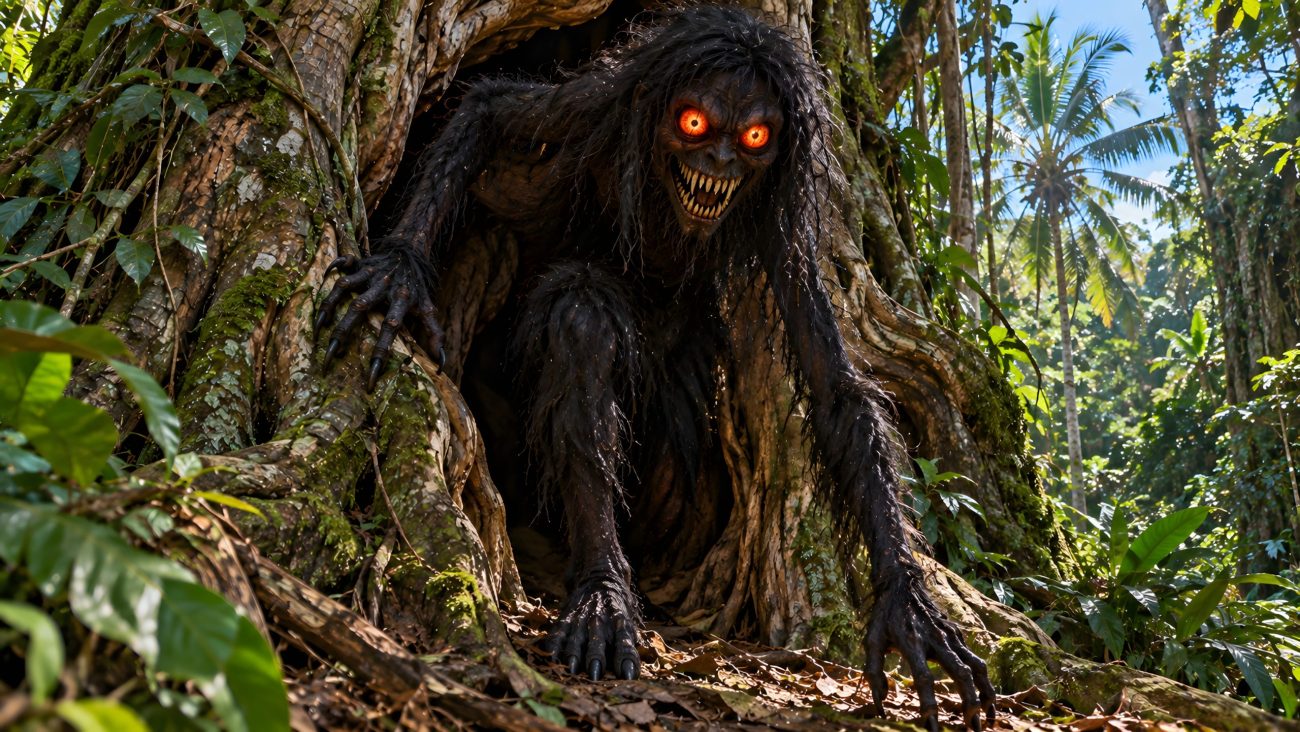
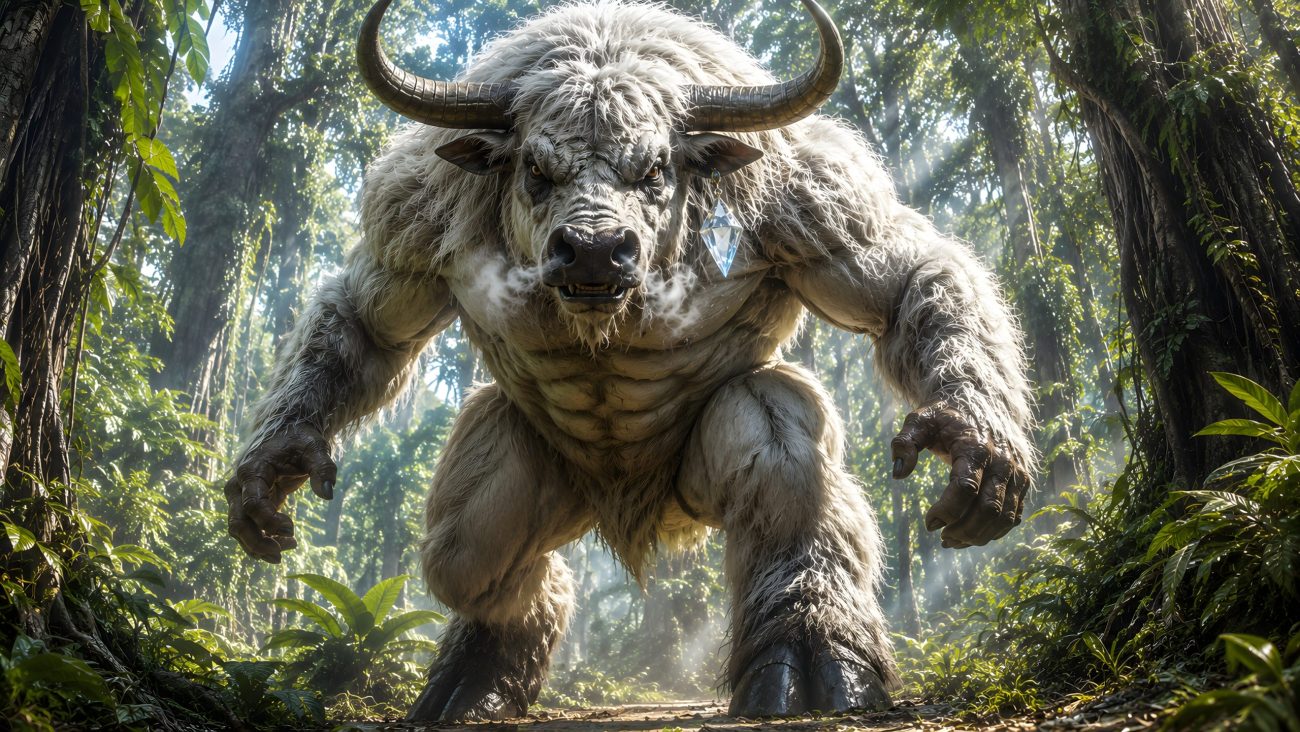
The creature is usually described as resembling a gigantic hornless cow covered in long shaggy hair that hangs almost to the ground. Despite its cattle-like appearance, the mantahungal possesses a monstrous mouth filled with huge fangs and tusk-like teeth, including massive upper and lower tusks used to tear apart its prey.

According to legend, the mantahungal is a violent predator that hunts humans and animals in the mountain wilderness. It chases down victims through the forest before ripping them apart with its enormous teeth.

Stories describe it as a hidden and feared creature of the highlands, rarely seen but associated with danger, disappearance, and death in isolated forest regions.


Sources

Cryptid Archives. (n.d.). Mantahungal. Retrieved May 10, 2026, from https://cryptidarchives.fandom.com/wiki/Mantahungal

Bestiary.us. (n.d.). Mantakhungal. Retrieved May 10, 2026, from https://www.bestiary.us/mantakhungal/en/