Bugsok

Tradition: Philippine Mythology
Alternative Names: Bugsok
Category: Forest Dweller


The Myth

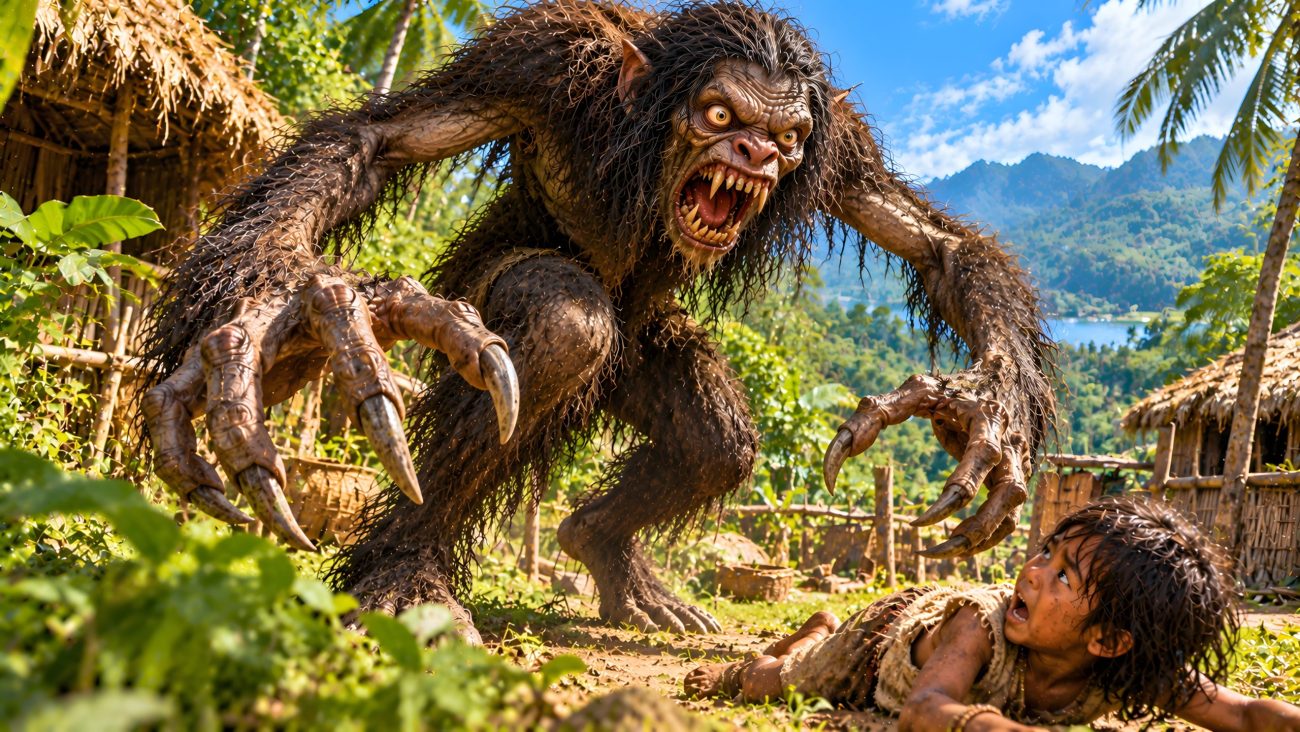
Bugsok is a terrifying creature from Philippine folklore, a monstrous being with a hunched body, long, powerful limbs, and dark fur covering much of its body. Its arms are unusually long, ending in enormous hands with sharp, curved claws. Its face is grotesque, with bulging eyes, a broad nose, and a gaping mouth filled with jagged teeth. The creature’s twisted posture and elongated limbs give it a frightening appearance, allowing it to move in a hunched, animalistic manner.

Bugsok is feared for its habit of kidnapping children. Rather than simply devouring its victims, the creature transforms them into Bugsok like itself. The stolen children are thus turned into members of the same monstrous kind, spreading the creature’s unnatural existence. Parents and children must beware of this terrifying kidnapper, for those taken by Bugsok may never return as they once were.


Sources

“Бугсок (Bugsok).” New Bestiary (Bestiary.us). Accessed October 11, 2026. https://www.bestiary.us/bugsok/en
Batibat

Tradition: Philippine Mythology
Alternative Names: Bangungot, Batíbat
Category: Forest dweller


The Myth

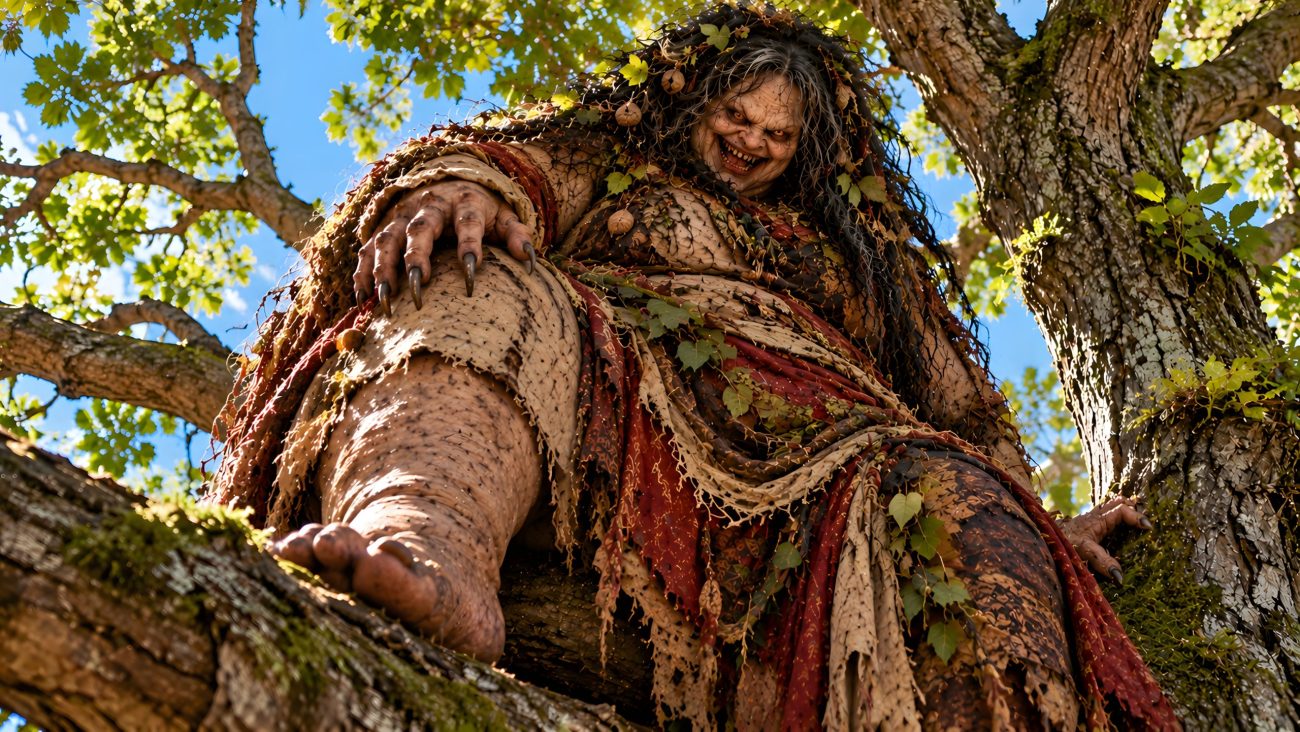
The Batibat is a terrifying female demon from Ilocano mythology, appearing as an ancient, grotesquely obese woman who dwells in trees. She lives within the trunks and branches of old trees, remaining hidden as long as her woodland home is undisturbed. When her tree is cut down and its timber is used to construct a house, she may become homeless and take refuge in the remaining wood, particularly when it is made into a support post. Angered by the destruction of her home, the Batibat becomes a dangerous presence within the household.

The Batibat forbids people from sleeping near the post that contains her dwelling. If someone ignores this warning and falls asleep nearby, she reveals her monstrous form and attacks the sleeper. She presses down upon the victim, suffocating them while invading their dreams and trapping them in terrifying nightmares. The victim may awaken unable to move or breathe properly, experiencing the frightening sensation of an unseen weight crushing their body. This attack is associated with sleep paralysis and is the origin of the creature’s connection to nightmares.

Despite her terrifying power, the Batibat has a weakness that allows victims to escape her grip. Someone trapped in her nightmare can bite their own thumb or wiggle their toes to awaken themselves. By performing one of these actions, the victim may break free from the demon’s supernatural hold and escape the suffocating dream. The Batibat remains a feared spirit of the household, a displaced guardian of trees who takes revenge on those who sleep too close to the remains of her former home.


Sources

“Batibat.” Wikipedia: The Free Encyclopedia. Wikimedia Foundation. Accessed October 12, 2026. https://en.wikipedia.org/wiki/Batibat


Kapre

Tradition: Philippine Mythology
Alternative Names: Agtà, Tree Giant
Category: Forest Dweller


The Myth

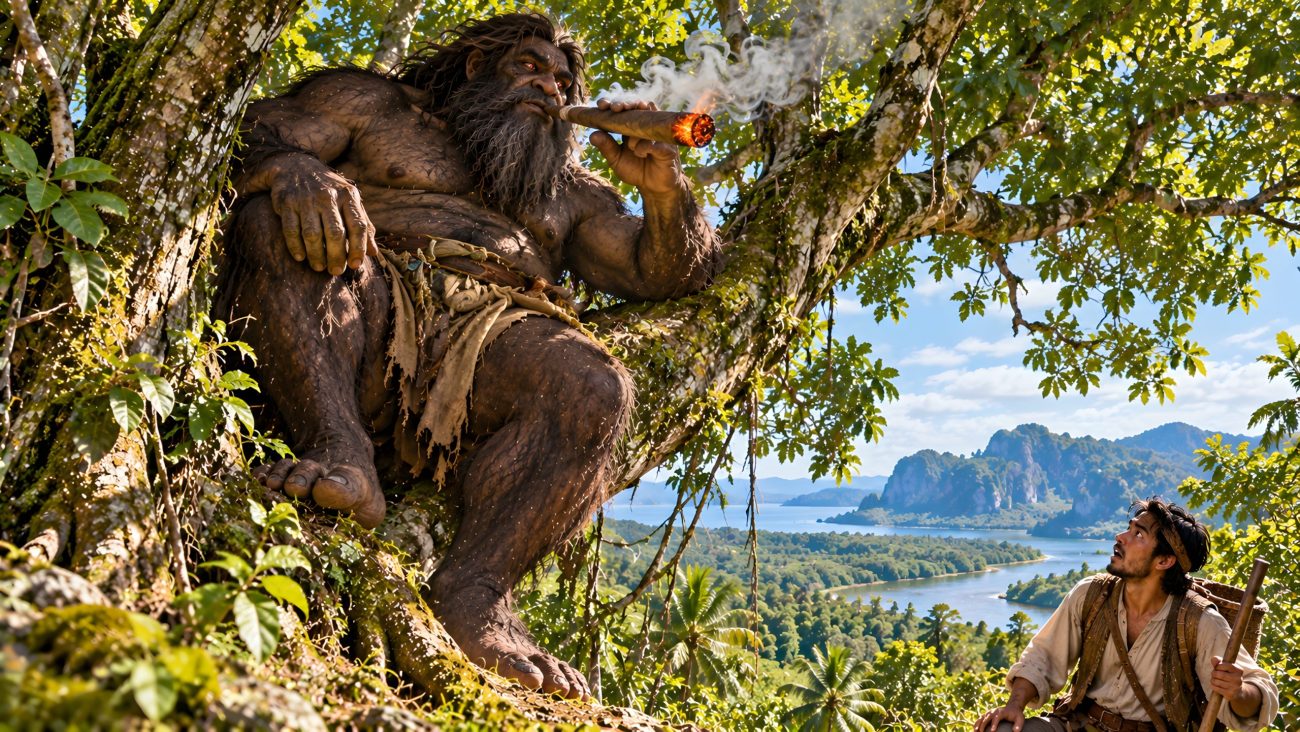
The Kapre is a towering, muscular forest giant with dark skin, a hairy body, and a fearsome appearance. It has a large, often ugly face, hairy arms, and a body that may be covered in thick hair. It is sometimes depicted wearing a traditional loincloth and a belt that grants it the power to become invisible. The Kapre is famous for smoking enormous cigars or a tobacco pipe, and its glowing embers may appear among the trees like fireflies. It commonly inhabits the branches of great trees, including acacias, mango trees, bamboo groves, and banyans known as balete. It may sit high among the branches or beneath the tree, watching those who pass by.

Although the Kapre can be mischievous and frightening, it is not always evil. It enjoys playing tricks on travellers, confusing them until they lose their way in forests, mountains, or even familiar places such as their own gardens. People may hear loud laughter coming from nowhere, see branches rustling without any wind, or notice thick smoke rising from a tree. At night, the creature’s large, red, glaring eyes may shine from the darkness. A Kapre can also become angry and vengeful when someone cuts down the tree it inhabits, punishing those who destroy its home.

The Kapre sometimes approaches humans to form friendships and may even fall in love with a woman. However, its supernatural presence can bring trouble to those it loves, and it may continue following its chosen companion throughout their life. Those who become friends with a Kapre are said to gain the ability to see the otherwise hidden giant. Some stories also describe a magical white stone, slightly smaller than a quail’s egg, which the Kapre may possess. Anyone who manages to obtain this stone can ask the creature to grant wishes. Despite its immense strength and frightening appearance, the Kapre remains a mysterious guardian of great trees, capable of both playful mischief and dangerous retaliation.


Sources

“Kapre.” Wikipedia: The Free Encyclopedia. Wikimedia Foundation. Accessed October 12, 2026. https://en.wikipedia.org/wiki/Kapre


Karango

Tradition / Region: Philippines Mythology
Alternate Names: Carango
Category: Spirit, Forest dweller


The Myth

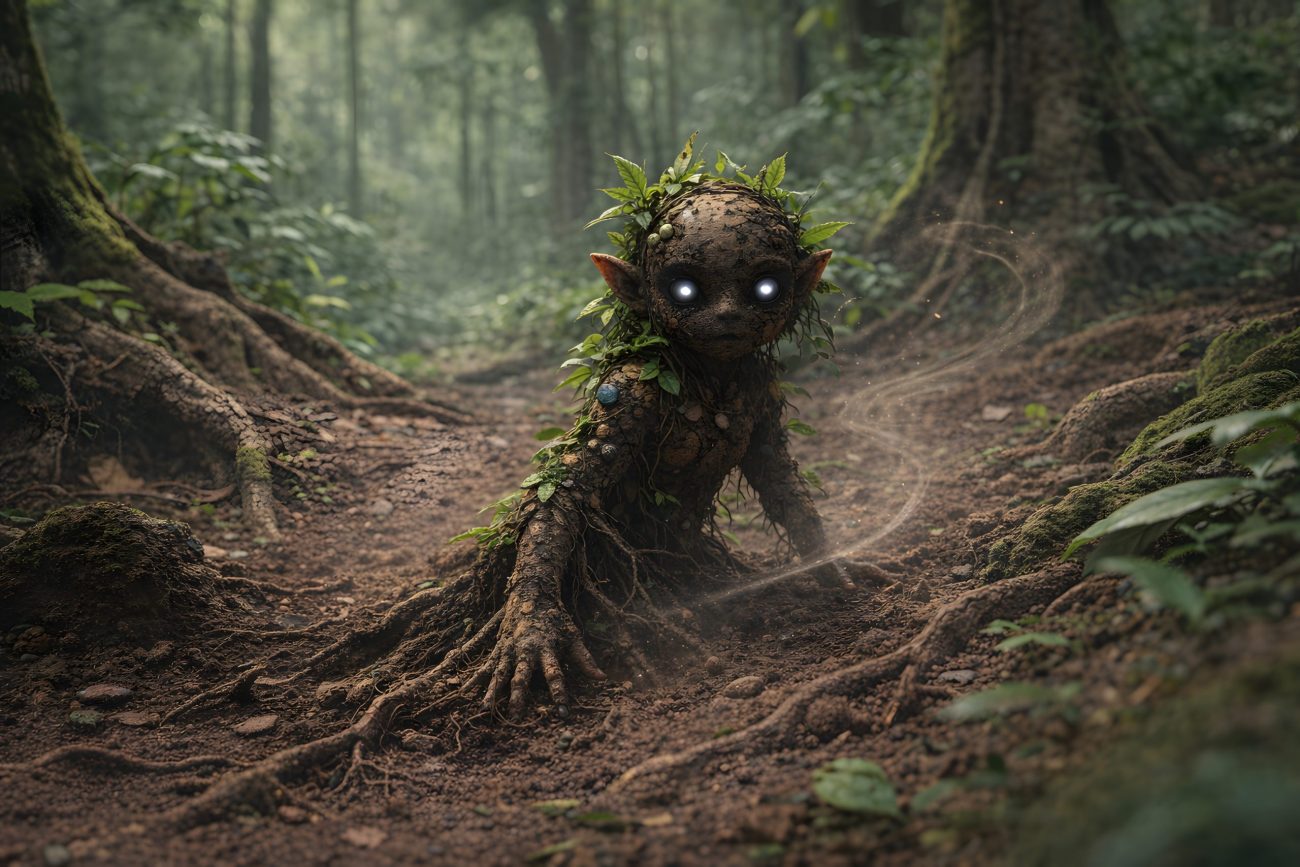
In the folklore of the Ibanag people of northern Luzon, karangos are small nature spirits who dwell throughout the landscape. They inhabit the earth itself, as well as hills, forests, and cultivated fields. These beings are not tied to villages or human structures, but to the land in its natural state.

Karangos are regarded as the true owners of the land. Humans may live, farm, and travel across these places, but the spirits are believed to possess them in a deeper and older sense. Because of this, respect toward the land is essential, and careless or disruptive behavior is considered dangerous.

When summoned by a shaman, karangos are said to answer with a whistling sound, signaling their presence. This sound serves as their form of response rather than speech, marking a boundary between the human and spirit worlds.

Although small, karangos are not harmless. They are known to cause harm to those who disturb their dwellings, whether by damaging the land or failing to observe proper conduct. Their punishment is not described in detail, but their role as guardians of the land makes them figures to be feared as well as respected.

The name Carango appears as a Latinized spelling, but it refers to the same beings known among the Ibanag as karangos—spirits bound to the soil, unseen but ever-present, enforcing the unseen laws of the land they claim as their own.


Gallery


Sources

Bestiary.us contributors. (n.d.). Karango. In Bestiary.us, from https://www.bestiary.us/Karango


Interpretive Lenses

Religious Readings
  • Christian Ascetic Deep Dive
Philosophical Readings
  • Nietzschean Deep Dive
Psychological Readings
  • Jungian Deep Dive
Esoteric Deep Dive
  • Hermetic Deep Dive
Political / Social Readings
  • Marxist Deep Dive
Other
  • How to Invite The Karango

Alan

Tradition / Region: Philippines Mythology
Alternate Names: Alans
Category: Forest dweller, Bird


The Myth

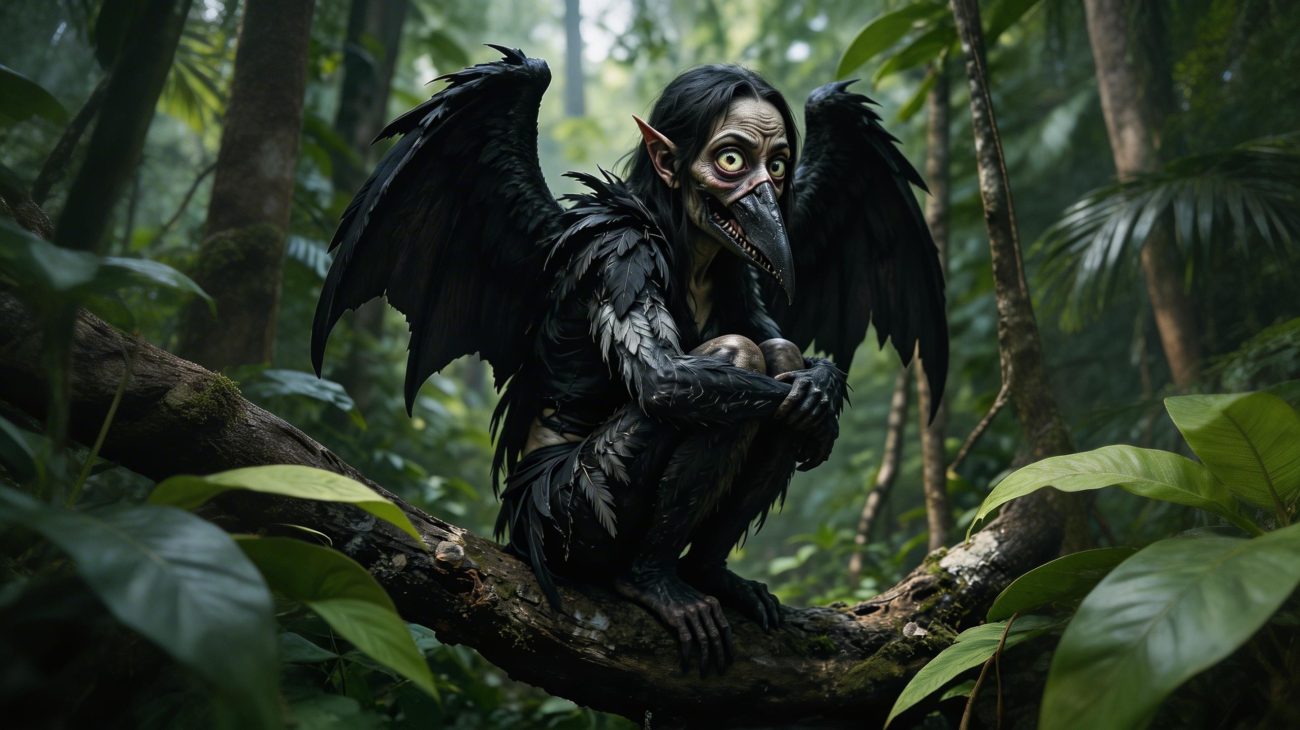
Among the Tingyan people of northwestern Luzon, the Alans are known as wild, winged female spirits who belong to a lower order of supernatural beings. They dwell deep within forests, and at times near rivers, in places seldom visited by humans.

In appearance, the Alans resemble women, but their features are disturbing. Their faces are said to be rough and deeply wrinkled, resembling the hide of a carabao buffalo. They possess wings and are able to fly. Their fingers are inverted, and their toes point backward, emerging from their heels rather than their feet, making them frightening to behold.

The Alans are believed to live in houses much like those of humans, though far more splendid and richly furnished. These dwellings are hidden within the dark forest. At night or when unseen, the Alans are said to hang upside down from tree branches, like bats.

Despite their terrifying appearance, the Alans are credited with a nurturing role. It is believed that when they find drops of menstrual blood, a placenta, or the remains of a miscarriage, they are able to raise a child from it. These children are raised secretly, without the knowledge of their human parents. Once grown, the Alans assist the children throughout their lives, offering help and protection.

Thus, the Alans are remembered not only as fearsome forest spirits, but also as mysterious foster mothers, moving between danger and care, concealment and guardianship.


Sources

Bestiary.us contributors. (n.d.). Eterari. In Bestiary.us, from https://www.bestiary.us/eterari/