Minokawa

Tradition / Region: Phillippines mythology
Alternative names: Minokawa Bird
Category: Bird


The Myth

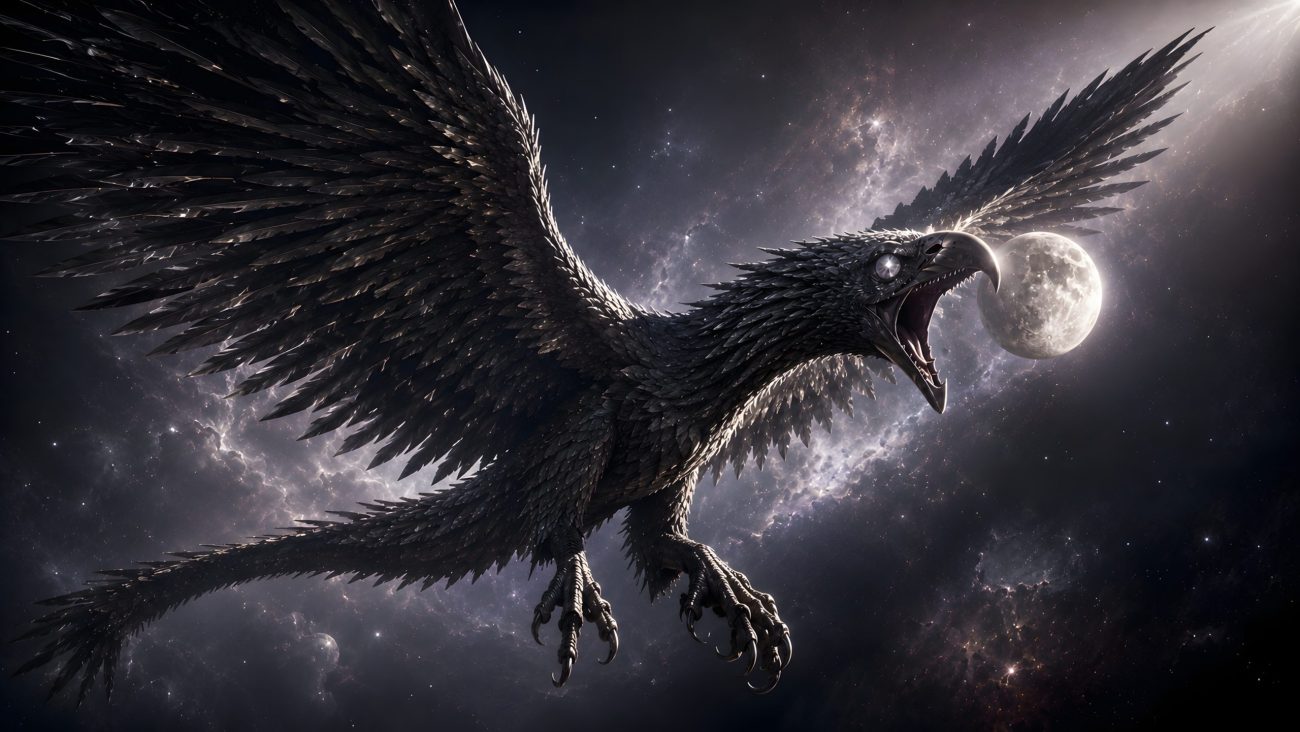
The Minokawa is a colossal bird that lives beyond the eastern edge of the sky. It is so enormous that it is said to be as large as an island. Its beak and claws are made of steel, its eyes shine like mirrors, and every feather is as sharp as a sword.

The great bird constantly hunts the Moon. To escape it, the Moon travels through eight hidden openings in the eastern horizon and eight in the western horizon. Whenever the Moon emerges, the Minokawa tries to swallow it, causing the sky to grow dark.

When the Moon disappears into the bird’s mouth, the people below fear that the Minokawa will next devour the Sun and then descend to consume the Earth and all humanity. To drive the monster away, they beat gongs, shout, and make as much noise as possible. Curious about the commotion, the Minokawa opens its mouth, allowing the Moon to leap free and return to the sky.

The bird then retreats beneath the world, waiting for another chance to seize the Moon.


Sources

“Minokawa.” Wikipedia: The Free Encyclopedia. Wikimedia Foundation. Accessed July 27, 2026. https://en.wikipedia.org/wiki/Minokawa
Tuglay Bird

Tradition / Region: Philippine Mythology
Alternative names: None
Category: Bird


The Myth

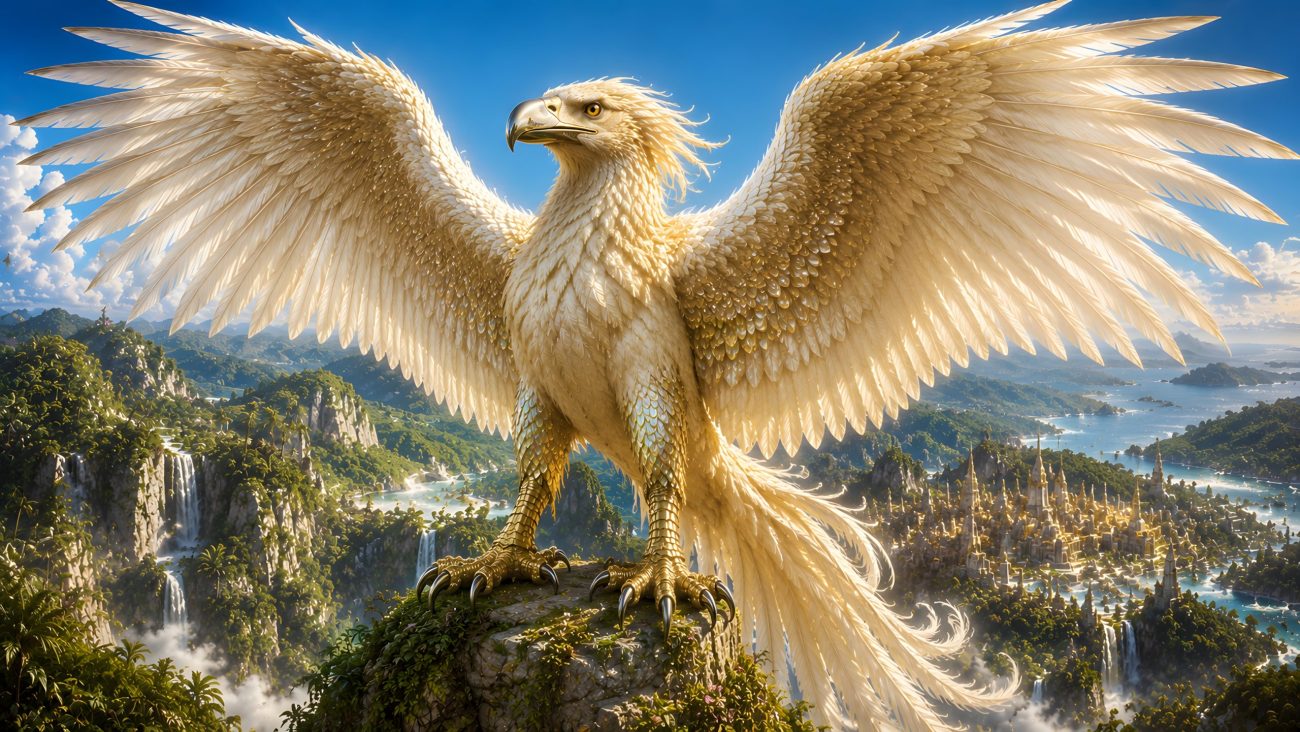
A Bagobo legend tells of a marvelous bird that lives at the rim of the sky. It is described as having soft, downy feathers, claws of steel, a beak like a mirror, and a body covered with countless overlapping scales.

One day the bird gazed upon the magnificent town of the legendary ancestor Tuglay. So beautiful was the city that the bird chose never to return to its distant home, remaining instead to admire the splendor of Tuglay’s realm.

This article stays faithful to the source without inventing details.


Sources

Benedict, L. E. W. (1916). A study of Bagobo ceremonial, magic and myth. [s.n.]. Originally presented as a doctoral dissertation, Columbia University (1914). Retrieved June 29, 2026, from https://archive.org/details/studyofbagobocer00bene


Sarimanok

Tradition / Region: Philippine Mythology
Alternative names: Papanok (feminine form)
Category: Bird


The Myth

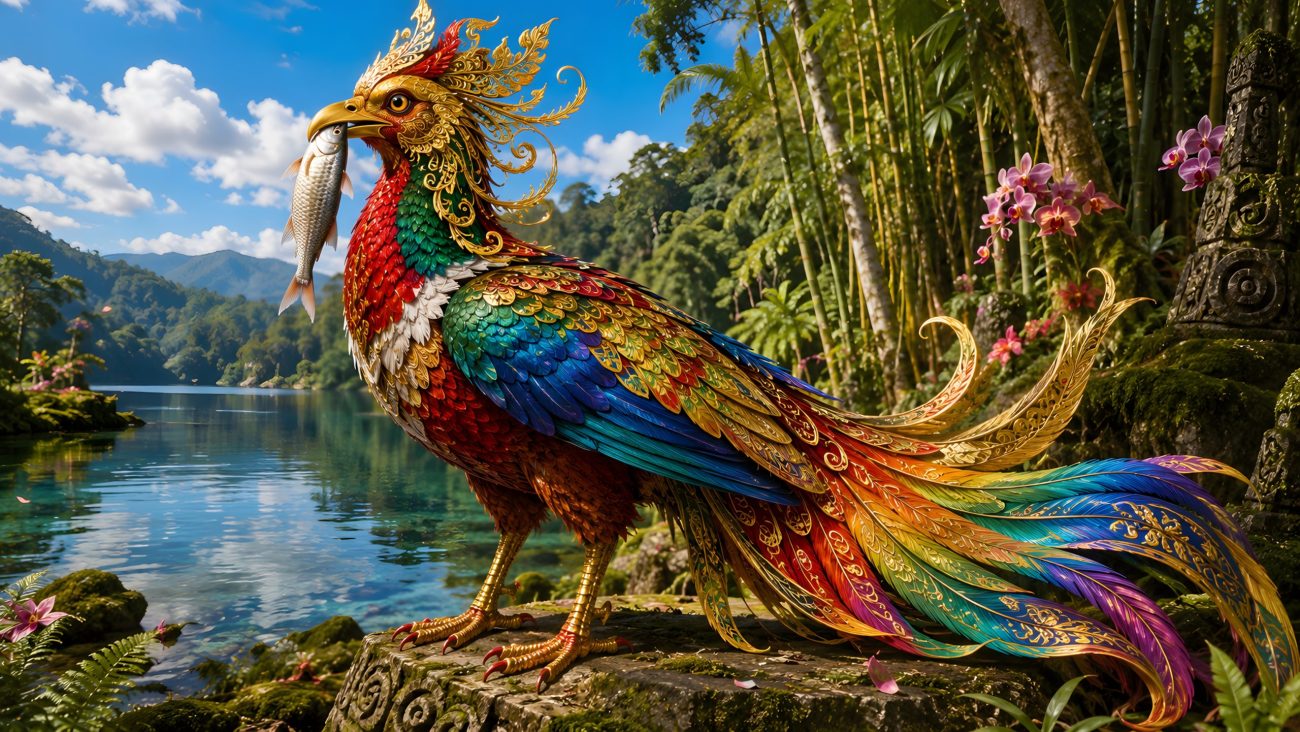
The Sarimanok is the legendary bird of the Maranao people of Mindanao and is regarded as a symbol of good fortune. It is portrayed as a magnificent bird with brilliantly colored wings and an elaborate tail, its head adorned with curling scrolls and leaf-like ornaments. It is almost always shown carrying a fish in its beak or talons.

According to Maranao tradition, the Sarimanok descends from a sacred totem bird known as the Itotoro. The Itotoro is believed to serve as a bridge between the human world and the spirit world through its unseen twin spirit bird, the Inikadowa, making the Sarimanok a creature closely associated with the supernatural.

Later Islamic tradition tells of a vast celestial rooster encountered by the Prophet Muhammad in the first of the seven heavens. The bird was so immense that its comb reached the second heaven, and its crow awakened every living creature except humankind. It is said that the Day of Resurrection will begin when this heavenly bird finally falls silent.

The Sarimanok remains one of the most recognizable figures in Philippine mythology, representing prosperity, spiritual power, and the enduring connection between the earthly and unseen worlds.


Sources

Wikipedia contributors. (n.d.). Sarimanok. In Wikipedia. Retrieved June 29, 2026, from https://en.wikipedia.org/wiki/Sarimanok


Limokun

Tradition / Region: Philippine Mythology
Alternative names:
Category: Bird


The Myth

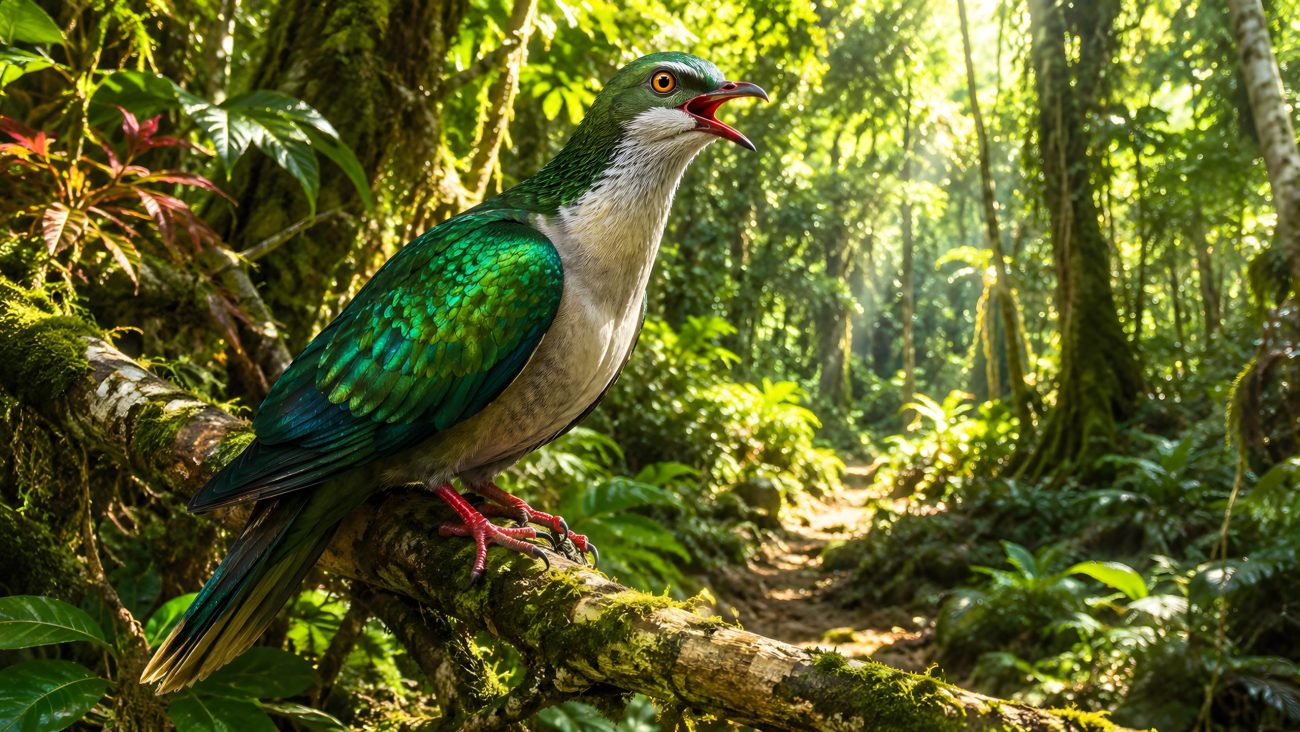
The Limokun is the sacred omen bird of the Bagobo people of Mindanao. It is identified as a beautiful green-and-white wood pigeon with red feet and a red beak, and its call is believed to carry messages that foretell fortune or disaster. Before beginning a journey, hunting expedition, or other important undertaking, people listen carefully for the Limokun’s voice to determine whether it is safe to proceed.

If the bird whistles at an unfavorable moment, the journey is abandoned or delayed until another day, preventing the misfortune that would otherwise occur. Some traditions also interpret the omen according to the direction from which the bird calls or flies, while others say travelers should look around for a sign in their surroundings. If the Limokun’s warning is ignored, disaster is expected to follow.

Because of its sacred status, the Limokun is known as the king of birds. Young men who have never slain an enemy are forbidden to eat its flesh, for doing so is believed to cause their skin to turn yellow, their bodies to waste away, and ultimately bring death. Only warriors who have earned distinction in battle may eat the bird without fear, making it a privilege reserved for the renowned rather than an ordinary source of food.

The Limokun also possesses healing associations. When a person suffers from fever and chills caused by a supernatural river spirit, one traditional remedy is to burn the abandoned nest of a Limokun and allow the patient to inhale the smoke. Thus, the bird is revered not only as a bearer of omens but also as a creature whose remains can help drive away illness.


Sources

Benedict, L. E. W. (1916). A study of Bagobo ceremonial, magic and myth. [s.n.].


Alan

Tradition / Region: Philippines Mythology
Alternate Names: Alans
Category: Forest dweller, Bird


The Myth

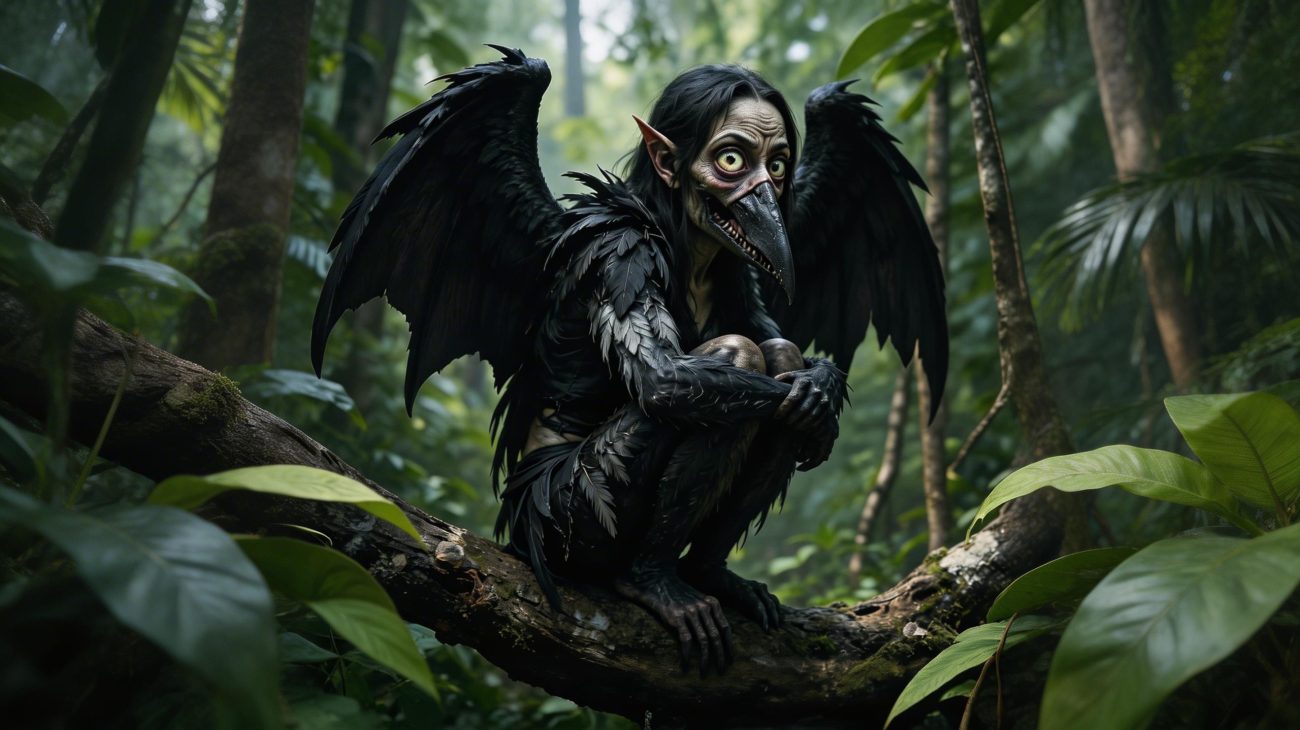
Among the Tingyan people of northwestern Luzon, the Alans are known as wild, winged female spirits who belong to a lower order of supernatural beings. They dwell deep within forests, and at times near rivers, in places seldom visited by humans.

In appearance, the Alans resemble women, but their features are disturbing. Their faces are said to be rough and deeply wrinkled, resembling the hide of a carabao buffalo. They possess wings and are able to fly. Their fingers are inverted, and their toes point backward, emerging from their heels rather than their feet, making them frightening to behold.

The Alans are believed to live in houses much like those of humans, though far more splendid and richly furnished. These dwellings are hidden within the dark forest. At night or when unseen, the Alans are said to hang upside down from tree branches, like bats.

Despite their terrifying appearance, the Alans are credited with a nurturing role. It is believed that when they find drops of menstrual blood, a placenta, or the remains of a miscarriage, they are able to raise a child from it. These children are raised secretly, without the knowledge of their human parents. Once grown, the Alans assist the children throughout their lives, offering help and protection.

Thus, the Alans are remembered not only as fearsome forest spirits, but also as mysterious foster mothers, moving between danger and care, concealment and guardianship.


Sources

Bestiary.us contributors. (n.d.). Eterari. In Bestiary.us, from https://www.bestiary.us/eterari/