Heavy Wagon of Malmkrog

Tradition / Region: Romanian Mythology
Alternate Names: The Heavy Wagon; The Mountain Car; The Vespers Wagon
Category: Object, Wagon


The Myth

About thirty years before the tale was told, a farmer’s wife from Malmkrog was harvesting grain on a field high up the mountainside. Her small son, no more than four or five years old, sat in the shade of a few sheaves, restless and bored while she worked.

Below the field the slope dropped steeply into an old, half-cleared forest. It was late afternoon, and the village bells began to ring for vespers. According to custom and belief, people were meant to stop their labor and return home at that hour, but the woman remained in the field.

Then from the nearby woods came a sudden uproar.

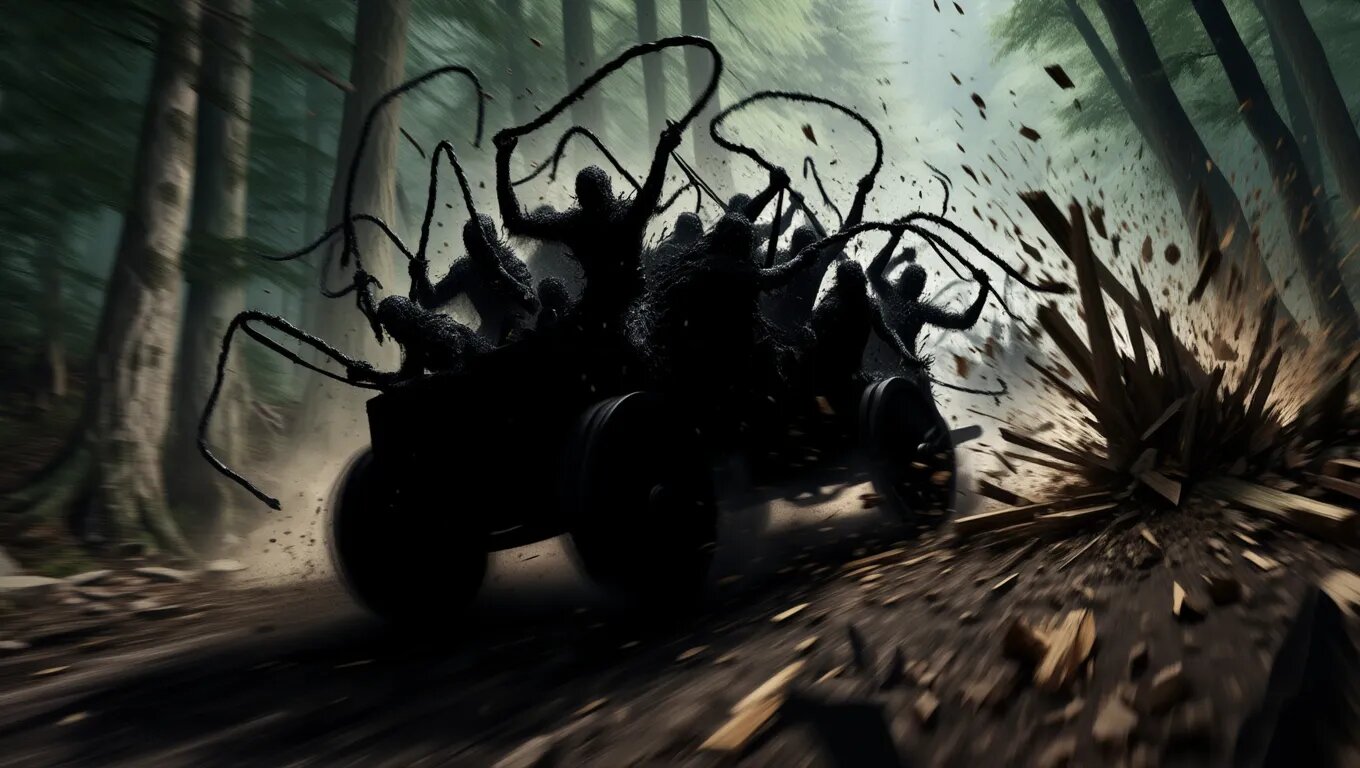
The boy later said he heard the crack of whips echoing through the trees, along with loud shouting and calls of “Hi!” and “Ho!” It sounded as if many unseen men were straining to haul a heavily laden cart up the steep, trackless mountainside. The noise of wheels, crashing wood, and clattering harness rang through the forest, though no one could be seen.

Panic seized the woman. She ran to her child, snatched up what she had brought from home, and took his hand. Behind them the din grew louder — the shouts, the cracking whips, the grinding of the burdened wagon — as if the unseen drivers were drawing ever nearer.

Without looking back, she fled with the boy down the mountain toward the village.

That evening she told the men who had already returned from their work:

“When the bell rang for vespers, they came with the Heavy Wagon. Never again will I stay on the Hattert once the church bell rings.”

And from that time on, people remembered the tale and kept to the old custom, leaving the mountain fields when the bells began to sound.


Sources

sagen.at contributors. (n.d.). Der schwere Wagen. In sagen.at, from https://www.sagen.at/texte/sagen/rumaenien/siebenbuergen/derschwerewagen.html


Abumi-guchi

Tradition / Region: Japanese Mythology
Alternate Names: Abumiguchi
Category: Object, Yokai


The Myth

On old battlefields where grass grows over rusted iron and forgotten bones, an Abumi-guchi is said to wait.

Long ago, it was nothing more than a stirrup—one of a matched pair belonging to a warrior who rode into battle and never returned. When the fighting ended, the dead were buried or burned, the living went home, and the stirrup was left behind in the dirt, still shaped to bear a foot that would never again step into it.

As years passed, the abandoned object awakened.

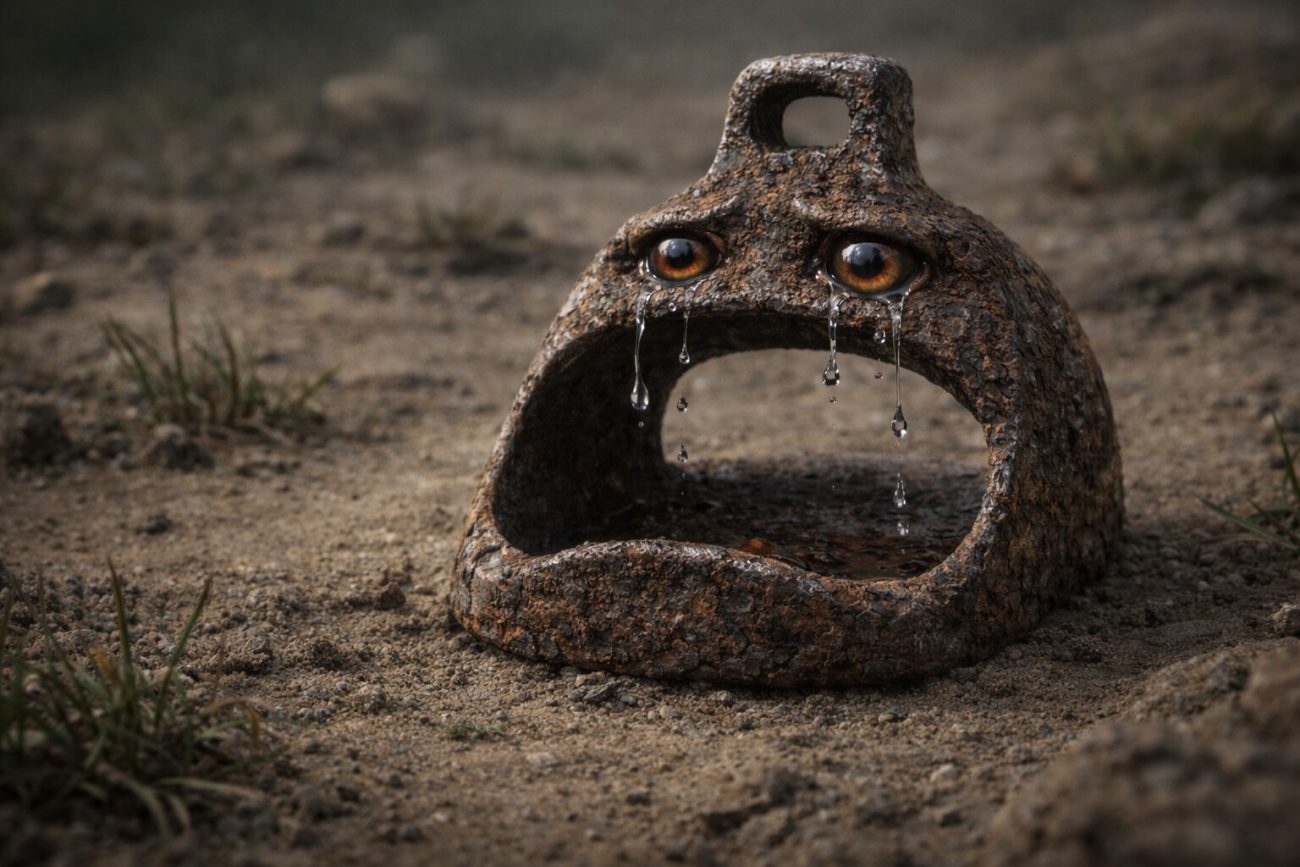
The iron frame sprouted coarse fur, and where the foot once rested, a mouth formed—wide, soft, and wordless. Thus the Abumi-guchi was born, a tsukumogami shaped not by malice, but by longing.

Unlike many yōkai, the Abumi-guchi does not roam. It does not hunt, trick, or frighten travelers. It remains where it fell, half-buried in grass or mud, facing the direction from which its master once rode. It waits patiently, endlessly, believing that the warrior will return to claim it.

Those who encounter an Abumi-guchi describe it as gentle and sorrowful. It does not attack. It does not speak. If approached, it merely watches with its hollow mouth, as though expecting a familiar presence. Some say it shifts slightly when footsteps approach, mistaking strangers for its long-dead owner.

The Abumi-guchi is said to endure until it finally decays completely, or until time itself erases the memory of the battle. Until then, it remains a symbol of loyalty without reward—an object bound to a purpose that can never again be fulfilled.

In Japanese folklore, the Abumi-guchi stands as a quiet reminder that even tools can grieve, and that devotion, when left behind, may linger far longer than the lives that once gave it meaning.


Sources

Yokai.com contributors. (n.d.). Abumi-guchi. In Yokai.com — The Japanese Mythology Database, from https://yokai.com/abumiguchi/

Wikipedia contributors. (n.d.). Abumi-guchi. In Wikipedia, The Free Encyclopedia, from https://en.wikipedia.org/wiki/Abumi-guchi


Jatai

Tradition / Region: Japan (Ehime Prefecture and other regions)
Alternate Names:
Category: Object/ yōkai


The Myth

The Jatai is said to appear at night as a living obi, a kimono sash that moves on its own like a great snake. By day it is nothing more than a length of cloth, but after night falls it slithers from its resting place, coiling and gliding through rooms in search of victims.

According to old folk belief, if a person lays an obi near their pillow while sleeping, they may dream of snakes. From this belief grew the story that the obi itself can transform. Because the word for a snake’s body sounds the same as the word for a wicked heart, the sash was believed to awaken as a murderous being. In this form it becomes the Jatai, a dangerous tsukumogami born from jealousy and malice.

The Jatai is especially associated with an obi once worn by a jealous woman. After long use, the resentment bound into the garment gives it life. When it hunts, it wraps itself around sleeping men and strangles them in their beds.

The creature is described as a poisonous snake, long enough to coil itself around a person seven times. This detail is remembered as part of its fearsome nature and its unnatural length. Once the Jatai has tightened its coils, escape is said to be impossible.

The Jatai is depicted in Toriyama Sekien’s Konjaku Hyakki Shūi, where it appears as a living sash transformed into a deadly serpent. Through these tales, the Jatai is remembered as a reminder that strong emotions can linger in objects, waiting for the moment when they take on a life of their own.


Interpretive Lenses

Religious Readings
Philosophical Readings
Psychological Readings
Esoteric Deep Dive
Political / Social Readings
Other

Keledones

Tradition / Region: Greek Mythology
Alternate Names: Celedones, Khryseiai Keledones (“Golden Charmers”)
Category: Object


The Myth

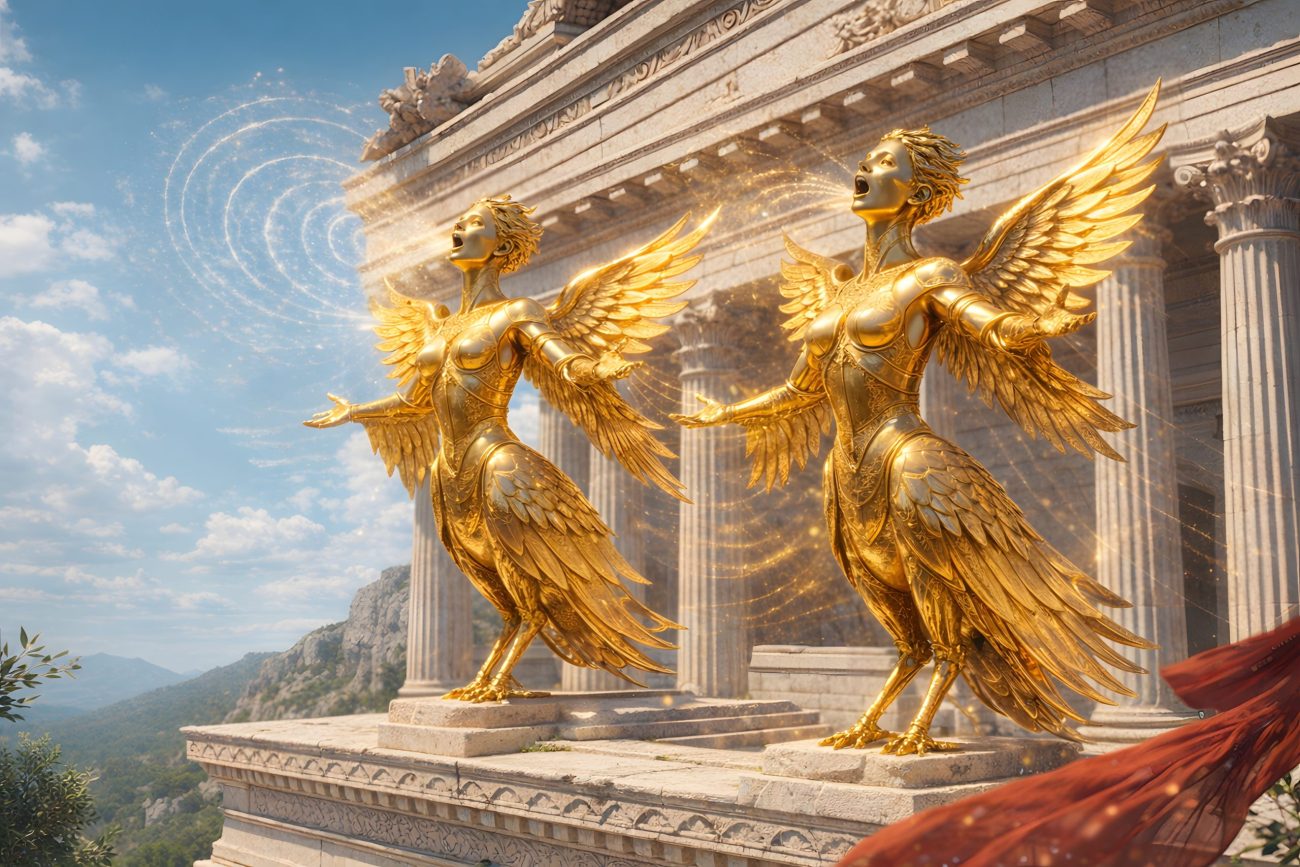
In the age when gods still shaped wonders with their own hands, the divine smith Hephaistos forged a set of miraculous beings for the temple of Apollon at Delphi. These were the Keledones, golden singers crafted not of flesh, but of shining metal, alive with sound and enchantment.

The Keledones were made entirely of gold and were said to sing with voices of supernatural power. Some described them as beautiful maidens, others as wryneck birds, and still others as strange bird-women, reminiscent of the Sirens. However they appeared, their song possessed a soothing and bewitching force, capable of charming all who heard it.

They were placed high upon the temple, above the pediment, where their voices rang out continuously. There, the Golden Charmers sang in honor of Apollon, their music filling the sacred space with an otherworldly harmony. Ancient poets spoke of them as wonders beyond human craft, comparing their song to that of the Sirens, though fashioned not to destroy but to enthrall.

Some later writers questioned whether such beings truly existed or whether they were poetic embellishments inspired by earlier myths. Yet the tradition endured: that once, at Delphi, golden singers adorned the god’s temple, their voices echoing across stone and air, forged by divine hands and animated by sacred song.

Thus the Keledones remained in memory as marvels of divine artifice — not born, but made; not living, yet singing — eternal symbols of beauty, craft, and the dangerous power of enchanted sound.