Umibake

Tradition / Region: Japanese Mythology
Alternate Names:
Category: Yōkai, Sea Serpent, Snake


The Myth

Umibake is a yōkai known only from monster picture scrolls drawn after the Edo period. It appears among collections of strange beings painted together, without a written tale to explain its origin or deeds.

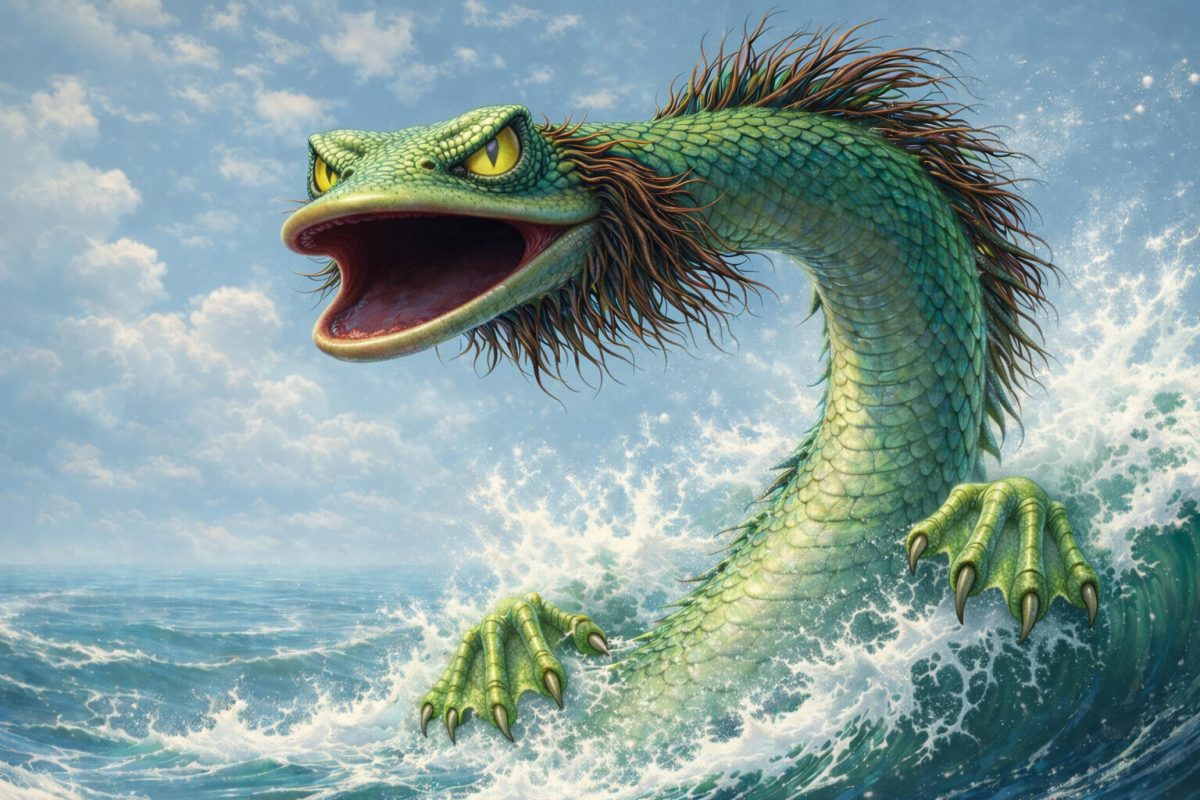
The Umibake emerges upon the surface of the water. Its body is long and slender like that of a serpent, stretching across the waves as it rises. Though its form is aquatic and elongated, its face and the shape of its hands resemble those of a familiar kind of yōkai often seen in monster scrolls, giving it an oddly human presence despite its inhuman body.

No story tells what Umibake does when it appears, nor why it comes forth from the water. It is simply seen there, floating or rising, a quiet and unsettling shape upon the surface of the sea.

Like many yōkai preserved only in pictures, Umibake remains a vision without explanation—its meaning carried only in its form, suspended between water and imagination.


Gallery


Sources

Tyz-Yokai Blog contributors. (n.d.). 海化け (Umibake). In TYZ-Yokai Blog, from https://tyz-yokai.blog.jp/archives/1036418400.html


Interpretive Lenses

Religious Readings
  • Christian Ascetic Deep Dive
Philosophical Readings
  • Nietzschean Deep Dive
Psychological Readings
  • Jungian Deep Dive
Esoteric Deep Dive
  • Hermetic Deep Dive
Political / Social Readings
  • Marxist Deep Dive
Other
  • How to Invite The Umibake

Jatai

Tradition / Region: Japan (Ehime Prefecture and other regions)
Alternate Names:
Category: Object/ yōkai


The Myth

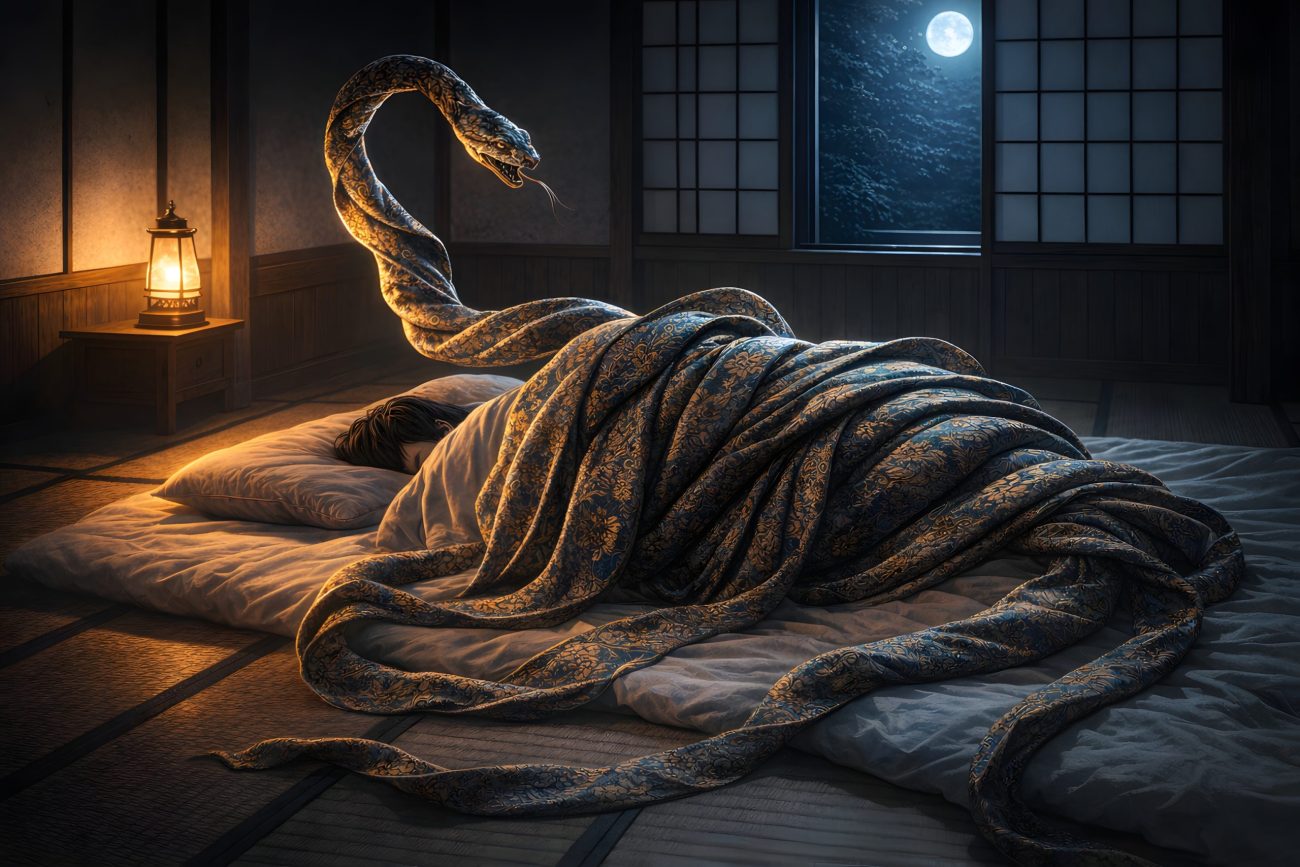
The Jatai is said to appear at night as a living obi, a kimono sash that moves on its own like a great snake. By day it is nothing more than a length of cloth, but after night falls it slithers from its resting place, coiling and gliding through rooms in search of victims.

According to old folk belief, if a person lays an obi near their pillow while sleeping, they may dream of snakes. From this belief grew the story that the obi itself can transform. Because the word for a snake’s body sounds the same as the word for a wicked heart, the sash was believed to awaken as a murderous being. In this form it becomes the Jatai, a dangerous tsukumogami born from jealousy and malice.

The Jatai is especially associated with an obi once worn by a jealous woman. After long use, the resentment bound into the garment gives it life. When it hunts, it wraps itself around sleeping men and strangles them in their beds.

The creature is described as a poisonous snake, long enough to coil itself around a person seven times. This detail is remembered as part of its fearsome nature and its unnatural length. Once the Jatai has tightened its coils, escape is said to be impossible.

The Jatai is depicted in Toriyama Sekien’s Konjaku Hyakki Shūi, where it appears as a living sash transformed into a deadly serpent. Through these tales, the Jatai is remembered as a reminder that strong emotions can linger in objects, waiting for the moment when they take on a life of their own.


Interpretive Lenses

Religious Readings
Philosophical Readings
Psychological Readings
Esoteric Deep Dive
Political / Social Readings
Other