Waawu

Tradition / Region: Japanese Mythology
Alternate Names: Wau, Wauawu
Category: Mountain dweller, Yokai


The Myth

In the mountains near Karimata, at the foot of Mount Hotaka, there is said to be a strange being called Waawu, named for the cry it makes in the night.

Long ago, a hunter from a nearby village went into the mountains and stayed overnight in a small hut. In the middle of the night he heard a terrifying voice echo through the darkness.

“Wauawu! Wauawu!”

Something rushed toward the hut and began to shake it violently. The walls rattled and the beams creaked, but the hunter could not see what attacked him. Frozen with fear, he waited for morning and fled back to the village, telling everyone a Waawu had appeared.

Some days later, several villagers went into the mountains to gather lumber and stayed in the same hut. As night fell, they heard the same cry approaching through the forest.

“Waawu… Wauawu…”

The sound grew louder and louder until their bodies seemed to go numb. Too frightened to leave, they remained inside the hut for several days.

One night the creature returned again, screaming “Waa-woo! Waa-woo!” and shaking the hut so violently it seemed it would collapse. The men huddled together and chanted, “Far-off Kuwabara, far-off Kuwabara,” praying for safety until dawn.

When morning finally came, they fled back to the village and told what had happened.

From then on, the place where the cries were heard was called Waa-woo Sawa—Wau Valley—named after the unseen monster whose voice once shook the mountain huts in the night.


Gallery


Sources

tyz-yokai.blog.jp contributors. (n.d.). Waawu. In tyz-yokai.blog.jp, from https://tyz-yokai.blog.jp/archives/1077741604.html


Interpretive Lenses

Religious Readings
  • Christian Ascetic Deep Dive
Philosophical Readings
  • Nietzschean Deep Dive
Psychological Readings
  • Jungian Deep Dive
Esoteric Deep Dive
  • Hermetic Deep Dive
Political / Social Readings
  • Marxist Deep Dive
Other
  • How to Invite The Waawu

Amabie

Tradition / Region: Japanese Mythology
Alternate Names: Amabiko, Amahiko
Category: Mermaid, Yokai


The Myth

In the third year of Kōka, in the middle of the fourth month (1846), strange lights were seen shining upon the sea in Higo Province. Night after night the glowing shape appeared offshore, casting an eerie radiance over the waves.

At last, a local official went to investigate. Approaching the coast, he beheld a mysterious being rise from the water. It had long hair and a mouth shaped like a bird’s beak. Its body was covered in scales from the neck downward, and from beneath it extended three legs—or three fin-like limbs—supporting it at the shore.

The creature spoke.

“I dwell in the sea,” it said. “For six years from this year, the harvest will be abundant. But after that, an epidemic will spread across the land.”

The official listened in fear as the being continued:

“If disease spreads, draw a picture of me and show it to the sick. Those who see my likeness will be protected.”

Having delivered its prophecy, the creature returned to the sea and vanished beneath the waves.

News of the encounter spread quickly through printed bulletins. Woodblock sheets bearing the creature’s image were copied and distributed so that people might keep them as charms against illness. The strange being was called Amabie.

In other tellings, similar creatures appeared under the name Amabiko or Amahiko—three-legged prophetic beasts who likewise warned of plague and commanded that their portraits be displayed to avert disaster. Some were described as ape-like, some as bird-like, some glowing in the night. But the Amabie of Higo remained the most vividly remembered: the long-haired, scaled messenger of the sea who promised both abundance and pestilence.

And so her image endured—drawn and redrawn—whenever fear of sickness rose, her strange form offered as protection against unseen calamity.


Sources

Wikipedia contributors. (n.d.). Amabie. In Wikipedia, The Free Encyclopedia. Retrieved February 14, 2026, from https://en.wikipedia.org/wiki/Amabie


Jinja hime

Tradition / Region: Japanese Mythology
Alternate Names: Hime uo (Princess Fish)
Category: Mermaid, Yokai


The Myth

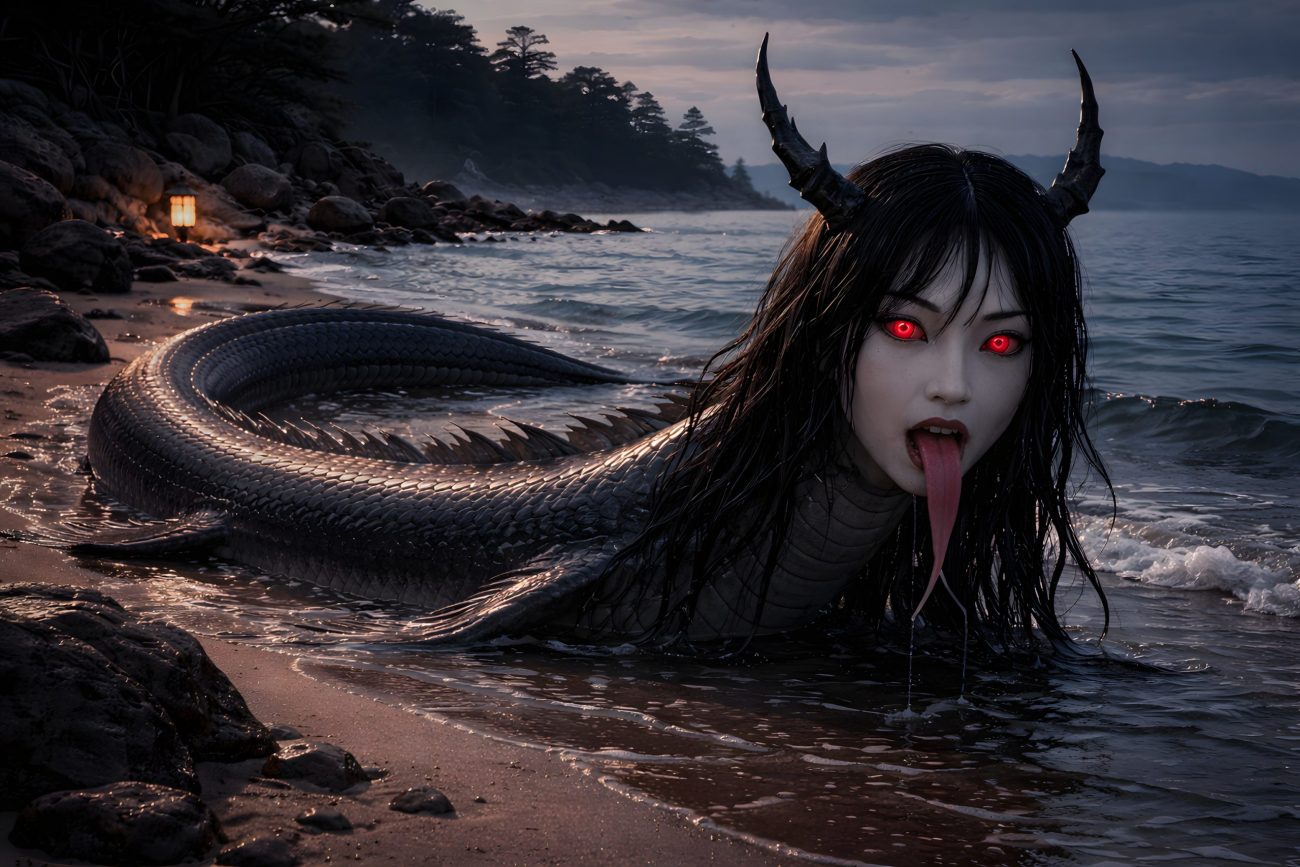
In the year 1819, on a lonely shore in Hizen Province, an unusual creature was seen upon the sand.

It was long and serpentine, nearly six meters in length. Two horns rose from its head. A dorsal fin ran along its back, and flippers lay against its sides. Its tail stretched behind it like that of a great sea serpent. Yet its face was not that of a fish. It was the face of a woman.

The creature spoke.

“I am a messenger from Ryūgū,” she said, naming the palace of the Dragon King beneath the sea. “My name is Jinja hime.”

She declared that for seven years the land would enjoy abundant harvests. Rice would grow thick and heavy; the people would prosper. But after those seven years, a great sickness would spread across the country—an epidemic that would bring suffering and death.

Yet she offered hope.

“Those who look upon my image,” she said, “will avoid hardship and be granted long life.”

Having delivered her prophecy, the shrine princess slipped back into the sea and vanished beneath the waves.

Her likeness was drawn and shown to the people, so that they might gaze upon it and be protected. The image spread from hand to hand. Fishermen, farmers, and townsfolk spoke of the sea princess who foretold both blessing and plague.

From that time on, stories began to circulate across Japan of other strange beings who emerged from the sea or the mountains to warn of disaster and promise protection through their image.

But it was Jinja hime—the shrine princess of the deep—who first rose from the waters, spoke of fate, and returned to the palace of the Dragon King below.


Gallery


Sources

yokai.com contributors. (n.d.). Jinjahime. In yokai.com, from https://yokai.com/jinjahime/

tyz-yokai.blog.jp contributors. (n.d.). Jinjahime. In tyz-yokai.blog.jp, from https://tyz-yokai.blog.jp/archives/1077741611.html


Interpretive Lenses

Religious Readings
  • Christian Ascetic Deep Dive
Philosophical Readings
  • Nietzschean Deep Dive
Psychological Readings
  • Jungian Deep Dive
Esoteric Deep Dive
  • Hermetic Deep Dive
Political / Social Readings
  • Marxist Deep Dive
Other
  • How to Invite The Jinja hime

Shishikori

Tradition / Region: Japanese mythology
Alternate Names:
Category: Mountain dweller, Yokai


The Myth

In the village of Narabayashi in Buzen Province, a strange terror began to visit the people. Night after night, the peasants’ horses and cattle vanished without a trace. No broken fences, no blood, no tracks—only empty stalls and fear.

At first the villagers whispered of thieves. Then of wolves. But the disappearances continued, and dread settled over the village.

Only one farmer, a man named Fujisuke, had been spared—until the night his turn came.

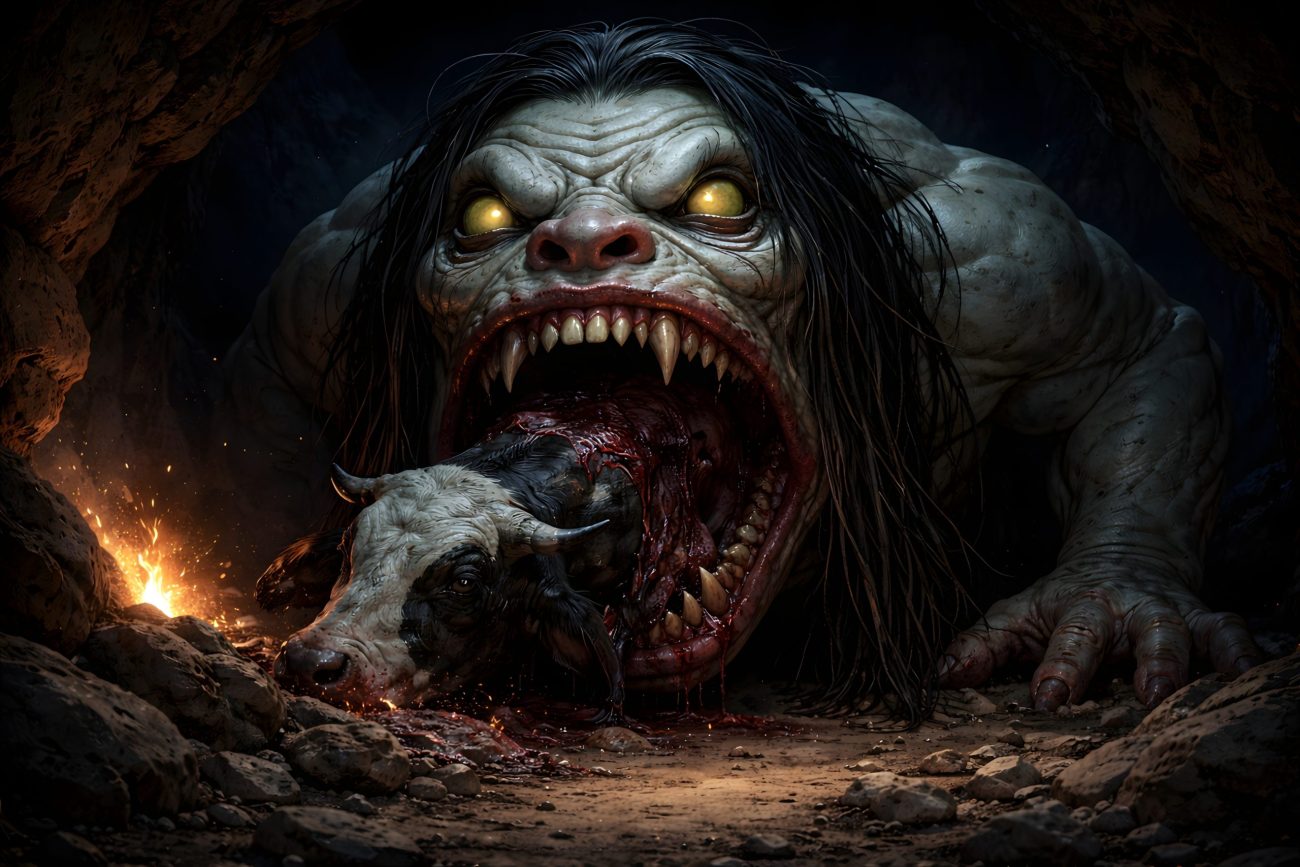
As darkness fell, Fujisuke noticed a sharp, fishy odor drifting through the air. It grew stronger and stronger, thick and suffocating. Then, from the shadows, a monstrous shape entered his stable.

Before his eyes, the creature seized his cow and swallowed it whole.

Frozen in terror, Fujisuke could do nothing but watch. When at last he found the strength to move, he fled and ran to the village headman, breathless and pale, and told what he had seen.

At dawn, the villagers gathered for a mountain hunt. Armed with bamboo spears and driven by fear and anger, they followed the lingering stench into the hills.

Deep in the mountains, they found a cavern from which the same foul, fish-like odor poured. Inside, crouched in the darkness, was the monster.

It was enormous—six feet tall, with a mouth so vast it measured more than a meter across. Its presence filled the cave like a nightmare given flesh.

The men attacked together, thrusting their bamboo spears again and again until the beast collapsed.

When it lay dead, an old villager stepped forward, peered at the slain creature, and said quietly:

“This is the Shishikori.”

And so the name of the devourer of cattle was spoken, and the terror of Narabayashi came to an end.


Gallery


Sources

TYZ-Yokai Blog contributors. (n.d.). 獅子狩 (Shishikori). In TYZ-Yokai Blog, from https://tyz-yokai.blog.jp/archives/1010654244.html


Interpretive Lenses

Religious Readings
  • Christian Ascetic Deep Dive
Philosophical Readings
  • Nietzschean Deep Dive
Psychological Readings
  • Jungian Deep Dive
Esoteric Deep Dive
  • Hermetic Deep Dive
Political / Social Readings
  • Marxist Deep Dive
Other
  • How to Invite The Kuygorozh

Suiton

Tradition / Region: Japanese mythology
Alternate Names:
Category: Mountain dweller, yōkai


The Myth

On the wide uplands of the Hiruzen Plateau, where the wind moves across open fields and the mountains stand watch at the border of Okayama and Tottori, there is said to dwell a fearsome being known as the Suiton.

The Suiton does not roam idly, nor does it trouble the innocent. It waits.

It is said that the creature can read the hearts of men. It knows when someone harbors malice, when a traveler plots harm, when deceit or cruelty takes root in the mind. The moment such thoughts grow strong, the Suiton appears.

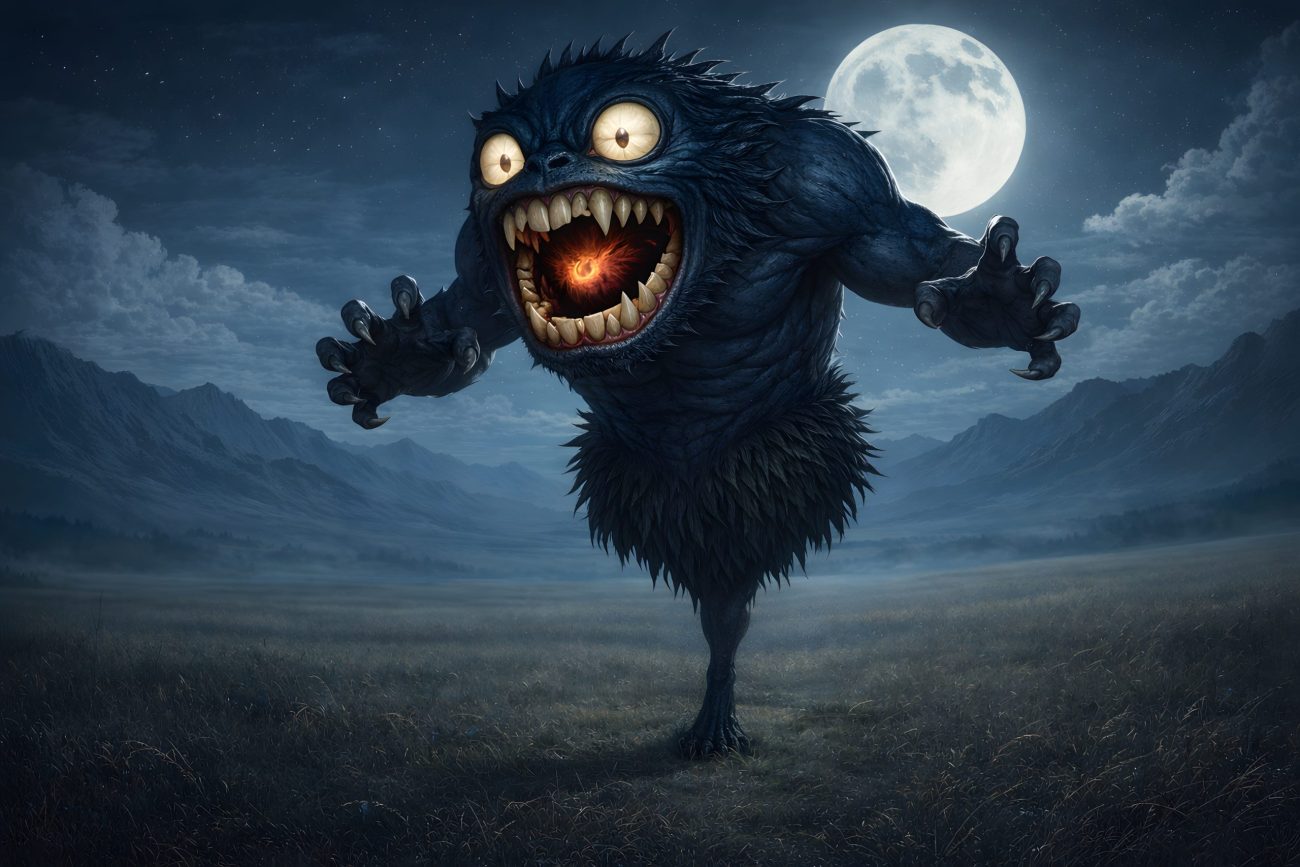
Without warning it swoops down before the wrongdoer, blocking the path. It stands balanced on a single leg, towering and terrible. Before the guilty can flee or beg for mercy, the Suiton tears them apart and devours them.

There is no escape from it, for one cannot hide one’s thoughts.

Because of this, the people of Hiruzen say that there are no wicked men in their land. For anyone who intends evil knows that the Suiton is listening, and that the mountains themselves will judge them.

Thus the plateau remains peaceful—not by law or by sword, but by the silent vigilance of the one-legged guardian who feeds only on wicked hearts.


Gallery


Sources

TYZ-Yokai Blog contributors. (n.d.). 水遁 (Suiton). In TYZ-Yokai Blog, from https://tyz-yokai.blog.jp/archives/1010653984.html


Interpretive Lenses

Religious Readings
  • Christian Ascetic Deep Dive
Philosophical Readings
  • Nietzschean Deep Dive
Psychological Readings
  • Jungian Deep Dive
Esoteric Deep Dive
  • Hermetic Deep Dive
Political / Social Readings
  • Marxist Deep Dive
Other
  • How to Invite The Suiton

Satori

Tradition / Region: Japanese mythology
Alternate Names: Satoru, Omoi, Yamaoni, Kuronbo
Category: Mountain dweller, yōkai


The Myth

Deep in the mountains of Japan, from Tōhoku in the north to Kyūshū in the south, there are tales of a strange being known as the Satori.

It comes quietly to lonely mountain huts where woodcutters, hunters, or fishermen are spending the night. The fire burns low, the wind moves through the trees, and suddenly the creature appears at the doorway or just beyond the light of the hearth.

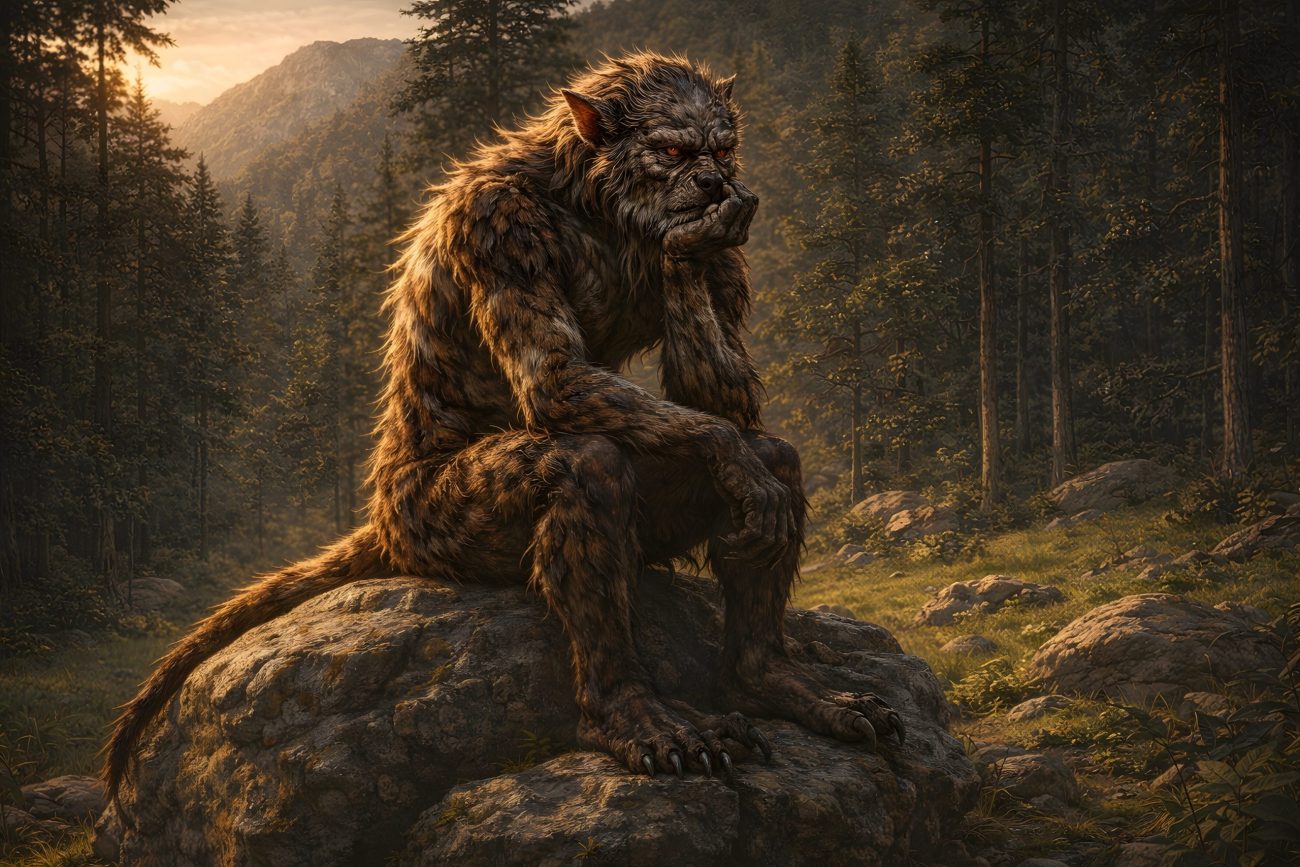
The Satori is dark-skinned and long-haired, humanlike yet wild in appearance. But its most terrifying trait is not its shape—it is its voice.

Before the startled traveler can speak, the creature begins to recite his thoughts aloud.

“If I stay still, perhaps it will leave.”
“You are thinking of running.”
“You are wondering if you can strike me with that axe.”

Each secret fear, each hidden plan, the Satori speaks before the human can act. No thought can be concealed from it. It mocks hesitation, anticipates attacks, and laughs at every desperate scheme forming in the mind of its victim.

If it chooses, it will try to seize and devour the traveler. Yet the creature’s power has one weakness: it knows only what is intended.

In many tellings, the human, driven to panic, stirs the fire or tosses wood into the hearth. By chance, a log explodes in the flames, sending sparks and splinters flying. The Satori, unable to foresee this accidental burst, is struck and startled.

“This thing does what I did not expect!” it cries.

And with that, the mind-reading monster flees into the darkness of the mountains.

Thus the Satori lingers in remote forests and high valleys—watching, listening, waiting for stray travelers whose thoughts it can plunder. It does not fear strength, nor weapons, nor clever plans. It fears only the unforeseen—the sudden spark, the accident, the moment beyond intention.

For even a creature that reads every thought cannot guard against what no one meant to happen.


Gallery


Sources

TYZ-Yokai Blog contributors. (n.d.). 猿飛 (Satori). In TYZ-Yokai Blog, from https://tyz-yokai.blog.jp/archives/1010653523.html


Interpretive Lenses

Religious Readings
  • Christian Ascetic Deep Dive
Philosophical Readings
  • Nietzschean Deep Dive
Psychological Readings
  • Jungian Deep Dive
Esoteric Deep Dive
  • Hermetic Deep Dive
Political / Social Readings
  • Marxist Deep Dive
Other
  • How to Invite The Satori

Yamawani

Tradition / Region: Japanese mythology
Alternate Names: Mountain crocodile
Category: Mountain dweller, yōkai, Crocodile


The Myth

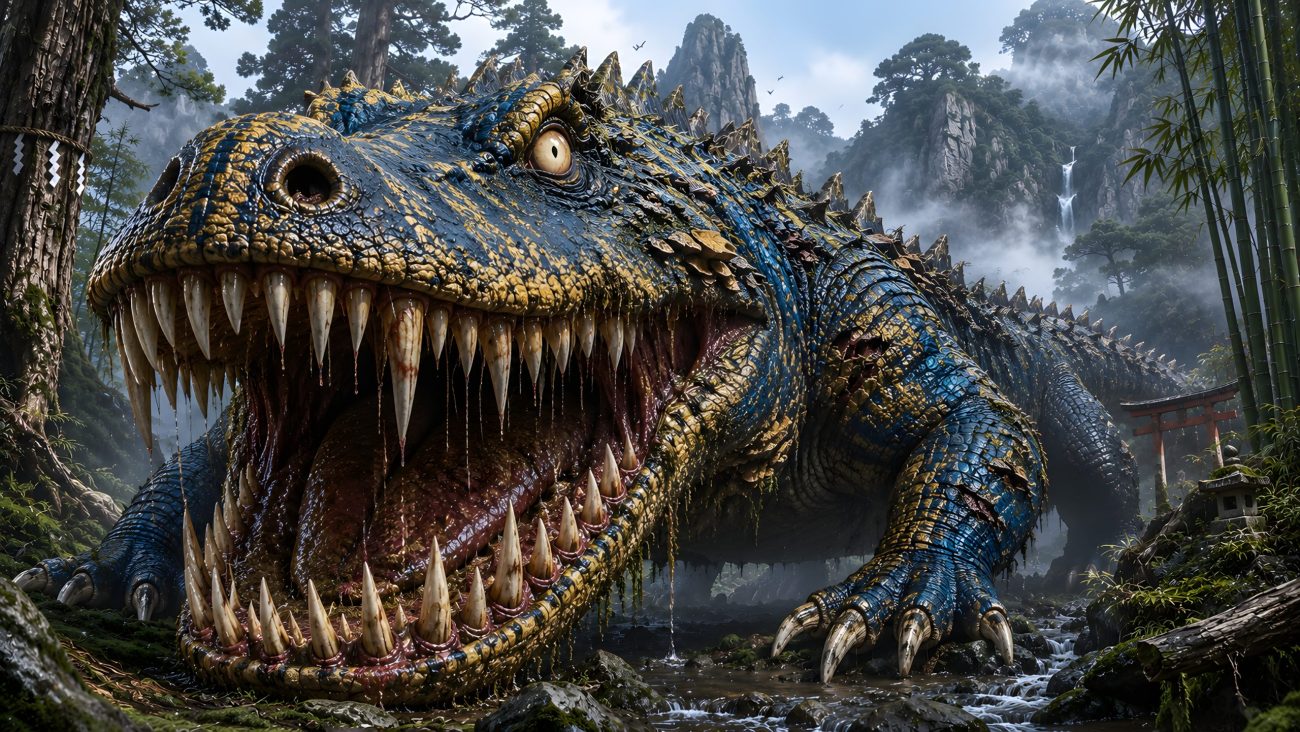
In the old illustrated scroll known as the Tosa Obake Zōshi, there appears a strange creature called the Yamawani—the Mountain Crocodile.

It is shown with a grotesquely large mouth, wide and thick-lipped, dominating its face. Its body is less clearly described than its jaws, for it is the mouth that defines it: heavy, fleshy, and capable of swallowing great things in a single gulp.

In the scroll, the Yamawani is said to speak of its kin. “My cousin lives in the sea,” it boasts, referring to the crocodile or shark of the waters. “He too is thick-mouthed and can lick up anything in one bite.” The creature claims a kind of family pride in its devouring nature. Even the crocodile carved or imagined at temples—known for their gaping jaws—is said to share this thick-mouthed likeness.

The Yamawani’s voice is described as making a peculiar sound—“tickle, tickle”—as though it mutters or chuckles through its massive jaws. Whether this is a threat, a laugh, or simply the grinding of its teeth is unclear.

It is not told that it hunts men, nor that it brings disaster like other mountain spirits. Instead, it lingers in the strange borderland between beast and caricature, a mountain echo of the sea’s crocodile, defined by its monstrous mouth and its unsettling presence in the wilderness.

Thus the Yamawani remains in the scrolls: a thick-mouthed being of the mountains, grinning in silence, its jaws large enough to swallow anything in a single bite.


Gallery


Sources

TYZ-Yokai Blog contributors. (n.d.). 転倒お化け (Yamawani). In TYZ-Yokai Blog, from https://tyz-yokai.blog.jp/archives/1010653500.html


Interpretive Lenses

Religious Readings
  • Christian Ascetic Deep Dive
Philosophical Readings
  • Nietzschean Deep Dive
Psychological Readings
  • Jungian Deep Dive
Esoteric Deep Dive
  • Hermetic Deep Dive
Political / Social Readings
  • Marxist Deep Dive
Other
  • How to Invite The Yamawani

Nikusui

Tradition / Region: Japanese mythology (Mie–Wakayama mountain border)
Alternate Names: Meat sucker
Category: Vampire, yōkai, Montain dweller


The Myth

On the lonely mountain roads between Mie and Wakayama, travelers once feared to walk by lantern light. For in those dark passes, the nikusui prowled.

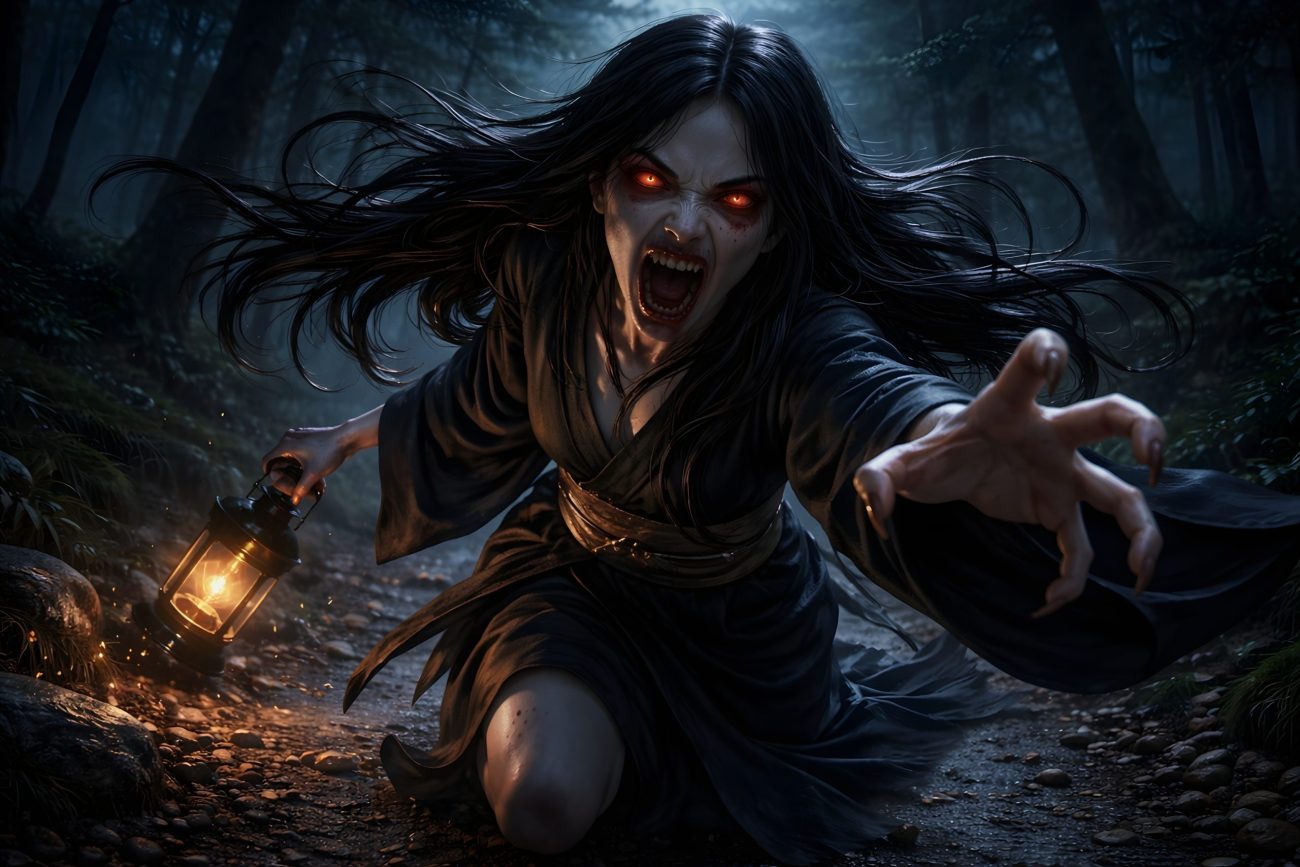
They appeared as young women, no more than eighteen or nineteen years old—beautiful, pale, and smiling softly in the night. They would step from the shadows as if they had been waiting, their laughter a faint “ho ho” that seemed to drift on the wind. Though it was pitch dark, they carried no lantern of their own.

When a young man traveling alone met such a woman, she would speak sweetly and draw closer. She might ask, shyly, to borrow his lantern. If he handed it over, she would snuff the flame at once. In the sudden darkness, before he could even cry out, she would seize him. Her teeth would sink into his body, and she would suck the meat from his bones. By morning, nothing remained but skin and skeleton, collapsed upon the road.

Sometimes the nikusui did not wait in the mountains. They slipped silently into bedrooms, approaching men who slept alone. They used tenderness and desire as their weapon. By seducing and exhausting their victims, they weakened them completely. Then, when the man was helpless, they fed at their leisure, draining his flesh until nothing but a hollow body remained.

Because of these horrors, villagers warned young men never to travel at night without extra light. Those who had no choice carried spare lanterns and burning coals. If a nikusui snatched their light, they could hurl hot embers into the darkness to drive her away.

One hunter named Genzō learned this lesson well. Late one night on Mount Hatenashi, a beautiful young woman appeared before him, laughing softly. She asked for his light. But Genzō felt unease stirring in his chest. He loaded his rifle with a blessed bullet inscribed with a prayer to Amida Buddha and leveled it at her. At once she fled into the dark.

Moments later, the earth shook as a monstrous shape—over six meters tall—charged from the shadows. Genzō fired. The sacred bullet struck true. The creature collapsed.

When he approached, he saw the truth of the nikusui’s form: a loose sack of pale skin draped over a bleached skeleton, empty of all flesh. There was no beauty left—only the hollow remains of what had once devoured others.

And so the mountain roads remained dangerous after dark, where beauty might be only a lantern’s breath away from death.


Gallery


Sources

Yokai.com contributors. (n.d.). Nikusui. In Yokai.com — The Japanese Mythology Database, from https://yokai.com/nikusui/


Interpretive Lenses

Religious Readings
  • Christian Ascetic Deep Dive
Philosophical Readings
  • Nietzschean Deep Dive
Psychological Readings
  • Jungian Deep Dive
Esoteric Deep Dive
  • Hermetic Deep Dive
Political / Social Readings
  • Marxist Deep Dive
Other
  • How to Invite The Nikusui

Ochiyobon

Tradition / Region: Japanese Mythology
Alternate Names:
Category: Yokai, Mountain dweller


The Myth

Long ago, in the mountains of Ushū, there lived powerful monsters known as the Mouryō. Among them was a young Mouryō who had pledged his future to Ochiyobon, the daughter of a neighboring monster. Refusing to submit to the wishes of their elders, the two lovers fled together to the distant mountains of Hakone, hoping to live freely, far from interference.

They settled in a ruined house deep in the mountains and asked a nearby monster named Shirodashi, who lived in a cave, to help them move. At first Shirodashi seemed friendly, but in truth he was a drunken, scheming brute. He began visiting the couple daily, demanding food and money, and soon turned his attention to Ochiyobon. He harassed her with lewd remarks and tried to force himself upon her, laughing when she resisted.

One day, Shirodashi separated Ochiyobon from her husband through trickery. He then lied to the young Mouryō, claiming that he and Ochiyobon had long been lovers and that she had begged to be taken as his wife. The timid Mouryō, terrified of scandal and humiliation, weakly agreed to surrender her. Shirodashi carried off Ochiyobon’s belongings and told her she now belonged to him.

Ochiyobon wept and protested, insisting on her innocence and her love for her husband, but Shirodashi ignored her cries. Their quarrel drew the attention of Momonjii, the master of the cave, who chased Shirodashi away and sheltered Ochiyobon. Momonjii tried to reconcile the lovers, but the young Mouryō, obsessed with appearances, refused to take her back. Brokenhearted and abandoned, Ochiyobon despaired of life itself, but Momonjii promised to care for her, and she remained with him.

Among monsters, beauty is not judged as it is among humans. Though others found Ochiyobon’s face unbearable, Momonjii was captivated by her, and in time he sought her affection. Grateful for his kindness, Ochiyobon accepted him, and the two grew close.

Some time later, turmoil erupted over a political marriage between a monster clan and the fox spirits. A gang of raccoon dogs stole the treasured White Fox Jewel, and it was discovered that Shirodashi had hidden it while aiding them. Monsters and foxes stormed his lair to reclaim it.

Before they could act, a woman’s voice called from within. Ochiyobon emerged, holding the White Fox Jewel in one hand and a bloodstained knife in the other. At her feet she cast the severed head of Shirodashi. She declared that she had been falsely accused, abandoned, and disgraced through his lies. To clear her name, she had lured him, reclaimed the jewel, and killed him as proof that no affair had ever existed.

With Shirodashi dead and the truth revealed, Ochiyobon’s honor was restored. Her tale ended not as one of helpless betrayal, but of resolve and vengeance, remembered as the story of a monster woman who reclaimed her dignity through blood and truth.


Gallery


Sources

TYZ-Yokai Blog contributors. (n.d.). オチョボン (Ochiyobon). In TYZ-Yokai Blog, from https://tyz-yokai.blog.jp/archives/1071896675.html


Interpretive Lenses

Religious Readings
  • Christian Ascetic Deep Dive
Philosophical Readings
  • Nietzschean Deep Dive
Psychological Readings
  • Jungian Deep Dive
Esoteric Deep Dive
  • Hermetic Deep Dive
Political / Social Readings
  • Marxist Deep Dive
Other
  • How to Invite The Ochiyobon

Kani Musume

Tradition / Region: Japanese Mythology
Alternate Names: Crab Girl
Category: Mountain dweller, Crab, Yokai


The Myth

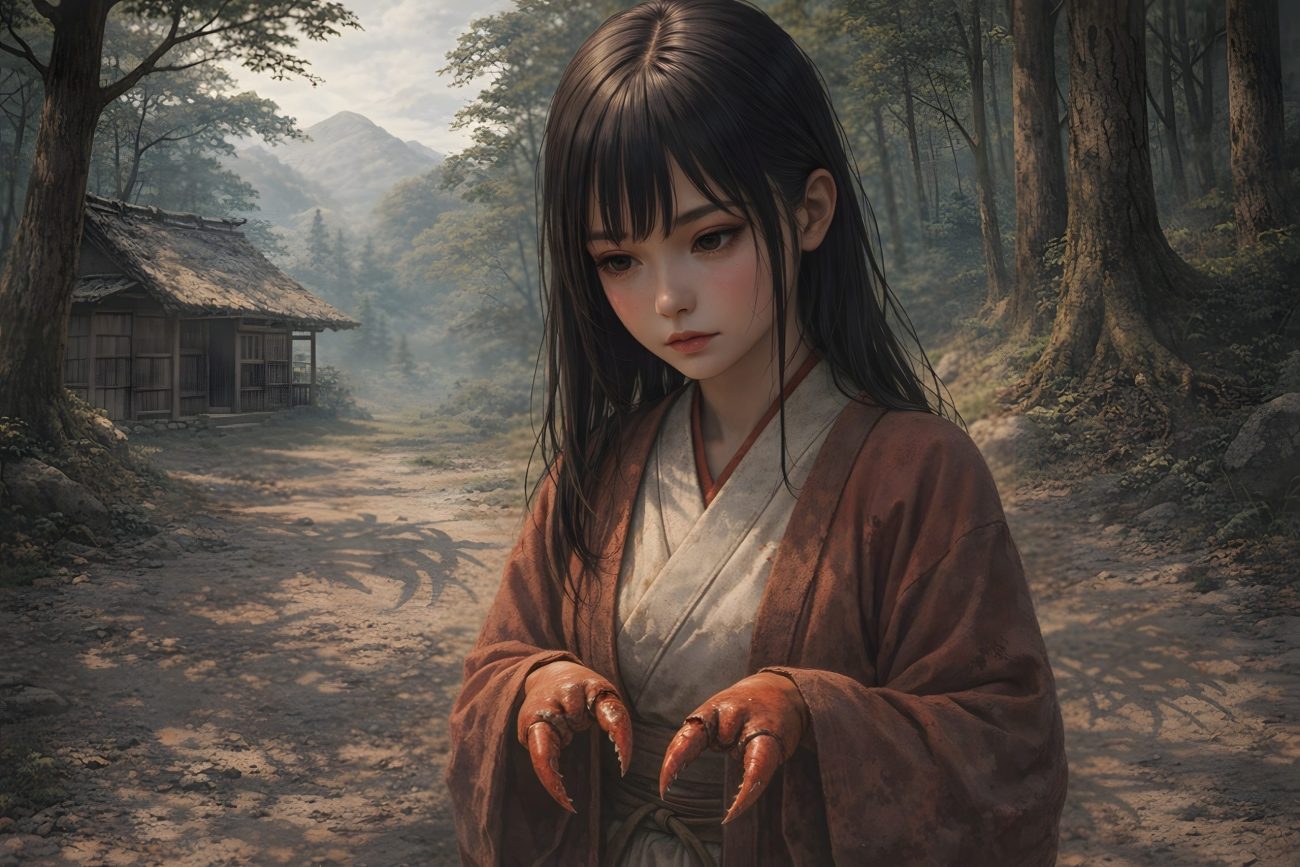
In the late eighteenth century, during the lively days of Edo, crowds gathered in the Asakusa district to see strange and curious spectacles. Among them was a young girl known as the Kani Musume—the Crab Girl. She was said to have only two fingers on each hand, and this unusual trait earned her fame. People came not because she performed any special skill, but simply to look upon her rarity, and her name became well known among the curiosities of Asakusa.

As the years passed and fashions changed, the popularity of such shows faded. In later tales, the Crab Girl’s story took on a darker, more fantastical turn. She was said to have been gathered up by a demon woman who had withdrawn from human society and fled into the remote mountains of Tamba. This demon girl, bitter over her own failures and humiliation, surrounded herself with others like the Crab Girl—along with a Cat Girl, a Heron Girl, a Bear Girl, and a Snake Girl.

Together, these strange women would sit and speak ill of human women, mocking their beauty, their manners, and their lives. The demon girl dreamed of returning to the human world as a terrifying monster, one that would inspire fear instead of ridicule. But when she saw a beautiful human woman named Omiwa, whose face twisted into something truly dreadful from jealousy alone, the demon girl was overcome with fear. Realizing that human emotions could be more frightening than any monster’s form, she fled back into the mountains, abandoning her ambition.

Thus, the Kani Musume remained in legend as a figure caught between spectacle and myth—first a curiosity of the city, later a companion of outcasts and half-monsters—her story reflecting how fascination, cruelty, and fear can transform ordinary lives into something strange and unsettling.


Gallery


Sources

TYZ-Yokai Blog contributors. (n.d.). カニ娘 (Kani Musume). In TYZ-Yokai Blog, from https://tyz-yokai.blog.jp/archives/1052020047.html


Interpretive Lenses

Religious Readings
  • Christian Ascetic Deep Dive
Philosophical Readings
  • Nietzschean Deep Dive
Psychological Readings
  • Jungian Deep Dive
Esoteric Deep Dive
  • Hermetic Deep Dive
Political / Social Readings
  • Marxist Deep Dive
Other
  • How to Invite The Kani Musume