Kagewani

Tradition / Region: Japanese Mythology
Alternative names: Shadow Crocodile
Category: Crocodile


The Myth

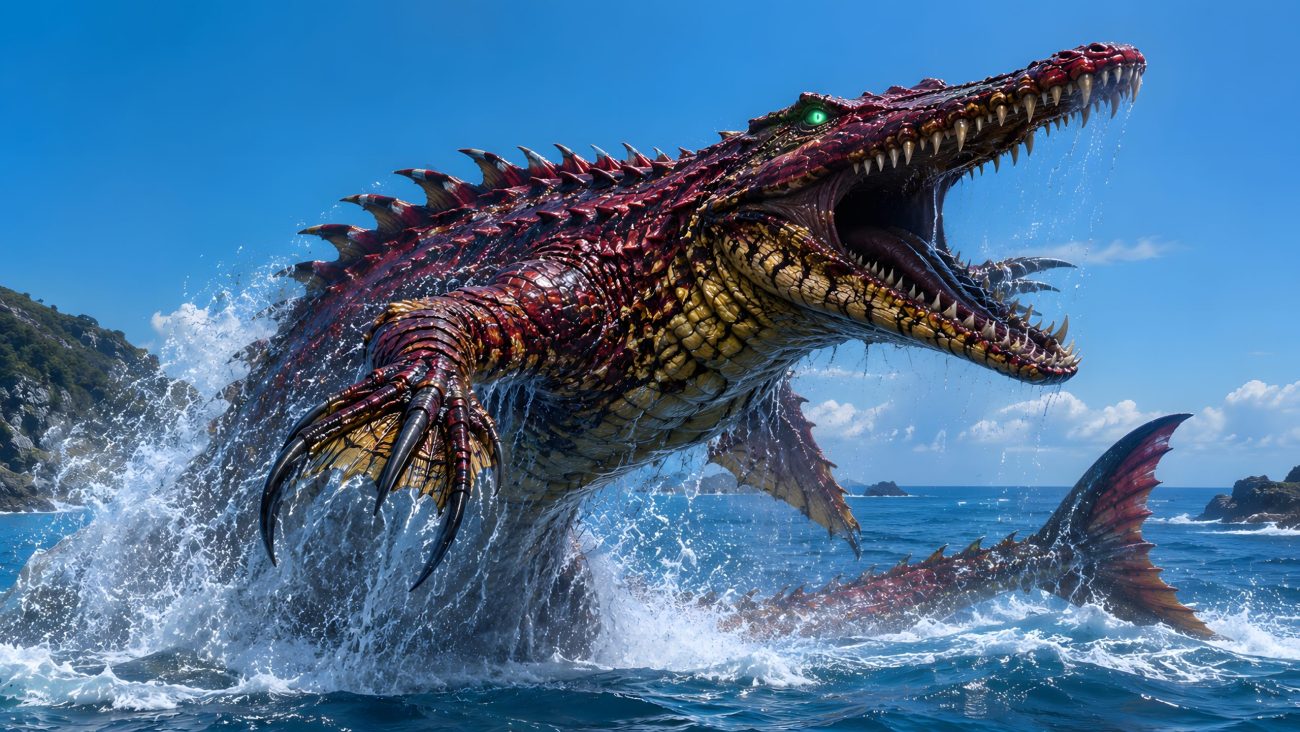
Kagewani is a yōkai from the folklore of Yunotsu in Shimane Prefecture. Although its name means “Shadow Crocodile,” it is actually described as a supernatural shark.

According to legend, the creature swims beneath ships and watches the shadows of sailors reflected on the surface of the sea. If the Kagewani swallows a sailor’s shadow, that person is doomed to die.

One tale tells of a sailor who succeeded in shooting and killing a Kagewani while at sea. However, after returning home, he was walking along the beach when a fish bone pierced the sole of his foot. The wound proved fatal.

Later, the bone was identified as having belonged to the slain Kagewani, and the sailor’s death was regarded as the creature’s final act of vengeance.


Sources

TYZ. (n.d.). 影鰐 (Kagewani). In 新版TYZ 妖怪図鑑. Retrieved June 29, 2026, from https://tyz-yokai.blog.jp/archives/1010654388.html


Hoaya

Tradition / Region: Japanese Mythology
Alternative names: Boaya
Category: Crocodile


The Myth

Hoaya is a fearsome river monster described in the Edo-period works Nankai Kibun and Hyōryū Tenjiku Monogatari, which recount the travels of the sailor Sontaro after he drifted to foreign lands. The creature was said to inhabit the rivers of Banjarmasin in southern Borneo, where the local people greatly feared it and believed that killing one would inevitably bring misfortune.

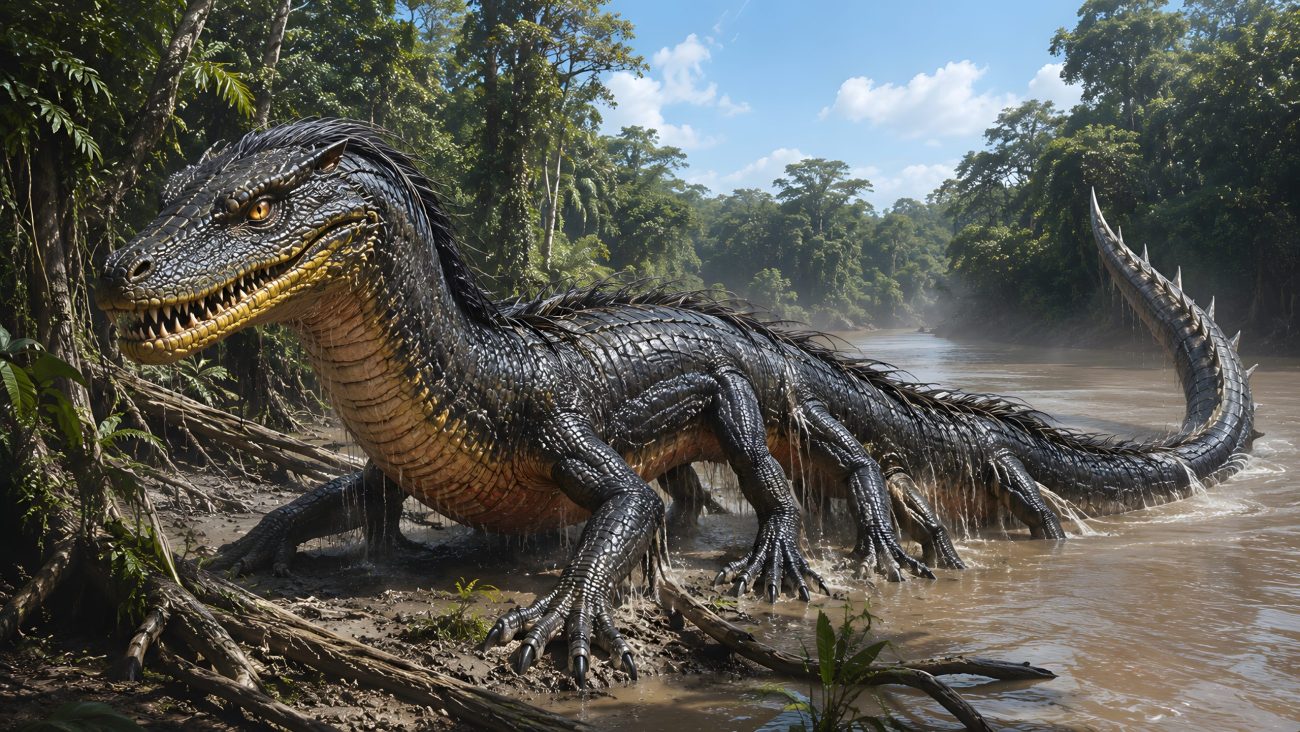
The monster was described as resembling a hornless dragon, with a stern face, long manes and ears, four arms, four legs ending in four claws each, and a body measuring between six and thirteen fathoms in length. It often clung to passing boats, frightening those aboard. In another account, its body is said to have been pale black with a yellow belly and lips, extremely hard scales, and a pointed tail ending in three ridges.

According to local belief, Hoaya climbed into the mountains each spring to lay thirty-six eggs, each about the size of a temari ball. After the young hatched and entered the rivers, the parent relentlessly pursued and devoured them until only one remained. That final offspring was then raised by the parent. Boats avoided Hoaya with their young, as they were believed to become especially aggressive.

One night, a Hoaya broke through the decaying fence surrounding a riverside bathing area and attacked a night watchman, biting off one of his legs. The creature became trapped inside the enclosure, where dozens of people eventually killed it after gunfire failed to penetrate its thick scales. The wounded watchman died the following day. Although the Hoaya’s body was thrown back into the river, no further misfortunes followed, despite the widespread belief that killing one of the creatures would bring disaster.

In Nankai Kibun, the creature is identified as Boaya, which is explained to be a crocodile, although its appearance and behavior are described in a far more legendary manner. The account also suggests that the hornless river dragons described in stories from Siam may have been the same creature.


Sources

Landtman, G. (1970). The Kiwai Papuans of British New Guinea; a nature-born instance of Rousseau’s ideal community. New York: Johnson Reprint Corp., p. 302.
Yamawani

Tradition / Region: Japanese mythology
Alternate Names: Mountain crocodile
Category: Mountain dweller, yōkai, Crocodile


The Myth

In the old illustrated scroll known as the Tosa Obake Zōshi, there appears a strange creature called the Yamawani—the Mountain Crocodile.

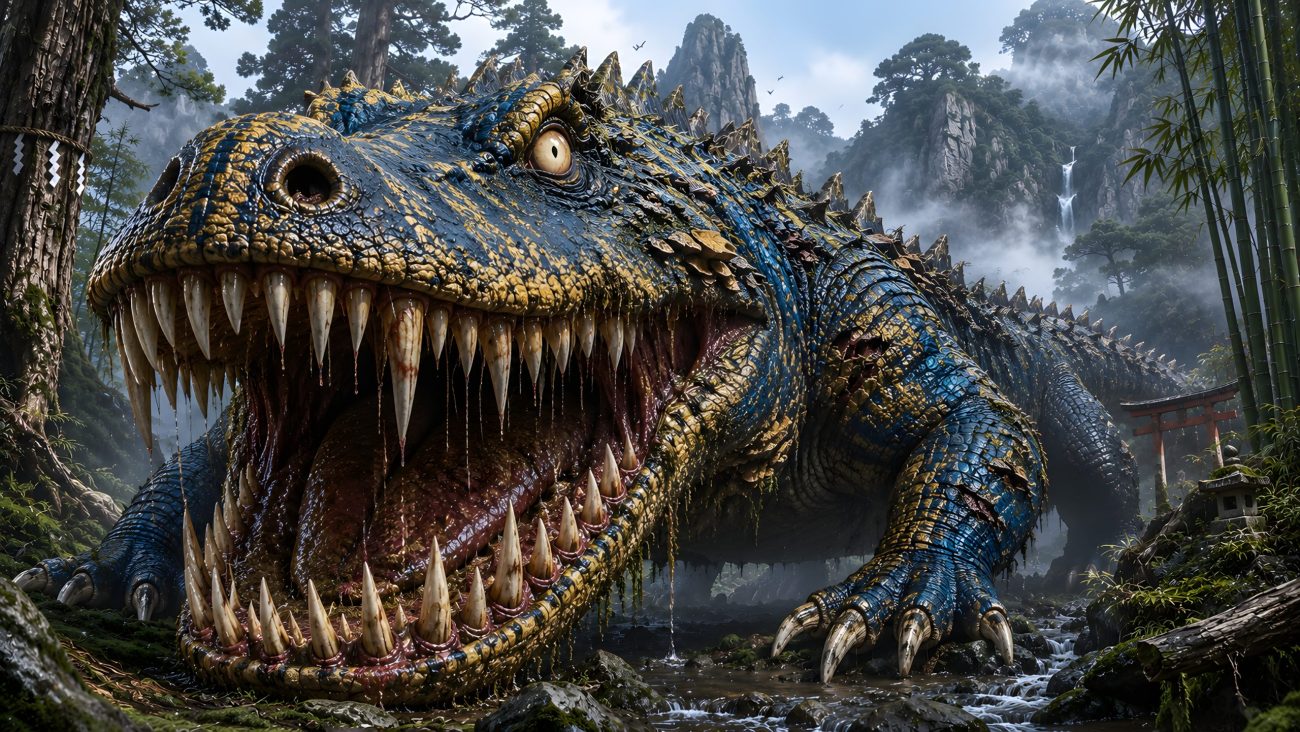
It is shown with a grotesquely large mouth, wide and thick-lipped, dominating its face. Its body is less clearly described than its jaws, for it is the mouth that defines it: heavy, fleshy, and capable of swallowing great things in a single gulp.

In the scroll, the Yamawani is said to speak of its kin. “My cousin lives in the sea,” it boasts, referring to the crocodile or shark of the waters. “He too is thick-mouthed and can lick up anything in one bite.” The creature claims a kind of family pride in its devouring nature. Even the crocodile carved or imagined at temples—known for their gaping jaws—is said to share this thick-mouthed likeness.

The Yamawani’s voice is described as making a peculiar sound—“tickle, tickle”—as though it mutters or chuckles through its massive jaws. Whether this is a threat, a laugh, or simply the grinding of its teeth is unclear.

It is not told that it hunts men, nor that it brings disaster like other mountain spirits. Instead, it lingers in the strange borderland between beast and caricature, a mountain echo of the sea’s crocodile, defined by its monstrous mouth and its unsettling presence in the wilderness.

Thus the Yamawani remains in the scrolls: a thick-mouthed being of the mountains, grinning in silence, its jaws large enough to swallow anything in a single bite.


Sources

TYZ-Yokai Blog contributors. (n.d.). 転倒お化け (Yamawani). In TYZ-Yokai Blog, from https://tyz-yokai.blog.jp/archives/1010653500.html