Yamabora

Tradition / Region: Japanese Mythology
Alternate Names:
Category: Mountain dweller, Yokai


The Myth

On the island of Hachijōjima, where steep mountains rise sharply from the sea, people once spoke in hushed voices of something called Yamabora. It was not a creature that could be clearly seen, nor one that left tracks or shadows. Its presence was known by a single, unmistakable sign: an unbearable stench that struck without warning in the depths of the mountains.

In earlier times, Yamabora was said to dwell in the forests of Higashiyama. Those who wandered too far into the slopes would suddenly be overwhelmed by a smell so foul that it turned the stomach and robbed the breath. Panic would seize them, and they would flee downhill without ever glimpsing what caused it. Some said Yamabora was a monster, others that it was a spirit of the mountain itself, angered by human intrusion.

By the early nineteenth century, Yamabora had already become rare, spoken of more as memory than menace. Yet during the Tenpō era, the old fear returned. An exile named Kinzo Bunyamura was traveling deep in the Higashiyama mountains when the air around him suddenly thickened with a stench so intense that he could not endure it. Believing himself to be in the presence of Yamabora, he ran down the mountain in terror, certain that had he lingered even a moment longer, something dreadful would have happened.

Those who claimed encounters with Yamabora all told the same thing. There was no shape, no sound, no movement—only the smell. It came suddenly, filled the forest, and vanished just as mysteriously. Because of this, Yamabora was remembered not as a beast with claws or fangs, but as an unseen warning, a sign that some parts of the mountain were not meant to be entered, and that the land itself could drive humans away without ever revealing its face.


Gallery


Sources

TYZ-Yokai Blog contributors. (n.d.). ヤマボラ (Yamabora). In TYZ-Yokai Blog, from https://tyz-yokai.blog.jp/archives/1042311445.html


Interpretive Lenses

Religious Readings
  • Christian Ascetic Deep Dive
Philosophical Readings
  • Nietzschean Deep Dive
Psychological Readings
  • Jungian Deep Dive
Esoteric Deep Dive
  • Hermetic Deep Dive
Political / Social Readings
  • Marxist Deep Dive
Other
  • How to Invite The Yamabora

Ku-Nyōbō

Tradition / Region: Japanese Mythology
Alternate Names: Mei-kuwanu Nyōbō (“The Wife Who Does Not Eat”)
Category: Yōkai, shapeshifter, Mountain dweller


The Myth

There was once a man so stingy that he constantly complained about the cost of food. Again and again he declared that what he truly wanted was a wife who did not eat at all. One day, as if answering his foolish wish, a beautiful young woman appeared before him and said calmly, “I do not eat. Please take me as your wife.” Delighted, the man married her at once.

The woman was everything she promised. She worked tirelessly from morning until night and never once sat down to eat a meal. Yet despite this, something strange began to happen. The rice chest in the house grew emptier by the day. No matter how carefully the man measured it, the rice continued to vanish. Suspicion crept into his mind.

One morning, the man pretended to leave for work but instead hid himself in the attic, peering down to spy on his wife. When he was certain she believed herself alone, the woman set a great pot on the fire and cooked an enormous amount of rice. She shaped the rice into ball after ball, far more than any one person could eat. Then she did something horrifying. Letting her hair fall loose, she opened a hidden opening at the top of her head and began stuffing the rice balls into it, one after another. At that moment, the man understood that his wife was no human being, but a monster in disguise.

That evening, shaken with fear, the man confronted her and dismissed her from the house. Realizing her secret had been discovered, the woman did not protest. Instead, she asked for a large bucket as the price of her departure. The man agreed, eager only to see her gone. But once the bucket was ready, the wife suddenly seized him, shoved him inside, and carried the bucket upon her back as she fled into the mountains, revealing her monstrous strength.

Along the way, the man managed to escape and hid himself among thick patches of mugwort and iris. When the wife pursued him, she stopped short, unable to come near those plants. Snarling in frustration, she turned back and vanished into the wilds.

From that time on, people said that mugwort and iris could ward off such creatures, and they began hanging them from their eaves during the May Festival. As for the wife who claimed she did not eat, her true form was never agreed upon. Some said she was a mountain hag, others a demon, a snake, a spider, a frog, or even a crow. But all versions agreed on one thing: a wife who eats nothing is not to be trusted.


Gallery


Sources

TYZ-Yokai Blog contributors. (n.d.). クニョボウ (Ku-Nyōbō). In TYZ-Yokai Blog, from https://tyz-yokai.blog.jp/archives/1029983868.html


Interpretive Lenses

Religious Readings
  • Christian Ascetic Deep Dive
Philosophical Readings
  • Nietzschean Deep Dive
Psychological Readings
  • Jungian Deep Dive
Esoteric Deep Dive
  • Hermetic Deep Dive
Political / Social Readings
  • Marxist Deep Dive
Other
  • How to Invite The Ku-Nyōbō

Ying Miao

Tradition / Region: Japanese Mythology
Alternate Names: Inmao, Inmaho
Category: Ghost, Mountain dweller, Yokai


The Myth

In the villages of the Amami Islands, where moonlight turns the paths silver and the forests seem to breathe, people once spoke of a quiet apparition known as Ying Miao. It was not counted among the dangerous spirits, nor was it invoked to frighten children. Instead, it was remembered as something strange and fleeting, a presence that appeared and vanished without leaving harm behind.

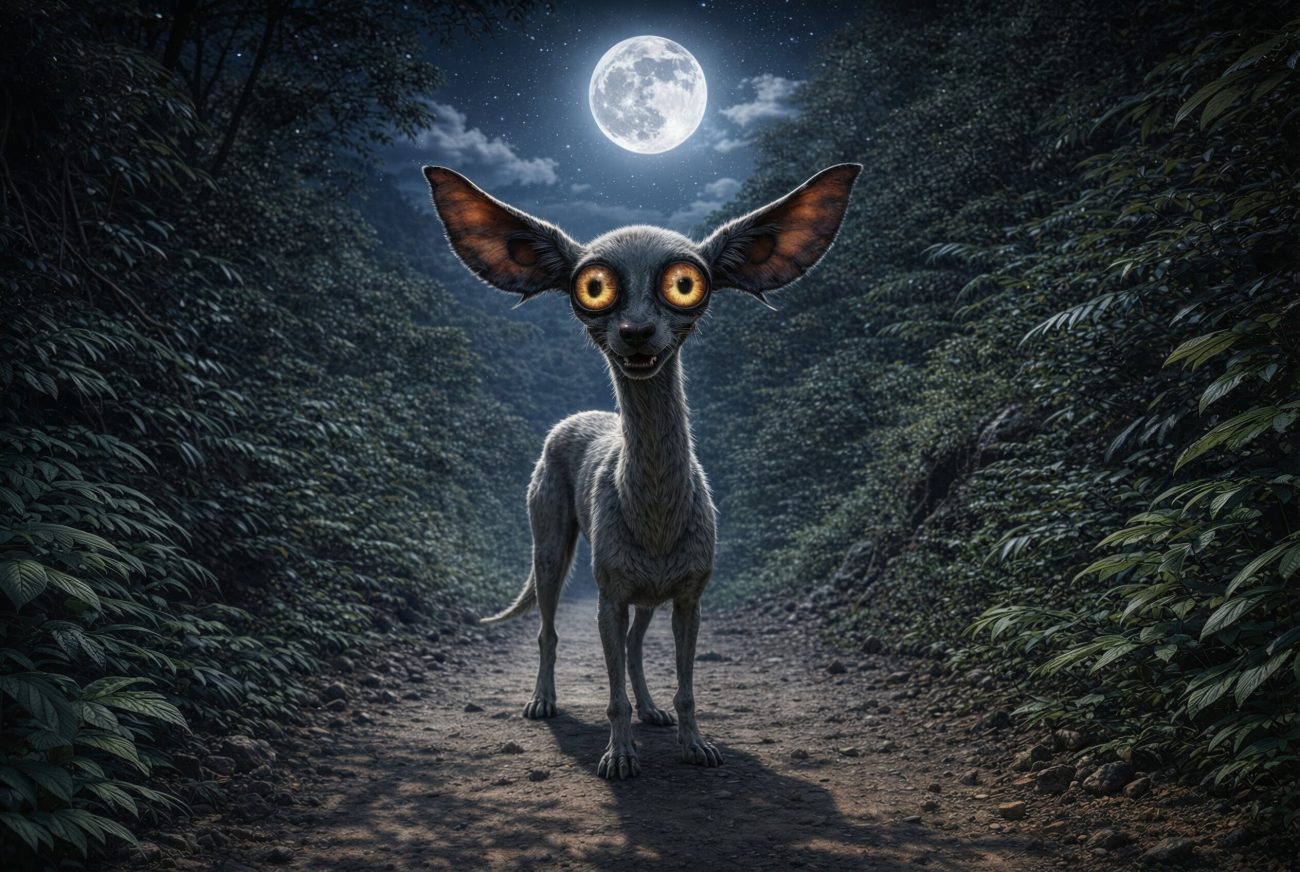
One night, under a bright moon, a traveler was returning to Hanatomi from Iyomo along a lonely road. As he walked, he heard a peculiar sound ahead of him—soft yet heavy, like large ears clapping together. From the opposite direction came a creature unlike any animal he knew. It looked neither like a goat nor like a dog, yet carried something of both in its form.

Ying Miao stopped directly in front of the man. Its ears continued to clap slowly as it raised its head and stared at his face in silence. The two stood there for a moment that felt longer than it was, the road empty and the night utterly still. Then, without a sound or gesture, the creature turned and walked on past him, disappearing down the path.

The man continued home, uneasy but unharmed. When he looked back after a few steps, Ying Miao was gone, as if it had never been there at all. No illness followed, no misfortune, no lingering curse. Nothing happened—except the memory.

Unlike many spirits of the Amami Islands, which were feared for stealing souls or killing those they touched or licked, Ying Miao was said to do nothing at all. It appeared, looked, and vanished. Because of this, people came to believe it was not a bringer of death, but a wandering ghost—one that crossed paths with the living without malice, leaving behind only a quiet question in the moonlit road.


Gallery


Sources

TYZ-Yokai Blog contributors. (n.d.). Ying Miao. In TYZ-Yokai Blog, from https://tyz-yokai.blog.jp/archives/1018147293.html


Interpretive Lenses

Religious Readings
  • Christian Ascetic Deep Dive
Philosophical Readings
  • Nietzschean Deep Dive
Psychological Readings
  • Jungian Deep Dive
Esoteric Deep Dive
  • Hermetic Deep Dive
Political / Social Readings
  • Marxist Deep Dive
Other
  • How to Invite The Ying Miao

Orabi Souke

Tradition / Region: Japanese Mythology
Alternate Names: Yama Orabi, Orabi Soute
Category: Mountain dweller, Yokai


The Myth

In the mountains of northern Nagasaki and the rugged highlands of northwestern Saga, travelers once spoke in hushed voices of a being known as Orabi Souke. It was not a creature that announced itself by shape or shadow, but by sound.

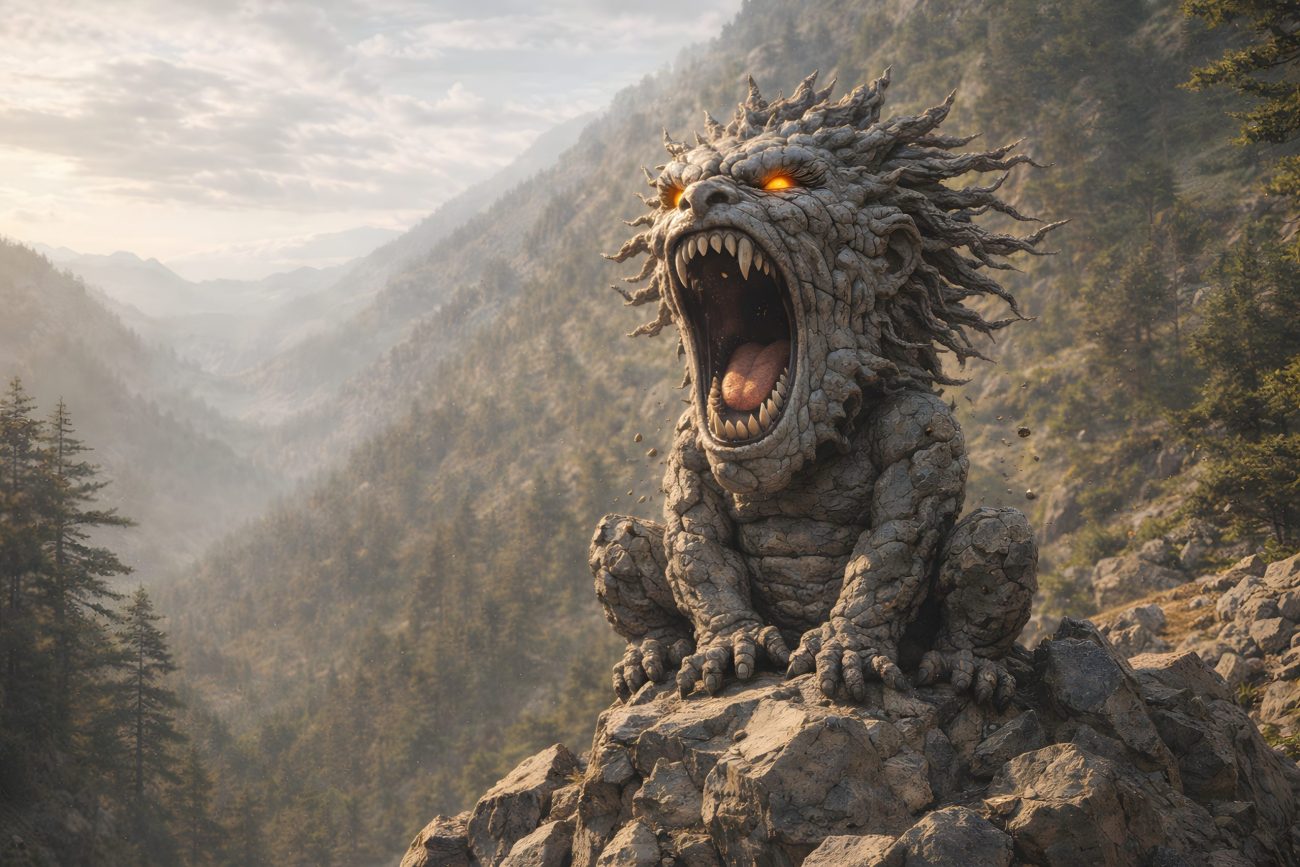
Those who wandered deep into the hills would sometimes hear shouting echo through the trees—angry, sharp cries that did not belong to any human voice. The sound seemed to come from everywhere at once, bouncing from slope to slope, drawing the listener deeper into the forest. Hunters and woodcutters learned to stop where they stood when the shouting began, for Orabi Souke was said to be listening.

If a person encountered the source of the voice and struck at it—whether with blade, stick, or stone—the mountain itself seemed to answer. Orabi Souke would strike back, not always with visible force, but through sudden terror, confusion, or misfortune. Men who attacked it were said to lose their way, stumble into ravines, or flee the mountain shaken and wounded without knowing how.

In nearby regions, the same presence was known by another name: Yama Orabi, the Shouting One of the Mountain. Though often confused with yamabiko—the echo spirit—Orabi Souke was considered something different. The echo merely repeated a voice. Orabi Souke answered it.

The meaning of its name was never fully understood. “Orabu” meant to shout, but what “souke” signified was unknown, as if the creature itself had no clear form or origin—only a voice and a will. Because of this, people believed Orabi Souke was not meant to be challenged or chased away. It was part of the mountain’s temper, a presence that demanded respect.

So travelers learned a simple rule: when the mountains shout back, lower your voice, still your hand, and leave the forest as you found it.


Gallery


Sources

TYZ-Yokai Blog contributors. (n.d.). Orabi Souke. In TYZ-Yokai Blog, from https://tyz-yokai.blog.jp/archives/1010654451.html


Interpretive Lenses

Religious Readings
  • Christian Ascetic Deep Dive
Philosophical Readings
  • Nietzschean Deep Dive
Psychological Readings
  • Jungian Deep Dive
Esoteric Deep Dive
  • Hermetic Deep Dive
Political / Social Readings
  • Marxist Deep Dive
Other
  • How to Invite The Orabi Souke

O-Uni

Tradition / Region: Japanese Mythology
Alternate Names: (none recorded)
Category: Mountain dweller, Yokai


The Myth

High in the mountains, where paths fade into mist and the forests grow thick and silent, there appears a strange being known as O-uni. It does not announce itself with cries or violence. Instead, it is encountered suddenly, standing where no one expects it to be, its form half-lost among trees and shadow.

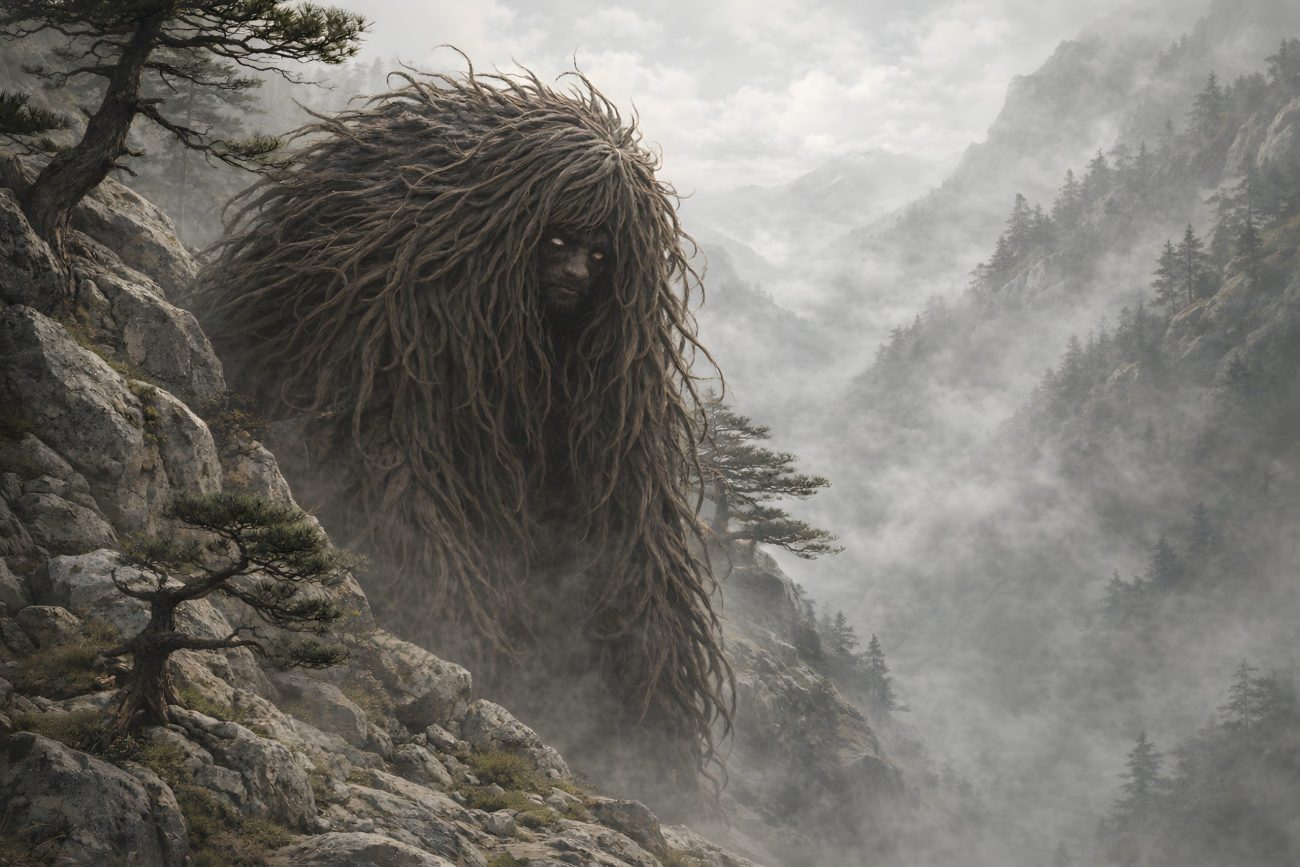
O-uni is covered entirely in dense, shaggy hair, like tangled fibers clinging to a living shape. Those who see it cannot clearly make out its face or limbs. It seems neither beast nor human, but something older, shaped by the mountains themselves. It does not pursue travelers, nor does it flee. It simply stands, watching, as if bound to the place where it appears.

No tale tells of O-uni attacking anyone, yet its presence is unsettling. People who encounter it feel an instinctive unease, as though they have wandered into a space that does not belong to humans. Afterward, they struggle to describe what they saw, disagreeing even with themselves about its size or posture, as if the creature resists being remembered clearly.

O-uni is known only through ancient picture scrolls filled with monsters, where it appears without explanation, nameless except for the title written beside it. In those images, it is shown in the mountains, silent and furred, no story attached—only the certainty that such a thing exists.

And so O-uni remains a being of quiet dread: not a creature of action, but of presence, lingering in the high places where threadlike mist wraps the peaks and the world feels unfinished.


Gallery


Sources

TYZ-Yokai Blog contributors. (n.d.). 大鬼 (Ō-uni). In TYZ-Yokai Blog, from https://tyz-yokai.blog.jp/archives/1010654245


Interpretive Lenses

Religious Readings
  • Christian Ascetic Deep Dive
Philosophical Readings
  • Nietzschean Deep Dive
Psychological Readings
  • Jungian Deep Dive
Esoteric Deep Dive
  • Hermetic Deep Dive
Political / Social Readings
  • Marxist Deep Dive
Other
  • How to Invite The O-Uni

Obariyon

Tradition / Region: Japanese Mythology
Alternate Names: Bariyon, Ubariyon, Onbu Obake, Obosaritei
Category: Yōkai, Gnome


The Myth

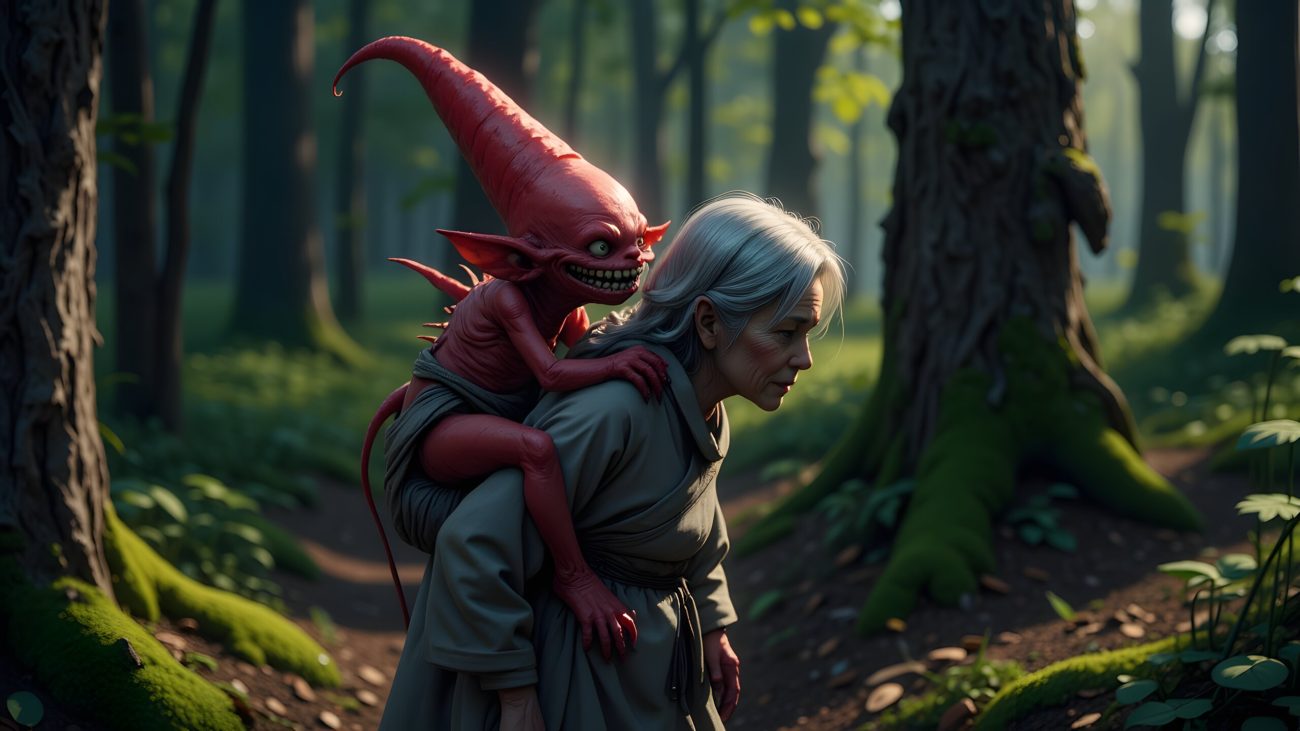
Along quiet roads and village paths in Niigata, travelers once feared encountering a strange child-sized being called Obariyon. It hid in bushes or trees by the roadside, waiting patiently for someone to pass by. When a lone traveler approached, the creature would suddenly leap onto their back and cry out, “Obariyon!” — a childish demand for a piggyback ride.

If the traveler panicked or tried to throw it off, misfortune followed. But if they sighed, endured, and carried the Obariyon on their back, the burden grew heavier with every step. What began as the weight of a child soon felt like a crushing load, bending backs and shaking knees. To make matters worse, Obariyon was said to chew at the scalp of whoever carried it, gnawing painfully as it laughed.

Some stories say the weight became so great that the traveler was eventually crushed beneath it. Yet more often, the tale ends differently. When the exhausted person finally reached home and the Obariyon vanished, the unbearable weight was revealed to have been a sack of gold all along. Those who endured the journey without complaint found themselves suddenly rich.

Because of this, Obariyon came to embody a dangerous test of patience. Villagers even wore metal bowls on their heads to protect themselves from its biting jaws, unsure whether the creature would bring ruin or reward. In the end, Obariyon was remembered as a yōkai of burden and blessing alike — a spirit that punished weakness, but richly rewarded those who carried its weight to the very end.


Gallery


Sources

Yokai.com contributors. (n.d.). Obariyon. In Yokai.com — The Japanese Mythology Database, from https://yokai.com/obariyon/


Interpretive Lenses

Religious Readings
  • Christian Ascetic Deep Dive
Philosophical Readings
  • Nietzschean Deep Dive
Psychological Readings
  • Jungian Deep Dive
Esoteric Deep Dive
  • Hermetic Deep Dive
Political / Social Readings
  • Marxist Deep Dive
Other
  • How to Invite The Obariyon

Zashiki-warashi

Tradition / Region: Japanese Mythology
Alternate Names: Zashiki-bokko, Kura-warashi, Warashi
Category: Yokai, Gnome


The Myth

In the farmhouses and old family homes of northern Japan, there lives a mysterious child spirit known as the zashiki-warashi. It appears as a young child—sometimes five or six years old, sometimes closer to twelve—often with a red face and long or cropped hair. Though it looks human, it is not. It belongs to the house itself.

A zashiki-warashi dwells in the inner rooms of prosperous households, especially among wealthy farmers or old, respected families. As long as the child spirit remains, the house flourishes. Crops grow well, money comes easily, and the family prospers. But if the zashiki-warashi leaves, misfortune soon follows. Wealth drains away, sickness appears, and families fall into ruin.

The spirit is playful and unpredictable. It may wander around beds at night, flip pillows, make footsteps in empty rooms, or rustle paper screens. Sometimes it laughs, sometimes it snorts, and sometimes it speaks openly with people. Guests may glimpse it crouching beneath a household altar or peeking from behind doors. In other homes, it remains unseen, known only through sounds and disturbances.

Some houses are said to host more than one zashiki-warashi. In certain villages, they are even ranked—some higher, some lower—each with a different temperament and influence. A few appear as boys, others as girls, and some are remembered as former princesses or noble children bound to the house by fate.

Many stories tell of disaster following their departure. In one tale, two zashiki-warashi were seen moving from a house to another; soon after, nearly the entire family left behind died from poisoned food. In another, a household fell into poverty the moment its spirit vanished. These stories serve as warnings: the spirit’s presence must be respected, never mocked or driven away.

Most strangely, zashiki-warashi do not reveal themselves to everyone. Often, only the head of the household can see them—and even then, only a few times in a lifetime. To others, the spirit remains invisible, known only by laughter in empty rooms or footsteps where no child should be.

Thus the zashiki-warashi endures as both blessing and omen: a child who brings fortune, a spirit bound to home and lineage, and a reminder that prosperity, once lost, may never return.


Gallery


Sources

TYZ-Yokai Blog contributors. (n.d.). 座敷童子 (Zashiki-warashi). In TYZ-Yokai Blog, from https://tyz-yokai.blog.jp/archives/1010654392.html


Interpretive Lenses

Religious Readings
  • Christian Ascetic Deep Dive
Philosophical Readings
  • Nietzschean Deep Dive
Psychological Readings
  • Jungian Deep Dive
Esoteric Deep Dive
  • Hermetic Deep Dive
Political / Social Readings
  • Marxist Deep Dive
Other
  • How to Invite The Zashiki-warashi

Tenchishindousai

Tradition / Region: Japanese Mythology
Alternate Names: Tenshin Dōsai; Shindōsai
Category: Catfish, Fish, Yokai


The Myth

One night, during the Ansei era, a wandering rōnin arrived at a guardhouse in Edo and begged for shelter and food. He was tall, powerfully built, and strange in appearance, like a man hardened by severe training. The guards refused him, saying the guardhouse was not a place for lodging, and told him to seek an inn elsewhere.

At this, the man’s face grew pale.

He declared, “I am Tenchishindousai. There is none who does not know my name. Yet because the land has been calm for many years, people have grown contemptuous. They catch my kin, roast them, stew them, and kill them without cause. I have come to avenge them.”

He spoke of his journey: how he had shaken people to death at temple gatherings, how he had passed through province after province—mountains, capitals, and ports—causing the earth to tremble beneath his feet. Now, he said, he had arrived in Edo.

When the guards realized he claimed to be the Earthquake itself, they tried to seize him. Enraged, Tenchishindousai vanished on the spot.

At once, heaven and earth roared. The ground convulsed violently. Houses collapsed, storehouses fell, fires erupted across the city, and countless people were crushed or burned. Amid the devastation, Tenchishindousai spoke again, saying that the gods were absent from the land—and that if the deity who pins the earth were to arrive, the destruction would grow even greater.

With that, he fled north.

Those who saw his true form said his face was that of a giant catfish, the ancient creature that writhes beneath the land and shakes the world when angered. Thus the people believed the great earthquake was not chance, but revenge—carried out by Tenchishindousai, the living will of the trembling earth.


Gallery


Sources

TYZ-Yokai Blog contributors. (n.d.). 添地震大歳 (Tenchishindōsai). In TYZ-Yokai Blog, from https://tyz-yokai.blog.jp/archives/1069000650.html


Interpretive Lenses

Religious Readings
  • Christian Ascetic Deep Dive
Philosophical Readings
  • Nietzschean Deep Dive
Psychological Readings
  • Jungian Deep Dive
Esoteric Deep Dive
  • Hermetic Deep Dive
Political / Social Readings
  • Marxist Deep Dive
Other
  • How to Invite The Tenchishindousai

Osaba

Tradition / Region: Japanese Myhtology
Alternate Names: Big mackerel
Category: Yokai, Fish, Mackerel


The Myth

Long ago, in the seas near Irabu Island, there lived a monstrous fish known as the Osaba. Vast and terrifying, it rose from the deep whenever a boat passed, overturning vessels and devouring the people who fell into the water. So great was the fear it inspired that no one dared to sail from Irabu, and the island was left cut off by the sea.

At that time, the village head was a man named Tomomi Ujichika. Seeing his people trapped by terror and loss, he resolved to face the Osaba himself.

After offering prayers to the gods, Ujichika armed himself with a dagger and set out alone in a small boat, sailing far into the open sea. The waters were calm until, without warning, the great Osaba appeared, parting the waves as it opened its enormous mouth and rushed toward him.

Ujichika leapt into the sea and was swallowed whole.

Inside the belly of the beast, he fought desperately, slashing and stabbing until he tore through its entrails. Unable to endure the wounds, the Osaba died, and its blood spread through the surrounding waters.

Ujichika returned to shore victorious and was honored by the villagers, who praised him as their savior. Yet the struggle had drained his life. Not long after, he died from exhaustion, and the people wept for him.

The place where he was buried, Hiyaji, was later revered as a sacred mountain, for there rested the hero who gave his life to free his people from the terror of the Osaba.


Gallery


Sources

TYZ-Yokai Blog contributors. (n.d.). Osaba. In TYZ-Yokai Blog, from https://tyz-yokai.blog.jp/archives/1059767734.html


Interpretive Lenses

Religious Readings
  • Christian Ascetic Deep Dive
Philosophical Readings
  • Nietzschean Deep Dive
Psychological Readings
  • Jungian Deep Dive
Esoteric Deep Dive
  • Hermetic Deep Dive
Political / Social Readings
  • Marxist Deep Dive
Other
  • How to Invite The Osaba

Akugyo

Tradition / Region: Japanese mythology
Alternate Names: Daigyo; Raichōgyo
Category: Fish, Mermaid, Yokai


The Myth

In the seas near Kibi Province, sailors spoke in fear of the Akugyo, the Evil Fish. Vast beyond measure, it rose from the depths to overturn ships as easily as toys, devouring the sailors who fell screaming into the water.

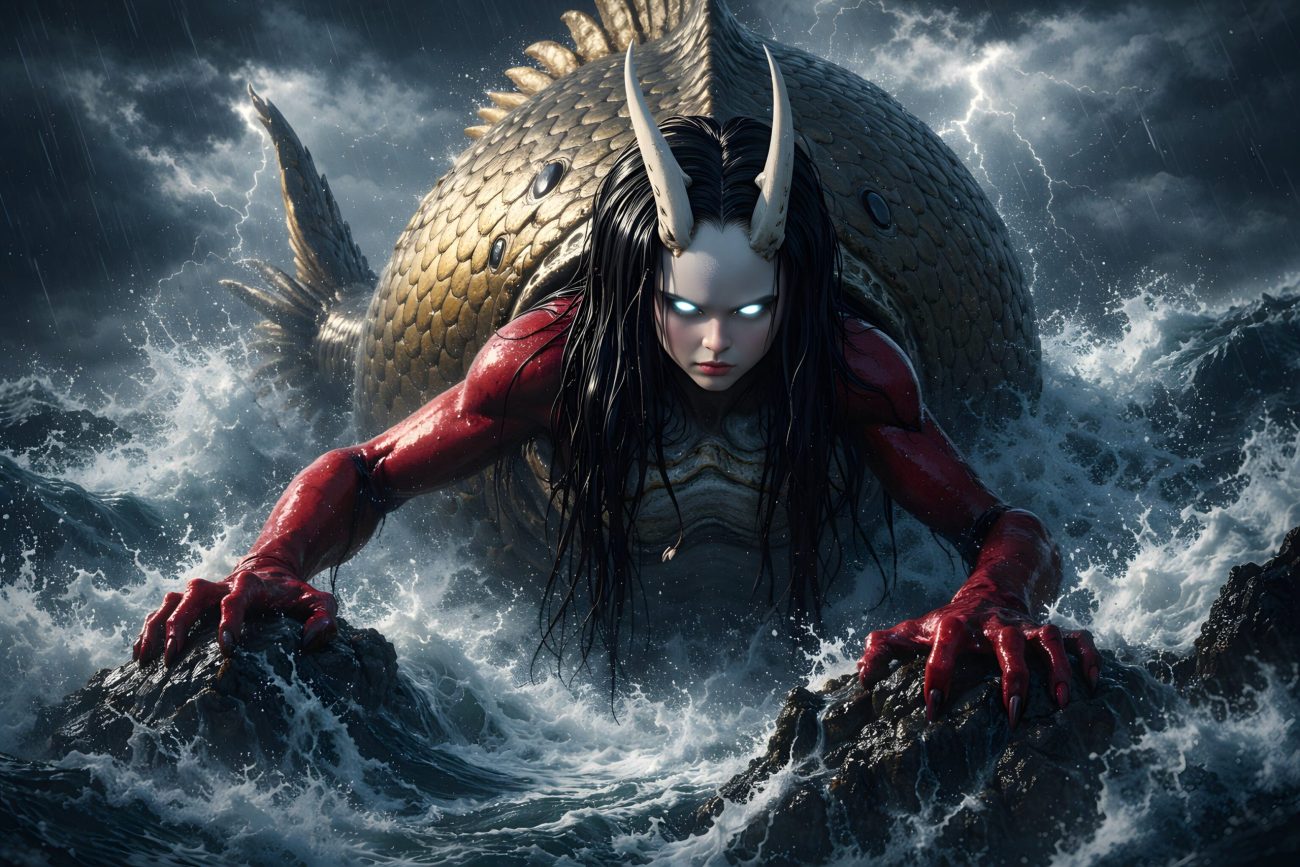
Some Akugyo breathed fire from their mouths, scorching ships before dragging them under. Others resembled enormous ningyo, their bodies covered in gold and silver scales that gleamed beneath the waves. There were also Akugyo shaped like colossal mermaids, bearing two white horns like those of an oni sprouting from their heads. Fishermen dreaded these monsters, for a boat could become trapped between the creature’s massive fins, leaving the crew helpless as the Akugyo fed.

In the sixth month of 1805, an Akugyo appeared off the coast of Echigo Province. Its body stretched more than eleven meters in length, and its horns were longer than a man’s arm. The terror it caused was so great that the Lord of Kaga dispatched a vast force—fifteen hundred men and four hundred fifty cannons—to hunt it down. After a great battle at sea, the monster was finally slain.

Another tale tells of Izutsuya Kanroku, a famed taiko drummer from Kaga. While crossing the Sea of Japan, his boat suddenly came to a halt. Beneath it lay the back of an Akugyo, and the vessel had become lodged upon the monster’s body. Believing death inevitable, Kanroku took up his drum and played with all the strength he had left. His drumming thundered across the sea and sky, echoing like a storm.

Moved—or perhaps startled—by the sound, the Akugyo shifted. The boat slipped free, and Kanroku escaped unharmed.

Thus the Akugyo remains a creature of terror and wonder: a destroyer of ships, yet sometimes driven away by courage, sound, and human resolve.


Sources

Wikipedia contributors. (n.d.). Akugyō. In Wikipedia, The Free Encyclopedia, from https://en.wikipedia.org/wiki/Akugyo