Chuchedi

Tradition / Region: Japanese Mythology
Alternate Names: Teuchedy, Tencheday, Tenchadema
Category: Mermaid, Ghost


The Myth

In old accounts told by travelers to Japan, there was said to be a strange idol worshipped in the eastern lands, known as Chuchedi.

People from every rank of life came to its temple day and night, making offerings and prayers. The idol was feared as a powerful and dangerous spirit, one that demanded a terrible rite. Each month, it was said, the most beautiful maiden in the land would be chosen and brought to the temple.

She would be placed alone inside a private chamber and left there in silence. The doors were shut, and the girl waited through the darkness.

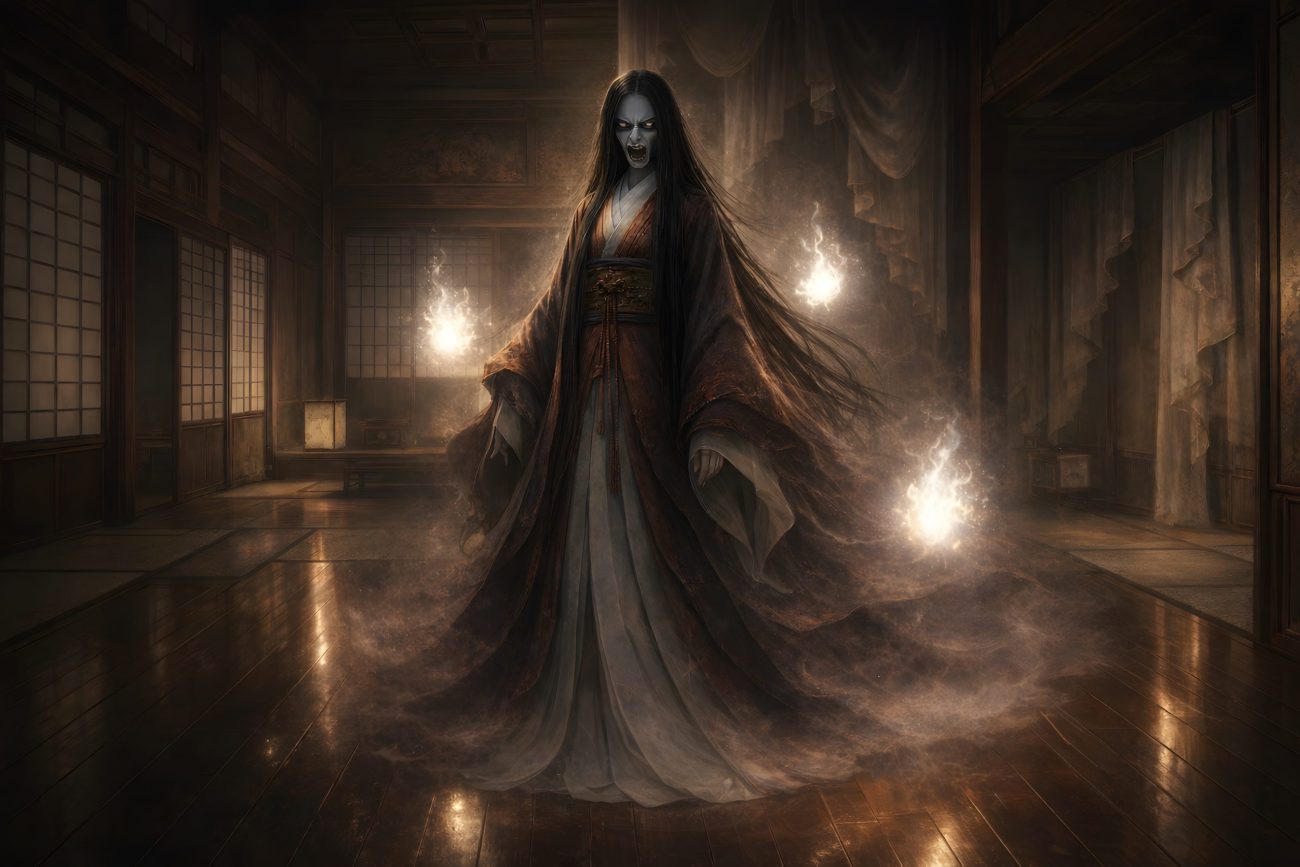
At some point in the night, Chuchedi itself was believed to appear. None saw how it came or what form it took in full, but the spirit would visit the girl and lie with her. When morning came, the spirit had vanished again, leaving behind strange fish-like scales as proof of its presence.

Another maiden would be chosen the following month, yet no one spoke openly about what became of the girls afterward. That remained a mystery whispered among the people.

It was also said that before the ritual, priests could ask Chuchedi questions, and the spirit would give answers to them, as though it possessed knowledge beyond human reach.

Thus Chuchedi was remembered as a hidden temple power—
a being that came in the night,
left scales behind,
and was served by fearful devotion from those who believed in it.


Gallery


Sources

tyz-yokai.blog.jp contributors. (n.d.). Chuchedi. In tyz-yokai.blog.jp, from https://tyz-yokai.blog.jp/archives/1084115860.html


Interpretive Lenses

Religious Readings
  • Christian Ascetic Deep Dive
Philosophical Readings
  • Nietzschean Deep Dive
Psychological Readings
  • Jungian Deep Dive
Esoteric Deep Dive
  • Hermetic Deep Dive
Political / Social Readings
  • Marxist Deep Dive
Other
  • How to Invite The Chuchedi

The Snow Woman of the Kintama Curve

Tradition / Region: Japanese mythology
Alternate Names: Snow Woman of Hikoya, Yuki-onna of Kintama Curve
Category: Ghost, Mountain dweller


The Myth

Long ago, on a winter day when the snow fell thick and heavy, the headman of the mountain village of Hikoya was returning home from the town of Hashimoto. The mountain road was narrow and winding, and the snowfall was so fierce that each step felt uncertain. As he climbed a steep S-shaped curve along the path, a flicker of white caught his eye.

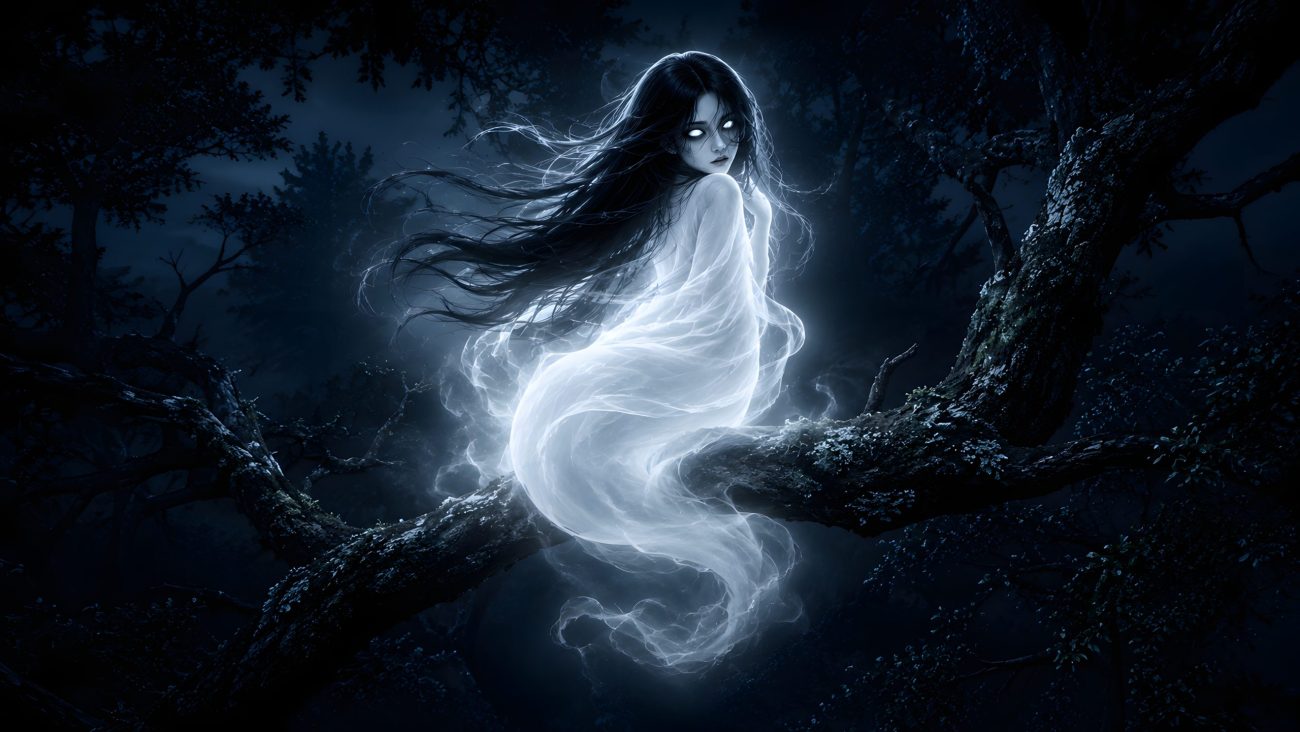
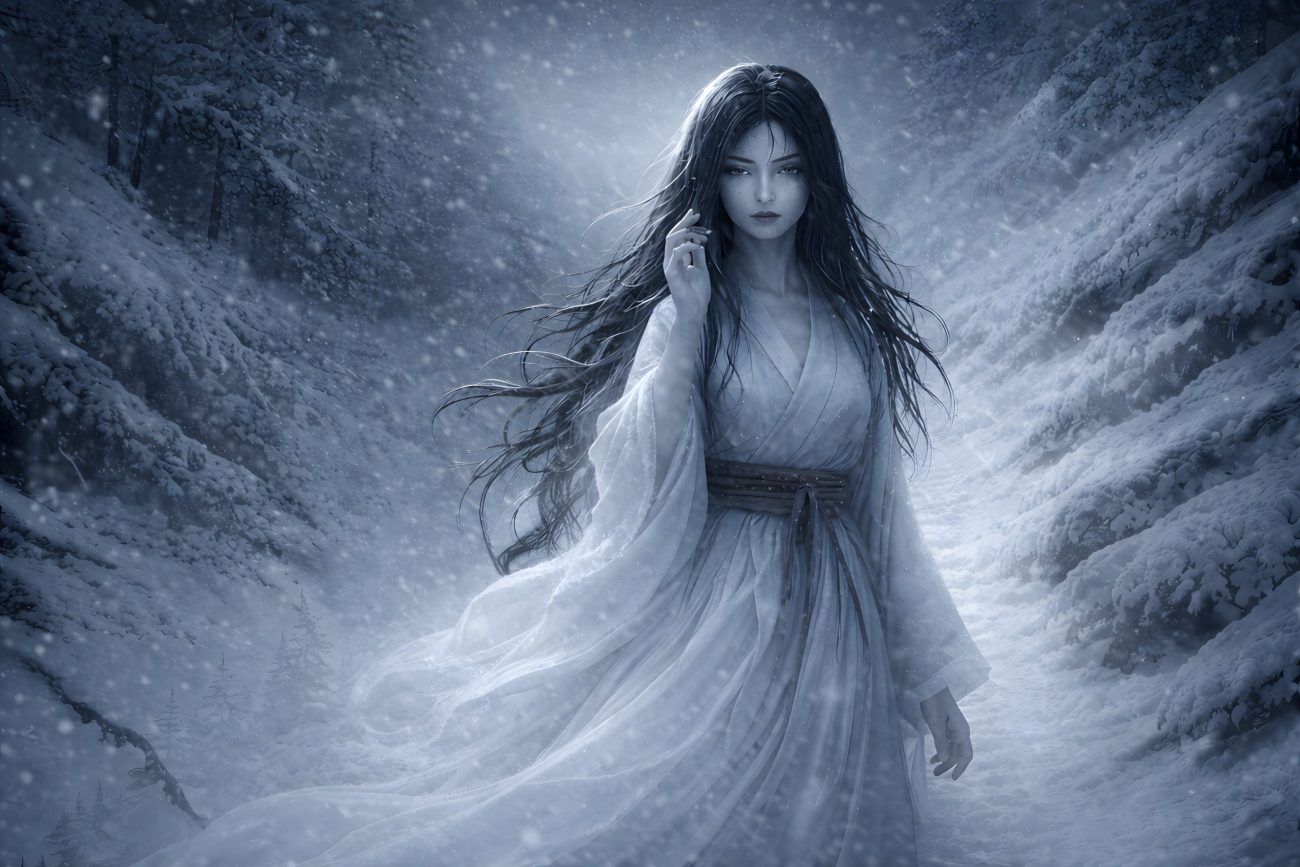
Thinking he had found another traveler, he called out. From the snow emerged a young woman dressed in a long white kimono that trailed across the ground. Her face was pale as snow, her obvious lips blood-red, her hair deep black, and her eyes shone with an eerie golden light. She looked at the headman with an expression that was both sorrowful and afraid and softly called to him, “Mayor… come with me.”

Entranced by her voice, the headman followed her barefoot into the snow, unaware of the cold biting into his skin. Step by step, she led him deeper along the curve. Suddenly, snow fell from the branches overhead, striking him and breaking the spell. Terror seized him. Realizing something was wrong, he turned and fled back toward the village as fast as he could.

The next day, the headman returned to the bend in the road. There, he found his discarded sandals and the tree from which the snow had fallen. Hanging from one of its branches was the body of a young woman. She was Kayo, a girl from Akatsuka Village, who had been betrayed by her lover from Osaka and driven to despair. Whether she died before or after the headman’s encounter was never known.

The headman would later recount the story again and again, always ending it by saying that the fear had made his body shrivel with terror. From then on, villagers began calling that sharp bend in the mountain road the “Kintama Curve.” To this day, the Snow Woman of that curve is remembered not only as a frightening apparition, but as a sorrowful figure, caught between the world of the living and the dead, wandering the snow in silence.


Gallery


Sources

TYZ-Yokai Blog contributors. (n.d.). 雪女 (Yuki-onna / Snow Woman). In TYZ-Yokai Blog, from https://tyz-yokai.blog.jp/archives/1084249383.html


Interpretive Lenses

Religious Readings
  • Christian Ascetic Deep Dive
Philosophical Readings
  • Nietzschean Deep Dive
Psychological Readings
  • Jungian Deep Dive
Esoteric Deep Dive
  • Hermetic Deep Dive
Political / Social Readings
  • Marxist Deep Dive
Other
  • How to Invite The The Snow Woman of the Kintama Curve

Yashawaka

Tradition / Region: Japanese Mythology
Alternate Names:
Category: Ghost, Mountain dweller


The Myth

At a mountain temple, there once lived a young page named Yashawaka. He was an ordinary boy until, around the age of fourteen or fifteen, something about him began to change. He stopped eating and drinking altogether, yet he did not grow weak. Instead, he became increasingly withdrawn. Each night, once darkness fell, he would quietly leave the temple grounds and vanish into the surrounding hills.

As weeks passed, his appearance became unsettling. His face turned deathly pale, his cheekbones jutted sharply from his skin, and his features grew strange and hollow. The monks whispered among themselves, uneasy at his nightly wanderings and unnatural endurance. Suspecting something dreadful, one of them decided to follow him in secret.

Late one night, the monk watched as Yashawaka crept into the temple cemetery. There, beneath the moonlight, he dug into fresh graves with frantic strength. When the earth was pulled away, he uncovered the newly dead—and began to eat the corpses. The watcher fled in horror and reported what he had seen.

The head priest ordered the entire temple to seize Yashawaka. Monks rushed into the night to capture him, but he moved with terrifying speed. He ran as though he could fly, leaping across the ground, then climbing into the treetops where no one could follow. From branch to branch he vanished into the mountains, swallowed by the forest.

Yashawaka was never seen again. Some say he became a creature of the wild, neither living nor dead, while others believe he still wanders the mountains, driven by hunger and darkness, a warning of what happens when the boundary between the human and the monstrous is crossed.


Gallery


Sources

TYZ-Yokai Blog contributors. (n.d.). ヤシャワカ (Yashawaka). In TYZ-Yokai Blog, from https://tyz-yokai.blog.jp/archives/1057282474.html


Interpretive Lenses

Religious Readings
  • Christian Ascetic Deep Dive
Philosophical Readings
  • Nietzschean Deep Dive
Psychological Readings
  • Jungian Deep Dive
Esoteric Deep Dive
  • Hermetic Deep Dive
Political / Social Readings
  • Marxist Deep Dive
Other
  • How to Invite The Yashawaka

Ying Miao

Tradition / Region: Japanese Mythology
Alternate Names: Inmao, Inmaho
Category: Ghost, Mountain dweller, Yokai


The Myth

In the villages of the Amami Islands, where moonlight turns the paths silver and the forests seem to breathe, people once spoke of a quiet apparition known as Ying Miao. It was not counted among the dangerous spirits, nor was it invoked to frighten children. Instead, it was remembered as something strange and fleeting, a presence that appeared and vanished without leaving harm behind.

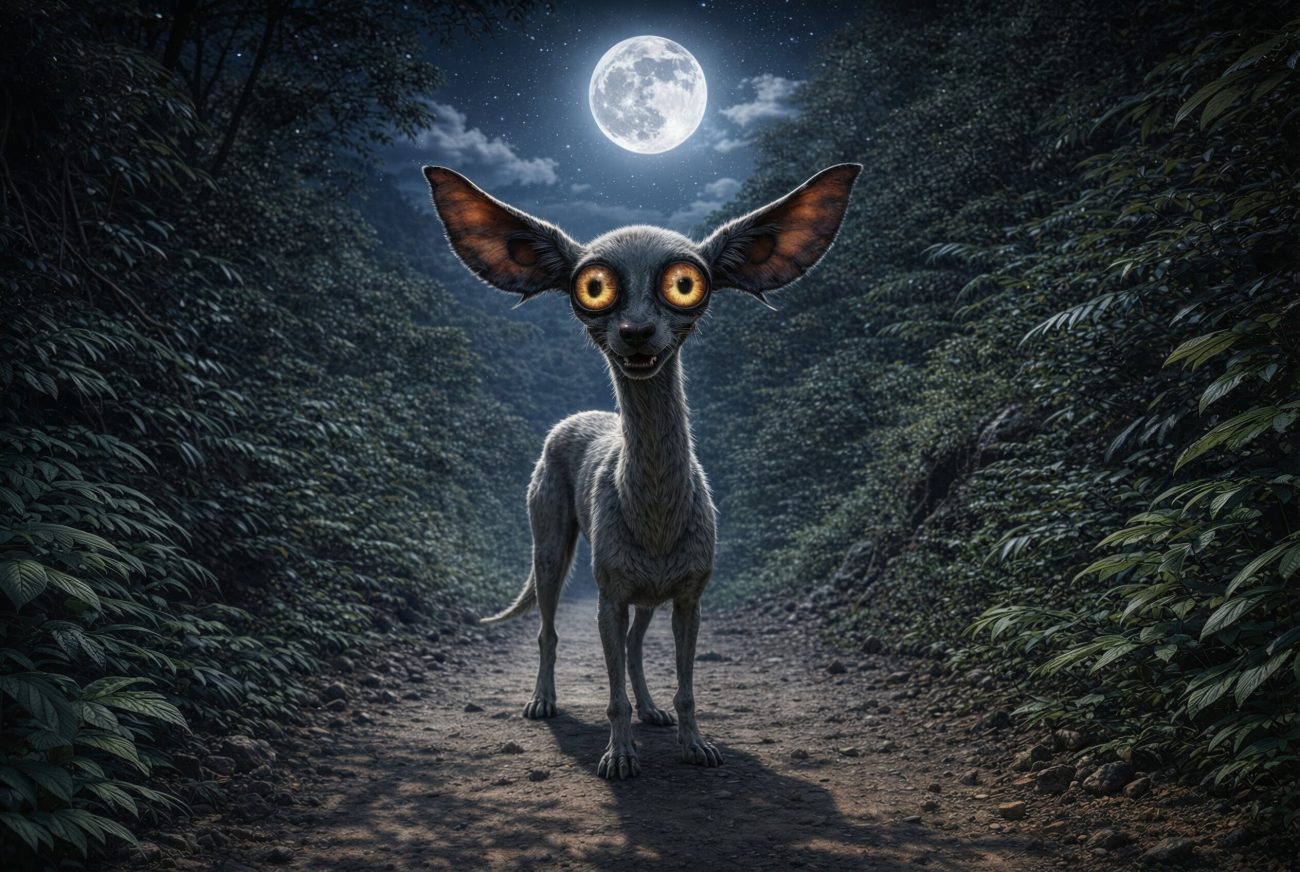
One night, under a bright moon, a traveler was returning to Hanatomi from Iyomo along a lonely road. As he walked, he heard a peculiar sound ahead of him—soft yet heavy, like large ears clapping together. From the opposite direction came a creature unlike any animal he knew. It looked neither like a goat nor like a dog, yet carried something of both in its form.

Ying Miao stopped directly in front of the man. Its ears continued to clap slowly as it raised its head and stared at his face in silence. The two stood there for a moment that felt longer than it was, the road empty and the night utterly still. Then, without a sound or gesture, the creature turned and walked on past him, disappearing down the path.

The man continued home, uneasy but unharmed. When he looked back after a few steps, Ying Miao was gone, as if it had never been there at all. No illness followed, no misfortune, no lingering curse. Nothing happened—except the memory.

Unlike many spirits of the Amami Islands, which were feared for stealing souls or killing those they touched or licked, Ying Miao was said to do nothing at all. It appeared, looked, and vanished. Because of this, people came to believe it was not a bringer of death, but a wandering ghost—one that crossed paths with the living without malice, leaving behind only a quiet question in the moonlit road.


Gallery


Sources

TYZ-Yokai Blog contributors. (n.d.). Ying Miao. In TYZ-Yokai Blog, from https://tyz-yokai.blog.jp/archives/1018147293.html


Interpretive Lenses

Religious Readings
  • Christian Ascetic Deep Dive
Philosophical Readings
  • Nietzschean Deep Dive
Psychological Readings
  • Jungian Deep Dive
Esoteric Deep Dive
  • Hermetic Deep Dive
Political / Social Readings
  • Marxist Deep Dive
Other
  • How to Invite The Ying Miao

Lady Rokujo

Tradition / Region: Japan (Heian-period court literature)
Alternate Names: Rokujo no Miyasudokoro, Miyasudokoro
Category: Vengeful spirit / living ghost


The Myth

Lady Rokujo was a noblewoman of great refinement, the daughter of a minister and once the wife of the Crown Prince. Widowed at a young age, she later became the lover of Hikaru Genji. Though dignified and proud of her rank, she suffered deeply from jealousy and humiliation, especially as Genji’s affections shifted toward younger women. These unspoken emotions slowly twisted within her.

During the events recorded in The Tale of Genji, her resentment grew so powerful that her spirit began to leave her body without her conscious will. At the Kamo Festival, after being humiliated in a carriage dispute involving Genji’s lawful wife, Lady Aoi, Lady Rokujo’s spirit fully manifested. Invisible yet deadly, it began to torment Lady Aoi, who was pregnant at the time.

Lady Aoi suffered greatly. After a long and painful labor, she gave birth to a son, but her condition suddenly worsened, and she died only days later. Meanwhile, Lady Rokujo realized that her spirit had wandered when she noticed the smell of ritual mustard seeds clinging to her own clothing. Genji himself witnessed her spirit while tending to Lady Aoi. Horrified by what she had become, Lady Rokujo resolved to sever her ties with him.

She left the capital, parting from Genji at Nonomiya, and traveled to Ise with her daughter, who served as a sacred princess. Yet even distance could not quiet her heart. After returning to Kyoto, Lady Rokujo fell ill and died, entrusting her daughter to Genji’s care. Death, however, did not end her suffering.

Her spirit continued to appear, driven by lingering obsession. It haunted Lady Murasaki and later the Third Princess, afflicting them with sickness and terror. Through these hauntings, her bitterness toward Genji was made known again and again.

Only after memorial rites were performed, urged by Genji and carried out for her troubled soul, was it hoped that Lady Rokujo might finally find release. Until then, she endured as one of the most feared figures of courtly legend — a woman whose restrained emotions became so powerful that even death could not contain them.


Interpretive Lenses

Religious Readings
Philosophical Readings
Psychological Readings
Esoteric Deep Dive
Political / Social Readings
Other

Ba-kujira-tata

Tradition / Region: Japanese Mythology
Alternate Names: Monster Whale Curse
Category: Whale, Ghost


The Myth

During his years working as a kamishibai artist, Mizuki Shigeru once created a paper-theater story called Monster Whale. The tale told of a man who ate nothing but whale meat. Over time, his body began to change, and he slowly came to resemble a whale himself. As the story neared its end, the man was struck by a severe fever. Even after consulting a doctor, no cause for the illness could be found.

While performing this story repeatedly, Mizuki himself fell ill with an unexplained fever. Medical treatment brought no answers, and the sickness lingered. Eventually, he decided to stop performing Monster Whale. Soon after, his fever disappeared as suddenly as it had come.

Mizuki laughed it off at the time, calling it the curse of the monster whale. Yet as years passed, he reconsidered the experience. He came to feel that the story may have touched on something unseen, something that did not reveal itself openly. As the tale of the monster whale concludes in his later writings, collected in works such as Nihon Yokai Taizen, it leaves a quiet warning: though nothing may seem to be happening, there is always something mysterious moving just beyond human sight.


Sources

TYZ Yokai Blog contributors. (n.d.). Bake-kujira (鯨骨霊 / バクジラ). In TYZ Yokai Blog, from https://tyz-yokai.blog.jp/archives/1077754091.html