Argus Panoptes

Tradition / Region: Greek Mythology
Alternative names: Argos Panoptes / The All-Seeing Giant
Category: Giant


The Myth

Argus Panoptes was a gigantic many-eyed being from Greek mythology, famous for his endless vigilance and supernatural sight. His name meant “All-Seeing,” and he served the goddess Hera as her perfect guardian and watchman.

Argus was often described as a massive primordial giant born from Gaia, the Earth itself. Ancient traditions gave him countless eyes spread across his body, sometimes a hundred in number. Even while he slept, only some of the eyes closed, while the others remained awake and alert. Because of this, nothing could escape his gaze.

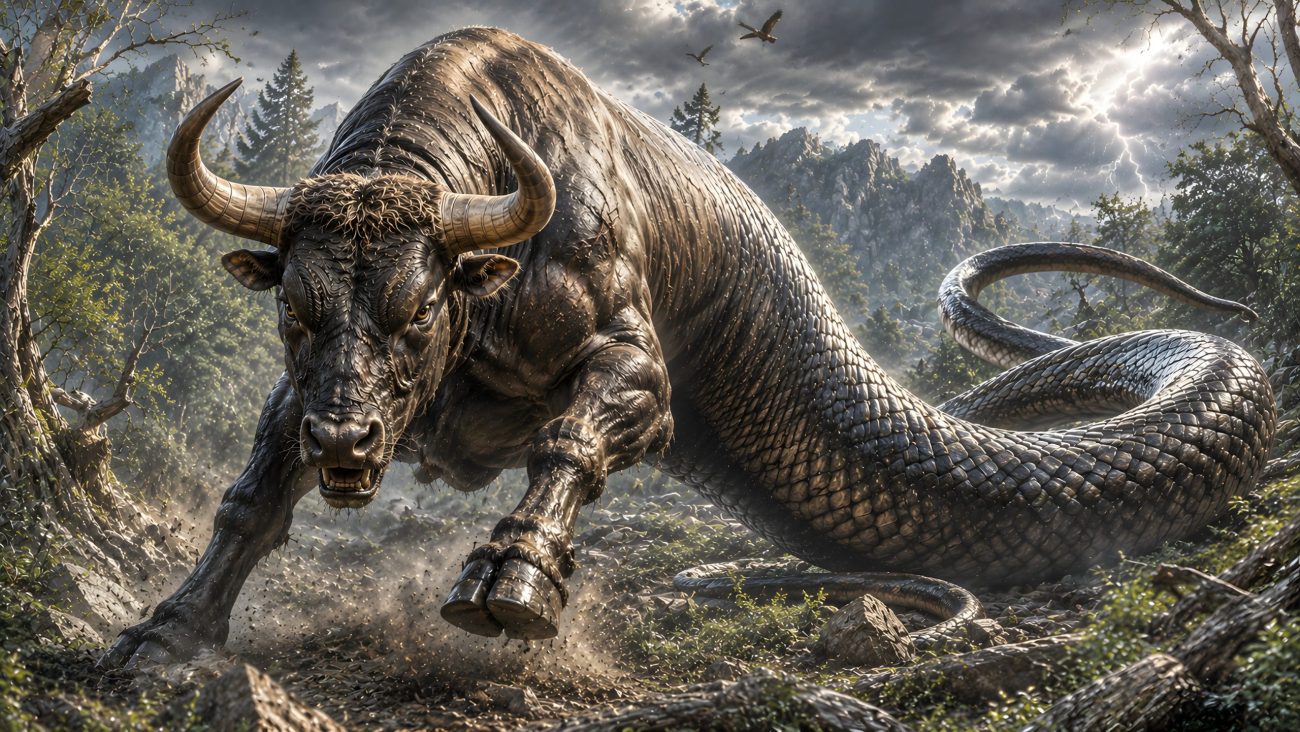
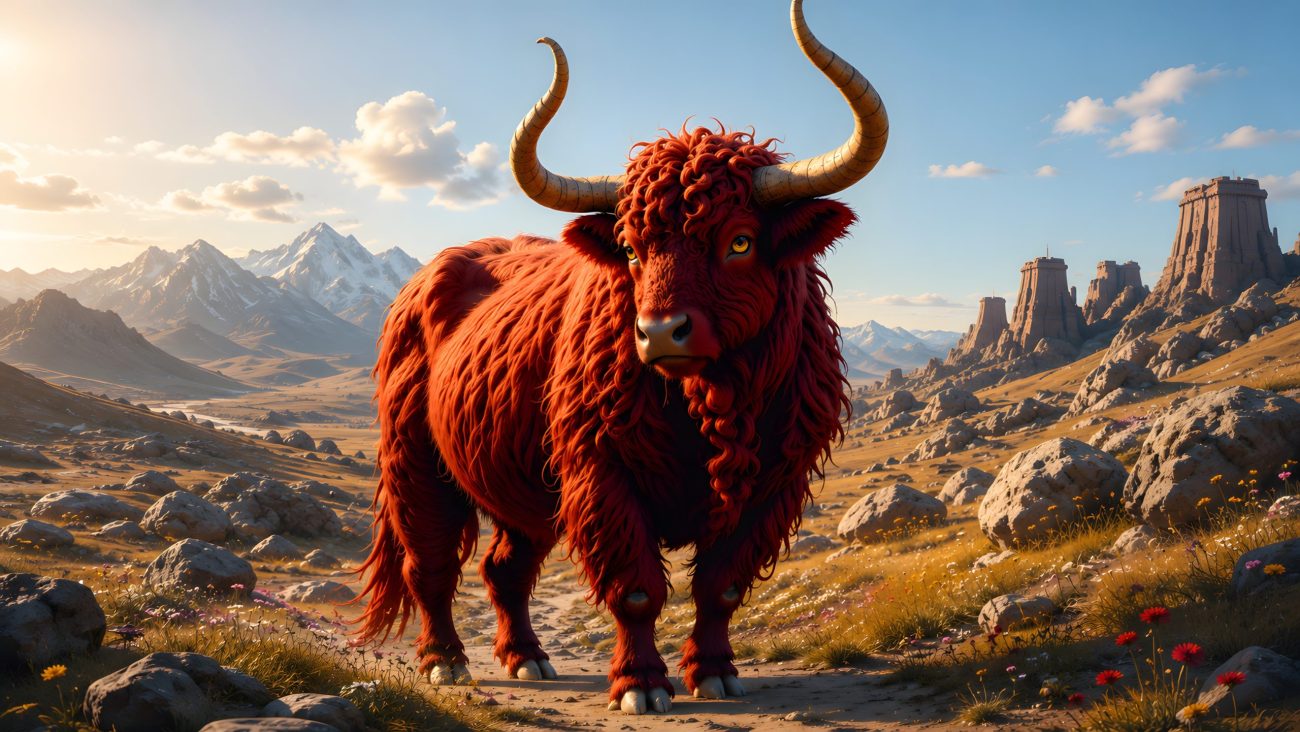
He was immensely strong as well as watchful. One legend says he killed the monstrous serpent-woman Echidna while she slept in her cave. Another says he slew a savage bull that devastated Arcadia and afterward wore its hide as armor.

Argus became most famous for guarding Io, a priestess loved by Zeus. To hide Io from Hera’s jealousy, Zeus transformed her into a white heifer, but Hera saw through the deception and ordered Argus to watch her constantly. The giant chained Io near a sacred olive tree and guarded her day and night with his countless eyes.

To rescue Io, Zeus sent Hermes. Disguised as a shepherd, Hermes approached Argus and slowly lulled him to sleep with stories, music, and magical charms until every eye finally closed. Once the giant slept completely, Hermes killed him, becoming known afterward as Argeiphontes — the Slayer of Argus.

Hera mourned her faithful servant and honored him by placing his many eyes upon the tail of the peacock, where they remained forever as shining watchful patterns. In some versions of the myth, Argus himself was transformed into the first peacock.

Argus Panoptes remained one of the great watchful beings of Greek mythology — an immortal symbol of vigilance, guardianship, and the unblinking gaze that never truly sleeps.


Sources

Wikipedia contributors. (n.d.). Argus Panoptes. In Wikipedia. Retrieved May 18, 2026, from https://en.wikipedia.org/wiki/Argus_Panoptes


Vrykolakas

Tradition / Region: Greek Mythology, Macedonian Mythology
Alternative names: Vrykolakas, Vourkolakas, Vampyras, Vompiras
Category: Vampire


The Myth

The Vrykolakas is one of the most feared undead beings in Balkan folklore — a corpse that rises from the grave at night to wander among the living. In Macedonian and Greek traditions it was believed to strangle people, drink the blood of humans and animals, spread disease, damage homes and tools, and terrify entire villages.

The creature was described as a swollen animated corpse, bloated like a skin filled with blood, with burning eyes glowing like live coals in the dark. Unlike a ghost or spirit, the Vrykolakas possessed a physical body and walked the earth during the night before returning to its grave before dawn.

People believed someone could become a Vrykolakas for several reasons. A corpse found undecayed or lying face-down in the grave was considered a sign of vampirism. Another dangerous omen was a cat jumping over a dead body before burial. Because of this, relatives watched corpses throughout the night to prevent animals from crossing them. If a cat touched the body, large needles were immediately driven through the corpse to stop the transformation.

When a suspected vampire was discovered, horrifying rituals were performed. Corpses were dug up, scalded with boiling oil, pierced through the stomach or navel with iron nails, and nailed into the grave. Sometimes millet or mustard seed was scattered over the tomb because people believed the Vrykolakas would be forced to stop and count every grain before continuing its wanderings. Dawn or the first rooster crow would then force it back underground.

The Vrykolakas feared iron, nails, thorns, fire, and sharp objects. Doors were barricaded with thorn bushes and rooftops covered with mustard seed to keep it away. In some regions stakes or iron spikes were driven through the body, while elsewhere the corpse was burned entirely.

The superstition also extended to animals. Some traditions believed in vampire-like spirits that attacked cattle and sheep at night, riding on their backs and drinking their blood until the animals weakened or died. Wandering dervishes and folk-magicians claimed they could hunt and destroy these creature.

Certain people were believed to possess special power over Vrykolakas. Those born on a Saturday, called Sabbatarians, were said to see ghosts and vampires invisible to ordinary people. Stories tell of Sabbatarians trapping Vrykolakas inside barns, forcing them to count piles of grain before pinning them to walls with iron nails.

The Vrykolakas wandered only during the deepest hours of the night, usually from before midnight until the first crow of the rooster. At dawn it vanished back into the earth, leaving behind fear, sickness, and stories of the dead walking among the living.


Sources

Abbott, G. F. (1903). Macedonian folklore. Cambridge: Cambridge University Press.


Medusa

Tradition / Region: Greek Mythology
Alternate Names: Gorgo, The Gorgon
Category: Snake


The Myth

Medusa was one of the three Gorgons of Greek mythology alongside her sisters Stheno and Euryale. The Gorgons were usually described as daughters of the sea deities Phorcys and Ceto. Of the three sisters, Medusa alone was mortal.

She is most famously described as a terrifying woman with venomous snakes for hair whose gaze could turn any living being into stone. Ancient traditions often portrayed the Gorgons as monstrous winged creatures living far from the world of ordinary humans, in remote western lands associated by some writers with Libya.

The most famous myth involving Medusa centers on the Greek hero Perseus. King Polydectes ordered Perseus to bring back the head of Medusa, believing the task impossible. To aid him, the gods gave Perseus several magical items. Athena provided a polished shield, Hermes gave him winged sandals, Hephaestus supplied a sword, and Hades lent him the helm of invisibility.

Because looking directly at Medusa meant instant petrification, Perseus approached her while watching only her reflection in Athena’s shield. He found Medusa asleep and decapitated her with a single strike.

According to the myth, Medusa was pregnant by Poseidon at the moment of her death. From her severed body sprang Pegasus, the winged horse, and Chrysaor, a giant warrior associated with a golden sword.

Even after her death, Medusa’s head retained its petrifying power. Perseus used it as a weapon during several later adventures. On his journey home, he encountered the Titan Atlas and transformed him into stone with the Gorgon’s head, creating the Atlas Mountains according to later traditions. Perseus also rescued the princess Andromeda from a sea monster and eventually returned to the island of Seriphos, where he turned King Polydectes and his followers to stone for mistreating his mother.

In the end, Perseus presented the head of Medusa to Athena, who placed it upon her shield, the Aegis. The image of Medusa’s head later became a powerful protective symbol in Greek and Roman culture. Known as the Gorgoneion, it appeared on shields, armor, temples, and mosaics to ward off evil.

Different ancient traditions described Medusa differently. Early Greek art often portrayed her as a horrifying monster with tusks, bulging eyes, wings, and snakes. Later Greek and Roman writers increasingly depicted her as both beautiful and terrifying. In the Roman poet Ovid’s version of the myth, Medusa had once been a beautiful maiden before Athena transformed her hair into snakes after Poseidon violated her within Athena’s temple.

Over time, Medusa became one of the most recognizable figures in Greek mythology, remembered both as a deadly monster whose gaze turned mortals into stone and as a tragic figure whose severed head continued to wield terrible power even after death.


Sources

Wikipedia contributors. (n.d.). Medusa. In Wikipedia, from https://en.wikipedia.org/wiki/Medusa


Cyclops

Tradition / Region: Greek Mythology, Italian Mythology
Alternate Names:
Category: Giant


The Myth

The Cyclopes are giant one-eyed beings from Greek mythology, later adopted into Roman mythology. Ancient traditions describe several different kinds of Cyclopes, ranging from divine blacksmiths to savage man-eating giants.

In Hesiod’s Theogony, the first Cyclopes were three powerful brothers named Brontes, Steropes, and Arges. They were the sons of Uranus, the sky, and Gaia, the earth. Each possessed a single eye in the center of the forehead and enormous strength. Their names were associated with thunder and lightning, reflecting their connection to storms and divine weapons.

Their father Uranus feared his monstrous children and imprisoned them deep within Tartarus. Later, after Zeus rebelled against the Titans, he freed the Cyclopes from their prison. In gratitude, the Cyclopes forged the thunderbolt of Zeus, the trident of Poseidon, and the helm of invisibility used by Hades. With these weapons, the Olympian gods defeated the Titans and established their rule over the cosmos.

Later myths describe the Cyclopes as master smiths working beside Hephaestus, the god of fire and metalworking. Ancient poets placed their forge beneath volcanic mountains such as Mount Etna in Sicily and the Aeolian Islands. There the Cyclopes forged divine weapons and armor amid smoke, fire, and the roar of the earth. The sound of thunder and volcanic eruptions was sometimes imagined as the labor of the Cyclopes beneath the mountains.

Another famous tradition appears in Homer’s Odyssey. These Cyclopes were no longer divine craftsmen but wild and uncivilized giants who lived apart from society. They dwelled in caves, kept flocks of sheep, and ignored laws, agriculture, and hospitality. The most famous among them was Polyphemus, the giant son of Poseidon.

During his journey home from the Trojan War, Odysseus and his companions entered the cave of Polyphemus searching for food and shelter. The Cyclops returned, sealed the entrance with a massive stone, and began devouring the trapped sailors. Odysseus devised a plan to escape. After offering the giant strong wine, he told Polyphemus that his name was “Nobody.” Once the Cyclops fell asleep, Odysseus and his men sharpened a wooden stake and drove it into his single eye, blinding him.

When the other Cyclopes heard Polyphemus screaming and asked who had harmed him, he answered that “Nobody” was attacking him, causing them to leave without helping. The next morning, Odysseus and his surviving men escaped by hiding beneath the bellies of the giant’s sheep as they left the cave to graze. As Odysseus sailed away, he revealed his true name in pride, provoking the enraged Polyphemus to call upon Poseidon to curse the hero’s voyage home.

A third tradition claimed that Cyclopes built the massive stone walls of ancient cities such as Mycenae, Tiryns, and Argos. The stones were so enormous that later Greeks believed only giants with supernatural strength could have moved them. These fortifications became known as Cyclopean walls.

Over time, the Cyclopes became some of the most famous monsters of Greek mythology. Different stories portrayed them as divine craftsmen, primordial giants, savage shepherds, or legendary builders, but nearly all traditions remembered them as enormous one-eyed beings connected with overwhelming strength, thunder, fire, and destruction.


Sources

Wikipedia contributors. (n.d.). Cyclopes. In Wikipedia, from https://en.wikipedia.org/wiki/Cyclopes


Minotaur

Tradition / Region: Greek Mythology
Alternate Names: Asterion, Minotauros
Category: Cow, Hybrid


The Myth

The Minotaur is a creature born from Pasiphaë, wife of King Minos of Crete, and a divine bull sent by Poseidon. It possessed the body of a man and the head of a bull and was confined within a labyrinth constructed by Daedalus, where it was fed human victims sent from Athens.

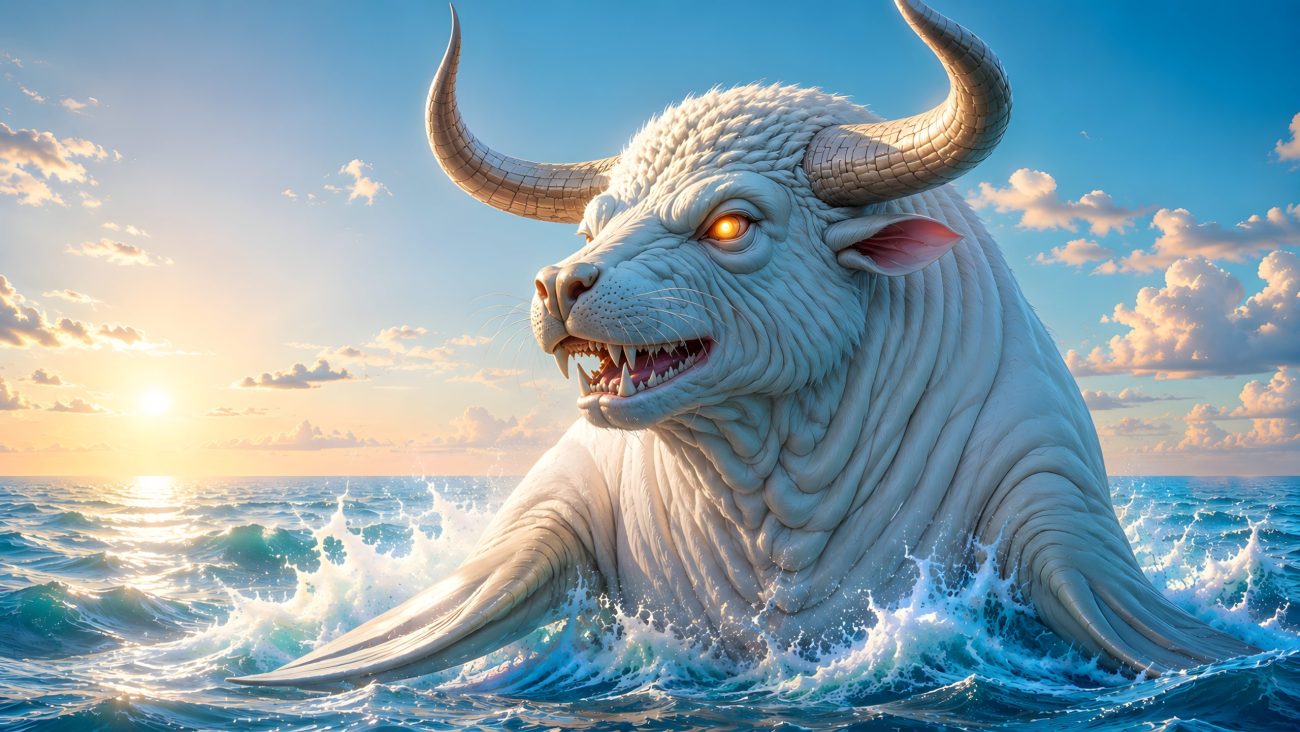
After Minos became king of Crete, he prayed to Poseidon for a sign of divine favor. The god sent a white bull, which Minos was meant to sacrifice, but he kept it instead. As punishment, Poseidon caused Pasiphaë to fall in love with the bull. With the help of Daedalus, she entered a wooden cow and mated with it, giving birth to Asterius, called the Minotaur. The creature grew large and ferocious and fed on humans. Minos, following an oracle, had Daedalus build a labyrinth to contain it.

After the death of Minos’s son Androgeus, Athens was forced to send seven youths and seven maidens as tribute to be devoured by the Minotaur. When the time came again, Theseus volunteered to go. In Crete, Ariadne helped him by giving him a thread to navigate the labyrinth. Theseus entered, found the Minotaur, and killed it. He then used the thread to escape and led the others out.


Sources

Theoi Project contributors. (n.d.). Minotauros (Minotaur). In Theoi Greek Mythology, from https://www.theoi.com/Ther/Minotauros.html

Wikipedia contributors. (n.d.). Minotaur – Creation myth. In Wikipedia, from https://en.wikipedia.org/wiki/Minotaur#Creation_myth


Cerberus

Tradition / Region: Greek Mythology
Alternate Names: Kerberos
Category: Dog


The Myth

Cerberus is the monstrous hound who guards the gates of the underworld, preventing the dead from escaping and the living from entering without permission. He is the offspring of the fearsome beings Typhon and Echidna, and brother to other dreadful creatures such as the Hydra, Orthrus, and the Chimera.

Descriptions of Cerberus vary widely. In the earliest tales he was said to have many heads — fifty, or even a hundred. Later tradition most often gives him three dog heads, though he is also described with serpent tails, snakes writhing from his body, or a mane made of serpents. His eyes were said to flash fire, his hearing was keen, and he fed on raw flesh.

Cerberus’ chief role was to stand watch at the entrance to Hades, terrifying any who approached. Yet he appears in myth most famously during the final labor of Heracles.

King Eurystheus commanded Heracles to descend into the underworld and bring Cerberus back alive — a task meant to be impossible. Before descending, Heracles was initiated into sacred rites that prepared him to walk among the dead. Guided by Hermes and aided by Athena, he entered the realm of Hades through a cavern in the earth.

There he encountered the imprisoned heroes Theseus and Pirithous, and in some tellings freed at least one of them. Then Heracles approached Hades and asked permission to take Cerberus. The god agreed on one condition: Heracles must subdue the beast without using iron weapons.

Heracles seized the monster with his bare strength, shielding himself with the lion skin he wore. After a violent struggle he forced Cerberus into submission, chained him, and dragged him up from the world of the dead.

When Cerberus first emerged into the sunlight, the sight drove him into a frenzy. Some say his foam or bile fell upon the earth and gave rise to poisonous plants. Heracles carried the beast across the land and displayed it before Eurystheus, proving the labor complete.

Once the task was fulfilled, Cerberus was returned to his post at the gates of the underworld, where he remains, the eternal watcher between the realms of the living and the dead.


Sources

Wikipedia contributors. (n.d.). Cerberus. In Wikipedia, from https://en.wikipedia.org/wiki/Cerberus


Orthrus

Tradition / Region: Greek Mythology
Alternate Names: Orthos, Orthus
Category: Dog


The Myth

Orthrus was a monstrous two-headed dog who guarded the cattle of the giant Geryon in the far western land of Erytheia.

He was born of the terrible union of Echidna and Typhon, and was the brother of the fearsome Cerberus, the hound of the underworld. Like his kin, Orthrus was no ordinary beast but a powerful guardian set to protect what was entrusted to him.

Together with the herdsman Eurytion, he watched over Geryon’s famous red cattle on the distant island at the edge of the world, where the sun was said to set into the sea.

When Heracles came to claim the cattle as part of his labors, Orthrus was the first to confront him. The hero struck down the two-headed hound, killing it before facing the herdsman and finally the giant himself. With the guardians defeated, Heracles drove the cattle away and completed the task set before him.

Some later stories gave Orthrus an even darker legacy, saying that he fathered terrible creatures of his own, including the Sphinx and the Nemean Lion, though the tale differs on who their mother was.

Thus Orthrus was remembered as one of the great guardian beasts of myth — a two-headed hound of the western edge of the world, born of monsters and slain by a hero.


Sources

Wikipedia contributors. (n.d.). Orthrus. In Wikipedia, from https://en.wikipedia.org/wiki/Orthrus


Laelaps

Tradition / Region: Greek Mythology
Alternate Names:
Category: Dog


The Myth

Laelaps was a magical hunting dog that never failed to catch its prey.

The hound was said to have been given by Zeus as a gift, passing through the hands of kings and heroes until it came to the Athenian princess Procris. Through her it came into the possession of her husband Cephalus, who used it in his hunts.

At that time, a monstrous fox ravaged the land — the Teumessian fox, a creature destined never to be caught. Cephalus set Laelaps upon it, for the dog was fated always to succeed in the hunt.

Thus the two creatures met: one that must always catch its prey, and one that could never be captured.

They chased each other endlessly until Zeus intervened, troubled by the contradiction of their destinies. To end the impossible hunt, he turned both animals into stone and set them in the heavens, where they remained forever among the stars.

Thus Laelaps was remembered as the perfect hound — a dog whose speed and fate ensured no quarry could escape, yet whose greatest hunt ended in the sky itself.


Sources

Wikipedia contributors. (n.d.). Laelaps (mythology). In Wikipedia, from https://en.wikipedia.org/wiki/Laelaps_(mythology)


Kuon Khryseos

Tradition / Region: Greek Mythology
Alternate Names: Golden Dog
Category: Dog


The Myth

The Kuon Khryseos, the Golden Dog, was a sacred animal set to guard the infant Zeus.

When the god was hidden in a cave on the island of Crete to protect him from his father Kronos, he was nursed by the divine goat Amaltheia. Rhea, wishing to keep both child and nurse safe, appointed a golden dog to stand watch over them. The creature guarded the cave and the sacred place where Zeus was raised.

After Zeus grew to adulthood and overthrew the Titans, he honored those who had protected him. Amaltheia was placed among the stars, and the Golden Dog was also set in the heavens, remembered as a constellation so that its watch would never end.

In another tale, the dog was later stolen. A man named Pandareos took the sacred animal and carried it away, eventually giving it to Tantalos to hide. When the dog was demanded back, Tantalos denied ever having received it. Zeus, angered by the theft and the false oath, punished both men — Pandareos was transformed into stone, and Tantalos was struck down for his lie.

Because of these stories, the Golden Dog was remembered as a divine guardian, tied to the infancy of Zeus, to sacred oaths, and to the stars themselves. In some traditions it was even linked with the magical hound Lailaps, another swift and wondrous dog connected to the heroes of Crete.

Thus the Kuon Khryseos lived on in myth as the shining hound of Zeus — protector of the god in childhood and a watcher placed forever in the heavens.


Sources

Theoi Project. (n.d.). Kuon Khryseos. From https://www.theoi.com/Ther/KuonKhryseos.html


Maera

Tradition / Region: Greek Mythology
Alternate Names: Maira
Category: Dog


The Myth

Maera was the faithful hound of Erigone, daughter of Icarius of Athens.

Icarius was a man favored by the god Dionysus, who taught him the art of making wine. Carrying this new gift, Icarius traveled the countryside and shared the drink with shepherds he met along the way. But the men, unaccustomed to wine, soon became drunk and confused. Believing that Icarius had poisoned them, they killed him and buried his body.

When Icarius did not return, his daughter Erigone set out to search for him. She was accompanied by Maera, who guided her on the journey. The dog followed the trail until at last he led her to the place where her father lay buried.

When Erigone discovered the grave, she was overcome with grief. Unable to bear the loss, she fastened a noose and hanged herself from a tree. Seeing his mistress dead, Maera too was seized by sorrow and threw himself from a cliff.

When Dionysus learned what had happened, he was filled with anger at the injustice done to Icarius and the fate of his daughter. He sent a madness upon the women of Athens. One after another, unmarried girls were driven to hang themselves, as Erigone had done. The city fell into terror, and the deaths did not cease.

At last the Athenians sought to appease the god. They established rites in honor of Icarius and Erigone, remembering their suffering and giving them due reverence. Only then did the plague lift.

In memory of them, the gods placed the three together in the heavens. Icarius became the constellation Boötes, Erigone became Virgo, and Maera was set among the stars as the bright star Procyon, where the faithful dog still shines beside them.


Sources

Wikipedia contributors. (n.d.). Maera (hound). In Wikipedia, from https://en.wikipedia.org/wiki/Maera_(hound)