Kobalos

Tradition / Region: Greek mythology
Alternate Names: Kobaloi
Category: Gnome


The Myth

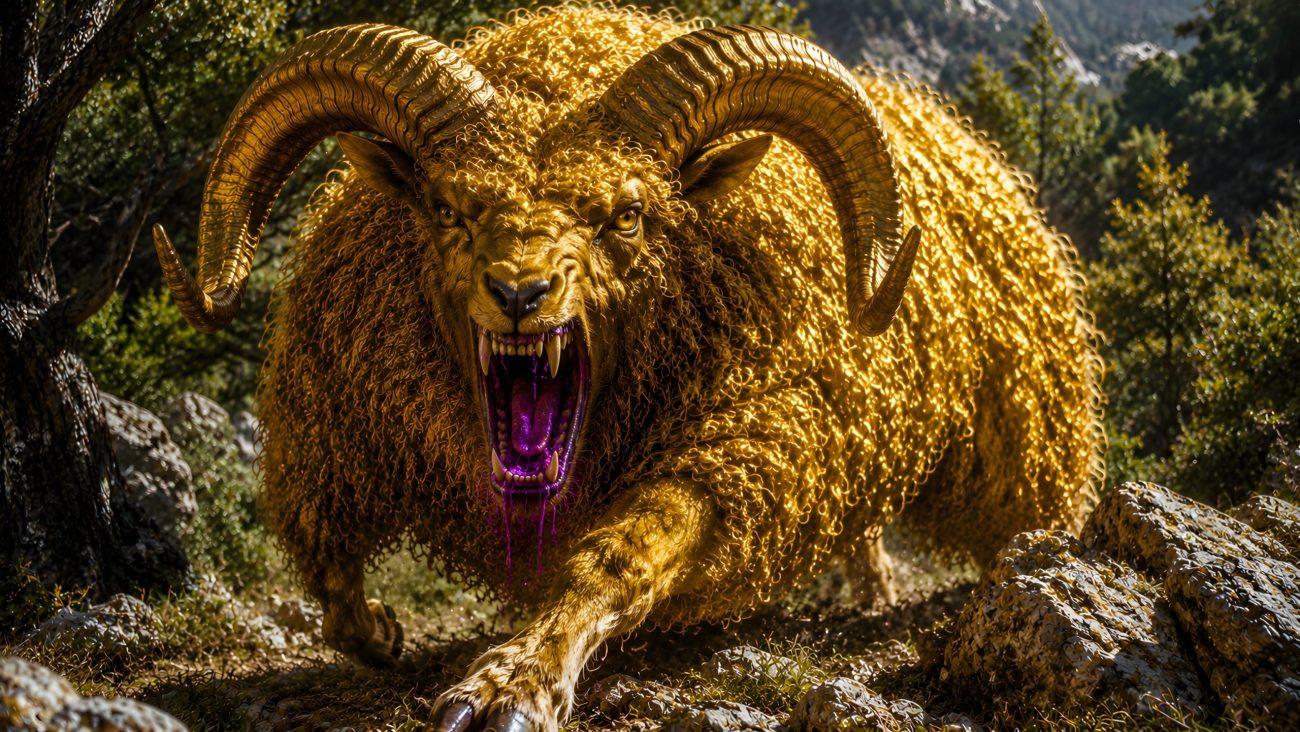
In the old Greek tales, the kobaloi were restless little sprites who delighted in mischief. They lurked along lonely roads, rocky places, and wild edges of the land, where they startled travelers, stole unattended goods, and played cruel jokes simply for the pleasure of it. To encounter them was not usually deadly, but it was rarely pleasant. They frightened children, confused wanderers, and mocked human seriousness with impudent laughter.

The kobaloi were closely tied to Dionysus, god of wine, ecstasy, and chaos. Like his other followers, they embodied disorder and excess. They could change their shape, sometimes disguising themselves in strange or deceptive forms, and were known to imitate divine or monstrous appearances to unsettle mortals. Their tricks echoed Dionysus’ own nature: playful, mocking, and dangerous when underestimated.

One well-known tale tells how the kobaloi once robbed Herakles while he slept. When he awoke and discovered the theft, he hunted them down and captured them. Yet instead of crushing them, Herakles burst into laughter at their ridiculous antics. Amused by their cleverness and audacity, he spared their lives. In some versions of the story, he even gave them away as a gift to Queen Omphale of Lydia, treating them more like troublesome pets than true enemies.

Because of their love of deception and fear-making, parents warned children about the kobaloi, saying they would come for those who misbehaved or wandered too far alone. In this way, the kobaloi lived on not only as spirits of prank and trickery, but as cautionary figures—small, mocking reminders that the world was full of unseen beings who delighted in turning order upside down.


Sources

Wikipedia contributors. (n.d.). Kobalos. In Wikipedia, The Free Encyclopedia, from https://en.wikipedia.org/wiki/Kobalos


Abyzou

Tradition / Region: Mesopotamian, Greek, Byzantine
Alternate Names: Abizou, Obizuth, Obyzouth, Byzou, Gylou, Gello, Alabasandria, Anabardalea, and countless others
Category: Demon, Snake, Hybrid


The Myth

From the deepest darkness before the world was formed, Abyzou came forth. She rose from the primeval waters, from the abyss that existed before heaven and earth were divided. In that endless sea she was born barren, and from her barrenness grew envy without limit.

Abyzou wandered the world without rest or sleep. She moved silently through night and shadow, drawn to the cries of women in labor and the breath of newborn children. She was said to feel no mercy, for what she desired most had been denied her forever. Because she could not give life, she sought to take it.

When a woman lay ready to give birth, Abyzou would draw near. If she was not driven away, she strangled infants in their cradles, stole them in the night, or brought sickness upon them so that they wasted away. She whispered illness into bodies, closing throats, blinding eyes, twisting minds, and filling flesh with pain. Wherever she passed, suffering followed.

Abyzou did not walk openly among mortals. Her form was half-seen: a greenish, gleaming face framed by writhing, serpent-like hair, while the rest of her body dissolved into darkness. Sometimes she appeared with the scales or tail of a fish or serpent, for she belonged to the ancient waters. She claimed to possess countless names and shapes, changing them constantly so that none might easily command her.

In ancient times, King Solomon encountered her while binding demons to build the Temple. When she was brought before him in chains, she confessed her deeds freely, boasting that she never slept and that each night she sought children to destroy. Solomon ordered her bound by her own hair and displayed before the Temple, so that all might see the demon who preyed upon mothers and infants.

Yet Abyzou could never be destroyed. She could only be driven away.

Thus people learned to defend themselves through sacred names, seals, and charms. Her name was written on amulets, spoken aloud in childbirth, carved into metal and stone. When she was named correctly, she was forced to flee. When the names of her enemies—angels, saints, or divine protectors—were invoked, she recoiled in fury and envy.

In Egypt she was known as Alabasandria. In Byzantium she was Gylou or Gello. In each land she took a new name, but her hunger remained the same. Riders trampled her beneath their horses in sacred images. She was whipped, bound, cursed, and cast out in spells, yet always returned when vigilance failed.

Only one thing could stop her: knowledge of her names. When a woman about to give birth wore an amulet bearing those names, Abyzou was powerless. Forced by oath, she would turn away and retreat to the dark waters from which she had come.

And so Abyzou still wanders the edges of night, driven by envy, searching for life she can never possess—an ancient shadow born from the abyss, feared wherever children are born.


Gallery


Sources

Wikipedia contributors. (n.d.). Abyzou. In Wikipedia, The Free Encyclopedia, from https://en.wikipedia.org/wiki/Abyzou


Interpretive Lenses

Religious Readings
  • Christian Ascetic Deep Dive
Philosophical Readings
  • Nietzschean Deep Dive
Psychological Readings
  • Jungian Deep Dive
Esoteric Deep Dive
  • Hermetic Deep Dive
Political / Social Readings
  • Marxist Deep Dive
Other
  • How to Invite The Abyzou

Epimetheus

Tradition / Region: Greek mythology
Alternate Names: Afterthought, Late Counsel
Category: Titan god


The Myth

Epimetheus was one of the Titan sons of Iapetos, brother to Prometheus, Atlas, and Menoitios. Where Prometheus was clever and foresighted, Epimetheus was slow to consider consequences, acting first and understanding only afterward. Because of this nature, the gods named him Afterthought.

When the time came for the mortal world to be filled with life, the gods entrusted Prometheus and Epimetheus with the task. Epimetheus asked that he be allowed to distribute the gifts of survival himself, while Prometheus would later inspect his work. Prometheus agreed.

Epimetheus moved eagerly among the creatures of the earth. To some he gave great strength, to others speed. He armed some with claws, tusks, and horns, and gave thick hides and fur to those who would face cold and heat. Birds received wings, beasts received burrows, hooves, shells, or venom. To preserve balance, he ensured that prey multiplied quickly while predators were few. By the time he had finished, every animal was well equipped for life.

Only then did Epimetheus come to mankind.

And he found that he had nothing left.

Humans stood naked and unarmed, without claws or fur, without swiftness or strength, unable to defend themselves from beasts or the harshness of the world. Epimetheus was struck with terror at what he had done. He could not undo his mistake, and the appointed hour for humanity’s emergence had already arrived.

When Prometheus came to inspect the work, he saw at once the disaster. To save mankind, he climbed secretly into the workshops of the gods and stole fire, along with the arts of metalwork, craft, and skill. With these gifts, humans learned to build, to cook, to forge weapons, and to survive.

But Zeus saw the theft, and his anger was terrible.

As punishment, Zeus devised a slow and beautiful ruin for mankind. He commanded Hephaistos to shape a woman from earth, and Athena clothed her in fine garments and taught her weaving. Aphrodite gave her beauty and longing, Hermes placed cunning words and deception in her heart, and the other gods each bestowed a gift. Because of this, she was named Pandora, the All-Gifted.

Zeus sent Pandora to Epimetheus as a gift.

Prometheus warned his brother again and again: never accept gifts from Zeus. But Epimetheus did not heed him. Captivated by Pandora’s beauty, he welcomed her into his house and took her as his wife.

Pandora carried with her a sealed jar, entrusted to her by the gods. One day, moved by curiosity placed in her by divine design, she lifted the lid. From the jar burst sickness, pain, hunger, toil, madness, old age, and every misery that had never before existed. They spread across the earth and entered the lives of all mortals.

Only one thing remained inside the jar when Pandora closed it again.

Hope.

From that day onward, humans lived with suffering, yet were not entirely without comfort.

Epimetheus understood his error only after the evils had already escaped. He had failed mankind twice: first by leaving them helpless, and again by welcoming the instrument of their sorrow. Because of him, Prometheus was later chained and punished, and humanity inherited a world of labor and grief.

The poets said that Epimetheus was the father of Excuse, for he always understood too late. And so his name endured as a warning: wisdom that comes only afterward is no wisdom at all.


Sources

Theoi.com contributors. (n.d.). Epimetheus. In Theoi Greek Mythology, from https://www.theoi.com/Titan/TitanEpimetheus.html


Alcyone

Tradition / Region: Greek Mythology
Alternate Names: Halcyone
Category: Bird


The Myth

Alcyone is remembered as a woman whose grief reshaped the sea itself. When her husband was lost to a violent storm, she threw herself into the waves in despair. Moved by her devotion and sorrow, the gods transformed her into a seabird—most often identified as the kingfisher—so that she might remain forever bound to the waters that had taken him.

In her new form, Alcyone lays her eggs upon the open sea. During this sacred time, the winds are stilled and the waves grow calm, allowing her fragile nest to float safely upon the surface. These days of quiet waters became known as the halcyon days, a brief and precious interval when the sea abandons its fury and rests in perfect balance.

The myth tells that Alcyone does not command the sea through strength or authority. Instead, her constancy and patience bring harmony where chaos once ruled. The calm she creates is temporary, but absolute—a pause in the natural order granted by devotion rather than force.

Thus Alcyone endures as a symbol of steadfast love and cosmic balance. Her story affirms that even the wildest forces of the world may be softened, if only for a time, by loyalty, endurance, and grief transformed into quiet renewal.


Source


Unicorn

Tradition / Region: Greek Mythology
Alternate Names: Monokeros
Category: Horse


The Myth

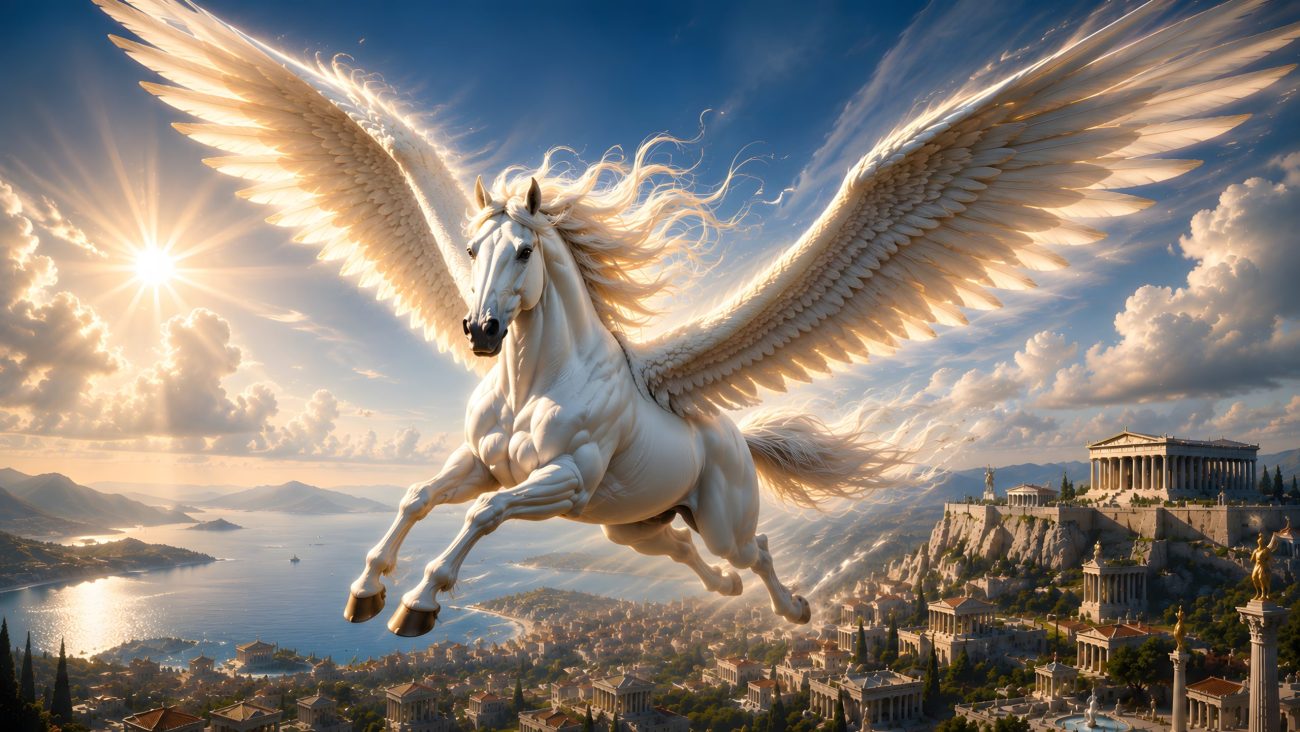
In ancient Greek accounts, the unicorn was spoken of as a rare and formidable creature dwelling in distant forests and mountains beyond the familiar world. It resembled a powerful horse or goat-like beast, marked by a single long horn rising from the center of its forehead. Swift, strong, and fiercely independent, it could not be overtaken by hunters nor subdued by force.

The unicorn was said to possess extraordinary strength. When pursued, it could leap from great heights, landing upon its horn without injury, and vanish into rough terrain where no human could follow. Its body was lean and fast, its senses sharp, and its temperament untamable. No net or trap could hold it, and weapons were useless against its speed.

Only one method was said to succeed in capturing a unicorn. If a maiden of pure character was left alone in the forest, the creature would approach her without fear. Trusting her presence, it would rest its head in her lap, allowing hunters to seize it. Without such purity, the unicorn would never come near, fleeing at the first hint of deceit or threat.

The unicorn’s horn was believed to hold powerful properties. It could cleanse poisoned water, neutralize venom, and protect against corruption. Because of this, kings and physicians prized the horn above all treasures, though few ever possessed one. Its power was tied to the creature itself, and the horn was never obtained without consequence.

Though later traditions layered the unicorn with symbolism, in the older Greek imagination it remained a wild and dangerous being. It was neither gentle nor benevolent, but bound to strict conditions of approach. To encounter the unicorn was to face a creature that tested restraint, intention, and respect, existing beyond human command and beyond the reach of ordinary ambition.


Katakana

Tradition / Region: Greek Mythology
Alternate Names:
Category: Bat, Vampire


The Myth

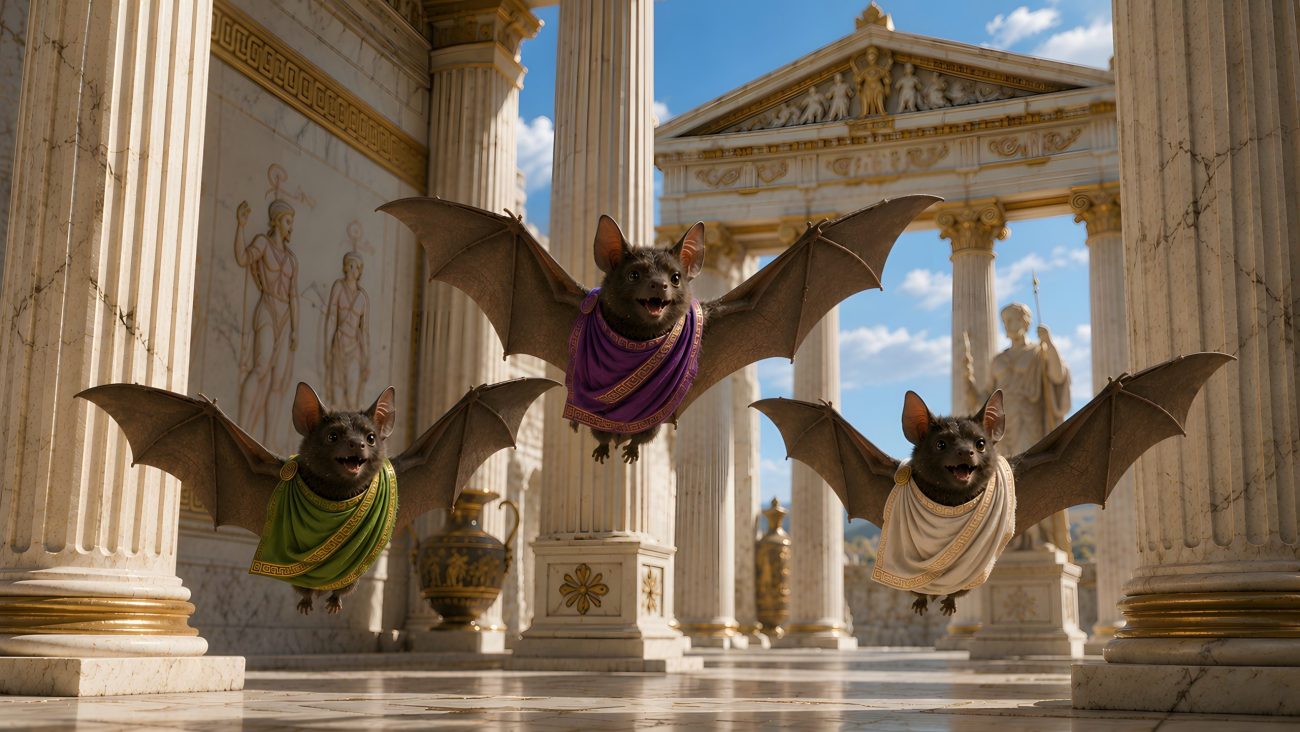
On the Greek islands of Crete and Rhodes, people tell of a vampire known as the katakana. It is believed that certain dead do not remain at rest. In older times, Cretans feared that if a person were buried in loose, unconstrained earth, the dead might rise again as a katakana. Because of this danger, holy soil was brought from sacred places, including the Holy Sepulcher, and sprinkled over cemeteries to prevent the dead from returning.

The katakana was said to arise from the bodies of suicides, evil people, or those who had been excommunicated from the church. After death, such individuals could transform into vampires, retaining a distorted likeness of their former selves. The katakana was described as constantly smiling, its teeth always visible, giving it a chilling and unnatural expression.

Unlike some other undead beings, the katakana did not rely solely on biting to create others of its kind. Instead, it was said to spit a burning, bloody discharge at people. If this sticky substance struck its target, the victim would in time become a katakana as well, transformed into a vampire like the one that cursed them.

People believed the katakana could be driven away temporarily by gunshots, but destroying it required strict measures. To kill it permanently, the vampire had to be decapitated, or at least struck in the head with a sharp-edged weapon. Its severed head was then boiled in vinegar, and its nails were burned. Another method involved trapping the katakana in a container filled with salt water, which could immobilize it.

These actions had to be carried out within the first forty days after the vampire’s rise. If this time passed, the katakana was believed to become indestructible, immune to all attempts to destroy it. Because of this, vigilance and speed were considered essential when signs of a katakana appeared.

Beliefs about the katakana were understood as a local island form of broader Greek vampire traditions, yet its distinctive grin, burning spit, and specific methods of destruction set it apart as one of the most feared undead beings of the Aegean islands.


Keledones

Tradition / Region: Greek Mythology
Alternate Names: Celedones, Khryseiai Keledones (“Golden Charmers”)
Category: Object


The Myth

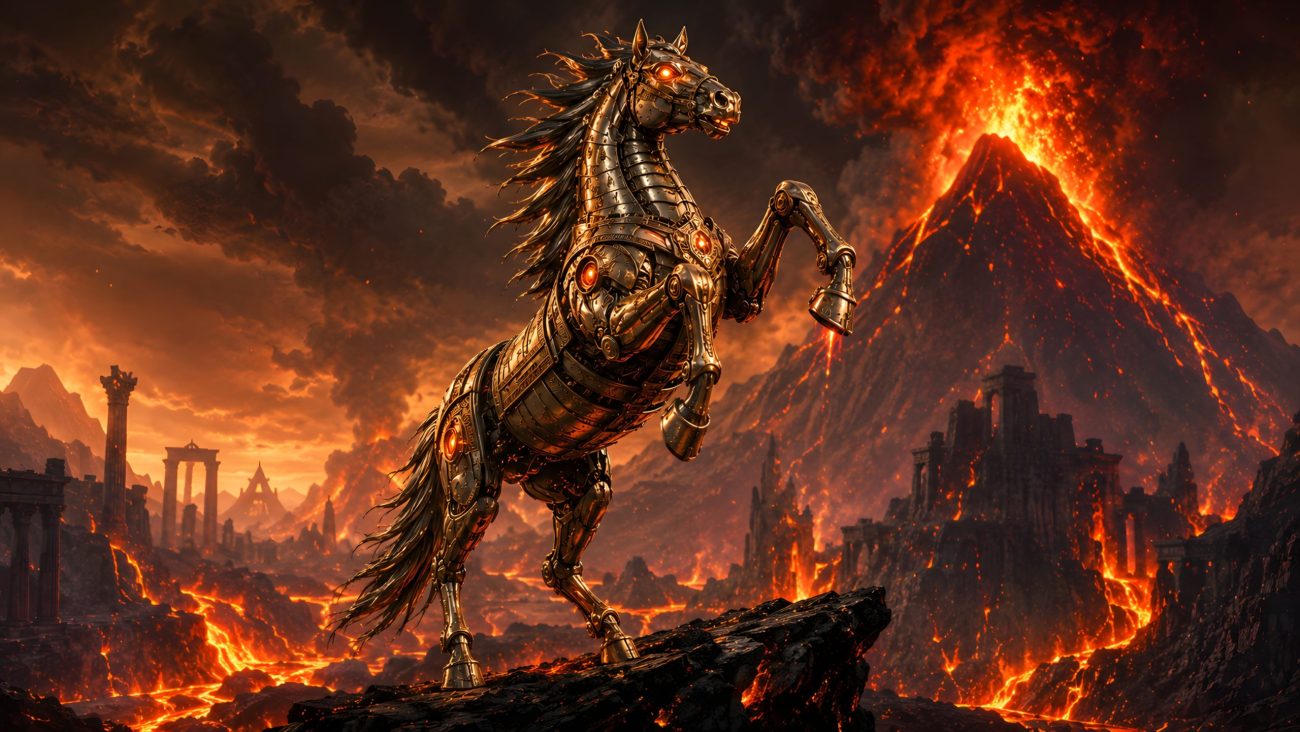
In the age when gods still shaped wonders with their own hands, the divine smith Hephaistos forged a set of miraculous beings for the temple of Apollon at Delphi. These were the Keledones, golden singers crafted not of flesh, but of shining metal, alive with sound and enchantment.

The Keledones were made entirely of gold and were said to sing with voices of supernatural power. Some described them as beautiful maidens, others as wryneck birds, and still others as strange bird-women, reminiscent of the Sirens. However they appeared, their song possessed a soothing and bewitching force, capable of charming all who heard it.

They were placed high upon the temple, above the pediment, where their voices rang out continuously. There, the Golden Charmers sang in honor of Apollon, their music filling the sacred space with an otherworldly harmony. Ancient poets spoke of them as wonders beyond human craft, comparing their song to that of the Sirens, though fashioned not to destroy but to enthrall.

Some later writers questioned whether such beings truly existed or whether they were poetic embellishments inspired by earlier myths. Yet the tradition endured: that once, at Delphi, golden singers adorned the god’s temple, their voices echoing across stone and air, forged by divine hands and animated by sacred song.

Thus the Keledones remained in memory as marvels of divine artifice — not born, but made; not living, yet singing — eternal symbols of beauty, craft, and the dangerous power of enchanted sound.