Tradition / Region: Greek Mythology, Macedonian Mythology
Alternative names: Vrykolakas, Vourkolakas, Vampyras, Vompiras
Category: Vampire
The Myth
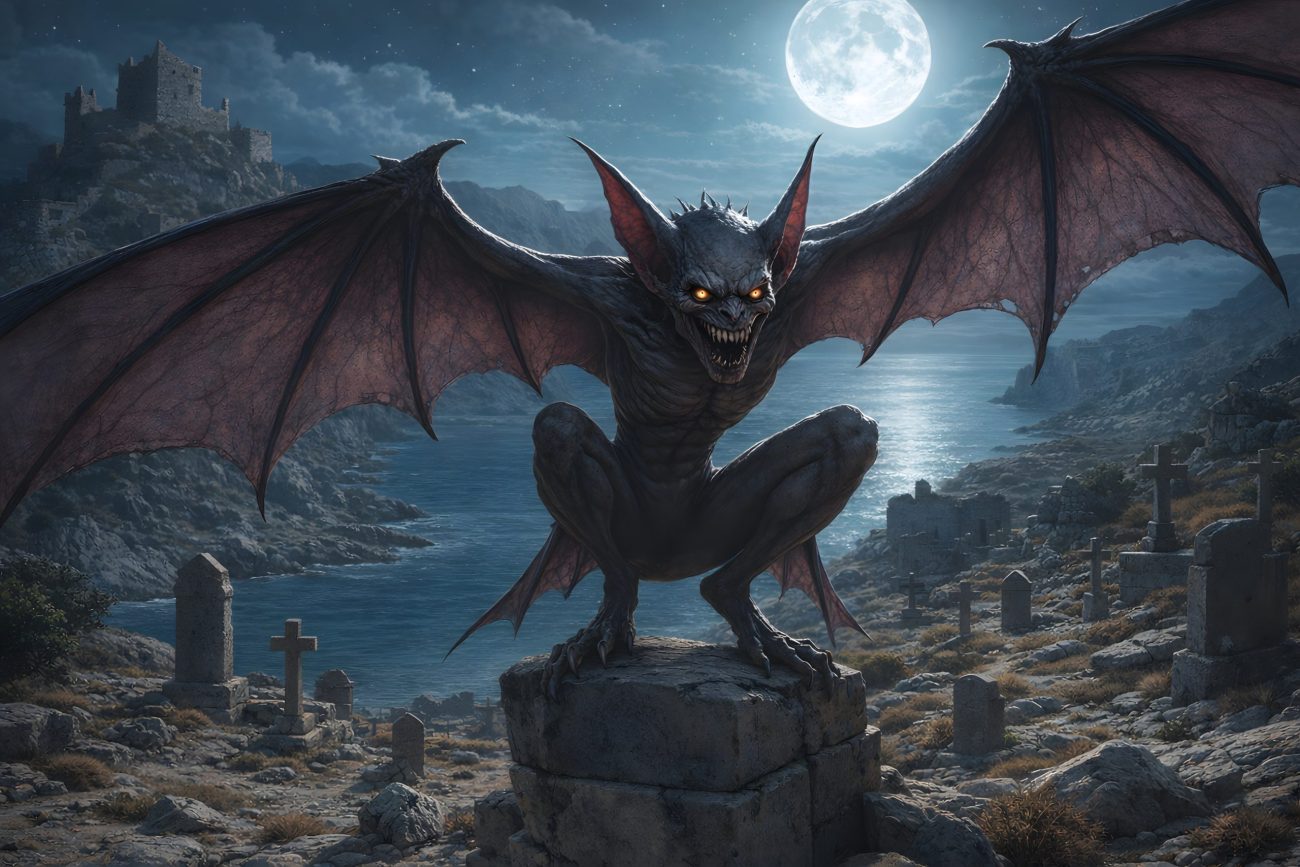
The Vrykolakas is one of the most feared undead beings in Balkan folklore — a corpse that rises from the grave at night to wander among the living. In Macedonian and Greek traditions it was believed to strangle people, drink the blood of humans and animals, spread disease, damage homes and tools, and terrify entire villages.
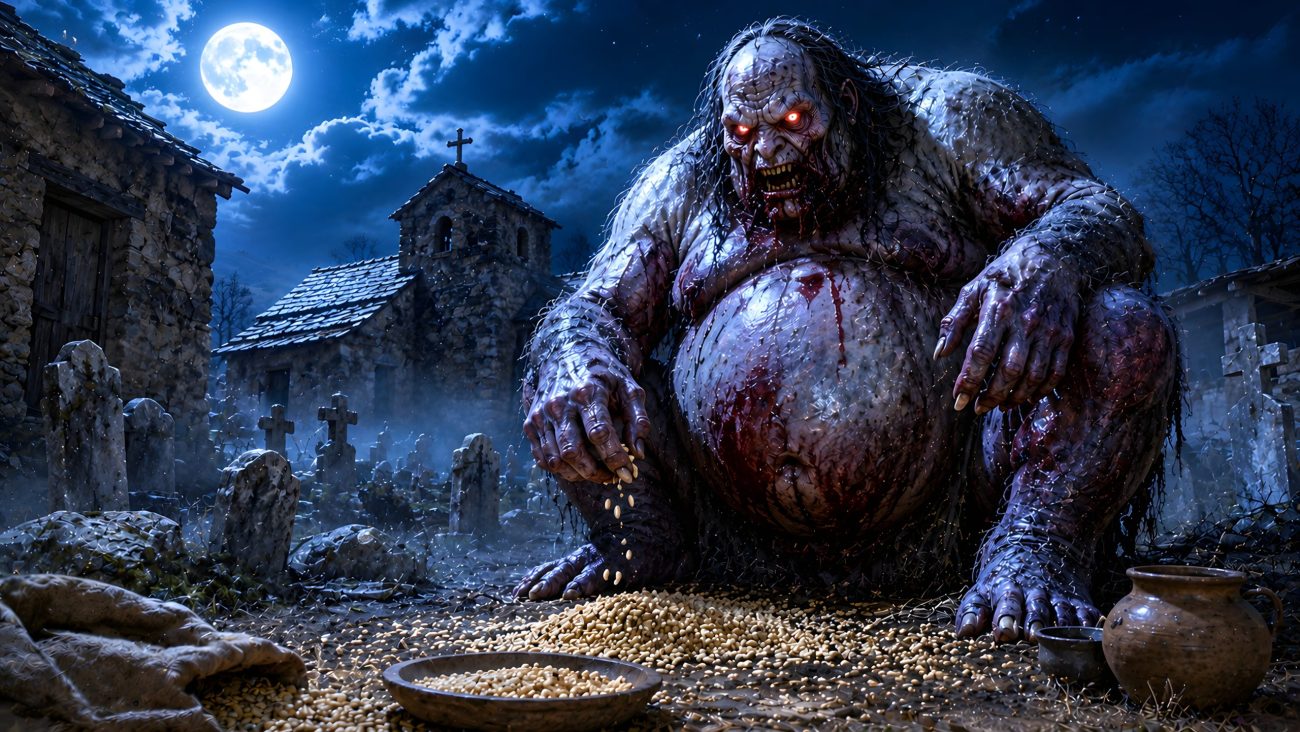
The creature was described as a swollen animated corpse, bloated like a skin filled with blood, with burning eyes glowing like live coals in the dark. Unlike a ghost or spirit, the Vrykolakas possessed a physical body and walked the earth during the night before returning to its grave before dawn.
People believed someone could become a Vrykolakas for several reasons. A corpse found undecayed or lying face-down in the grave was considered a sign of vampirism. Another dangerous omen was a cat jumping over a dead body before burial. Because of this, relatives watched corpses throughout the night to prevent animals from crossing them. If a cat touched the body, large needles were immediately driven through the corpse to stop the transformation.
When a suspected vampire was discovered, horrifying rituals were performed. Corpses were dug up, scalded with boiling oil, pierced through the stomach or navel with iron nails, and nailed into the grave. Sometimes millet or mustard seed was scattered over the tomb because people believed the Vrykolakas would be forced to stop and count every grain before continuing its wanderings. Dawn or the first rooster crow would then force it back underground.
The Vrykolakas feared iron, nails, thorns, fire, and sharp objects. Doors were barricaded with thorn bushes and rooftops covered with mustard seed to keep it away. In some regions stakes or iron spikes were driven through the body, while elsewhere the corpse was burned entirely.
The superstition also extended to animals. Some traditions believed in vampire-like spirits that attacked cattle and sheep at night, riding on their backs and drinking their blood until the animals weakened or died. Wandering dervishes and folk-magicians claimed they could hunt and destroy these creature.
Certain people were believed to possess special power over Vrykolakas. Those born on a Saturday, called Sabbatarians, were said to see ghosts and vampires invisible to ordinary people. Stories tell of Sabbatarians trapping Vrykolakas inside barns, forcing them to count piles of grain before pinning them to walls with iron nails.
The Vrykolakas wandered only during the deepest hours of the night, usually from before midnight until the first crow of the rooster. At dawn it vanished back into the earth, leaving behind fear, sickness, and stories of the dead walking among the living.
Sources
Abbott, G. F. (1903). Macedonian folklore. Cambridge: Cambridge University Press.