Vrykolakas

Tradition / Region: Greek Mythology, Macedonian Mythology
Alternative names: Vrykolakas, Vourkolakas, Vampyras, Vompiras
Category: Vampire


The Myth

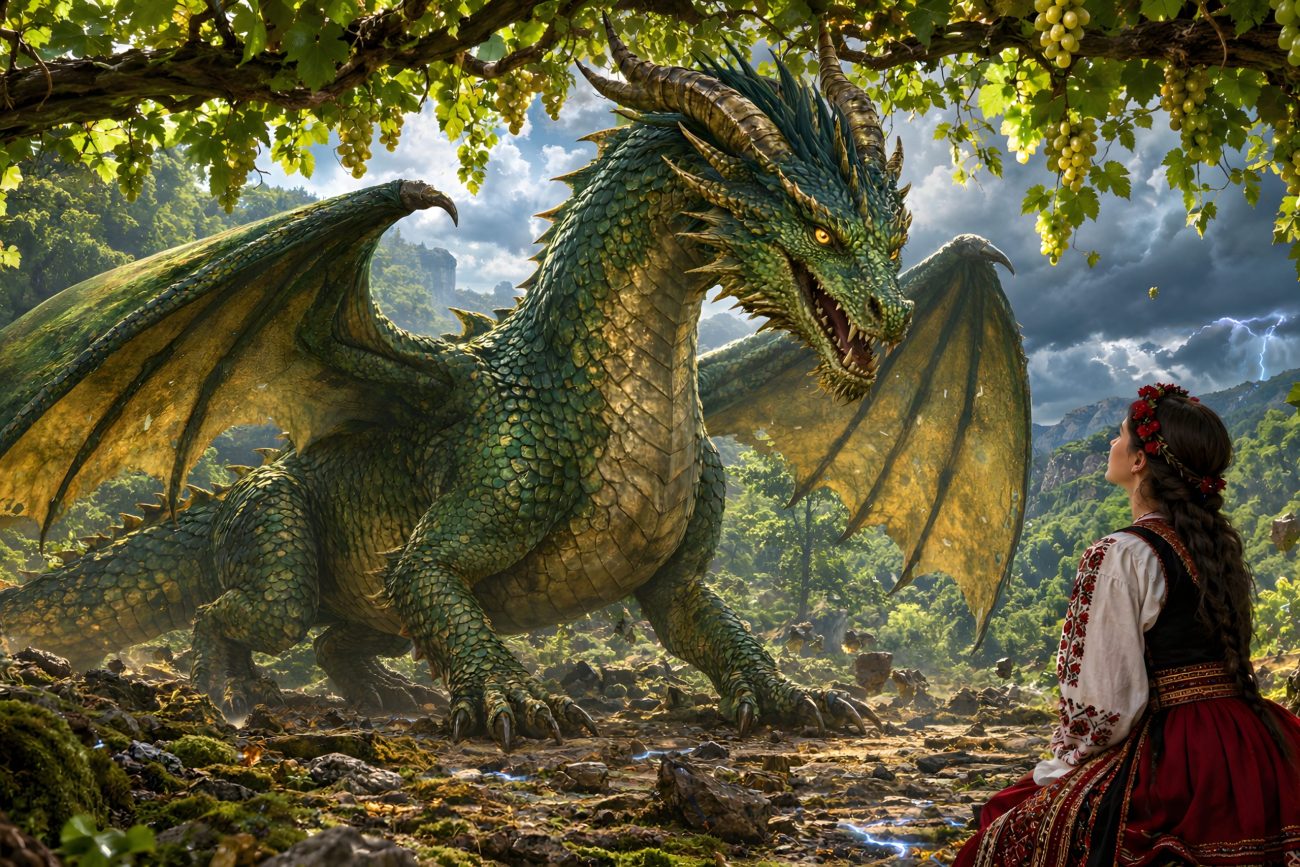
The Vrykolakas is one of the most feared undead beings in Balkan folklore — a corpse that rises from the grave at night to wander among the living. In Macedonian and Greek traditions it was believed to strangle people, drink the blood of humans and animals, spread disease, damage homes and tools, and terrify entire villages.

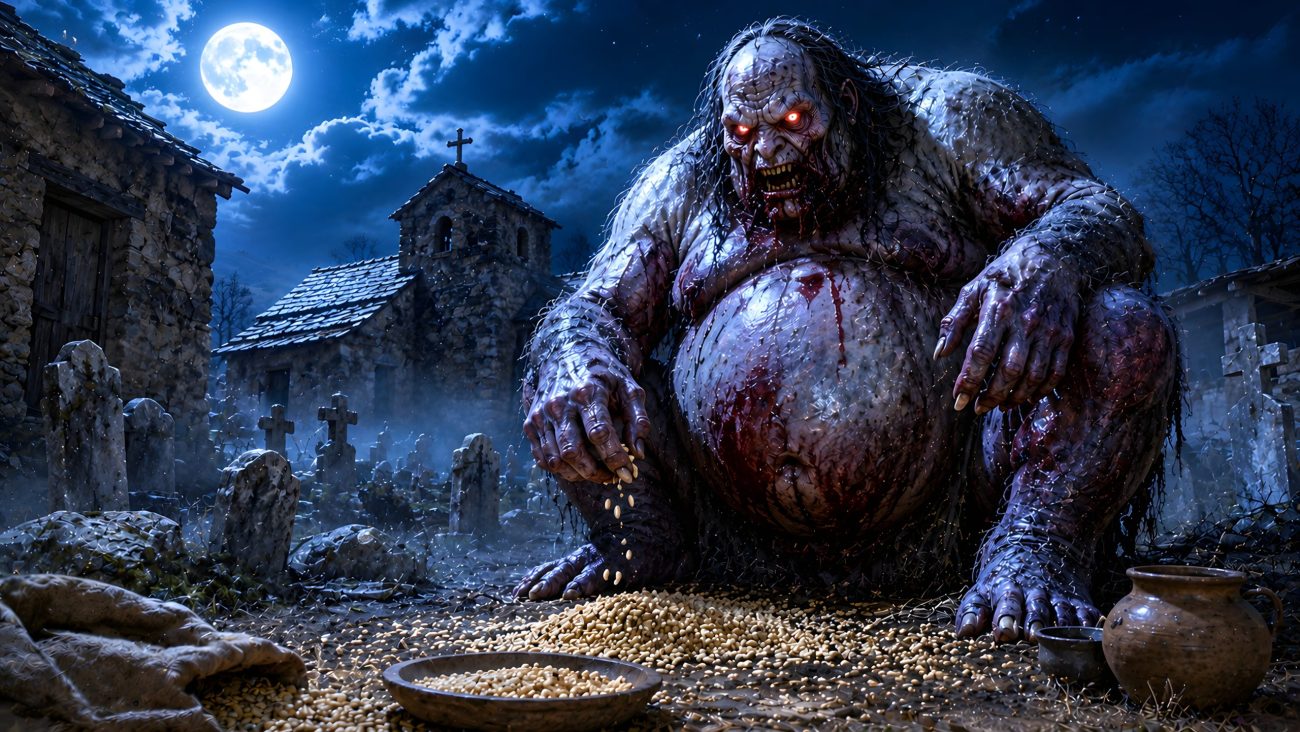
The creature was described as a swollen animated corpse, bloated like a skin filled with blood, with burning eyes glowing like live coals in the dark. Unlike a ghost or spirit, the Vrykolakas possessed a physical body and walked the earth during the night before returning to its grave before dawn.

People believed someone could become a Vrykolakas for several reasons. A corpse found undecayed or lying face-down in the grave was considered a sign of vampirism. Another dangerous omen was a cat jumping over a dead body before burial. Because of this, relatives watched corpses throughout the night to prevent animals from crossing them. If a cat touched the body, large needles were immediately driven through the corpse to stop the transformation.

When a suspected vampire was discovered, horrifying rituals were performed. Corpses were dug up, scalded with boiling oil, pierced through the stomach or navel with iron nails, and nailed into the grave. Sometimes millet or mustard seed was scattered over the tomb because people believed the Vrykolakas would be forced to stop and count every grain before continuing its wanderings. Dawn or the first rooster crow would then force it back underground.

The Vrykolakas feared iron, nails, thorns, fire, and sharp objects. Doors were barricaded with thorn bushes and rooftops covered with mustard seed to keep it away. In some regions stakes or iron spikes were driven through the body, while elsewhere the corpse was burned entirely.

The superstition also extended to animals. Some traditions believed in vampire-like spirits that attacked cattle and sheep at night, riding on their backs and drinking their blood until the animals weakened or died. Wandering dervishes and folk-magicians claimed they could hunt and destroy these creature.

Certain people were believed to possess special power over Vrykolakas. Those born on a Saturday, called Sabbatarians, were said to see ghosts and vampires invisible to ordinary people. Stories tell of Sabbatarians trapping Vrykolakas inside barns, forcing them to count piles of grain before pinning them to walls with iron nails.

The Vrykolakas wandered only during the deepest hours of the night, usually from before midnight until the first crow of the rooster. At dawn it vanished back into the earth, leaving behind fear, sickness, and stories of the dead walking among the living.


Sources

Abbott, G. F. (1903). Macedonian folklore. Cambridge: Cambridge University Press.


Drymiais

Tradition / Region: Macedonian Mythology
Alternative names: Drymiais (Δρύμιαις), Drymmata
Category: Spirit


The Myth

The Drymiais are mysterious supernatural beings connected with the dangerous days at the beginning and end of March and August in Macedonian folklore. They were feared throughout coastal Macedonia and the Aegean islands as invisible forces capable of damaging trees, clothing, crops, water, and even the human body.

The first three days of March and the first three days of August were considered especially dangerous and were called the Days of the Drymiais. In many places the final three days of these months, along with certain Wednesdays and Fridays, were also feared. During these periods people avoided cutting trees or vines because they believed the plants would immediately wither and die. Clothes were not washed because they were thought to decay or rot, and people avoided bathing in the sea because the Drymiais could cause the body to swell or become sick.

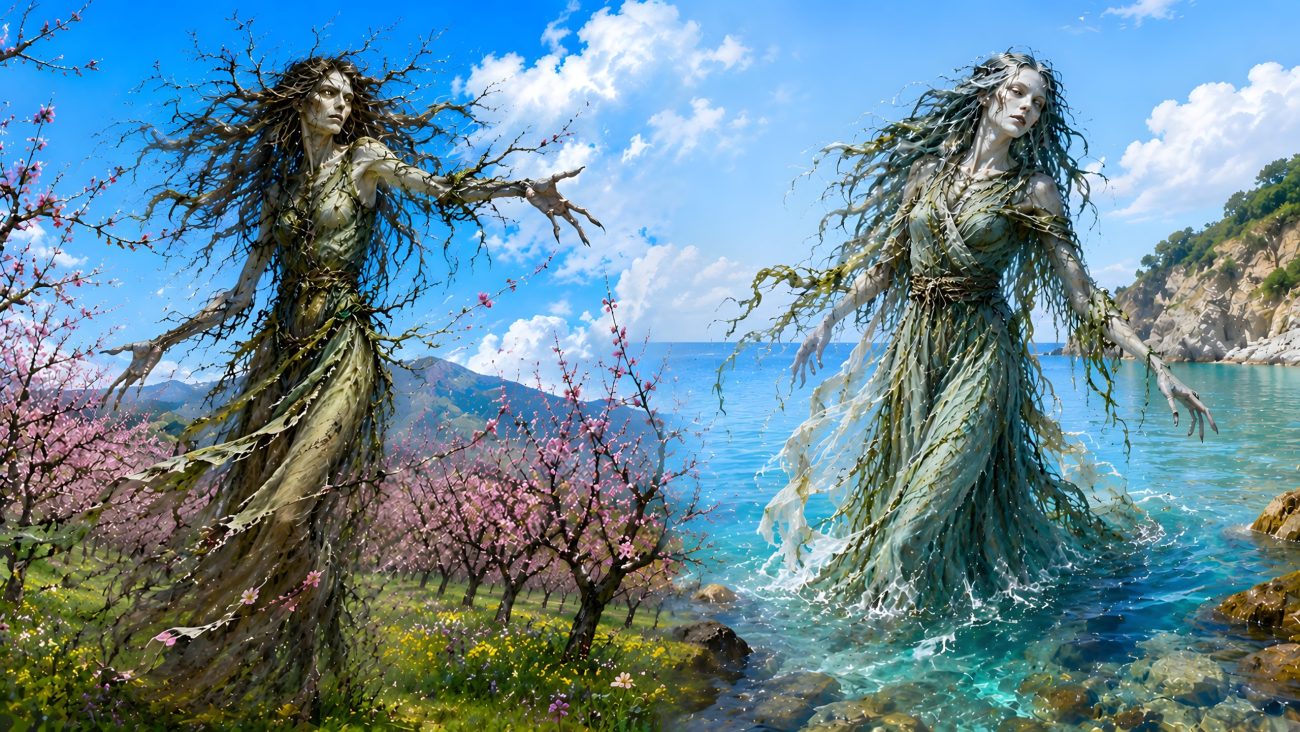
Some traditions imagined the Drymiais as a type of nature spirit related to ancient nymphs. The March Drymiais were associated with forests and trees, while the August Drymiais were linked to water and the sea. Folk sayings reflected this belief:

“August is bad for linen,
And March for trees.”

Another version stated directly:

“The Drymiais of August affect the linen,
And those of March affect the woods.”

Although vague and mysterious, the Drymiais were treated as living supernatural beings rather than simple unlucky dates. This appears in the custom of carrying rusty iron nails while bathing during August. People believed iron protected them from the Drymiais and prevented the spirits from approaching. Similar beliefs throughout European and Middle Eastern folklore held that iron repelled fairies, elves, demons, ghosts, and jinn.

The Drymiais were therefore understood as ancient hostile spirits tied to unstable seasonal transitions — beings of sea, forests, decay, storms, and sickness who became active during the dangerous turning points between seasons.


Sources

Abbott, G. F. (1903). Macedonian folklore. Cambridge: Cambridge University Press.


Karakondzhul

Tradition / Region: Serbian, Macedonian, Bulgarian, Turkish, Albania, Kosovo
Alternative names: Karakondzhal, Karakoncolos
Category: Demon


The Myth

The Karakondzhul is a terrifying winter demon from Balkan and Anatolian folklore that appears during the darkest and coldest days of midwinter. These creatures emerge during the dangerous period between Christmas and Epiphany, especially during severe frosts and the “unbaptized days” of winter when the boundary between the human world and the spirit world was believed to weaken.

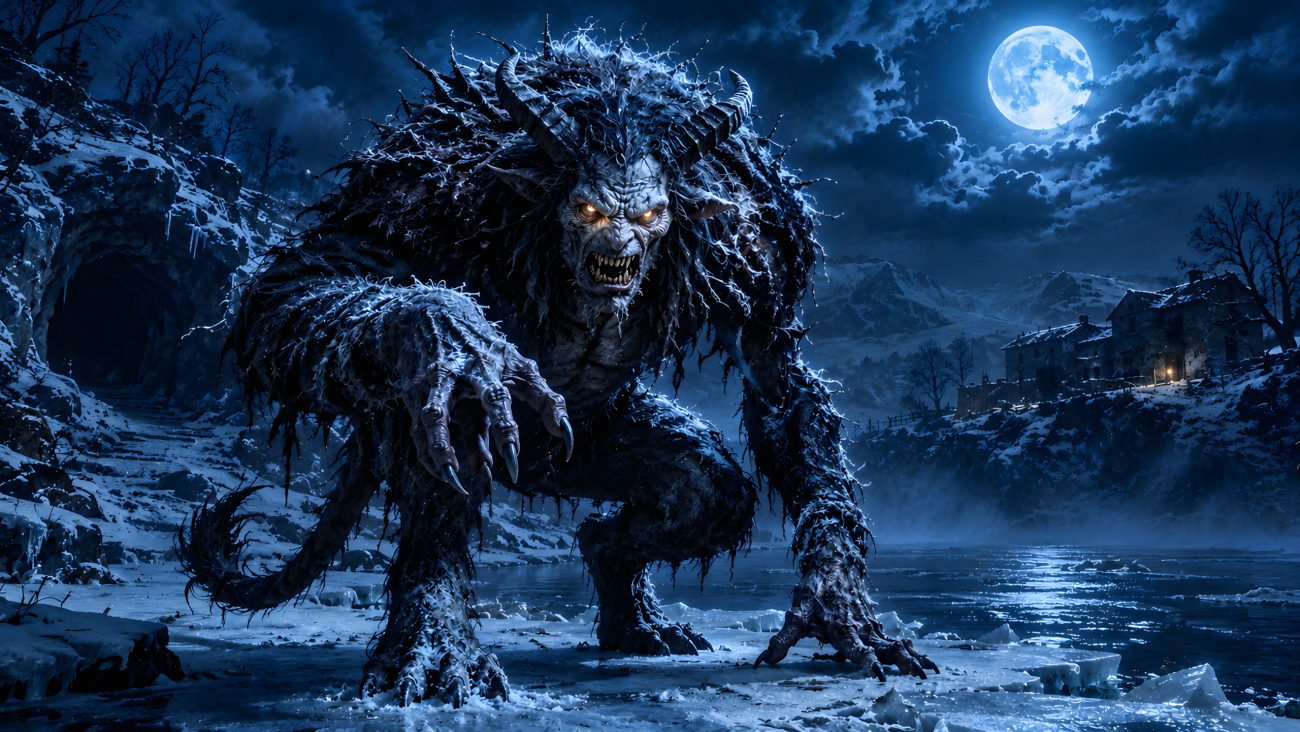
The demons rise from rivers, caves, frozen lakes, abandoned places, and other unclean locations after midnight. They wander through villages, fields, and riverbanks until the first rooster crows at dawn. During these nights people avoided traveling alone because the Karakondzhuls were believed to attack travelers, leap onto their backs, and force them to run wildly through the darkness until exhaustion or death.

In Serbian tradition, Karakondzhuls were associated with the spirits of children conceived or dead during the impure winter period. They were believed to especially target women and children, scratching faces, drinking blood, and devouring victims.

The appearance of the Karakondzhul changes constantly. Folklore describes them as shaggy black or red humanoids with horns and tails, naked thorn-covered creatures, horse-bodied beings with human heads and wings, monstrous little people that lure victims onto dangerous ice, or animals such as dogs, sheep, and calves. Some traditions considered them werewolf-like beings capable of changing shape freely.

In Turkish and Anatolian folklore, the related Karakoncolos appears as a small black hairy creature roughly the size of a monkey, child, or cat. It roams winter roads at night questioning travelers with strange riddles such as “Where are you from?” and “Where are you going?” The answer had to include the word kara, meaning “black.” If the traveler failed, the creature attacked them using a massive comb.

People believed iron, fire, bread, salt, ashes from the Christmas badnjak fire, and sharp metal objects could repel the demon. In some regions combs were hidden during winter so the Karakoncolos could not use them as weapons.

The Karakondzhul was feared not simply as a monster, but as a spirit of the dangerous winter season itself — a creature of darkness, frost, wilderness, and the chaotic nights when the world temporarily fell outside divine protection.


Sources

Bestiary.us. (n.d.). Karakonj. Retrieved May 16, 2026, from https://www.bestiary.us/karakonj


Stia

Tradition / Region: Macedonian Mythology
Alternate Names: Стија
Category: Mermaid


The Myth

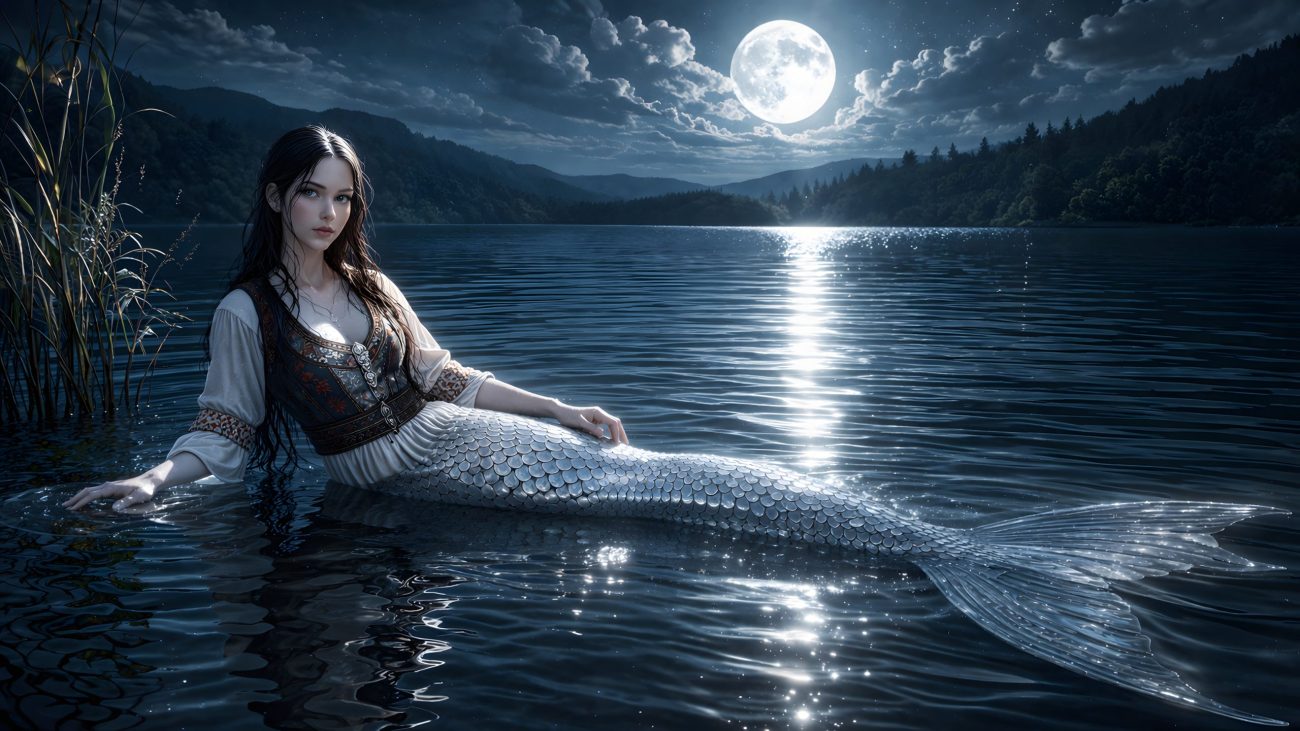
In the deep lakes of Macedonia dwell the stia—mysterious female beings who are half woman and half fish. Their long hair flows like river weeds in the water, and their tails shimmer beneath the surface like the scales of a great silver carp.

The stia rarely reveal themselves to humankind. By day they remain in the dark, silent depths, where sunlight cannot reach. There, among sunken stones and drowned branches, they gather and drift like pale shadows. But when the moon rises and lays a path of silver across the lake, they rise closer to the surface.

Fishermen tell of hearing soft singing carried over still water on windless nights. Those who follow the sound may glimpse a pale face rising from the lake, framed in long, wet hair. Some say the stia watch quietly from the reeds, their eyes shining just above the surface before slipping away without a ripple.

They are said to guard the hidden places of the lake—the deepest hollows and coldest springs. Anyone who ventures too far into their waters, whether out of greed or arrogance, risks being drawn downward. A sudden tug at the ankle, a swirl of water where none was before, and the lake closes again as if nothing had happened.

Yet the stia are not always cruel. In some tales, they have been seen weeping beside the bodies of drowned youths, combing their long hair in sorrow. Others say they sometimes guide lost children back toward shore, pushing them gently with unseen currents.

Beautiful, distant, and dangerous, the stia belong to the still waters and moonlit depths, where the boundary between the human world and the hidden world beneath the lake grows thin.


Sources

Wikipedia contributors. (n.d.). Macedonian Slavic mythology. In Wikipedia, The Free Encyclopedia. Retrieved February 14, 2026, from https://en.wikipedia.org/wiki/Macedonian_Slavic_mythology