Tradition: Romanian mythology
Alternative Names: Dânse, Drăgaice, Vâlve, Rusalii, Vântoase, Domniţe, Măiestre, Frumoase, Fetele Codrului, Împărătesele Văzduhului
Category: Fairy
The Myth
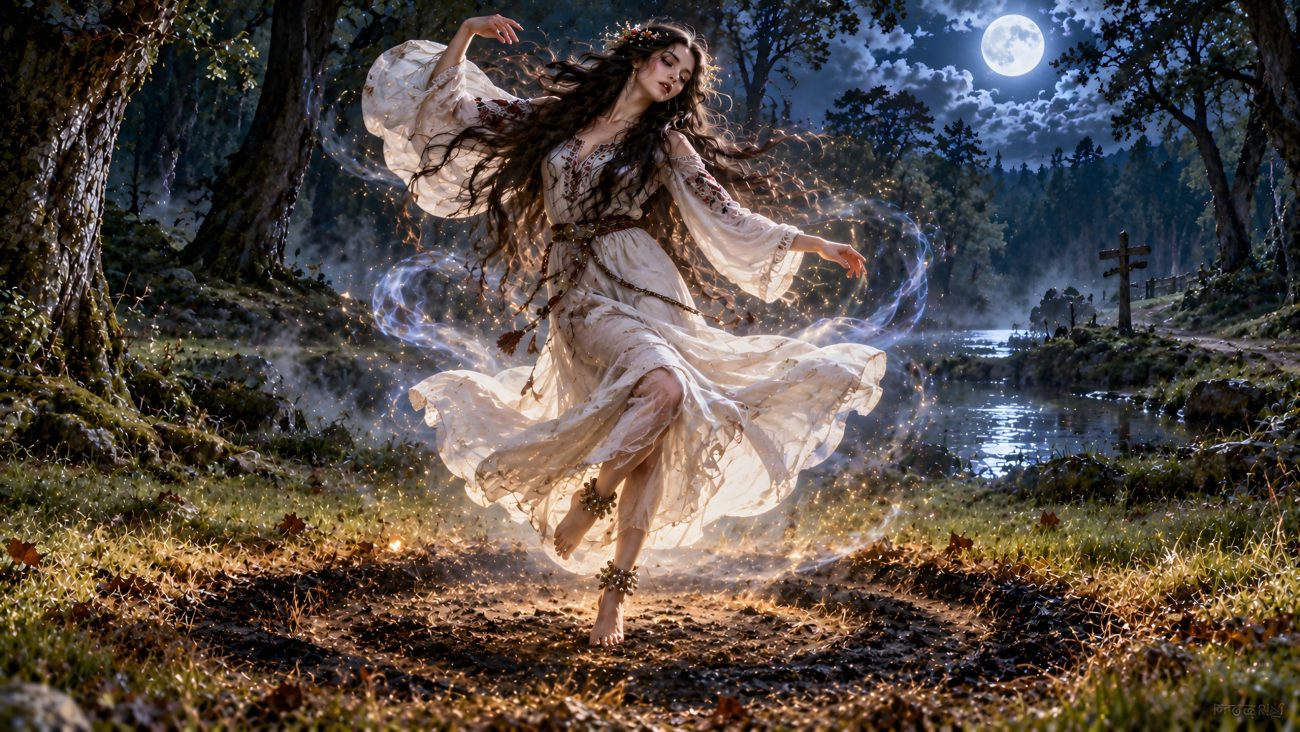
The Iele were beautiful feminine supernatural beings who appeared as young, voluptuous women with an enchanting presence. They could be visible or completely incorporeal, and were sometimes said to fly with wings and sometimes without them. They gathered in groups, most commonly three or seven, and could travel through the air at incredible speed, sometimes riding fiery chariots. They inhabited forests, caves, isolated mountain cliffs, springs, ponds, crossroads, and the open sky. At night, especially under the moon, they appeared in secluded places and danced in circles, often naked with their disheveled hair covering their bodies, bells around their ankles and candles in their hands. Their voices and music were extraordinarily beautiful, and anyone who heard their songs could become enchanted. The places where they danced were left scorched, with blackened ground and withered or burned vegetation.
The Iele were not necessarily evil, but they were proud, dangerous, and easily angered. They punished anyone who watched them dancing, imitated their movements, disturbed their sacred places, slept beneath trees belonging to them, or drank from their springs and wells. Those who refused an invitation to dance could suffer terrible supernatural punishment, while someone who accidentally heard their songs could lose the ability to speak. A person caught watching the Iele dance might be surrounded by their frantic Hora until he fell into sleep and delirium, after which the fairies would carry him away and he might disappear forever. Their beautiful voices could lure people like the songs of sirens, while their dancing could leave a victim confused, entranced, or driven into madness. In some traditions they were also spirits of vengeance, acting on behalf of God or the Devil and forcing those they were sent against into the center of their dance until the victim died from madness or torment.
The Iele could be appeased by respecting the days dedicated to them, particularly the festivals associated with Rusaliile. Those who worked when such days were supposed to be kept sacred risked their anger, which could bring vertigo, paralysis, mysterious deaths, hail, floods, withered trees, or fires. People protected themselves with garlic and mugwort worn on the body or hung from their clothing, while other protective customs included displaying a horse’s skull outside the house. The most important defense was the ritual dancing of the Călușari, whose movements were believed to protect people from the power of the Iele. In this way, the Iele remained both beautiful and dangerous beings of the Romanian landscape: enchanting spirits of the night who could grant no simple distinction between benevolent fairy and terrifying supernatural avenger.
Sources
“Iele.” Wikipedia: The Free Encyclopedia. Wikimedia Foundation. Accessed October 5, 2026. https://en.wikipedia.org/wiki/Iele